
What Is the Best Induction Cooker for Commercial Use
07/12/2026
Estimated reading time: 2 minutes

Opening a restaurant, taking over a hotel kitchen, or selecting equipment for a chain brand — if you’ve reached this point, you probably don’t need anyone to explain what an induction cooker is. What you need is an answer: which commercial induction cooker is actually worth buying.
This article skips the theory and the beginner’s overview. Drawing on commercial induction cooker reviews from real operators, industry buying guides, and hands-on testing insights, we go straight from type recommendations and a commercial induction cooktop brands comparison to critical specs and purchasing pitfalls — helping you shorten the distance from “still researching” to “ready to order.”
IN THIS ARTICLE
- Commercial Induction Cooker Recommendations by Scenario: Which Types Are Worth Buying
- Commercial Induction Cooker Brand Comparison: Vollrath, CookTek, Hatco, Garland — Which One to Choose
- Key Specs to Focus On When Choosing the Best Commercial Induction Cooktop
- Tips and Pitfalls When Buying a Commercial Induction Cooker
- Common Questions People Ask
Commercial Induction Cooker Recommendations by Scenario: Which Types Are Worth Buying
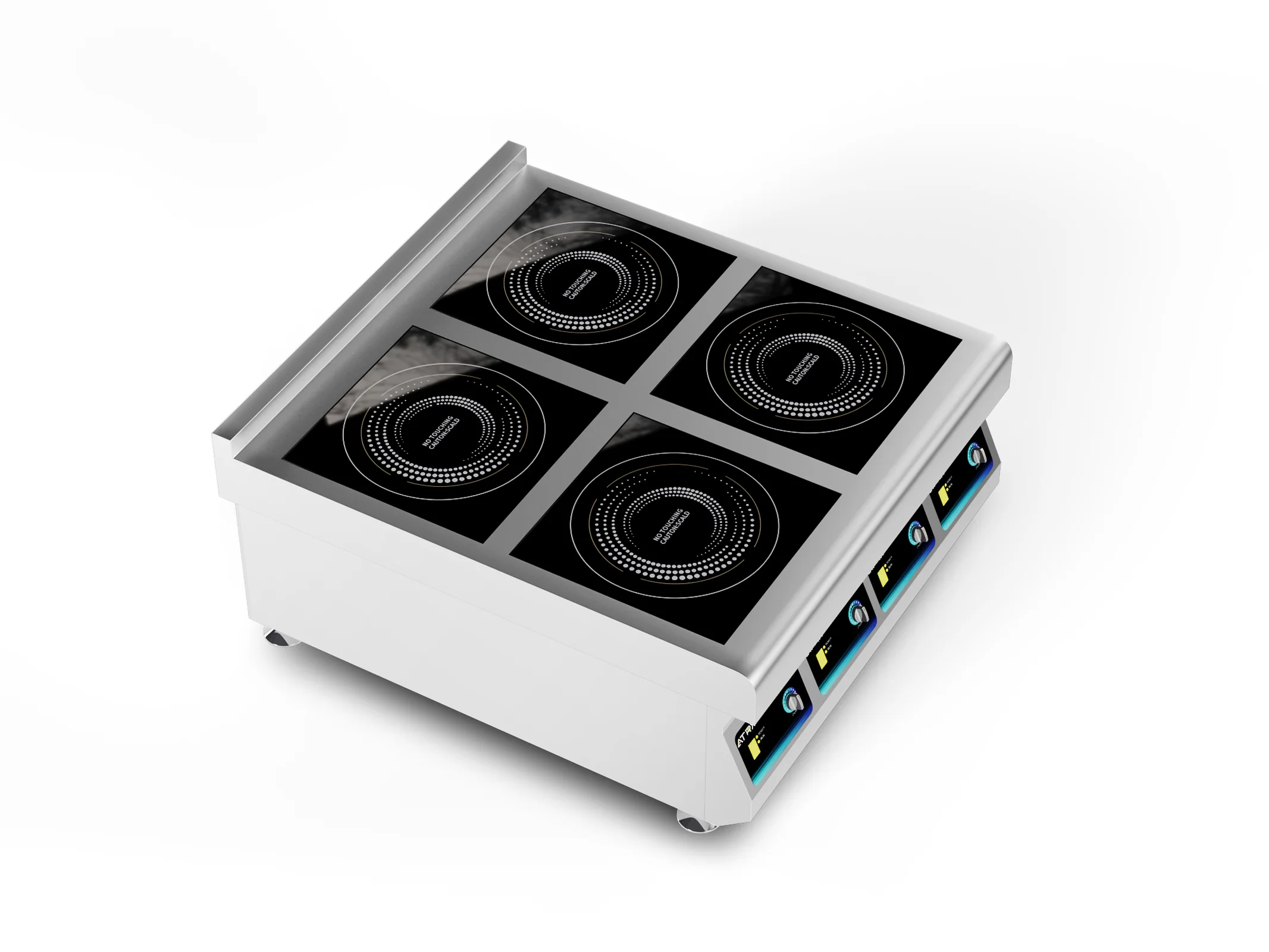
Commercial induction cookers are not one-size-fits-all. Countertop, drop-in, and freestanding — these three installation types solve completely different kitchen problems. Pick the wrong type, and no amount of wattage or brand prestige will save you.
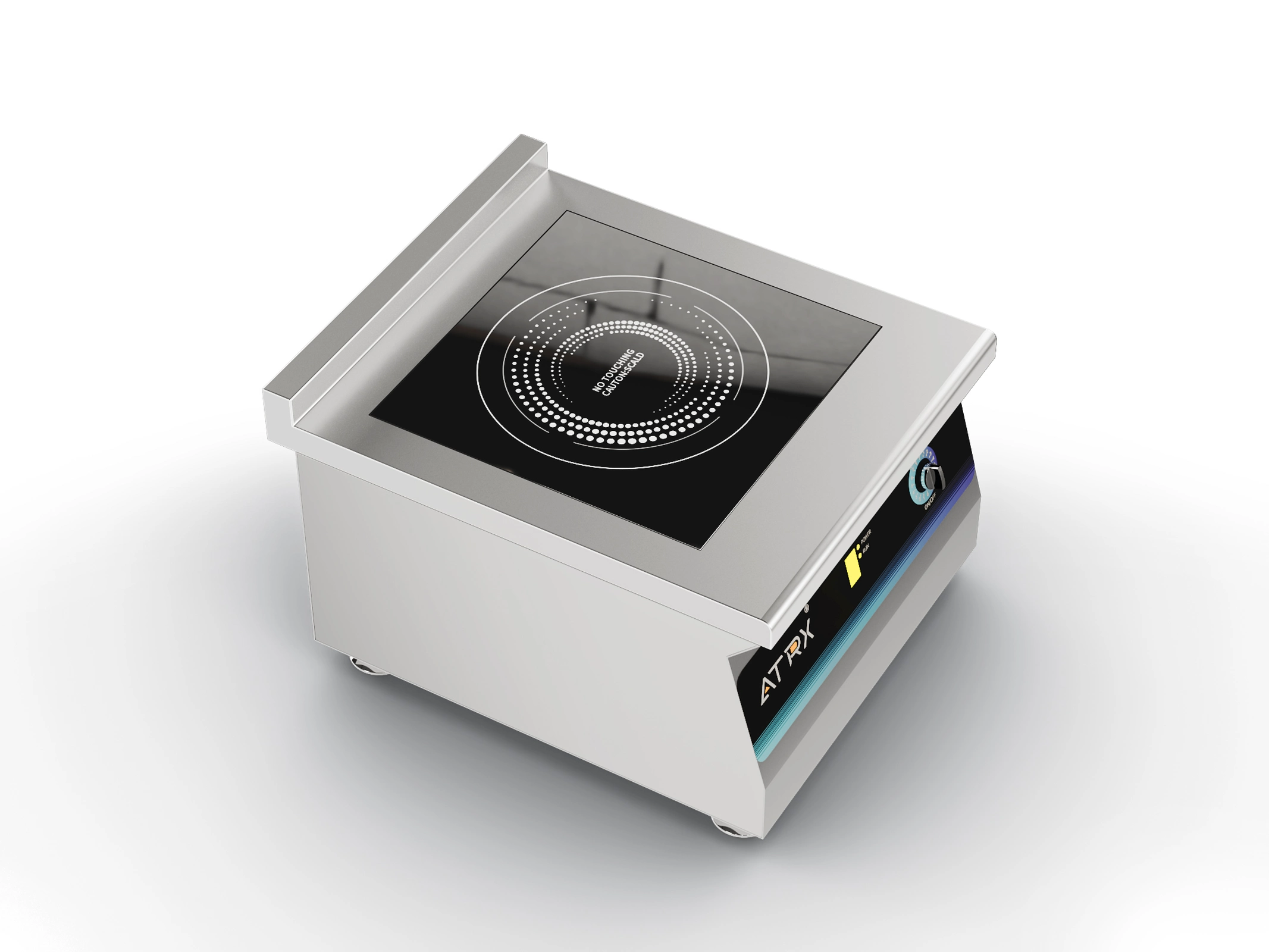
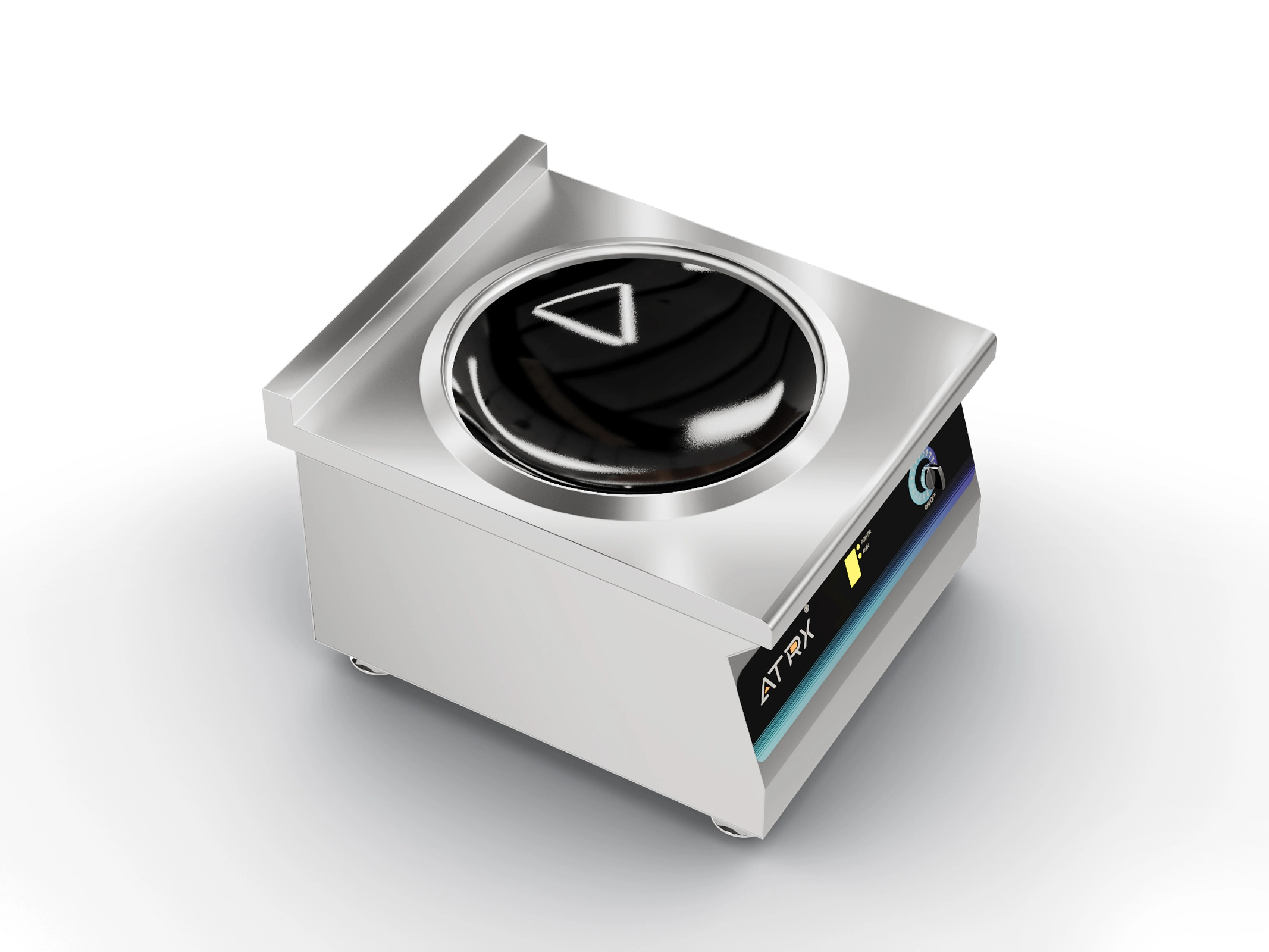
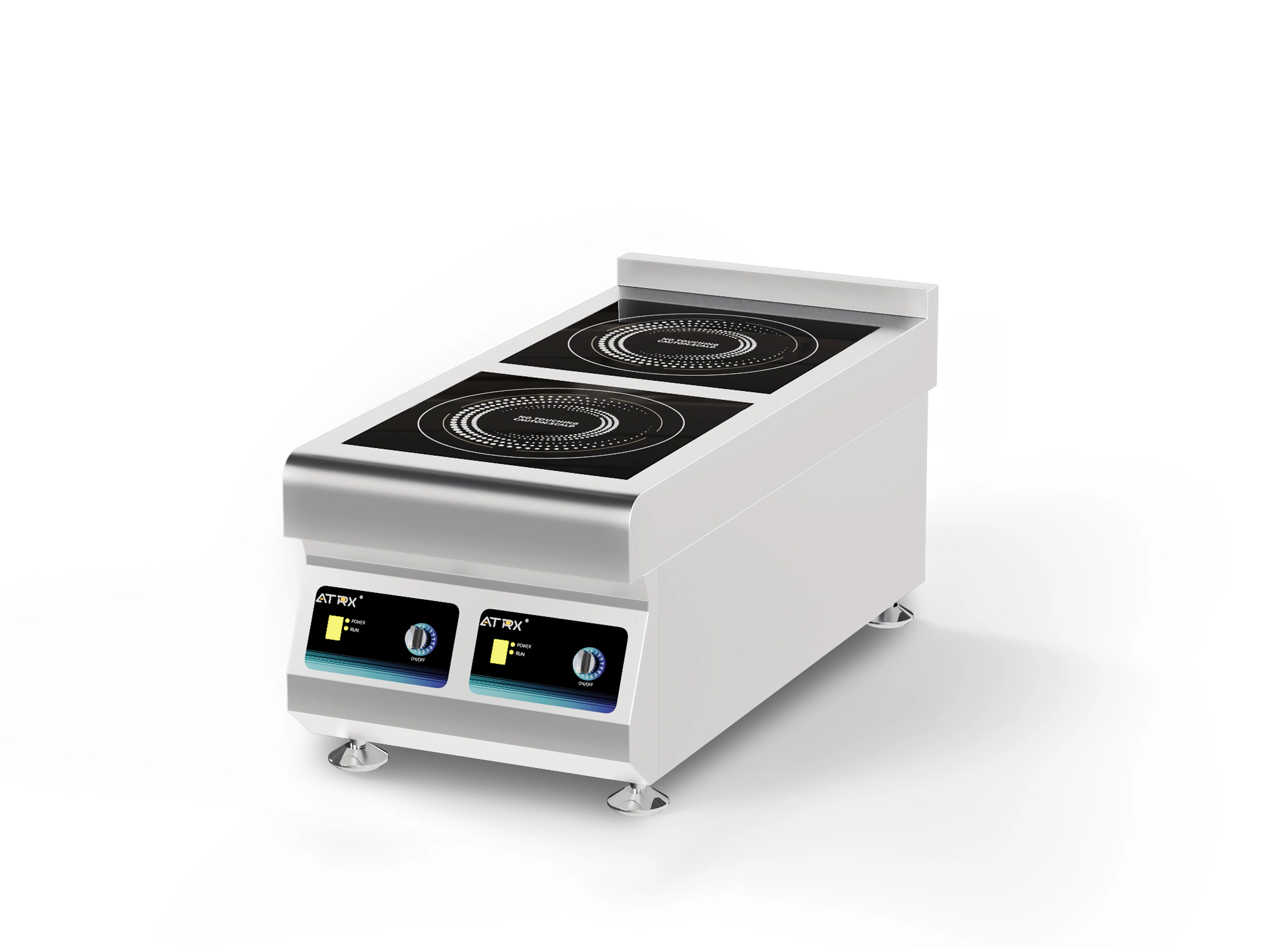
Countertop Commercial Induction Cookers
The core value of a countertop unit comes down to one word: flexibility.
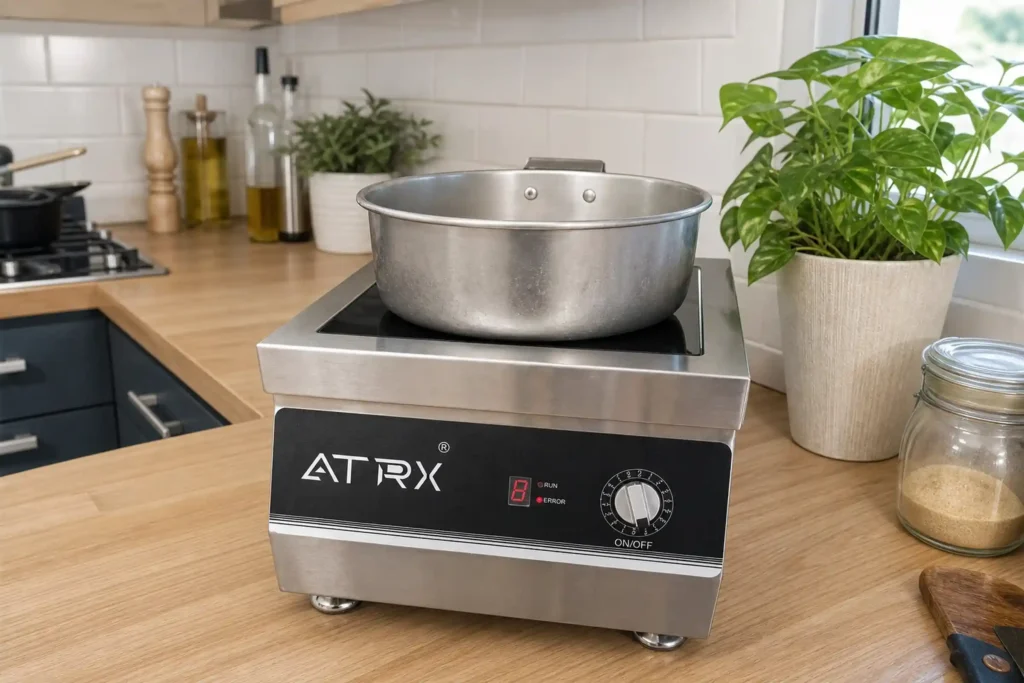
Power typically ranges from 3.5kW to 5kW. Plug it in and it’s ready to go — no rewiring, no cutouts, no electrician needed. Use it at Station A for stir-frying today, move it to an off-site catering event for soup tomorrow, set it up in the front-of-house for a cooking show the day after. It goes wherever you go.
Best commercial scenarios: Peak-hour overflow stations, off-site catering, front-of-house live cooking demonstrations, core burner position in small commercial kitchens
| Advantages | Limitations |
|---|---|
| Plug-and-play, zero installation cost | Power ceiling usually 5kW — not enough for high-heat commercial cooking |
| Portable, reusable across multiple commercial scenarios | Extended full-load operation puts heavy strain on cooling |
| Low investment, ideal for commercial trials and supplementary use | Not suitable as the sole primary burner in high-volume kitchens |
Drop-In Commercial Induction Cookers
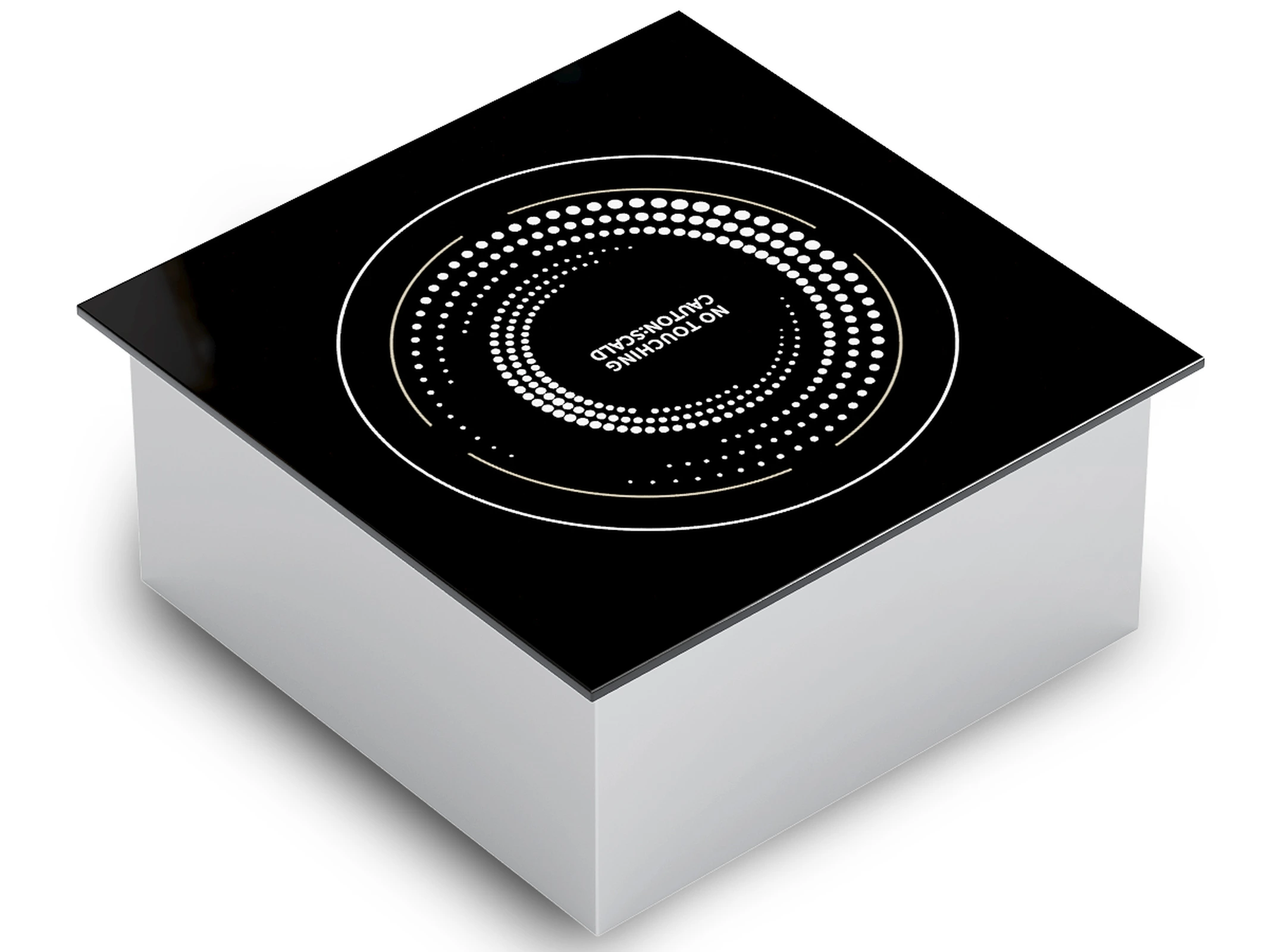
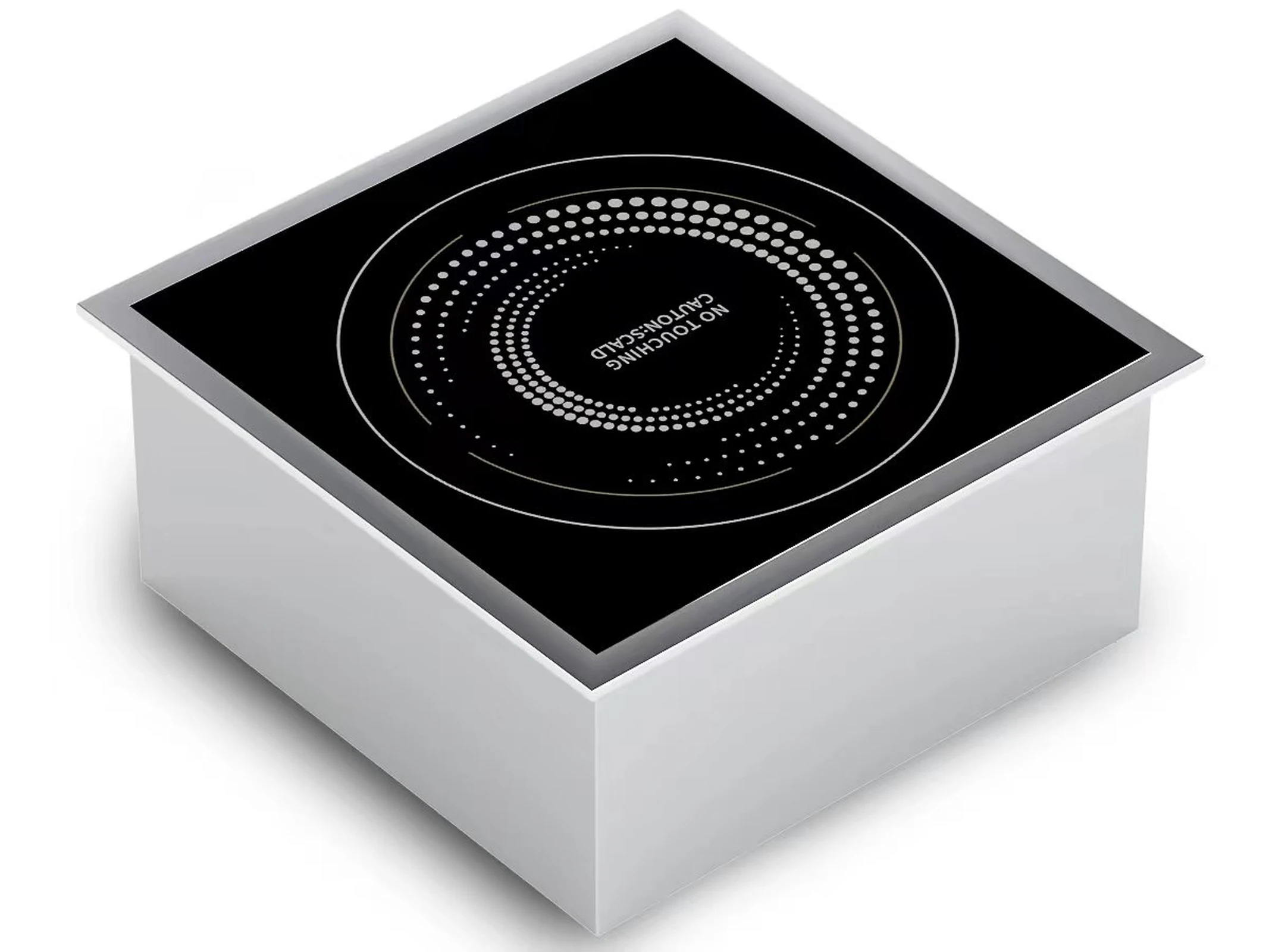
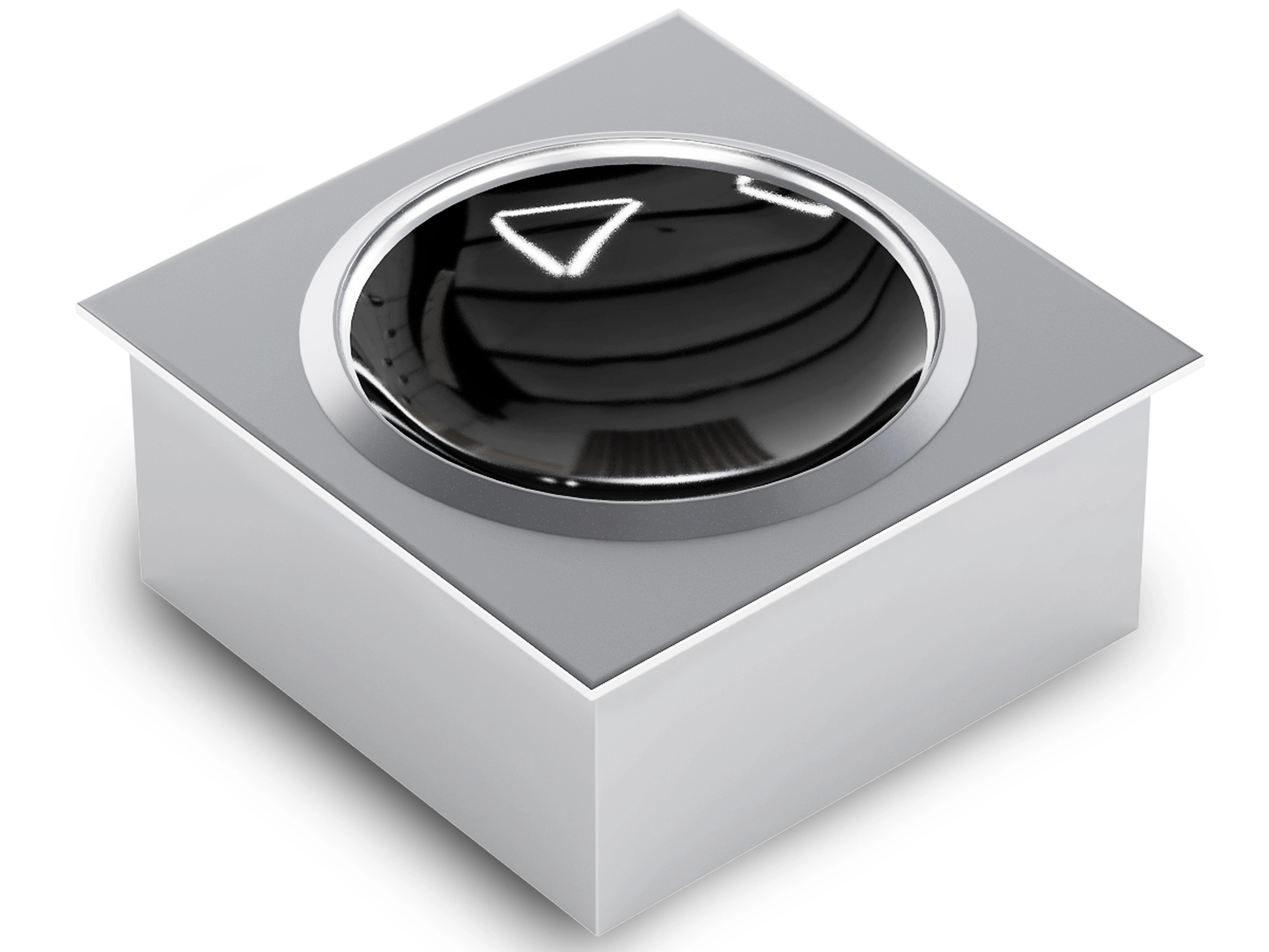
A drop-in induction cooker sits flush with the countertop after installation — no protruding edges, no raised frames. The entire cooking area looks clean and seamless.
Functionally, drop-in units excel at sustained warming — which is exactly the core requirement for buffet lines. The goal isn’t blazing heat for stir-frying, but hours of consistent, even temperature to keep dishes at serving temperature. The flush surface also makes cleaning effortless — wipe down oil splashes with a single pass, no crevices to trap grime.
However, drop-in units come with one unavoidable hurdle: installation precision.
Best commercial scenarios: Hotel buffet lines, open kitchens, front-of-house live cooking stations, high-end banquet halls
| Advantages | Limitations |
|---|---|
| Flush with countertop — clean, polished look ideal for guest-facing areas | Fixed position once installed — cannot be moved |
| Stable sustained warming, ideal for commercial buffet scenarios | Cutout dimensions must be exact; installation cost is higher |
| Flat surface is easy to clean | Repairs require removing from countertop, leading to longer downtime |
Freestanding Commercial Induction Cookers
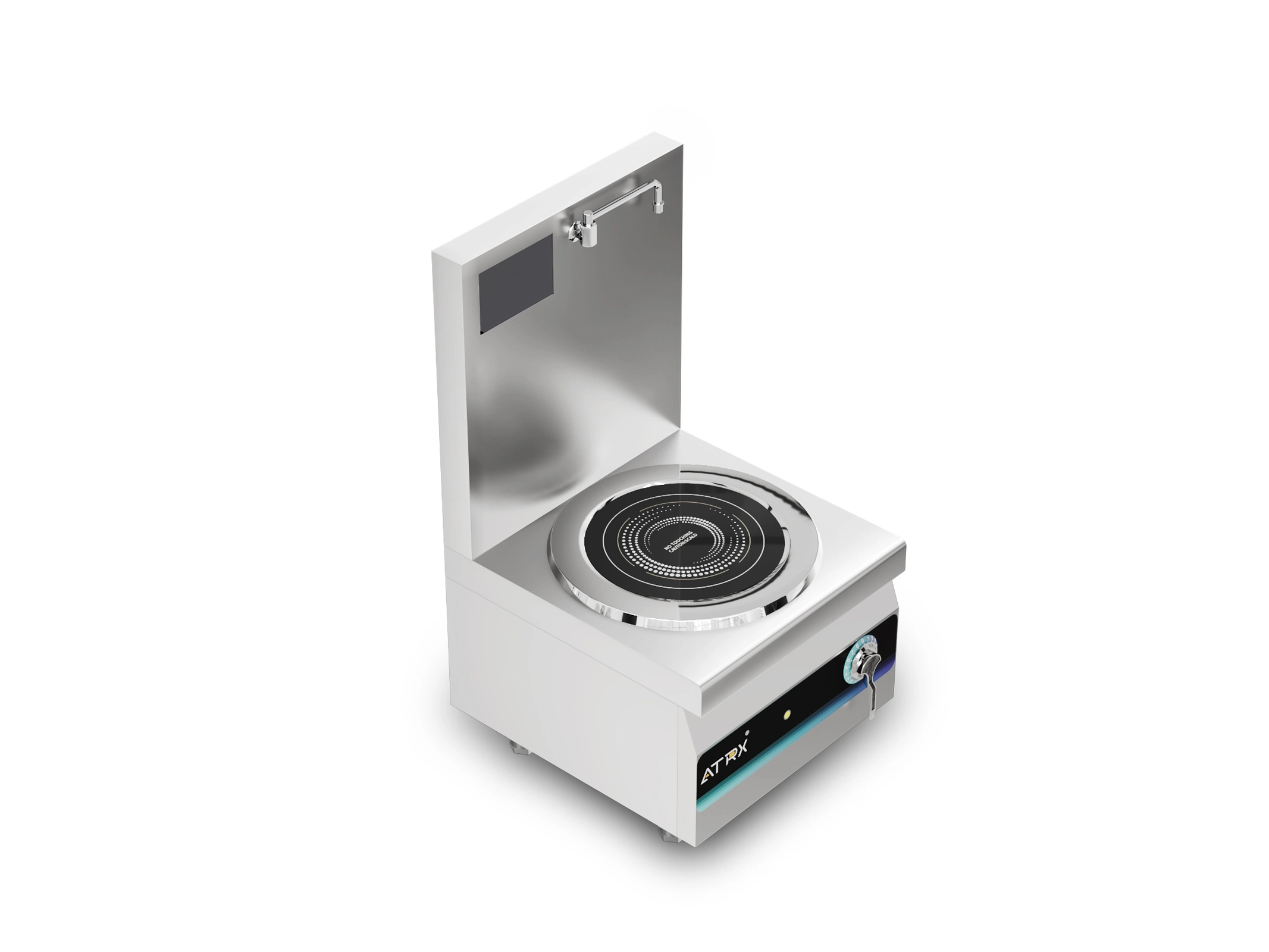
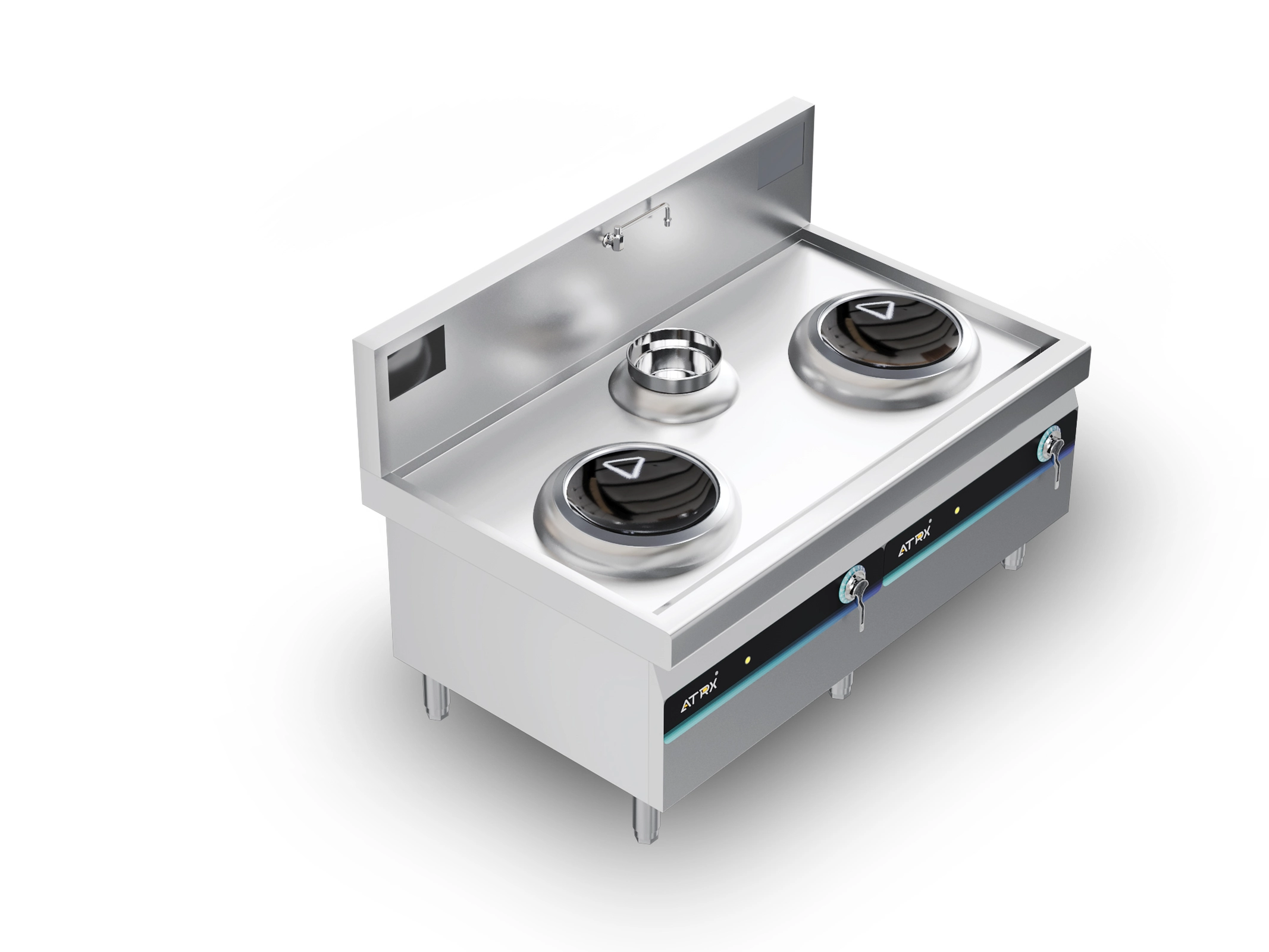
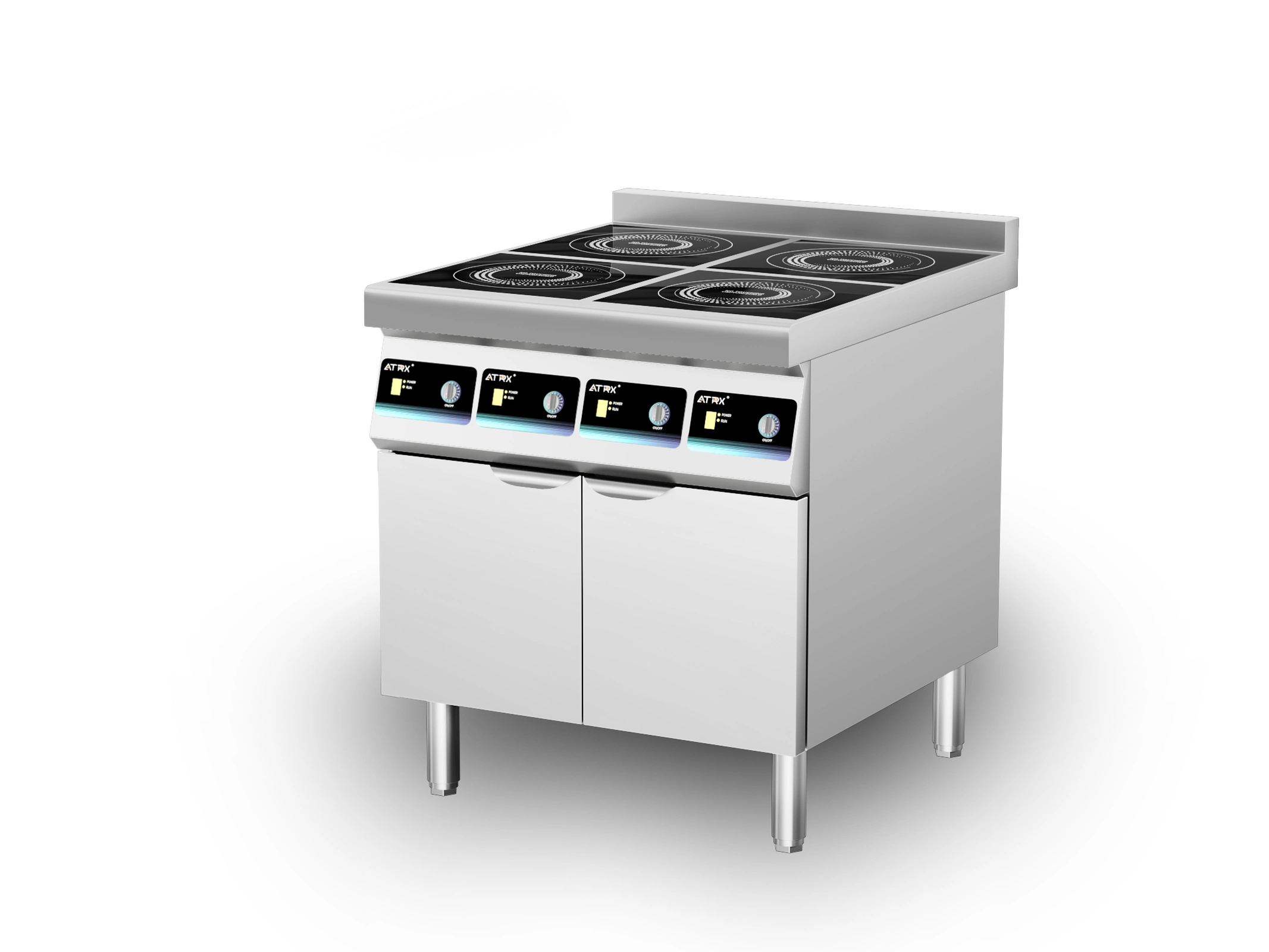
If your kitchen needs to push out hundreds of meals a day, with multiple burner positions running simultaneously for hours on end — a freestanding commercial induction cooker is the only option that can hold up.
Power typically starts at 8kW and above, with some models reaching 15kW or higher. Three-phase power is mandatory. This isn’t a “recommendation” — it’s a hard requirement. Without three-phase power, equipment at this level simply won’t start.
The core capability of freestanding units is endurance: multiple burner positions at full power without tripping breakers, continuous high-intensity output without power derating, and cooling systems built to handle all-day operation. Countertop and drop-in units simply can’t deliver this.
Best commercial scenarios: High-volume restaurant main cooking lines, central kitchens, chain brand back-of-house operations, institutional cafeterias
| Advantages | Limitations |
|---|---|
| High power — handles sustained full-load output in commercial environments | Requires three-phase power; electrical infrastructure demands are high |
| Multiple burner positions running simultaneously — capacity matches large commercial kitchens | Equipment and installation costs significantly higher than the other two types |
| Cooling system designed for all-day commercial operation | Large and heavy — position is essentially permanent |
Wasserstrom’s commercial induction cooker buying guide provides a detailed breakdown of Vollrath’s various series and their power tier differences — well worth reading before you finalize your selection: Commercial Induction Range Buying Guide – Wasserstrom.
Commercial Induction Cooker Brand Comparison: Vollrath, CookTek, Hatco, Garland — Which One to Choose
Type selected — next up is the brand. There are plenty of active brands in the commercial induction cooker market, but the ones that consistently appear in industry guides and real user feedback narrow down to a handful.
Each brand has a different positioning and excels in different commercial scenarios. Rather than comparing spec by spec, first figure this out: which brand’s strengths best match your commercial needs?
Vollrath
Vollrath has the broadest coverage in the commercial induction cooker space.
The entry level offers the Mirage Cadet, suited for budget-limited or light-duty commercial scenarios. The mid-range Mirage Pro steps up in temperature precision and build quality. The heavy-duty 4-Series is positioned as the workhorse for high-output back-of-house operations. Wasserstrom’s commercial induction cooker buying guide is built almost entirely around Vollrath’s product line — that’s no accident. In the North American market, Vollrath’s channel coverage and model completeness are genuinely industry-leading.
Feedback from restaurant professionals on Reddit is remarkably consistent: stable, reliable, no surprises but no disappointments either. One user put it this way: “we got Vollrath mirage units and they’re… fine” — in a commercial environment, that “fine” is actually high praise. Not breaking down is the greatest virtue.
CookTek
The CookTek vs. Vollrath comparison is practically a classic topic on Reddit.
The difference between the two isn’t about “which is better” — it’s about positioning. Vollrath is “has everything.” CookTek is “does precision temperature control to the absolute extreme.” CookTek’s strength lies in temperature accuracy and purpose-built commercial solutions. The Helios series multi-burner drop-in combination is specifically engineered as an integrated solution for high-end commercial kitchens — not just a bunch of machines placed side by side.
On Facebook, a chef selecting commercial equipment for a 100-seat café received CookTek as the recommendation. That’s a typical scenario: seat count isn’t extreme, but there are clear requirements for output consistency and temperature precision.
CookTek’s pricing runs higher than comparable commercial products. If your budget allows and your menu has genuine requirements for temperature precision — not “I feel like I need it,” but dishes that actually demand it — CookTek deserves serious evaluation.
Hatco
Hatco isn’t a brand that tries to do everything. Its product line is concentrated in the portable commercial induction cooker niche, and it goes deep in that space.
Hatco’s own website positions its products as “portable commercial induction cooktops” — front-of-house demonstrations, banquet service, flexible deployment. These are its home turf. On Reddit, when commercial induction burner recommendations come up, Hatco gets named directly with straightforward feedback: for portable commercial use, Hatco is the specialist.
If your commercial need is an induction cooker that can be moved around and used flexibly across different scenarios, Hatco is very likely the most fitting choice. But if you’re looking for heavy-duty back-of-house primary equipment, or need a drop-in integrated solution, Hatco’s product line doesn’t extend there.
Garland
Garland is a long-established name in commercial kitchen equipment.
In Facebook chef discussion groups and Chef’s Deal commercial equipment catalogs alike, Garland appears on recommendation lists. Its positioning has always been clear: heavy-duty, large kitchens, institutional-grade commercial use. If your scenario is a large-scale back-of-house operation or institutional cafeteria, Garland’s product specifications naturally match your requirements.
Garland also has a hidden advantage: if your kitchen already uses Garland gas equipment, choosing the same brand when transitioning to induction means the after-sales network, parts ecosystem, and even operational familiarity are all already in place. For large commercial kitchens, this kind of brand compatibility and the operational convenience it brings can sometimes outweigh the spec differences between individual machines.
Looking for Value and Customization? China-Made ATRX Is Also Worth Considering
The four brands above are all well-established choices in the international market. If your priority is high brand recognition and a robust local after-sales network, each of them deserves serious evaluation.
But not every buyer’s top priority is brand name recognition.
If your purchasing decision weighs more heavily on cost-effectiveness, flexibility in bulk procurement, or the need for OEM customization, then China-manufactured ATRX offers another path. As our own brand, we’ll lay out both the strengths and the limitations here — you make the call.
Where ATRX excels:
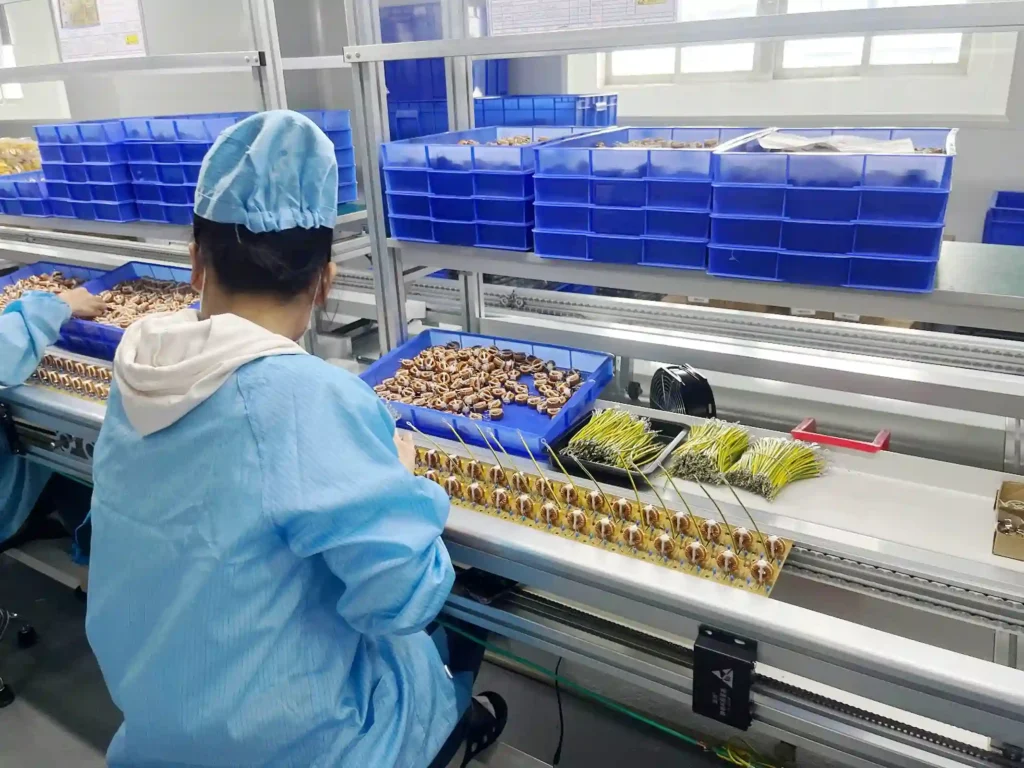
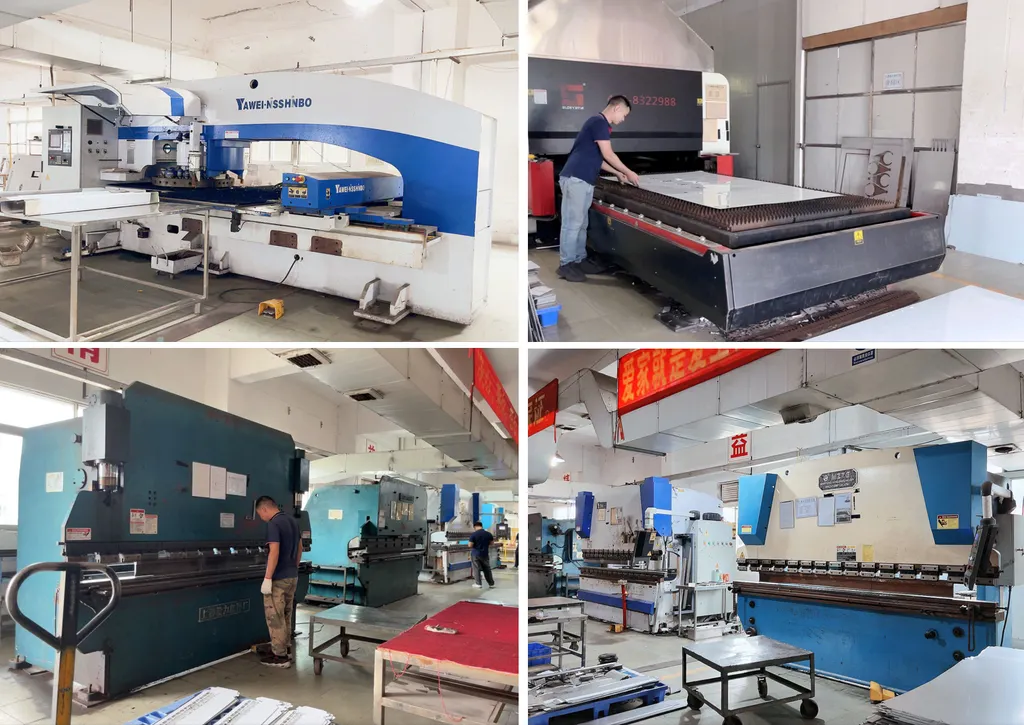
Factory-direct pricing with no middleman markup. ATRX operates its own 20,000㎡ factory in Dongguan, handling everything from PCB assembly to finished unit testing in-house. The price you get is the factory gate price — not a price that’s been marked up through multiple distribution layers.
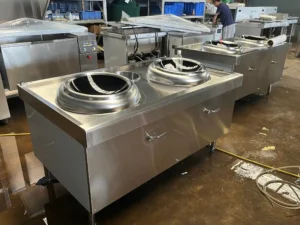
Low customization threshold. From power output and voltage to brand labeling and packaging, everything can be tailored to your requirements. MOQ starts at just 30 units for stock models, and OEM custom models start at only 10 units. For distributors and chain brands looking to build their own label, this level of flexibility is something most international brands simply can’t offer.
Key materials exceed industry standards. A 6mm ceramic glass surface panel comes standard — the industry norm is 3–4mm. The PCB is commercial-grade, not a repurposed residential board. Cooling fans are CE/UL certified with sealed bearings, rated for 12+ hours of continuous operation.
Where ATRX falls short:
Brand recognition doesn’t match the four above. Names like Vollrath and CookTek have been operating in North American and European markets for decades. Brand trust is built over time. ATRX, as a Chinese factory brand, is still in the process of establishing end-market brand awareness.
On-site local repair isn’t available. ATRX’s after-sales model is 24-hour remote video technical support plus free replacement parts shipping. For buyers with their own technical teams, this solution works perfectly well. But if you need “call today, someone shows up today,” international brands with local service networks are a better fit.
Lead time depends on customization level. Stock models ship in 10–15 days. OEM custom models take 25–35 days. If you need equipment urgently, stock models are fine. But for fully customized orders, you need to plan the timeline in advance.
ATRX isn’t here to replace Vollrath or CookTek. It serves a different type of buyer: budget-conscious purchasers, bulk procurement needs, private-label aspirations, or commercial customization requirements for specific power and voltage configurations. If that describes you, it’s worth requesting a sample unit to test.
If you want a deeper dive into the complete comparison of leading global commercial induction cooker manufacturers — covering 10 representative factories from China, the US, and Europe — check out this commercial induction cooker manufacturer selection guide.
Five brands at a glance:
| Brand | Core Strength | Best For |
|---|---|---|
| Vollrath | Full product line, 100-level precision power control | Commercial buyers seeking one-stop selection and proven reliability |
| CookTek | Superior temperature precision, strong integrated solutions | Professional commercial kitchens with ample budgets and clear temperature control needs |
| Hatco | Specialist in portable commercial induction | Commercial scenarios requiring flexible deployment, front-of-house demos, banquet service |
| Garland | Heavy-duty commercial, institutional-grade durability | Large back-of-house operations, institutional cafeterias, kitchens already using Garland equipment |
| ATRX | Factory-direct pricing, flexible customization, strong value | Budget-conscious buyers, bulk procurement, those needing OEM customization |
Key Specs to Focus On When Choosing the Best Commercial Induction Cooktop
After you’ve settled on a brand and type, the final checkpoint is specifications. But the spec pitfalls on commercial induction cookers run deeper than you’d expect — impressive numbers on a spec sheet don’t always reflect real-world commercial cooking performance.
The following three specs are the ones real commercial users complain about most — and the ones most frequently overlooked.
Actual Coil Size
This is the most common misconception in commercial induction cooker purchasing: a large glass surface doesn’t mean a large heating area.
Reddit is full of complaints about the Duxtop 9600ls — the glass surface is 12 inches, but the actual coil is only 8 inches. The result: small pots work fine, but put a large pot on it and the center heats up while the edges stay cold, producing severely uneven heating.
In a commercial kitchen, this problem is magnified. Commercial cookware is typically much larger than residential. Place a 14-inch stock pot on an 8-inch coil, and only the center ring heats up — the ingredients around the edges can’t keep up in temperature, and output consistency falls apart. Webstaurantstore’s troubleshooting guide also explicitly states: if the cookware is significantly larger than the induction coil, uneven heating is an inevitable result.
By contrast, Buffalo is mentioned by Reddit users as using 9 to 9.5-inch coils, earning recognition as “one of the few honest brands.”
Low-Temperature Stability
Commercial kitchens aren’t all about blazing heat. Reducing sauces, slowly simmering stock, holding food at temperature — these are high-frequency commercial operations that all require stable low-temperature output.
How do you judge a commercial induction cooker’s low-temperature performance? Look at the number of power levels.
Wasserstrom specifically emphasizes this point when comparing Vollrath’s product line: the Mirage Cadet has only 20 power levels, while the Mirage Pro and 4-Series offer 100. The more levels, the smaller the increment at each step in the low-temperature range, and the finer the control. A 20-level machine may still run too hot at its lowest setting; a 100-level machine lets you find the precise point for a true gentle simmer.
| Power Levels | Low-Temperature Performance | Best For |
|---|---|---|
| 1–20 levels | Wide increments; low range prone to overheating or pulsing | Commercial kitchens focused primarily on high-heat quick cooking |
| 1–100 levels | Fine increments; low range is smoother and more stable | Commercial kitchens needing both high heat and precision cooking |
Hatco’s official blog also analyzes the real-world performance of commercial induction cookers in terms of temperature precision and energy efficiency: Pros and Cons of Induction Cooktops in Commercial Kitchens – Hatco
Does Power Drop During Continuous Service?
Restaurant professionals on Reddit have mentioned they specifically run this test when evaluating commercial induction cookers: continuous high-power output, comparing heating performance between dish #1 and dish #10. If the machine’s internal cooling can’t keep up, once the heat accumulates to a certain point, automatic power derating kicks in — your 15th dish might take 30% longer than your 1st, and during peak service, you simply don’t have time to wait.
There’s no shortcut for this. You can’t tell from a spec sheet — the only way is to test a sample unit in your own commercial kitchen. Use your own pots, cook dishes from your own menu, and run a full cycle at your actual service pace.
Tips and Pitfalls When Buying a Commercial Induction Cooker
A few practical reminders to close things out — all distilled from real commercial buyers’ hard-learned lessons.
Don’t use a cheap residential unit to “test the waters” and then draw conclusions. This is the single most common mistake on Reddit. Multiple commercial buyers report buying a budget residential induction cooker for a few dozen dollars, having a bad experience, and writing off the entire category. One user bought a Tefal single-burner residential unit, returned it immediately, and concluded induction was terrible — until they used a real commercial machine at a friend’s restaurant and realized the two aren’t even in the same league.
Commercial machines operate on an entirely different level of power architecture, coil specifications, and cooling systems. If you want to evaluate whether commercial induction is right for your kitchen, you must test with a commercial-grade sample. A residential unit’s performance has zero reference value.
Ask about after-sales and repair policies before ordering — and be as specific as possible. Multiple commercial buyers on Reddit have reported that Breville Control Freak’s after-sales support is practically nonexistent — “everyone said don’t bother, zero help with maintenance.” In a commercial environment, one day of equipment downtime can cost you more in lost revenue than the price difference between two machines. You need to know: How long is the warranty? Who does repairs? Where are parts shipped from? What’s the response time? Ask these questions before you order, not after the machine breaks.
Run a sample through your actual menu before placing a large order. Don’t make commercial purchasing decisions based on spec sheets alone. Use your own pots, your menu items, and your kitchen’s actual service pace to run a full test cycle.
If you want to directly browse power, dimensions, and spec parameters for various types of commercial induction cookers, visit the ATRX commercial induction cooker product range.
Common Questions People Ask
Q: How many induction cookers does a commercial kitchen need? How do you determine the right number?
Don’t calculate by kitchen floor area — calculate by peak service output. Start by counting how many burner positions need to fire simultaneously during your busiest period: one for stir-frying, one for noodles, one for sauces — that’s at least three units. Then check whether any station can be consolidated using a multi-burner freestanding unit.
Most mid-sized commercial kitchens (80–150 seats) are configured with 3 to 6 heating positions. Better to have one backup position than to discover during peak service that you don’t have enough burners and scramble to add staff and cookware.
Q: Is it better to get one high-power commercial induction cooker, or multiple lower-power units?
It depends on how you plate and serve. If a single station handles one task only (say, dedicated wok cooking), a single 8kW+ high-power unit beats two 3.5kW units — faster recovery, no queuing. But if you need to run different tasks simultaneously (soup on one burner, searing on another), two independent mid-power units give you more flexibility — and if one goes down, the other keeps going.
In a commercial environment, the risk of “one machine down, entire line paralyzed” costs far more than spending a few extra thousand on redundancy.
Q: How long does a commercial induction cooker typically last, and when should you replace it?
It depends on usage intensity and maintenance. In a commercial kitchen running 8–12 hours daily, a quality machine typically lasts 3 to 5 years. Two signals suggest it’s time to start looking for a replacement: first, heating speed during continuous service is noticeably slower than when the machine was new, indicating the power module is aging; second, fan noise suddenly increases or the exhaust vent feels significantly hotter, indicating the cooling system is deteriorating.
Rather than waiting for a complete breakdown that disrupts your business, start selecting the next unit as soon as these signals appear.
About the author
ATRX Team| 18 Years Commercial
Induction Cooker Manufacturer in China
Induction Cooker Manufacturer in China
Related Posts
Commercial Induction Cooker 3500W: Model Selection, Commercial Power and Installation
09/29/2026
How to Install a Built-In Induction Cooktop: A Step-by-Step Guide
09/17/2026
How to Clean a Commercial Deep Fryer: A Step-by-Step Guide
09/13/2026
High Quality Commercial Induction Cooker Manufacturer
09/09/2026
Automatic Wok Machine: Types, Specifications, Applications and Buying Guide
08/18/2026
Commercial Induction Range: How to Choose the Right Size, Power, and Configuration for a Commercial Kitchen
08/15/2026
What Is a Commercial Induction Cooker and How Does It Work
08/13/2026
Commercial Induction Range for Hotel Kitchens: How to Choose the Right Model
08/11/2026
China Commercial Induction Cooker Manufacturer
08/09/2026
10 Best Commercial Induction Cooker Manufacturers & Supplier Selection Guide [2026]
08/07/2026