

Best Commercial Induction Cooktop: Types &Buying Guide
10/09/2026
Estimated reading time: 2 minutes

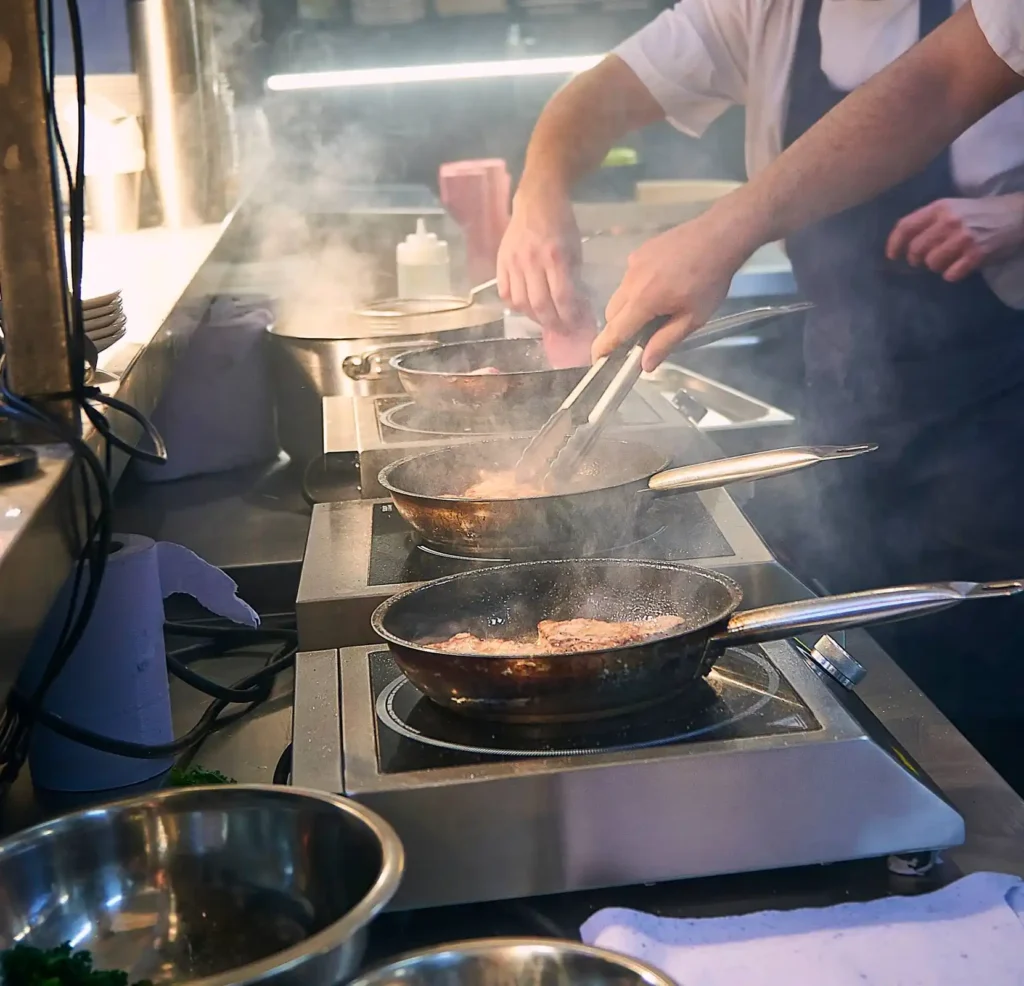
Equipment problems in a restaurant kitchen surface during the lunch rush: pots wait to be heated, and a wok takes too long to recover its temperature once ingredients go in. Smaller annoyances add up daily too, such as unstable cookware, no space beside the cooktop, grease trapped in corners, and multiple zones that can’t all run at full power at once.
Choosing the Best Commercial Induction Cooktop is therefore not just about wattage. This article compares flat-top, built-in, concave wok, and multiple-zone models on applications, heating speed, temperature control, heat dissipation, and long-term performance, to help restaurants, hotels, cafeterias, distributors, and OEM buyers choose the right configuration.
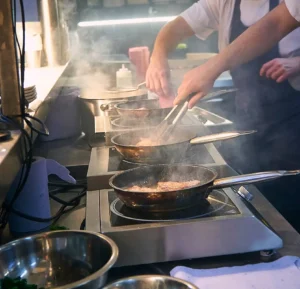
What Types of Commercial Induction Cooktops Are Available?
Start with the cookware and the cooking motions, then consider the equipment type. Searing in a flat-bottomed pan and tossing food in a round-bottomed wok involve completely different operating requirements. Likewise, preparing one or two hot dishes is not the same challenge as handling four pots at once during peak service.
Countertop Commercial Flat Induction Cooktop
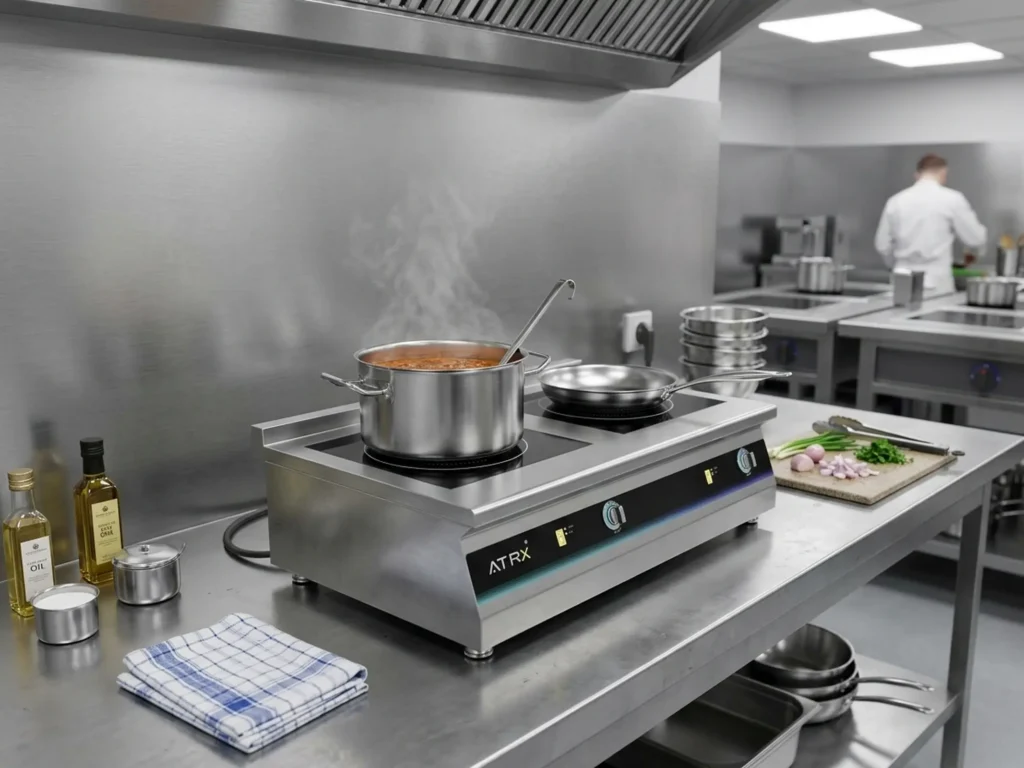
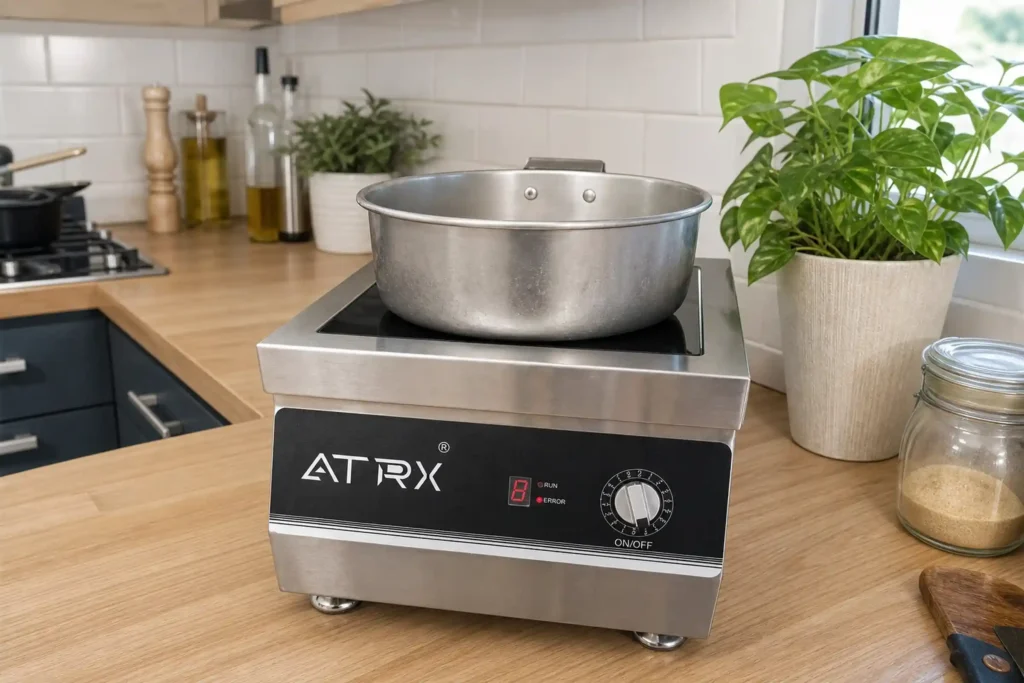
A countertop commercial flat induction cooktop is suitable for flat-bottomed pans, stockpots, saucepans, and frying pans. It can be placed directly on a stable work surface and is commonly used for boiling water, cooking noodles, pan-frying, heating sauces, simmering soup, and short-term holding.
Its advantage is practical: there is no need to modify the countertop first, and the cooking station can be repositioned as the work area changes. In a food truck, the unit may need to move between the prep area and the service area. A small fast-food restaurant may temporarily add another cooking station on weekends. At a compact food stall, space must still be reserved beside the cooktop for cutting, preparation, and plating. A countertop unit adapts more easily to these changes.
These countertop units, also known as commercial induction burners, are particularly suitable for:
- Small-batch cooking and heating completed in a single pot;
- Kitchens that need the flexibility to add or move cooking stations;
- Businesses that cannot accommodate complex countertop cutouts and installation;
- Foodservice operations with frequently changing menus and equipment used for different purposes.
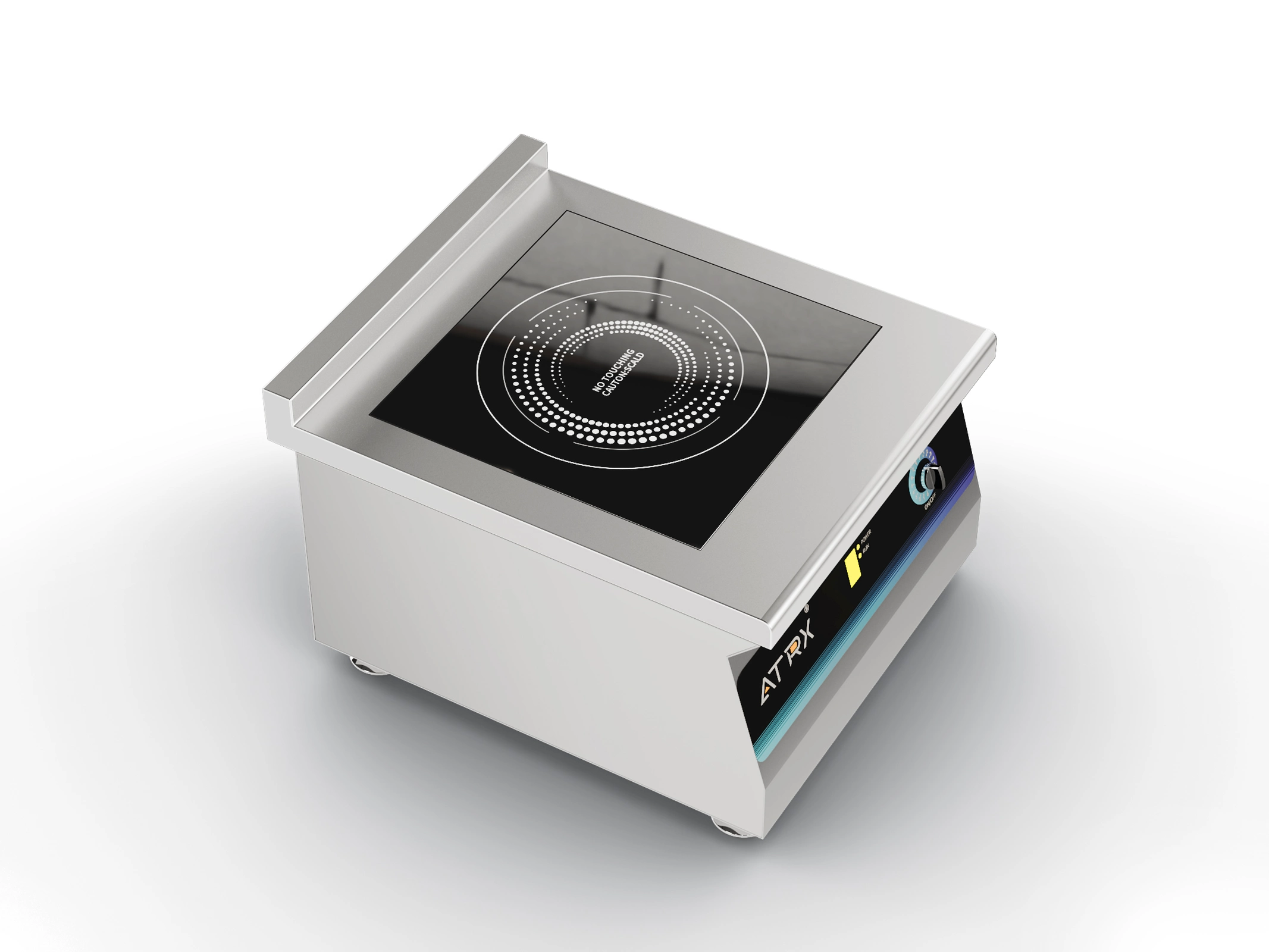
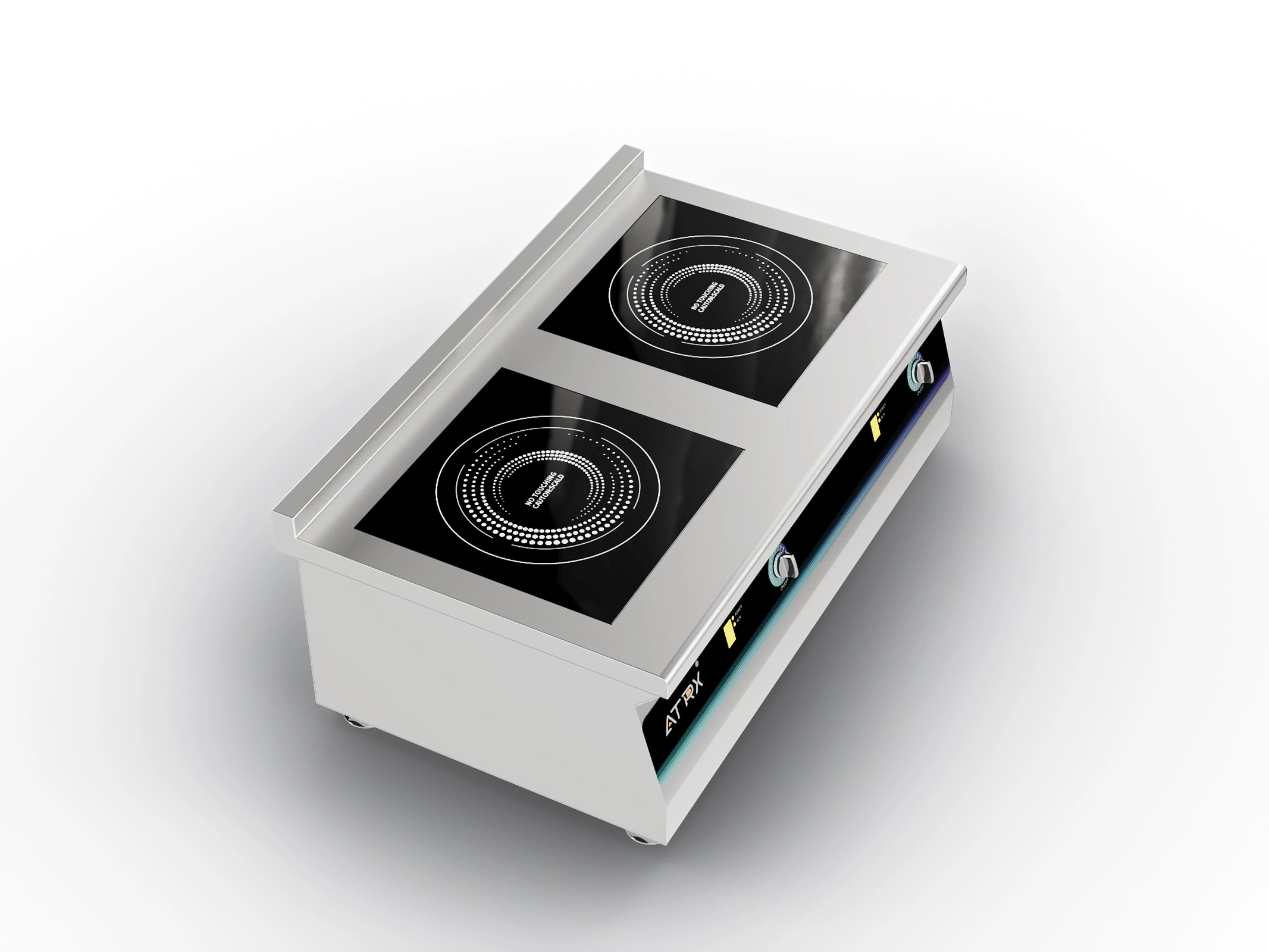
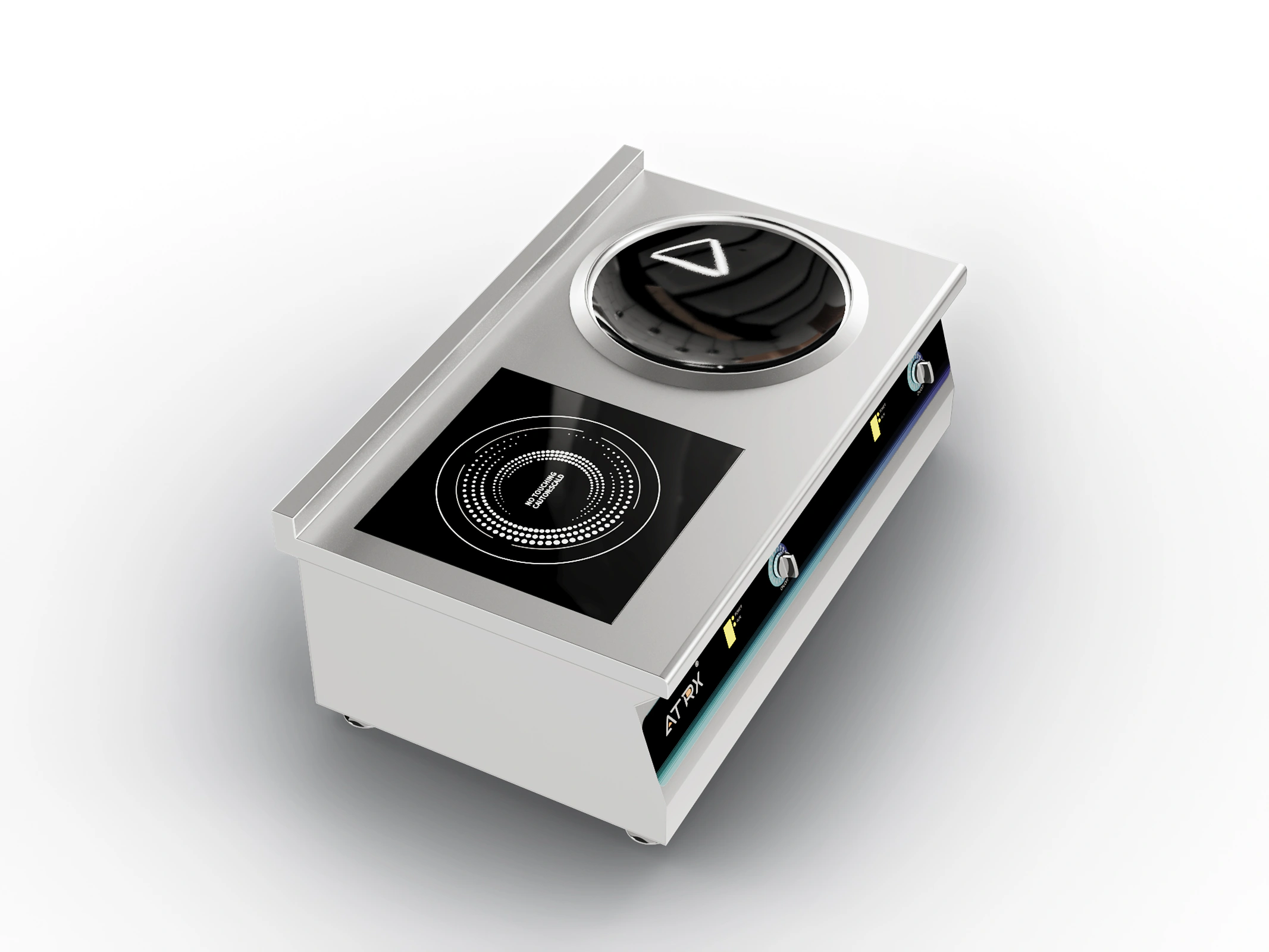
Swipe picture to view more product →
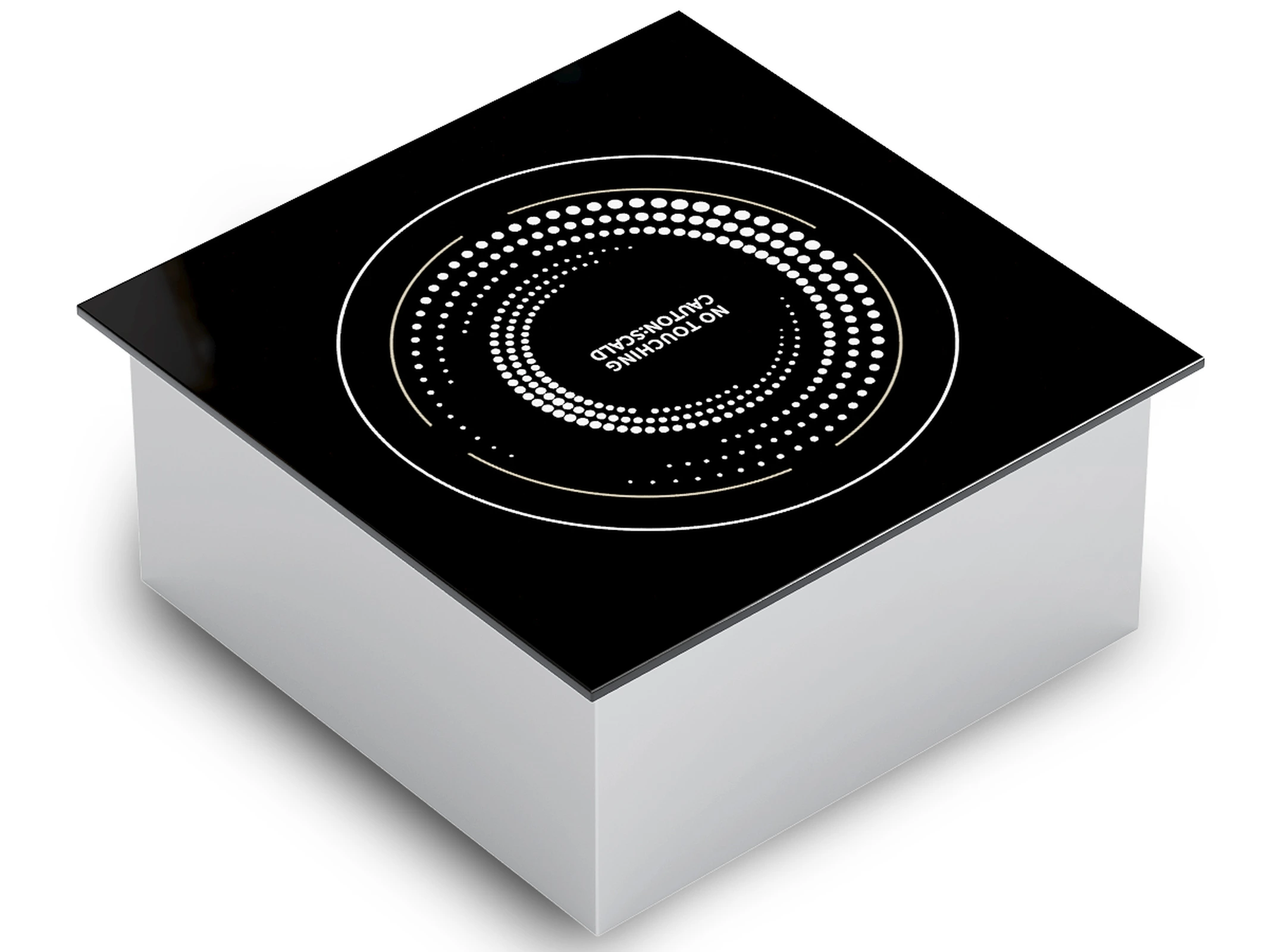
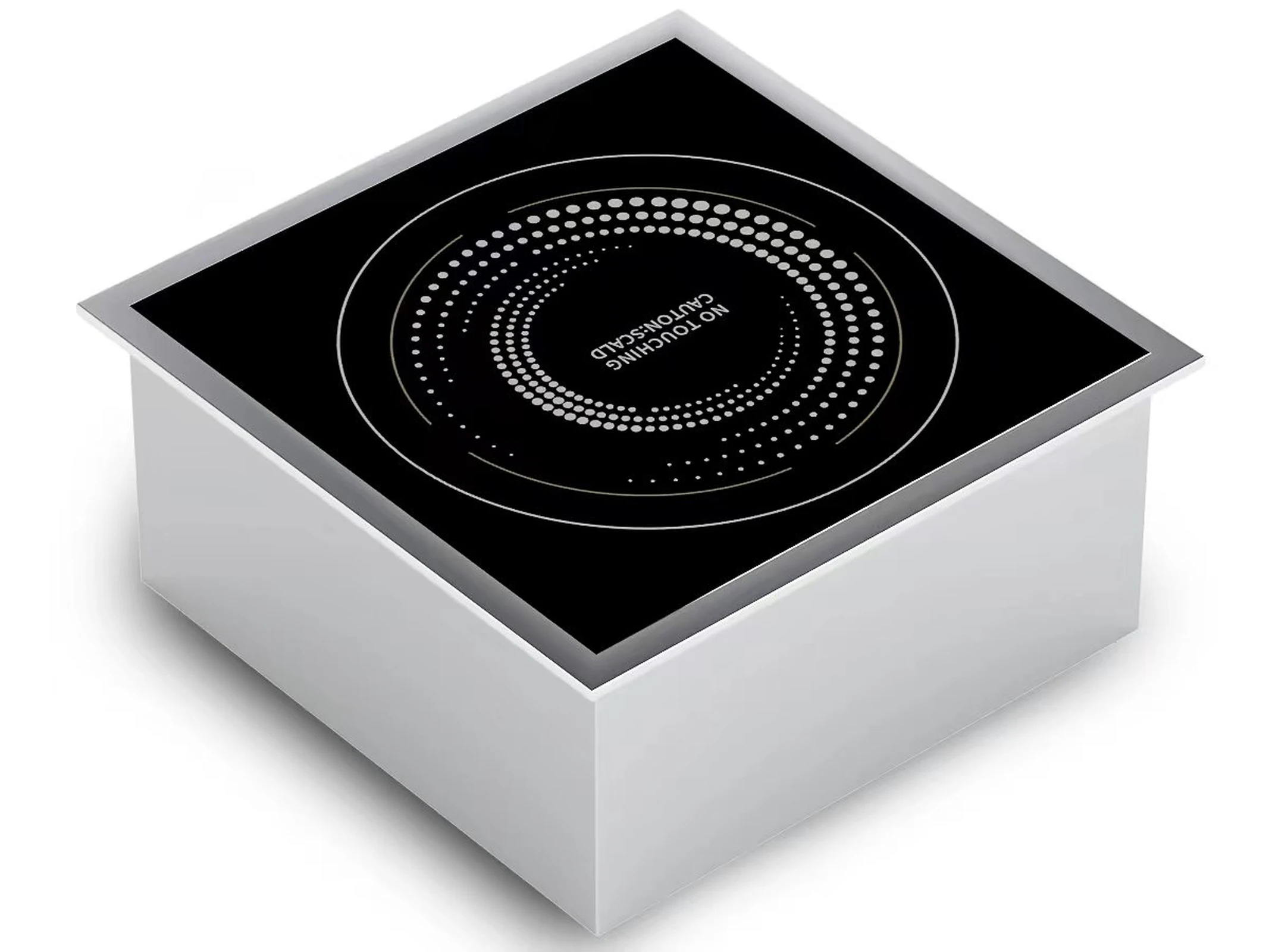
Built-In Commercial Induction Cooktop
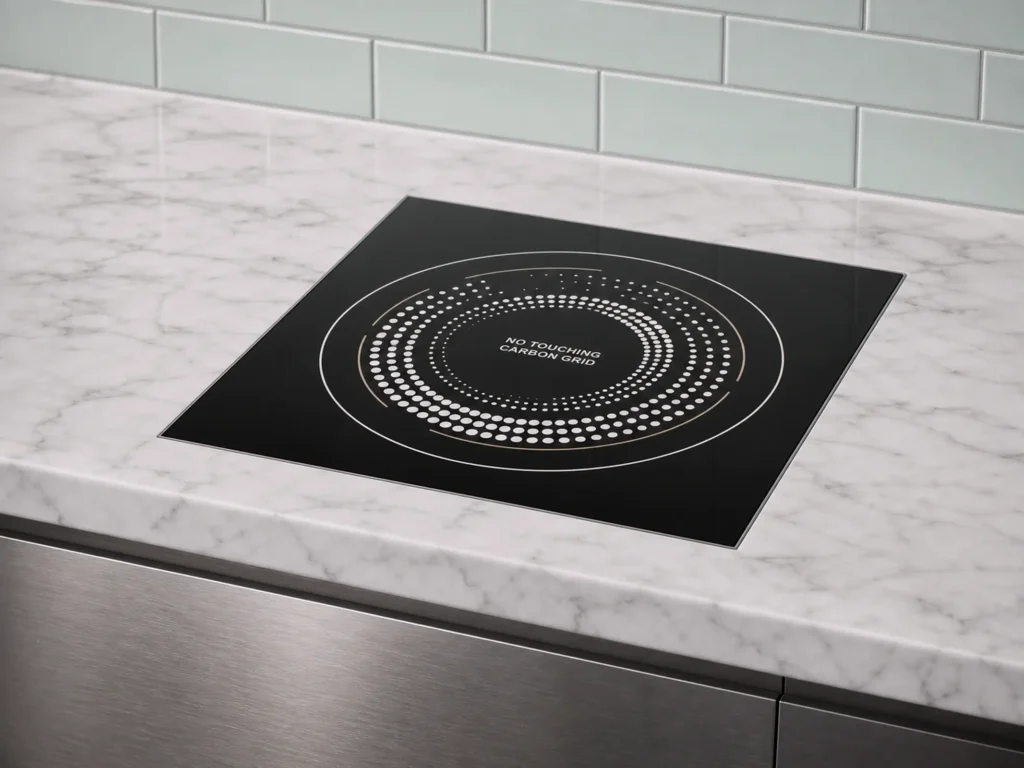
A built-in commercial induction cooktop is installed in a custom countertop or stainless-steel worktable, with the cooking surface sitting nearly flush with the surrounding counter. Once the unit is fixed in place, cookware is less likely to shift during pushing, pulling, or cleaning, and chefs can follow a consistent route for collecting ingredients, cooking, and plating.
This is particularly useful in restaurant back-of-house areas and hotel kitchens. The prep area may be on the left, the cooktop in the middle, and the plating area on the right. If the cooktop has to be repositioned every time, pan handles, seasonings, and serving plates quickly become disorganized. Built-in installation keeps the worktop continuous and also reduces the number of feet and gaps that must be cleaned around.
The tradeoff is that the initial installation must be precise. If the cutout is too small, the unit will not fit. If it is too large, the cooktop may be unstable. If there is no space underneath for cooling and servicing, future inspection will also be difficult. Before installation, verify the following:
| Item | What to Confirm |
|---|---|
| Cutout dimensions | Machine the opening according to the installation drawing for the selected model rather than estimating from its external dimensions |
| Electrical conditions | Voltage, number of phases, rated current, and wiring method |
| Cooling clearance | Whether sufficient air intake and exhaust space is available beneath, beside, and behind the unit |
| Service access | Whether panels can be removed and fans and components can be inspected or replaced |
| Countertop structure | Thickness, load capacity, and whether water can easily collect around the unit |
Built-in induction cooktops are suitable for kitchens with a long-term fixed layout. For temporary stalls or food counters whose layouts change frequently, the installation work may create an additional burden instead.
Swipe picture to view more product →
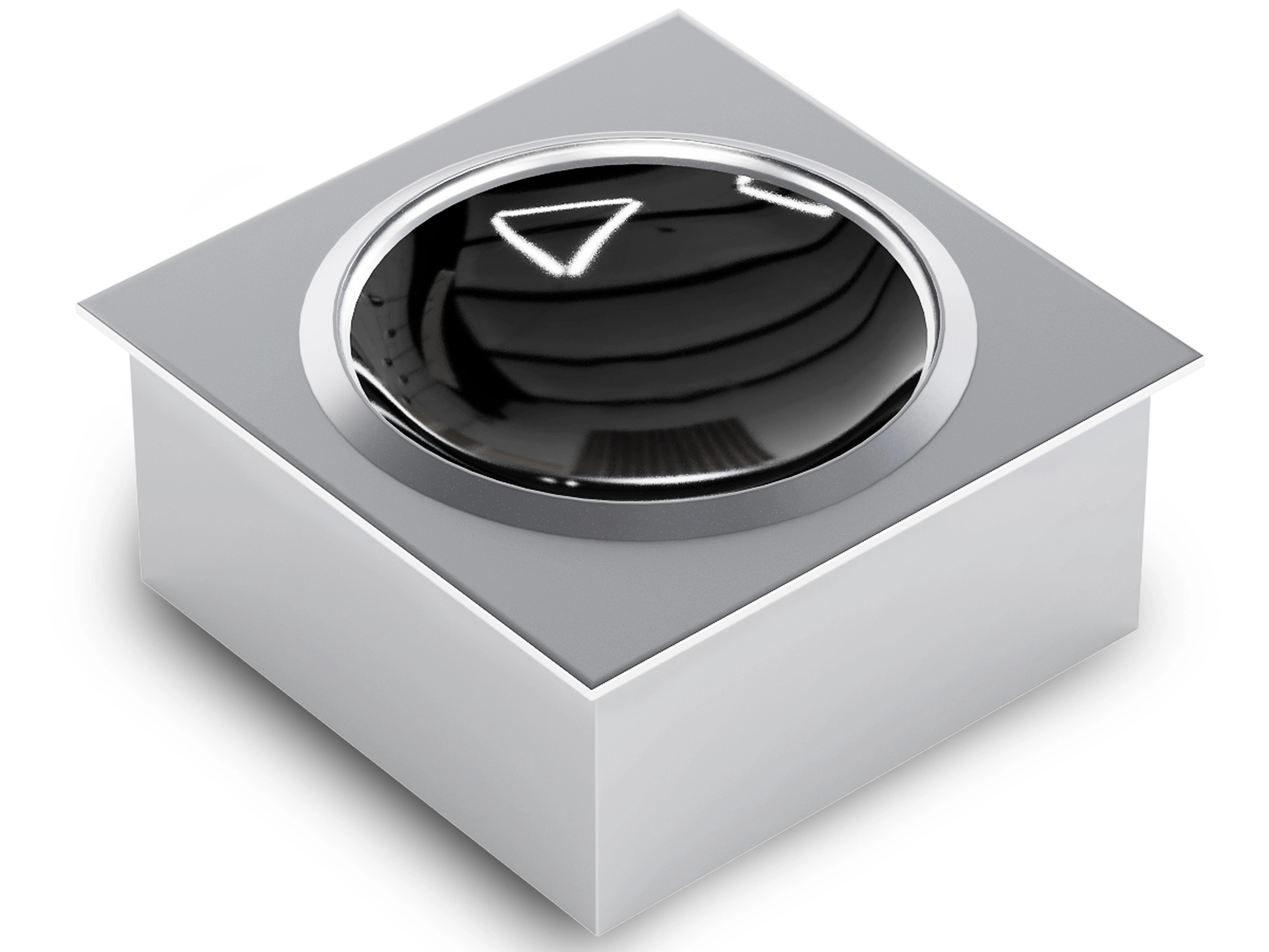
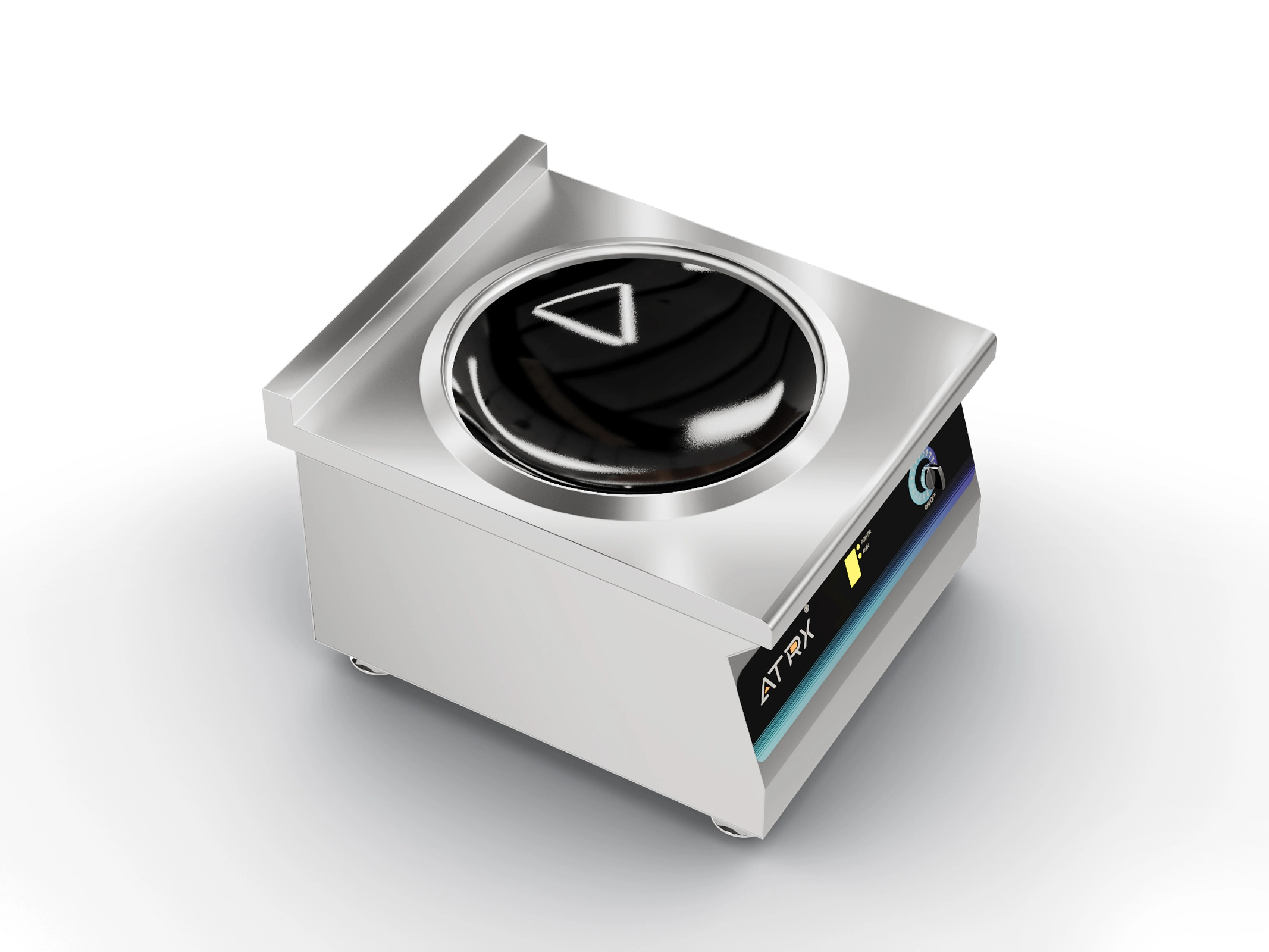
Countertop Concave Induction Wok Cooker
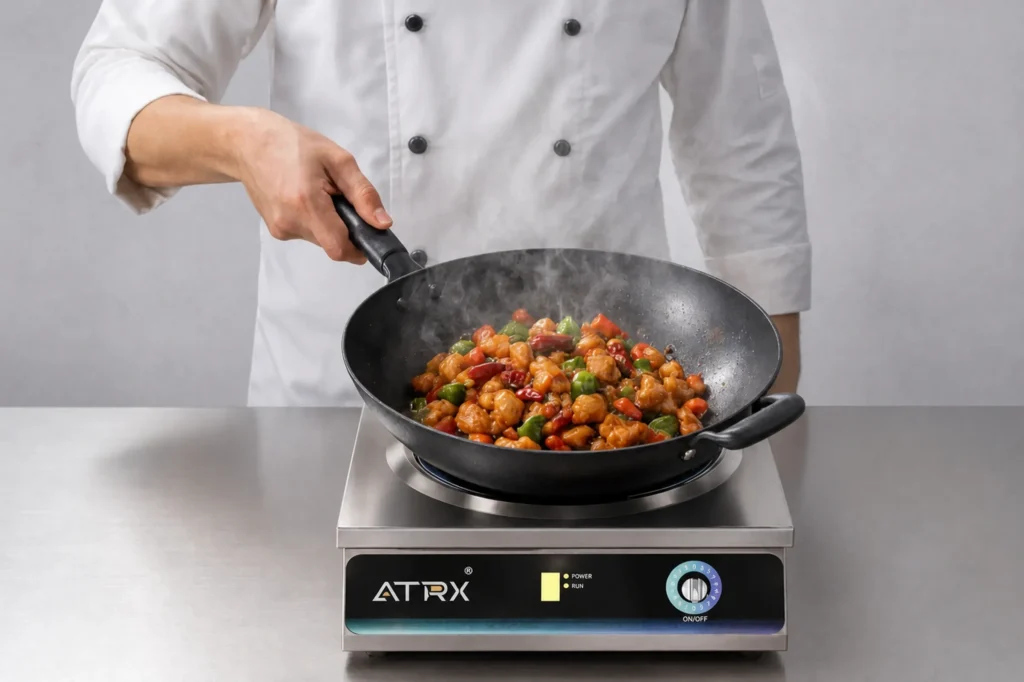
A countertop concave induction wok cooker is primarily designed for Chinese woks, round-bottomed pans, and cooking methods that involve frequent tossing. The concave bowl supports the wok, so the chef does not have to keep holding it with the other hand while pushing, rocking, or quickly tossing the food.
It is better suited to stir-frying, deep-frying, braising, and large-pot cooking. A wok must heat quickly after oil is added, and ingredients will then draw away some of that heat. When reducing a sauce, the power must also be lowered promptly. Only when the wok is stable and the coil is properly matched to the cookware can changes in power keep pace with these actions.
A concave wok cooker is not suitable for every piece of cookware. Before purchasing, test it with the actual cookware and confirm:
- Whether the diameter of the concave surface fits the bottom of the wok;
- Whether the cookware is flat-bottomed, round-bottomed, or made to a specified shape;
- Whether the cookware material can be detected by the induction unit;
- Whether the cooking surface has sufficient load capacity when a large pot is full of food.
If a kitchen mainly prepares Chinese, Thai, or Southeast Asian stir-fried dishes, a concave unit is usually easier to use than a flat cooktop. If the menu mainly involves searing in flat-bottomed pans, making soup, and heating food in small pots, the concave design offers less value.
Swipe picture to view more product →
Countertop Multiple-Zone Induction Hobs
Countertop multiple-zone induction hobs provide several independent heating zones in a single unit. They are suitable for kitchens that need to boil water, cook soup, heat sauces, and hold prepared ingredients at the same time during peak service.
Multiple-zone equipment addresses the problem of waiting for an available cooking station. As soon as one pot is removed, another can take its place. If several ingredients need to be held at temperature simultaneously, the chef does not have to move pots back and forth among several single-zone units. Hotel banquets, cafeterias, central kitchens, and chain restaurants with concentrated order volumes are generally better positioned to benefit from this type of equipment.
However, the number of cooking zones does not directly equal the number of zones that can operate at maximum power simultaneously. Total power distribution must also be considered. Four zones may share the unit’s overall power, so the output of each zone may be limited when several pots are in use at once. Before purchasing, confirm the power of each zone, the total unit power, the simultaneous-operation rules, and cooling performance under a full load.
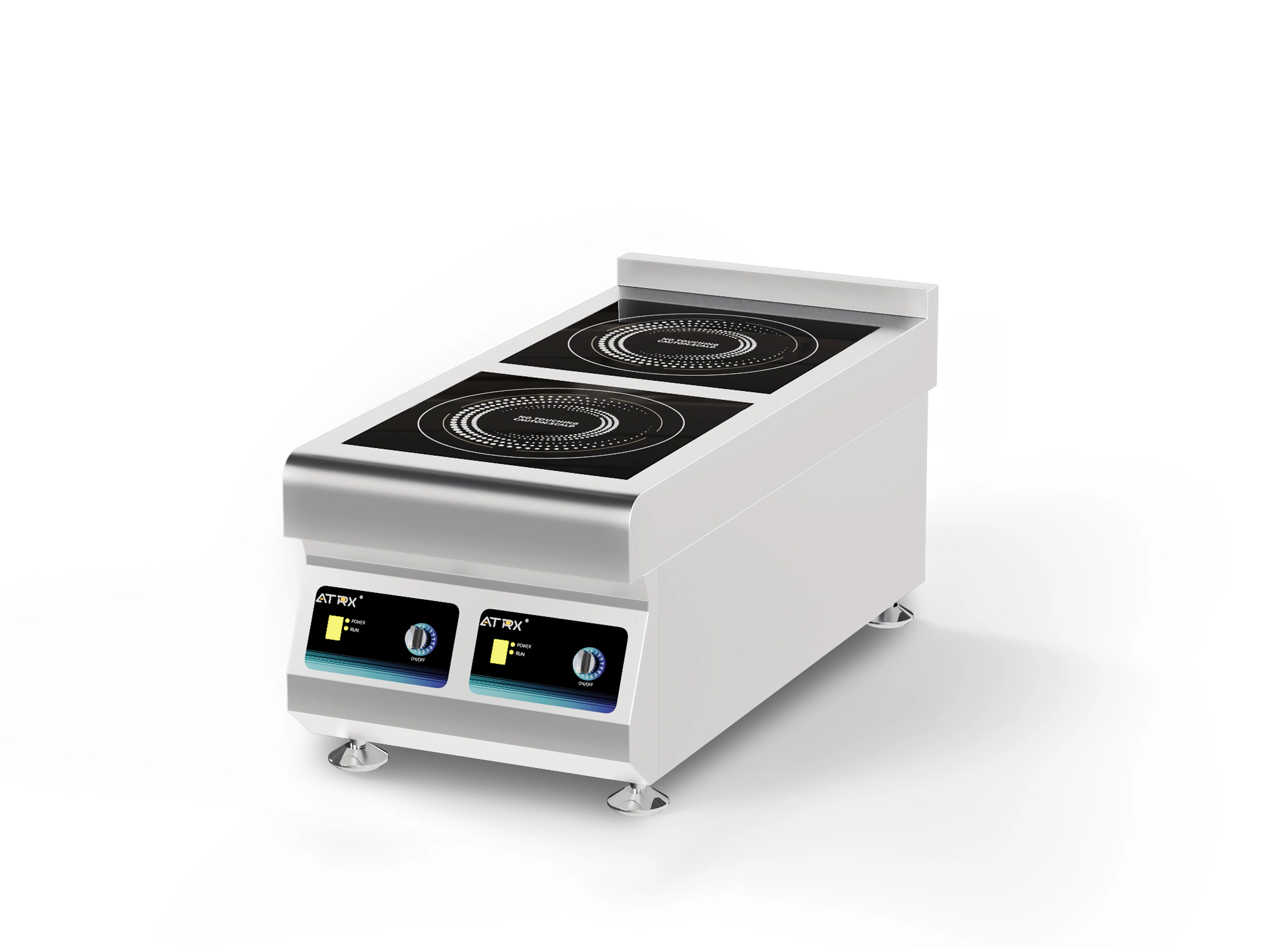
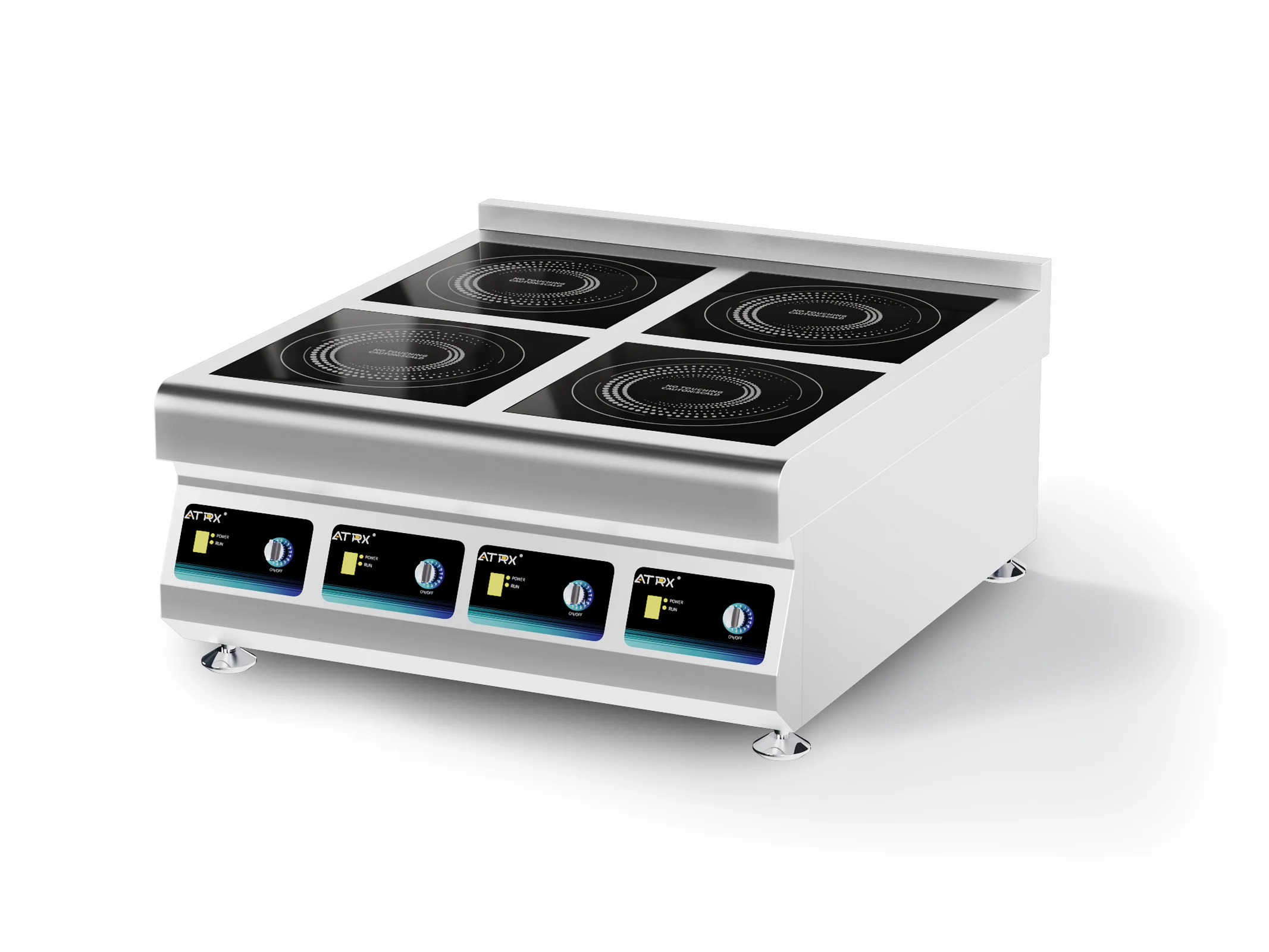
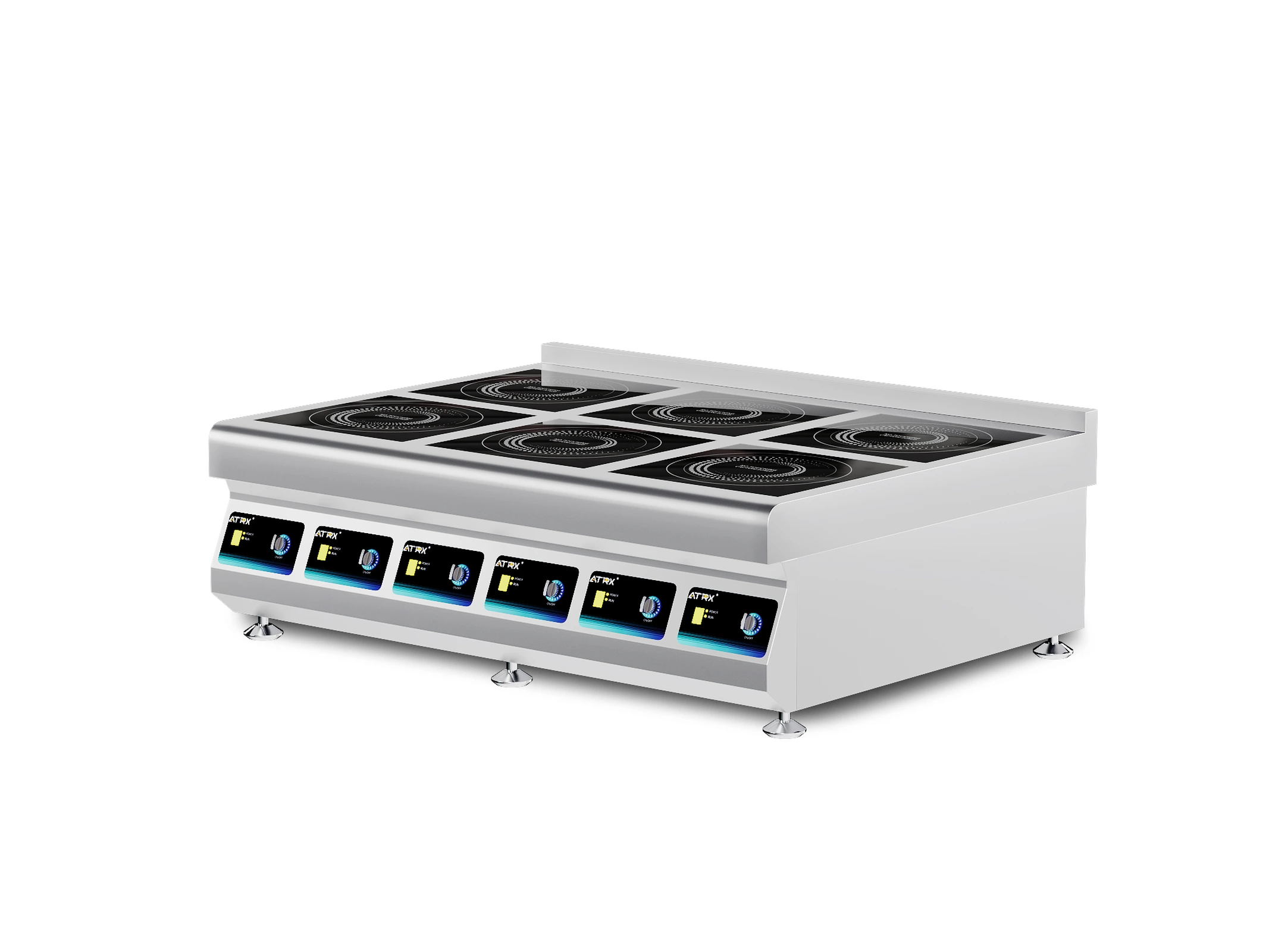
Swipe picture to view more product →
Why Can These Products Be Considered the Best Commercial Induction Cooktops and Recommended?
“Best” must be judged during the busiest part of the day. A unit that heats quickly immediately after startup only demonstrates good initial performance. What really matters is whether the power can keep up after a period of continuous operation, whether the cookware remains easy to handle, and whether chefs are willing to continue using the equipment.
They Can Meet the High-Frequency Demands of Commercial Kitchens
Commercial kitchens rarely prepare only one pot of food. During the lunch rush, a stockpot may be removed and immediately replaced, while a wok finishes reducing a sauce just as the frying pan beside it needs to preheat. The equipment repeatedly starts, heats up, steps down, and returns to high-power output. The strain comes from this continuous cycle, not from a single short heating session.
In a commercial induction cooktop designed for high-frequency use, the power module, coil, control board, housing, and cooling system must work together. Looking only at rated power can make it easy to overlook problems that appear during long operating periods. A unit may feel powerful at startup but begin reducing its output after running for some time. It may also trigger a protective shutdown during the busiest service period because of inadequate cooling.
For commercial projects, ATRX can confirm control, protection, and factory-testing requirements according to the selected model. For buyers, clearly defined test conditions provide more useful guidance than a general claim that a product is “suitable for restaurant use.” The cookware, capacity, continuous operating time, and power supply conditions should all be recorded so that subsequent batch inspections have a clear basis.
How Do These Commercial Induction Cooktops Compare Favorably with Other Products?
Every type of cooking equipment has its place. Residential induction cooktops are suitable for intermittent household use. Gas ranges offer the advantages of an open flame and broad cookware compatibility, while conventional electric ranges transfer heat through a heating element. The main advantages of commercial induction cooktops lie in continuous back-of-house operation, cleaning, and temperature control.
They Are Better Suited to Long Operating Hours Than Residential Induction Cooktops
Residential induction cooktops are generally designed for smaller cookware, shorter operating periods, and intermittent use. Commercial induction cooktops must withstand larger cookware, heavier loads, frequent startups, grease, moisture, and repeated wiping. A similar appearance does not mean the operating conditions are the same.
Placing residential equipment in a restaurant kitchen may not cause obvious problems at first. During periods of continuous service, however, heat continues to build up in the cooling system and power module, magnifying the effect of protective shutdowns or reduced output. Commercial models place greater emphasis on duty cycle, cooling, and protection configurations.
| Comparison Item | Residential Induction Cooktop | Commercial Induction Cooktop |
|---|---|---|
| Operating pattern | Intermittent cooking | Repeated startups and continuous operation |
| Cookware conditions | Mostly smaller cookware | Larger, heavier commercial cookware |
| Cooling requirements | Designed for a home environment | Designed for back-of-house temperatures and extended loads |
| Protection priorities | Basic protection | Protection against overheating, overcurrent, boil-dry operation, no-pan conditions, and more |
| After-sales support | More commonly replaced after failure | Requires spare parts, repairs, and volume support |
If a kitchen performs only a small amount of heating each day, residential equipment may be sufficient. If the equipment must continuously support peak service, a commercial model is the safer choice. The price difference between the two should be considered together with operating hours and the risk of downtime.
They Are Easier to Clean and Control Than Gas Ranges
The most difficult part of cleaning a gas range is often beneath the grates. After soup boils over, grease and residue remain on the grates, burner ports, and drip areas. At closing time, more than a single countertop surface must be disassembled and cleaned. The flat panel of an induction cooktop has none of these combustion components, so the area around the cookware is generally easier to wipe down.
Temperature control is also more direct. When making soup, the power can be lowered to maintain a gentle simmer. Once a sauce thickens, the setting can be reduced promptly. During pan-frying, there is less chance of the pan base overheating. Chefs do not have to keep watching the size of a flame and then rely on experience to estimate temperature changes.
There are still operating requirements. Allow the cooking surface to cool and disconnect the power before cleaning. Do not flush the control area directly with large amounts of water, and maintain the air inlet and filter according to the level of grease in the kitchen. A flat panel reduces hard-to-clean areas, but it does not replace a proper cleaning procedure.
They Reduce Open Flames and Heat Loss Compared with Conventional Electric Ranges
A conventional electric range first heats an element, which then transfers heat to the cookware. An induction cooktop uses an alternating magnetic field to heat compatible cookware directly, so less wasted heat is generally released into the surrounding air.
In a hot back-of-house kitchen, this is not an abstract energy-efficiency concept. There is already steam beside the wok, and chefs still need to lift cookware, plate food, and replenish ingredients. If the cooking equipment continuously releases heat into the surrounding area, the workstation becomes even more uncomfortable. The Washington Post’s report on professional chefs using induction cooktops notes that heat from gas kitchens can expose the chefs interviewed to working environments above 100 degrees Fahrenheit during hot weather. The report illustrates how heat load can affect chefs’ working experience, but the actual reduction in kitchen heat still depends on the equipment combination, menu, and ventilation conditions.
The absence of an open flame also reduces situations in which flames can contact grease and decreases combustion exhaust. However, deep-frying, high-heat stir-frying, and large amounts of steam still require extraction. A ventilation system remains necessary after switching to induction equipment.
Cookware compatibility must also be confirmed in advance. Pure aluminum or copper cookware, or cookware without a magnetic layer, may not be detected by the equipment or may heat unevenly. This is a significant limitation, especially when a kitchen already owns a full set of cookware, so compatibility testing should be completed before purchase.
What Makes Their Heating Speed, Power, and Continuous-Duty Performance Strong?
High Power Output Brings Cookware to Operating Temperature Faster
The value of high power is most apparent during peak service. If the previous pot of water takes even a few dozen seconds less to heat, the next batch of noodles, soup, or prepared ingredients can begin sooner. When a wok recovers its temperature quickly after ingredients are added, the chef can also move on to the next dish faster. The benefit is not merely saving a few seconds on one dish; it is reducing the number of pots waiting in line.
However, a power rating should not be considered on its own. If the contact area at the base of the cookware is too small, the coil’s energy cannot be used effectively. If the cookware is overfilled, heat-up time will naturally increase. If the on-site voltage or wiring is inadequate, the equipment may also be unable to maintain its rated output.
ATRX’s power and heating test video can be used as a reference example. When viewing it, pay attention to the cookware type, liquid volume, starting temperature, and time required to reach the target temperature. Buyers should then repeat the test with their own cookware and normal batch sizes so the results genuinely reflect their kitchens.
| Factor Affecting Heating Speed | What to Confirm On Site |
|---|---|
| Equipment power | Whether the figure is the rated power of one zone or the total power of the unit |
| Cookware | Whether the base is magnetic and the contact area is appropriate |
| Heating capacity | How many liters of liquid or kilograms of food are processed per batch |
| Power supply | Voltage, number of phases, circuit breaker, and wiring method |
| Continuous operation | Whether power drops after the unit has been operating for a period of time |
Precise Temperature Control Makes the Cooking Process More Consistent
When temperature control is stable, chefs do not have to keep adjusting a knob to correct the heat. During pan-frying, the base of the pan is less likely to overheat suddenly. When making soup, the power can maintain a steady gentle simmer. When reducing a sauce, the output can be lowered more promptly. With fewer corrective actions, the finished food is easier to keep consistent.
Power settings and the actual temperature inside the cookware are not the same thing. Cookware material, ingredient quantity, and whether a lid is used all affect the final temperature. When evaluating temperature-control capability, consider the control program, temperature feedback, coil response, and tests with actual cookware together. The number of settings on the panel only indicates that more operating options are available.
ATRX’s temperature-control test video can help buyers observe how the equipment responds after switching from a high setting to a low one. A more reliable approach is to run the same test three times with the intended dish: use the same cookware, quantity, and setting, then compare the heating time and temperature changes.
Which Applications Best Match Each Type of Commercial Induction Cooktop?
Countertop Induction Cooktops Suit Food Trucks, Fast-Food Restaurants, and Small Kitchens
Worktop space is extremely limited in food trucks and small food stalls. If cookware is placed too far away, the chef must turn around for every order. If the cooktop is too large, it takes away space needed for cutting, preparation, and plating. A countertop flat induction cooktop is suitable for cooking noodles, boiling water, pan-frying, heating sauces, and preparing small batches, and its position can be adjusted relatively easily.
It is particularly suitable when:
- The business needs to adjust cooking stations according to peak demand;
- The site is not suitable for complex cutouts and fixed installation;
- The menu mainly involves single-pot cooking, small batches, and rapid heating;
- The equipment needs to move between the preparation area and the service area.
If the kitchen uses many round-bottomed woks or requires continuous wok tossing, a countertop flat cooktop may not be suitable. It offers broader compatibility, but it is less stable for high-heat Chinese stir-frying than a concave induction wok cooker.
Built-In Induction Cooktops Suit Restaurant Back-of-House Areas and Custom Kitchens
Restaurant back-of-house areas, hotel kitchens, and custom kitchens generally have predetermined counter heights, cooking stations, and staff workflows. A built-in induction cooktop is fixed into the worktable, so cookware is less likely to shift during pushing, pulling, and wiping. Chefs can follow a consistent route for collecting ingredients, cooking, and plating.
It is suitable for projects where cooking stations will remain fixed for the long term, a consistent operating height is required, or the overall worktop layout is important. Open kitchens also often use this design because the cooking surface remains continuous with the counter and there are no protruding feet to clean around.
The drawbacks of built-in equipment are equally clear: the cutout, electrical supply, cooling clearance, and service access must all be confirmed before installation. Discovering that the equipment dimensions do not fit after the countertop has already been fabricated usually creates a more frustrating rework cost than the original price difference between units.
Induction Wok Cookers Suit Stir-Frying, Pan-Frying, and High-Heat Wok Cooking
Induction wok cookers are designed for fast wok movement and short, high-temperature cooking. The wok must heat quickly after oil is added, recover its temperature after ingredients go in, and then allow the heat to be reduced promptly when a sauce is being reduced. The concave bowl makes the wok more stable, while high power helps it recover its temperature, but both must be matched to the cookware.
They are suitable for Chinese, Thai, and Southeast Asian restaurants, as well as back-of-house kitchens that need to deep-fry, braise, or rapidly cook large batches in a wok. When selecting a unit, confirm the following together:
| Key Factor | Effect on Wok Cooking |
|---|---|
| Concave surface dimensions | Determine whether the cookware is stable and whether the heating area is properly matched |
| Cookware material | Affects induction detection and heat transfer |
| Power response | Affects preheating and temperature recovery after ingredients are added |
| Temperature-control method | Affects the transition between high-heat stir-frying and low-heat reduction |
| Load-bearing structure | Affects the safety of large or heavy cookware and wok-tossing motions |
If the kitchen mainly prepares stir-fried dishes, use the actual wok to test preheating, adding ingredients, tossing, and reducing a sauce. Whether the cookware remains stable and the power responds naturally during the test is more useful than simply looking at the kilowatt rating.
Multiple-Zone Induction Cooktops Suit Preparing Several Dishes at Once During Peak Service
Commercial induction hobs with multiple zones are suitable for kitchens where orders arrive in concentrated waves and several pots often operate simultaneously. One zone can boil water, another can cook soup, a third can handle a sauce, and a fourth can hold prepared ingredients at temperature. Every avoided pot change during peak service removes another point of delay from the orders that follow.
Hotel banquets, cafeterias, central kitchens, and chain restaurants are better positioned to benefit from multiple-zone equipment. They use more cookware, their tasks are concentrated, and several cooking stations often need to operate at the same time.
When selecting equipment, consider the number of zones together with the total power. Four zones may not all be able to maintain maximum power simultaneously, and inadequate on-site electrical capacity may cause automatic current limiting. Before purchasing, confirm:
- The rated power of each zone;
- The total unit power and simultaneous-operation rules;
- Whether independent temperature control and timers are supported;
- Whether different cookware sizes affect one another;
- Cooling and protection performance when all zones are operating under full load.
If a kitchen only occasionally uses two pots at once, a combination of single-zone units may offer greater flexibility. If four tasks frequently run in parallel during peak periods, multiple-zone equipment becomes more worthwhile.
Who Is Best Suited to Choose These Commercial Induction Cooktops?
High-Use Kitchens Such as Restaurants, Hotels, and Cafeterias
Restaurants, hotels, cafeterias, central kitchens, and institutional foodservice projects generally use cooking equipment repeatedly every day and follow a relatively consistent service rhythm. If a cooktop reduces power during peak service, the impact extends beyond a single dish: every piece of cookware waiting behind it is delayed.
These kitchens should select equipment according to the task. Flat cooktops are suitable for general pan-frying, boiling, and food preparation. Concave wok cookers are suitable for woks. Built-in equipment is suitable for fixed production lines, while multiple-zone induction cooktops suit parallel food preparation. The menu, cookware, site, and electrical supply determine which option is truly the “best” for a particular kitchen.
Operators Who Need to Reduce Open Flames and Kitchen Heat
Open kitchens, shopping-mall food courts, food trucks, hotel banquet areas, and back-of-house kitchens in hot climates often place greater importance on open flames and ambient heat. There is steam beside the wok, the extraction fan runs continuously, and chefs still need to lift cookware and plate food. If the cooking equipment itself continuously releases heat into the air, the work area becomes even more uncomfortable.
Induction heating directs more heat into compatible cookware while also reducing open flames and combustion exhaust. Canary Media’s report on commercial kitchen electrification describes a chef’s experience moving from a traditional gas kitchen to an all-electric one. The report notes that heat, humidity, and steam can affect the back-of-house working environment. This example helps explain why some operators are interested in induction equipment, but the actual reduction in ventilation or air-conditioning load must still be determined through on-site measurements.
Induction cooktops do not eliminate all heat. Deep-frying, high-heat stir-frying, and large amounts of steam still require extraction, and adequate cooling clearance must remain around the equipment.
Kitchen Managers Who Prioritize Cleaning Efficiency and Operational Safety
A flat cooking surface reduces the cleaning burden created by grates, burner ports, and corners. At the end of each day, cleaning staff do not have to repeatedly remove and wash combustion components, and spilled soup can be wiped away more promptly. No-pan detection, timers, control locks, overheat protection, and boil-dry protection can also reduce some common operating errors.
These functions should be incorporated into opening and closing procedures:
- At the end of each shift, clean the cooking surface, control area, and air inlet as required;
- Before each shift, check the cookware’s magnetic compatibility, the condition of the panel, and the cooling channels;
- During employee training, explain how to respond to alarms, abnormal shutdowns, and hot cookware.
Protection functions cannot replace training and maintenance. When purchasing, request the feature list, operating instructions, and maintenance requirements for the selected model. Confirm which protections the equipment actually provides rather than assuming every model has the same configuration.
Foodservice Operators Who Need Flexible Cooking Equipment Configurations
Menu changes, store expansion, and site adjustments can all alter a kitchen’s equipment requirements. Countertop units are suitable for work areas where equipment needs to move. Multiple-zone cooktops suit parallel tasks on limited counter space. Built-in cooktops are appropriate for long-term fixed production lines, while concave wok cookers serve specific cookware and wok-cooking motions.
Begin by filtering options according to how the kitchen is likely to change:
- If equipment moves frequently, prioritize a countertop design;
- If several dishes must be handled at once during peak periods, consider a multiple-zone configuration;
- If the cooking station will remain fixed and be integrated into the overall project, consider built-in equipment;
- If the menu centers on wok cooking and high-heat stir-frying, prioritize testing a concave induction wok cooker.
The equipment does not have to become an “all-purpose cooktop” in a single step. For distributors, restaurant chains, and brand buyers, it is more efficient to confirm the intended dishes, cookware dimensions, store electrical standards, and future expansion plans before determining the equipment combination. This also makes it easier to replicate the setup in other locations later.
Choosing the Best Commercial Induction Cooktop ultimately comes back to a few actions in the kitchen: whether the cookware sits securely, whether the power responds quickly enough, whether the equipment can withstand a peak service period, and whether cleaning and maintenance are easy to carry out. Countertop, built-in, concave wok, and multiple-zone induction cooktops each have their place. Compile the intended dishes, cookware, operating hours, electrical conditions, installation method, and after-sales requirements into a specification sheet, then ask suppliers to test and quote under the same conditions. This approach usually makes it easier to select the right equipment than relying on promotional pages alone.
About the author
ATRX Team| 18 Years Commercial
Induction Cooker Manufacturer in China
Induction Cooker Manufacturer in China
Related Posts
Best Commercial Induction Cooktop: Types &Buying Guide
10/09/2026
Commercial Double Hob Induction Cooker | Types, Power, and Installation Guide
10/05/2026
Commercial Induction Cooker 3500W: Model Selection, Commercial Power and Installation
09/29/2026
How to Install a Built-In Induction Cooktop: A Step-by-Step Guide
09/17/2026
How to Clean a Commercial Deep Fryer: A Step-by-Step Guide
09/13/2026
High Quality Commercial Induction Cooker Manufacturer
09/09/2026
Automatic Wok Machine: Types, Specifications, Applications and Buying Guide
08/18/2026
Commercial Induction Range: How to Choose the Right Size, Power, and Configuration for a Commercial Kitchen
08/15/2026
What Is a Commercial Induction Cooker and How Does It Work
08/13/2026
Commercial Induction Range for Hotel Kitchens: How to Choose the Right Model
08/11/2026