
- Can You Cook Chinese Food on an Induction Stove?
- How Induction Heating Affects Chinese Wok Cooking
- What Type of Wok Is Best for an Induction Stove?
- Induction vs. Gas for Chinese Cooking
- Choosing the Right Induction Setup for Chinese Cooking
- How to Use an Induction Wok for Better Chinese Cooking Results
- What Are the Limitations of Induction Cooking for Chinese Food?
- Frequently Asked Questions
Can You Cook Chinese Food on an Induction Stove?
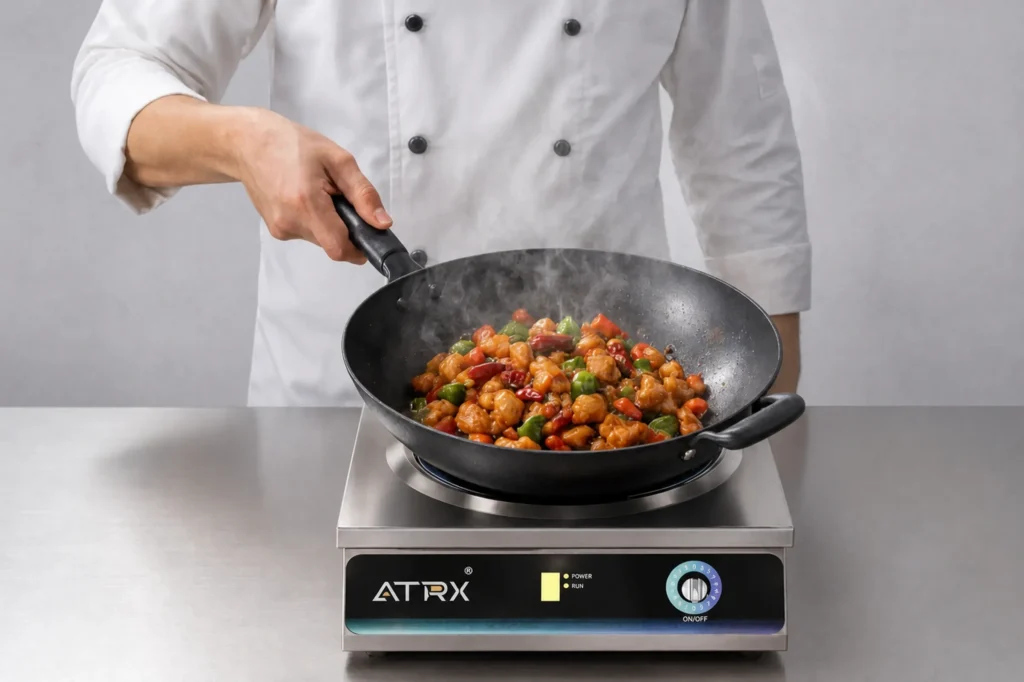
Yes. An induction stove can support stir-frying, steaming, boiling, blanching, shallow-frying, deep-frying, and simmering when the cookware is compatible and the cooker can deliver enough heat for the intended load.
For home cooking, the practical combination is usually a flat-bottom wok made from carbon steel, cast iron, or magnetic stainless steel. For a commercial Chinese kitchen, a dedicated concave induction wok range may be more suitable because it is designed around a curved heating zone and a compatible round-bottom or curved-base wok.
Which Chinese cooking methods work well on induction?
Induction works particularly well when the recipe benefits from controlled heat and quick adjustment. Stir-fried vegetables, meat, noodles, and rice can be cooked effectively in manageable batches. Steaming and blanching benefit from stable heat during longer cooking cycles, while soups and sauces can be held at a controlled simmer.
Frying is also possible, but the operator must respect the wok or pot capacity, oil level, pan stability, and the instructions for the exact model. The cooking method should always be tested with the intended cookware and realistic ingredients before a kitchen standard is approved.
Can induction produce wok hei?
Induction can produce strong browning and a roasted flavor, but the result may feel different from cooking directly over a gas flame. Wok hei depends on heat recovery after ingredients are added, moisture control, pan movement, cooking volume, and how heat reaches the sides of the wok.
A flat induction hob mainly heats the part of the wok that contacts the cooking surface. A purpose-built concave induction wok cooker uses a curved coil and matching wok profile to distribute energy around more of the lower pan. That arrangement is better suited to commercial wok cooking, although the final result still depends on the cooker, the recipe, the batch size, and the cook’s technique.
How Induction Heating Affects Chinese Wok Cooking
Induction creates an electromagnetic field that heats compatible cookware directly. The pan becomes the heat source for the food, which allows the operator to change the cooking temperature without waiting for a gas flame or a conventional electric element to respond. The U.S. Department of Energy technical material on induction cooking explains the operating principle in greater detail.
Why wok material and magnetic contact matter
An induction cooker needs a ferromagnetic surface that it can detect and heat. A magnet that holds firmly to the outside of the wok base is a useful first check, but it is not a substitute for the cooker’s compatibility requirements. Aluminum and copper woks generally need a magnetic base, and stainless steel may or may not be magnetic depending on its composition.
For procurement, request the cookware specification for the exact cooker. Confirm the base material, magnetic response, diameter, weight, and approved pan shape together. A wok that passes a simple magnet test can still perform poorly if its contact area or weight falls outside the equipment design.
Why contact area affects heat distribution
Induction transfers energy through the area where the cooker and cookware are properly coupled. If a flat-bottom wok is too small, too large, or placed off-center, the heating pattern may become uneven. If the pan is lifted repeatedly during tossing, the cooker may reduce output or pause pan detection.
For a concave wok range, the coil, ceramic bowl, wok profile, and control system are designed as one system. This is why the rated wattage should be reviewed together with the contact diameter and the expected cooking movement. A higher number on a specification sheet cannot correct a mismatch between the wok and the heating geometry.
Why rated power does not tell the whole story
Rated power is important, but cooking performance also depends on the starting temperature of the ingredients, the amount added at one time, the weight of the wok, the available electrical supply, and how quickly the cooker recovers after a cold load enters the pan.
For small home portions, a lower-power portable hob may be adequate. A restaurant serving large portions during a peak period needs a different assessment: how many wok positions will operate simultaneously, what batch size is expected, and whether the site can support the total connected load. ATRX’s induction wok range power-level guide provides a practical starting point for that discussion, while the final selection should be confirmed through a real cooking test.
What Type of Wok Is Best for an Induction Stove?
The best wok is the one that matches the heating surface and the cooker’s approved operating range. There is no single wok shape that works equally well on every induction product.
Flat-bottom woks for standard induction hobs
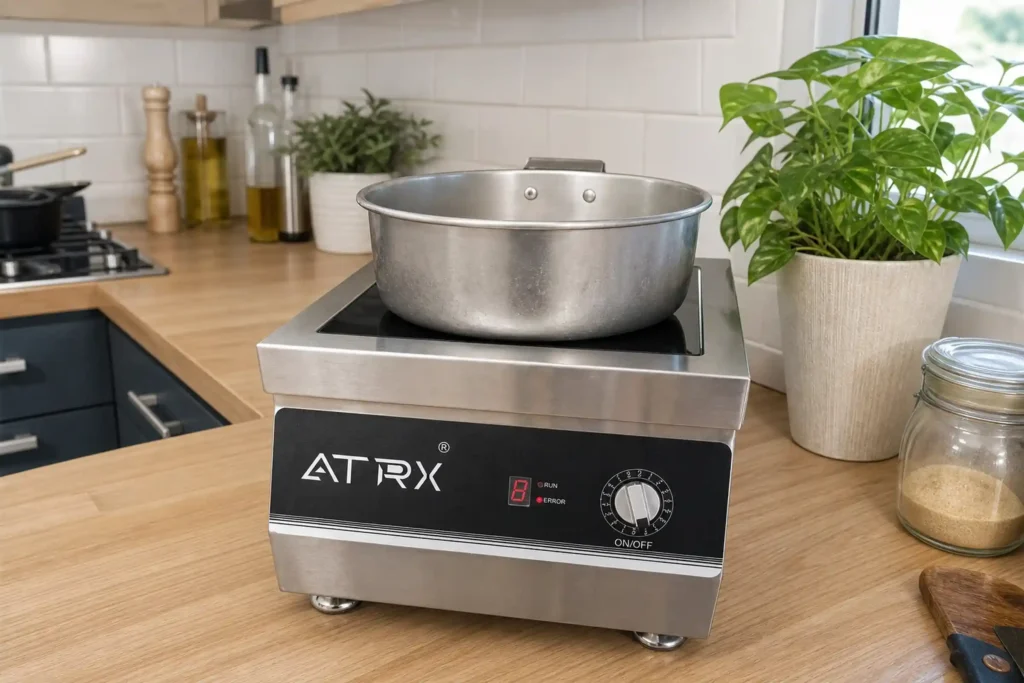
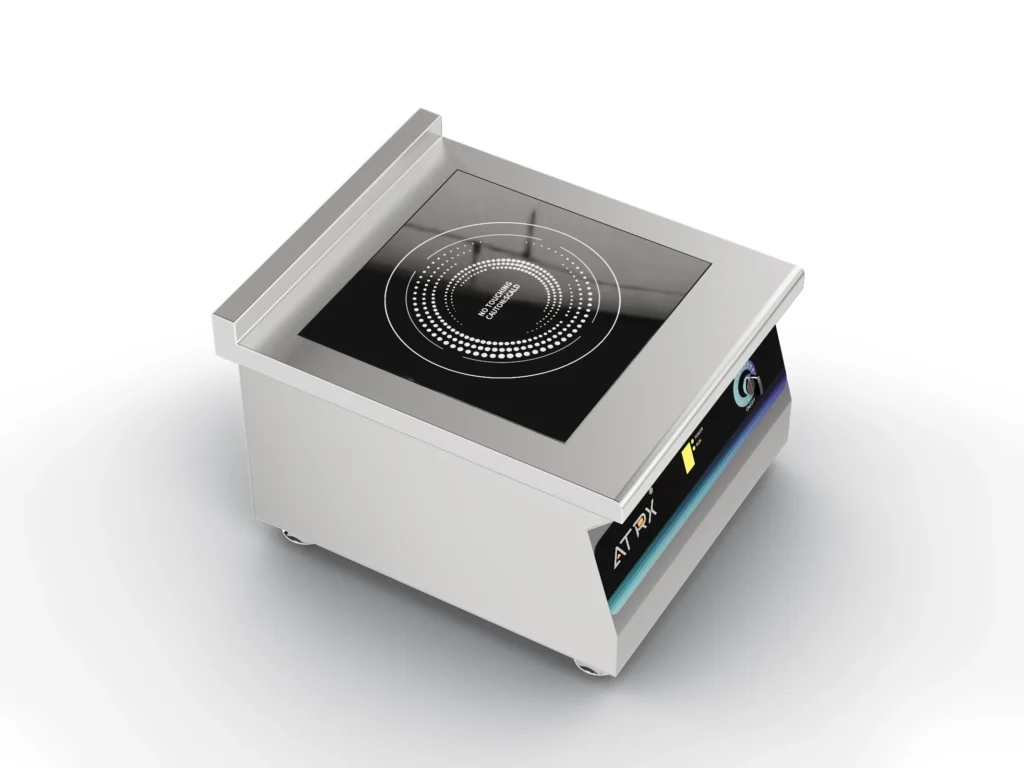
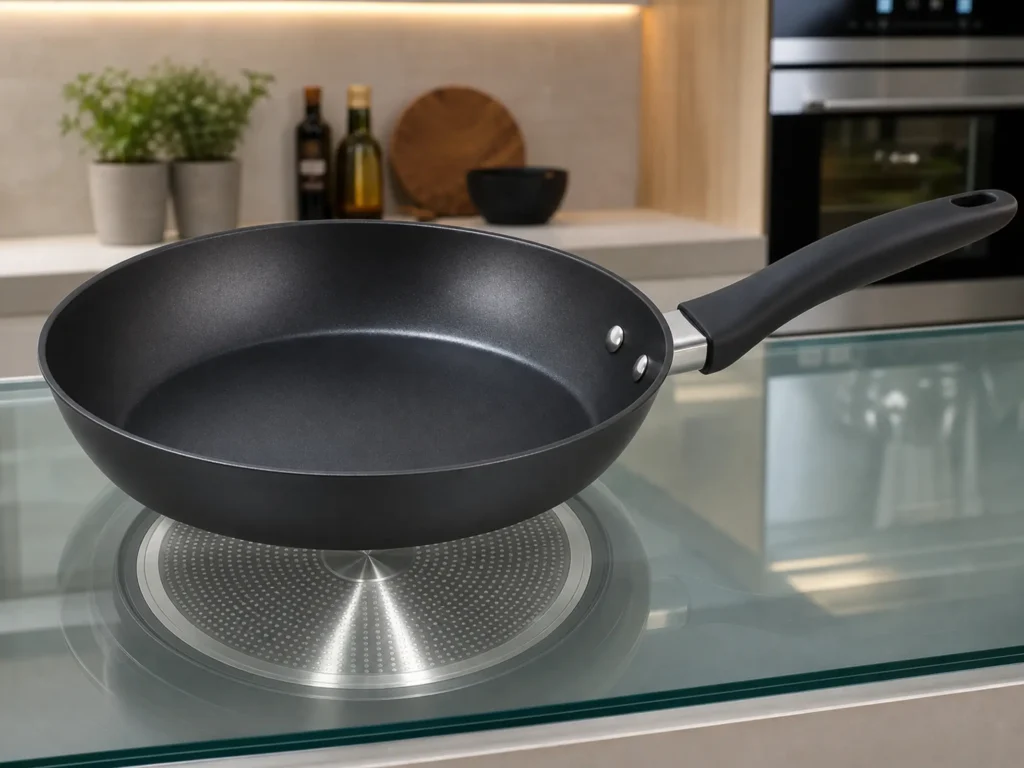
A flat-bottom wok is the most practical choice for a standard flat induction hob. Its base creates the contact area needed for the magnetic field, and it remains more stable on a glass cooking surface than a traditional round-bottom wok.
Choose a base that sits fully and steadily on the hob without rocking. The base should be large enough for the heating zone but not so large that the outer area receives little useful heat. Carbon steel offers a balance between responsiveness and manageable weight, while cast iron can retain heat but may be heavier for frequent tossing.
Round-bottom woks for concave induction wok ranges
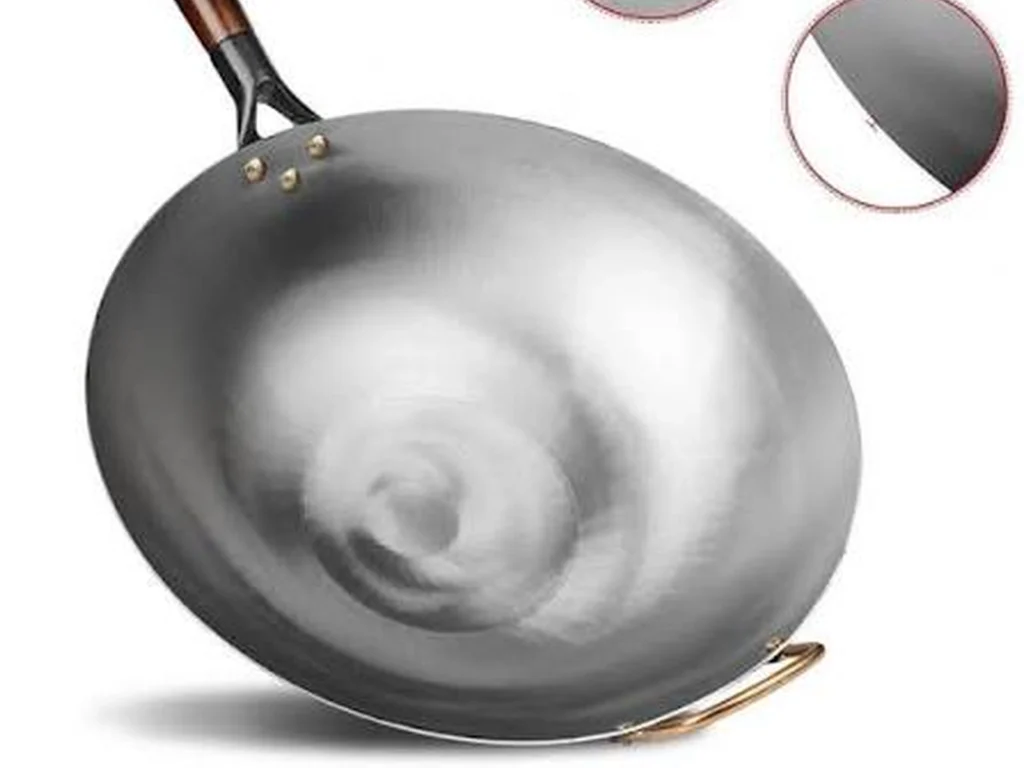
A round-bottom wok is generally unsuitable for a normal flat induction hob because only a small part of its curve may contact the surface. The pan can become unstable, and the cooker may not detect it consistently.
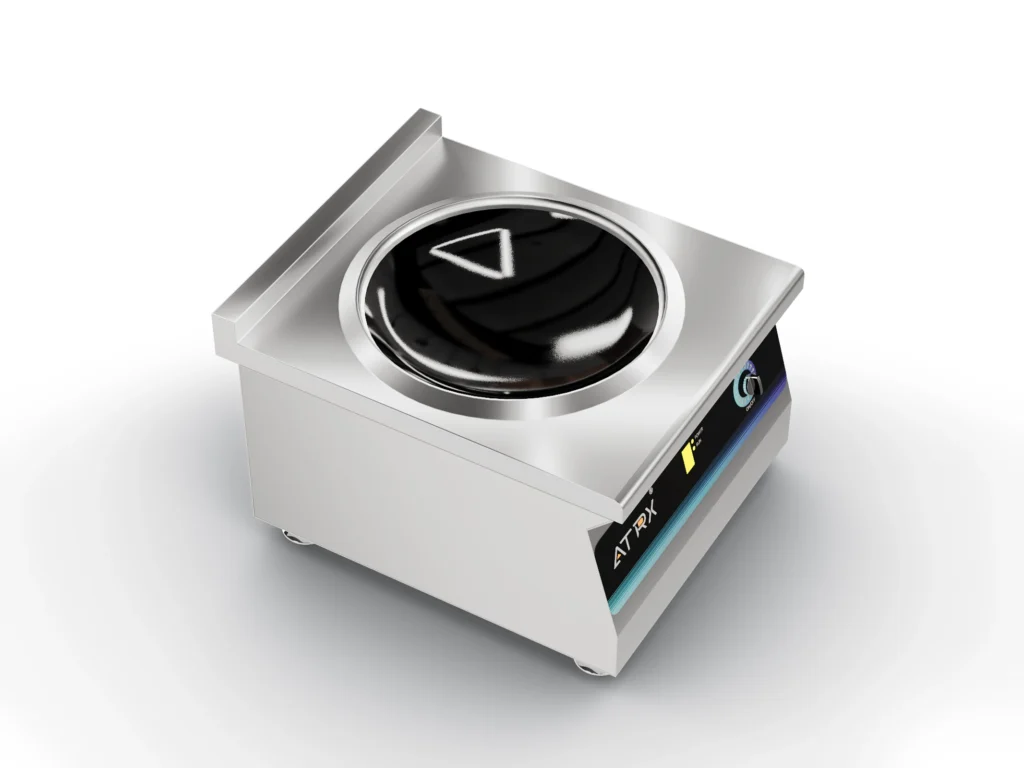
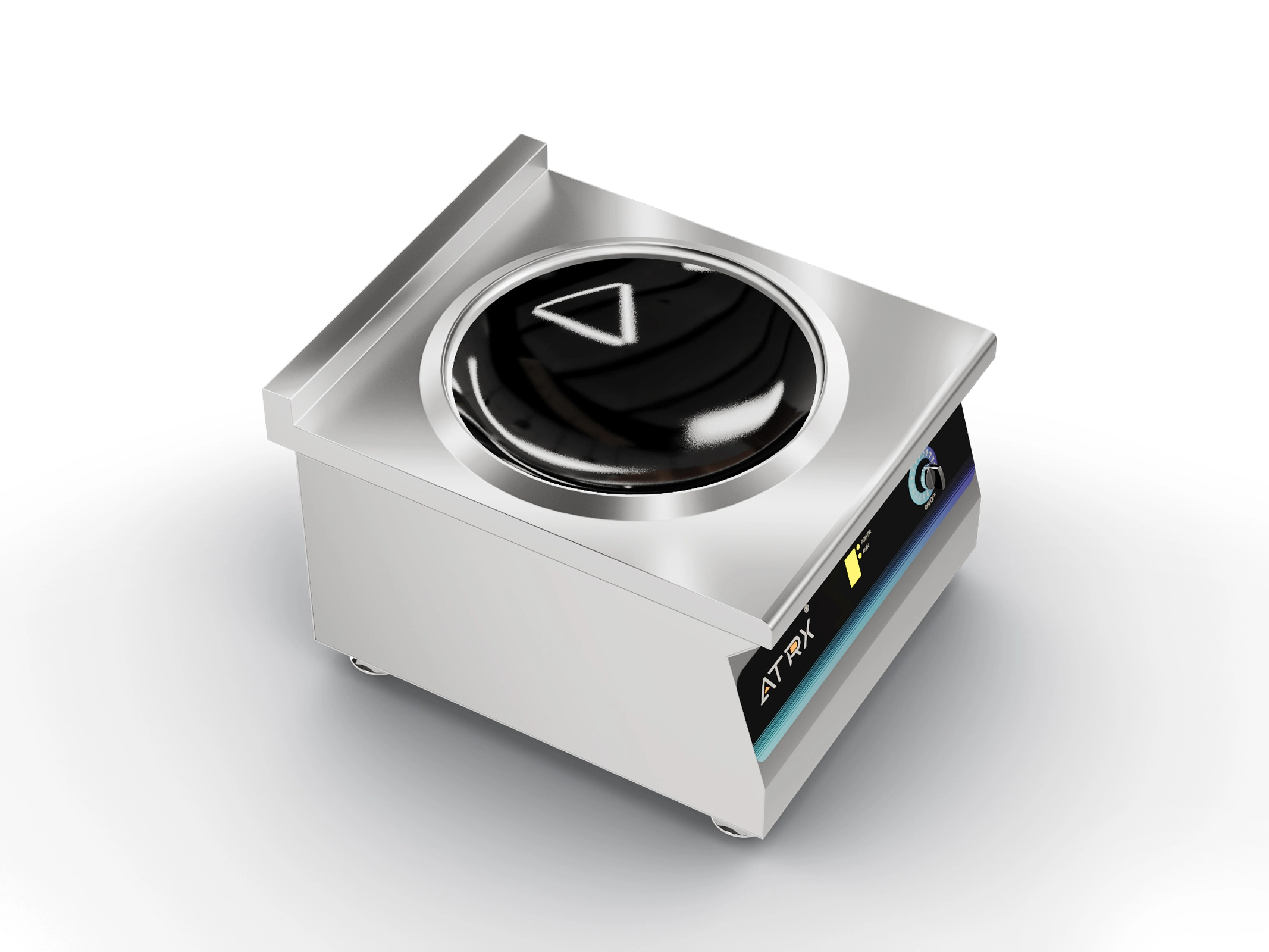
Commercial concave induction wok ranges are designed differently. Their recessed or curved cooking area supports a specified round-bottom or curved-base wok and places the heating field around the lower part of the pan. The wok diameter, curvature, weight, and support ring must match the range. Always confirm these dimensions before ordering the cooker or the cookware.
Which wok materials are induction-compatible?
Carbon steel, cast iron, and magnetic stainless steel are common induction-compatible choices. Compatibility depends on the base, not simply on the name of the material. A stainless-steel wok may be suitable if the grade or base is magnetic; an aluminum or copper wok usually requires an added magnetic layer.
Material also affects the cooking experience. Carbon steel heats and cools relatively quickly and is easy to move, but it needs seasoning and careful cleaning. Cast iron holds heat well but adds weight. Stainless steel is easy to maintain, although its heating behavior and magnetic properties depend on the construction. Match the material to the recipe, operator technique, cleaning routine, and cooker specification.
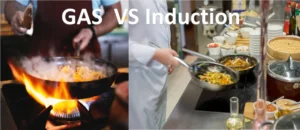
Induction vs. Gas for Chinese Cooking
Both induction and gas can support Chinese cooking. The stronger choice depends on the menu, kitchen infrastructure, operator preference, safety requirements, and the type of wok flavor and movement the kitchen expects.
Where induction has an advantage
Induction offers direct control, a comparatively clean cooking surface, and no open flame at the pan. Heat is delivered through compatible cookware, so less energy is released into the surrounding room than with a flame-based system. The smooth surface can also simplify daily wipe-downs when spills are handled according to the manufacturer’s cleaning instructions.
These characteristics can be useful in kitchens where heat management, surface cleaning, and fire-risk control are important. They do not remove the need for ventilation, electrical planning, safe oil handling, or operator training.
Where gas still has a practical advantage
Gas provides visible flame contact and supports the traditional movement of a wok above and around the burner. Many cooks are familiar with its response, and a round-bottom wok can sit naturally on a suitable ring. Flame reaching the sides of the wok can also contribute to the cooking style and flavor profile expected by some kitchens.
Gas systems require appropriate fuel supply, ventilation, clearance, flame safety, and routine cleaning around burners. The surrounding kitchen may also experience more radiant heat and grease exposure.
Which cooking method fits different kitchen scenarios?
A home cook using a flat-bottom wok may value induction’s compact format and simple surface maintenance. A restaurant with a high-volume wok menu should compare recovery, wok movement, service speed, and electrical capacity rather than choosing from general advantages. Hotels, central kitchens, and project buyers may also value the ability to specify a repeatable cooking system across multiple positions.
The right comparison is therefore recipe-led. Test the dishes that matter to the business, using the intended wok, batch size, and service rhythm. A cooker that performs well for boiling noodles may not deliver the same response for repeated high-load stir-frying.
Choosing the Right Induction Setup for Chinese Cooking
Start with the cooking task, then define the equipment. This approach keeps the decision focused on Chinese cooking performance and prevents a commercial buyer from comparing models that were designed for different workloads.
Flat hob, countertop wok unit, or concave wok range?
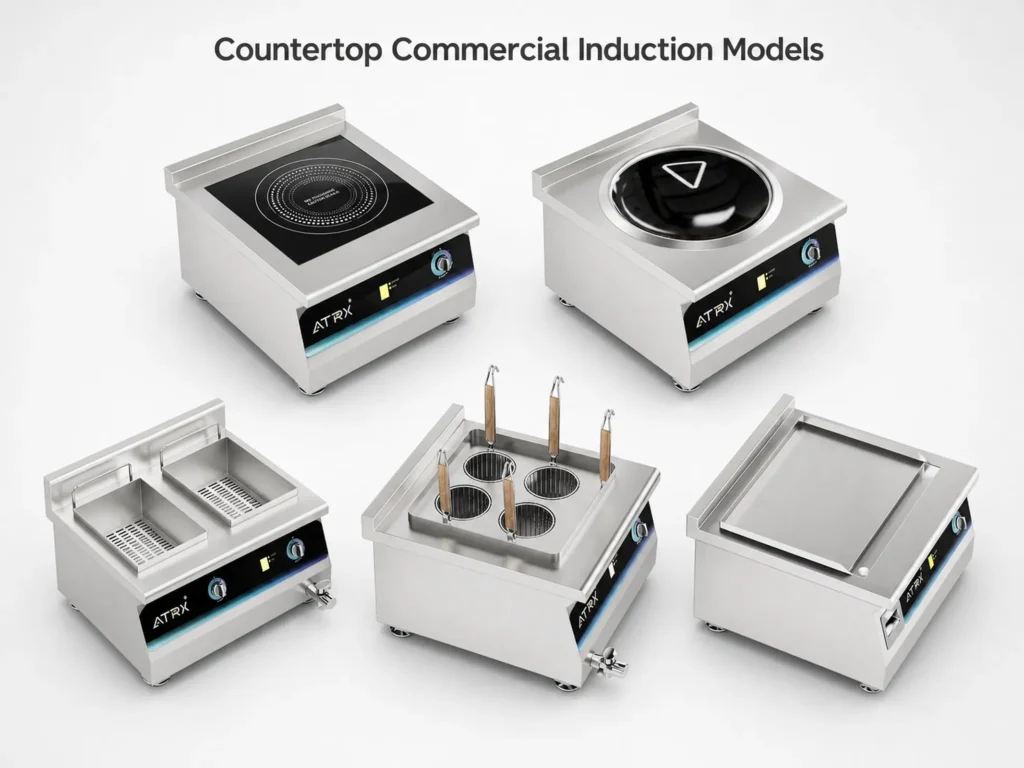
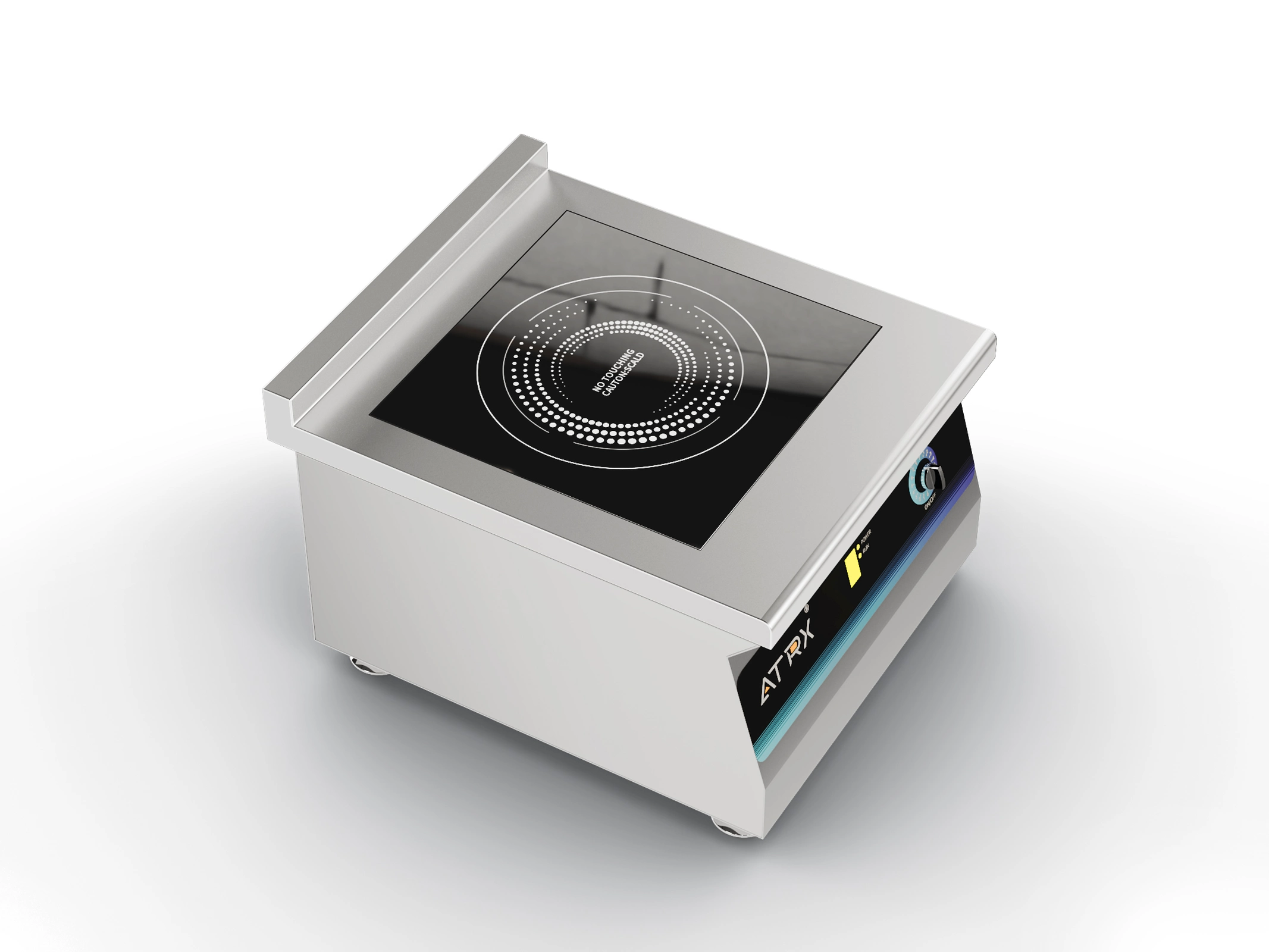
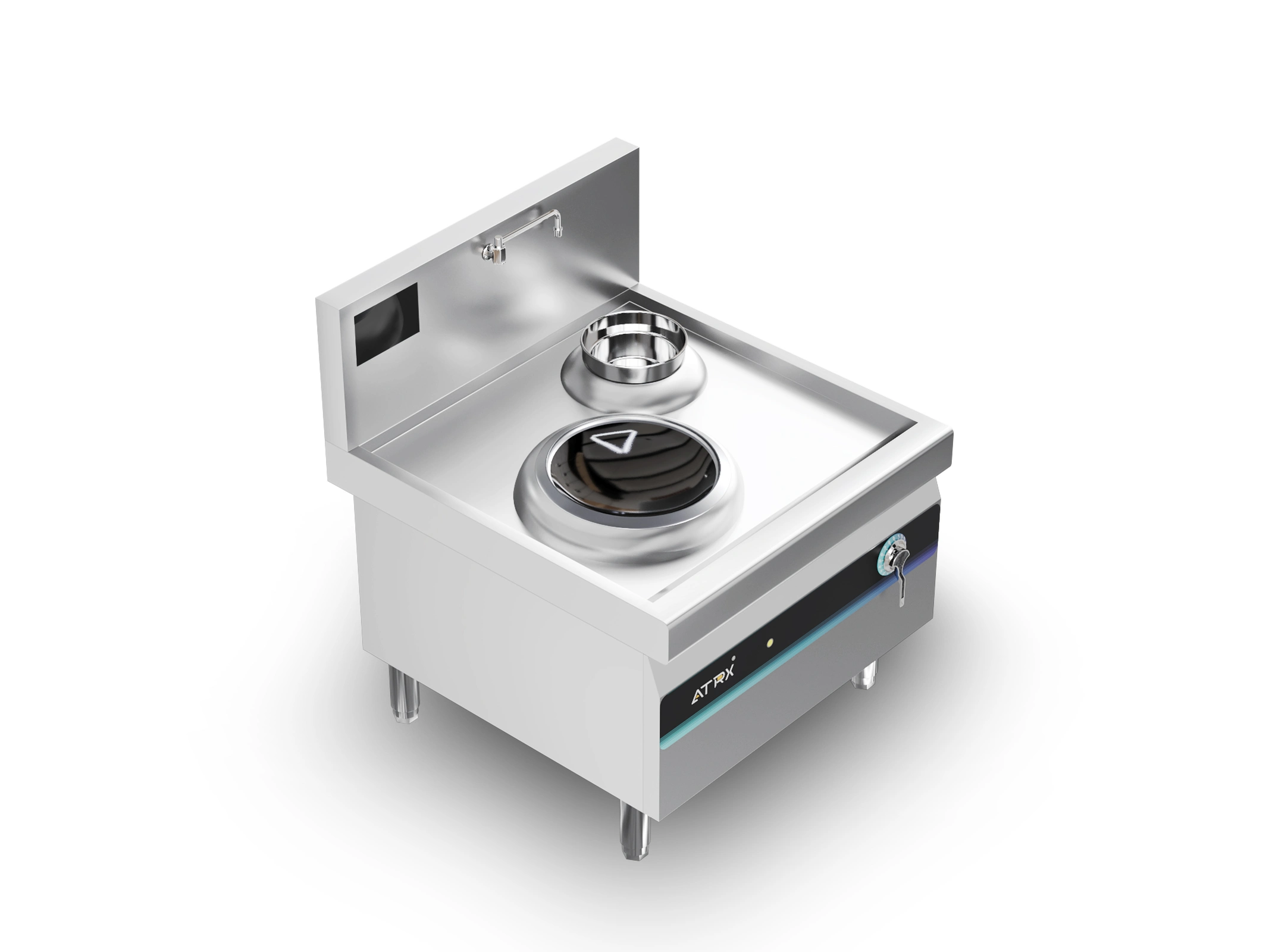
A flat hob suits general home cooking and smaller portions with a flat-bottom magnetic wok. A countertop wok unit is more appropriate when the equipment needs a dedicated control layout, stronger output, or a compact commercial footprint. A concave induction wok range is the more relevant format when the kitchen requires a round-bottom wok and a heating pattern around the lower curve.
For a project quotation, confirm the number of positions, available counter or floor space, wok support method, cleaning access, and whether adjacent equipment will affect operator movement. The equipment format should fit the kitchen workflow as well as the pan.
How much power does your cooking style need?
Estimate power from the actual workload. Record the portion size, number of portions per hour, ingredient temperature, pan weight, number of positions operating together, and the recovery speed expected after ingredients enter the wok. Then confirm voltage, frequency, phase, connection method, and circuit capacity with the site electrician or project engineer.
For larger commercial applications, review the total load rather than looking only at the power of one position. ATRX’s fast-heating commercial induction wok cooker range is an example of why power, wok geometry, and intended service conditions should be discussed together with the manufacturer.
What should you test before choosing a cooker?
Ask for a product test or sample evaluation using the intended wok and representative recipes. Check whether the pan is detected consistently, whether heat is distributed across the working area, how quickly the cooker recovers after a cold batch is added, and whether the controls remain predictable during a busy cooking cycle.
Also review the practical details that affect ownership: body and surface materials, cleaning access, overheat and pan-detection protection, documentation, spare-part availability, destination-market certification, and warranty terms. For a custom or private-label project, approve a written specification before production. ATRX approaches this as a manufacturing review in which wok geometry, electrical requirements, controls, dimensions, and service expectations are defined together.
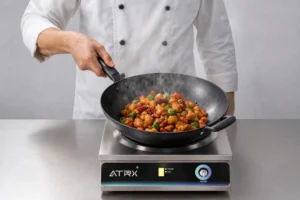
How to Use an Induction Wok for Better Chinese Cooking Results
Preheat the wok and check heat recovery
Allow the wok to reach the working temperature before adding oil or ingredients, following the cookware and cooker instructions. Add a small representative batch and observe how quickly the surface returns to temperature. This test is more useful than judging performance from an empty-pan heat-up alone.
Cook in manageable batches
Overcrowding adds moisture and lowers the working temperature. Divide meat, vegetables, noodles, or rice into batches that match the wok size and the cooker’s recovery capability. A smaller batch often produces a better sear and more consistent texture than a larger load that steams in its own moisture.
Keep the wok stable and centered
Keep the wok aligned with the heating zone and use a pan that sits securely. When the recipe calls for tossing, lift the pan only as much as the cooking technique requires. Repeatedly removing the wok from the magnetic field can interrupt heating or reduce the practical output of the cooker.
What Are the Limitations of Induction Cooking for Chinese Food?
Traditional round-bottom woks may not suit a flat hob
A normal flat induction hob is designed for cookware with a stable magnetic contact area. A round-bottom wok may rock, make limited contact, or fail to be detected. If a round-bottom wok is central to the menu, specify a compatible concave induction wok range instead of trying to adapt the pan to a flat surface.
Wok hei may require a different technique
Induction can deliver high, controlled heat, but it does not reproduce every part of direct flame cooking. The cook may need to manage batch size, ingredient moisture, pan movement, and timing differently. The target should be evaluated through the finished dish rather than through the heat source alone.
Electrical supply can limit commercial performance
A cooker can only deliver its intended performance when the site has the required voltage, phase, circuit capacity, and connection. Multiple high-power positions may require a project-level electrical review. Confirm the installation requirements before the equipment is shipped or the kitchen layout is finalized.
Cookware weight and surface care still matter
Heavy cast iron can help retain heat but may slow down tossing and increase operator fatigue. Carbon steel is easier to move but requires seasoning and sensible cleaning. Any wok used on a glass or ceramic surface should be placed and moved carefully to avoid impact damage.
Frequently Asked Questions
Can you cook Chinese food on induction?
Yes. Induction can support most common Chinese cooking methods when the wok is magnetic, stable, and matched to the heating surface. The cooker must also provide enough usable power for the intended batch size.
Can you use a round-bottom wok on an induction stove?
Use a round-bottom wok with a concave induction wok range designed for that pan shape. A standard flat induction hob normally requires a flat-bottom magnetic wok.
What is the best wok for induction cooking?
For a standard induction hob, choose a flat-bottom carbon-steel, cast-iron, or magnetic stainless-steel wok that matches the approved diameter and weight. For a concave induction range, use the round-bottom or curved-base wok specified for that model.
What is the main limitation of induction cooking for Chinese food?
The main limitations are cookware compatibility, pan stability, electrical requirements, and a different heat pattern from direct flame. These limitations can be managed by matching the wok, cooker, site power, and cooking method as one system.
Chinese induction cooking is a practical option when the equipment is selected around the recipes, wok geometry, workload, and site conditions. For a home kitchen, that may mean a reliable flat-bottom magnetic wok and a suitable induction hob. For a restaurant or foodservice project, the decision should be based on representative cooking tests and a written specification review.
When a commercial project requires a repeatable wok system, ATRX can support discussions around induction heating geometry, power levels, controls, dimensions, and destination-market requirements. Its high-quality commercial induction wok cooker information can be used as a starting point for a technical conversation, while the final configuration should always be confirmed for the intended application.