

Commercial Grade Induction Cooker: A Practical Buying Guide
10/12/2026
Estimated reading time: 2 minutes

The ingredients for the next batch are ready, but the cooker still hasn’t brought the pan back up to temperature. That wait is especially frustrating during a busy service. When choosing a commercial induction cooker, start with one of your kitchen’s most frequently prepared dishes. Cook several batches at your usual portion size and see how long you have to wait and how easy the heat is to adjust. Then place the pan where you plan to install the cooker, with the handle, prep containers, and serving plates all in position. This often reveals problems more clearly than a power-rating chart does.

What Types of Commercial-Grade Induction Cookers Are Available?
If you want to add a cooking station without altering the counter, look at countertop models first. If the location is fixed and you want the body of the unit tucked beneath the serving counter, consider a built-in model. If you handle large pots of soup or batches of stews every day, look at the load capacity and unloading arrangement of a floor-standing model. Once you have chosen the installation format, decide how many cooking zones you need and whether the cooking surface should be flat or concave. You can also browse our full range of commercial induction equipment to compare all available formats.
Countertop Commercial Induction Cookers
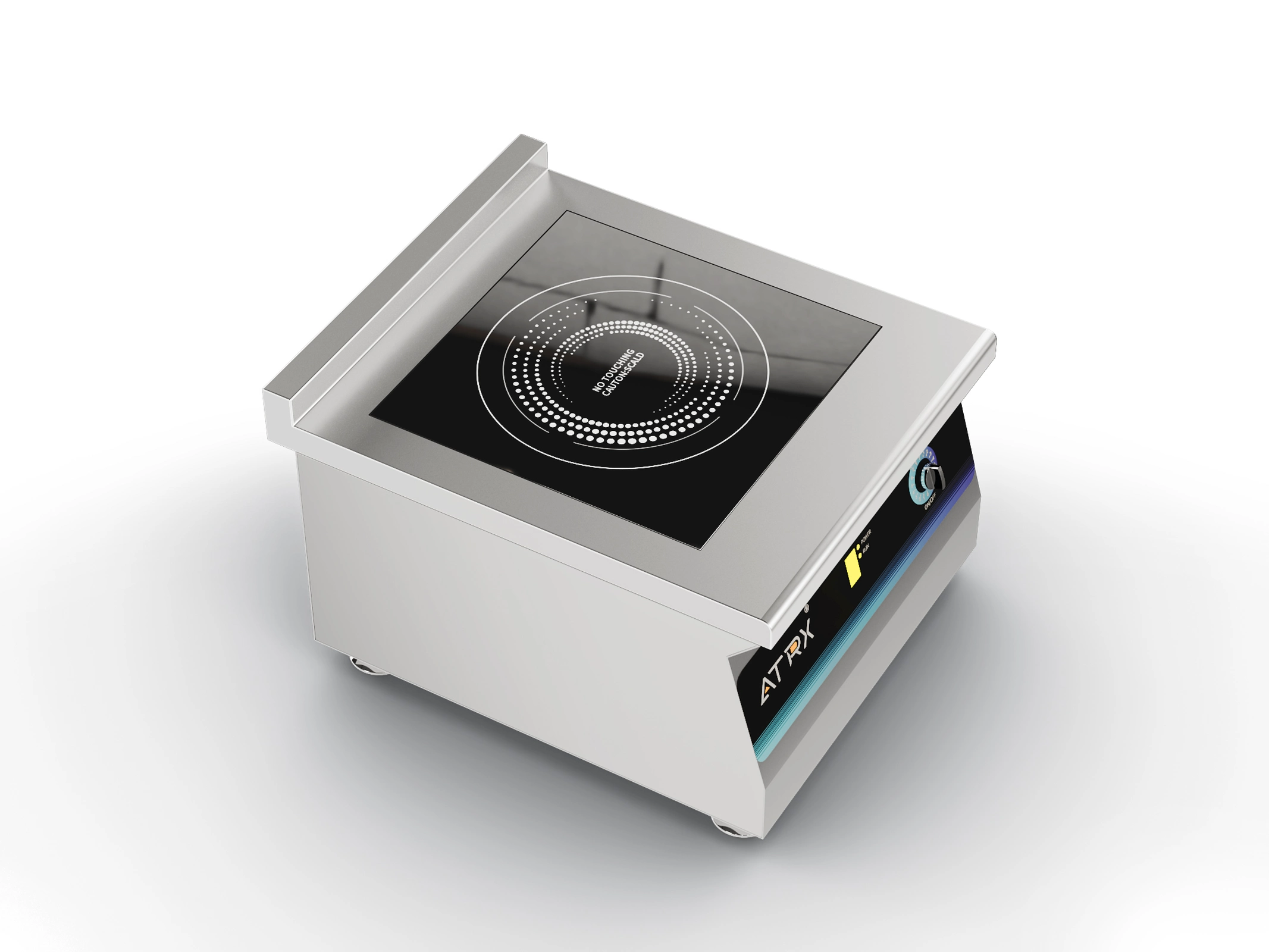
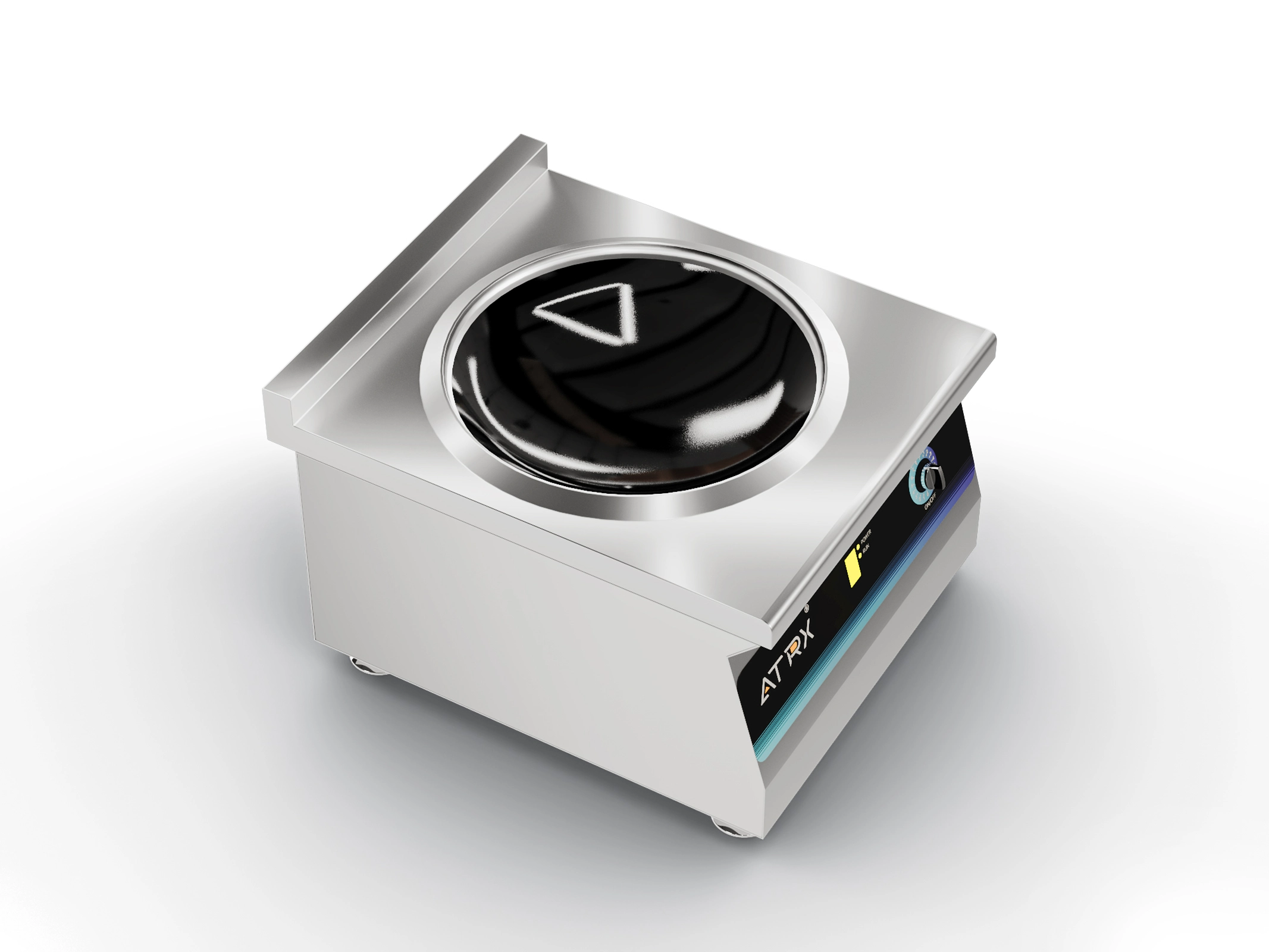
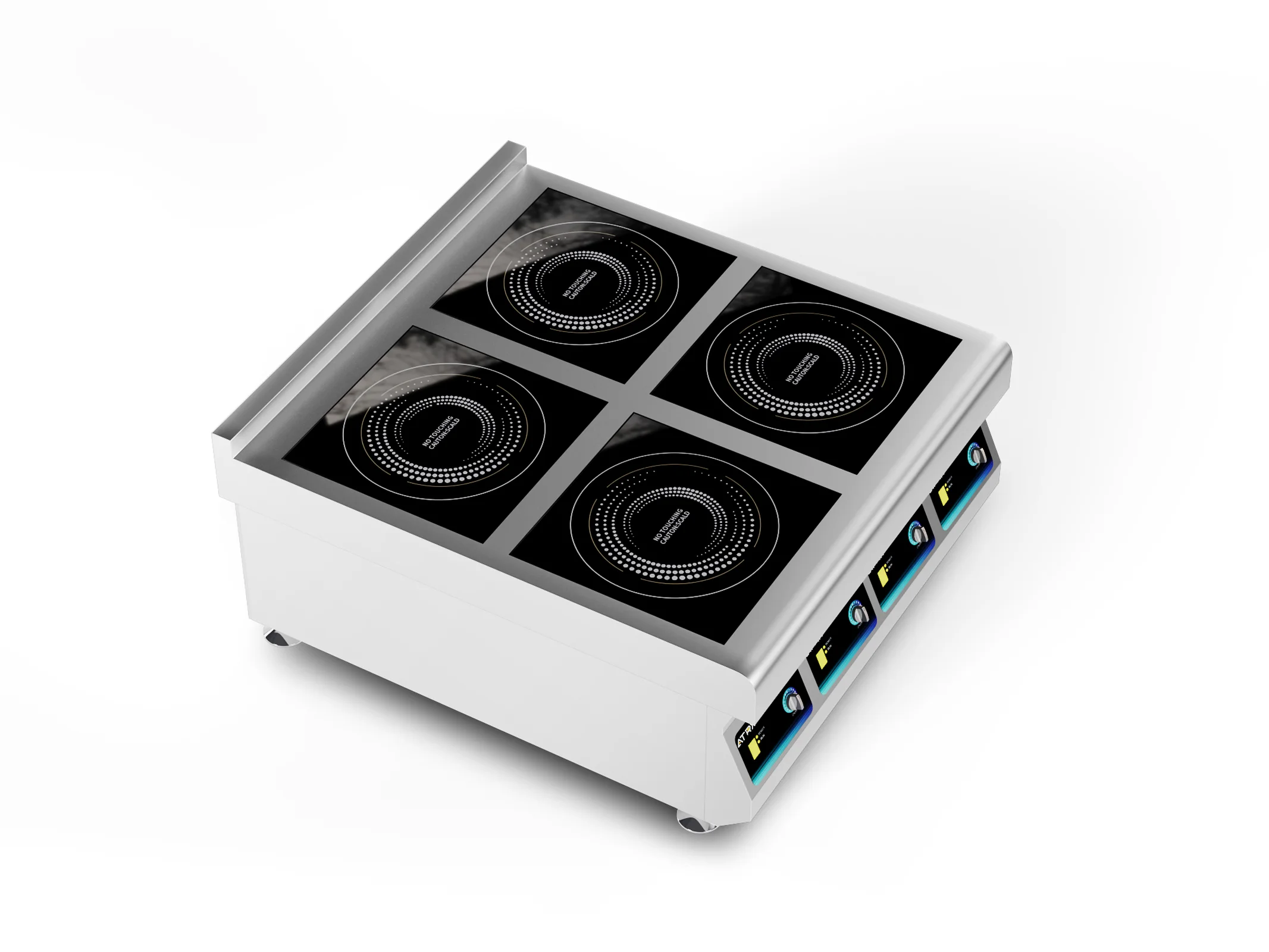
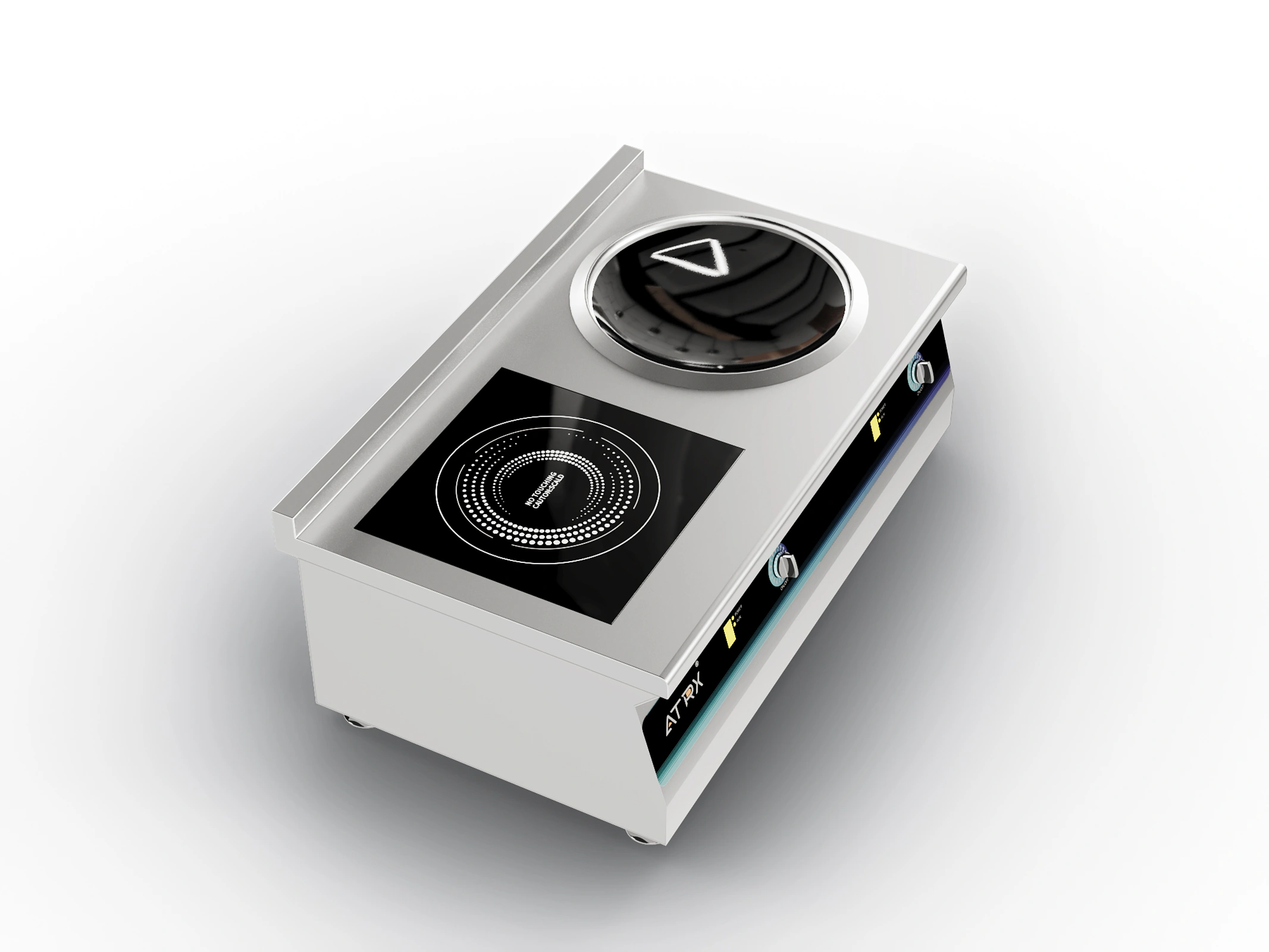
A countertop unit is relatively easy to fit into a small restaurant that needs an extra noodle-cooking station or a dedicated pan for sauces. It requires no cutout in the counter and is easy to reposition when the station layout changes. The electrical supply still needs to suit the model. Higher-powered units may require a dedicated circuit, so confirm the wiring requirements in advance.
The ATRX countertop commercial induction cooktop range includes flat-surface cookers, concave wok cookers, and multi-zone models. The page lists configurations including 3.5, 5, and 8 kW. Matching the cooking surface to your usual cookware and then deciding how many zones you need is more practical than choosing the highest power rating first.

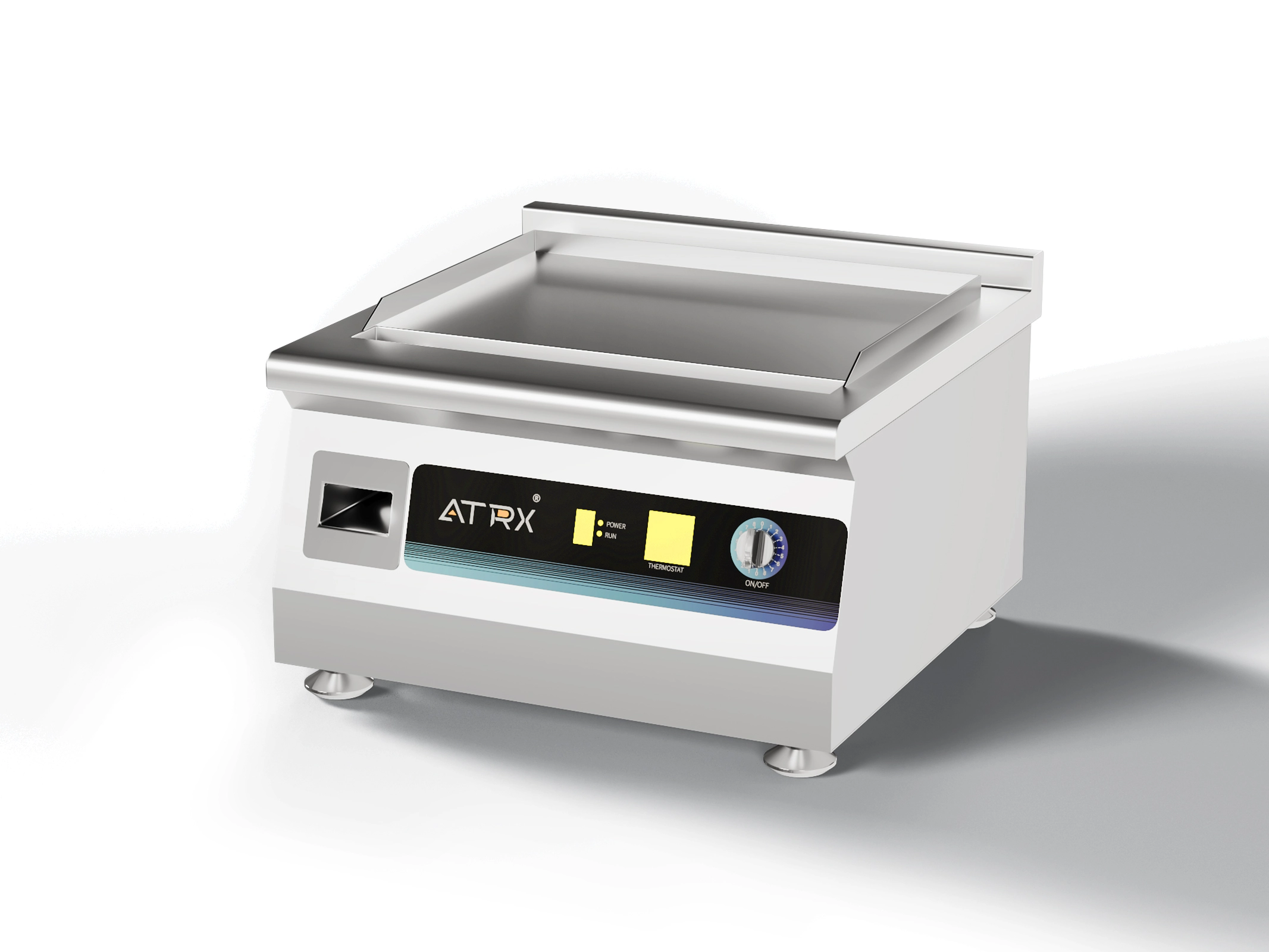
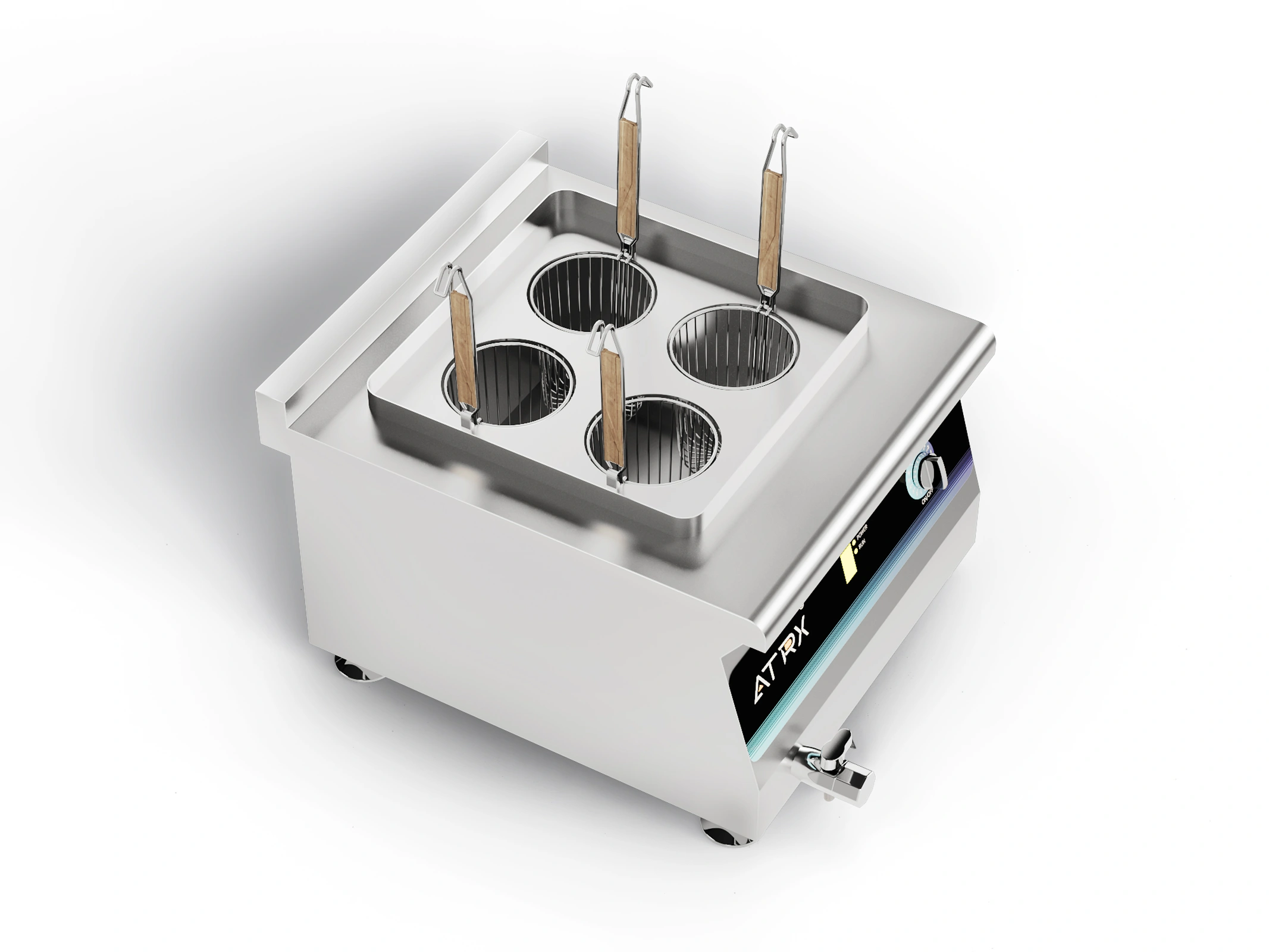
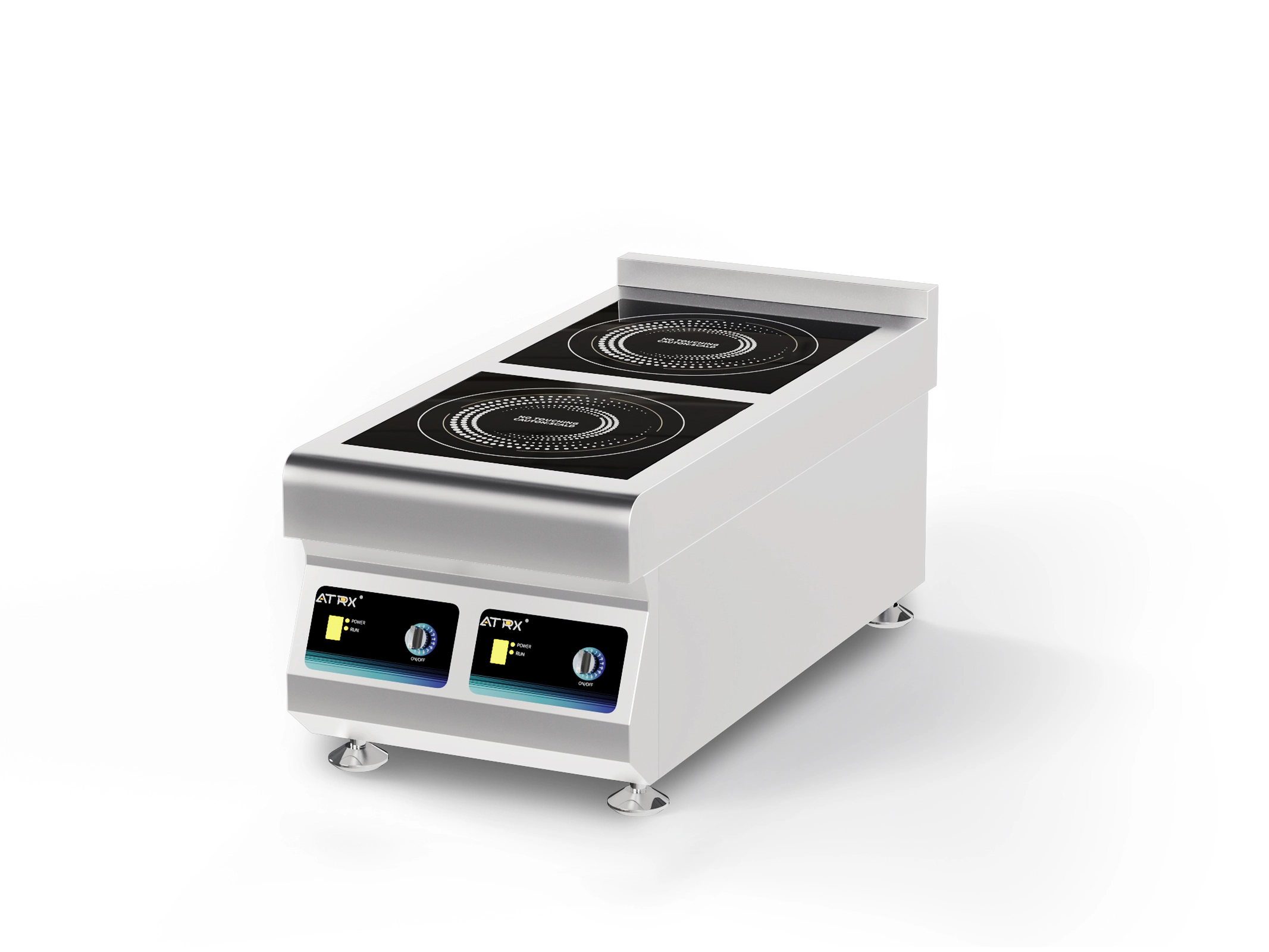
Swipe picture to view more product →
Built-In Commercial Induction Cookers
Buffet counters need frequent soup refills and pot changes, while hot pot tables need room for guests’ bowls and plates. These are good places to tuck the body of the cooker beneath the countertop. With fewer protruding parts and exposed cables, the surface is easier to wipe down and food is easier to reach. For more installation options, see the ATRX built-in commercial induction cooktop range. The key checks are whether the complete unit fits, whether it can dissipate heat, and whether it will remain accessible for repairs.
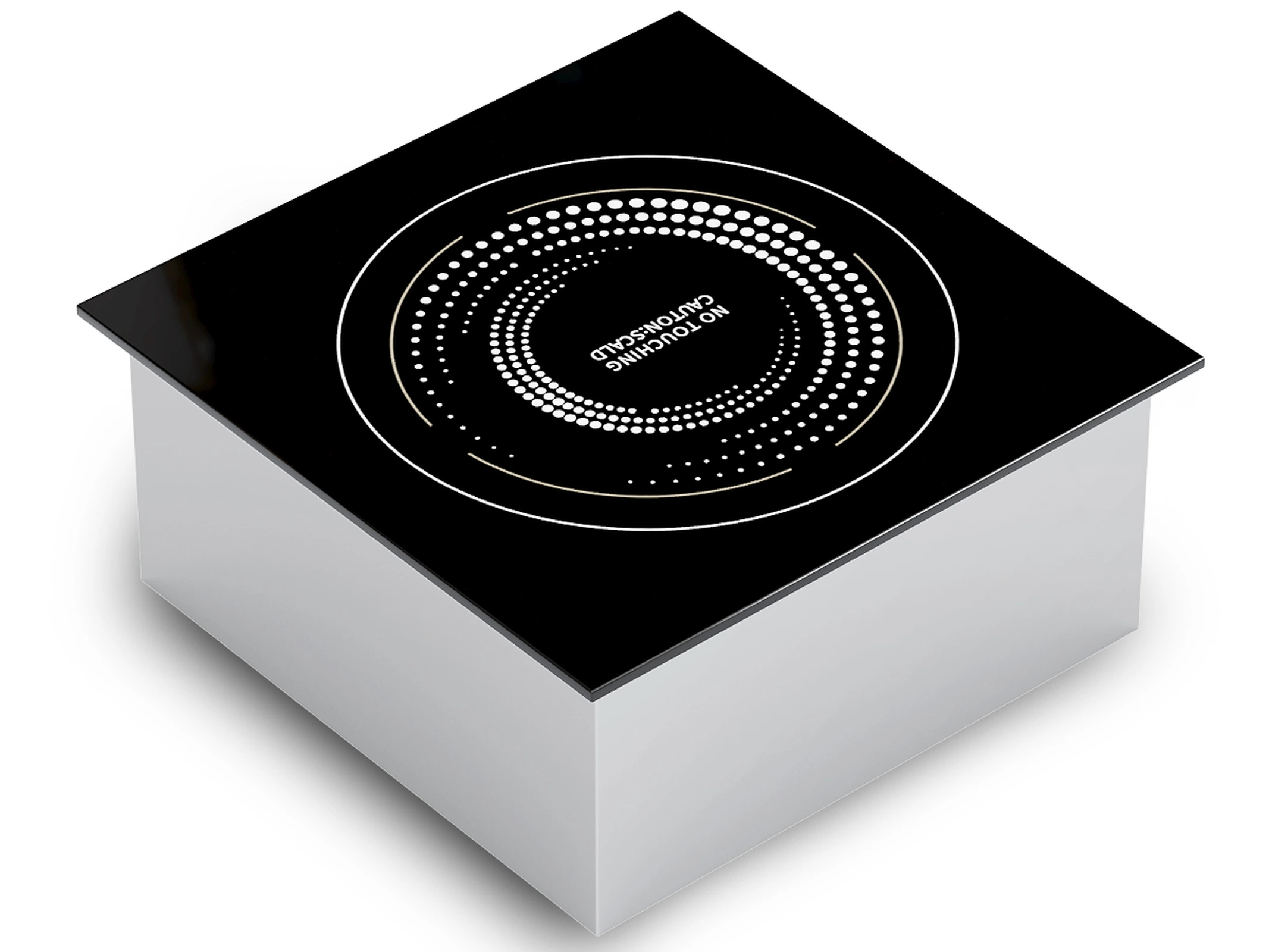
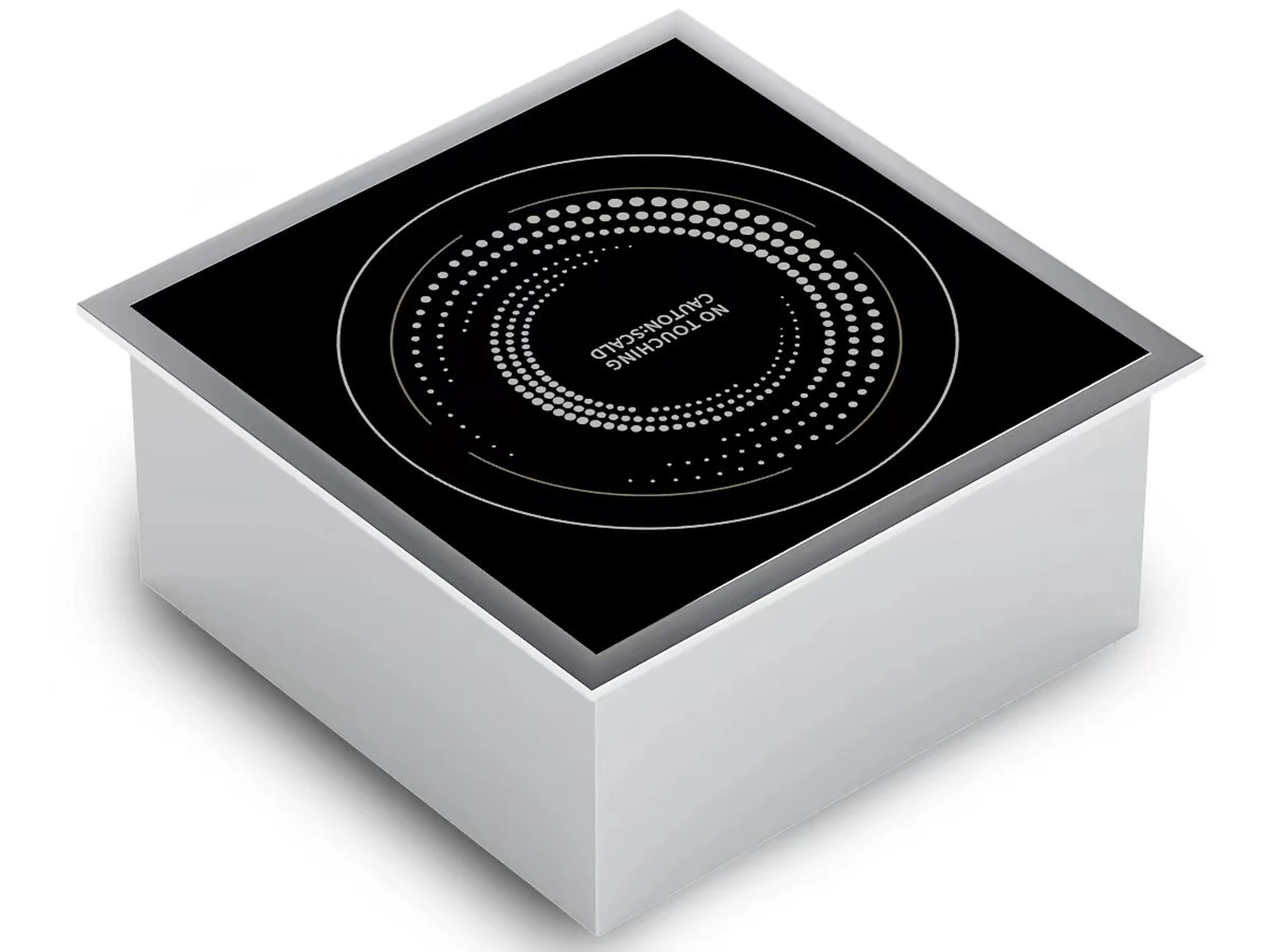
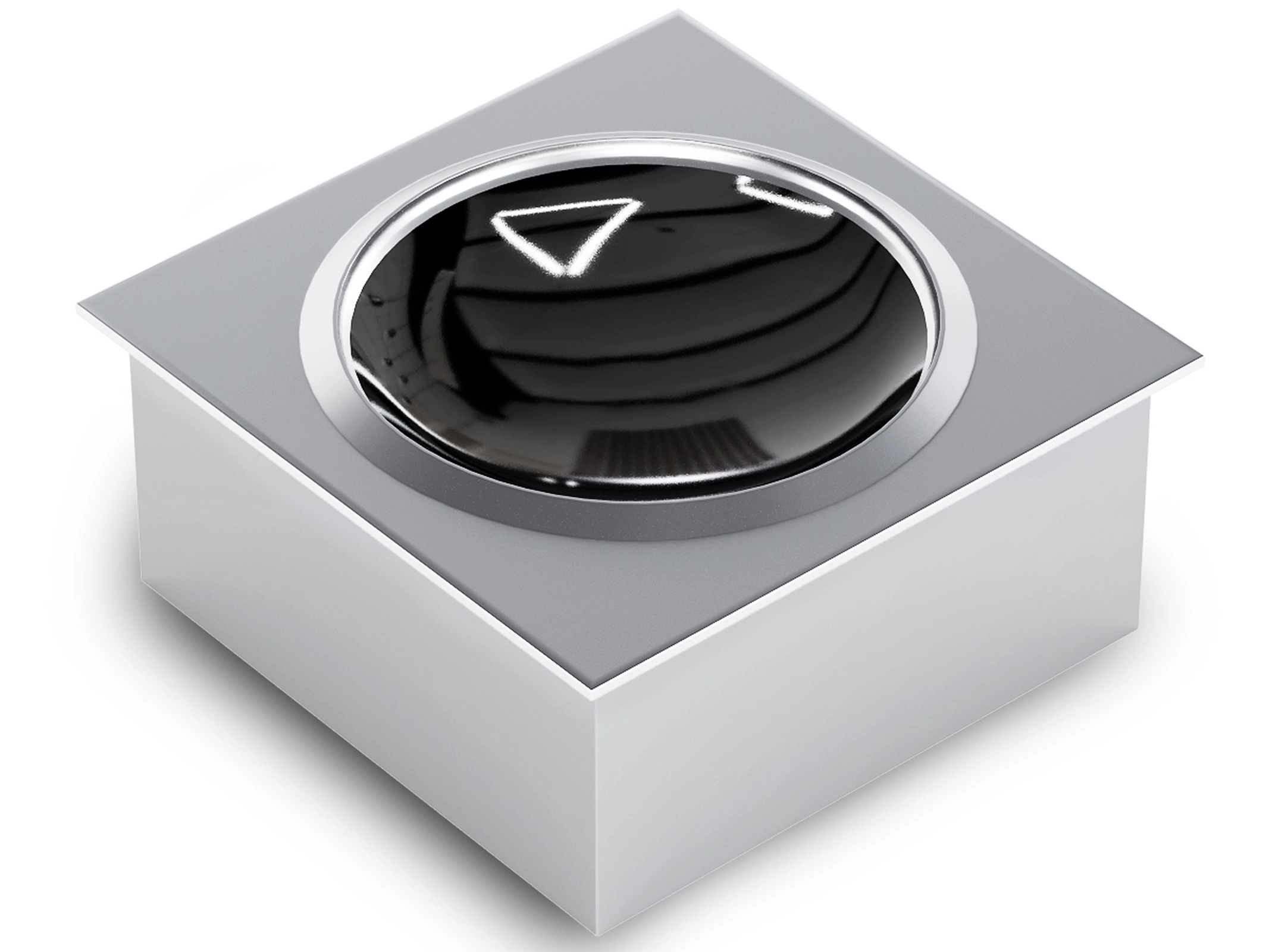
Swipe picture to view more product →
Floor-Standing Commercial Induction Cookers
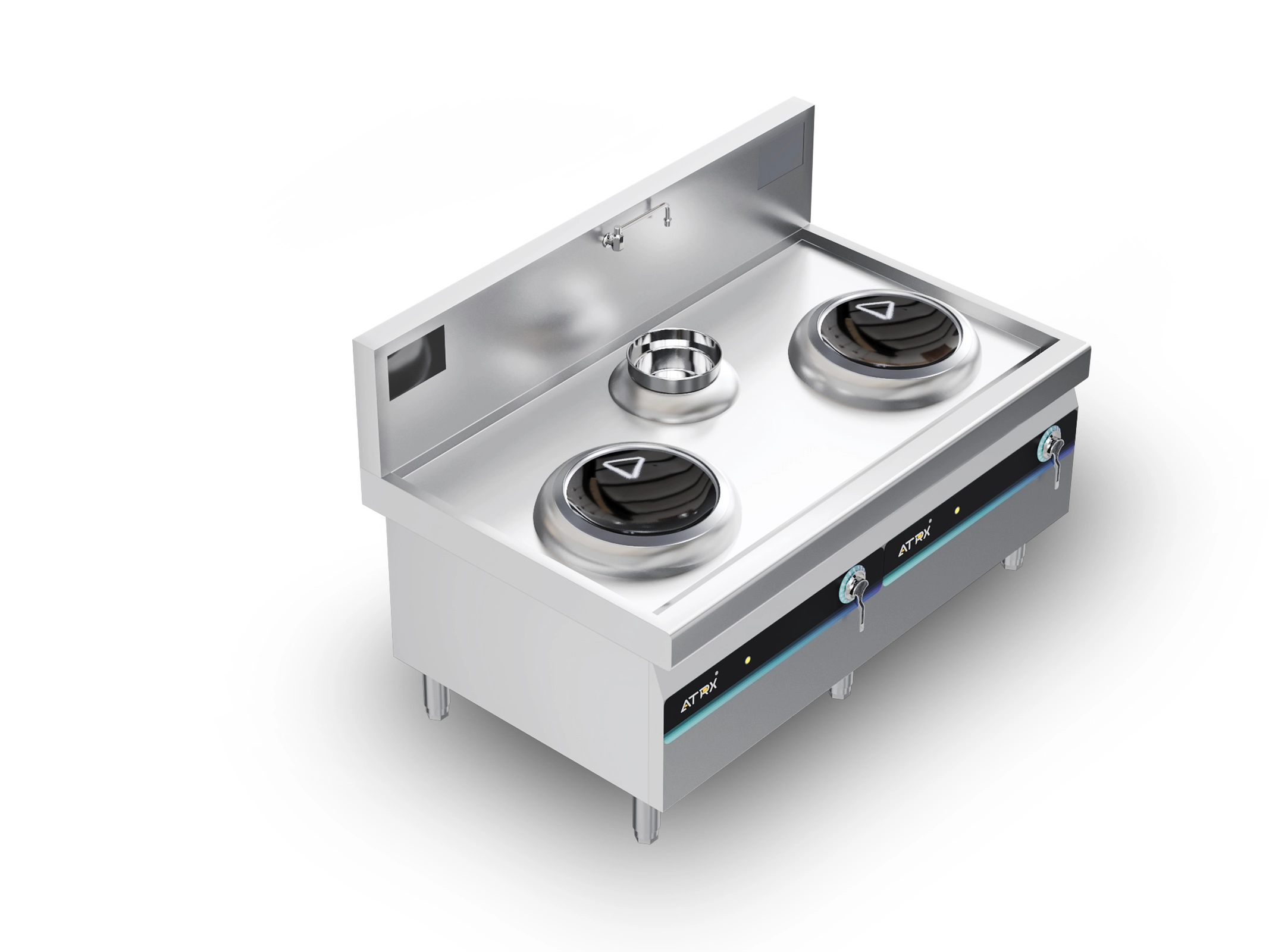
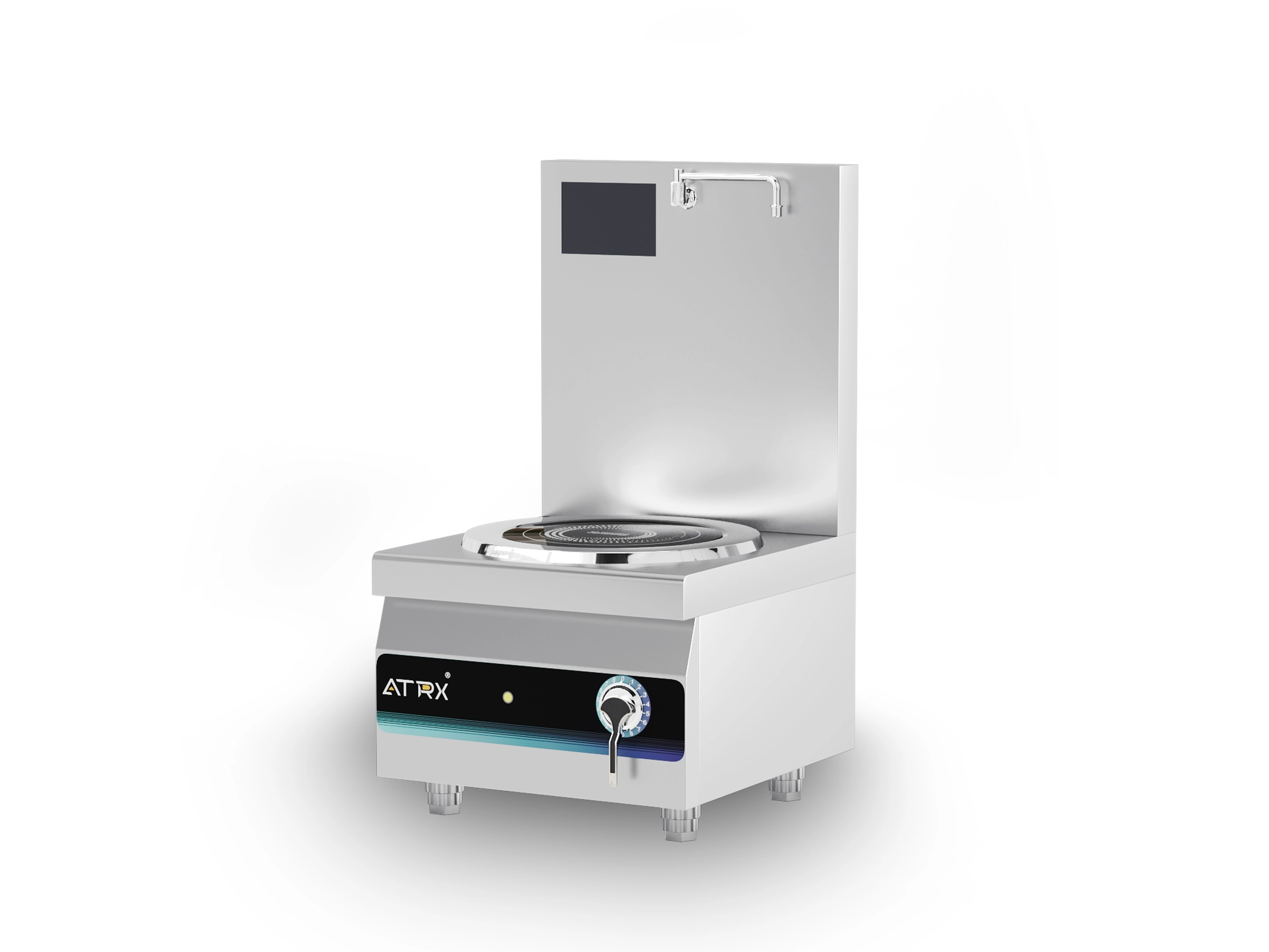
Once several dozen liters of soup are ready, getting them out of the pot matters just as much as bringing them to a boil. Floor-standing soup cookers have their own cabinet or support frame and are better suited to these large-pot tasks. Still, check the specific model’s permitted load, working fill level, and operating height. Fixed-pot models suit stations with a consistent workflow where cookware is rarely changed. Tilting models reduce the need to lift a pot to pour out its contents, but the receiving container, tilt direction, and drainage position all need to be planned in advance. Even a convenient tilting mechanism is awkward to use if the container cannot fit beneath the discharge point.
The ATRX floor-standing commercial induction soup cooker range shows capacities of 58 liters, 84 liters, and 100 to 200 liters, with both fixed and tilting designs. These figures describe pot capacity; they are not a recommendation to fill the pot to the brim every time. Leave headroom for boiling and enough room to stir and unload the contents.
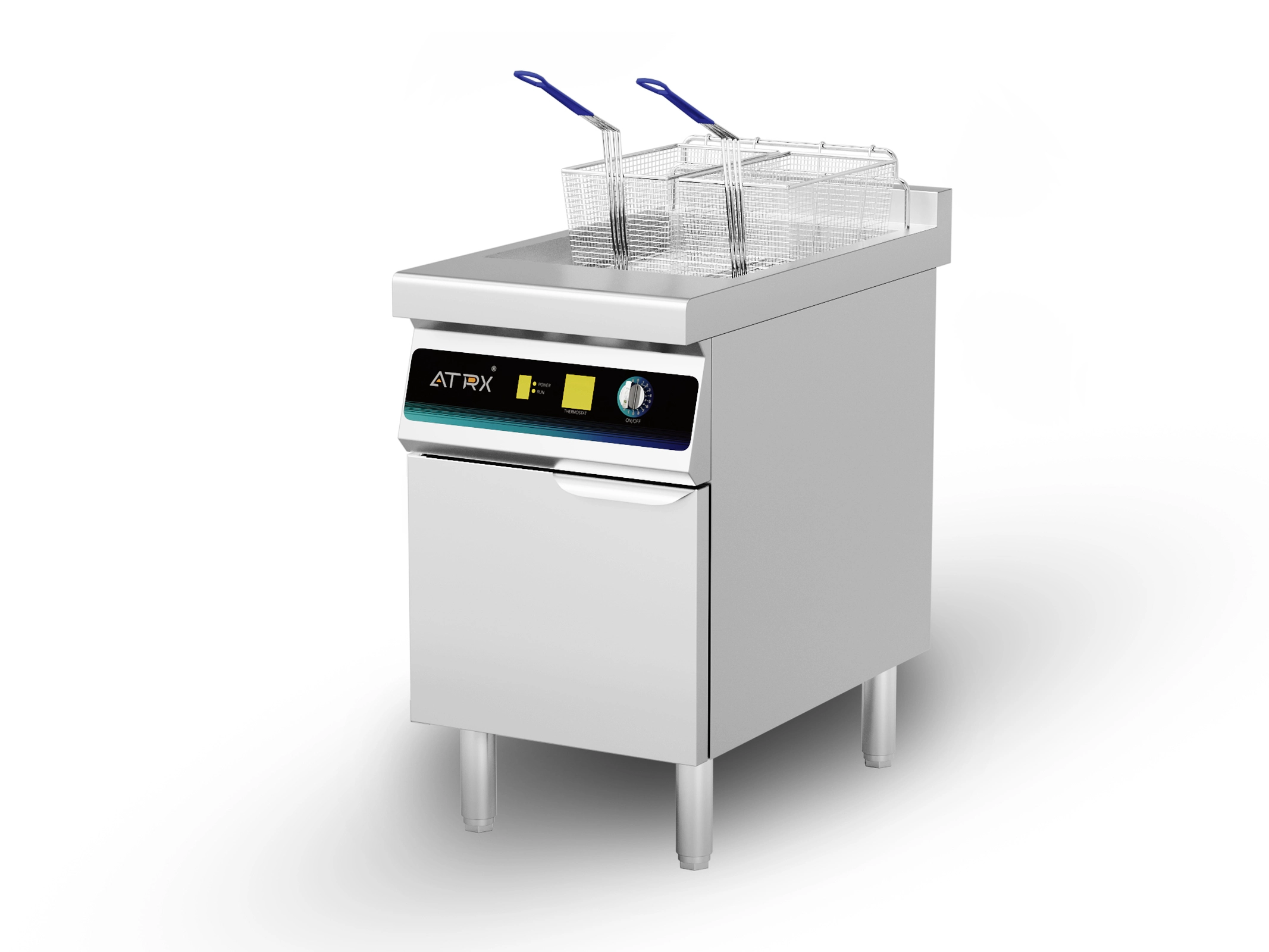
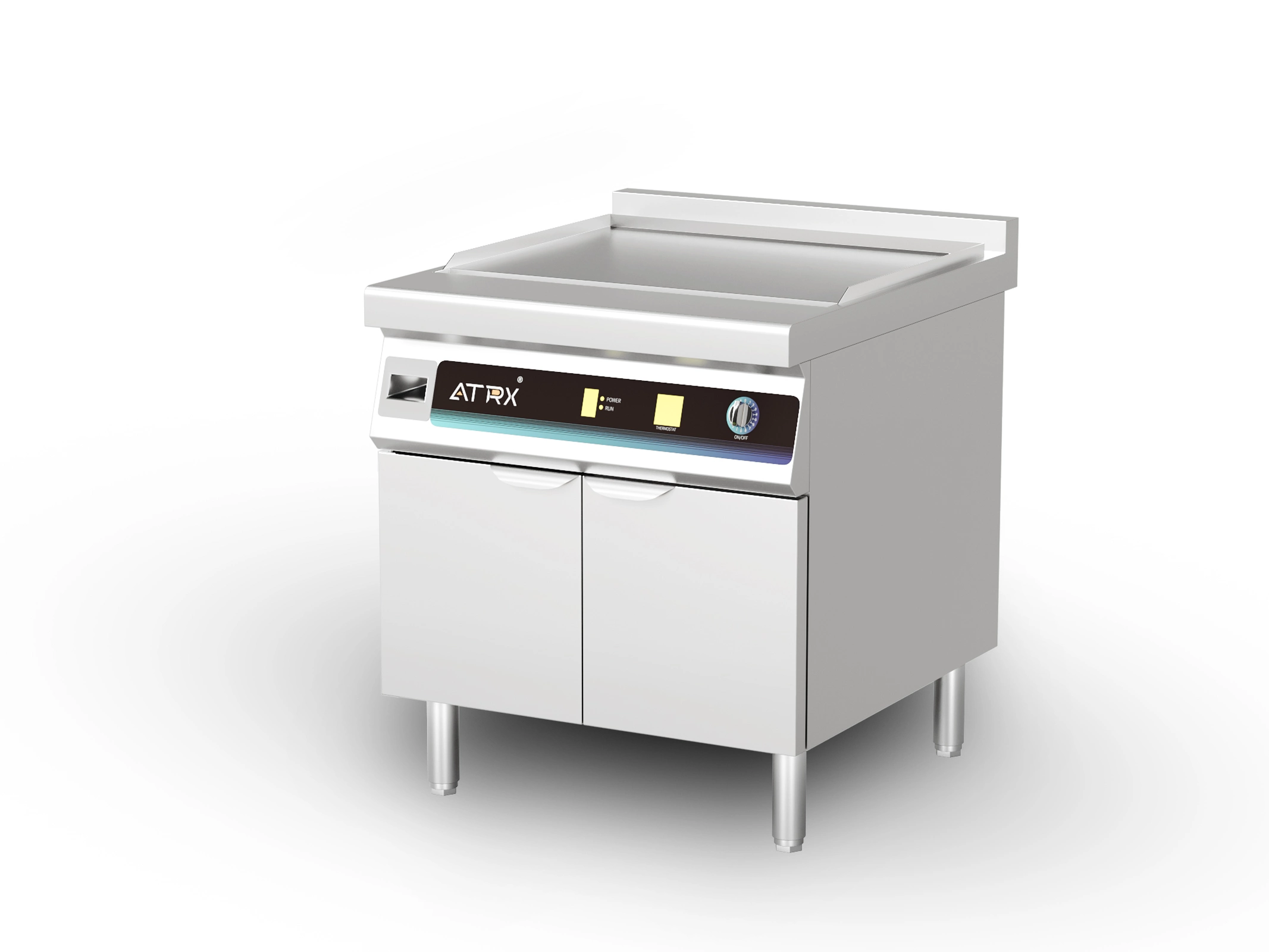
Swipe picture to view more product →
Can Commercial-Grade Induction Cookers Handle Continuous Use During Peak Service?
Yes. A commercial-grade induction cooker matched to the cooking load can handle consecutive batches of stir-frying and boiling during peak service. Commercial-specification core components and cooling systems support extended operation. These address two practical kitchen concerns: whether the heating can keep up with back-to-back orders, and whether the equipment can maintain normal output after it has been running for a while.
They Can Handle Stir-Frying and Boiling During Peak Service
Induction generates heat in the base of compatible cookware. After ingredients are added, the unit continues supplying energy to the pan to help its temperature recover. During boiling, continued output replaces heat lost through adding ingredients, topping up water, and heat dissipation. This allows induction to handle consecutive stir-frying batches and maintain the heat needed for noodles and soup. Actual recovery speed still depends on batch size, cookware, and the unit’s output capacity. Results from a small portion cannot simply be applied to a full pan of food.
Continuous cooking also calls for repeated heat adjustments. The output needed changes as a stir-fry moves from preheating to adding ingredients and reducing the sauce, or as soup goes from a boil to a gentle simmer. Commercial models suited to these tasks can adjust their output so that one cooking zone handles the whole cooking process without running at maximum power throughout.
On December 16, 2022, StateImpact Pennsylvania documented chef Chris Galarza demonstrating induction cooking with vegetables and shrimp in its report on gas stoves and indoor air quality. The ingredients were cooked within minutes. This firsthand observation shows that induction can perform an actual stir-frying task. However, the report did not provide data on extended operation at full load. It supports induction’s stir-frying capability but cannot, on its own, establish that a particular model can handle an entire lunch rush.
Commercial-Specification Core Components and Cooling Systems Can Support Extended Continuous Operation
During back-to-back service, the cookware heats up, and the power modules and induction coils inside the unit also generate heat. For commercial equipment to run for extended periods, its core components need to cope with the working load, and its cooling system needs to keep removing internal heat. Together, they allow the unit to operate within its designed temperature range.
The power modules control output, the induction coils transfer energy to the cookware, and the fans and air ducts carry heat out of the unit. As operating time increases, cooling performance directly affects output. Removing heat allows the unit to keep operating normally; if the internal temperature exceeds its permitted range, the unit may reduce power or shut down for protection. When a cooker heats quickly at first but becomes progressively slower, inadequate cooling is one possible cause.
Materials supplied by ATRX show a multi-fan cooling configuration. The fans create airflow that works with the intake vents, air ducts, and exhaust vents to remove heat from the unit. This explains why commercial cooling configurations help with continuous operation. Actual capability still depends on the specific model’s cooling design and ventilation conditions after installation. Fan count alone does not indicate how long a unit can run.
The durability of the core components matters too. After prolonged exposure to heat, they still need to control output and respond to the operator’s adjustments normally. ATRX manufacturing materials list thermal aging, constant-temperature and constant-humidity testing, and thermal shock testing. These address performance under sustained heat, hot and humid conditions, and temperature changes, respectively. Such tests can provide evidence of component or complete-unit reliability under the relevant conditions. The duration and load that a specific model can sustain in continuous operation depend on what was tested, the test conditions, and the results.
If you are interested in how we control the quality of our commercial induction cookers, please refer to our other column article titled “High Quality Commercial Induction Cooker Manufacturer“.
How Much Power Does a Commercial Induction Cooker Typically Need?
The power ranges below are useful for an initial shortlist, but they are not standard specifications for every dish. Batch size, cookware dimensions, and the time allowed for heating all affect the requirement. Before committing to a purchase, also check which models the existing electrical supply can support.
Start with 3 to 5 kW for Small-Pot Heating
For noodles in a small pot, boiling water, or small-batch pan-frying and stir-frying, this range is a reasonable starting point. At a noodle station, check whether the water returns to a boil promptly after topping it up or adding noodles. At a sauce station, low-power control matters more.
Once a sauce is hot, sustained high heat can make it stick to the bottom of the pan. Some units cycle their output at low settings. Use one of your usual sauces to see whether that affects the cooking. If you have to keep moving the pan or adjusting the setting to maintain the desired heat, the unit is not a good fit for that station.
Small-batch heating may not require the full 3 kW. If the task is only hot holding, you can also compare dedicated holding equipment, focusing on whether it maintains the temperature the dish requires.
Start with 5 to 8 kW for Everyday Stir-Frying
Adding sliced meat and vegetables lowers the pan temperature, so this range is a useful starting point for everyday stir-frying. Test with your usual batch size and observe temperature recovery and the finished food. A small portion may cook quickly, while a full pan at your normal batch size may behave differently.
Cookware material, dimensions, and base shape also affect performance. Comparing two units with the same pan and the same batch size gives you a more useful result. If you use a round-bottom wok, first confirm that the concave cooking surface matches the curve of its base. A large pot holding several dozen liters of soup is a separate case. Even if both are called large pots in everyday use, the heating requirement is very different from a batch of quick stir-frying, so this power range cannot be applied in the same way.
Consider 8 to 15 kW for Larger Frying, Boiling, and Griddle Stations
This range is often used at stations that need a continuous supply of heat. Whether it is sufficient depends on how much cold food is added at a time and when the next batch needs to start. Usually, though, 8–15 kW is enough.
| Station | What to Test with an Actual Batch |
|---|---|
| Deep-frying | After removing a batch, how long does the oil take to return to the temperature needed for the next batch? |
| Boiling | After topping up water or adding ingredients, how long does it take to return to the cooking conditions the dish requires? |
| Griddle cooking | Add food repeatedly to the area you normally use and observe local temperature recovery and the consistency of the finished food. |
Assess 15 to 30 kW for Batch Steaming and Boiling
If a canteen or central kitchen needs to prepare large batches of soup, congee, or stews, start by assessing 15 to 30 kW. First establish the amount of water and food in each batch, then decide how much time is allowed to bring it from cold to boiling or steaming temperature. Making 100 liters of soup in five batches over a day can require very different equipment from making it in one batch. Once the soup boils, the heat needs to be reduced, so include that stage in the trial. A sustained rolling boil can affect how much the liquid reduces, while congee and thicker stews need closer attention to what is happening at the bottom of the pot. High power addresses only part of the heating task.
Which Type of Induction Cooker Suits Each Common Commercial Cooking Setting?
Once you have chosen the installation format, decide how to divide the tasks between cooking stations. A kitchen often needs one unit for quick stir-frying and another for soup or hot holding.
Single-Zone Countertop Units Suit Small Restaurants and Food Stalls
If there is just one dedicated task, such as cooking noodles or heating a pot of soup, a single-zone countertop unit is usually enough. When budget and counter space are limited, focus on getting that task set up properly.
If soup needs to keep simmering while you stir-fry, add another cooking zone. Replacing a single-zone unit with a more powerful one still will not let you use two pots at the same time.
When arranging the station, leave space for bowls after draining noodles, plated dishes, and a hot pan temporarily moved off the cooker. If the cook has to reach around the unit to get a bowl for every order, the layout still needs adjusting.
High-Power Induction Wok Cookers Matched to the Cookware Suit Chinese Kitchens
Round-bottom woks need concave models that the manufacturer has confirmed are compatible; flat-bottom pans need corresponding flat-surface units. Before purchasing, bring the kitchen’s wok and check its material, diameter, and base curvature. Compare power ratings once cookware compatibility has been confirmed.
During the cooking trial, go through the full sequence: add ingredients, stir-fry, adjust the heat, briefly lift the wok, and put it back. Induction requires compatible cookware to remain in a position where the unit can detect it and transfer energy to it. The way heating stops when the wok is lifted and resumes when it is returned should match the equipment’s instructions and suit the chef’s technique.
If a dish or cooking technique relies on the effects of an open flame, switching to induction may require changes to the method. Test those particular dishes if that applies; power rating alone cannot establish whether induction can replace the existing setup.
Soup and sauces can stay on an auxiliary cooker. The wok cooker does not have to handle slow simmering as well.
Multi-Zone or Built-In Induction Cookers Suit Buffet Restaurants
Cooking to order and hot holding need to be considered separately. On-site cooking needs prompt heating, while hot holding needs to maintain the required food temperature after replenishment without constantly boiling soup down. Low-setting performance and actual food temperature are more useful than maximum power. Built-in units suit fixed serving counters, and multi-zone units make it easier to use several pots at once; the two formats can be combined. When choosing a multi-zone unit, ask whether each zone can be adjusted independently and whether all zones share a total power limit when switched on together. A single zone may perform quickly during a demonstration, but performance may need to be reassessed when several zones are operating at once.
Staff change pots frequently, so test the cooking surface’s support and control area with the actual cookware. Cabinets beneath the serving counter still need sufficient ventilation space; the remaining space cannot all be treated as storage for tableware.
Choose Floor-Standing Units for Canteens and Central Kitchens
For a large pot used to make soup, congee, or stews in bulk, a floor-standing unit is more likely to match the required capacity and load. For several dishes made in small batches, multi-zone equipment or separate cooking stations allow the heat to be controlled individually.
Pay particular attention to the unloading process. Can a receiving trolley get close enough? Can the container line up with the outlet? Does an employee have to turn around while carrying a full pot of hot soup? If those movements are awkward or strenuous, reconsider the unloading arrangement and station location during selection. Kitchens that switch dishes frequently also need to account for cleaning. Moving from a pot of congee to a clear soup means cleaning time affects when the next batch can start. Looking only at pot size and high power makes this easy to miss.
How Can You Assess the Safety and Quality of a Commercial-Grade Induction Cooker?
When inspecting a sample unit, check it through a few everyday actions: moving cookware, topping up soup, adjusting the heat, and cleaning at the end of service. For protective functions, ask the manufacturer to explain the activation conditions and recovery procedure and provide the relevant documentation.
Distinguish Between Overheat, Earth-Leakage, and Empty-Pan Protection
Pan detection and empty-pan dry-heating protection need to be confirmed separately. A unit that stops heating when the pan is removed has not necessarily shown that it can detect a pan that is still in place but contains no food. Ask about these as two separate functions when requesting a quote. Overheat protection typically limits output or shuts the unit down when internal temperature is abnormal. Once protection activates, the cooling time required, whether the unit recovers automatically, and whether there is a clear alarm all affect how staff handle the situation.
Earth-leakage protection may need to be installed on the supply side. A qualified person should confirm this along with grounding and circuit capacity, following the equipment instructions and local requirements. Leave earth-leakage and dry-heating protection tests to the manufacturer or qualified personnel. Kitchen staff need to understand the operating instructions and alarms.
For Cleaning, Check Seams, Controls, and Permitted Water Use
A flat cooking surface is usually easy to wipe, but grease can still collect in edge seams, around buttons, and in air intakes. Check these areas on the sample unit to see whether they can be reached during routine cleaning and whether any parts need to be removed. Soup or sauce left in a seam takes more time to deal with at the end of service.
Water-resistance documentation should state whether it covers the entire unit or only part of the control panel, and whether splashes or rinsing are permitted. Heat resistance and an easy-to-wipe surface do not replace these specific requirements. Disconnect the power and allow the unit to cool before cleaning, as instructed. Follow the manufacturer’s requirements for cleaning products and water use as well. If rinsing is not explicitly permitted, use the specified wiping method.
Assess Core Component Quality Through Cookware Tests and After-Sales Documentation
Component quality shows up in heat-adjustment response, sustained output, and control-panel reliability. Use your usual cookware to test heating, low settings, and consecutive batches, checking for behavior that differs from the equipment’s stated performance. Heating across the pan base also depends on the cookware and heating zone, so investigate those together if a problem appears.
When purchasing, keep the key component model numbers, repair instructions, and spare-parts supply information. Test records should also correspond to the model being purchased. If you are still shortlisting suppliers, you can also visit our Commercial Induction Cooker Manufacturer homepage to review the full product range and contact the team about the model that suits your kitchen. Ask in advance whether the remaining cooking zones can still be used if one is out of service, who can handle repairs, and how replacement parts will be supplied.
Before settling on a model, complete a continuous cooking trial with your usual cookware, then unload the food and clean the unit. If there are still long waits, nowhere to put hot pans, or difficult-to-clean areas, adjust the model choice or station layout before purchasing.
About the author
ATRX Team| 18 Years Commercial
Induction Cooker Manufacturer in China
Related Posts

Portable Induction Hobs vs Built-in Cooker: Which Is Right for You?
10/26/2026
How ATRX Handles OEM Custom Orders for Commercial Induction Cookers
10/24/2026

Commercial Induction Cooker Operating Instructions
10/23/2026

What Parts Are Typically Found Inside a Commercial Induction Cooker?
10/23/2026

Gas vs Infrared vs Induction: Efficiency, Cost & Cookware
10/22/2026

Commercial Induction Cooker Maintenance: 5 Tips to Extend Its Service Life
10/22/2026

How ATRX Controls the Quality of Commercial Induction Cookers: From Incoming Inspection to Final Quality Inspection
10/22/2026
How Are Commercial Induction Cookers Made?
10/21/2026
Should a Hot Pot Restaurant Choose an Induction Cooker or a Gas Stove?
10/21/2026

How Much Electricity Does a Commercial Induction Cooker Use
10/20/2026