

Commercial Induction Cooker Quality Control — How ATRX Does It
06/16/2026
Estimated reading time: 2 minutes

TL;DR: ATRX runs commercial induction cooker quality control from supplier screening all the way to final release. The idea is simple — catch problems early, don’t rely on one last check to save you. Strict incoming material standards, mandatory mid-line checkpoints, full-load burn-in, and item-by-item final inspection work together so every unit ships in the same reliable condition. Read this to tell whether a supplier’s QC is the real thing or just a sticker on the box.
IN THIS ARTICLE
Where Does Quality Control Begin
Most people assume quality starts on the production line. ATRX sees it differently. Before any component gets soldered to a board — before materials even enter the building — control is already active. The logic: blocking a problem up front costs far less than fixing it later.
Last year a Southeast Asian client asked our QC manager during a factory visit: “How do you keep your failure rate this low?” The answer wasn’t about one magic process. It was one line: “We’re already managing quality before materials come through the door.”
How Core Components Are Screened Before Entering the Factory
Commercial induction cookers aren’t small home appliances. They run at high power, high temperature, for hours on end. That puts serious demands on component reliability. Incoming material control focuses on three things: IGBT modules, capacitors, and micro-crystalline panels.
These three directly decide whether a finished unit delivers stable power, how long it lasts, and whether it stays safe. Even a small parameter shift can turn into a field failure months later. So what actually happens before anything enters the factory?
Suppliers must attach test reports to every batch. Each shipment of IGBTs, capacitors, or panels must come with that batch’s test data — electrical parameters, withstand voltage results, within-batch consistency numbers. All of it. If the report is missing, the warehouse won’t accept the delivery. The materials don’t even make it to the holding area.
After arrival, a second round of sampling — using our own instruments. The QC team pulls samples at a fixed ratio and measures them in-house, comparing real readings against what the report claims. Two questions: Are the parameters inside tolerance? Is sample-to-sample consistency tight enough? The supplier says “pass” — our team confirms it independently.
If it fails, the whole batch goes back. No exceptions. One parameter drifts beyond threshold and the entire batch is returned. No sorting out the good ones. No downgrading. No “let’s use it this time.” There’s zero flex on this rule.
Every return gets logged and counts in supplier scoring. Rejections don’t disappear after the truck leaves. Each one enters the supplier’s file and gets reviewed quarterly. Repeated batch problems mean suspended supply status — reinstatement only after verified corrective action.
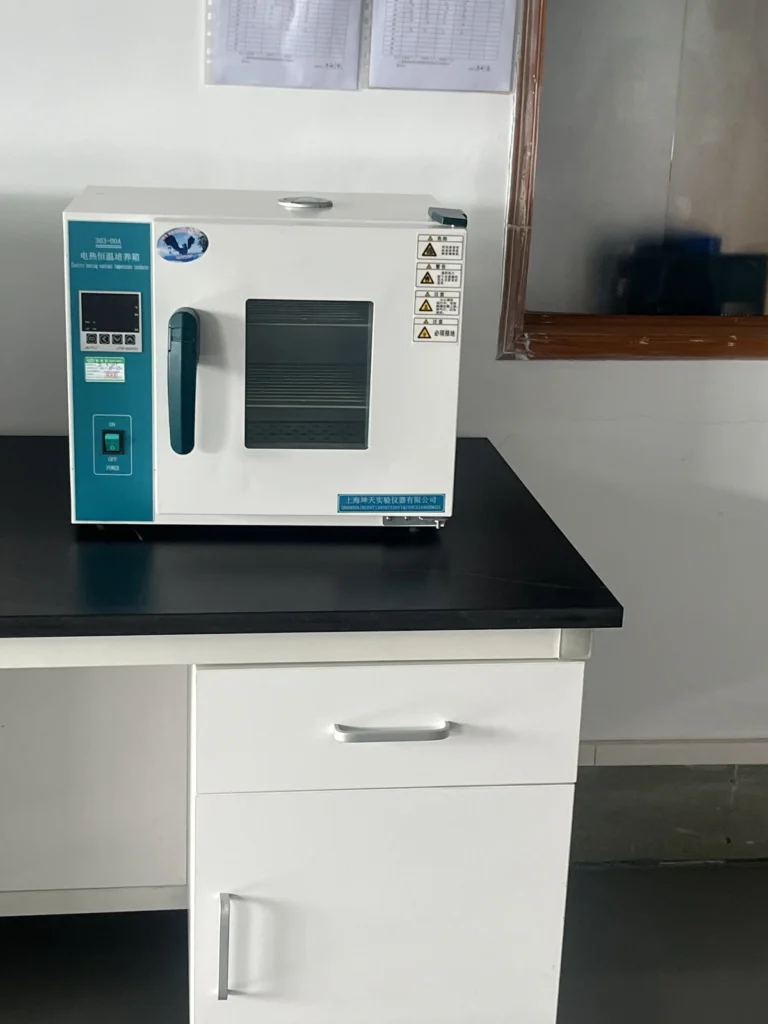
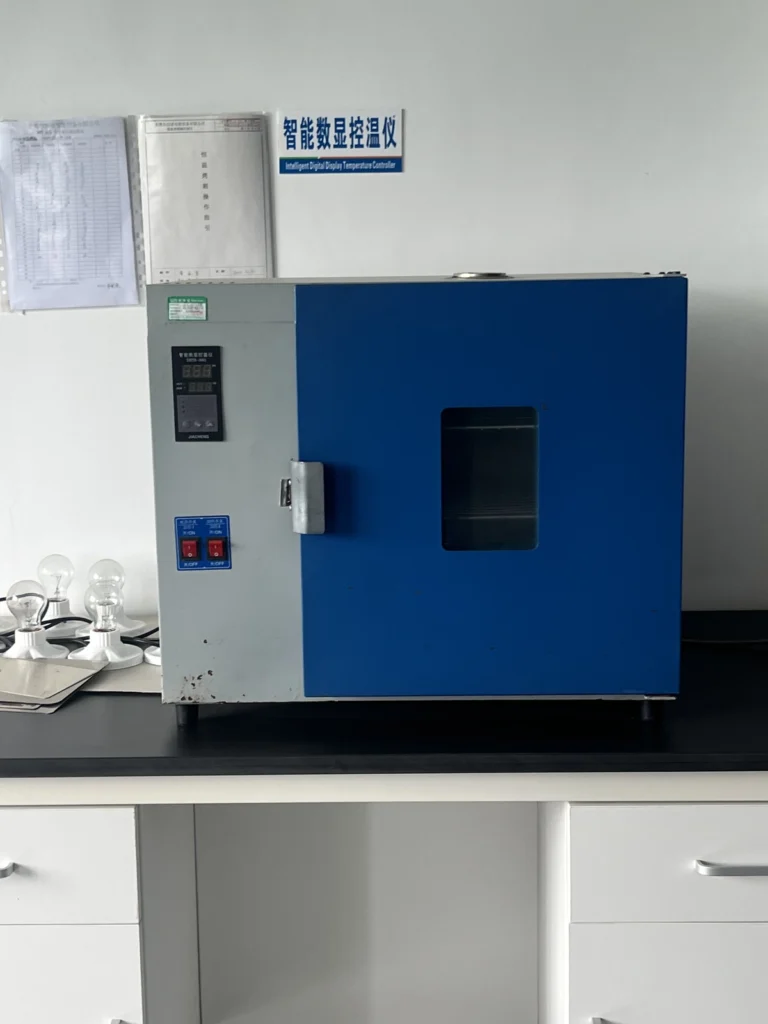
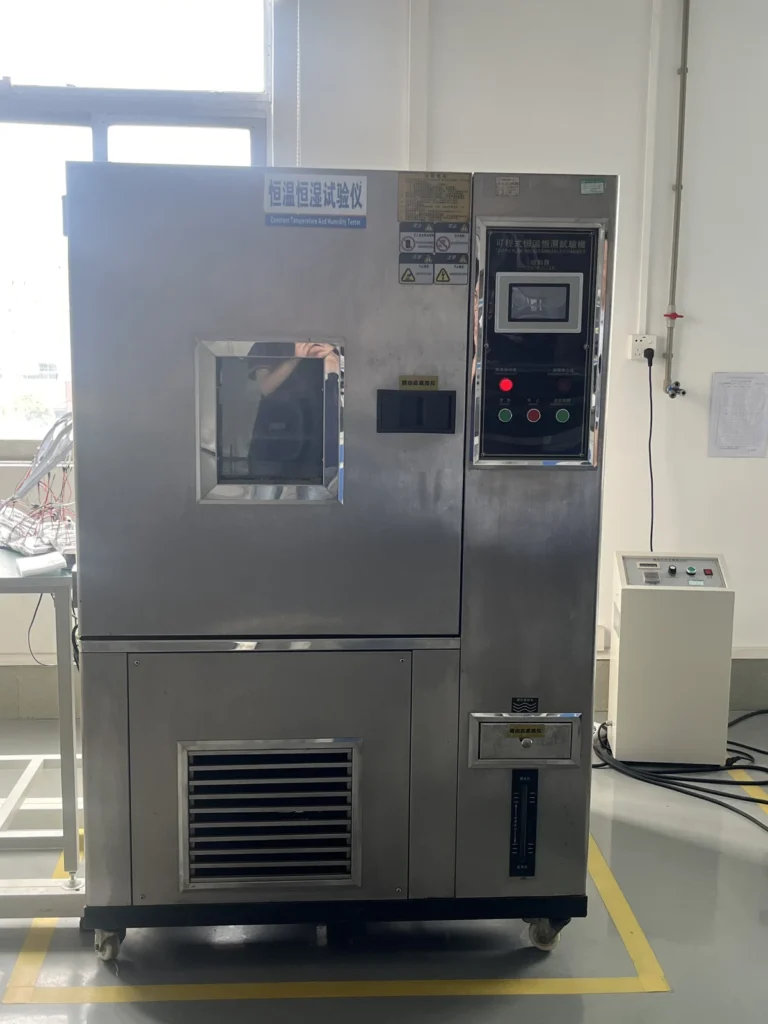
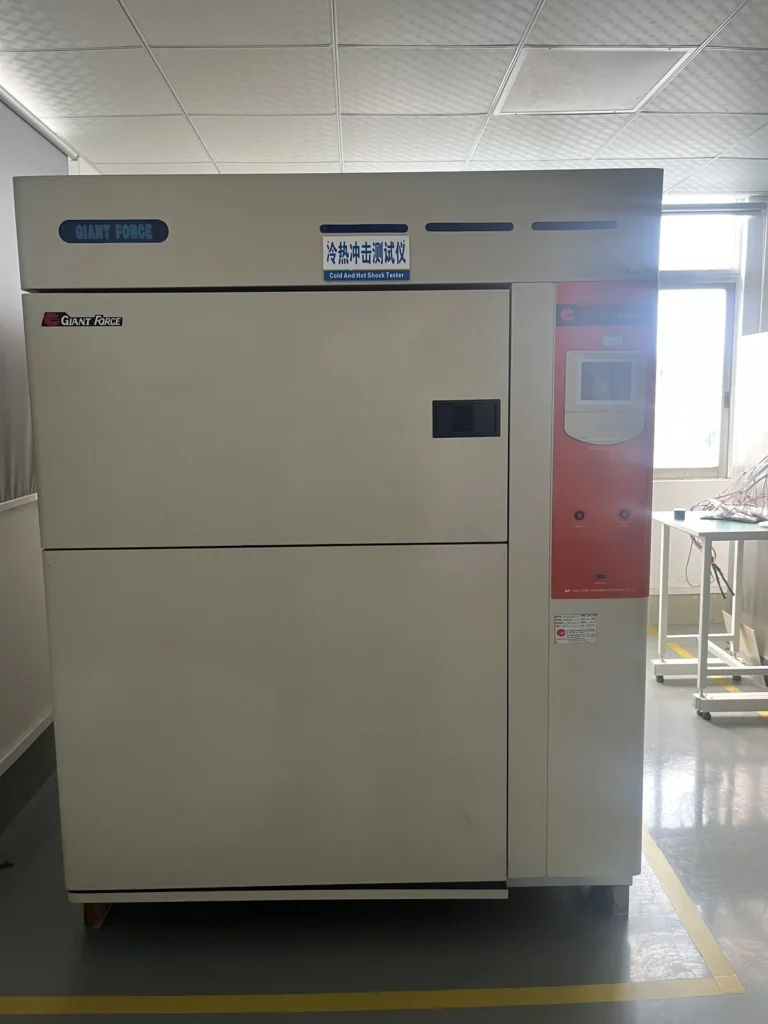
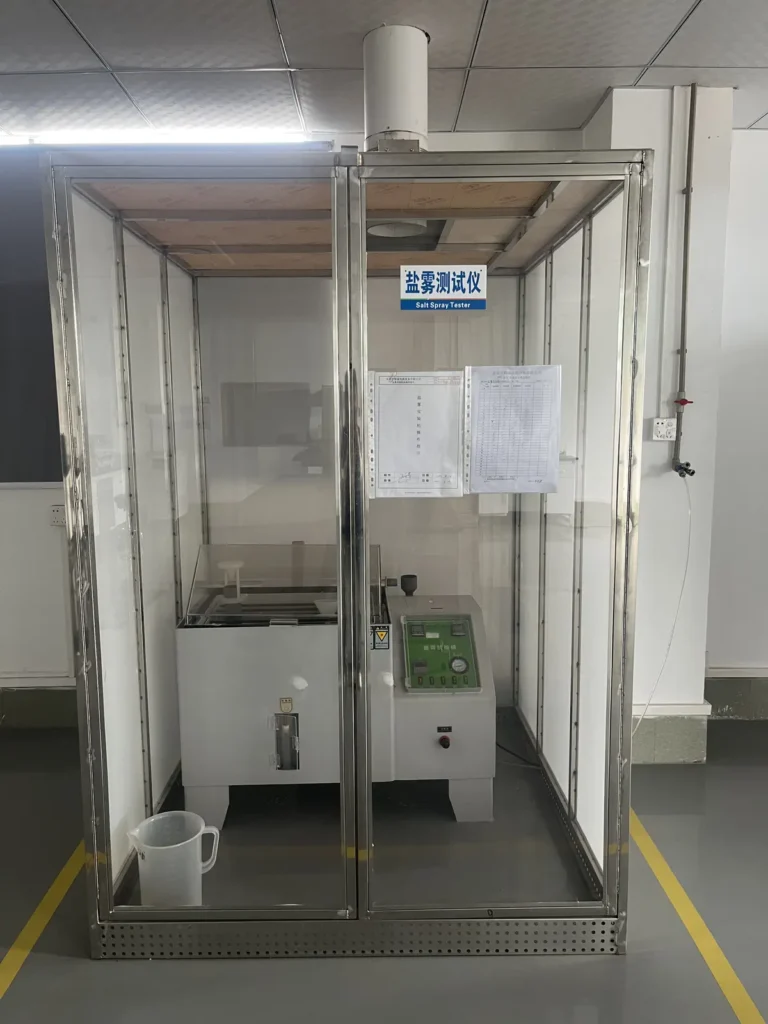
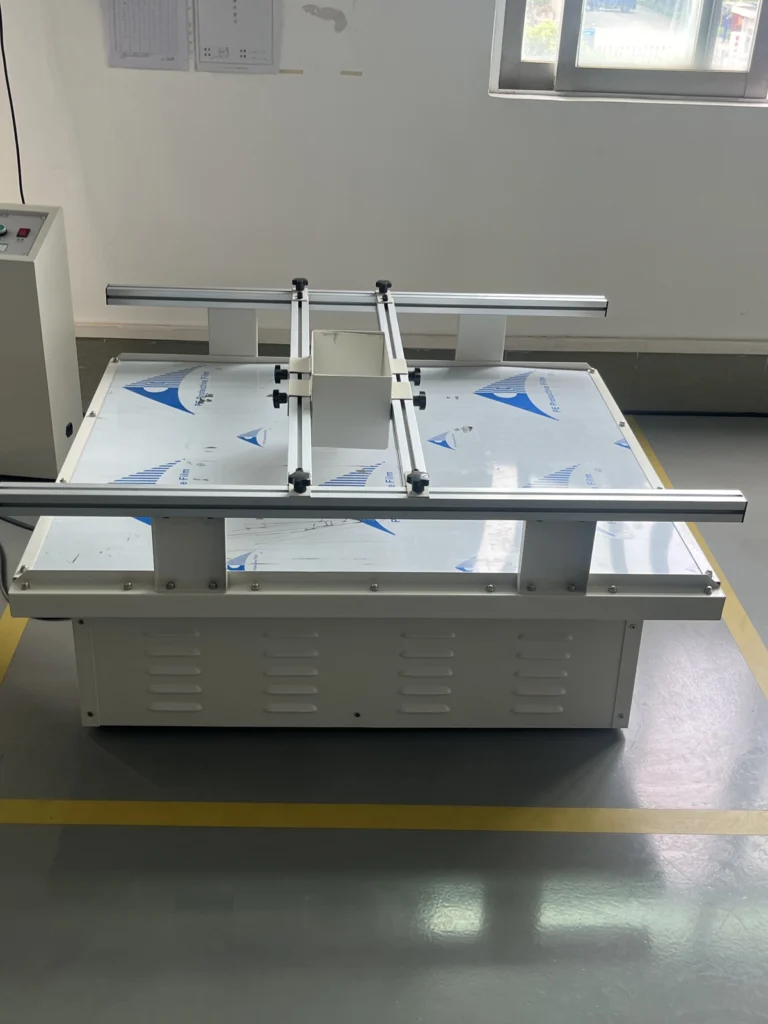
You’re also welcome to take a closer look at the actual testing equipment we use on our commercial induction cookers — this is what our in-house testing really looks like in practice. Below are the specific test items we run. (The instruments shown are real equipment on our factory floor — you’re welcome to see them in person if you visit.)
Step 1 — Electrically Heated Constant-Temperature Incubator
Finished units go in first. We hold each cooker at a controlled elevated temperature for a defined period, simulating the thermal load of sustained commercial use. This surfaces any component that was borderline on arrival — solder joints that crack under heat, capacitors that drift out of spec, connections that loosen. If it’s going to fail from heat, it fails here, not in a customer’s kitchen.
Step 2 — Intelligent Digital Display Temperature Controller
We run a precision temperature verification pass — confirming the unit’s own temperature regulation is accurate and stable under load. The controller’s readings are compared against our calibrated reference. A cooker that misreads its own operating temperature is a safety and consistency problem. This step confirms the onboard control is telling the truth.
Step 3 — Constant Temperature and Humidity Tester
The unit goes into a combined heat-and-humidity environment. Commercial kitchens aren’t dry labs — steam, heat, and moisture are constant. This chamber confirms the cooker’s electronics, seals, and housing hold up under real-world ambient conditions. Delamination, corrosion starting points, and control panel failures typically show up here.
Step 4 — Cold and Hot Shock Tester
Rapid temperature cycling — hot to cold, cold to hot, repeated. This is where thermal expansion mismatches between materials become visible. Solder cracks, housing warps, and glass panel micro-fractures that wouldn’t appear in steady-state testing get forced out here. It’s one of the hardest tests a unit faces.
Step 5 — Salt Spray Tester
Any exposed metal surface — frame, terminals, fasteners — goes through controlled salt fog exposure. Commercial cookers live in environments with grease, steam, cleaning chemicals, and moisture. Salt spray accelerates the corrosion timeline so we see in hours what the field produces over months.
Step 6 — Vibration Table (Earthquake Resistance Simulation)
The final mechanical stress check. Units are secured to the vibration table and run through frequency and amplitude profiles that replicate transport shock and installation vibration. A cooker that arrives at a restaurant with a loose component or cracked panel failed here first — which means it doesn’t ship.
A Middle Eastern client once messaged the sales team asking why his order was a few days late. The honest answer: a batch of capacitors failed incoming capacitance checks. The whole batch went back. Waiting for replacement stock ate the extra days.
His response surprised everyone. He said, “That actually makes me more confident.” Why? His previous supplier would just use whatever showed up. The problems always landed on end users.
How Suppliers Themselves Are Selected
Strict incoming inspection is still just a backstop. The real risk reduction happens one step earlier — choosing who to buy from in the first place. As an ATRX induction cooker manufacturer serving commercial kitchens, the selection logic isn’t price-first. Price matters, sure. But it’s not the deciding factor.
Core component suppliers go through a multi-dimension qualification. Only those who clear every critical bar get approved.
| Assessment Dimension | What Gets Evaluated | How It’s Determined |
|---|---|---|
| Production Equipment Level | On-site audit — equipment models, automation, capacity | Can they sustain stable bulk output |
| QC System Completeness | Full chain: incoming, in-process, and outgoing inspection | Records must be traceable, not empty paperwork |
| Historical Supply Stability | Performance over the past 12–24 months | Major unresolved issues = immediate disqualification |
| Problem Response Speed | How fast they react to anomalies and what they do about them | Root cause + corrective plan within the agreed window |
| Industry Reputation | Track record with other clients in the same space | Preference for proven experience in high-reliability commercial equipment |
One sentence sums it up: pick the right supplier and incoming inspection is just confirmation. Pick the wrong one and incoming inspection is damage control.
The elimination rate is steep. On audit trips, procurement engineers regularly find candidates with great pricing but no incoming inspection on their own lines. Quality records? Empty templates made for audits. These get cut in round one — they never even get to submit samples.
A long-term Turkish client once flipped through the supplier audit archives during a visit. His comment stuck: “No wonder your stuff is more stable. You spend more effort choosing suppliers than most factories spend choosing customers.”
If you’re evaluating commercial induction cooker suppliers right now and want to know which hard indicators matter beyond price, this piece breaks down three verifiable screening dimensions: How to Choose a Truly Reliable Commercial Induction Cooker Manufacturer.
How Every Unit Stays Consistent During Production
These machines come off batch production lines. They’re not hand-finished one at a time. The biggest risk in batch production? The first few units are fine, then later ones quietly drift — and nobody catches it until customers complain. By then the damage is done.
ATRX solves this by making unit one and unit two hundred leave the factory in identical condition. The method isn’t a single final gate. It’s mid-line interception — catching variation before it compounds.
A Southeast Asian restaurant equipment distributor came for an audit last year. His previous supplier had shipped 20 units in one batch; 3 had noticeably low power. All 20 reports said “passed.” He told our procurement team afterward: “I don’t care what your final report says. Show me how you catch things in the middle.”
That’s the right question. Mid-line interception structure is where consistency actually lives.
Which Production Steps Have Inspection Checkpoints
The line doesn’t run end-to-end with one final test at the finish. Mandatory checkpoints sit between critical processes. Fail at any node and the unit stops — it can’t move forward. These nodes are placed where problems hit hardest and are toughest to fix later. That’s the foundation of commercial induction cooker production inspection here.
Want to see the full manufacturing flow first, then understand where checkpoints sit? Start here: How Commercial Induction Cookers Are Manufactured.
Here’s the checkpoint sequence along the production flow:
After mainboard SMT soldering → AOI (Automated Optical Inspection). Every board gets scanned. Cold solder, missing parts, misaligned components — all caught here. Boards that fail are ejected automatically. No human override.
After through-hole insertion and wave soldering → In-line functional pre-test. Each soldered board powers up for a basic response check. The goal: confirm circuit continuity before it goes into a full unit.
After complete assembly → Insulation withstand voltage test. A set voltage is applied between internal wiring and the outer shell. Any breakdown or leakage means fail. This is a safety gate. Non-negotiable.
During power-on commissioning → Power output consistency check. Actual output is measured under standard load. If the reading lands outside the allowed band, the unit doesn’t move forward.
Before packaging → Appearance and labeling final check. Surface condition, nameplates, accessories — everything non-electrical gets closed out here.
Every one of these is 100% inspection. Not sampling. Every unit, every time.
That Southeast Asian distributor stood on the line for close to two hours during his visit. He watched the AOI station auto-eject a board with a shifted solder joint. No one stepped in to debate “it’s only slightly off.” Machine says fail, it’s fail.
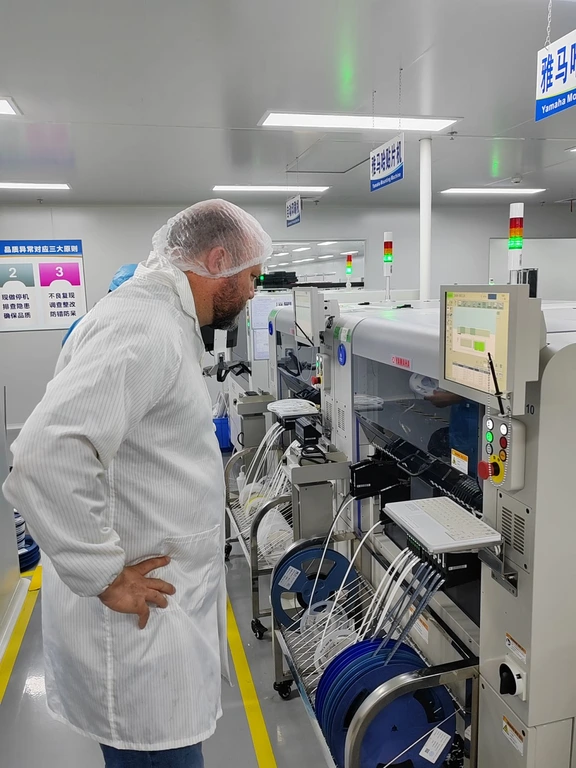
In his feedback he wrote: he’d toured multiple factories and this was the first with hard-stop interception between stages.We’re not alone in hearing this — many of our clients share the same impression. In the photo below, you can see one of our customers from the United States touring our clean-room production facility, observing firsthand how PCB boards are manufactured and inspected for quality.
How Defective Units Are Handled Once Detected
Finding a defect isn’t the end of the process. Three steps follow: classify severity, trace the root cause upstream, then decide whether the rest of the batch needs expanded checks.
Earlier this year, the QC team hit a pattern: four units over two days failed withstand voltage — same symptom, same spot, elevated leakage. Pulling those four for rework would have “solved” the visible problem. But traceability records showed all four used wire from the same incoming batch.
The team immediately re-sampled the remaining unused wire from that batch. Finding: insulation thickness sat right on the lower tolerance edge. Decision: send the entire batch back. Not “it still technically works, keep going.”
That’s what traceability does. It doesn’t just fix what’s in front of you. It follows the thread and blocks batch-level risk before it spreads.
Here’s the defect classification logic:
| Defect Level | Typical Scenario | Action Taken | Triggers Batch Traceability? |
|---|---|---|---|
| Level A (Safety) | Voltage breakdown, leakage above limit | Scrapped on the spot — no rework | Yes — same-batch materials and same-period products all get checked |
| Level B (Functional) | Power out of spec, control board dead | Identify failed part, evaluate rework | If ≥2 units show it, yes |
| Level C (Cosmetic/Labeling) | Scratch, crooked nameplate, missing accessory | Rework, then re-run final inspection | No — handled per unit |
This isn’t just about removing bad units. Each month the QC team counts how often each defect type repeats. Same issue pops up more than twice? It escalates to a process improvement task. The line gets a permanent fix.
The goal shifts from “catch it every time” to “make it stop happening.”
Pre-Shipment Verification Methods
Assembly done doesn’t mean ready to ship. Two more hard gates stand between the line and the loading dock. First: real-load stress to flush out hidden issues. Second: item-by-item final inspection to lock down overall condition. Pass both or it doesn’t leave.
How Full-Load Burn-In Testing Works
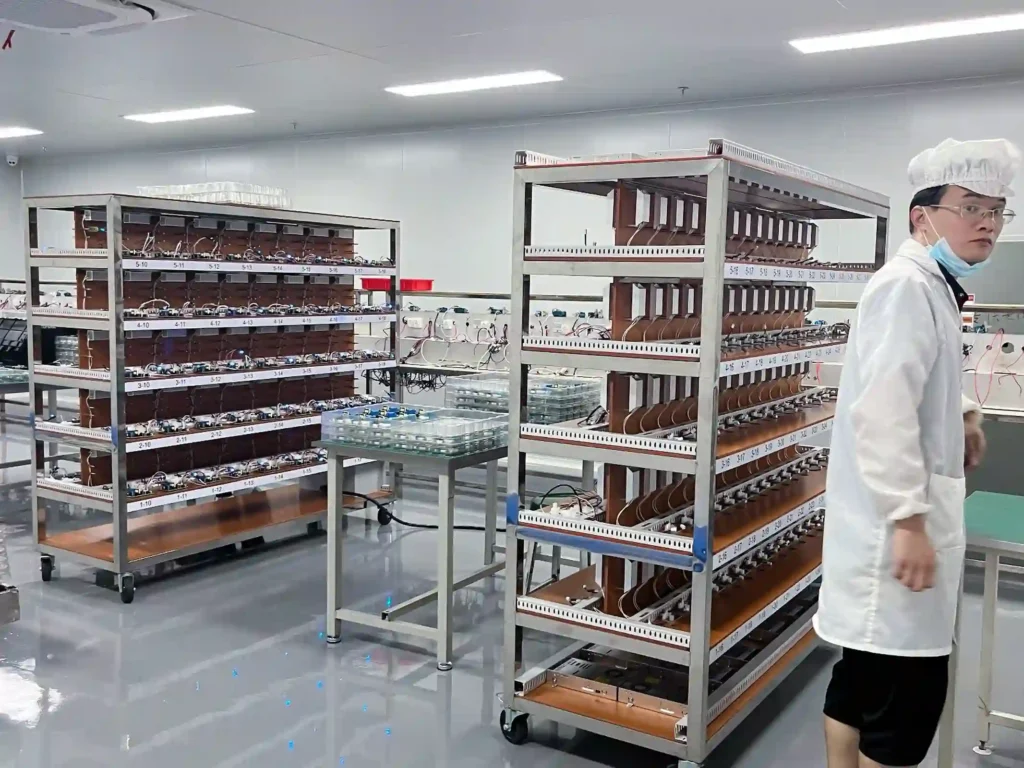
Turning on and lighting up is not the same as being qualified. Every unit goes through induction cooker burn-in testing before it ships. That means running at near-maximum power, continuously, for hours — long enough to force out failures that a quick bench test would miss.
The setup: each assembled unit goes onto a test station at rated max power (or close to it) and runs nonstop for 4 to 8 hours. That window mirrors a commercial kitchen pushing through lunch and dinner service back-to-back. No one touches the machine during the run. It just endures sustained heat and heavy current.
What breaks under this stress? Cold solder joints crack from thermal cycling. Capacitors degrade under heat. Fan bearings develop noise after hours of spin. If something is going to fail in the field, this is where it shows up first.
Parameters monitored during burn-in:
IGBT module temperature. Surface temp is logged continuously. Cross the safety threshold and it’s an automatic fail. Bad thermal design can’t hide here.
Input/output power stability. Input and output are compared in real time. If fluctuation exceeds the band, something in the main circuit is drifting. Unit goes back for investigation.
Cooling fan speed. Actual RPM must match the spec. A speed drop points to a motor issue or faulty control signal — either one leads to overheating down the road.
Unexpected protective shutdown. Zero shutdowns are allowed during the full burn-in window. If the unit trips and restarts on its own, it fails — no matter how fine it looks afterward.
What Final Inspection Covers After Burn-In
Burn-in proves the machine survives sustained load. But surviving isn’t the same as being flawless in every detail. A dedicated final inspection station handles that — one person, one checklist, every item checked. One fail and the unit stays put.
| Category | What’s Checked | Fail Criteria |
|---|---|---|
| Power Level Response | Cycle through every level, confirm heating kicks in | Any level dead, delay over 2 seconds, output deviation out of spec |
| Control Panel | Press every button, full-light display test | Dead button, missing segments, dim or uneven indicators |
| Safety Protections | Trip each one: over-temp, empty pot, overcurrent | Any protection doesn’t fire under its trigger condition |
| Enclosure Appearance | Standard-light scan for scratches, dents, warping, color shift | Visible-surface scratch over limit, dent, color mismatch, gap unevenness |
| Printing and Labels | Clarity, alignment, adhesion strength | Blurred text, off-center, peels with a fingernail |
| Accessories | Count rubber feet, power cord, manual | Anything missing, wrong, or loose |
One functional fail — back to the line. One cosmetic issue over the limit — same result. “Close enough” doesn’t exist here.
A restaurant chain’s procurement lead visited last year to watch the process in person. He followed along with his phone open to the checklist, matching each item as the inspector worked. When it was done he told the QC supervisor: “Your final inspection is more granular than my old supplier’s incoming inspection.”
That’s not a marketing quote. It’s what someone spending real budget said after standing there and watching it happen. Burn-in proves the machine can run. Final inspection proves nothing is off. Together, they’re the full gate before any unit leaves the building.
Commercial induction cooker quality doesn’t come from one final checkpoint. It’s layered — supplier qualification, incoming screening, mid-line interception, burn-in stress, item-level final inspection. Every layer removes uncertainty. Every layer closes a gap where luck might have been enough.
That’s what commercial induction cooker quality control looks like when it’s structural, not cosmetic. When you’re evaluating a supplier, skip the claims. Look at whose system still holds up when you’re standing right next to the line, checking every step yourself.
That’s exactly how ATRX runs it. As a manufacturer special in induction technology,controlling every stage in-house — from incoming material gates to final burn-in release — the entire process described above is what you’d walk through on a single factory floor. If you want to put it to the test, the line is open.
Common Questions People Ask
Q: A factory claims to have a QC system. During a commercial induction cooker supplier audit, what should I actually look at to tell if it’s real?
Skip the final product report — everyone has one. Look at three things instead. First: does incoming inspection have real rejection records, not just a procedure document? Second: are there mandatory stop-points between production stages with a separate process for handling defects? Third: does the burn-in station run every unit with live monitoring data that gets saved?
If records are traceable, the system is real. If all you see is paperwork with no execution evidence, it’s window dressing.
Q: Two factories quote similar prices. One delivers faster, one slower. Does slower mean less efficient?
Not always. The gap often comes from how many QC steps sit inside the timeline. Full-load burn-in alone takes 4 to 8 hours per unit. Rejecting a bad material batch and waiting for resupply adds days too.
If the faster factory is skipping those steps, you’ll likely see higher failure rates after delivery — and the after-sales cost plus customer complaints will eat whatever time you saved. Ask what quality actions are baked into the lead time. Then decide if the trade-off makes sense.
About the author

ATRX Team| 18 Years Commercial
Induction Cooker Manufacturer in China
Induction Cooker Manufacturer in China
Related Posts

Best Commercial Induction Cooktop: Types &Buying Guide
10/09/2026
Commercial Double Hob Induction Cooker | Types, Power, and Installation Guide
10/05/2026
Commercial Induction Cooker 3500W: Model Selection, Commercial Power and Installation
09/29/2026
How to Install a Built-In Induction Cooktop: A Step-by-Step Guide
09/17/2026
How to Clean a Commercial Deep Fryer: A Step-by-Step Guide
09/13/2026
High Quality Commercial Induction Cooker Manufacturer
09/09/2026
Automatic Wok Machine: Types, Specifications, Applications and Buying Guide
08/18/2026
Commercial Induction Range: How to Choose the Right Size, Power, and Configuration for a Commercial Kitchen
08/15/2026
What Is a Commercial Induction Cooker and How Does It Work
08/13/2026
Commercial Induction Range for Hotel Kitchens: How to Choose the Right Model
08/11/2026