

Best Induction Cooktop for Food Truck
07/04/2026
Estimated reading time: 2 minutes
If you’re picking an induction cooktop for a food truck, this article narrows the field for you. We matched equipment recommendations to different menu types, laid out the real trade-offs between single and dual burners, explained how to match cooktop power to your generator, and listed the hard specs you need to check before ordering. Everything here is based on actual commercial food truck use — not general overviews. Just which models are worth buying, and why.
IN THIS ARTICLE
Which Induction Cooktops Are Worth Buying for a Food Truck?
Your menu decides your equipment. A burger truck and a ramen truck need completely different setups. Here are recommendations broken down by four common food truck menu types.
Fast-Casual Trucks (Burgers, Sandwiches, Pancakes)
These trucks live on speed and variety. No single machine covers everything, but you don’t need five devices either. Pick 2–3 from the list below based on your main items.
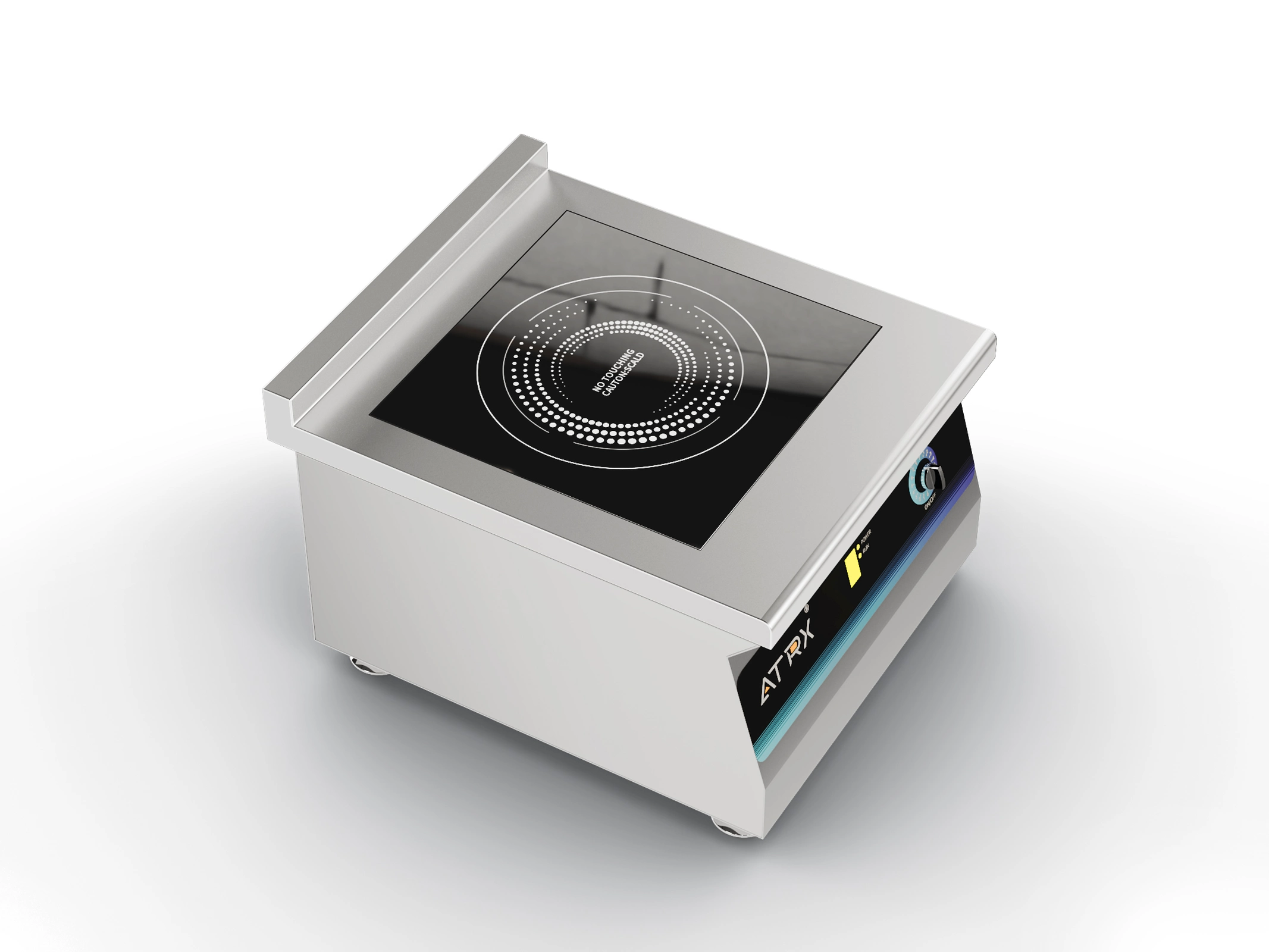
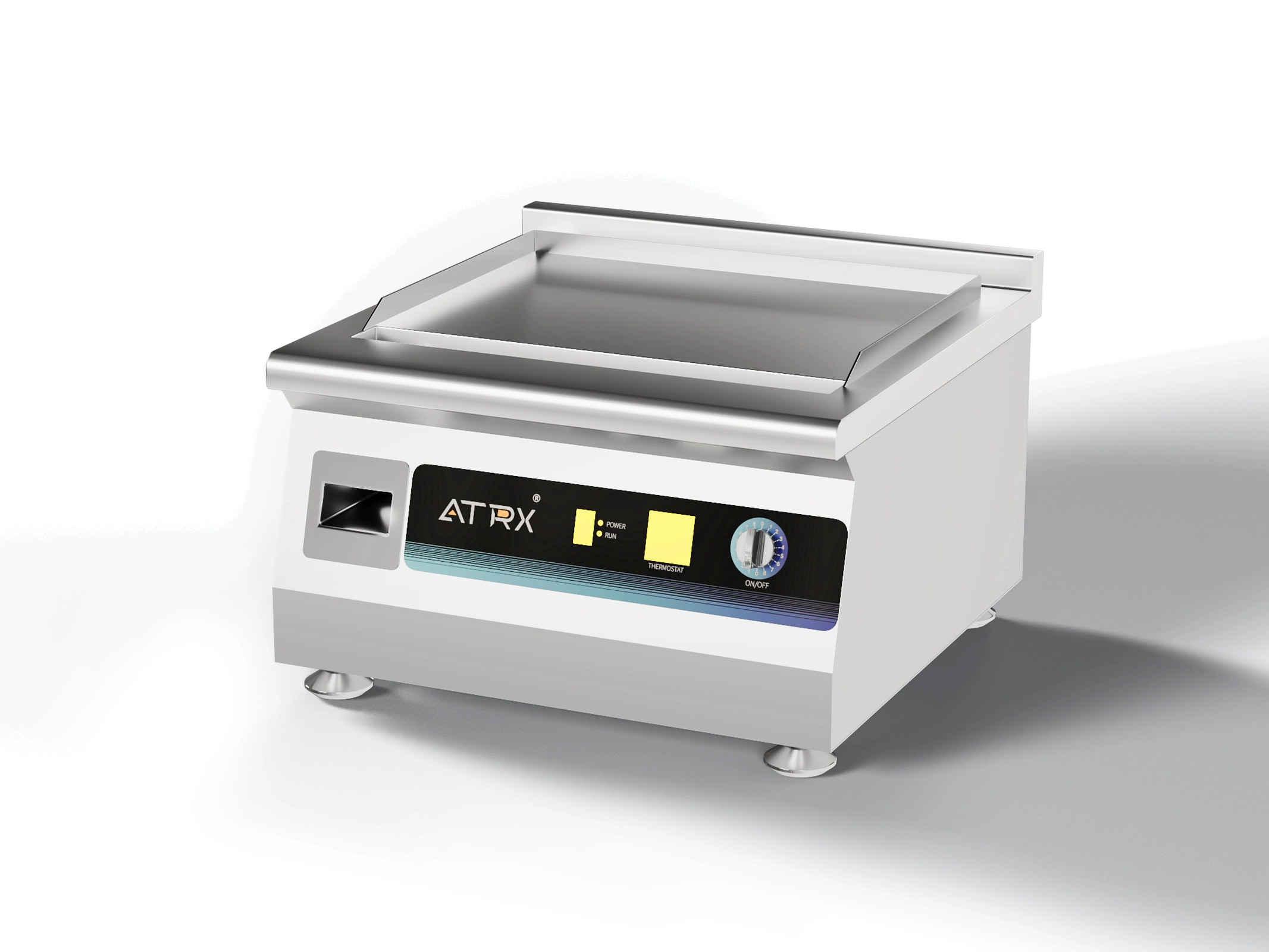
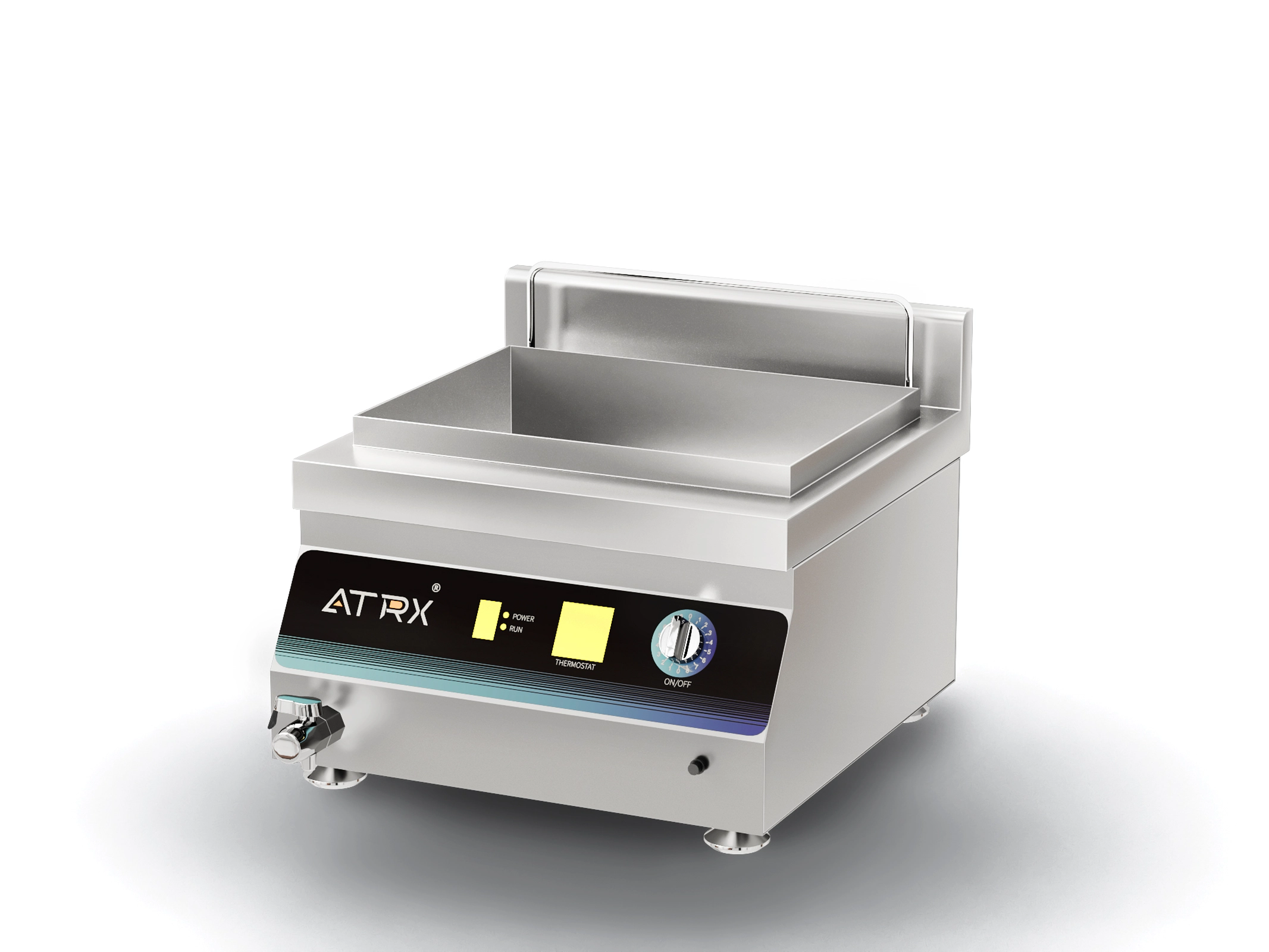
| Equipment Type | What It Does | Recommended Model | Power / Size |
|---|---|---|---|
| Flat Induction Cooktop | Frying eggs, heating sauces, cooking patties | ATRX AT-CTP-003/005 | 3.5KW/5KW, 420×470mm |
| Induction Griddle | Batch-cooking burgers, pancakes | ATRX AT-CTG-003/005 | 3.5KW/5KW, 550×470mm |
| Induction Fryer | Fries, chicken nuggets, sides | ATRX AT-CTF-003/005 | 3.5KW/5KW, 500×500mm |
For a burger truck, the most common combo is one griddle (batch patties) plus one fryer (fries). Add a flat cooktop if your menu includes breakfast eggs or pancakes. Three machines, full coverage.
3.5KW or 5KW? Under 200 servings a day, 3.5KW works fine. Over 200 — or heavy lunch-rush volume — go with 5KW. The recovery speed gap shows up fast when orders stack.
Soup, Noodle & Broth Trucks (Ramen, Pho, Stew)
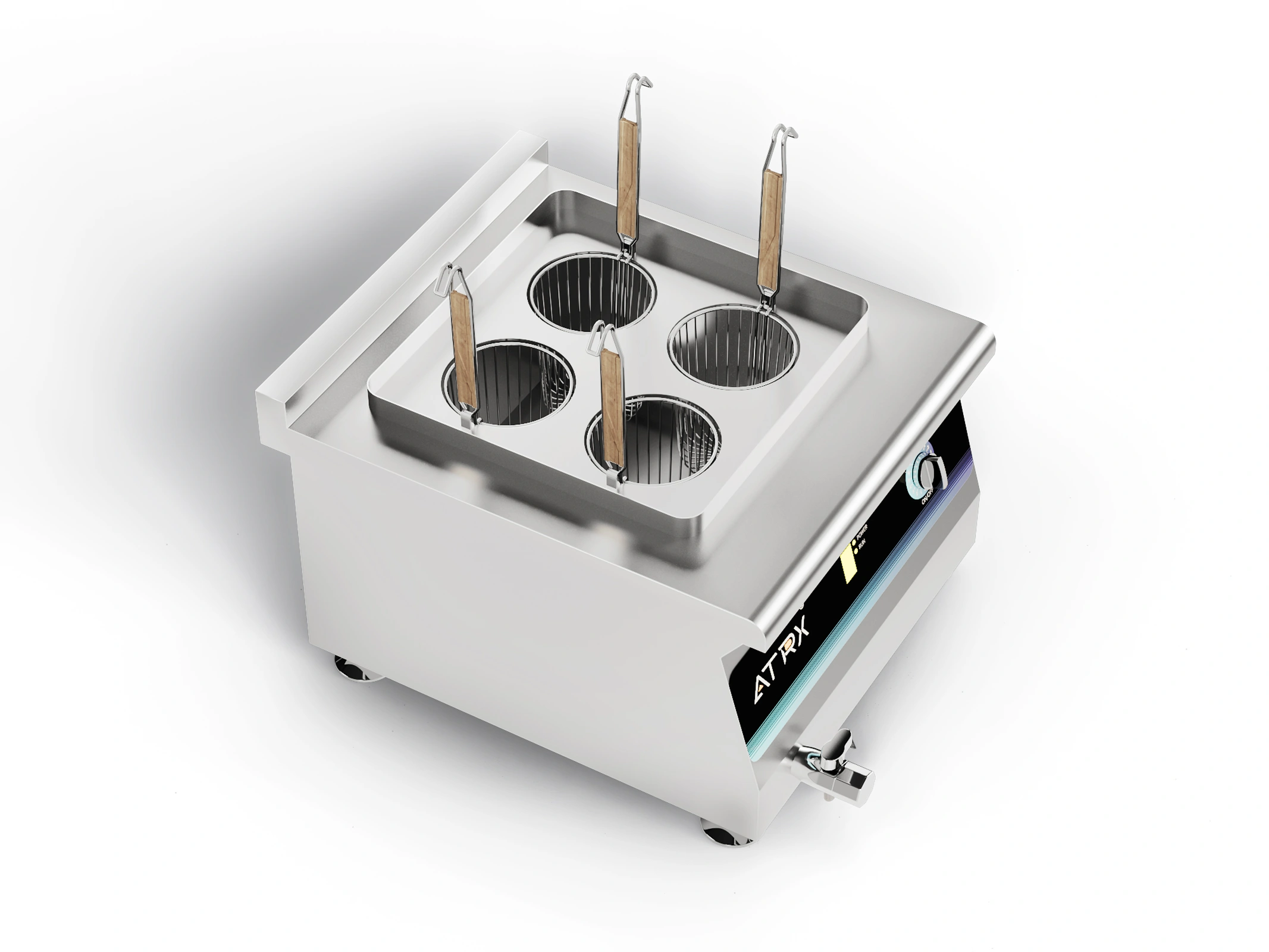
These trucks run on different logic. Fast-casual is “quick sear, quick serve.” Noodle trucks are “broth can’t stop, noodles must cook fast.” Your equipment revolves around three jobs: simmering broth, cooking noodles, and preparing toppings.
| Equipment Type | What It Does | Recommended Model | Key Features |
|---|---|---|---|
| Flat Induction Cooktop | Continuous broth simmering | ATRX AT-CTP-005 | 5KW, 8-level knob for precise temp control |
| Induction Noodle Cooker | Multiple noodle types / blanching at once | ATRX AT-CTB-003/005 | 4 baskets, 12-second reboil |
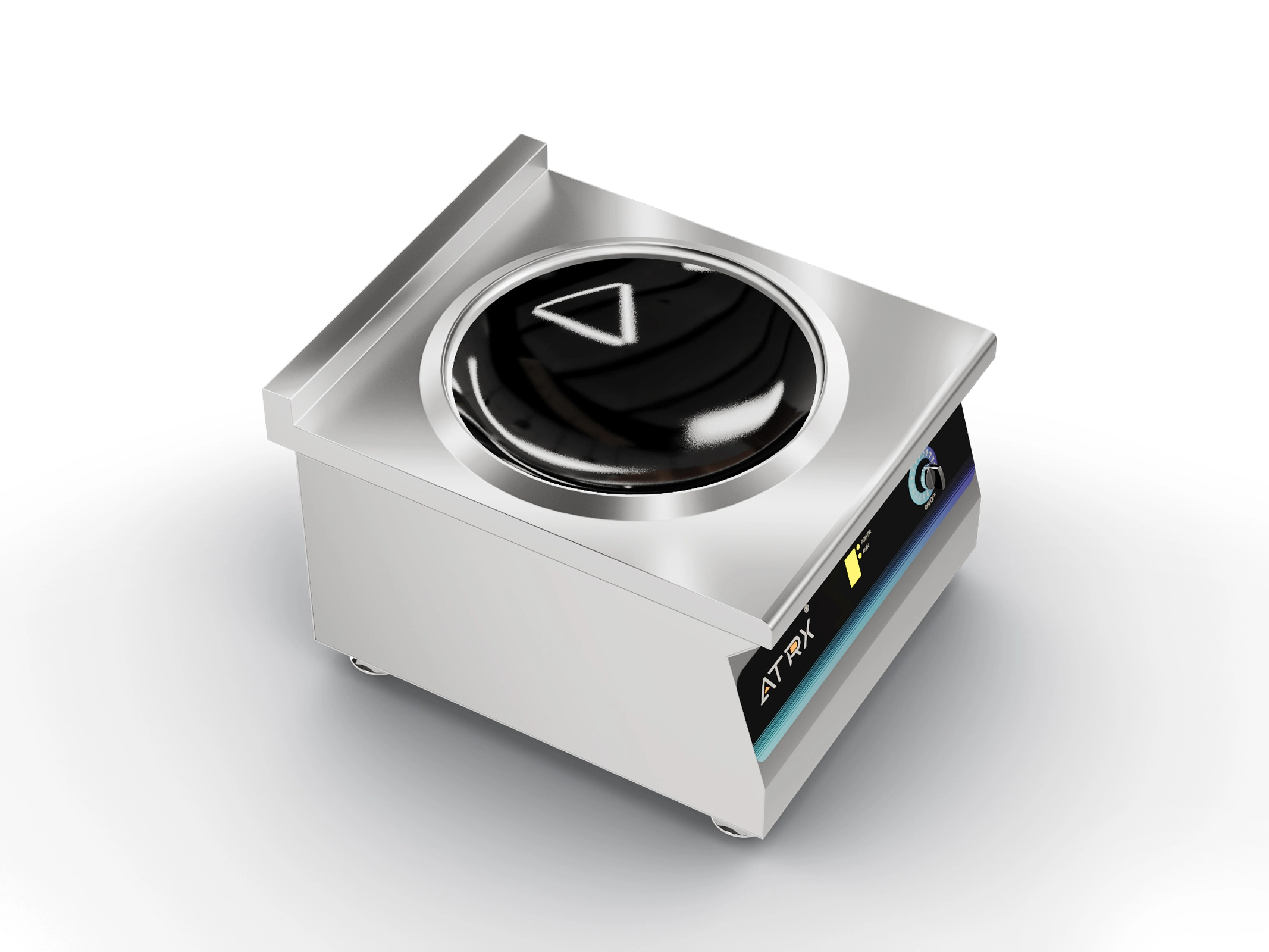
| Wok-Style Induction Cooktop | Stir-frying toppings (char siu, braised meat) | ATRX AT-CTW-003/005 | Concave surface fits round-bottom woks |
Broth is the lifeline. One pot simmers from morning to night — no interruptions, no scorching. That puts serious demands on continuous operation. Household units typically auto-shutoff after 2–3 hours. On a food truck, that’s worse than it sounds: the shutoff triggers a generator restart surge that can knock out your fridge, POS, and exhaust fan all at once. Your whole service line goes dark.
Asian Stir-Fry Trucks (Fried Rice, Pad Thai, Teppanyaki)
The soul of these trucks is fierce heat and fast wok work. Without enough power, fried rice sticks, noodles break, and there’s zero wok hei. A flat cooktop can’t do this — it only touches a small spot on the bottom of a round wok. Most of the wok walls stay cold.
Two equipment types matter here:
Wok-Style Induction Cooktop (single burner) — the AT-CTW-005, 5KW. Its concave coil follows the curve of a round-bottom wok, giving about 40% more heating contact than a flat surface. On Reddit’s r/inductioncooking, one widely cited rule of thumb says Asian cooking needs at least 3500W — anything less and you can’t get wok hei. 5KW is the realistic ceiling for single-phase 220V on a food truck, and it’s also the minimum for real stir-frying.
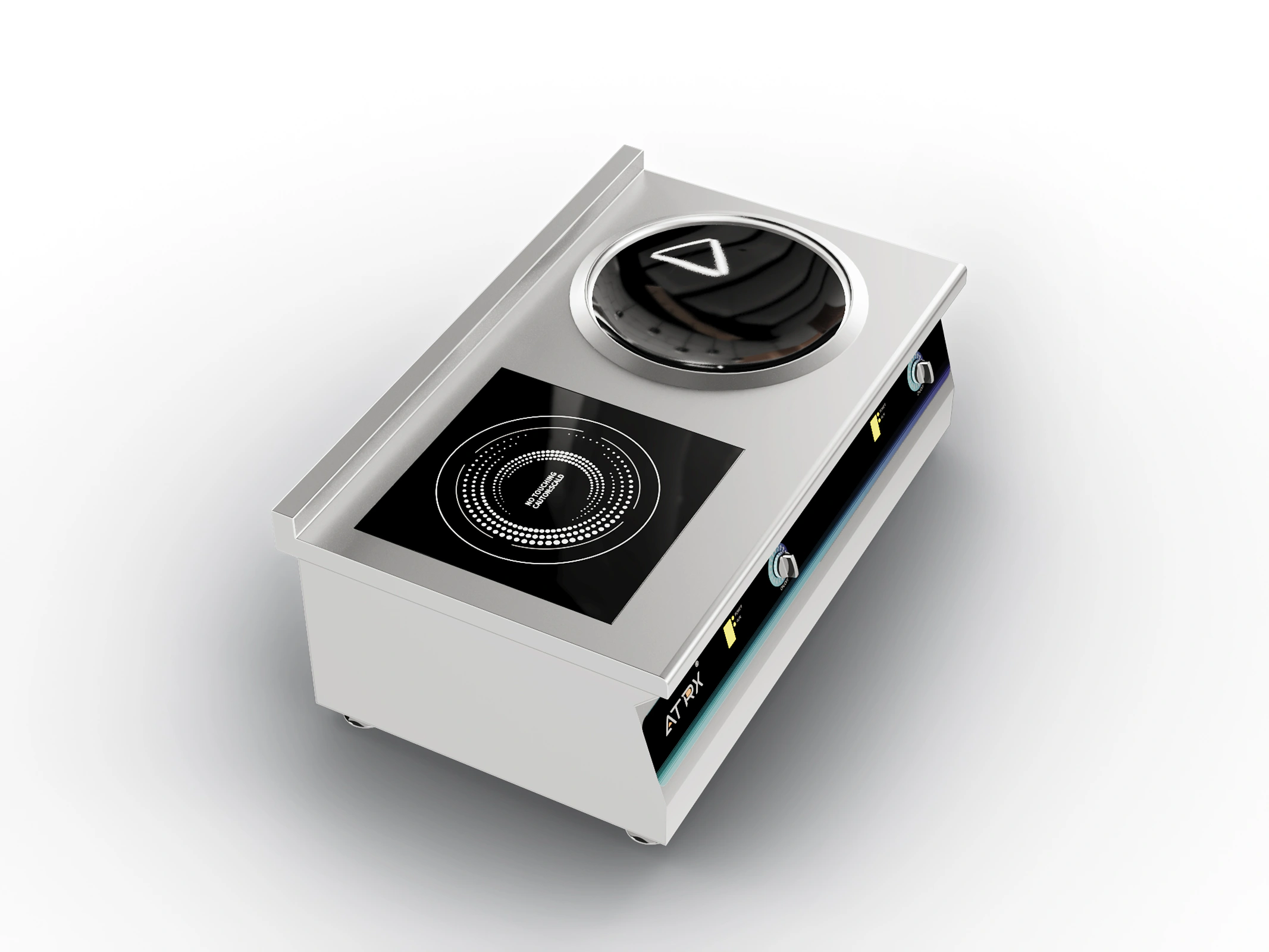
Flat + Wok Combo (dual burner) — the AT-CTWII-003/005. Left side flat, right side concave, each with independent 3.5KW. Stir-fry on the concave side while the flat side cooks rice or simmers sauce. One machine, full workflow. It’s 800×470mm — fits most truck counters.
Deep-Fry Trucks (Fried Chicken, Fries, Donuts, Churros)
Deep-fry trucks worry about two things: unstable oil temperature and open-flame risk. A ±5°C swing means food comes out too greasy or burnt. Propane plus open flame is the most common fire-inspection violation on food trucks.
Induction fryers fix both problems.
| Model | Tanks | Oil Capacity | Power | Dimensions | Temp Accuracy |
|---|---|---|---|---|---|
| AT-CTF-003 | Single | 25L | 3.5KW | 500×500mm | ±1°C |
| AT-CTF-005 | Single | 25L | 5KW | 500×500mm | ±1°C |
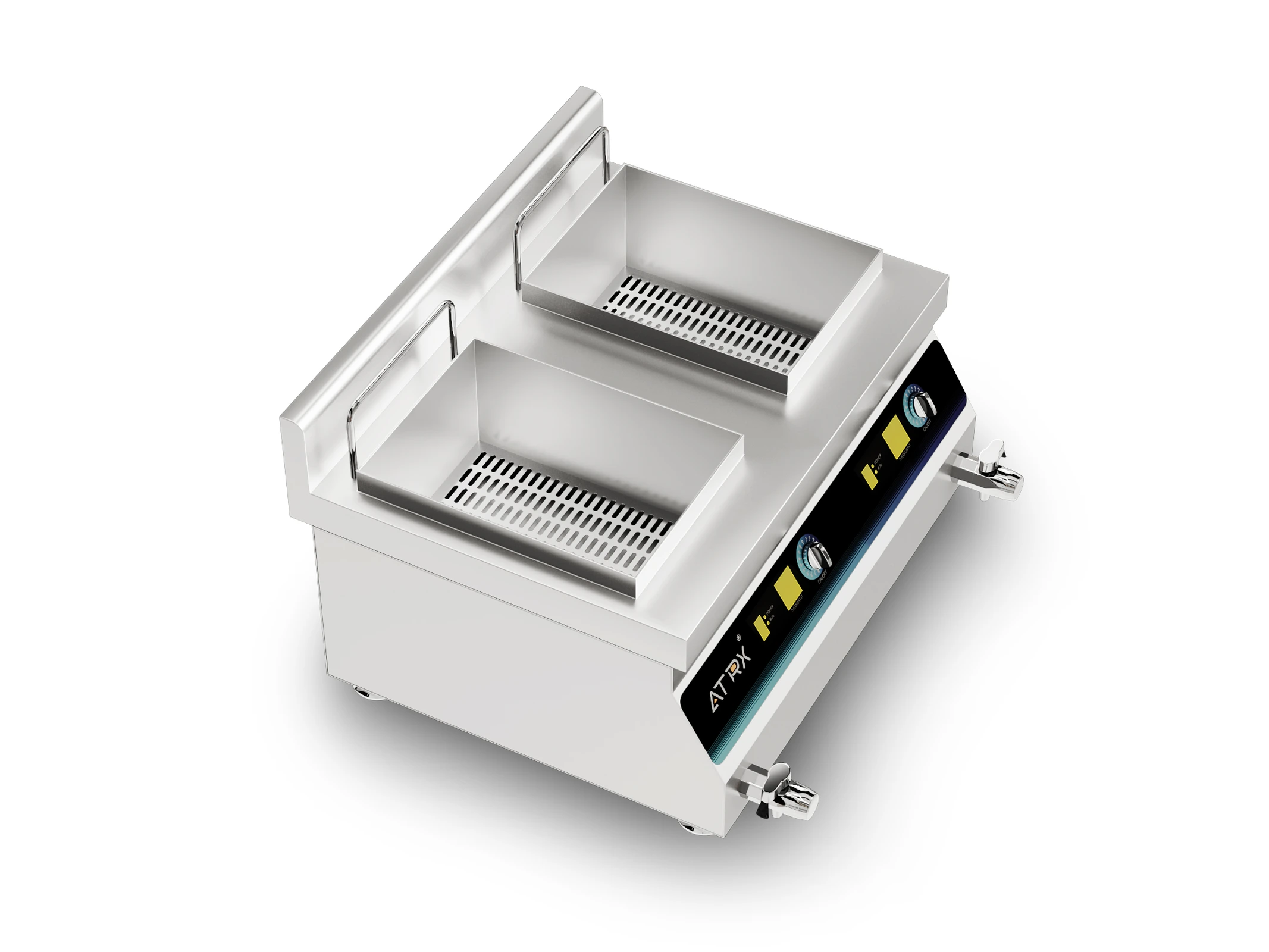
| AT-CTFII-003 | Dual | 9L×2 | 3.5KW×2 | 800×500mm | ±1°C |
| AT-CTFII-005 | Dual | 9L×2 | 5KW×2 | 800×500mm | ±1°C |
Single-tank 25L suits trucks built around one main fried item — fried chicken or fries. The large oil volume keeps temperature stable through dozens of servings. Dual-tank works when your menu has two items at different temperatures — say, 170°C wings on one side and 180°C fries on the other. No flavor crossover.
±1°C precision matters more on a food truck than anywhere else. Gas fryers typically swing ±5–10°C. Every time cold food drops in, oil temp crashes and recovers slowly. During that recovery, food soaks up extra oil. Induction heats electromagnetically — the oil barely dips.
Single Burner vs. Dual Burner: Which Works Better on a Food Truck?
This comes down to your counter width, power setup, and menu. It’s one of the most common questions truck owners wrestle with before buying.
Why Two Single Burners Often Win
A popular Reddit thread on r/vandwellers (45 comments) tackles this directly. The top-voted take: two singles each have their own power supply. If one dies, the other keeps going.
On a food truck, that matters a lot. You’re not in a kitchen where you can call a repair tech in an hour. You’re on the street, mid-service. A dual burner’s control board fails? Both sides go down. Your whole day might be done. Two singles give you a safety net.
Three other advantages stand out for trucks:
- Full power on each burner. Each single runs its own circuit — no power sharing. One user in that thread tested an 1800W dual burner and found each side only got about 900W when both ran at once. Stir-frying was impossible. Two independent singles each output their full rated wattage. On a generator with limited capacity, every watt counts.
- Flexible counter space. Only using one? Stow the other and reclaim the counter. Truck counters run 1.2–1.8 meters long. An extra 20cm for prep or plating makes a real difference.
- Mix and match. They don’t have to be identical. Pair a flat cooktop with a wok burner, or a wok burner with a noodle cooker. An AT-CTP-003 plus an AT-CTW-003 — one flat, one concave — covers more ground than any dual-flat unit.
When a Dual Burner Makes More Sense
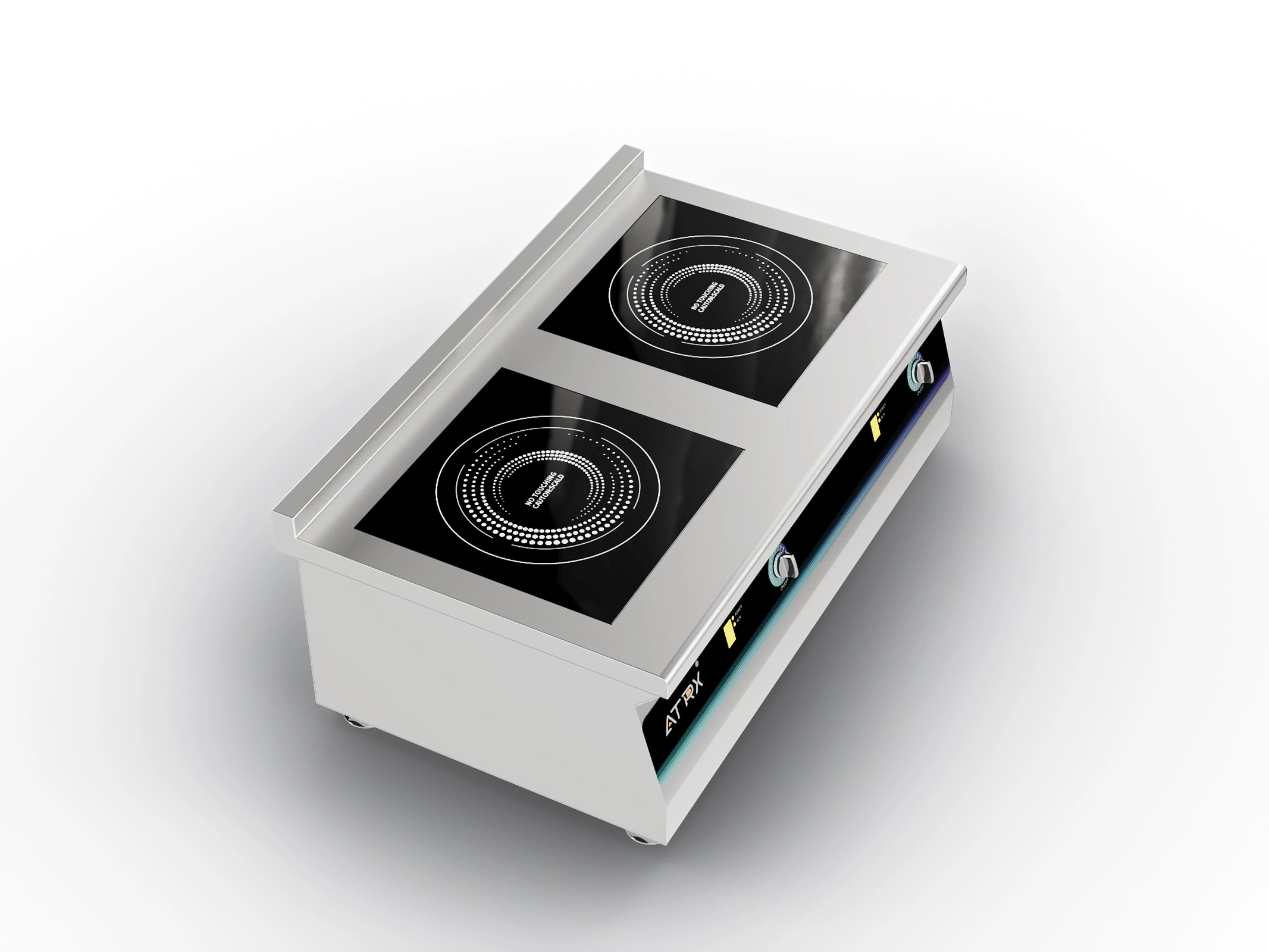
When counter space is genuinely maxed out. The dual-burner AT-CTPII-003 is 800×470mm. Two AT-CTP-003 units side by side take 840×470mm. That 40mm gap can be the difference between “fits” and “doesn’t fit” on a standard truck counter.
Wiring is simpler too. A dual burner uses one cable, one circuit. Two singles need two of each. If your truck’s electrical panel only has one slot left, the dual unit saves you from rewiring.
A dual burner also works well when you need two pots running but not both at full power — say, low heat holding broth on one side and medium heat searing patties on the other. Combined draw stays well below peak, so shared power isn’t a problem. The flat + wok combo AT-CTWII-003 follows the same logic: if your menu needs both surfaces anyway, one unit is cleaner and simpler to wire.
How Much Power Does Your Food Truck Induction Cooktop Actually Need?
Too little power and you can’t keep up at the rush. Too much and the generator trips the moment you turn on. A food truck has a hard power ceiling — unlike a restaurant on grid power. You need to balance what your menu demands against what your generator delivers.
Match Power to Your Menu
Vollrath’s commercial induction buying guide offers a useful power-to-task framework:
| Power Range | Best For | Food Truck Examples |
|---|---|---|
| 300–1250W | Holding, low-heat warming | Warming stations, sauce holding |
| 1400–1800W | Pan-frying, eggs, display cooking | Fried eggs, hot sandwiches, small stir-fry |
| 2600–3800W | High heat, sustained boiling, large pots | Stir-fried rice, broth, deep frying |
Here’s how that maps to the ATRX lineup:
3.5KW (3500W) — Handles most Western fast-casual menus: burgers, sandwiches, pancakes. It’s the most common commercial countertop tier, the best value, and the lightest load on your generator.
5KW (5000W) — For peak-hour rushes that demand fast recovery, or sustained high heat: broth, stir-fry, frying. Costs a bit more, but during a 2–3 hour lunch peak, the speed difference adds up to real extra servings.
8KW (8000W) — Large-pot stewing, high-volume broth. But it needs 380V three-phase power. Most food truck generators are single-phase 220V and can’t run it. Skip 8KW unless you have a custom large trailer with a three-phase generator.
Bottom line: most food trucks choose between 3.5KW and 5KW. For a deeper comparison of the two, see this complete guide to commercial induction cooktop power.
How to Calculate What Your Generator Can Handle
Champion Power Equipment’s food truck generator guide gives a simple formula:
Max cooktop power = Generator rated output − Other equipment draw − 20–30% safety margin
“Other equipment” means fridge, exhaust fan, lights, POS — anything that stays on during service. The safety margin covers startup surges. This is critical on a truck: a fridge compressor can pull 3–4× its running wattage for a split second at startup. Without enough headroom, that spike trips the breaker and kills your cooktop mid-service.
A quick example: 8000W generator, 1500W for other equipment, 20% margin. Available cooktop power = (8000 − 1500) × 0.8 = 5200W.
Here’s what common ATRX models need from a food truck generator:
| Model | Power | Current / Voltage | Min. Generator (with other equipment factored in) |
|---|---|---|---|
| AT-CTP-003 | 3.5KW | 15.9A / 220V | 6500W+ |
| AT-CTP-005 | 5KW | 22.7A / 220V | 8000W+ |
| AT-CTF-005 | 5KW | 22.7A / 220V | 8000–10000W |
| AT-CTWII-005 (dual, full load) | 5KW×2 | 22.7A×2 / 220V | 15000W+ (two independent circuits) |
These figures are conservative — they already account for typical truck equipment and safety margins. If your truck runs minimal electrics (no fridge, just LEDs), the real threshold is lower.
Specs You Must Check Before Buying
Price and wattage are what most people look at first. But a food truck is a tough environment — constant vibration, high cabin heat, voltage swings from the generator. Some specs matter more here than price does, and they determine how long your equipment actually lasts.
Coil Size and Panel Material
On Reddit’s r/inductioncooking, one question comes up over and over: why does my cooktop heat unevenly? The answer is almost always the same — the coil is too small. Many units claim a 12-inch (~30cm) heating zone, but the actual coil inside is only 8 inches (~20cm). The center of the pan gets hot. The edges stay cold. Patties burn in the middle while the outside is raw.
Users who’ve taken units apart and measured share useful data. Buffalo, for example, uses a 9–9.5 inch coil — one of the few brands where the coil nearly matches the advertised zone. Many budget models use 8-inch copper-clad aluminum coils — smaller and made of different material. When you’re shopping, ask the supplier for the actual coil diameter. It’s the most direct indicator of even heating.
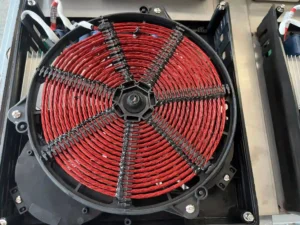
Panel material matters far more on a truck than in a fixed kitchen. Hard braking, speed bumps, curb edges — the daily vibration a food truck puts on equipment is nothing like what a stationary kitchen sees. Regular glass panels crack under this over time. Go with glass-ceramic rated for higher impact resistance.
The r/inductioncooking community on Reddit has extensive teardown photos and real coil measurements across brands — worth checking if you want to compare specs based on what’s actually inside the unit.
Common Questions People Ask
Q1: Do I need an exhaust hood to pass fire inspection if I use induction?
Usually not. Under NFPA 96, induction cooktops produce no open flame or oil-smoke aerosol, so they’re generally exempt from hood and fire-suppression requirements. That saves you money on equipment and frees up roof space. But rules vary by city — confirm with your local fire department before submitting permits.
Q2: Can I use my existing pots and pans on an induction cooktop?
Maybe. Induction only heats ferromagnetic materials — carbon steel, cast iron, and magnetic stainless steel. Quick test: stick a magnet to the pan bottom. If it holds, the pan works. Aluminum, copper, and non-magnetic stainless steel won’t heat up. For food trucks, carbon steel or cast iron are the best choices. They conduct magnetic energy efficiently, heat fast, and handle the constant thermal cycling and vibration of truck life better than stainless steel.
Q3: My menu has just 3–4 items. How many cooktops do I need?
Most 3–4 item trucks need 2–3 pieces of equipment. Don’t count by menu items — count by tasks that run at the same time. Selling fried chicken, fries, and lemonade? Chicken and fries share a dual-tank fryer. Lemonade goes on a warmer. That’s two units. List how many burners need to fire simultaneously during your lunch peak. That number is your minimum.
Q4: What’s the best induction cooker for commercial use on a food truck?
There’s no single best — it depends on your menu, your counter size, and your generator capacity. Focus on three things: coil size relative to the claimed heating zone, continuous-operation rating (no auto-shutoff), and panel material rated for vibration. The model-by-model breakdowns above are built around exactly these criteria.
About the author
ATRX Team| 18 Years Commercial
Induction Cooker Manufacturer in China
Induction Cooker Manufacturer in China
Related Posts
Best Commercial Induction Cooktop: Types &Buying Guide
10/09/2026
Commercial Double Hob Induction Cooker | Types, Power, and Installation Guide
10/05/2026
Commercial Induction Cooker 3500W: Model Selection, Commercial Power and Installation
09/29/2026
How to Install a Built-In Induction Cooktop: A Step-by-Step Guide
09/17/2026
How to Clean a Commercial Deep Fryer: A Step-by-Step Guide
09/13/2026
High Quality Commercial Induction Cooker Manufacturer
09/09/2026
Automatic Wok Machine: Types, Specifications, Applications and Buying Guide
08/18/2026
Commercial Induction Range: How to Choose the Right Size, Power, and Configuration for a Commercial Kitchen
08/15/2026
What Is a Commercial Induction Cooker and How Does It Work
08/13/2026
Commercial Induction Range for Hotel Kitchens: How to Choose the Right Model
08/11/2026