

Fast Heating Commercial Induction Wok Cooker
07/22/2026
Estimated reading time: 2 minutes

If you’re sourcing a fast heating commercial induction wok cooker for a restaurant, hotel, or central kitchen, this article walks you through what matters before you place an order — why it heats so fast, how fast exactly, how to pick the right model, and how to avoid common mistakes.
ATRX is a commercial induction cooker manufacturer based in Dongguan, China. We’ve been building these since 2007, and our equipment now ships to over 50 countries. Everything below comes from what we’ve learned firsthand — through R&D, mass production, and global delivery of high-power induction wok cookers.
IN THIS ARTICLE
Why Does a Commercial Induction Wok Cooker Heat So Fast?
The first question most buyers ask: no open flame — how can it be faster than gas? It comes down to two things: how the heat is generated, and how the cooker is built.
Eddy Currents: Heat Is Generated Inside the Wok Itself
A gas stove transfers heat in three steps: gas burns → flame heats the air → air heats the wok. Every step loses energy. A big chunk of it never reaches the wok — it just heats up your kitchen.
An induction wok cooker cuts out all those middle steps. The coil creates a high-frequency magnetic field (16–40 KHz) that passes through the ceramic glass panel and generates eddy currents directly inside the iron wok. The wok itself is the heat source. Between the coil and the wok, there’s only a single layer of glass. No flame. No hot air in between.
Concave Panel Hugs the Wok — So Heat Doesn’t Miss
Fast eddy-current heating only works well if the coil actually covers enough of the wok. If it only heats a small spot at the center, the walls stay cool and your food cooks unevenly. For stir-frying, that’s a deal-breaker.
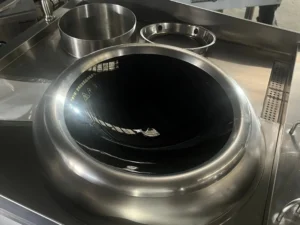
ATRX wok cookers use a concave ceramic glass panel shaped to match the curve of a round-bottom iron wok. Under the panel, evenly spaced pure copper coils cover the area from the wok bottom up to the lower walls. The whole wok heats up at once — not just one spot.
Our standard panel is 6 mm thick, about 50% thicker than the 3–4 mm you’ll find on most competitors. It handles temperatures up to 700°C and holds over 125 KG. That extra thickness matters — under sustained high power, a thicker panel resists thermal shock much better, which is critical for long-term reliability.
The bottom line: “fast” isn’t just about wattage. It’s about making sure every watt actually reaches the wok.
What Else Does It Save Your Kitchen Besides Time?
Speed got you reading this far. But if you’re the one signing the purchase order, the real question is: does it pay for itself?
Energy Costs Drop by Nearly Half
How efficient is induction, really? The numbers are straightforward. Data from the American Council for an Energy-Efficient Economy (ACEEE) puts gas stove efficiency at about 40%, traditional electric at about 74%, and induction at about 84%. Leafscore frames it differently: gas wastes roughly 60% of its energy, induction wastes about 16%.
Here’s what that looks like in dollars. We ran a projection based on boiling 55 kg of water:
Assumptions: Theoretical heat needed to boil 55 kg of water from 25°C to 100°C ≈ 17,251 kJ. Gas at 40% efficiency needs about 43,127 kJ of input. Induction at 84–90% efficiency needs about 19,168–20,536 kJ. Costs are converted using local industrial electricity and natural gas rates.
| Comparison | Gas Stove (~40% Efficiency) | Induction Wok Cooker (~84–90% Efficiency) |
|---|---|---|
| Time to boil 55 kg of water | ~21 minutes | ~13 minutes |
| Daily operating cost (USD) | ~$43 | ~$18 |
| Monthly operating cost (USD) | ~$1,309 | ~$532 |
| Annual operating cost (USD) | ~$15,709 | ~$6,382 |
| Annual savings | — | ~$9,327 |
That’s roughly $9,300 saved per unit per year. If your kitchen runs 3–5 wok stations, multiply that out.
There’s also a less obvious saving. No open flame means you can spec lower-capacity exhaust hoods and ventilation ducts, and your HVAC load drops too. Most buyers don’t factor this in during early evaluation, but it adds up.
Temperature Changes in Seconds — Blast Fry to Gentle Simmer, Instantly
The flip side of fast heating is fast temperature control. Turn the dial from max to low, and the wok temperature follows within seconds. No waiting for a flame to die down. Fire has thermal inertia; a magnetic field doesn’t. Power off means heat off. Power on means heat on.
This matters most during stir-frying. Chinese wok cooking calls for “fierce fire, fast attack” — but the very next move might be low heat to reduce a sauce. Gas stoves lag during that switch. Chefs have to guess the timing. Induction makes the lag nearly zero.
ATRX wok cookers offer multi-level power adjustment. Select models support programmable menu presets — you can store the power, time, and temperature for each dish. For chain restaurants, that means Store A and Store B cook the same dish to the same standard, without relying on each chef’s instinct.
Key Specs to Check Before You Buy
Now that the value case is clear, it’s time to pick a model. There are really only two numbers that determine whether a unit works for your kitchen.
Power: How to Choose Between 3.5 KW and 18 KW
Power decides two things: how fast the wok heats up, and how many meals you can push out per hour.
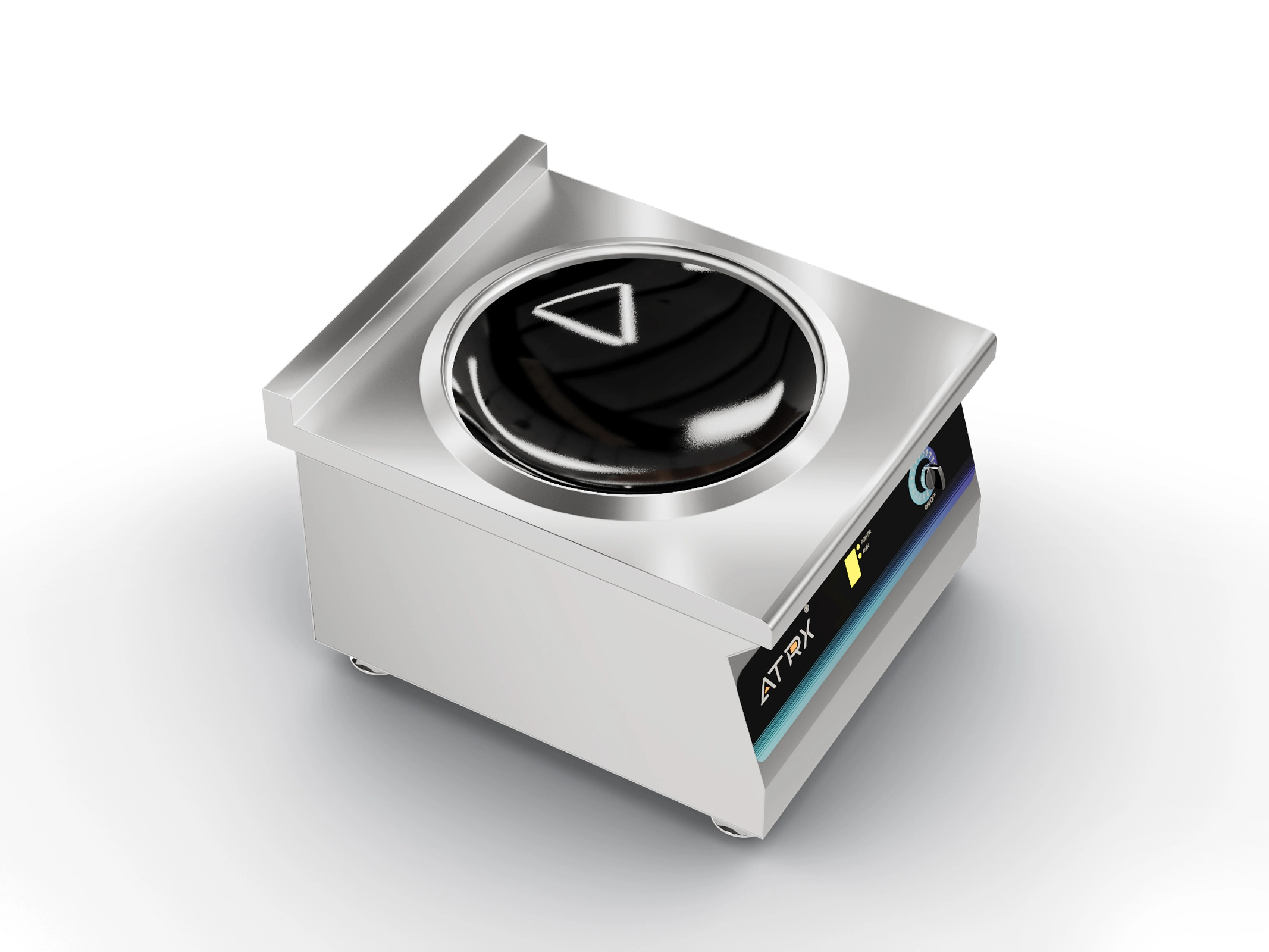
3.5–5 KW: Small food stalls, single-item shops, light cooking. Pair with a 300–400 mm wok. Handles 15–50 covers. Mostly countertop units — plug in and cook.
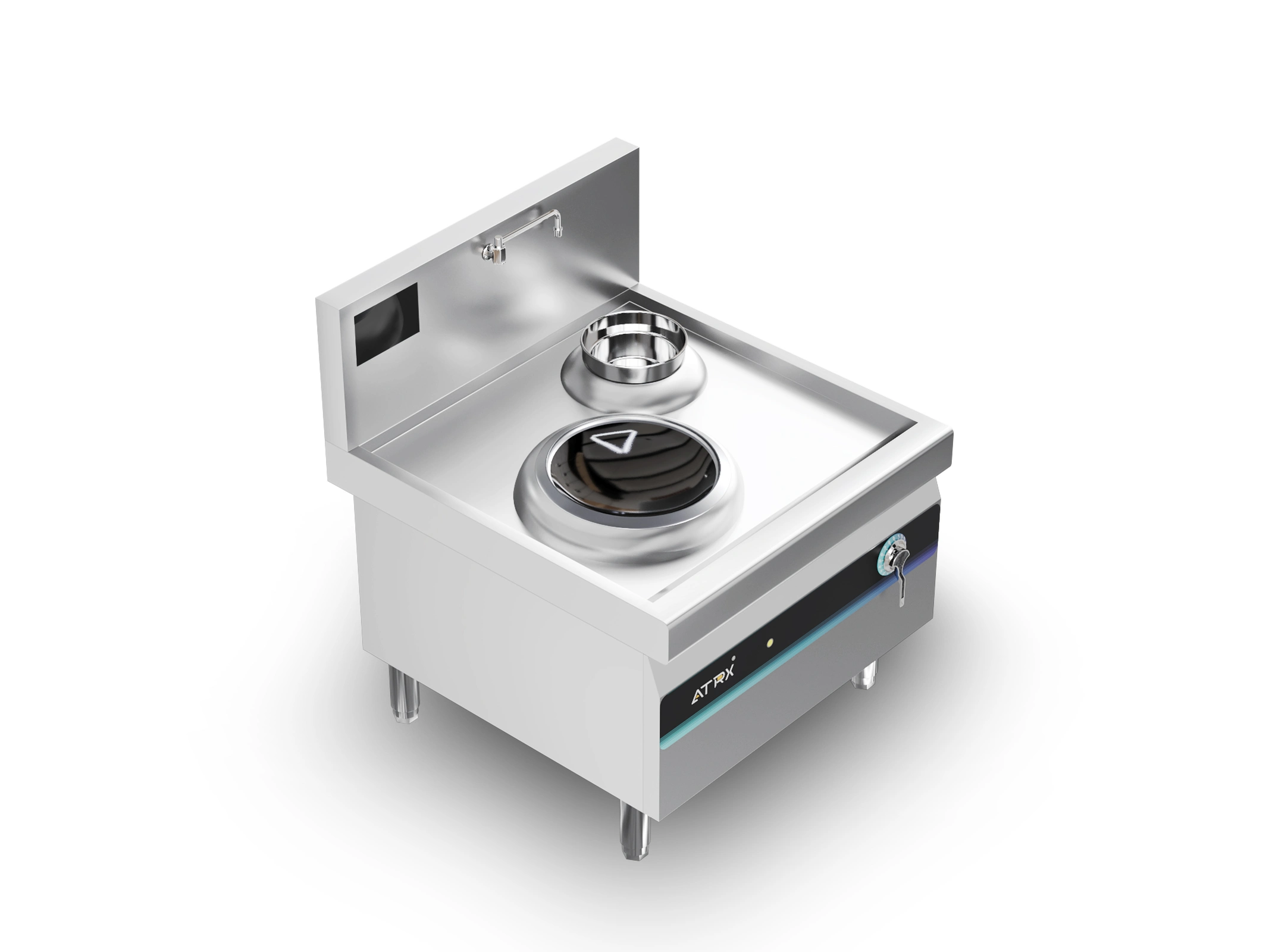
8–12 KW: The standard setup for mid-size restaurants. Pair with a 500 mm round-bottom iron wok. Covers stir-frying, pan-frying, deep-frying, and stewing. This is the most popular power range across the commercial induction wok range.
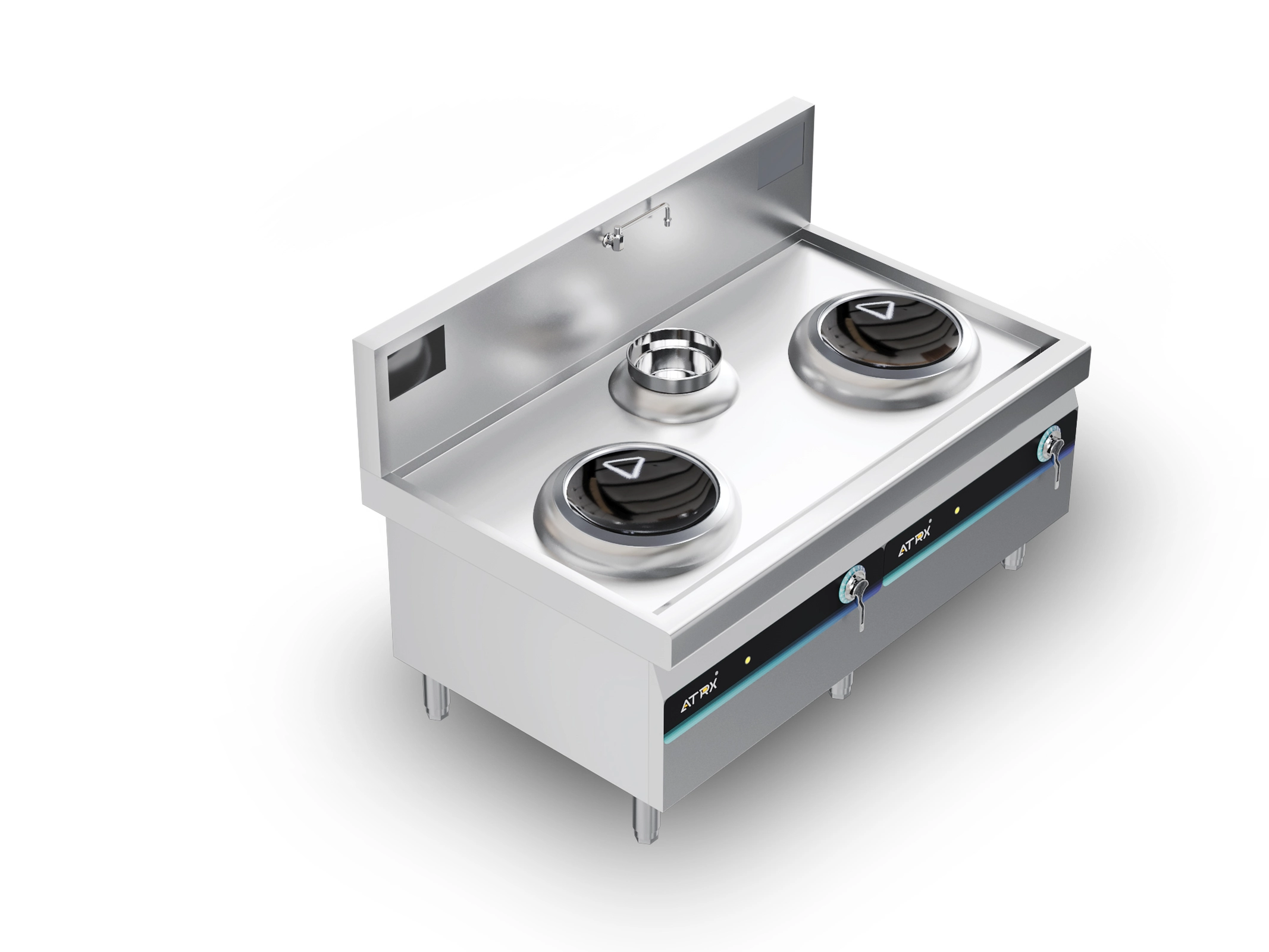
15–18 KW: Hotel banquet halls, large canteens, central kitchens. Big woks, high heat, bulk processing. When peak-hour output is non-negotiable, this is the tier you need.
The rule is simple: bigger wok + more meals per day = more power
Voltage: Single-Phase 220V or Three-Phase 380V?
Power and voltage go together. Get the voltage wrong, and your new cooker arrives but can’t be plugged in.
| Power Range | Voltage Required | Typical Use |
|---|---|---|
| Below 3.5 KW | Single-phase 220V | Small stalls, food carts, temporary setups |
| 3.5–5 KW | 220V or 380V (either works) | Small restaurants, countertop wok cookers |
| 8 KW and above | Three-phase 380V (required) | Mid-to-large restaurants, hotels, canteens |
ATRX wok cookers support both 220V single-phase and 380V three-phase, with a tolerance range of 340V–430V. We customize voltage specs to match your local grid standard.
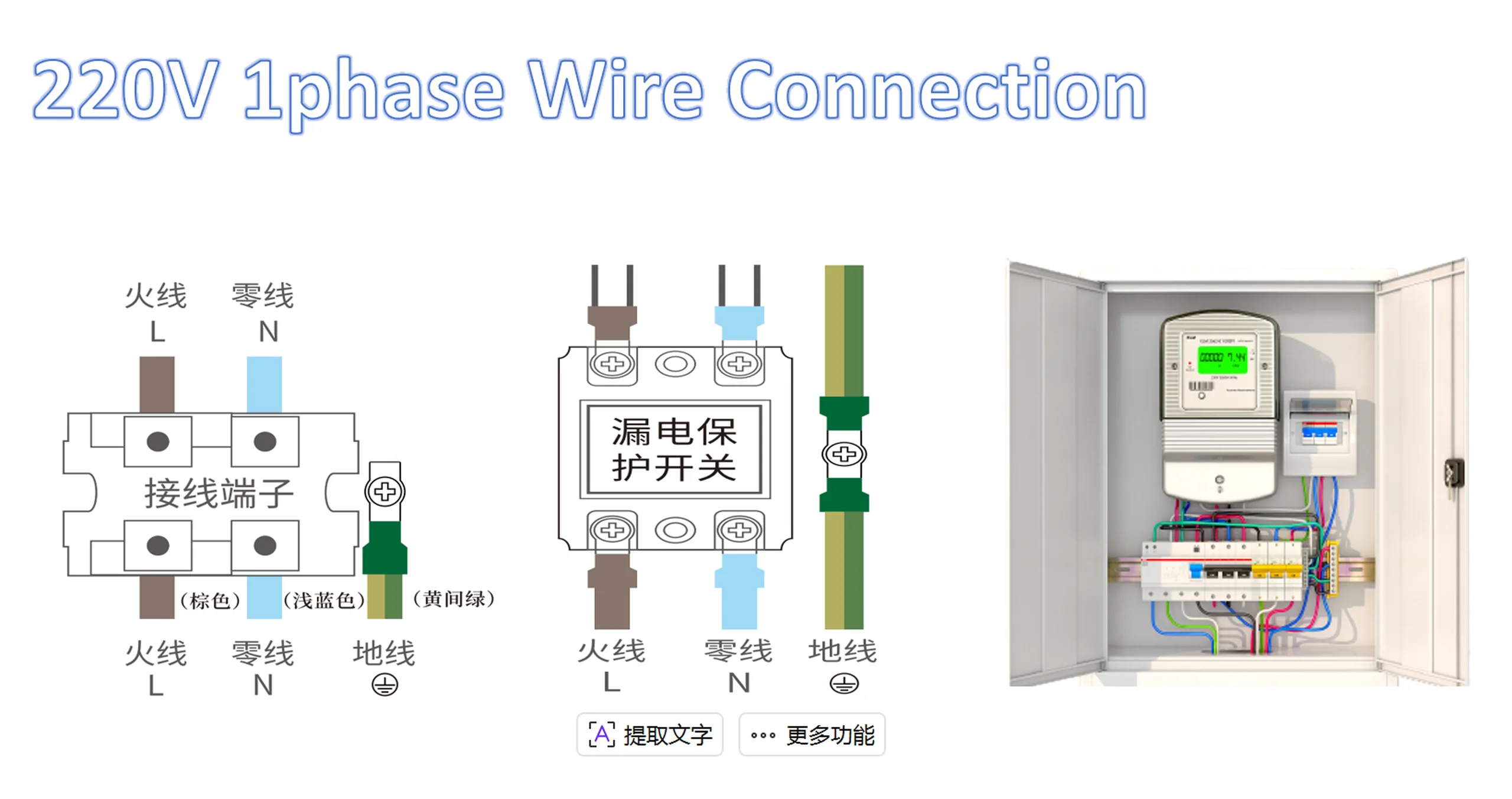
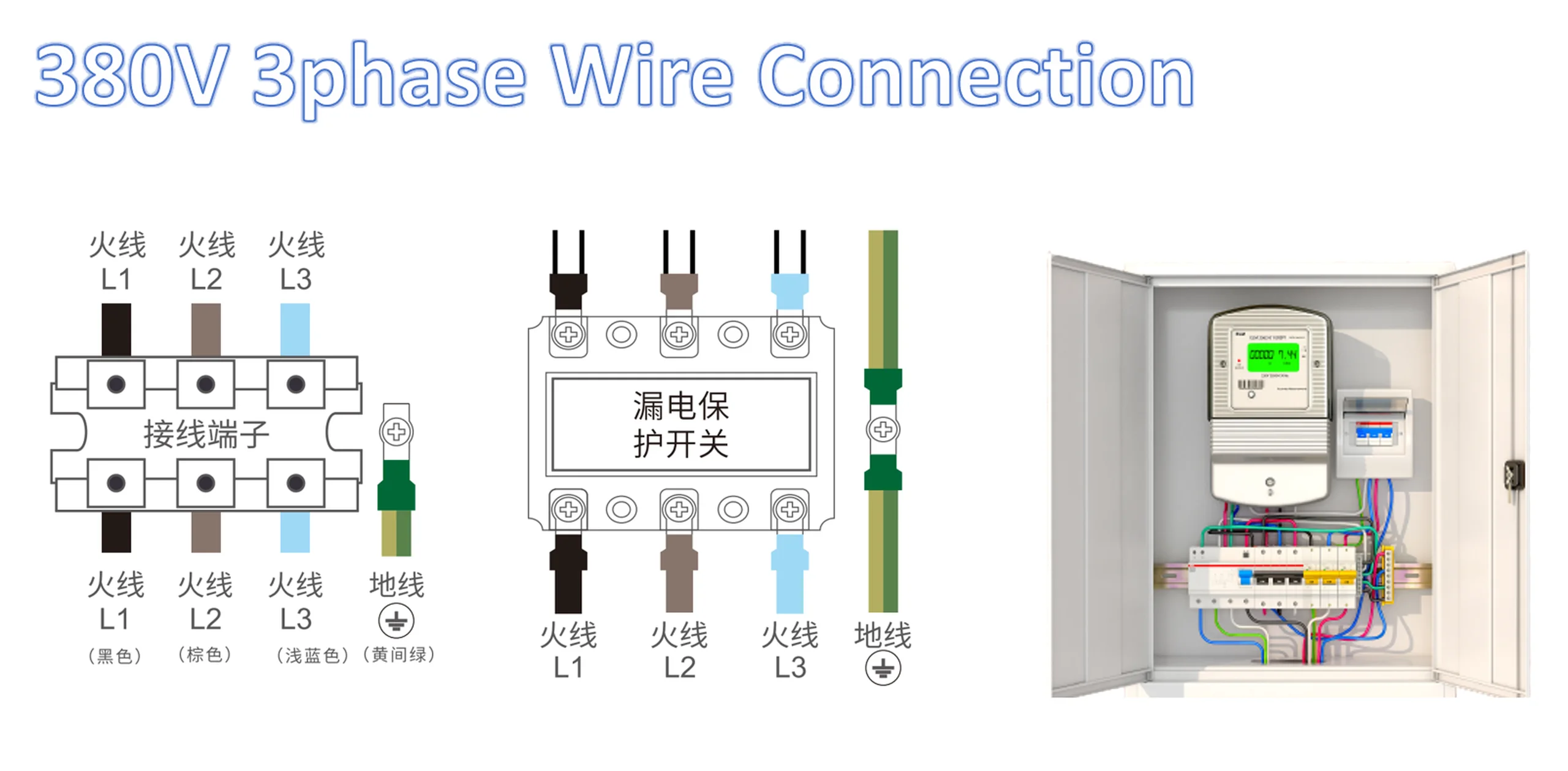
Before ordering, confirm your kitchen’s supply phase, breaker capacity, and cable gauge. Not sure? Send us your electrical diagram — our engineering team will check it for you.
Which Kitchens Need This the Most?
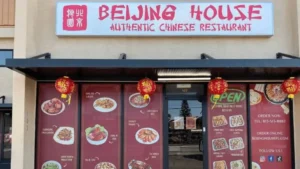
Chinese and Asian Restaurants: Stir-Frying Lives or Dies by Heat
Chinese stir-frying is unforgiving on temperature. The wok has to be screaming hot. The oil has to smoke. The second ingredients hit the surface, you need that sizzle — what Cantonese chefs call “Wok Hei” (镬气).
For a long time, the consensus was that only open flame could get you there. A fast heating induction wok burner at 8 KW and above has proven otherwise. The concave coil heats the entire surface of a round-bottom wok. Power response is instant. Even when the wok lifts briefly off the panel during tossing, heating doesn’t cut out. One professional Chinese culinary training institution called it “the greatest invention since the use of fire.”
Chain brands get a bonus: preset your power and timing parameters, and every location cooks the same dish to the same standard. During rapid expansion, that consistency is hard to put a price on.
Hotels, Canteens, and Central Kitchens: Bulk Output, No Slowdowns
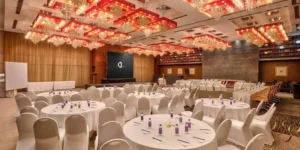
When you’re feeding hundreds or thousands per service, speed equals capacity. A 15–18 KW floor-standing unit paired with a 500 mm+ wok handles banquet-level volumes in a single round.
ATRX supplies starred hotels, university dining halls, corporate canteens, and central kitchens for fast-food chains. These kitchens all share the same pressure: concentrated peak demand, tight service windows, and zero room for equipment to lag behind. A commercial wok cooker for restaurants and institutional kitchens at this scale needs to deliver — every service, without fail.
How to Pick the Right One for Your Kitchen
Three Steps: Meal Volume → Menu Type → Station Count
No need to dig through product catalogs. Three steps will get you to the right model:
Step 1 — Meal volume. How many covers per day? How fast during peak hours? Under 100 covers: 5 KW. 200–500 covers: 8–12 KW. Over 500: start at 15 KW.
Step 2 — Menu type. Mostly stir-fry? You need instant high heat and fast power swings — pick a model with headroom. Mostly braised dishes and soups? Mid-range power will do.
Step 3 — Station count. How many wok positions run at the same time? Single-burner units are flexible and compact. Dual or triple integrated units save space and reduce wiring — good for fixed production lines.
Countertop models work for tight spaces or mobile setups. Floor-standing models are for permanent, heavy-duty installation. For a deeper dive into selection logic and common buying mistakes, read the commercial induction wok stove buying guide.
Check Your Power Supply and Floor Space Before You Order
Model picked? Don’t pay yet. Confirm two things first.
Power supply: Single-phase or three-phase? Breaker rated high enough? Cable thick enough? Anything at 8 KW or above usually needs its own dedicated circuit. Some ATRX models have a power-limit mode — an 8 KW unit can run at 5 KW if your electrical supply isn’t fully upgraded yet.
Floor space: Enough clearance on the counter or floor? Minimum gaps to walls and neighboring equipment met? Ventilation outlet in the right spot? For floor-standing units, check floor load capacity too.
If you’re not sure about any of this, send us your kitchen floor plan. Our project team will recommend the right configuration. Getting this sorted before the order is placed saves far more time than reworking the layout after the equipment lands. Ready to browse? Filter by power and installation type: browse ATRX commercial induction wok cookers.
Why Source from ATRX?
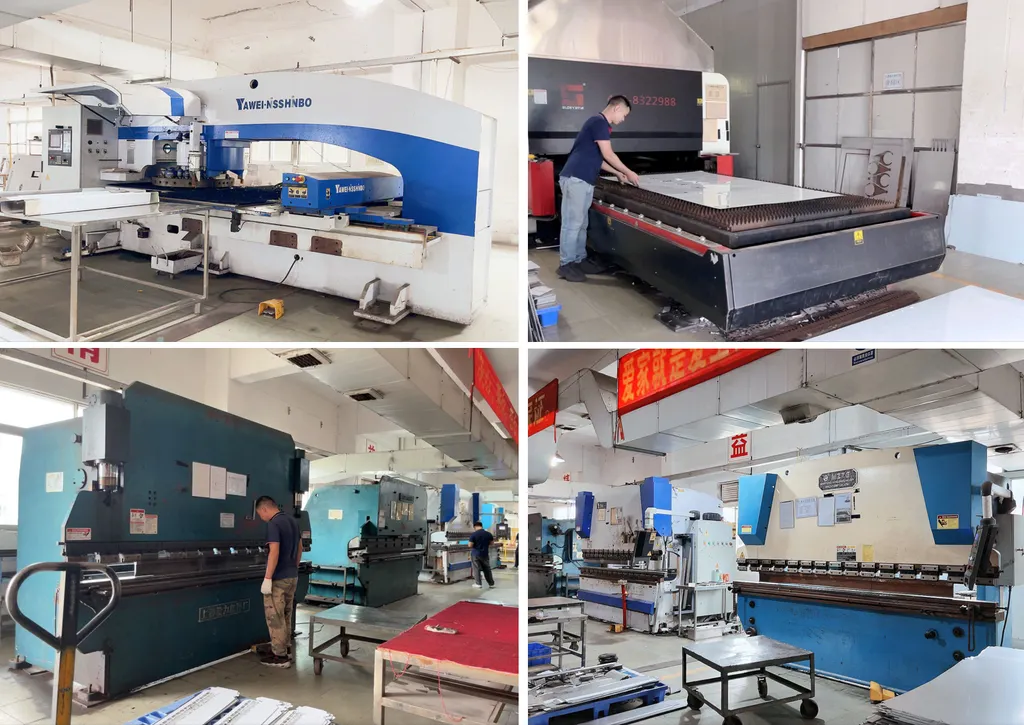
ATRX is a manufacturer, not a trading company. We’ve been at it since 2007 in Dongguan, Guangdong. Our own factory covers 20,000 square meters, turns out over 3,000 units a month, and ships to 50+ countries.
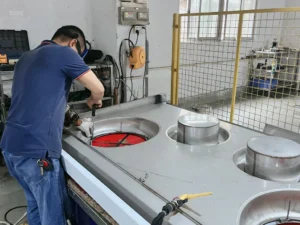
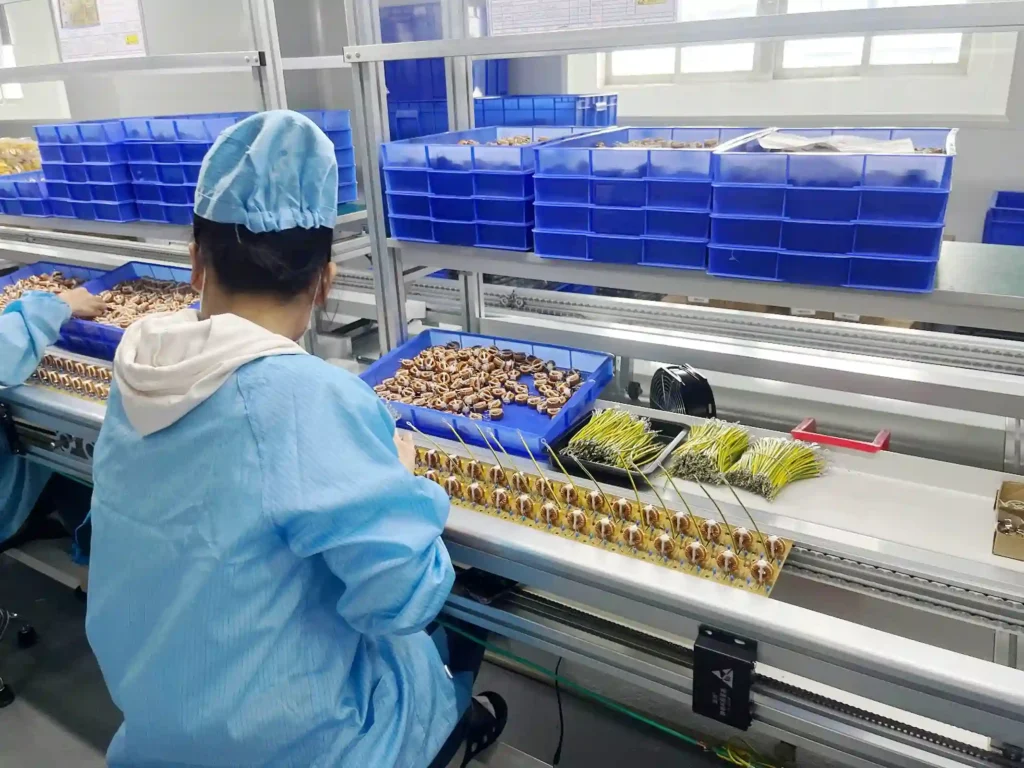
Every step happens under one roof — from PCB SMT soldering to full-power burn-in testing of the finished unit. PCB assembly runs in a Class 100 clean room. Every cooker runs at rated power continuously before it ships. If there’s an early failure, it shows up on our test line — not in your customer’s kitchen.
Two engineering details worth noting for fast heating performance. First, the concave pure copper coils: how evenly the coils are wound directly affects how consistently the wok heats at high power. Second, the PCB control board: ATRX uses commercial-grade dedicated boards — not repurposed residential ones. They handle instant power-level changes at high wattage with no delay or overshoot.
We fully support OEM and ODM. Product structure, power and voltage, branding, packaging — all customizable. Over 90% of our orders are custom. Stock models ship in 10–15 days. Custom orders take 25–35 days, FOB Shenzhen.
Every OEM order gets a pre-production sample. If anything needs changing, we revise it free of charge. Production only starts after you sign off.
FAQ
What kind of wok do I need?
It has to be ferromagnetic — cast iron or magnetic stainless steel. Aluminum and pure copper woks won’t work because they’re not magnetic. Quick test: stick a magnet to the bottom. If it holds, you’re good. All ATRX units have built-in cookware detection — put an incompatible wok on it, and it simply won’t start.
Can it actually produce Wok Hei?
Yes — if the power is high enough. A high power commercial induction wok at 8 KW or above delivers the kind of instant, intense heat you need. The concave coil heats the bottom and walls at the same time, so a skilled chef can get very close to open-flame results.
Plenty of Chinese chefs who’ve switched from gas say that once they get used to the temperature control, their output quality stays the same. The keys: enough power, a properly pre-heated wok, and mise en place ready to go.
Can the cooling system handle sustained fast heating?
This is the right question to ask for any high-power setup. ATRX uses CE/UL dual-certified fans with sealed bearings and thermistor-controlled speed. They’re rated for 12+ hours of continuous full-load operation without thermal shutdown.
One maintenance tip: clean the cooling ducts once a month. Under sustained high power, clear airflow is the single biggest factor in equipment lifespan.
Do you do OEM/ODM?
Yes. Structure, power/voltage, logo, packaging — all four can be customized. We send a pre-production sample first. If revisions are needed, we adjust and send a second sample at no charge. Mass production starts only after your written sign-off.
What’s the MOQ and lead time?
MOQ is 30 units. Stock models ship in 10–15 days. OEM/ODM custom orders take 25–35 days. We handle FOB, CIF, or door-to-door, and manage all export documentation.
What does after-sales look like?
Every unit carries a 1-year warranty. Replacement parts are free during that period. Remote support responds within 24 hours — our engineers walk your local technician through repairs via video call, so you don’t ship anything back. For high-volume, long-term partners, extended warranty terms are negotiable.
About the author
ATRX Team| 18 Years Commercial
Induction Cooker Manufacturer in China
Induction Cooker Manufacturer in China
Related Posts
Commercial Induction Cooker 3500W: Model Selection, Commercial Power and Installation
09/29/2026
How to Install a Built-In Induction Cooktop: A Step-by-Step Guide
09/17/2026
How to Clean a Commercial Deep Fryer: A Step-by-Step Guide
09/13/2026
High Quality Commercial Induction Cooker Manufacturer
09/09/2026
Automatic Wok Machine: Types, Specifications, Applications and Buying Guide
08/18/2026
Commercial Induction Range: How to Choose the Right Size, Power, and Configuration for a Commercial Kitchen
08/15/2026
What Is a Commercial Induction Cooker and How Does It Work
08/13/2026
Commercial Induction Range for Hotel Kitchens: How to Choose the Right Model
08/11/2026
China Commercial Induction Cooker Manufacturer
08/09/2026
10 Best Commercial Induction Cooker Manufacturers & Supplier Selection Guide [2026]
08/07/2026