

High Quality Commercial Induction Cooker Manufacturer
09/09/2026
Estimated reading time: 2 minutes

If you’ve already decided to buy commercial induction cookers, there’s really only one question left: which manufacturer. This article won’t explain how induction heating works, and it won’t hand you a list of ten brands to figure out on your own. ATRX is a commercial induction cooker manufacturer based in Dongguan, Guangdong — 18 years in the business. What follows is a straightforward look at our factory, our equipment, the materials we use, and how we control quality. Read through it, then decide if we belong on your shortlist.
IN THIS ARTICLE
Who Is ATRX
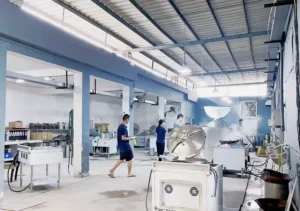
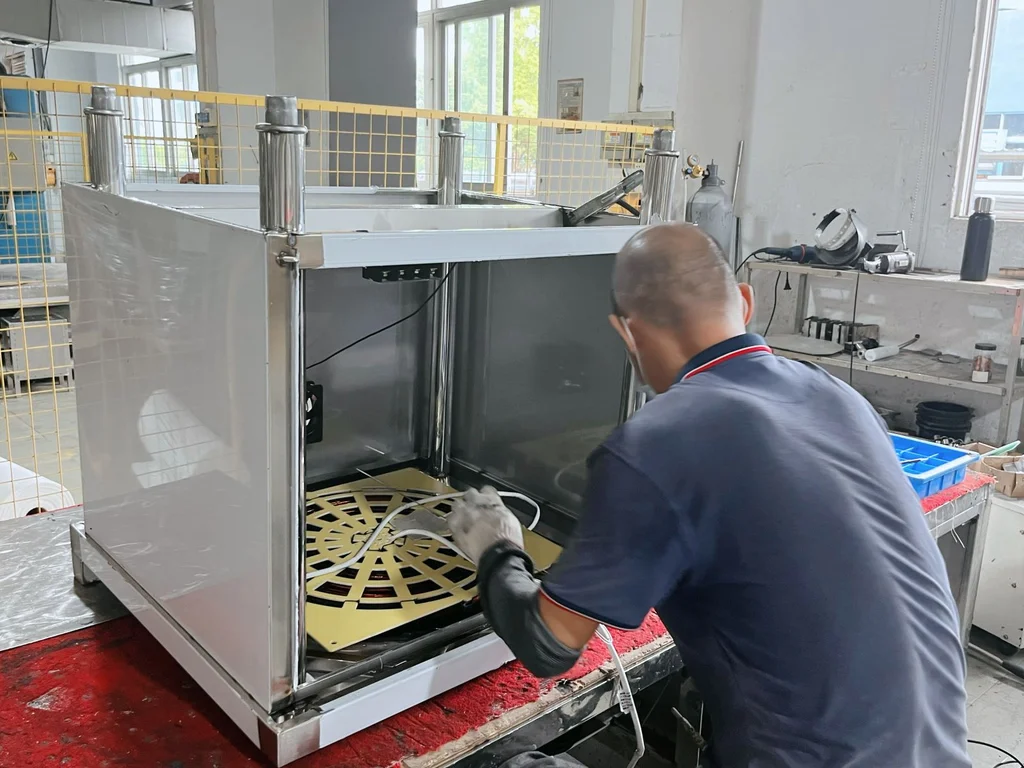
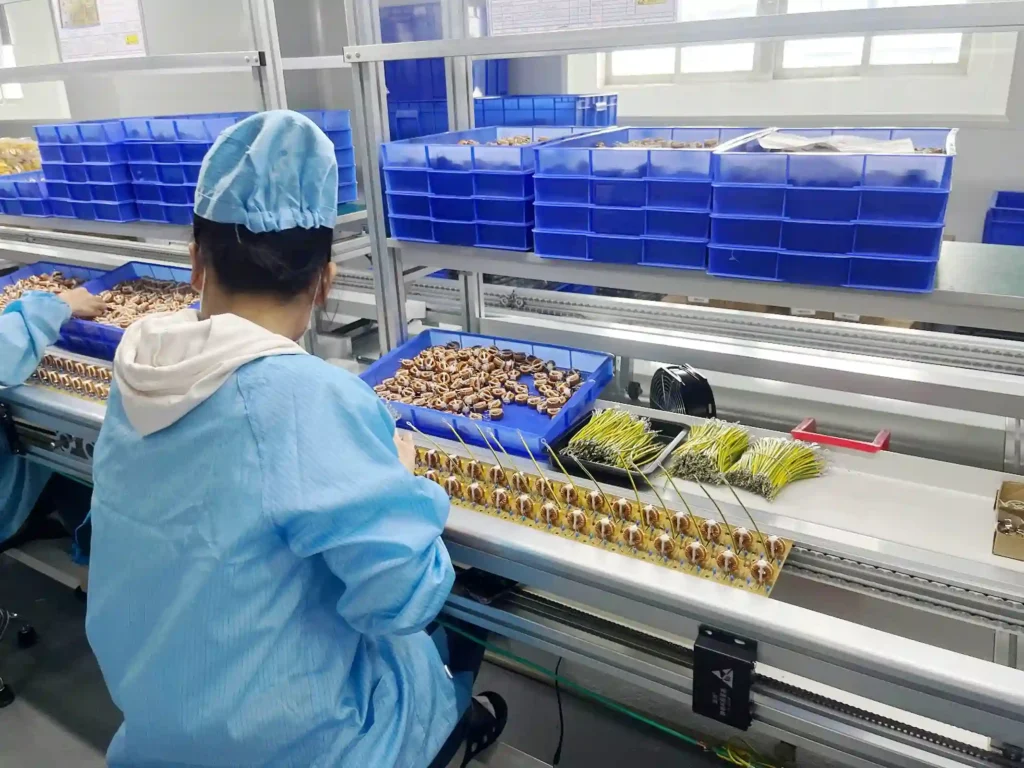
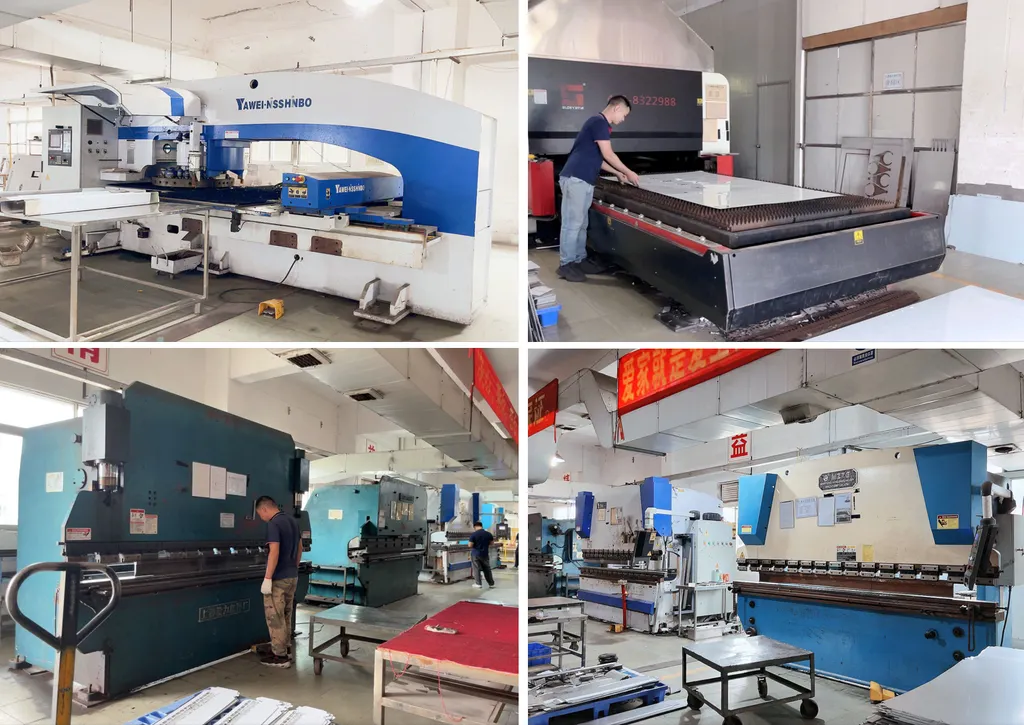
ATRX was founded in 2007. The factory sits in Dongguan, Guangdong, covering over 20,000 square meters. Sheet metal cutting, PCB soldering, coil winding, final assembly, burn-in testing — all done under one roof. Not a trading company. No middlemen.
Monthly output exceeds 3,000 units. Exports reach 50+ countries. Our buyers are overseas distributors, importers, OEM brand owners, and chain-restaurant procurement teams. No retail, no direct-to-consumer.
Worth noting: many so-called “manufacturers” in this industry are actually trading companies. They don’t own production lines — they take your order, hand it to a contract factory, and slap a label on the box. The easiest way to tell? Ask for a factory visit. Ask to see the PCB assembly line and the finished-unit test stations. If they dodge the request, that tells you something.
We welcome both live video tours and on-site audits. Pickup can be arranged from Guangzhou Baiyun or Shenzhen Bao’an airport. If you’d like to review our full factory capabilities, product lines, and cooperation models before booking a visit, check this commercial induction cooker manufacturer detail page first.
What Equipment Does ATRX Make
The first question most buyers ask isn’t “which model is best.” It’s “can you supply everything I need?” If a factory only makes countertop burners and you need a full kitchen setup, there’s no reason to keep talking.
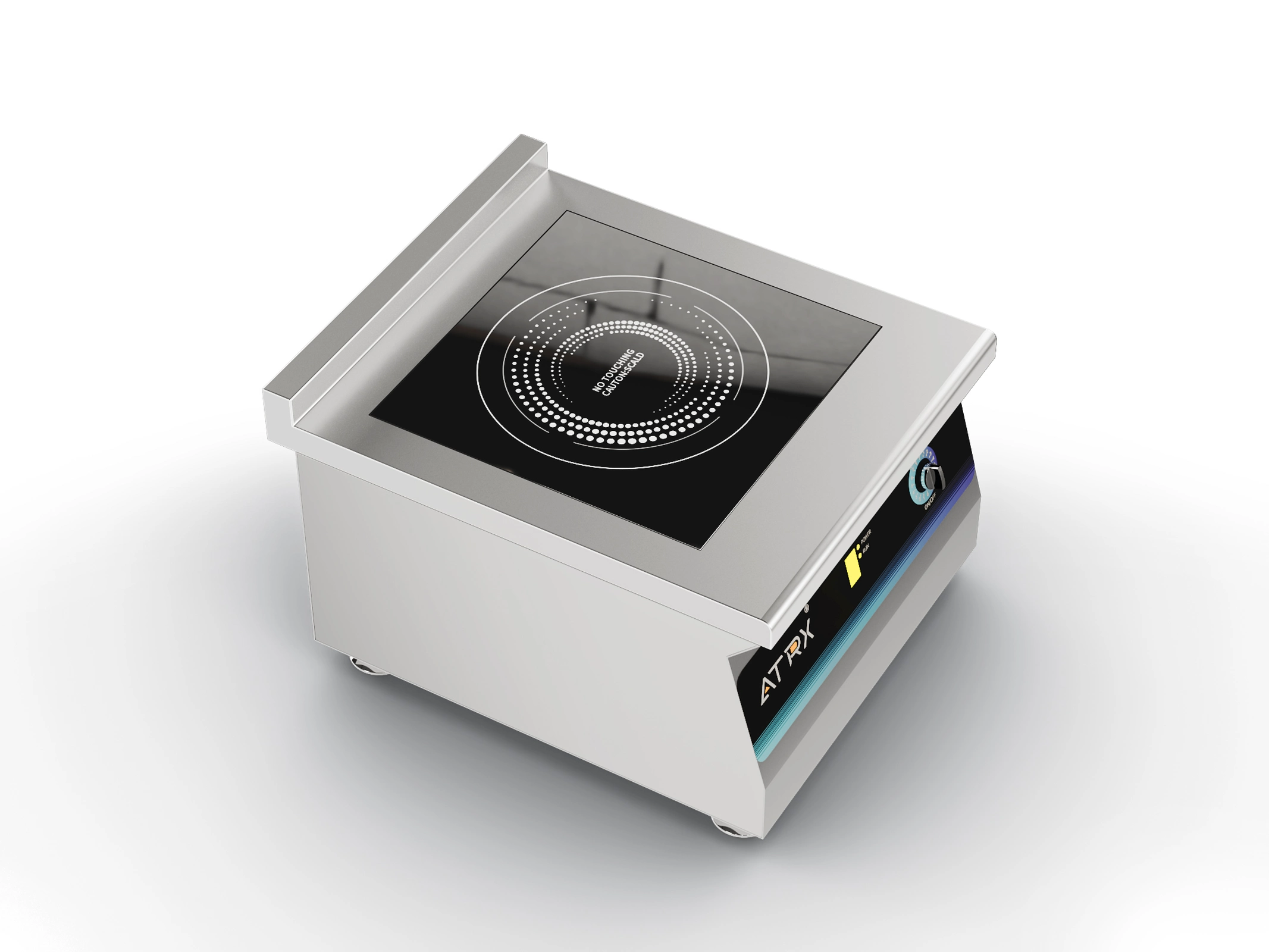
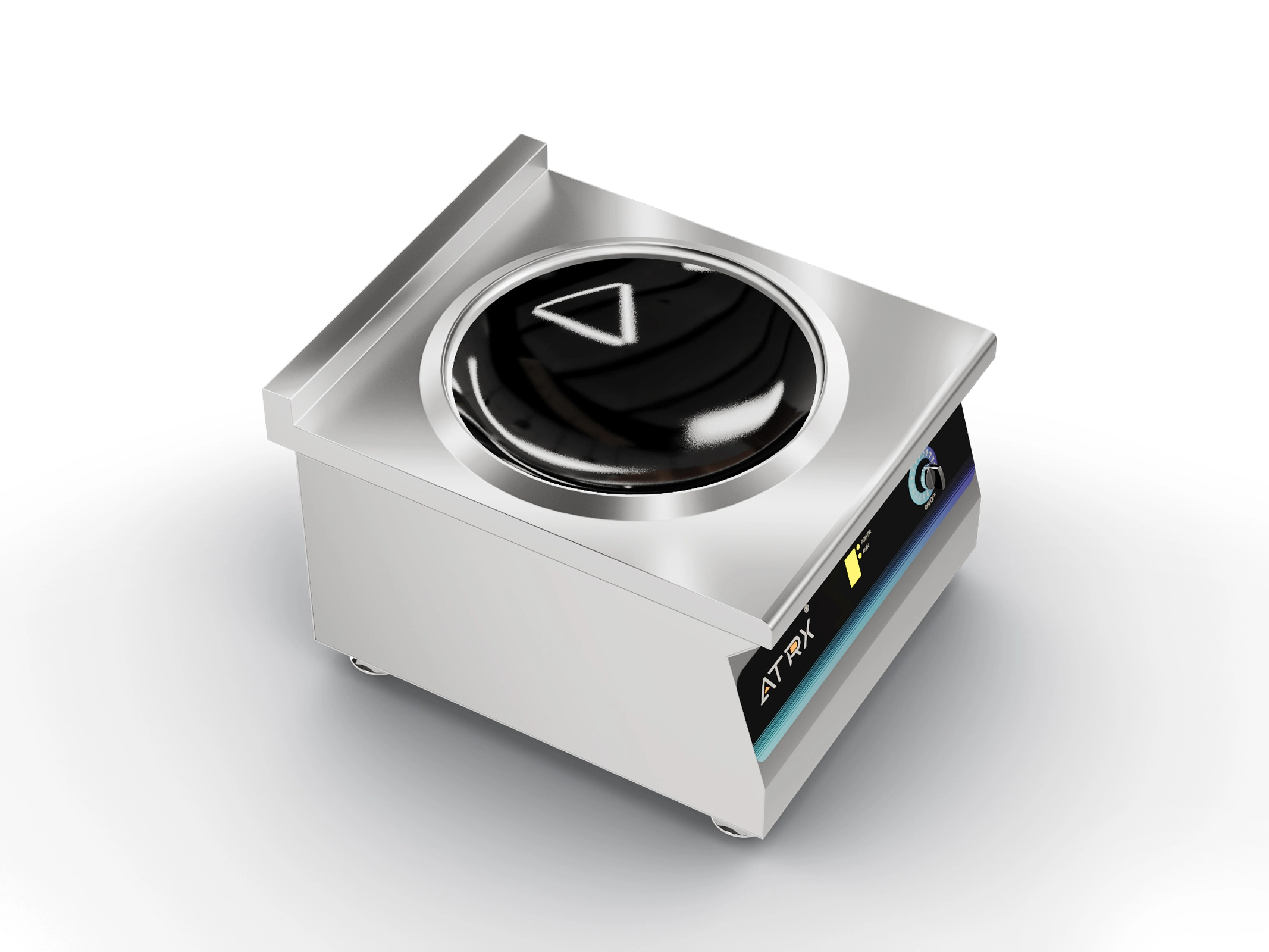
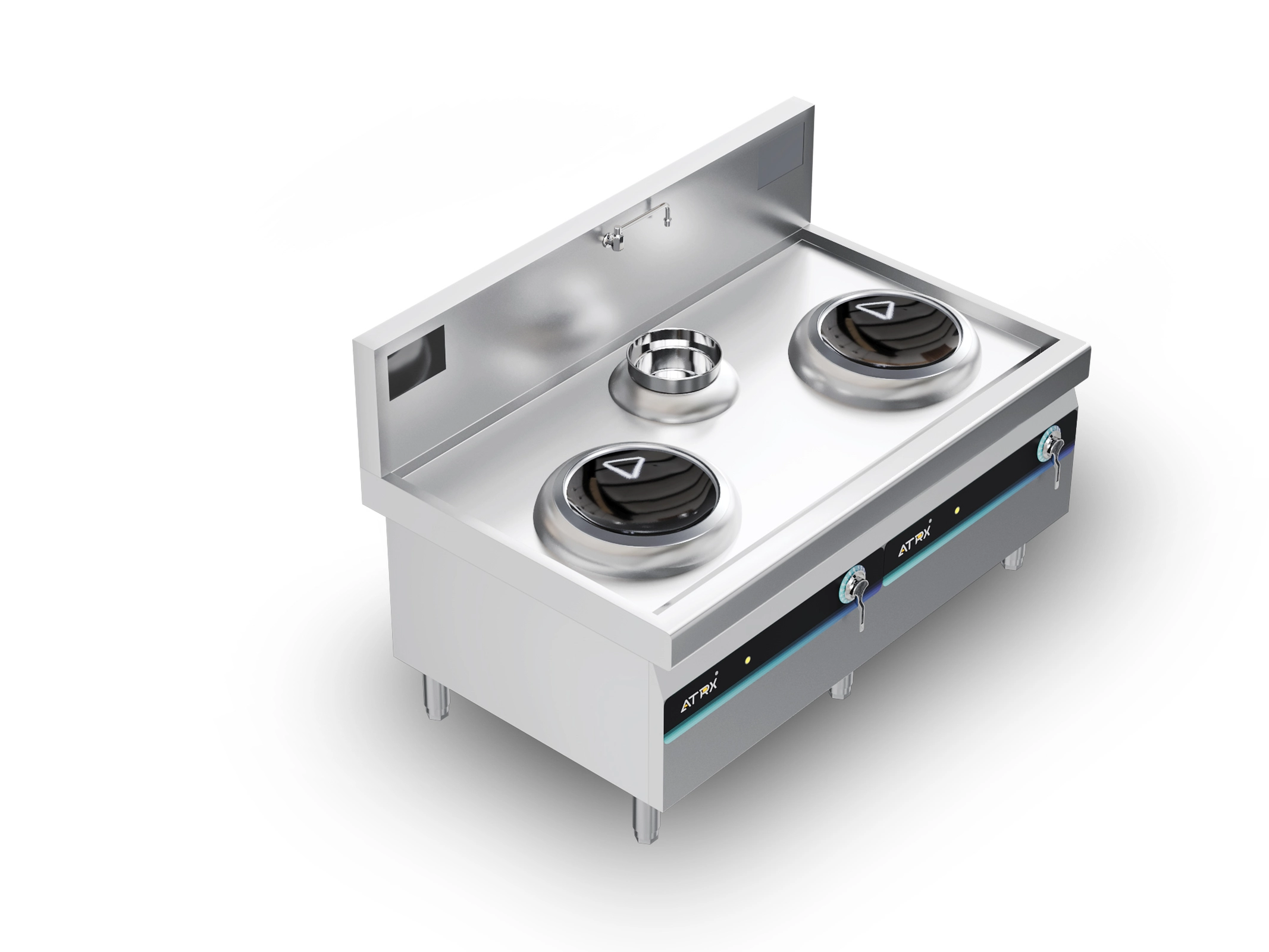
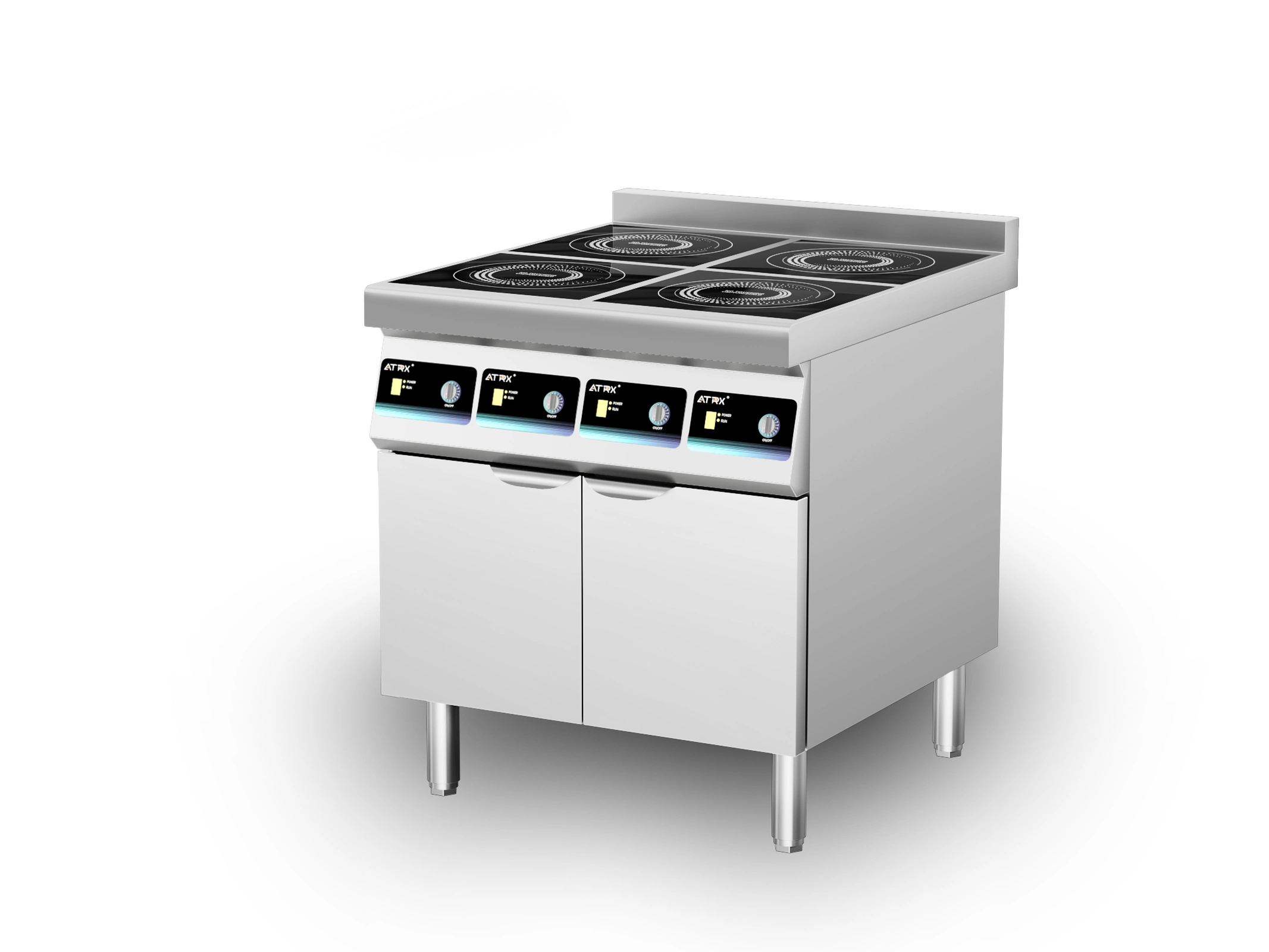
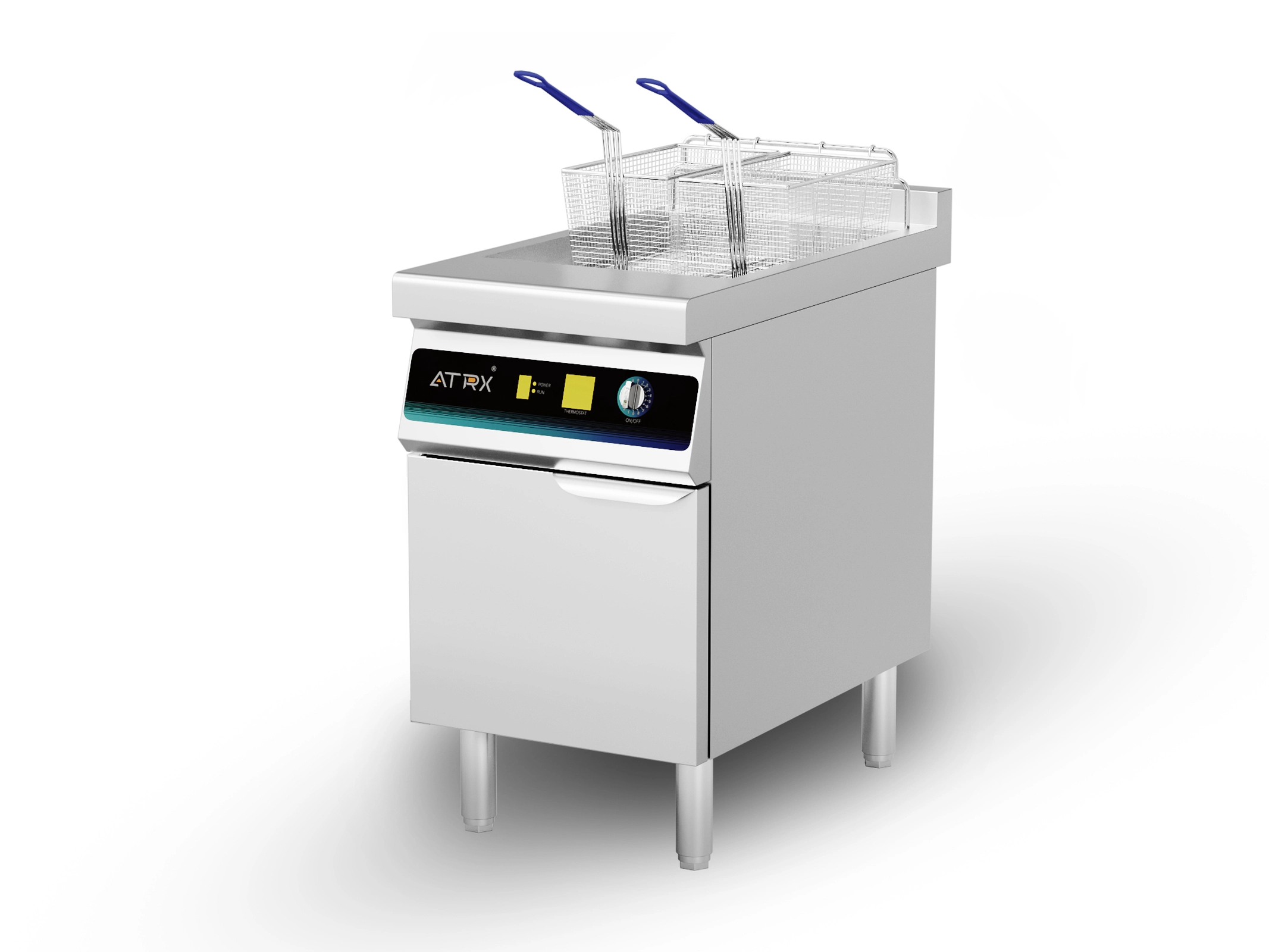
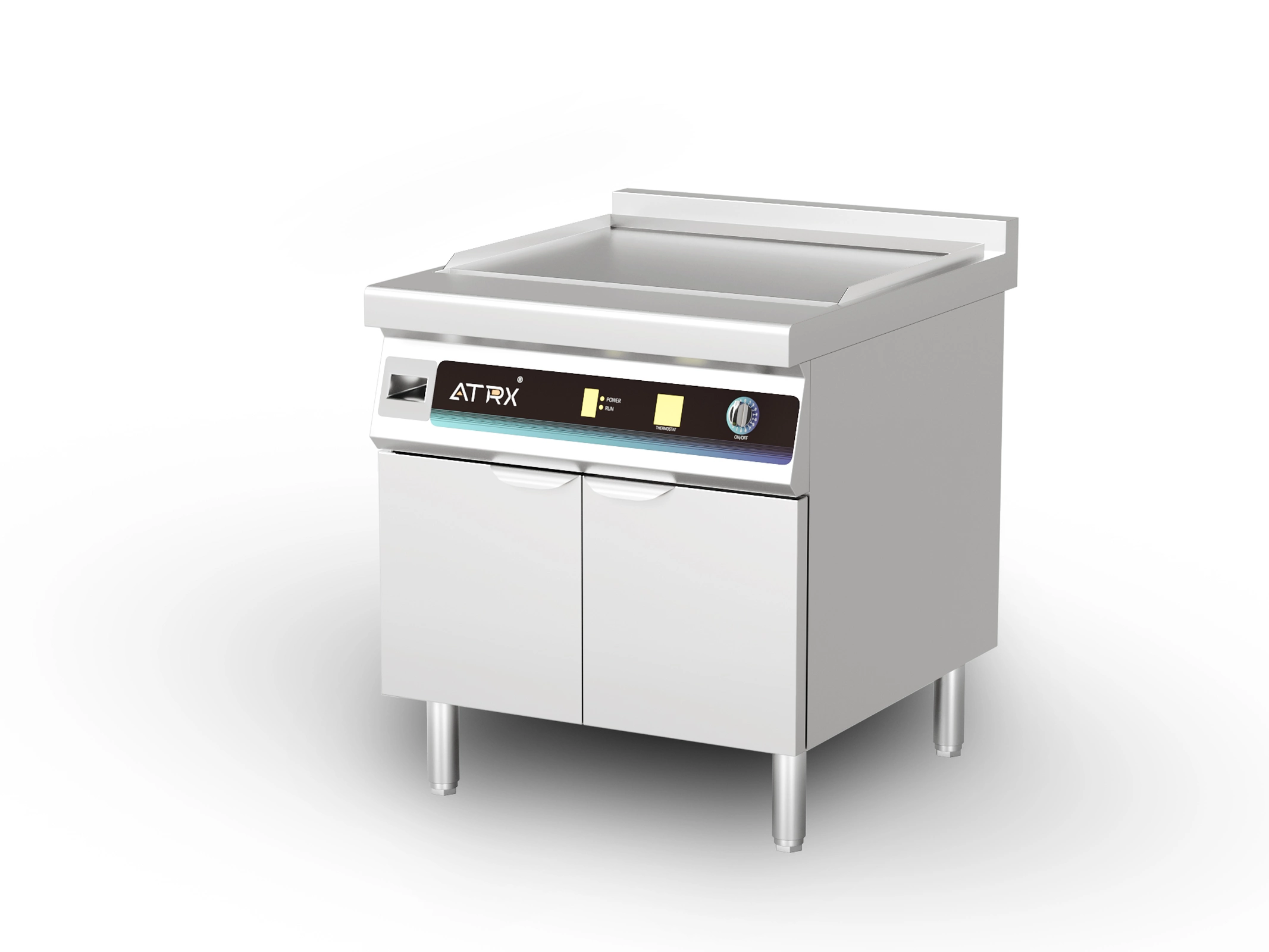
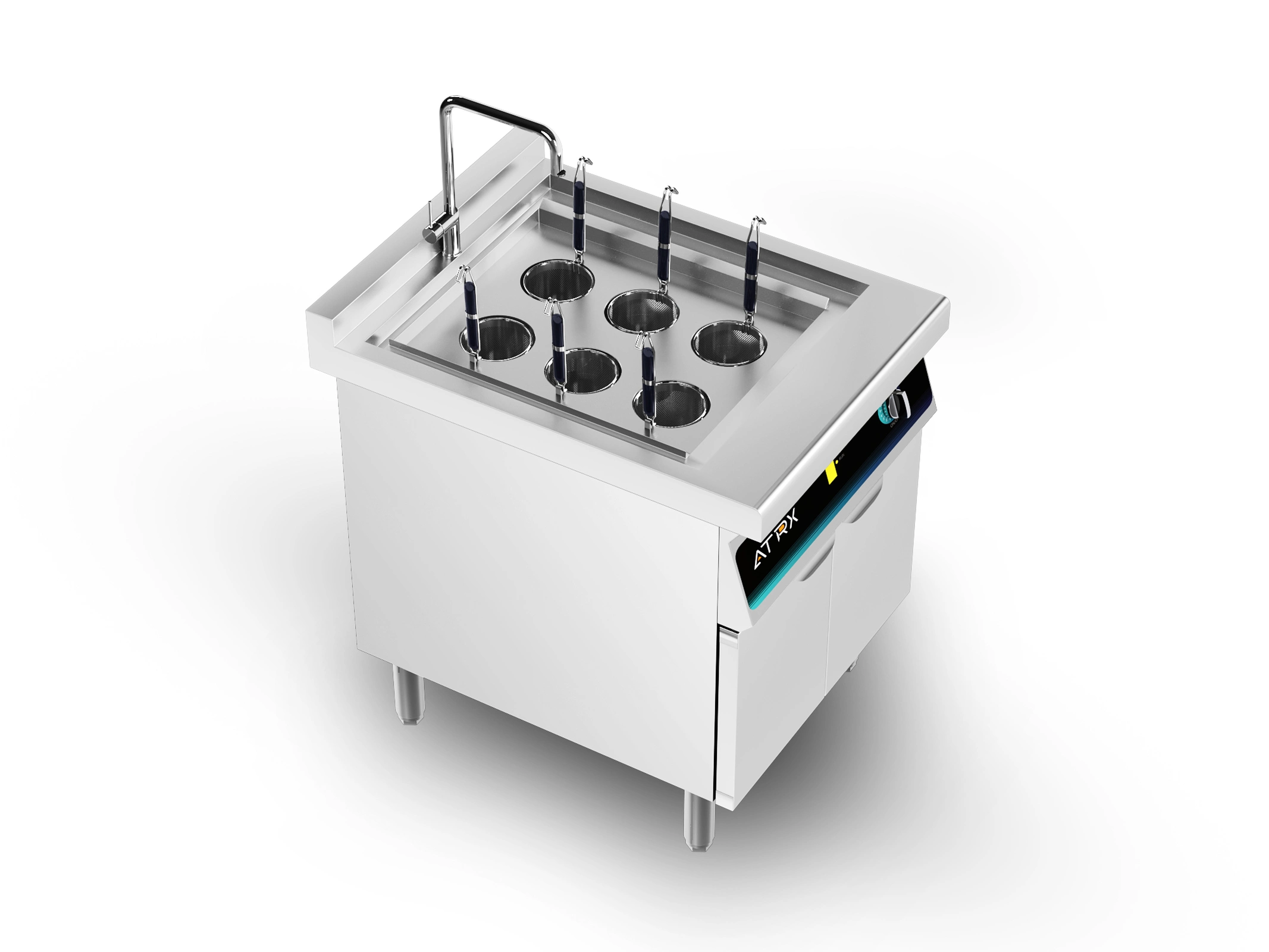
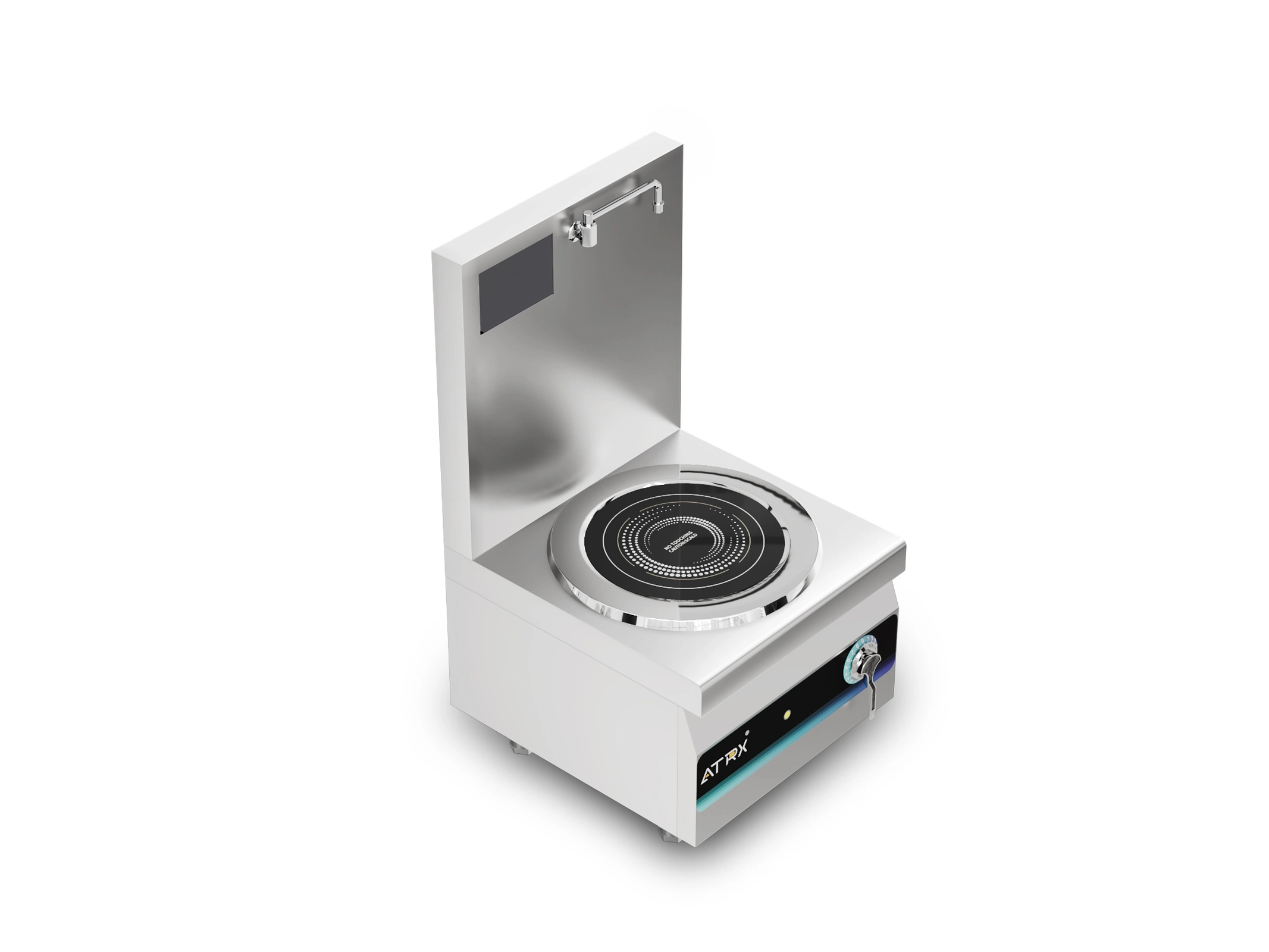
Our product line covers the main categories of commercial induction cooking equipment. One factory, one quality standard, one inspection, one container. Here’s the breakdown:
| Equipment Type | Power Range | Typical Use |
|---|---|---|
| Countertop Commercial Induction Cooker | 3.5kW – 8kW | Fast-food counters, buffet warming, small kitchen stations, food trucks |
| Freestanding Wok Cooker (Concave) | 8kW – 20kW | Chinese and Asian kitchens — stir-frying, high-heat tossing |
| Freestanding Cooker (Flat Top) | 8kW – 20kW | Western and Middle Eastern kitchens — sautéing, flat-pan cooking |
| Induction Deep Fryer | 8kW – 15kW | Chain restaurants, hotel kitchens — frying stations |
| Induction Griddle | 8kW – 12kW | Steakhouses, Western kitchens — grilling and searing |
| Induction Steamer Cabinet | 8kW – 24kW | Group-meal kitchens, hotel banquet prep |
| Induction Soup Cooker | 5kW – 15kW | Hotel buffets, central kitchens — simmering and boiling |
What Makes ATRX Induction Cookers “High Quality”
Two commercial induction cookers can look nearly identical on the outside. The price gap can be two or three times. The difference is almost entirely inside — in the components you can’t see.
This section spells out our material choices. Not for show, but so you know what to check and what questions to ask when comparing quotes from any commercial induction cooker supplier.
IGBT Module
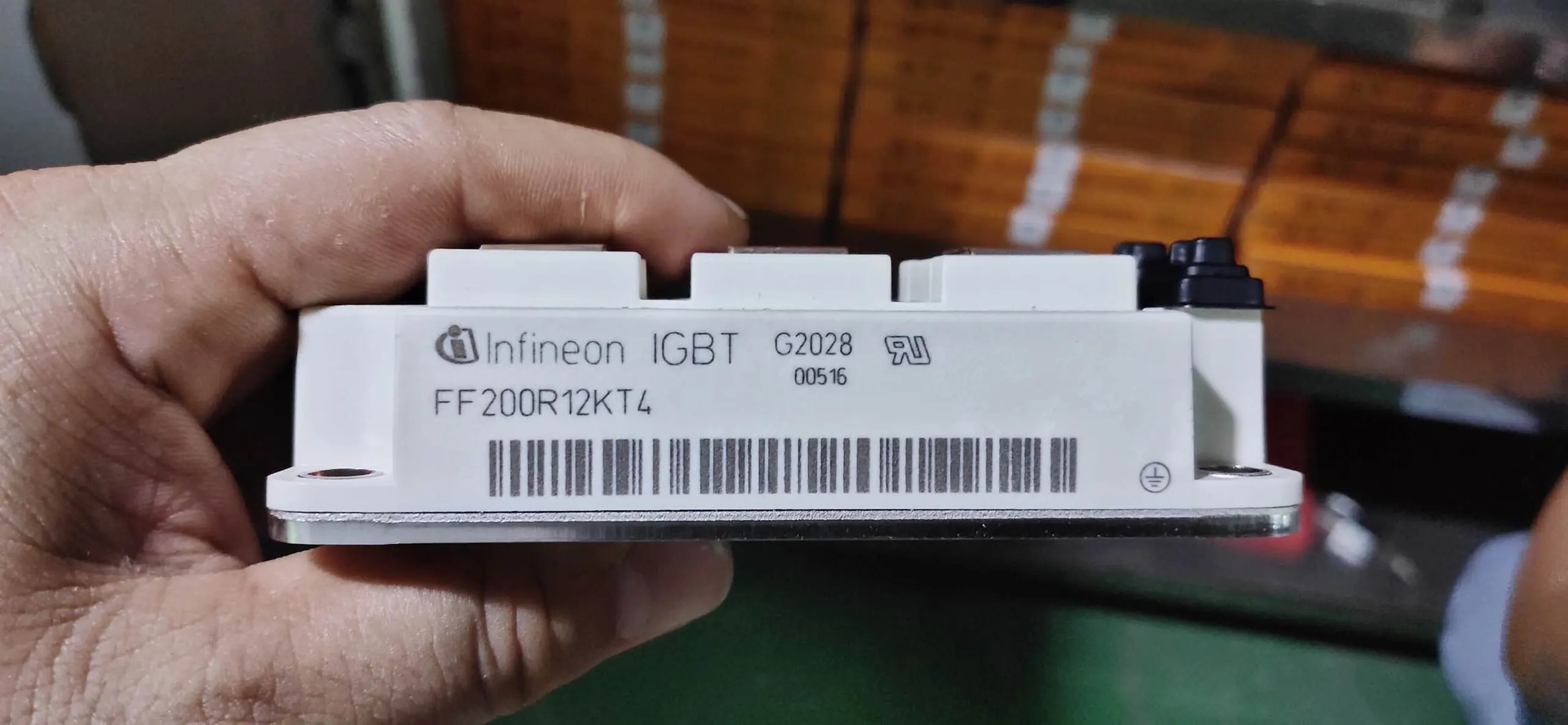
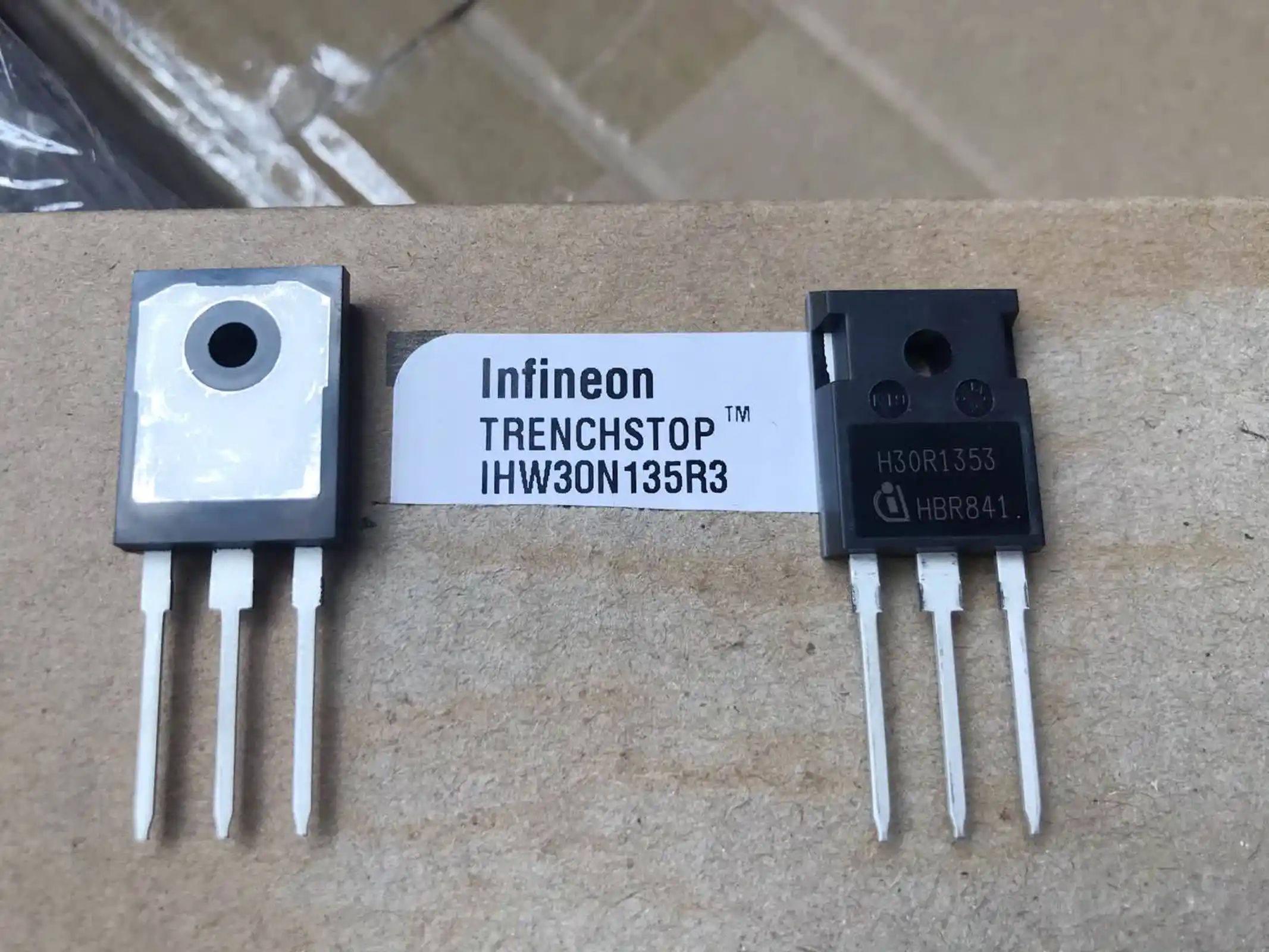
The IGBT is the main power-switching component. It controls how the current cycles on and off, which directly affects heating efficiency, temperature accuracy, and how long the machine lasts.
We use Infineon 1400V reverse-conducting IGBT modules — a series Infineon specifically designed for induction heating, covering operating frequencies from 18kHz to 75kHz with optimized switching and conduction losses. In practice, this means less heat buildup in the chip during 10–12 hours of daily full-load kitchen use, and slower efficiency degradation over time.
Some lower-priced machines use unbranded, generic IGBTs. They pass a quick power-on test just fine. But after a few hundred hours at full load, parameters start drifting — and the end user notices the cooker “just doesn’t get as hot as it used to.” That complaint almost always traces back to the IGBT.
One distributor in the Middle East shared his numbers: with his previous supplier, the six-month return rate was close to 12%, mostly mainboard failures. After switching to us, the annual return rate dropped below 3% — same customer base. He calculated that the savings on after-sales labor and international parts shipping alone covered the per-unit price difference.
Copper Coil
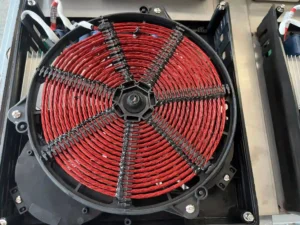
The coil is where heat actually starts. Current runs through it, creates an alternating magnetic field, and that field heats the pot. Coil material and winding density determine how efficiently that energy transfers and how evenly the pot heats up.
We use pure copper coils with dense winding across the entire product line. The physics is simple: copper’s electrical conductivity is about 58 MS/m versus aluminum’s 35 MS/m — roughly 66% higher. Higher conductivity means less energy wasted as heat inside the coil itself, and more delivered to the pot.
The common cost-cutting move is copper-clad aluminum wire (CCA). It looks the same on the outside — thin copper plating over an aluminum core — but weighs about a third less. CCA’s conductivity sits between copper and aluminum, and efficiency drops faster over time under high power. End users notice the cooker gradually slowing down after a year or two, but rarely connect it to the coil.
A useful question for any supplier conversation: is the coil pure copper or CCA? Can you provide a wire material test report?
Glass-Ceramic Panel
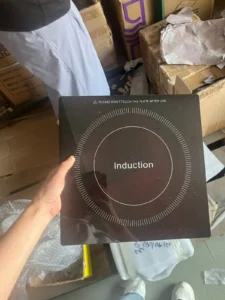
The panel takes the most physical abuse of any component. Commercial kitchens aren’t gentle — iron woks get dropped onto the surface, cold water hits a hot panel, pot residue gets scraped across it all day long.
We use 6mm glass-ceramic panels as standard. Industry norm is 3–4mm. That difference matters. Schott AG’s patent documentation states that glass-ceramic panel thickness typically ranges from 2.5mm to 6mm, and that thinner panels are “detrimental in terms of strength.”
Panel cracking is one of the most common after-sales complaints in this product category. Our internal data shows that upgrading from 4mm to 6mm cut panel-related service tickets by over 60%. For distributors, fewer panel claims means fewer cross-border replacement shipments and less trust erosion with end customers.
Two questions tell you if a supplier has cut corners here: what brand is the panel, and how thick is it?
Cooling Fan
Fans aren’t glamorous, but they rank in the top three components by failure rate in commercial induction cookers.
Commercial kitchens are brutal on fans — constant heat, grease coating the blades, moisture everywhere. Sleeve-bearing fans have a rated lifespan of 20,000–30,000 hours under ideal conditions. At 12 hours of daily use, that’s 4.5–7 years on paper. In a real kitchen full of oil smoke and steam, many fail within three to six months — noise first, then reduced airflow.
We use ball-bearing fans with CE/UL certification, rated above 50,000 hours — close to double the sleeve-bearing lifespan under equivalent conditions. Each fan is paired with an NTC thermistor for automatic speed control: it ramps up when internal temperature rises and slows down when things cool off. The point is simple — keep the machine running at full load for 12+ hours without an overheating shutdown.
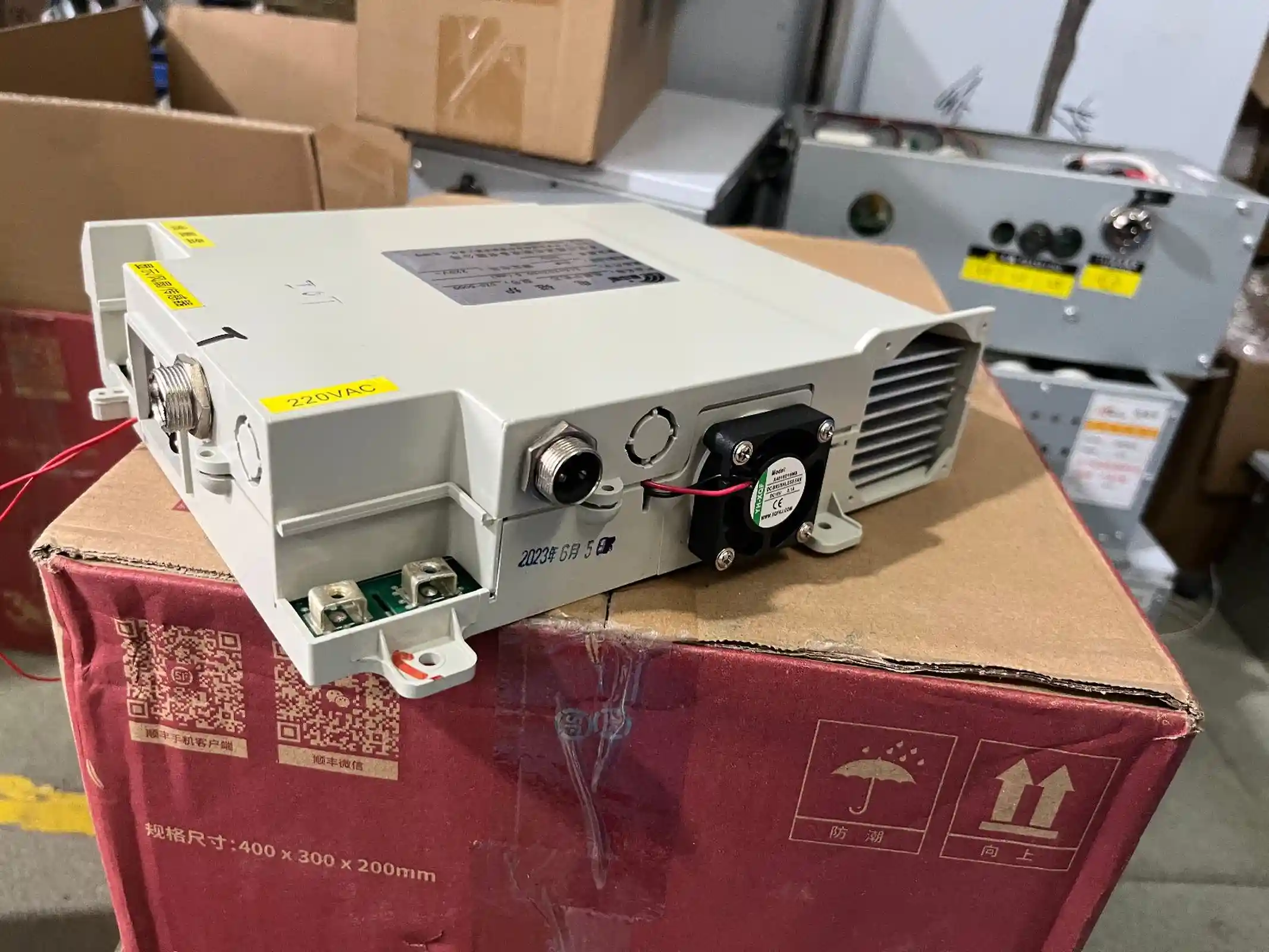
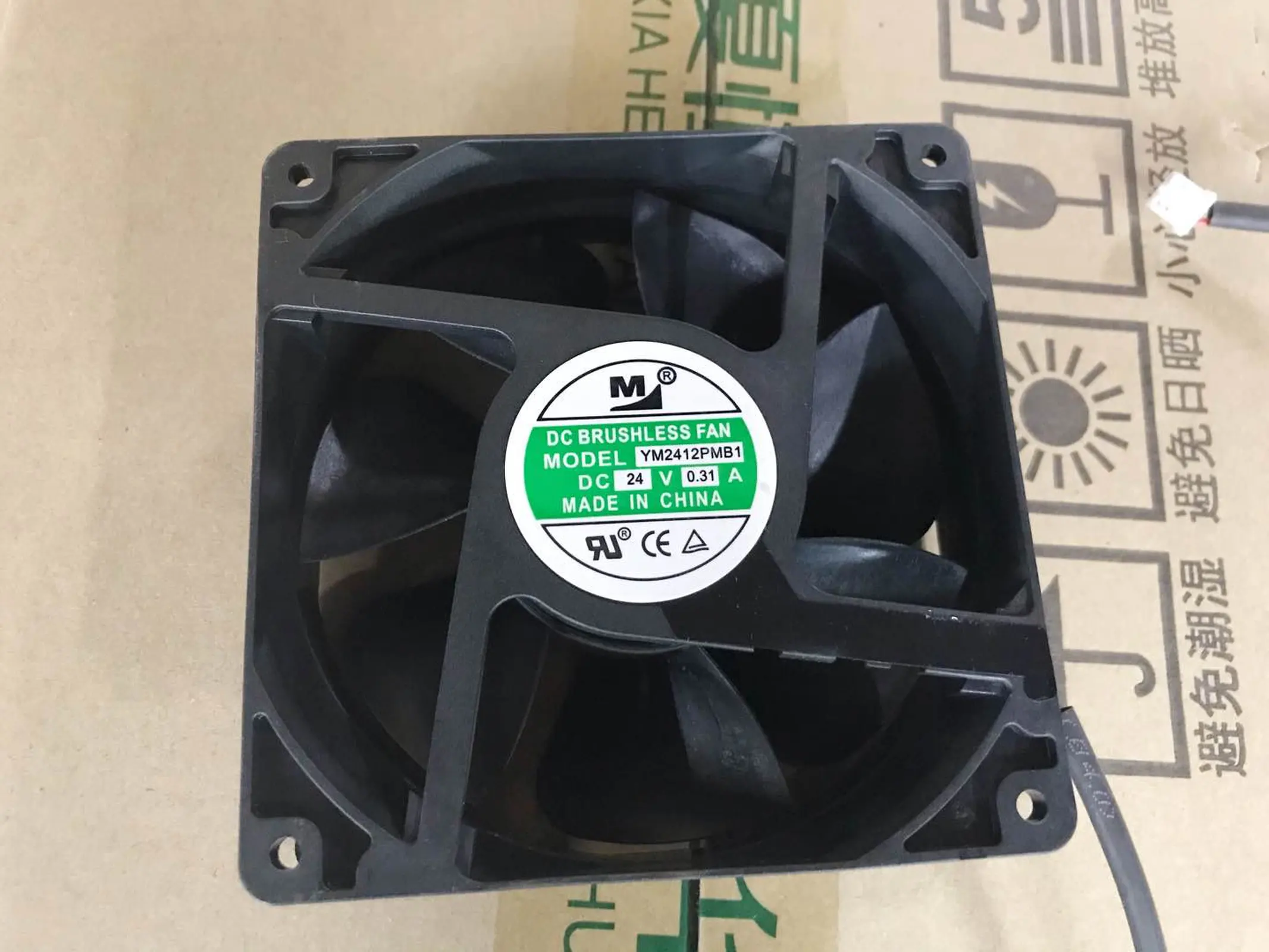
For technical detail on bearing-type lifespan differences across temperatures, the DigiKey engineering forum has a useful fan bearing longevity comparison. The conclusion aligns with ours: in greasy, high-temperature environments, ball bearings or ceramic bearings are the reliable option, ideally with at least IP55 protection.
What Tests Does Every Unit Go Through Before Shipping
Passing incoming material inspection and finishing assembly doesn’t mean a unit is ready to ship. Before release, every batch goes through a series of equipment-level stress tests.
The factory runs six dedicated testing machines across five dimensions: high temperature, high humidity, corrosion, thermal shock, and vibration. Every batch is tested. Every result is recorded and traceable.
Constant Temperature Incubator
Finished units or PCB boards run continuously in sustained high heat, simulating the thermal load of a commercial kitchen over time. This forces out heat-sensitive defects — cold-solder joints that crack under thermal cycling, capacitors whose values drift, terminal blocks that loosen from repeated expansion and contraction. If a component can’t survive the incubator, it won’t last in a real kitchen.
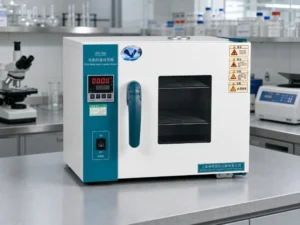
Digital Constant Temperature Drying Oven
This one is about precision. The drying oven holds tighter temperature tolerances than the incubator, so it’s used to verify component-level parameter stability. Does the IGBT’s forward voltage drop stay consistent at the target temperature? Is the capacitor’s ESR still within spec? This step catches parts that passed initial testing but have poor thermal stability.
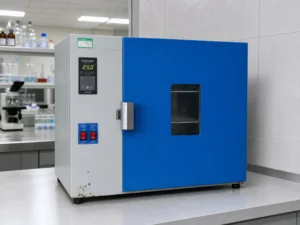
Constant Temperature and Humidity Chamber
Steam, splashes, and condensation are constant in commercial kitchens. This chamber replicates those conditions, testing PCB coating moisture resistance, connector insulation, and early-stage oxidation on metal parts. Moisture creeping into circuit boards is one of the top failure causes in coastal and tropical markets — this test targets that directly.
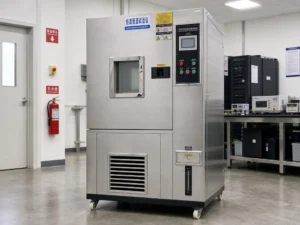
Thermal Shock Chamber
The test subject gets cycled rapidly between extreme heat and extreme cold, following IEC 60068-2-14. This mirrors real-world abuse — a chef splashing cold water on a fully heated cooking surface. The panel and internal components take an instant temperature swing of dozens of degrees. Materials and solder joints that can’t handle it get caught here, not in the field.
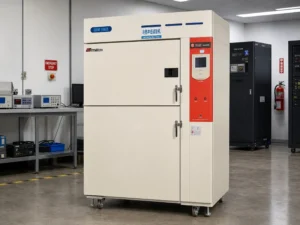
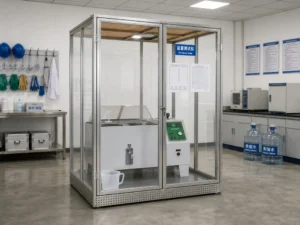
Salt Spray Chamber
Stainless steel housings and metal parts are exposed to 5% sodium chloride salt spray for hundreds of hours, per ISO 9227. This matters most for equipment heading to coastal cities, islands, and tropical regions. 304 stainless steel should survive 200+ hours with no red rust. If a supplier is using 201 stainless or cutting corners on surface treatment, the salt spray chamber exposes it in a fraction of that time.
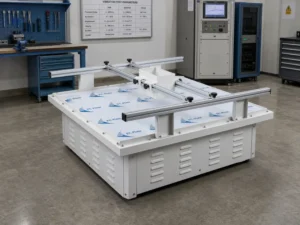
Vibration Test Machine
From Dongguan to an overseas warehouse, a unit goes through trucking, ocean freight, and transshipment — weeks of continuous vibration. This machine simulates that journey and checks for loose internals, screws backing out, fan brackets shifting, and terminal disconnection. Better to find a problem on the factory floor than inside a customer’s shipping crate.
Here’s a quick reference for all six:
| Equipment | What It Tests | Real-World Scenario | What It Catches |
|---|---|---|---|
| Constant Temp Incubator | Sustained heat | Long daily operation in hot kitchens | Solder cracks, capacitor drift, loose terminals |
| Digital Drying Oven | Precision thermal aging | Component stability under heat | IGBT voltage drift, capacitor ESR out of range |
| Temp & Humidity Chamber | Heat + moisture | Kitchen steam, coastal humidity | Coating failure, insulation drop, early oxidation |
| Thermal Shock Chamber | Rapid temp swings | Cold water on hot surface, seasonal extremes | Panel micro-cracks, solder fractures, delamination |
| Salt Spray Chamber | Corrosion resistance | Coastal, island, high-humidity export markets | Rust, coating blisters, poor surface treatment |
| Vibration Machine | Shock & vibration | Road + ocean freight over weeks | Loose screws, bracket shifts, terminal disconnection |
Not every unit runs through all six. The incubator and humidity chamber apply to each batch’s PCBs and key components. Thermal shock and salt spray are sampled per batch. Vibration testing runs before mass production of new models and whenever packaging changes. All results are archived and available for buyer audits or quality report requests.
How ATRX Controls Outgoing Quality
Good materials alone don’t guarantee every unit ships without issues. The real risk in volume production: the first few units check out fine, then quality quietly drifts, and the problem doesn’t surface until the machines reach end users.
Our approach is to build mandatory checkpoints into every stage of production — not to rely on a single final inspection as the safety net. Below is an overview. A detailed breakdown of the full QC system, including all six test machines and step-by-step procedures, is available in a separate article on our site.
Incoming Material Inspection
Every batch of core components arrives with the supplier’s test report. Our QC team then samples at a fixed ratio and re-tests with our own instruments. The check covers IGBT modules (electrical parameters and batch consistency), capacitors (capacitance and voltage ratings vs. reported values), glass-ceramic panels (thickness, flatness, surface defects), and stainless steel sheets (grade and gauge).
Any batch with out-of-spec parameters gets returned in full. No cherry-picking, no downgrading. Returns go into the supplier’s quarterly scorecard — repeat offenders get suspended.
For reference on panel thickness standards: Schott AG’s patent states that glass-ceramic panels typically range from 2.5mm to 6mm, with thinner panels being “detrimental in terms of strength.” The original text is at Google Patents US9018113B2.
Finished-Unit Burn-In Testing
A machine doesn’t pass just because it powers on. Every assembled unit goes to the burn-in station and runs at near-maximum rated power for an extended period. IGBT temperature, power stability, fan speed, and protection circuit response are all monitored in real time.
This is where hidden problems surface. Cold-solder joints crack under thermal stress. Capacitors drift. Fan bearings develop noise after hours of continuous spin. None of these show up in a quick power-on check — but all of them will show up in a working kitchen.
After burn-in, every unit gets a final inspection: each power level switched and confirmed, every button tested, every safety function triggered and verified, exterior checked on all six faces. Any failure holds the unit for rework. It doesn’t reach the packing area.
OEM & ODM — How We Help You Build Your Own Brand
Many buyers searching for a commercial induction cooktop manufacturer aren’t just looking for finished goods — they want their own brand on the product.
We support both OEM and ODM:
| Model | What You Get | MOQ | Lead Time |
|---|---|---|---|
| OEM | Your brand on our proven models — logo, panel printing, packaging, manuals | 100 units | 25–35 days |
| ODM | Custom development — voltage, power curve, control interface, housing design | 500 units | 2–3 months |
Neither is better in the abstract — it depends on where your business is. Entering a new market? Start with OEM. Get products listed fast, test demand, prove your channel works. Once volume is steady and you know what your market wants, move to ODM for differentiation. If you already have a finalized product spec but no factory, ODM from day one makes sense too.
For the full step-by-step process — sample timelines, approval milestones, and what you need to prepare — see the OEM commercial induction cooker process guide on our site.
That covers the full picture — factory background, product range, core materials, testing and quality control, and customization options. If you’re evaluating suppliers right now, this should give you enough to judge whether ATRX, as a high quality commercial induction cooker manufacturer, belongs on your list. Next step: send your requirements (target market, equipment types, quantities, power specs) and we’ll reply within 48 hours with a complete proposal and quote.
About the author
ATRX Team| 18 Years Commercial
Induction Cooker Manufacturer in China
Induction Cooker Manufacturer in China
Related Posts
How to Install a Built-In Induction Cooktop: A Step-by-Step Guide
09/17/2026
How to Clean a Commercial Deep Fryer: A Step-by-Step Guide
09/13/2026
High Quality Commercial Induction Cooker Manufacturer
09/09/2026
Automatic Wok Machine: Types, Specifications, Applications and Buying Guide
08/18/2026
What Is a Commercial Induction Cooker and How Does It Work
08/13/2026
Commercial Induction Range for Hotel Kitchens: How to Choose the Right Model
08/11/2026
China Commercial Induction Cooker Manufacturer
08/09/2026
10 Best Commercial Induction Cooker Manufacturers & Supplier Selection Guide [2026]
08/07/2026
Tilting Skillet & Bratt Pan: How to Choose the Right One for Your Commercial Kitchen
08/06/2026

Commercial Induction Cooker for School Cafeteria: How to Pick the Right High-Power Unit
08/04/2026