

PRODUCT HIGHLIGHTS
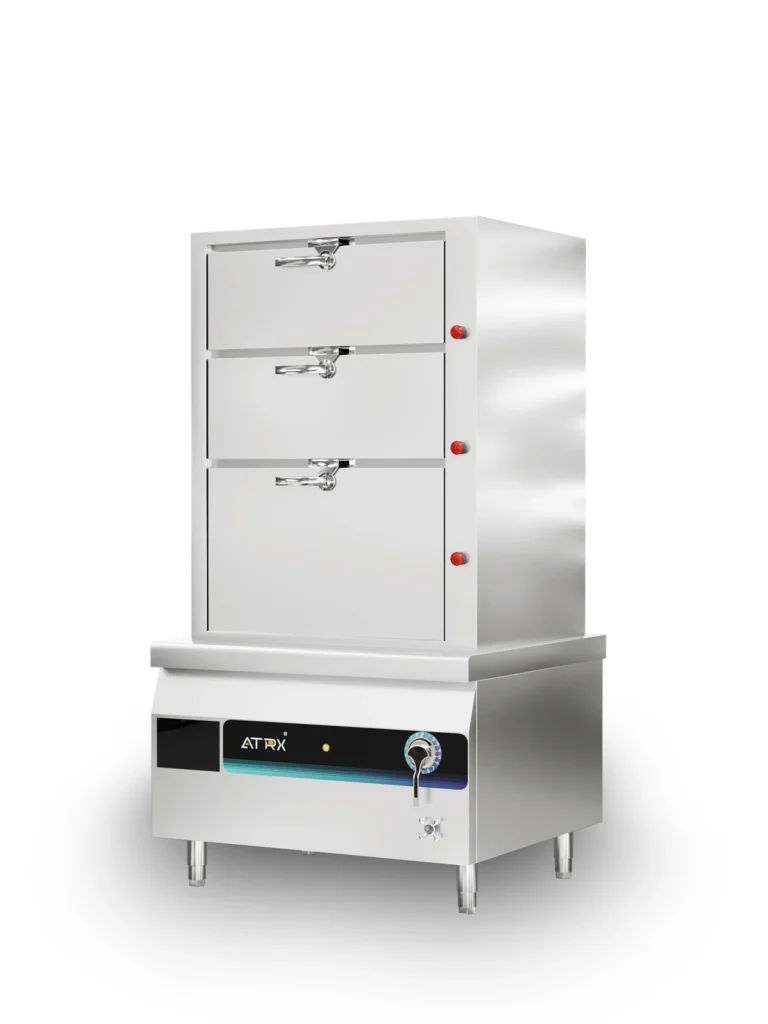
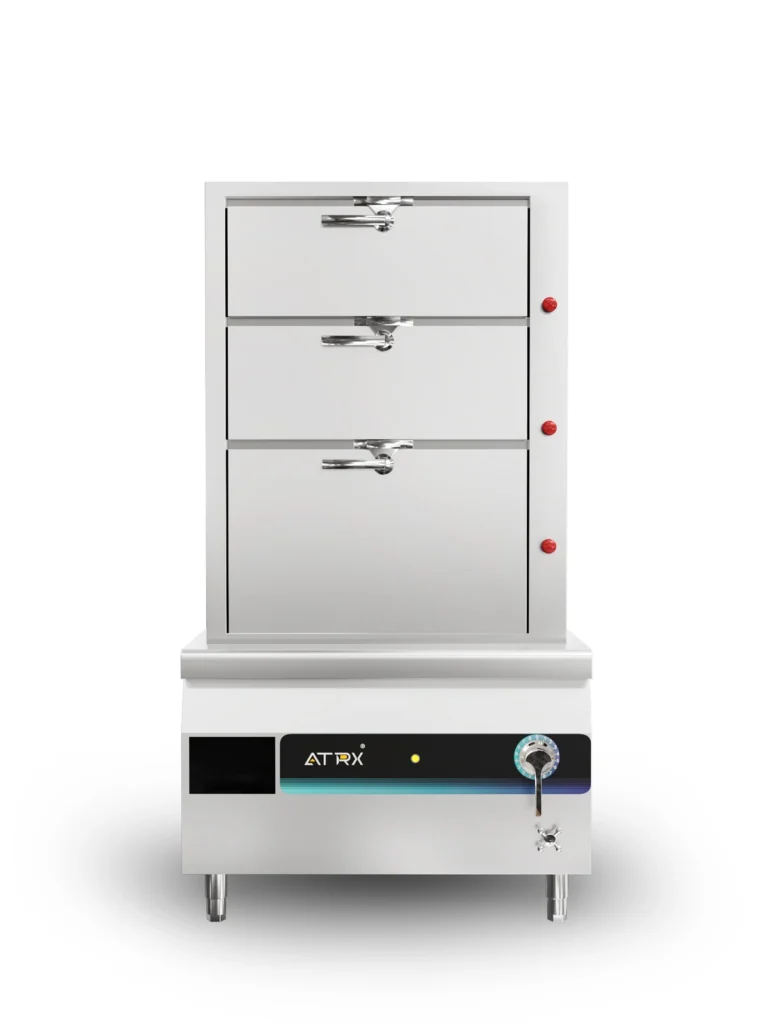
Anti-Drip Commercial Seafood Steamer Cabinet
3-tier Induction Seafood Steamer Cabinet | 15KW
Value of the 220V Front-to-Back 2-Burner Induction Cooktop
360° Vapor Circulation
Optimized steam inlet and exhaust ports create a 360-degree airflow loop in each chamber, so seafood heats evenly from all sides with no cold spots.
Anti-Drip Condensation Slope
A sloped ceiling inside each compartment channels condensate to the walls—not onto your food—keeping steamed seafood surfaces pristine.
4.5 cm Insulation + Silicone Seal
Thick foam-insulated walls and food-grade silicone gaskets lock steam inside the cabinet, cutting heat loss and lowering energy costs.
Inquiry UsView Specifications
01 / SPECIFICATIONS
Product Specification
Product Name
Product Model
Power(Kw)
Voltage(V)
Product Size
Product Material
Hs Code
02 / GETTING STARTED
How To Operate This Machine
Step 1
Place your commercial induction cooker in position and connect the power cable based on the required voltage. Make sure all wiring is done correctly before turning on the unit.
Step 2
Once powered on, place your induction cookware on the commercial induction cooker, prepare your ingredients, and get ready to start cooking.
Step 3
Turn the knob from 0 to your desired setting to begin cooking. During the cooking process, simply adjust the knob between levels 1 to 8 to control the heat output to your needs.
Step 4
Once cooking complete,then turn the knob back to 0 to power off the unit. Wipe down and clean the surface of your commercial induction cooker to keep it in top condition.
03 / QUALITY ASSURANCE
Anti-Drip Commercial Seafood Steamer: Four Build and Load Tests
01
Form the Sloped Roof and Check Batch Consistency
The sloped roof is formed through laser cutting, CNC bending, and welding to drawing. Because weld distortion can leave a low spot where condensate collects and drips onto seafood, each panel is checked for distortion, hole position, and cover fit before surface treatment. The first unit confirms the structure and production repeats it, so condensate runs to the sidewalls instead of marking plated fish.
02
Treat Welds and Corners to Reduce Water Collection
Uneven SS304 seams, distortion, or untreated burrs can trap water and make cleaning harder in a humid kitchen. Weld areas, burrs, and sharp edges are finished after checking distortion, openings, and cover fit, before surface treatment and final assembly. Cleaner corners let water leave the chamber instead of pooling near the food.
03
Compress Door Seals to Limit Moist-Heat Ingress
Door-seal compression, fit, and clearance are checked during assembly, because a weak seal lets steam escape and the cooler air that enters forms new condensate. The unit pairs 4.5 cm insulation with food-grade silicone door seals, followed by functional and full-load tests. Stable sealing keeps one tier’s moisture from affecting the next in banquet and buffet service.
04
Check Openings and Clearances to Keep Steam Paths Clear
Before panels are closed, openings, component positions, and clearances are compared with the drawing. A blocked path, loose screw, or stray wire end can trap mist and change how condensate moves. After confirming no foreign objects remain, full-unit functional testing verifies heating and control response, so the anti-drip design works without extra cleaning after service.
05
Check Wiring and Seal Fit on Each Tier
Wiring and seal fit are verified tier by tier, since a crossed harness or uncompressed seal can leave one tier leaking steam while another takes on moisture. The heating element, steam generator, control board, and harness are compared with the model drawing, and abnormal units are stopped and retested after repair. Each door can then protect the food behind it on a banquet or buffet line.
06
Damp-Heat Testing and Two-Hour Full-Load Aging
Boards, metal parts, and connectors go through cleanroom assembly, pre-solder drying, high-temperature aging, salt spray, damp heat, and thermal shock. Moisture, solder cracking, or corrosion can otherwise affect heating and steam control after weeks in a hot seafood kitchen. Each finished unit then completes a two-hour full-load aging test to check electrical stability and steam circulation. For long banquet service, that final run helps reduce the risk of a control or circulation fault appearing after the cabinet has already entered the line.
All results above are from our own factory. See related pages below.
Production Line Center Manufacturing Machines PCB Assembly Center04 / COOKING APPLICATIONS
Anti-Drip Commercial Seafood Steamer for Banquets and Buffet Lines
Own factory
CE certified
OEM available
Continuous Whole-Fish Service at Banquets
Wedding banquets, birthday banquets, and business dinners often send several tables of steamed grouper, sea bass, or sea bream out in quick succession. Once a whole fish is plated, condensate that drips onto the skin, scallions, or soy-based steaming sauce can leave water marks, soften the garnish, or dilute the sauce. Steaming whole fish on an independent tier with a sloped roof directs water to the cabinet walls, and opening one tier to remove fish allows the other two to keep working, helping keep plates clean.
Made-to-Order Steaming in Seafood Restaurants
Seafood restaurants and coastal open-air seafood venues often steam flower crab, lobster, prawns, scallops, and clams to order. Crab and scallop shells can catch condensate, leaving water in the bottom of the plate and dulling the surface sheen. Steam circulates inside the cabinet while the sloped roof directs water to the sidewalls; crab, shrimp, and shellfish can be divided across three tiers and steamed at once, reducing pot-by-pot queues during peak hours.
Replenishment at Buffets and Dim Sum Counters
Hotel buffets, Cantonese tea houses, and banquet appetizer stations often serve har gow, crab-roe siu mai, stuffed squid, and seafood platters at the same time. Dim sum wrappers are delicate, and roof drips can soften them; platters can also lose their appearance when droplets mark the arrangement or aromas transfer between seafood items. Three independent tiers keep dim sum, fish, and small seafood plates separate, while the sloped roof directs condensate to the walls so plates look neater during buffet replenishment.
FAQs
Frequently Asked Questions
We've gathered the most common questions buyers ask before placing their first order — browse through and find the answers that matter most to you.
How does the sloped interior roof direct condensate away?
Each tier’s sloped roof angles toward both sidewalls, so condensate that forms on the cooler surface runs to the sidewalls and drain path instead of dropping directly onto fish, crab shells, or plated food. That reduces water marks on steamed fish, lobster, and delicate presentations and helps keep scallions, fish skin, and sauce clean. Cleaning the sloped surface regularly helps drainage stay smooth. The design does not stop condensation altogether; its practical benefit is that formed water is directed away from the food.
Does opening one tier affect the other two?
No, opening one tier does not interrupt the other two. Each tier has its own heating elements and steam-generation system, so the closed tiers keep their steam pressure and cooking rhythm while the finished dish is served, and moisture or aromas from the open tier are less likely to enter the others. That suits fish, crab, and dim sum on separate levels and allows dishes to go out table by table. Closing the door promptly after serving protects heat retention, steam recovery, and anti-drip performance.
Can a high steam volume create a curtain of water?
A water curtain is unlikely. The inlet and exhaust paths create 360° circulation inside the cabinet, moving hot steam around the food and carrying excess mist away before it can collect into large droplets on the roof; the sloped roof then directs the remaining condensate to the sidewalls instead of back onto seafood. As a result, fish, shrimp, and crab heat more evenly, plates collect less condensate, and staff spend less time wiping plates at service. Stable circulation depends on the inlet and exhaust openings remaining clear, especially at high steam volume.
Do door seals and insulation help reduce dripping?
Yes, they help reduce dripping. The 4.5 cm insulation and food-grade silicone door seals keep heat and steam inside, reducing temperature swings and condensation on cool surfaces; with good seal contact, the sloped roof has less water to manage and plates stay cleaner. Cleaning the seals daily helps maintain that effect. The benefit depends on continuous, well-seated contact, so hardened or poorly fitting seals are the practical limit.
How can the anti-drip effect be maintained over time?
Maintaining the anti-drip system comes down to three routines: drain, wash, and descale. At closing, the foot-operated drain should empty standing water; the SS304 interior and sloped roof should be wiped, the trays removed and washed, and residual condensate rinsed away so grease or food debris cannot block drains or steam paths. Depending on use and water conditions, clean the tank and steam generator with a food-grade descaler every 1–4 weeks, because heavy scale can make steam output fluctuate. Water hardness and daily load determine where within that interval a site should operate, and filtered or softened water reduces the maintenance burden.
——07 / Factory quote & RFQ
Partner with a Trusted Commercial Induction Cooker Manufacturer
Whether you need wholesale commercial induction cookers, an OEM product line or a commercial kitchen project configuration, send a focused commercial brief. An ATRX team member can review the product, power, certification and customization requirements before quotation.
Useful information to include:
Target country · Product category · Application · Voltage / phase · Estimated quantity · Required certifications · OEM / branding needs