
PRODUCT HIGHLIGHTS
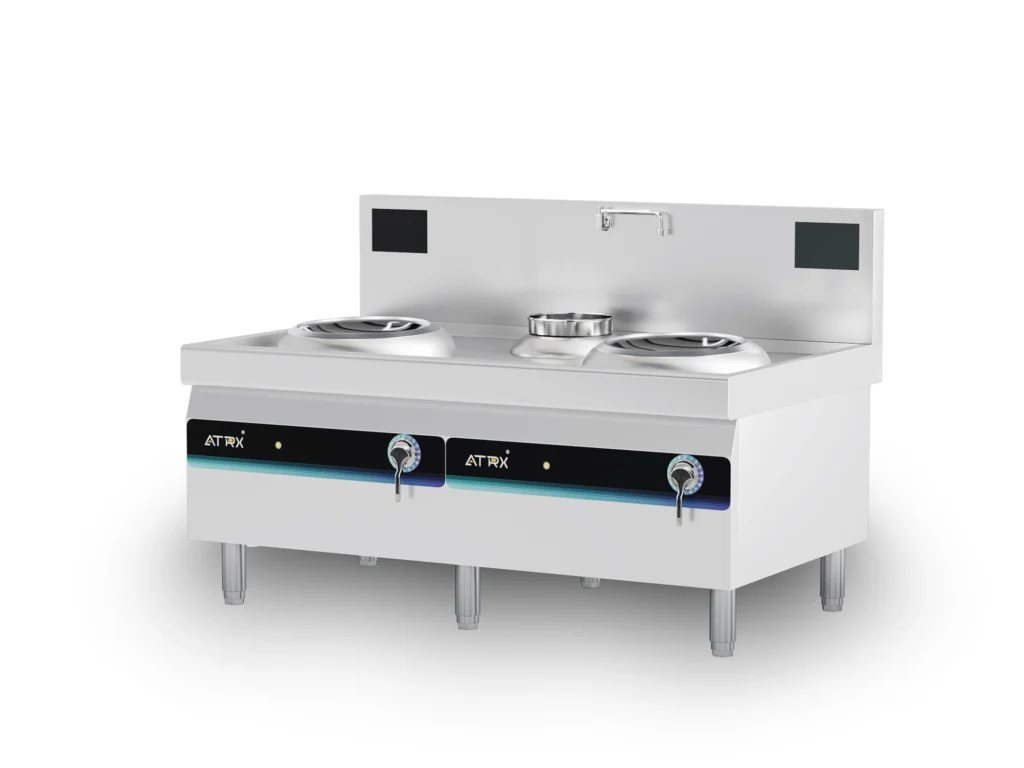
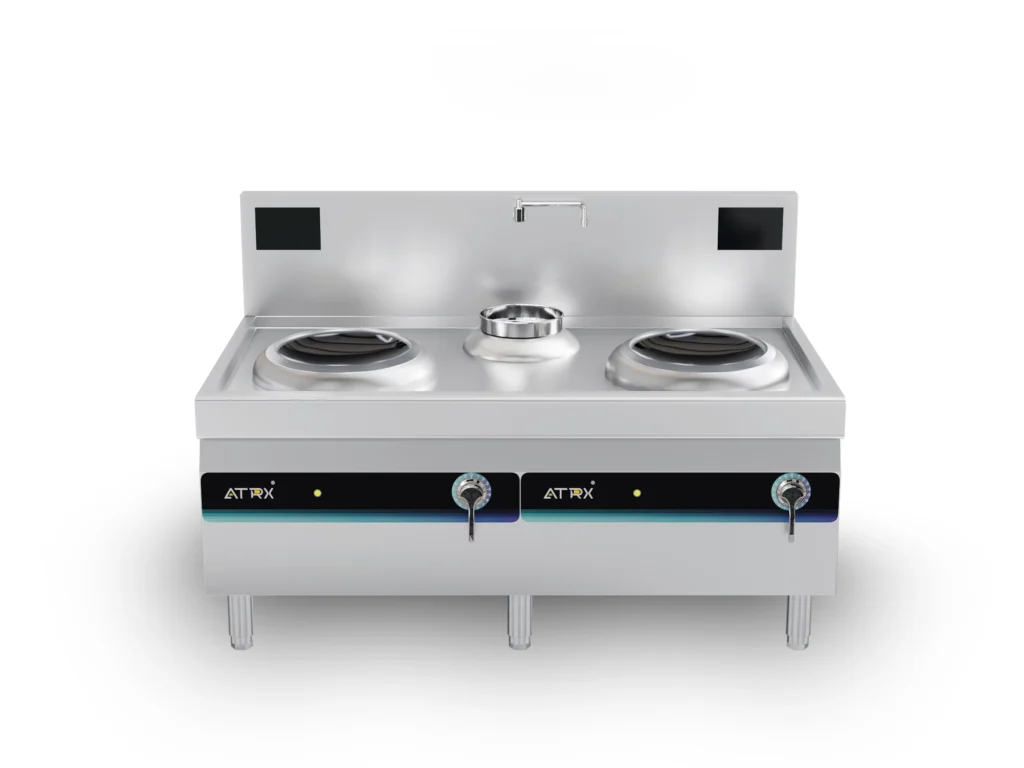
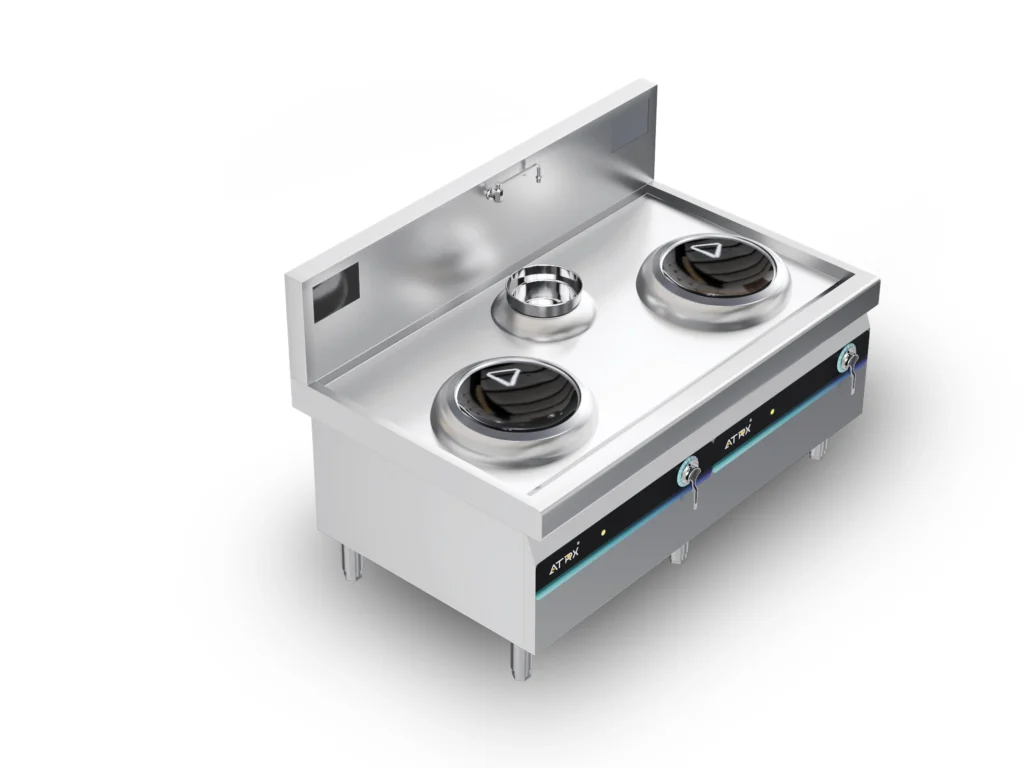
15kW×2 Double Induction Wok Cooker
Floor Induction Double Wok Cooker With sink | 15KW*2
Value of the 220V Front-to-Back 2-Burner Induction Cooktop
Direct Induction Heating to Reduce Cooking Energy Use
Induction heating directly heats the wok, reducing heat loss to the surroundings. When restaurants and canteens serve meals continuously, it can reduce energy waste in the cooking process and help control daily energy expenses.
Lift the Wok and Heating Stops to Cut Idle Power Draw
When plating, changing woks, or waiting for an order, lift the wok off the station and heating stops, cutting power draw with no wok in place. During alternating busy and quiet periods, this also reduces energy waste between orders.
Less Waste Heat Spills Out, Easing the Cooling Load
Compared with an open flame wok, induction heating reduces excess heat released into the kitchen and reduces the cooling burden of the air conditioner. For kitchens that operate for a long time, it helps to control the cost of refrigeration electricity.
Inquiry UsView Specifications
01 / SPECIFICATIONS
Product Specification
Product Name
Product Model
Power(Kw)
Voltage(V)
Product Size
Product Material
Hs Code
AT-FLWK08II-008
8kw*2
380V/3Phase
L1600*W1000*H800+400mm
SS304 Stainless Steel
8419810000
8KW Electric Requirement (One Burner,One Wire)-(8L)-Glass:300mm
- Rated at: 12.2A
- Voltage: 380V (Three-phase)
- Wire: 2.5mm² Copper Cable
- Breaker: 16A RCD (Residual Current Device)
AT-FLWK17II-012
12kw*2
380V/3Phase
L1800*W1100*H800+400mm
SS304 Stainless Steel
8419810000
12KW Electric Requirement (One Burner,One Wire)-(17L)-Glass:400mm
- Rated at: 18.2A
- Voltage: 380V (Three-phase)
- Wire: 4mm² Copper Cable
- Breaker: 25A RCD (Residual Current Device)
AT-FLWK17II-015
15kw*2
380V/3Phase
L1800*W1100*H800+400mm
SS304 Stainless Steel
8419810000
15KW Electric Requirement (One Burner,One Wire)-(17L)-Glass:400mm
- Rated at: 22.8A
- Voltage: 380V (Three-phase)
- Wire: 6mm² Copper Cable
- Breaker: 32A RCD (Residual Current Device)
AT-FLWK29II-018
18kw*2
380V/3Phase
L2000*W1200*H800+400mm
SS304 Stainless Steel
8419810000
18KW Electric Requirement (One Burner,One Wire)-(29L)-Glass:500mm
- Rated at: 27.4A
- Voltage: 380V (Three-phase)
- Wire: 6mm² Copper Cable
- Breaker: 40A RCD (Residual Current Device)
AT-FLWK29II-020
20kw*2
380V/3Phase
L2000*W1200*H800+400mm
SS304 Stainless Steel
8419810000
20KW Electric Requirement (One Burner,One Wire)-(29L)-Glass:500mm
- Rated at: 30.4A
- Voltage: 380V (Three-phase)
- Wire: 10mm² Copper Cable
- Breaker: 40A RCD (Residual Current Device)
02 / GETTING STARTED
How To Operate This Machine
Step 1
Place your commercial induction cooker in position and connect the power cable based on the required voltage. Make sure all wiring is done correctly before turning on the unit.
Step 2
Once powered on, place your induction cookware on the commercial induction cooker, prepare your ingredients, and get ready to start cooking.
Step 3
Turn the knob from 0 to your desired setting to begin cooking. During the cooking process, simply adjust the knob between levels 1 to 8 to control the heat output to your needs.
Step 4
Once cooking complete,then turn the knob back to 0 to power off the unit. Wipe down and clean the surface of your commercial induction cooker to keep it in top condition.
03 / QUALITY ASSURANCE
Double Induction Wok Cooker: Six Tests That Reduce Downtime and Repair Costs
01
Dust-Free Assembly: Protecting the Control Board from Shorts First
ATRX builds the control board in a closed, dust-free workshop and checks component position before soldering. Dust, oil and metal particles trapped under a component can bridge a circuit, causing unstable heating or an unexpected shutdown that adds repair cost to an energy-saving double wok. Post-solder inspection for bridges, missing parts and misalignment helps keep both zones in service.
02
Pre-Solder Drying: Preventing High-Temperature Blistering
Before the board reaches the soldering line, we dry it in a constant-temperature oven using the set heating and cooling profile. Moisture left inside the laminate can blister or crack the board during high-power starts and stops. Removing it early produces more dependable joints and reduces the material and labour needed for repeat repairs.
03
Powered Burn-In: Catching Cold Solder Joints Early
Every populated board is energised and aged for several hours at the factory. Weak joints that might otherwise surface as intermittent heat, false alarms or a shutdown after installation are exposed while repair is still straightforward. This protects the savings case for a 15kW×2 cooker by limiting callouts and lost service time.
04
Temperature and Humidity Testing: Checking Moisture Risk
The board and key connections are placed in a constant-temperature and humidity chamber before release. Steam, wash water and hot air can corrode contacts or reduce insulation, turning a minor moisture path into a costly fault. Screening that risk helps the double wok cope with humid weather and frequent cleaning without avoidable downtime.
05
Salt Spray Testing: Watching Metal Connections
Relevant metal parts and connectors enter our salt-spray chamber and are checked for surface condition and connection quality afterward. Oil, acidic food and salty steam can oxidise terminals, raise contact resistance and eventually require replacement parts. The test helps protect the low operating-cost target by reducing corrosion-related callouts.
06
Thermal Shock Testing: Validating Solder Joint Life
Our thermal-shock test cycles solder joints, terminals and wiring through repeated expansion and contraction. Cracks or loosening that develop after daily heating and cooling are found before the unit ships. That matters for a double wok chosen to cut operating cost: fewer intermittent failures mean fewer repair bills and less interrupted production.
All results above are from our own factory. See related pages below.
Production Line Center Manufacturing Machines PCB Assembly Center04 / COOKING APPLICATIONS
Double Induction Wok Cooker: Cost-Control for Restaurants, Canteens, and Chains
Own factory
CE certified
OEM available
Restaurant Wok Cooking: Two Woks in Rotation Reduce Empty-Burn Time
During lunch and dinner peaks, fried rice, rice noodles, sliced pork stir-fry, and dry-fried vegetables are produced continuously. A 17L wok can output several portions per batch, and the two stations alternate so main dishes and toppings cook at the same time. Heat goes directly into the wok base, reducing waiting and wasted heating, keeping service continuous and peak energy use lower.
Institutional Kitchens: Dual-Station Service Eases HVAC Cooling Costs
During centralized service, vegetables, meat, and egg fried rice are cooked in batches on one station while the other braises meat, prepares braised dishes, or simmers sauce. Both zones run together for concentrated peak output. Because induction releases less waste heat than an open flame, the kitchen's cooling load and the electricity used to remove that heat are easier to control.
Chain Locations: One Power Level Controls Energy Use and Loss
Each location reproduces the same dishes at the same power setting, reducing flavor variation between stores. The two stations handle main dishes, sauces, and ingredients separately, which also helps centralized prep and peak replenishment. High-power heat stays concentrated in the wok, helping each store control per-wok energy use and food waste.
FAQs
Frequently Asked Questions
We've gathered the most common questions buyers ask before placing their first order — browse through and find the answers that matter most to you.
Can an Induction Wok Cooker Reduce Energy Waste?
It can. Induction puts heat directly into the wok and food instead of warming the surrounding air, reducing the losses associated with an open gas flame. Output also stops when the wok is lifted, and the two 15kW zones can run independently, so energy follows actual cooking demand rather than an idle maximum load.
How Is Hourly Power Use Calculated for 15kW×2?
Both zones at full power draw 15kW + 15kW, or 30kW, so one hour would use about 30kWh in theory. Actual consumption follows the selected level and heating cycle, so current power multiplied by running time gives a more useful estimate than the nameplate rating alone. Run one station during quieter periods and bring the second online only when orders justify it.
Can Both Wok Stations Run at the Same Time?
Yes, as each 15kW zone has its own supply circuit and control knob. One side can handle a main dish while the other prepares toppings, braises or starts the next order, so they work in parallel at peak and independently during quieter periods.
Does Heating Stop Automatically When the Wok Is Lifted?
Yes—the wok detector cuts output when the wok is lifted for plating, changing or cleaning, and heating resumes when it is replaced. That prevents dry heating and keeps electricity demand tied to actual cooking time, including short lifts during service.
Is Daily Cleaning and Maintenance Simple?
Yes, with routine care. The SS304 body, glass wok zones and central sink are flat, accessible surfaces that can be wiped as part of normal kitchen cleaning. Because there are no gas nozzles, ignition needles or combustion carbon, the daily routine has fewer small parts and deposits to dismantle around.
——07 / Factory quote & RFQ
Partner with a Trusted Commercial Induction Cooker Manufacturer
Whether you need wholesale commercial induction cookers, an OEM product line or a commercial kitchen project configuration, send a focused commercial brief. An ATRX team member can review the product, power, certification and customization requirements before quotation.
Useful information to include:
Target country · Product category · Application · Voltage / phase · Estimated quantity · Required certifications · OEM / branding needs