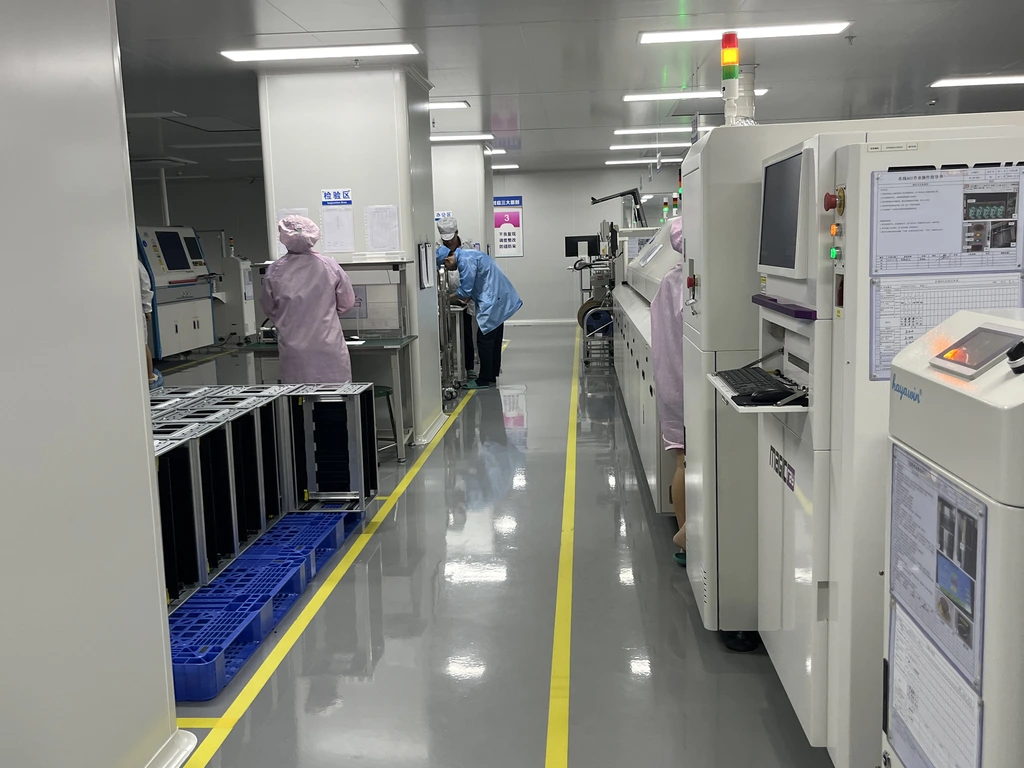

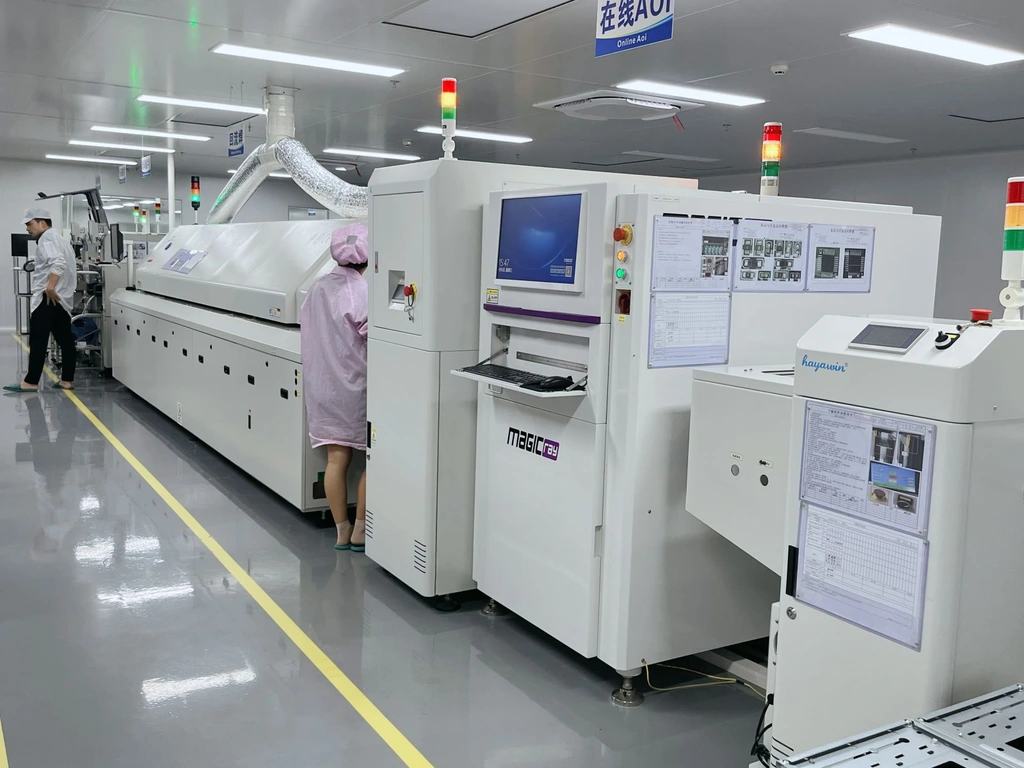
Nitrogen-Atmosphere Reflow Oven
We run every IGBT control board through a nitrogen-atmosphere reflow oven using a carefully controlled heat curve — confirming each solder joint is electrically sound before the board leaves the line. A single weak or hollow joint can disrupt the gate-drive signal, causing the board to fail under full cooking load.
A ten-zone heat profile matched to lead-free solder requirements — preheat, soak, reflow, and cooling stages are each individually tuned to protect sensitive components from heat shock.
A nitrogen-filled atmosphere kept below 1,000 ppm oxygen — reduces oxidation and produces solid, void-free joints that hold up through years of thermal cycling in commercial kitchens.
An in-line AOI scan runs immediately after reflow — every board is checked for solder bridges, lifted components, and insufficient solder before to the next stage.
Cooling Fan Assembly & Inspection
As a commercial induction cooker specialist, we hand-assemble and test every cooling fan module before it goes into the main unit. The fan is the only active measure keeping the IGBT module at a safe temperature — a single underperforming fan can trigger a thermal shutdown during a busy service.
Fan speed and airflow are verified on every unit — each module is bench-tested against a minimum airflow threshold to confirm it can handle full-load cooling conditions
The wiring harness is routed and secured to spec — connectors are checked for firm seating and correct polarity, preventing loose or intermittent faults after final assembly
Every module is screened for vibration and noise before sign-off — operators check by hand and ear for bearing irregularities that could lead to early fan failure in a working kitchen
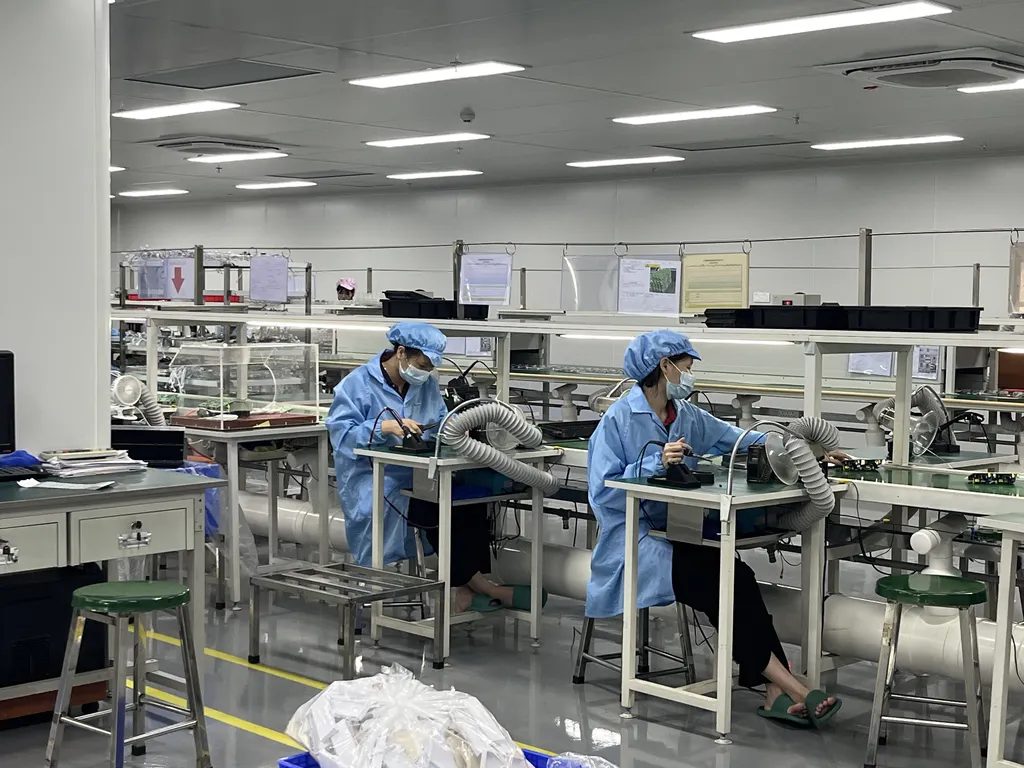
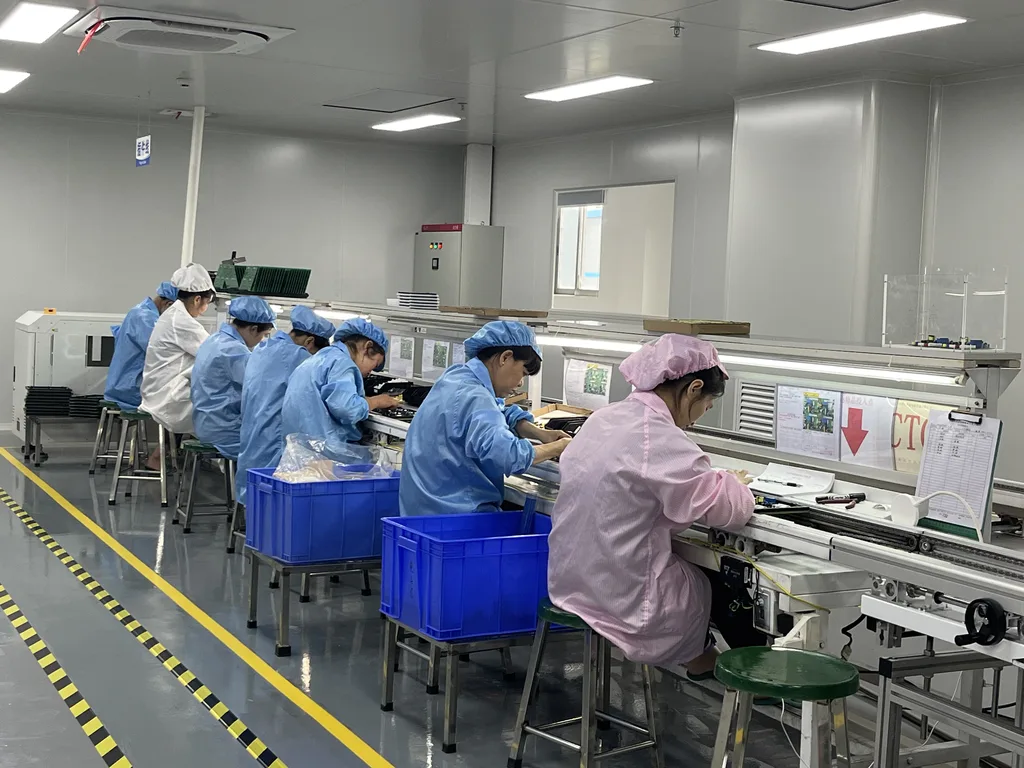
Manual DIP Component Insertion
We hand-insert every high-power through-hole component — IGBT modules, filter capacitors, relays, transformers, and heat-sink assemblies — onto the PCB before wave soldering. These components carry the full power load of the induction cooker — a single misaligned pin or missed insertion can cause arcing or open-circuit failure under heavy cooking use.
Component type and orientation verified against an insertion map — operators follow a fixed station layout with visual guides, ensuring every IGBT, capacitor, and relay is placed in the correct position and polarity
Pin-to-hole fit confirmed before the board moves on — each lead must pass fully through the PCB with no bending or partial insertion, guaranteeing solid solder contact at the wave-soldering stage
ESD-safe handling enforced at every station — operators wear grounded wrist straps and work on anti-static mats to protect sensitive IGBT and driver components from static damage
Wave Soldering Machine
We pass every hand-inserted PCB through a fully automated wave soldering line to complete all through-hole joints in a single controlled pass. The IGBT module, filter capacitors, and relay pins all rely on this stage for their permanent electrical connection.
Flux spray, preheat, and wave settings locked per board model — each PCB variant runs a pre-validated recipe to ensure consistent solder fill across all through-hole joints
Solder pot temperature and wave height monitored in real time — any drift beyond tolerance triggers an automatic alert, stopping batch-level defects before occur
Post-wave AOI and visual inspection at line exit — every board is checked for bridging, insufficient fill, and solder skips before moving to functional testing