
Precision Welding for Commercial Induction Cookers
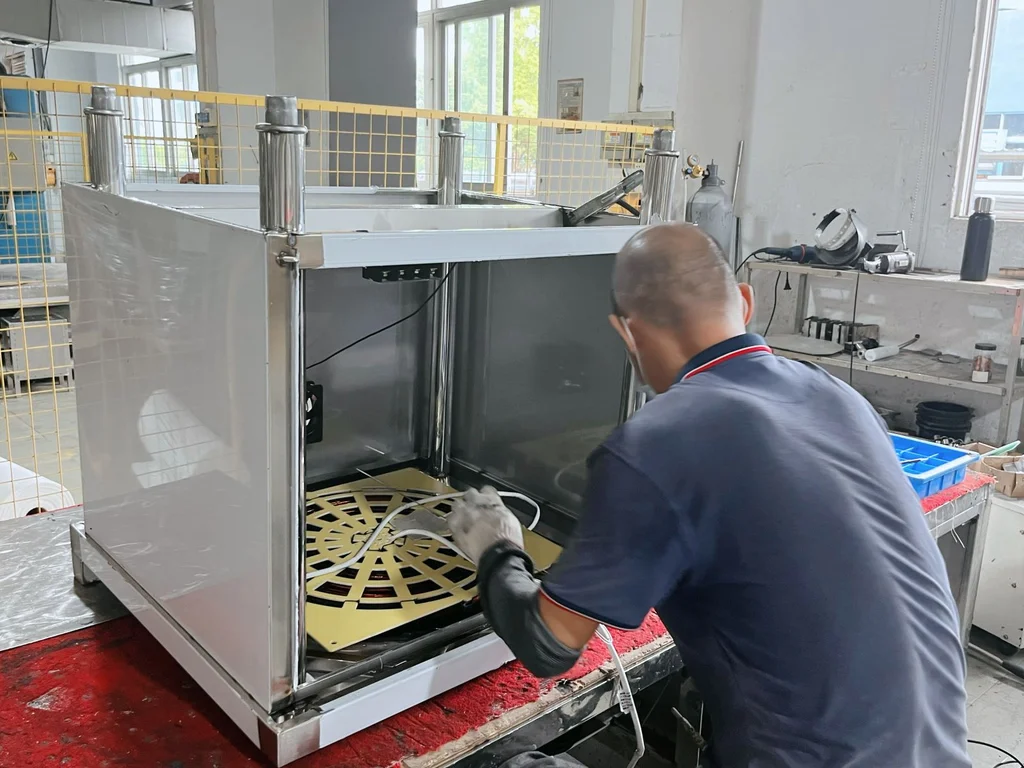
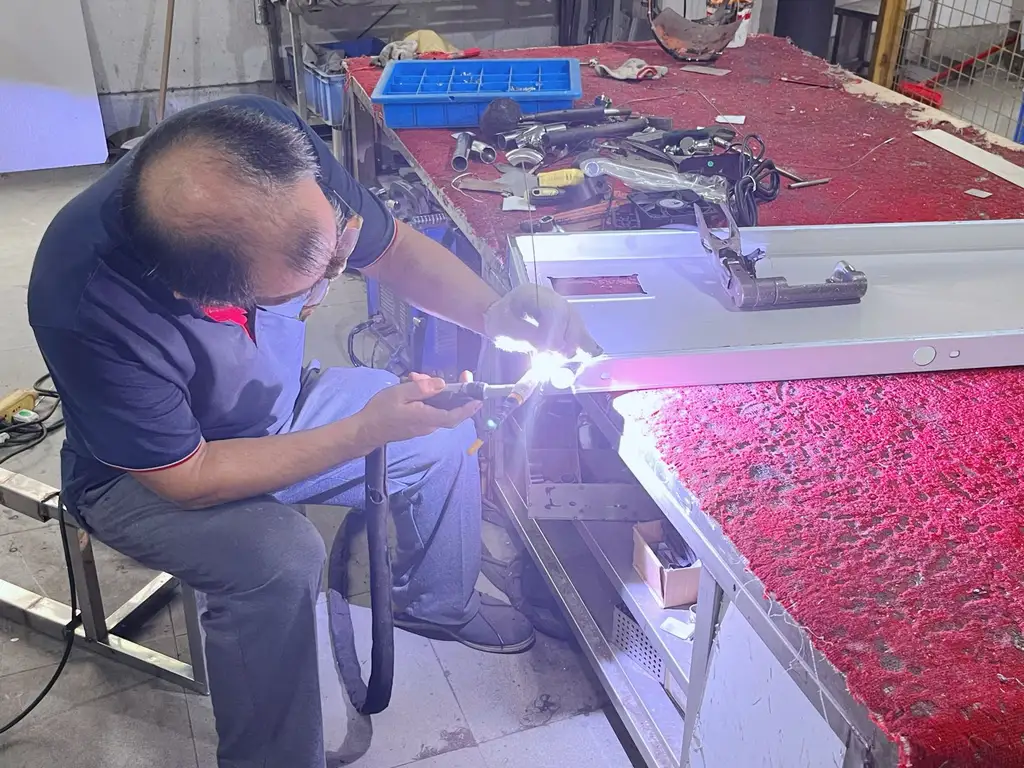
Our certified welders join every stainless-steel enclosure and chassis by hand, ensuring each commercial induction cooker is structurally sound before it leaves the line. A single weak weld can allow moisture to reach the IGBT module — risking electrical failure during peak service.
Weld penetration held to strict WPS standards — uniform seam depth on every joint ensures the housing withstands continuous thermal cycling and daily kitchen impact
Locked welding procedure per part number — operators follow a pre-qualified specification matched to material grade and thickness, eliminating shift-to-shift variation
Full seam inspection at every stage — QC inspectors check for undercut, porosity, and spatter before any unit moves to final assembly
Ceramic Glass Panel Fitting & Inspection
Each commercial induction cooker receives its ceramic glass top through a precision hand-fitting process. The operator aligns the panel flush against the frame and seals it in place — even a 0.5 mm gap can allow grease and water to penetrate, risking damage to the IGBT module beneath.
Edge-to-frame gap checked to ≤0.3 mm — every panel is verified against the housing rim to ensure a flush, watertight seal that withstands daily splashing and heavy cleaning
Visual and tactile inspection before lock-down — operators check the entire perimeter for unevenness or misalignment before the panel is secured
Silicone seal applied to a controlled bead width — consistent coverage prevents moisture ingress while allowing safe thermal expansion during high-power cooking cycles
Pressure Vessel Welding for Oil-Based Commercial Equipment
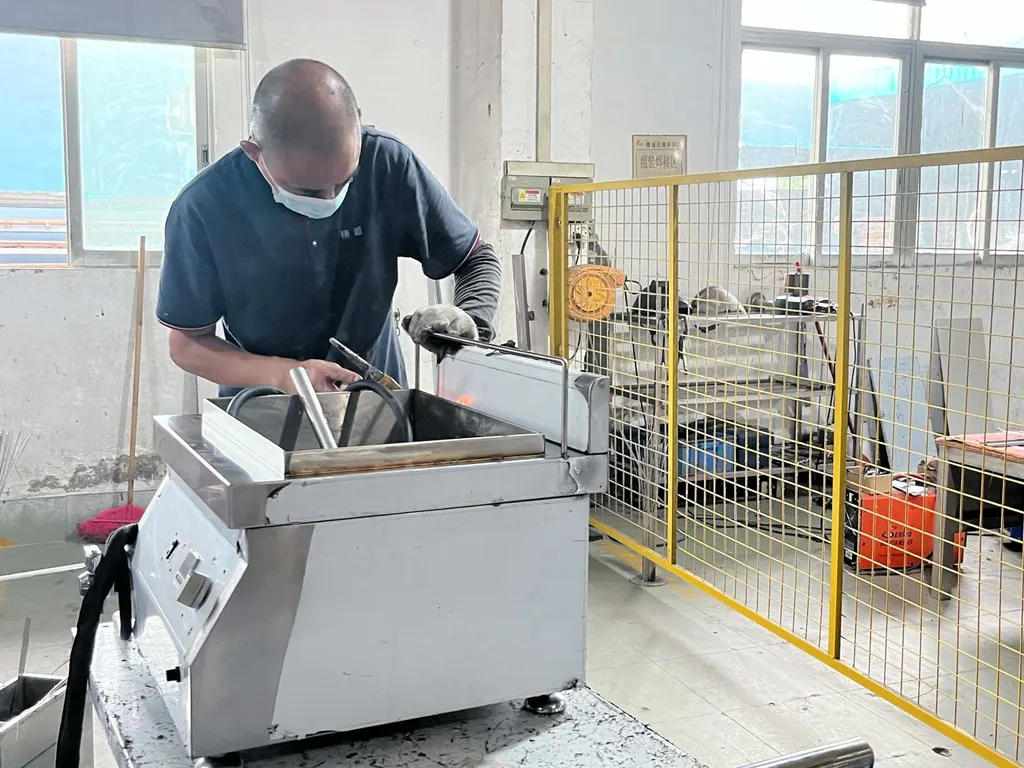
Every oil-filled unit — deep fryers, commercial fryer tanks, and hydraulic-cylinder equipment — demands leak-proof welds that withstand sustained high temperatures and oil pressure. A single pinhole in a pressurised fryer can cause hot oil leakage, posing serious burn hazards in a commercial kitchen.
Full-penetration weld on every oil-contact seam — complete fusion through the base material eliminates weak spots that could fail under continuous thermal and pressure stress
Welding parameters locked per product type — fryer tanks, oil cylinders, and drain fittings each follow a pre-set WPS matched to wall thickness and operating temperature
Hydrostatic pressure test on every finished tank — each unit is held at above-service pressure to verify zero leakage before it proceeds to assembly
Induction Coil Disk Installation
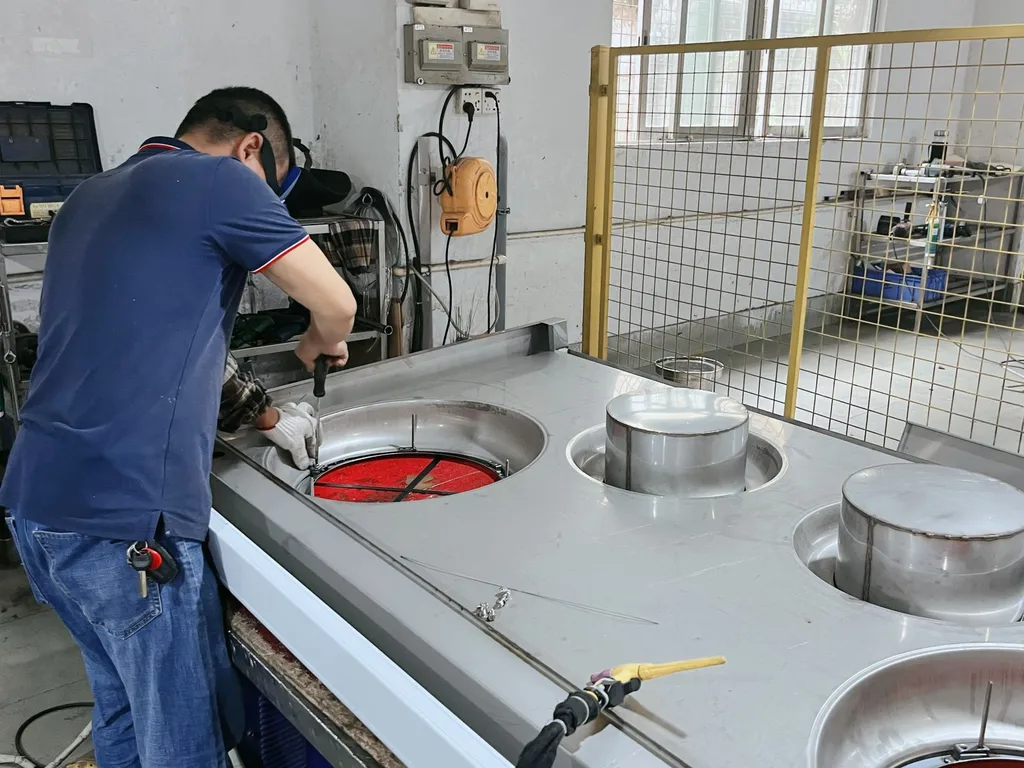
The induction coil disk is the core heating element of every commercial induction cooker — its position directly determines heating uniformity and energy efficiency. Even a 2 mm offset between the coil and the ceramic glass top creates uneven heat distribution and shortens IGBT module lifespan.
Coil-to-glass gap calibrated to a fixed specification — each disk is positioned at the precise distance from the ceramic panel to ensure maximum magnetic coupling and uniform heat output
Center alignment verified against the housing datum point — the technician checks coil concentricity before fastening, preventing hot spots or dead zones on the cooking surface
Mounting hardware torqued to a set value per product model — every fixing point holds the coil securely through thermal expansion cycles without cracking or loosening