

—— PRODUCT HIGHLIGHTS
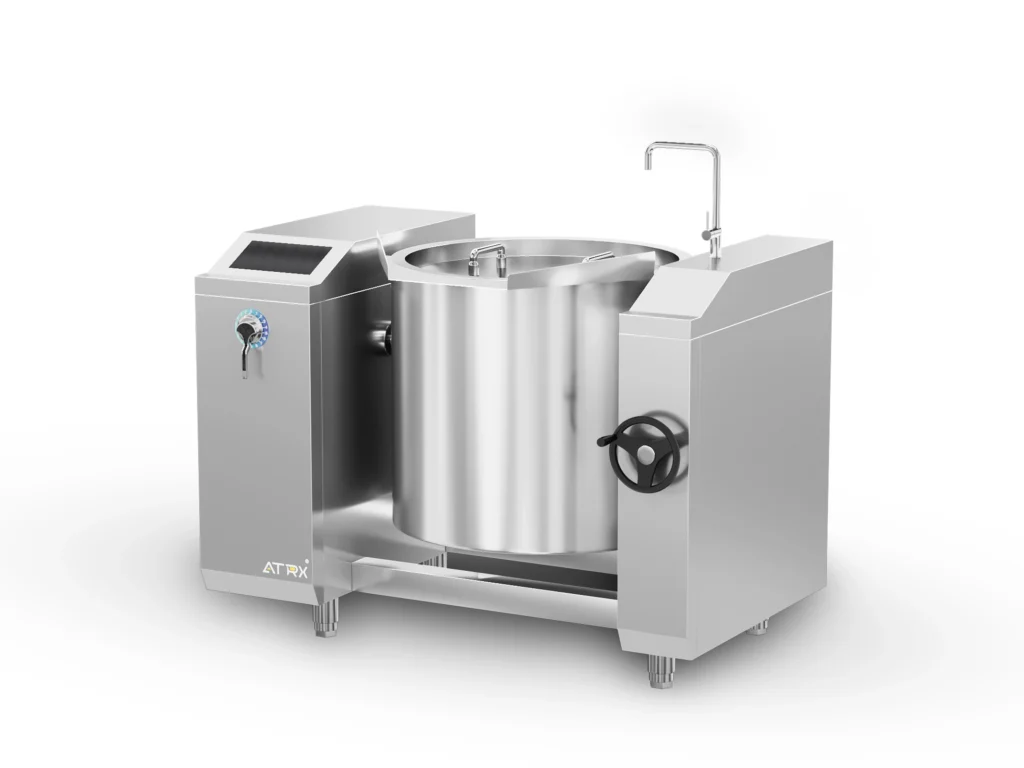
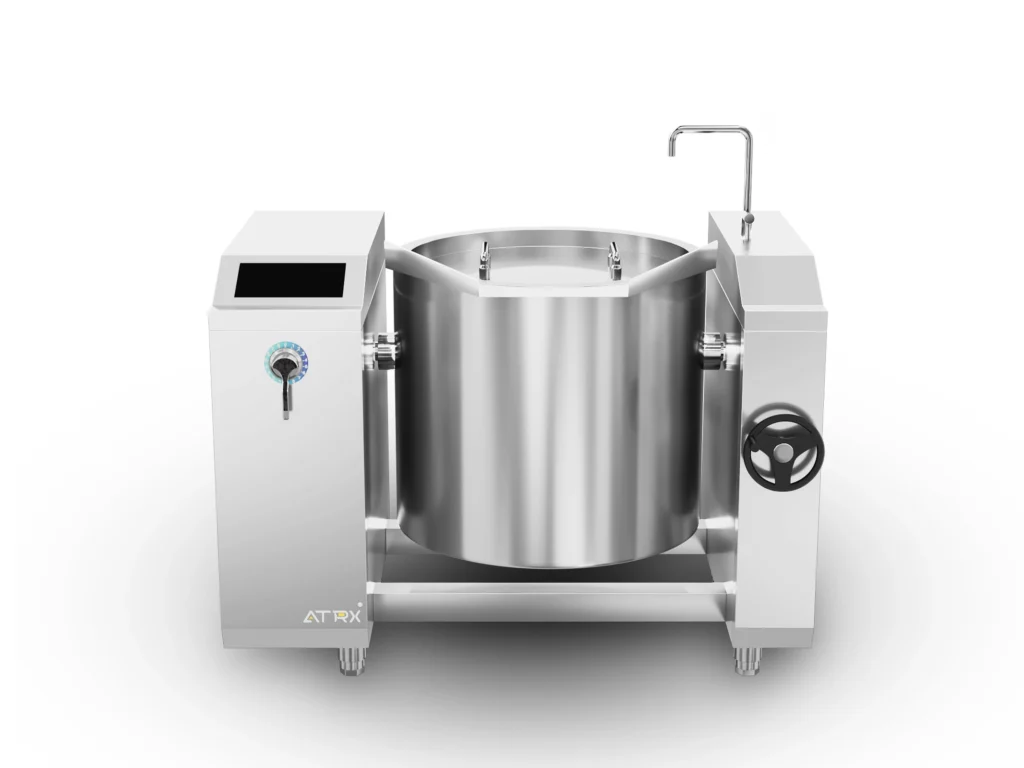
Floor Commercial Induction Tilting Soup Cooker | 100L
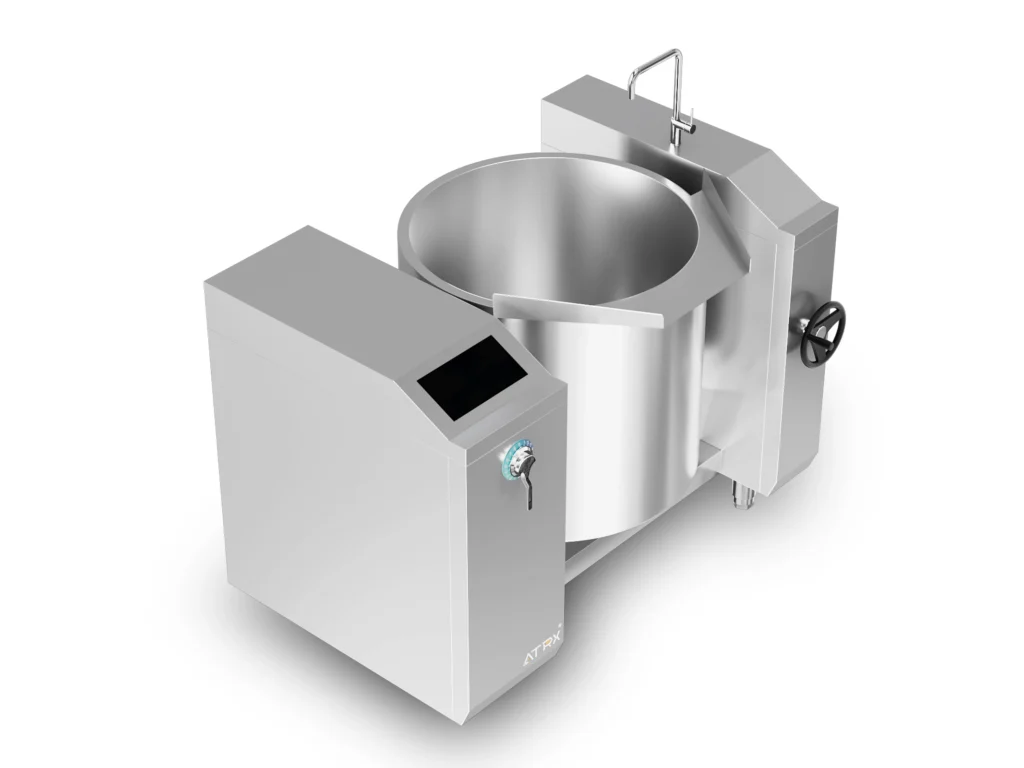
Hand-Wheel Tilt-to-Pour Design
Turn the hand wheel to tilt the full 100L pot and pour soup out completely — no lifting, no pumps, no removing heavy vessels from the frame.
Tilt-and-Rinse Cleaning in Place
Keep the pot tilted after draining. Hose down the exposed interior — gravity pulls all sediment and waste liquid straight out through the pour lip.
Under 8 Minutes Between Batches
Drain, rinse, refill, and restart in one continuous flow. The full cycle compresses to minutes, supporting 3–5 batches per shift.
800mm Integrated SS304 Pot
The pot is built into the frame with no removable insert, so the 20kW induction coil heats the full base evenly with zero air gap.
Basic Specification
Product Name
Product Model
Power(Kw)
Voltage(V)
Product Size
Product Material
Hs Code
How To Operate This Machine
Step 1
Place your commercial induction cooker in position and connect the power cable based on the required voltage. Make sure all wiring is done correctly before turning on the unit.
Step 2
Once powered on, place your induction cookware on the commercial induction cooker, prepare your ingredients, and get ready to start cooking.
Step 3
Turn the knob from 0 to your desired setting to begin cooking. During the cooking process, simply adjust the knob between levels 1 to 8 to control the heat output to your needs.
Step 4
Once cooking complete,then turn the knob back to 0 to power off the unit. Wipe down and clean the surface of your commercial induction cooker to keep it in top condition.
6-Step Quality Checking of this Machine | Every Unit
Every testing machine shown below is physically present in our factory — no fabrication.
PERFORMANCE
Dust-free PCB assembly
- Every board built in a sealed cleanroom, no dust or grease particles get trapped under components — eliminates 40% short-circuit failures compare to competitors.
Electric Heating Constant Temperature Drying Oven
- Bakes out all moisture from PCBs before soldering — boards that skip this step blister and crack under high-power heat within months.
Electric Heating Constant Temperature Incubator
- Every board is heat-aged for hours to force weak solder joints to fail in our lab, not in your kitchen after installation.
Constant Temperature and Humidity Test Chamber
- Simulates years of steam and humidity from a real commercial kitchen to verify no board corrosion or short circuits develop over time.
Salt Spray Test Chamber
- Tests every metal part and connector against aggressive corrosive vapor — the same oils, acids, and moisture your cooker faces daily in a commercial kitchen environment.
Thermal Shock Test Chamber
- Mimics the hundreds of rapid heat-up / cool-down cycles your cooker endures every single day, cracking any weak solder joint before it ever ships.
What Food Can You Cook With It?
Bone Broths & Slow-Simmered Stocks
Pork bone broth, beef marrow stock, and chicken soup need hours of steady low heat to extract flavor and collagen. The 20kW induction base holds a precise simmer across the full 100L without hot spots, cooking every batch evenly from edge to center.
Curries & Porridges
Congee, corn chowder, lamb curry, and oatmeal porridge thicken as they cook and scorch easily on standard burners. Even induction heating across the 800mm base keeps dense liquids at consistent temperature, preventing sticking and delivering uniform texture.
Blanching Broths
Miso soup, minestrone, seafood broth, and vegetable consommé require rapid boiling then gentle holding. The cooker brings 100 liters to a full boil in about 13–15 minutes, then dials back to a controlled simmer — protecting delicate ingredients precisely.
FAQs
Frequently Asked Questions

Most People Curious
We've gathered the most common questions buyers ask before placing their first order — browse through and find the answers that matter most to you.
Submit Your InquiryHow does the tilting design make a 100L soup cooker easier to clean?
After pouring, the hand wheel holds the pot at a steep angle. Bone fragments, starch, and grease slide toward the lip under gravity. A kitchen hose aimed into the tilted pot flushes the entire inner wall in one pass — water follows the curve and exits through the lip, reaching areas that stay hidden inside a fixed upright kettle.
How many batches of soup can this cooker produce in one shift?
At 20 kW, a full 100L load reaches a rolling boil in roughly 13–15 minutes. Simmer time depends on the recipe. The real time saver is between batches — the tilt-pour-rinse-refill cycle takes under eight minutes because you never remove the pot or stop to scrub. Most chain kitchens run 3–5 full batches per eight-hour shift, producing 300–500 liters of soup from a single unit.
Is the pot removable or permanently attached?
It is permanently integrated into the tilting frame, sitting directly above the induction coil. This eliminates the air gap that forms under a removable insert, so the full 20 kW heats the 800mm base evenly. It also means the pot and frame tilt as one rigid unit — no risk of a separate heavy vessel slipping during pouring.
What power supply does this floor-standing induction soup cooker require?
It runs on 380V three-phase at 20 kW — the standard commercial kitchen electrical setup in most markets. A dedicated circuit with proper breaker protection is needed. Because induction produces no open flame or combustion exhaust, hood and ventilation requirements are simpler, which speeds up permitting for chain restaurant buildouts.
Why do chain restaurants choose 100L as the standard soup batch size?
One hundred liters yields about 200–330 servings at typical 300–500 mL portions — enough for a peak meal period without overproducing. Larger pots take longer to heat and are harder to drain and rinse. Smaller pots force extra cycles that add labor without raising output. The 800mm diameter at 100L keeps liquid depth right for even induction heating and lets the tilt mechanism empty the pot fully in one pour.