

—— PRODUCT HIGHLIGHTS
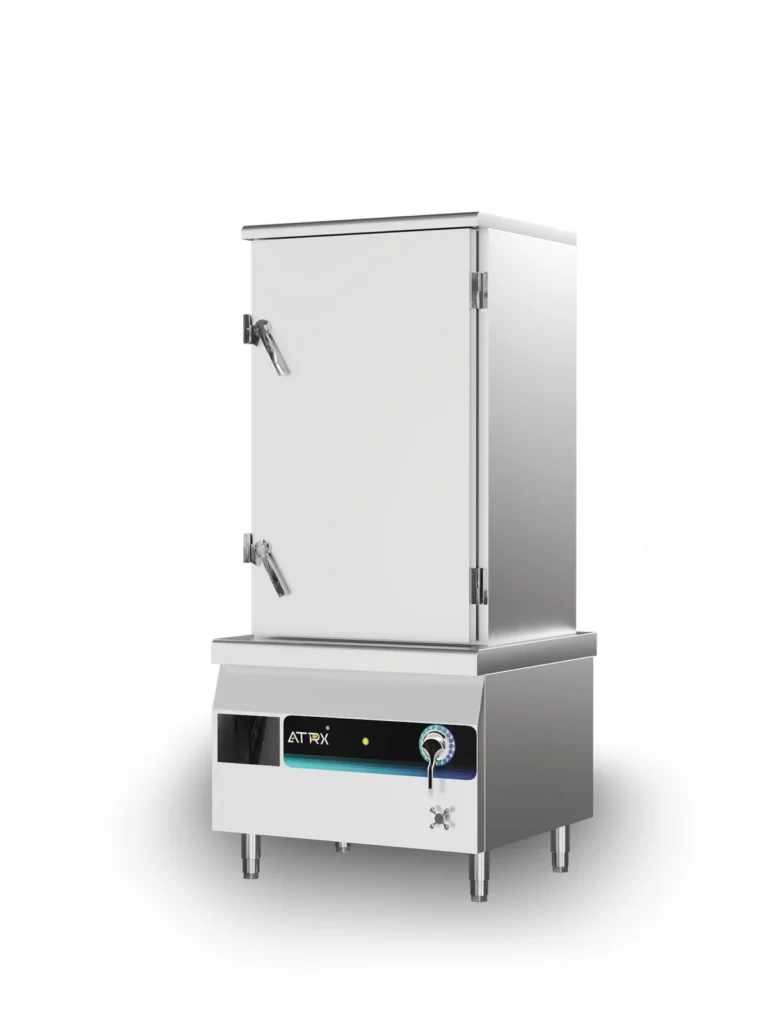
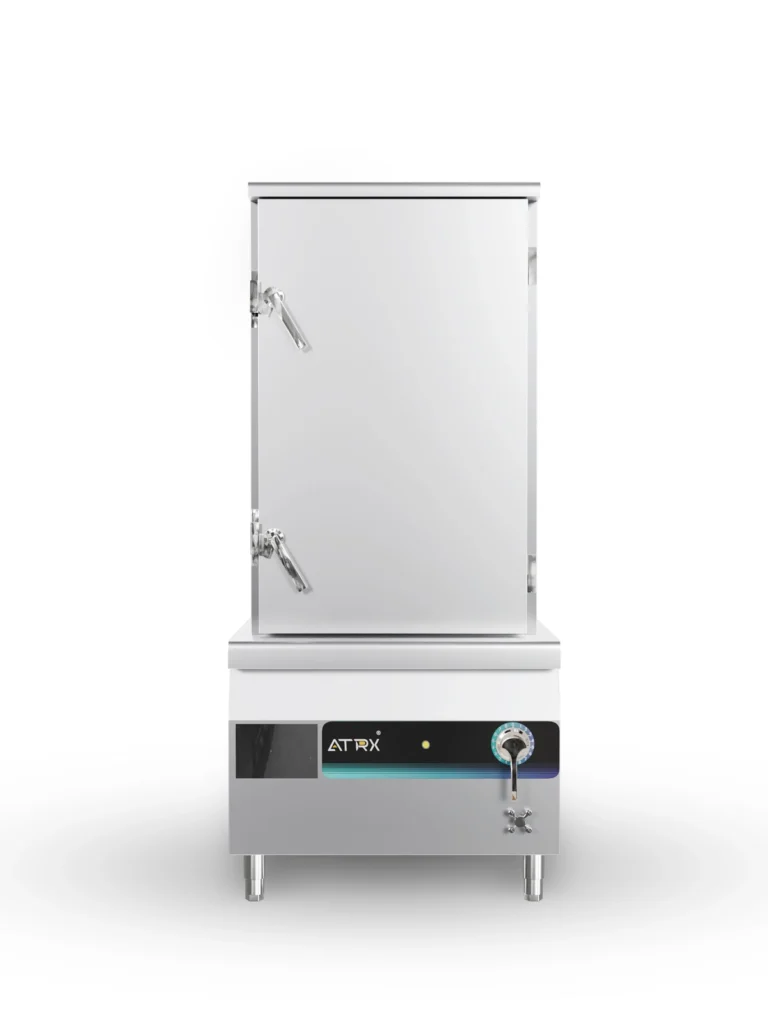
Commercial Induction Single Door Rice Steamer | 15KW
Skip Gas Line Installation
Going fully electric means no gas piping, no fuel permits, and no scheduled leak checks. For a new kitchen project, that alone removes a significant line item from the construction budget.
Less Ductwork and Ventilation
No open flame produces no combustion fumes. That allows the kitchen to scale back exhaust hoods and makeup air systems, which typically account for a sizable share of HVAC buildout costs.
Works Where Gas Is Not Allowed
Upper-floor food courts, basement dining areas, and mixed-use buildings often restrict gas access. This electric rice steamer cabinet only needs a power connection, so location options open up.
Compact Single-Chamber Design
One induction cavity serves all 12 trays inside a 900 × 800 mm footprint. Without gas valves, flue pipes, or extra clearance for combustion, the kitchen layout stays clean and simple.
Basic Specification
Product Name
Product Model
Power(Kw)
Voltage(V)
Product Size
Product Material
Hs Code
How To Operate This Machine
Step 1
Place your commercial induction cooker in position and connect the power cable based on the required voltage. Make sure all wiring is done correctly before turning on the unit.
Step 2
Once powered on, place your induction cookware on the commercial induction cooker, prepare your ingredients, and get ready to start cooking.
Step 3
Turn the knob from 0 to your desired setting to begin cooking. During the cooking process, simply adjust the knob between levels 1 to 8 to control the heat output to your needs.
Step 4
Once cooking complete,then turn the knob back to 0 to power off the unit. Wipe down and clean the surface of your commercial induction cooker to keep it in top condition.
6-Step Quality Checking of this Machine | Every Unit
Every testing machine shown below is physically present in our factory — no fabrication.
PERFORMANCE
Dust-free PCB assembly
- Every board built in a sealed cleanroom, no dust or grease particles get trapped under components — eliminates 40% short-circuit failures compare to competitors.
Electric Heating Constant Temperature Drying Oven
- Bakes out all moisture from PCBs before soldering — boards that skip this step blister and crack under high-power heat within months.
Electric Heating Constant Temperature Incubator
- Every board is heat-aged for hours to force weak solder joints to fail in our lab, not in your kitchen after installation.
Constant Temperature and Humidity Test Chamber
- Simulates years of steam and humidity from a real commercial kitchen to verify no board corrosion or short circuits develop over time.
Salt Spray Test Chamber
- Tests every metal part and connector against aggressive corrosive vapor — the same oils, acids, and moisture your cooker faces daily in a commercial kitchen environment.
Thermal Shock Test Chamber
- Mimics the hundreds of rapid heat-up / cool-down cycles your cooker endures every single day, cracking any weak solder joint before it ever ships.
What Food Can You Cook With It?
Rice and Grains
White rice, brown rice, sticky rice, millet, and mixed grains—up to 42 kg per load across 12 trays. Because there is no gas burner underneath, the kitchen does not need a combustion exhaust run just for the steamer, keeping the ceiling space open and the build straightforward.
Dim Sum and Dumplings
Bao buns, siu mai, har gow, and rice noodle rolls cook in steady, saturated steam at 98–100 °C. Without any flue or gas supply line routed to the unit, it fits easily into tight kitchen footprints where ductwork would otherwise be a problem.
Vegetables and Proteins
Broccoli, sweet potatoes, fish fillets, and chicken pieces steam evenly in the sealed chamber. The flameless operation removes the need for gas shut-off valves and fire-suppression systems tied to open-flame equipment, simplifying the overall kitchen buildout.
FAQs
Frequently Asked Questions

Most People Curious
We've gathered the most common questions buyers ask before placing their first order — browse through and find the answers that matter most to you.
Submit Your InquiryHow does choosing an induction rice steamer cut kitchen construction costs?
When there is no gas equipment in the kitchen, you do not need gas piping, a gas meter, permit applications, or regular leak inspections. On top of that, removing combustion means the exhaust and makeup air systems can be smaller or, in some cases, removed entirely.
Can I install this electric rice steamer in a building that does not allow gas?
Yes. The unit runs on 380V three-phase electricity and produces no combustion at all. It is a practical choice for high-rise food courts, underground commercial kitchens, and shared buildings where gas pipelines are restricted or banned outright. All you need is a dedicated electrical circuit.
Will I still need a full exhaust hood system with this steamer?
Gas-fired cookers require Type I hoods to handle combustion byproducts, and those hood systems often cost $10,000–$25,000 to install. This induction steamer produces only clean steam with no combustion gases, so many local codes allow reduced ventilation or exempt electric steam equipment from Type I hood requirements.
What electrical setup does this steamer need?
It requires a 380V/3-phase supply at 15 kW, drawing about 22.7 amps. Running a dedicated circuit from the electrical panel is simpler and less expensive than installing gas lines with certified fittings, pressure regulators, and safety valves. There are no ongoing gas meter rental fees or annual gas inspection costs afterward.
Can a single induction chamber really handle 12 trays as well as a gas steamer?
Yes. Induction heating converts about 93% of electrical energy into heat, compared to around 55% for a typical gas burner. So 15 kW of induction output does roughly the same cooking work as a higher-rated gas unit. The single chamber circulates steam evenly across all 12 trays and produces very little waste heat, which is one reason the kitchen around it needs less ventilation and cooling.