

PRODUCT HIGHLIGHTS
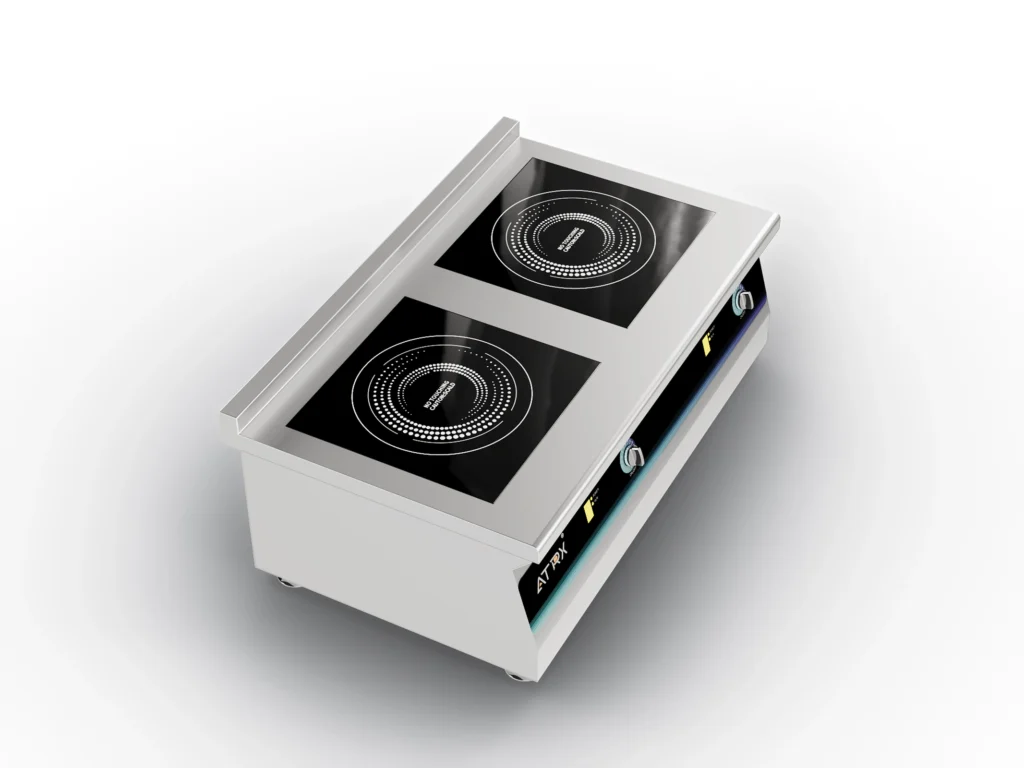
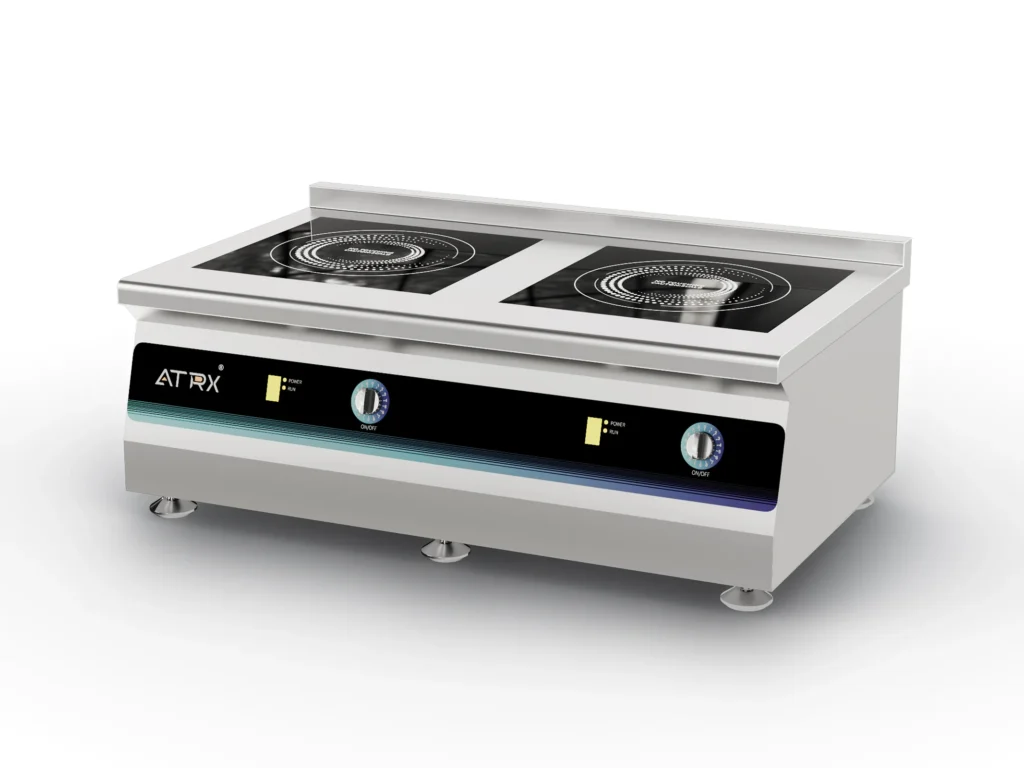
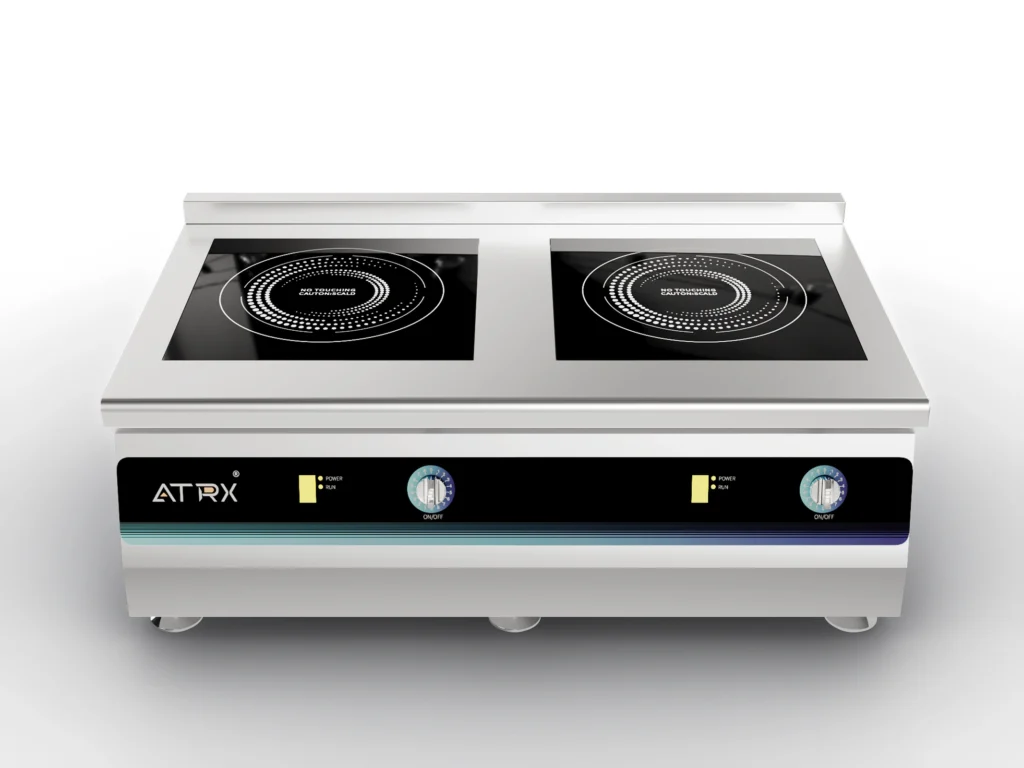
Easy-Clean 2-Burner Commercial Induction Cooktop
Countertop Induction Double Flat Cooker | 5KW*2
Own factory
CE certified
OEM available
Flat Seamless Panel, Nothing to Trap
One smooth glass-ceramic surface across both zones. No gaps, no seams, no grates. Grease and spills sit on top with nowhere to hide — one wipe, done.
No Flame Means No Burnt-On Mess
Heat goes into the pot, not the panel. Spills land on a cool surface and never scorch. No soot, no carbon rings, no hard scrubbing afterward.
Clean Both Zones in Under Two Minutes
No grates to pull apart. No drip pans to soak. A damp cloth and a quick pass across the flat surface is all it takes between services.
304 Stainless Steel, Always Sanitary
The body is built from food-grade 304 stainless steel. It won't corrode, stain, or degrade — even with daily commercial-strength sanitizers.
Inquiry UsView Specifications
01 / SPECIFICATIONS
Basic Specification
Product Name
Product Model
Power(Kw)
Voltage(V)
Product Size
Product Material
Hs Code
02 / GETTING STARTED
How To Operate This Machine
Step 1
Place your commercial induction cooker in position and connect the power cable based on the required voltage. Make sure all wiring is done correctly before turning on the unit.
Step 2
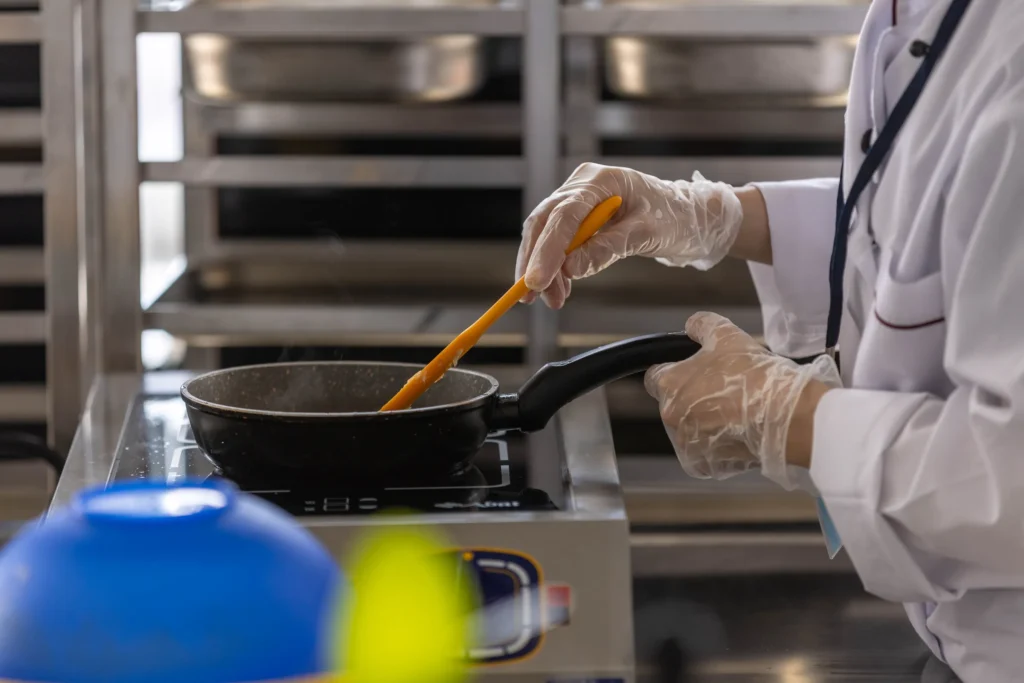
Once powered on, place your induction cookware on the commercial induction cooker, prepare your ingredients, and get ready to start cooking.
Step 3
Turn the knob from 0 to your desired setting to begin cooking. During the cooking process, simply adjust the knob between levels 1 to 8 to control the heat output to your needs.
Step 4
Once cooking complete,then turn the knob back to 0 to power off the unit. Wipe down and clean the surface of your commercial induction cooker to keep it in top condition.
03 / QUALITY ASSURANCE
6-Step Quality Checking of Every Unit
Every testing machine shown below is physically present in our factory — no fabrication.
01
Dust-free PCB assembly
Every board built in a sealed cleanroom, no dust or grease particles get trapped under components — eliminates 40% short-circuit failures compare to competitors.
02
Electric Heating Constant Temperature Drying Oven
Bakes out all moisture from PCBs before soldering — boards that skip this step blister and crack under high-power heat within months.
03
Electric Heating Constant Temperature Incubator
Every board is heat-aged for hours to force weak solder joints to fail in our lab, not in your kitchen after installation.
04
Constant Temperature and Humidity Test Chamber
Simulates years of steam and humidity from a real commercial kitchen to verify no board corrosion or short circuits develop over time.
05
Salt Spray Test Chamber
Tests every metal part and connector against aggressive corrosive vapor — the same oils, acids, and moisture your cooker faces daily in a commercial kitchen environment.
06
Thermal Shock Test Chamber
Mimics the hundreds of rapid heat-up / cool-down cycles your cooker endures every single day, cracking any weak solder joint before it ever ships.
04 / COOKING APPLICATIONS
What Food Can You Cook With It?
Own factory
CE certified
OEM available
Meat, Poultry & Seafood
Steaks, chops, chicken, duck, shrimp, fish, and scallops — all need fast, high heat that dual 5 kW induction zones deliver precisely.
Vegetables, Grains & Plant-Based Foods
Greens, peppers, carrots, rice, pasta, tofu, and beans — steady, even heat across both zones suits quick sautés and long simmers alike.
Soups, Sauces & Liquid Preparations
Stocks, broths, sauces, gravies, stews, and curries — dual independent burners hold stable low temperatures for hours without hot spots.
FAQs
Frequently Asked Questions
We've gathered the most common questions buyers ask before placing their first order — browse through and find the answers that matter most to you.
How do I clean this cooktop after heavy use?
Let the surface cool for a moment — induction panels cool down fast since the heat goes into the pot, not the glass. Wipe the flat panel with a damp cloth and mild degreaser. There are no grates, grooves, or loose parts to work around, so both zones clean in about two minutes. For anything stubborn, a non-abrasive cream cleanser works without scratching.
What makes it easier to clean than a gas range?
A gas range has grates, burner caps, drip pans, and igniter parts — all separate pieces that trap grease and need individual scrubbing. This cooktop is one flat glass surface on a sealed steel body. Nothing to take apart, nothing to soak. Wipe the surface and you are done.
Will spills burn onto the surface?
No. Induction puts heat directly into the cookware, not the panel. The glass around the pot stays cool enough that boil-overs and splashes never scorch or bond to the surface. They stay liquid and wipe off easily, even after cooking is finished.
Can I use commercial sanitizers on the steel body daily?
Yes. The body is 304-grade stainless steel — the standard for professional kitchen equipment. It handles daily contact with commercial degreasers and sanitizers without corroding, staining, or breaking down over time.
Does this cooktop help with health-code compliance?
It does. The flat seamless panel leaves no hidden spots for grease to build up. Induction creates no combustion residue or carbon deposits. And the 304 stainless steel body is non-porous and fully sanitizable. Together, these features make inspection prep faster and reduce the risk of hygiene citations.
——07 / Factory quote & RFQ
Partner with a Trusted Commercial Induction Cooker Manufacturer
Whether you need wholesale commercial induction cookers, an OEM product line or a commercial kitchen project configuration, send a focused commercial brief. An ATRX team member can review the product, power, certification and customization requirements before quotation.
Useful information to include:
Target country · Product category · Application · Voltage / phase · Estimated quantity · Required certifications · OEM / branding needs