
BUILT FOR CANTEENS
HIGH-VOLUME STAFF MEAL INDUCTION SERIES
—— Commercial Induction Equipment Manufacturer
Heavy-Duty Induction Cookers for Factory & Industrial Canteens
Reliable high-power induction cooking for factory canteens, staff cafeterias, catering centers and central kitchens. ATRX helps canteen operators, catering contractors, kitchen consultants and distributors select the right power, format and controls for high-volume meal service.
GET A RESTAURANT INDUCTION QUOTEEXPLORE PRODUCT SERIES
First Question
Factory canteens aren’t switching for trends. They’re switching for faster batch cooking, fewer breakdowns across shifts and meals that come out the same every time.
Built for batch cooking, shift after shift
Why Factory Canteens Are Switching To Induction Technology
Factory and industrial canteens cook in large batches, run across two or three shifts, and have to put hundreds of meals on the line within short break windows. Gas burners waste heat and depend on a fuel line, while electric coil is slow to respond and wears out under continuous use. Commercial induction heats the pan directly, with fast, stable power and fewer parts to fail. These are the four reasons canteen managers and catering contractors cite most.
01
High power for batch cooking
Staff meals are cooked in large batches with big woks and stockpots, and rice, soup and stir-fry all peak at the same time. High-power induction (3-phase, up to xx kW per unit) brings large volumes to temperature fast, so meals are ready within the break window.
02
Built for continuous multi-shift duty
Canteens run through two or three shifts, sometimes around the clock. Induction has no burner nozzles to clog, no coil elements to burn out, and fewer parts to fail, so there is less downtime and lower maintenance cost.
03
Consistent meals, simple for any cook
Preset power levels and temperature control give the same result on every shift, so output no longer depends on one experienced chef. New or rotating kitchen staff learn it quickly, which matters in high-turnover canteens.
04
Fits factory safety and hygiene rules
No open flame or gas line in or near the production area, which simplifies fire-safety approval and factory audits. Overheat and dry-burn protection reduce risk, and a sealed, flat surface is easy to clean for food-safety compliance.
Second question
Match the equipment to each canteen station, from batch stir-frying and soup cooking to large-volume boiling.
Mall kitchen equipment
Which Commercial Induction Equipment Suits Factory Canteen Kitchens?
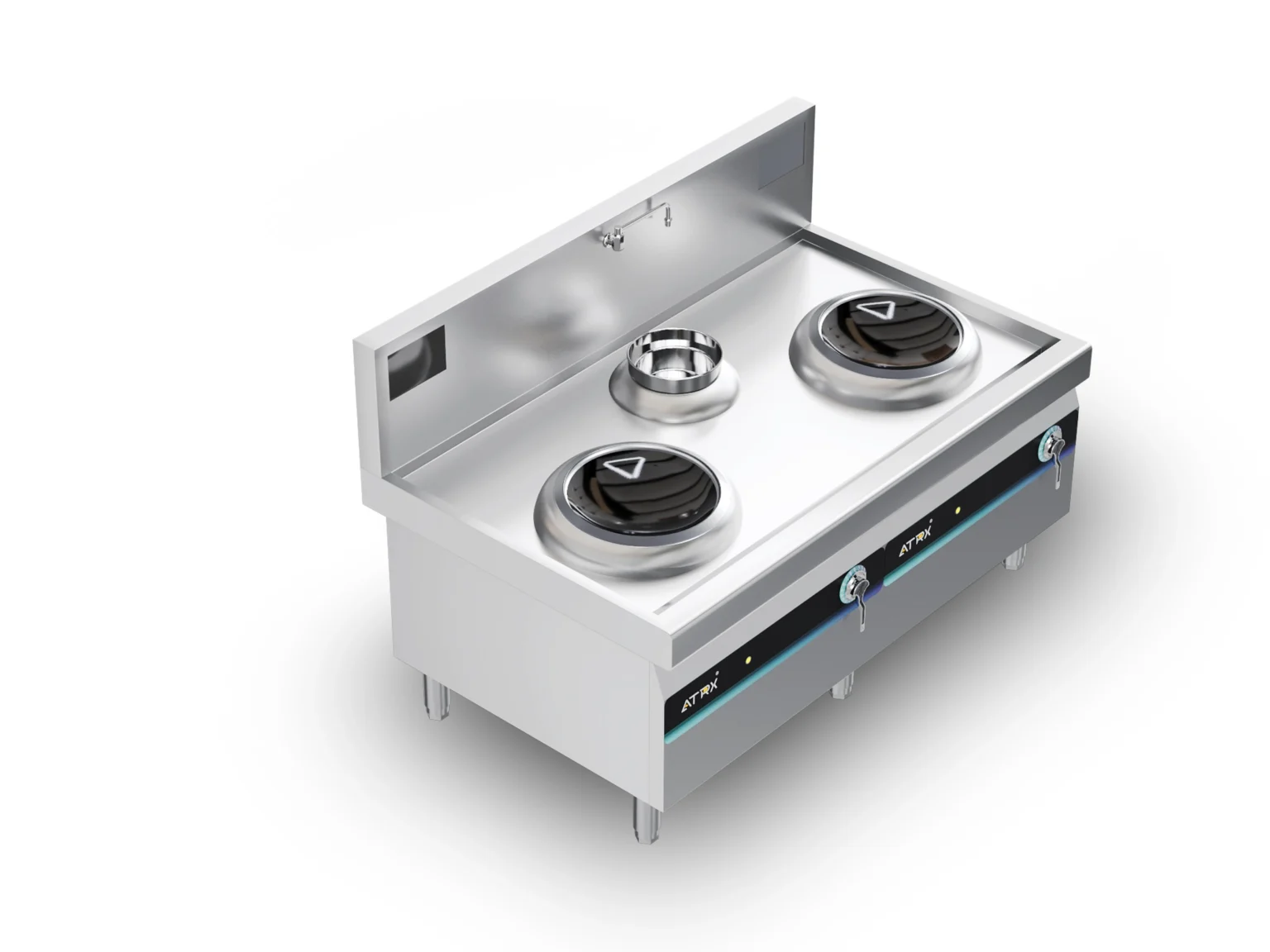
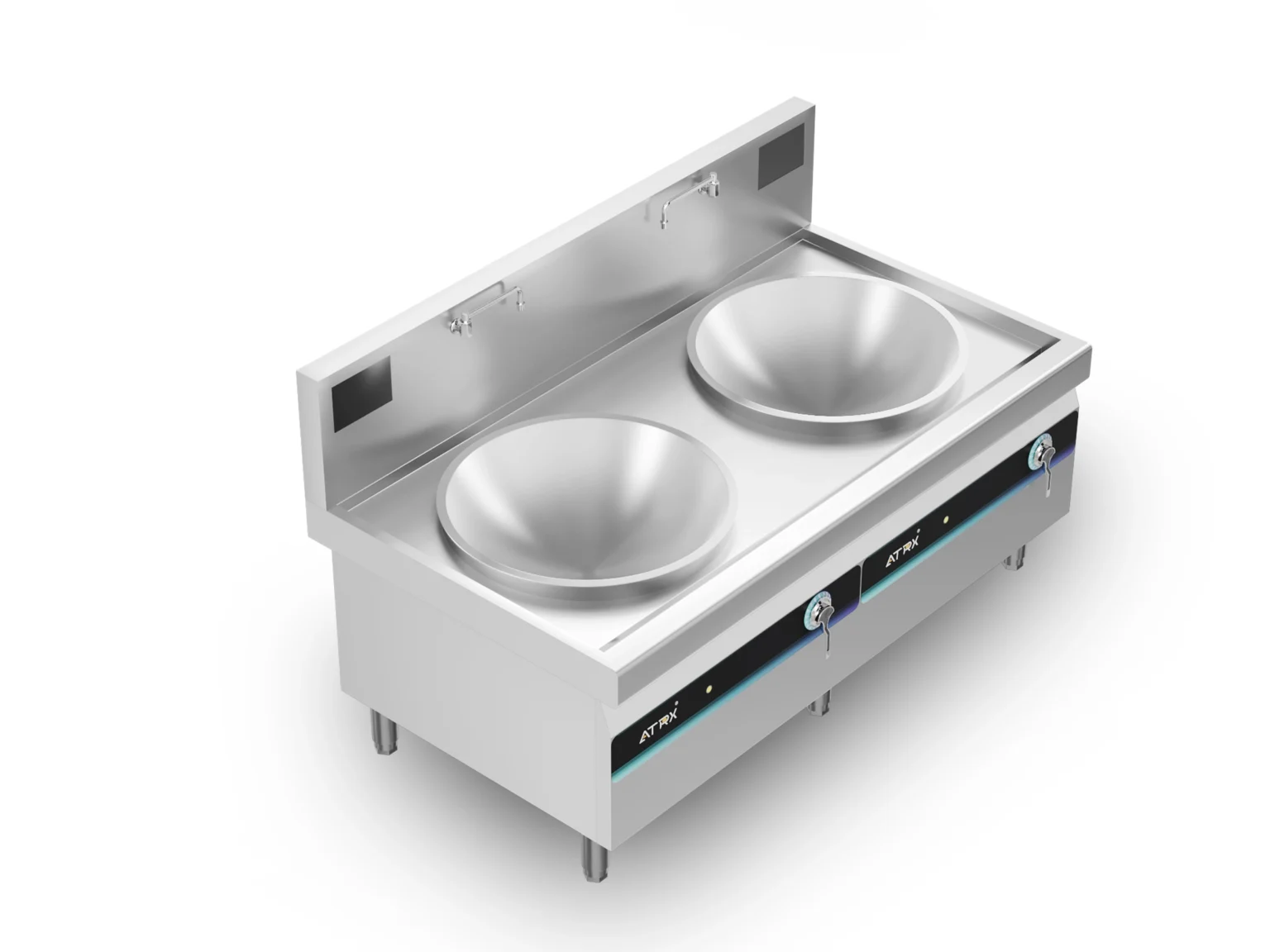
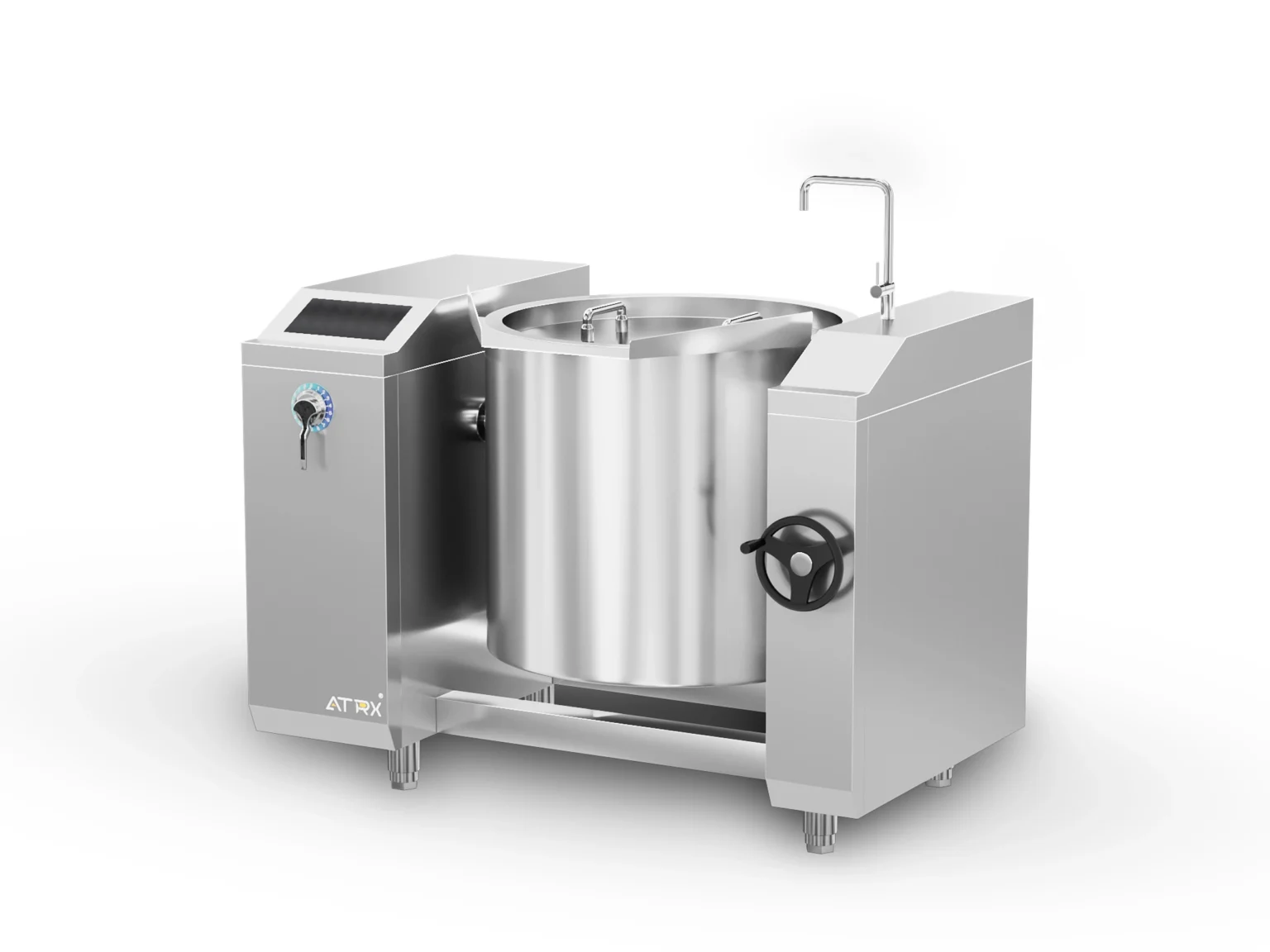
Factory canteens usually run several stations side by side, such as stir-frying, soup and stock cooking, and boiling in large pots, and all of them peak at the same time before each meal break. Each station needs a different power level and cooking format, and every unit has to keep up with continuous multi-shift use. Here are five induction units that cover the most common canteen setups. Confirm specifications against your kitchen layout, meal volume and power supply before you order.
01
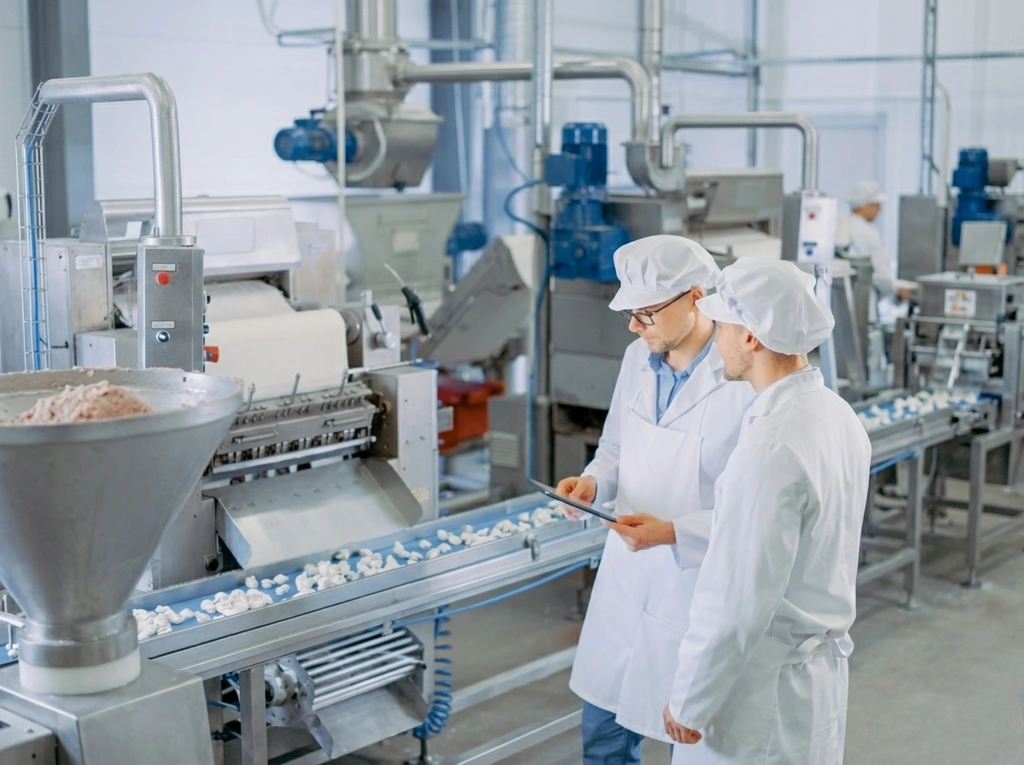
Food Plant & Production Kitchens
Hygienic, easy-to-clean cooking for plants where kitchens work alongside production lines. Best fit: food processing plants, ready-meal factories and central production kitchens. Key advantage: flat sealed surface for food-safety cleaning, cooler workshop air and repeatable heat for every batch.
02
Self-Service Canteen Serving Lines
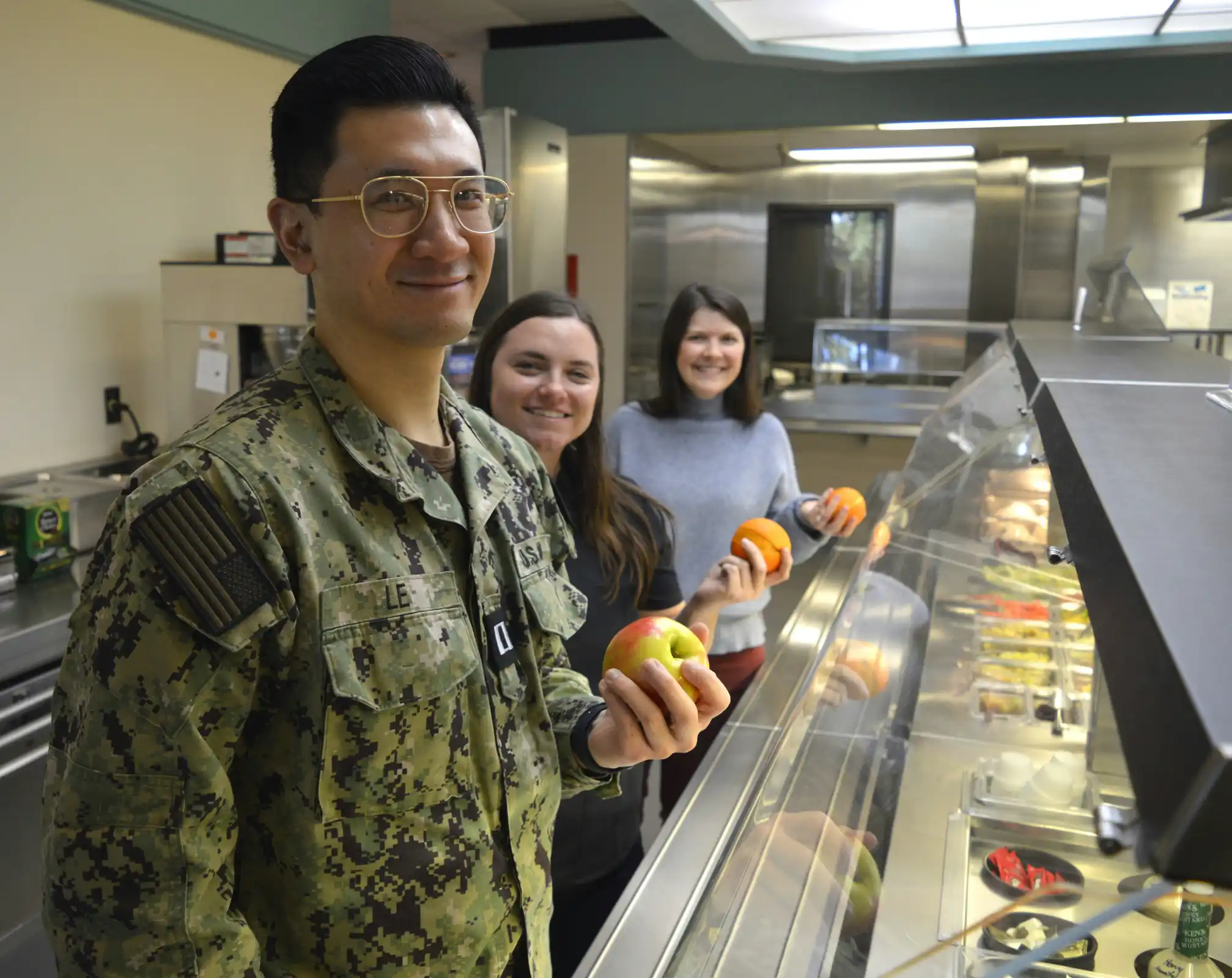
Continuous cooking behind busy serving lines, with food replenished as the queue moves. Best fit: staff cafeterias, institutional dining facilities and multi-shift canteens. Key advantage: fast heat recovery and stable output, so the line never runs empty during the meal rush.
03
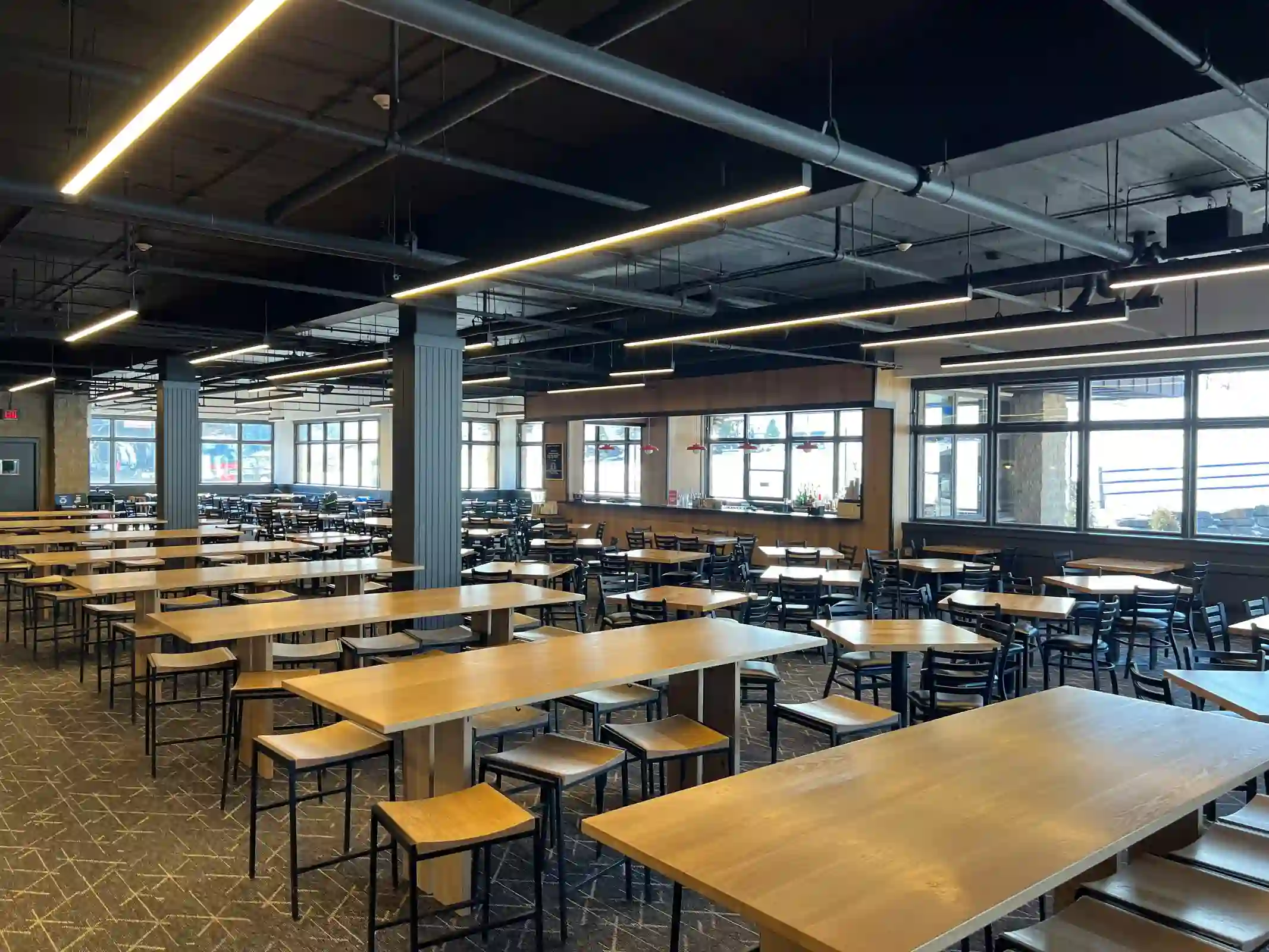
Large Dining Halls & High-Volume Canteens
High-power batch cooking for halls that seat hundreds at the same time. Best fit: large factory canteens and industrial park dining halls. Key advantage: big woks and stock pots reach working temperature fast, so every meal is served within the break window.
04
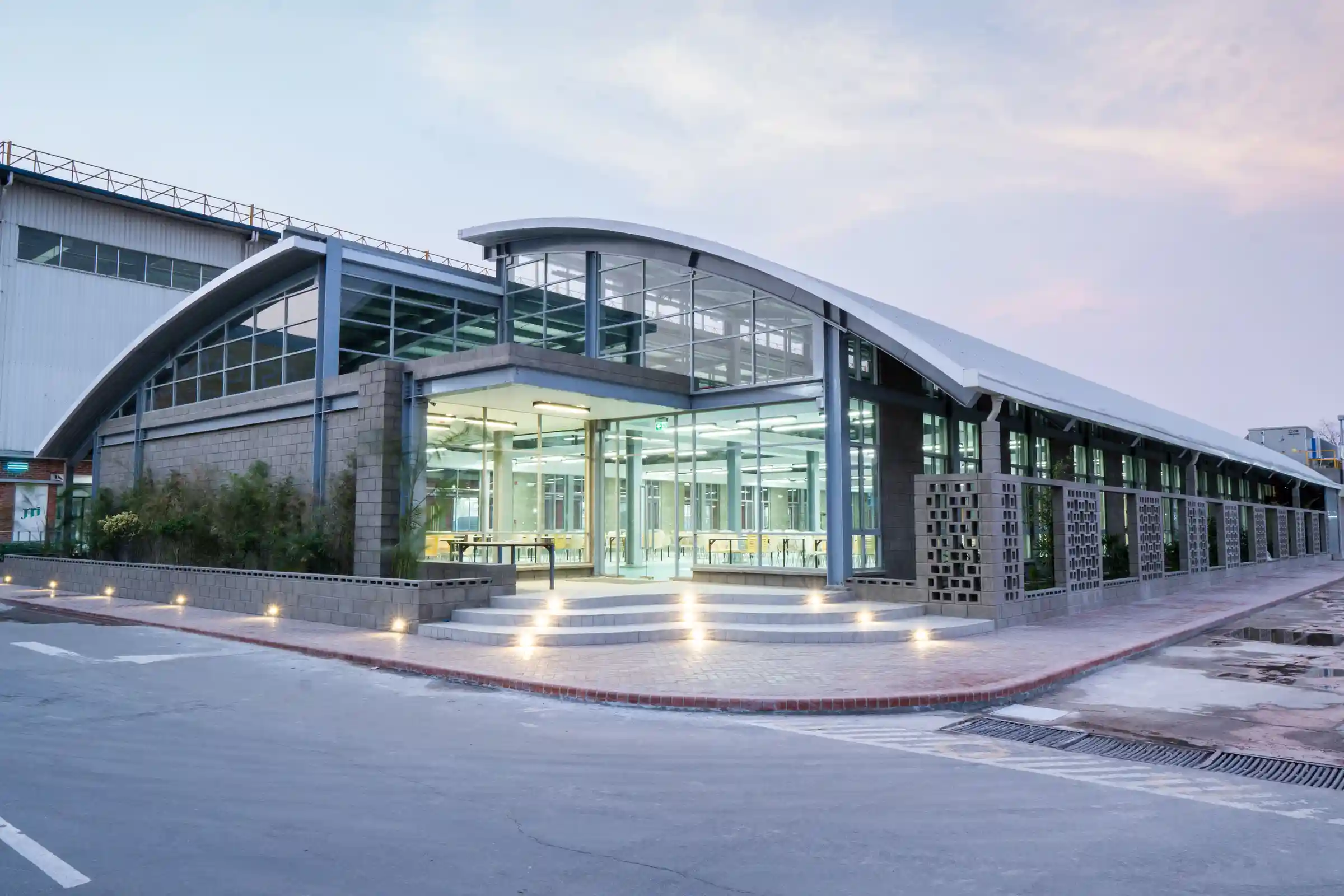
Industrial Park & Campus Canteen Buildings
Gas-free cooking for standalone canteen buildings in industrial parks and new factory campuses. Best fit: new-build canteens, park shared kitchens and sites without a gas supply. Key advantage: no gas line or open flame, simpler safety approval and lower ventilation load.
Third question
Start with how many meals you serve, then check the specification.
Mall buyer checklist
What Should Factory Canteen Managers Consider First When Choosing Commercial Induction Equipment?
Start with how your canteen actually runs: how many meals you serve per shift, which stations operate at the same time, and how many hours the kitchen runs each day. Then confirm the plant’s electrical capacity, ventilation and hygiene routine, and only then compare specifications. The four checks below cover what canteen managers, catering contractors and kitchen designers usually need to settle before requesting a quote.
01
Meals per shift and daily workload
List how many meals you serve per shift, how long the serving window is, and which stations need induction (batch stir-frying, soup and stock cooking, steaming, side dishes). This decides the unit type, the power level and the number of burners.
02
Power and plant electrical capacity
Confirm the available voltage (single-phase or three-phase) and the spare capacity on the canteen’s distribution board. Large canteens often run several high-power units at once, so check the total connected load against what the plant can supply.
03
Installation and layout
Plan the layout around ventilation clearance, drainage position and service access. Check the factory’s safety and fit-out requirements for the canteen building, and review the plan with your kitchen designer before ordering.
04
Safety, hygiene and after-sales
Look for stable temperature control, overheat and dry-burn protection, and easy-to-wipe surfaces that support daily cleaning. For multi-shift use, confirm warranty terms, spare parts supply and technical support for your project.
Buyer Checklist Before Requesting a Quote
Having these details ready lets us recommend the right configuration quickly, whether you need a single countertop unit or a full line of floor-standing equipment.
Meals per shift
Number of meals, shifts per day, serving window
Kitchen stations
Batch stir-frying, soup and stock, large-pot boiling, side dishes
Equipment type
Countertop flat or concave, floor-standing
Total connected load
Confirm with the plant electrical engineer
Project support
Custom size, voltage and logo available on request
Supply voltage
Single-phase 220 V or three-phase 380 V
Fourth question
Cookware with a magnetic base that makes firm contact with the induction surface will heat normally.
Cookware and mall menu fit
What Cookware Works on a Commercial Induction Cooker in a Factory Canteen Kitchen?
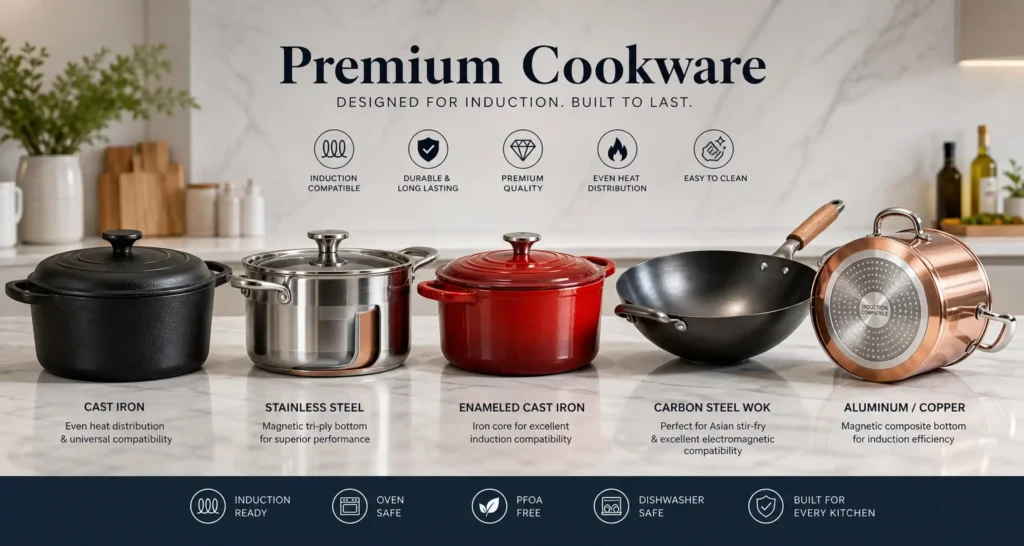
Induction only heats cookware with a magnetic base, but material is not the only factor. Base flatness, pan size relative to the cooking zone, and weight also affect performance, and canteen cookware is often large and heavy when full. Do a quick magnet test on the base first. Before ordering, test your own cookware on the equipment, especially large woks, stock pots and steaming pots.
Works
These cookware types work on a commercial induction cooker.
Stainless-steel pans and stockpots (magnetic)
Cast iron and carbon-steel pans
Any pot that a magnet sticks to on the bottom
Flat-bottom pans that match the burner size
Does Not Work
These will not heat on induction.
Aluminum, copper or glass pots — magnet won't stick
Pans with a bent or uneven bottom — won't make full contact
Pans too big for the burner — the outer area won't heat
Round-bottom wok—won't sit flat, need wok induction
Fifth question
Each station has the dishes it does best.
Menu fit by equipment
Canteen Menu Fit by ATRX Commercial Induction Equipment
From small staff pantries to large factory canteens serving thousands of meals, each kitchen cooks very differently. Here is which ATRX unit fits which kind of canteen station and menu.
Commercial Countertop Induction Flat Cooktop
For small pantries, shift snack counters and side-dish stations with limited space. Reheating soups and sauces, steaming and quick side dishes, with no gas line needed.
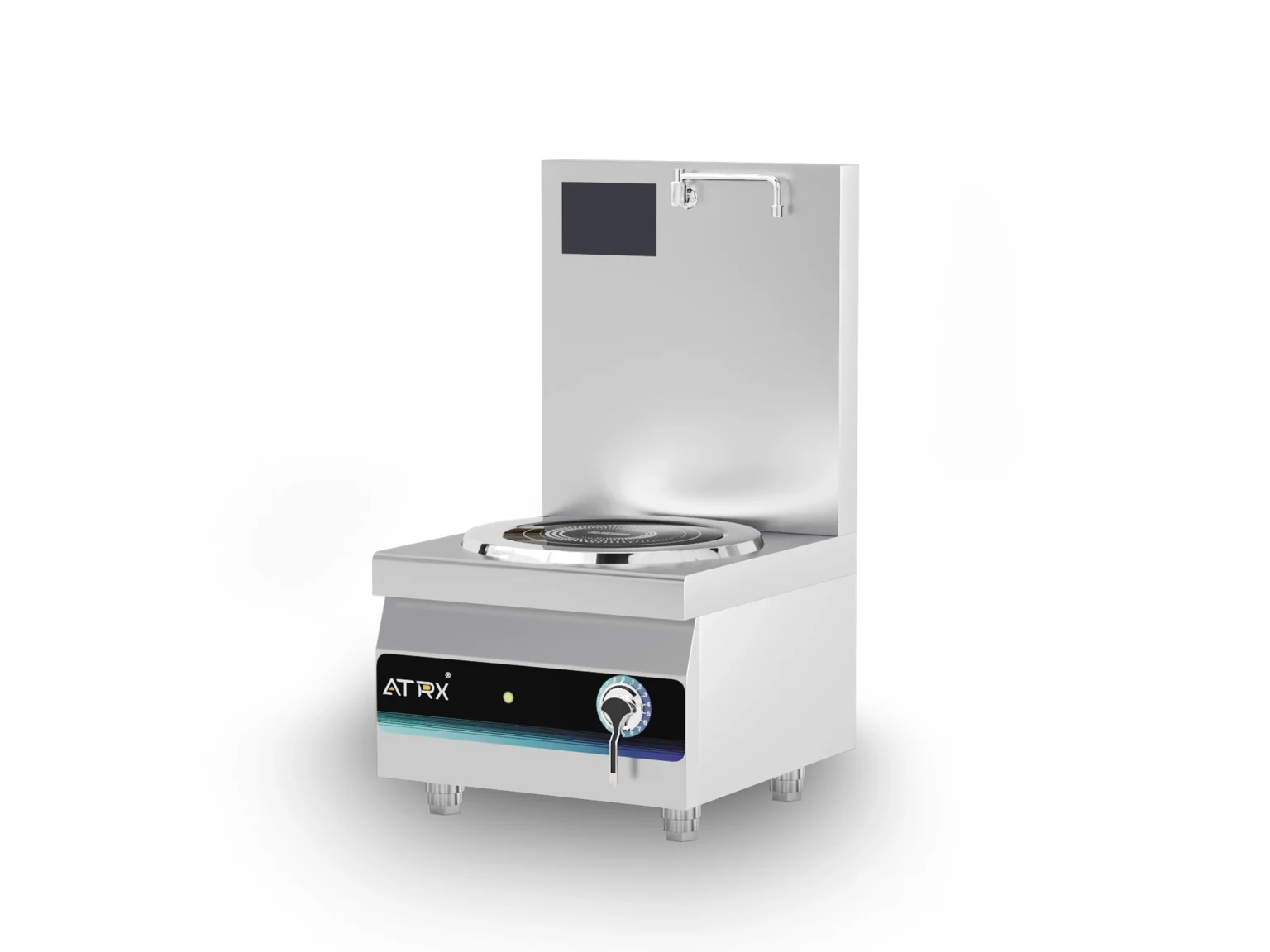
Commercial Countertop Induction Concave Cooktop
For small-batch stir-fry stations and flexible serving counters. Fried rice, noodles and wok dishes cooked to order, with cooler heat and less exhaust in the kitchen.
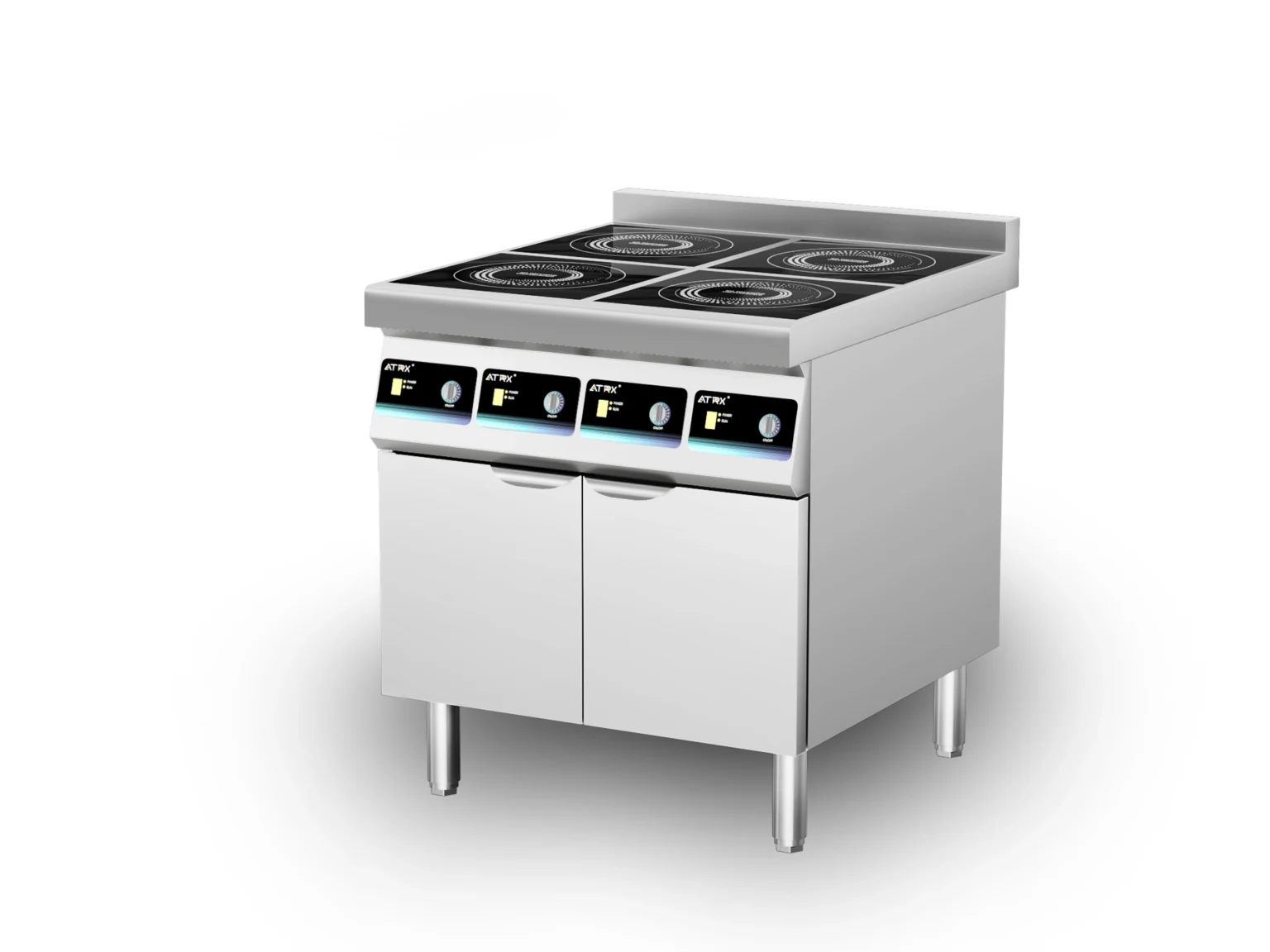
Commercial Floor Induction 4-Burner Range
For the main line of mid-size canteens. Four zones cook several pots at once, such as soups, braised dishes, rice and side dishes, so the meal rush keeps moving.
Commercial Floor Induction Small Wok
For the stir-fry line in staff canteens. Fast stir-fried meats and vegetables in batches, with high heat that recovers quickly between loads and a cooler working area for cooks.
Commercial Floor Induction Fryer
For canteens with fried items on the menu. Steady oil temperature for fried chicken, fish, tempura and spring rolls, with easy cleaning between shifts.
Commercial Floor Induction Griddle
For burger, steak and breakfast outlets. Even flat-surface heat for patties, steaks, eggs and teppanyaki-style dishes, with no open flame and an easy wipe-down between orders.
Sixth question
The questions factory canteen managers raise most often before they ask for a quote.
Factory canteen buyer FAQ
Factory Canteen Buyer FAQ
A factory canteen kitchen has to satisfy several people at once: the canteen operator who runs it, the plant’s EHS and facilities teams who approve it, and often a catering contractor who cooks in it. These are the questions that usually come up first, so you can settle them before the quotation stage.
01 Will induction pass our plant’s safety and EHS review?
Induction has no open flame and needs no gas line, so there is no gas leak risk and no fuel pipeline to run through the plant or inspect. Many factories restrict open-flame cooking near production areas and warehouses, and removing combustion from the canteen makes internal fire-safety approval simpler. Overheat and dry-burn protection add a further safeguard in kitchens where many staff work at once.
02 How do we size the equipment for our meal volume?
Tell us how many meals you serve per shift, how many shifts you run, how long the serving window is during each break, and what you cook most often (batch stir-fries, soups, rice, steamed dishes). From that we suggest the units and the power level for each station, so the kitchen can keep up with the meal rush instead of guessing from a catalogue.
03 Can our plant’s power supply handle it, and can it replace our gas stoves?
Canteen induction units are high-power, so the key check is the total connected load against the spare capacity on your distribution board. Please send the available voltage (single-phase or three-phase), the canteen’s power capacity, and your current kitchen layout. We can work from your drawings to confirm what fits, and size, voltage and control panel can be adjusted for a project.
04 What happens if something breaks during a shift and we cannot stop the kitchen?
Every unit has a 1-year free warranty and lifetime after-sales support. For a replacement part, we ship it to your site and walk your maintenance staff through the repair on a live video call, so your plant electricians can get the kitchen back in service without waiting for an overseas technician. For multi-shift or round-the-clock canteens, tell us your shift pattern and we can advise which spare parts are worth keeping on site.
Start with your canteen brief
Need an Induction Cooking Solution for Your Factory Canteen?
Tell us how many meals you serve per shift, how many shifts you run and what you cook. ATRX will recommend the right countertop or floor-standing configuration for your canteen, check it against your plant’s power supply, then follow up with a closer technical review.