

PRODUCT HIGHLIGHTS
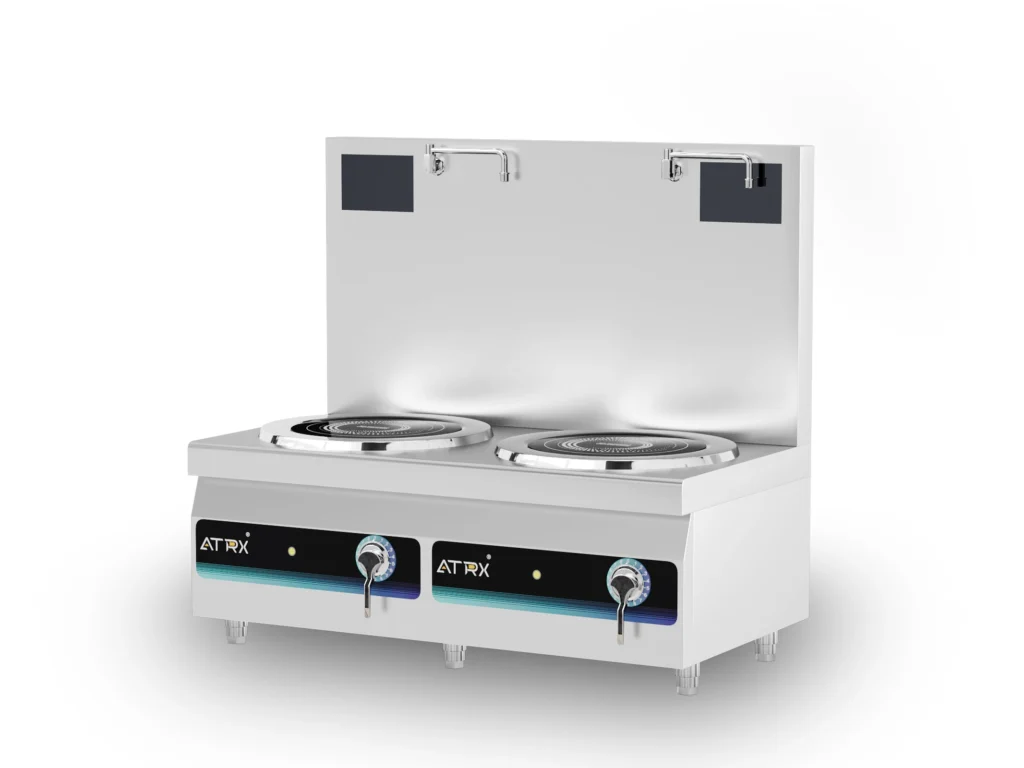
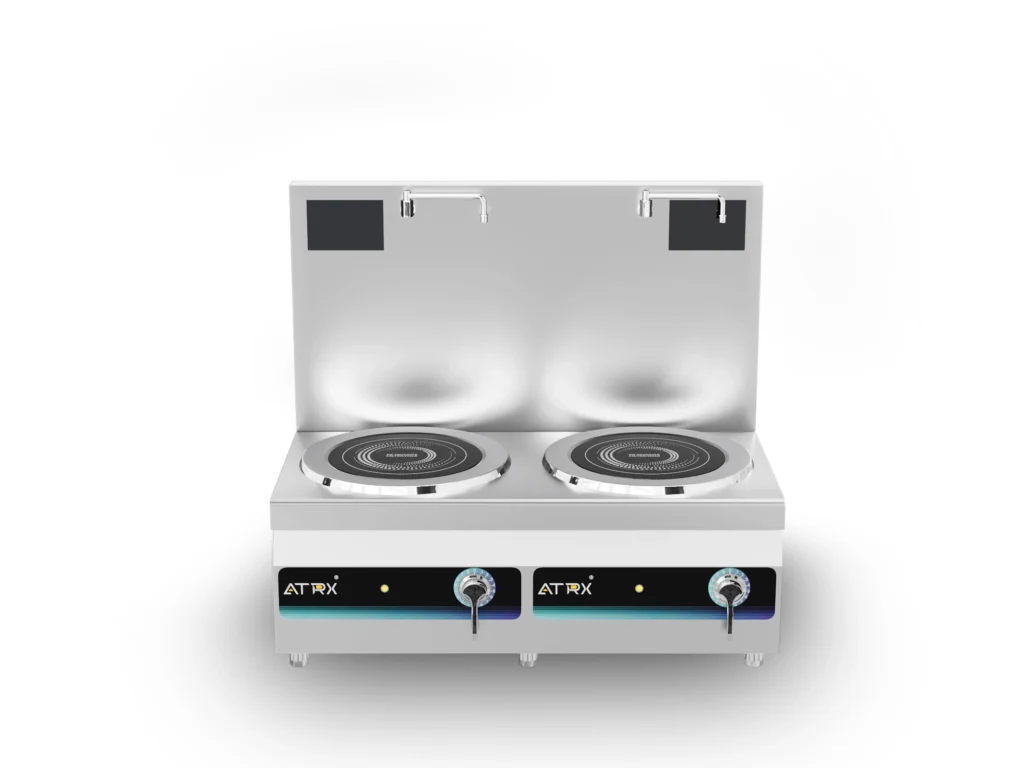
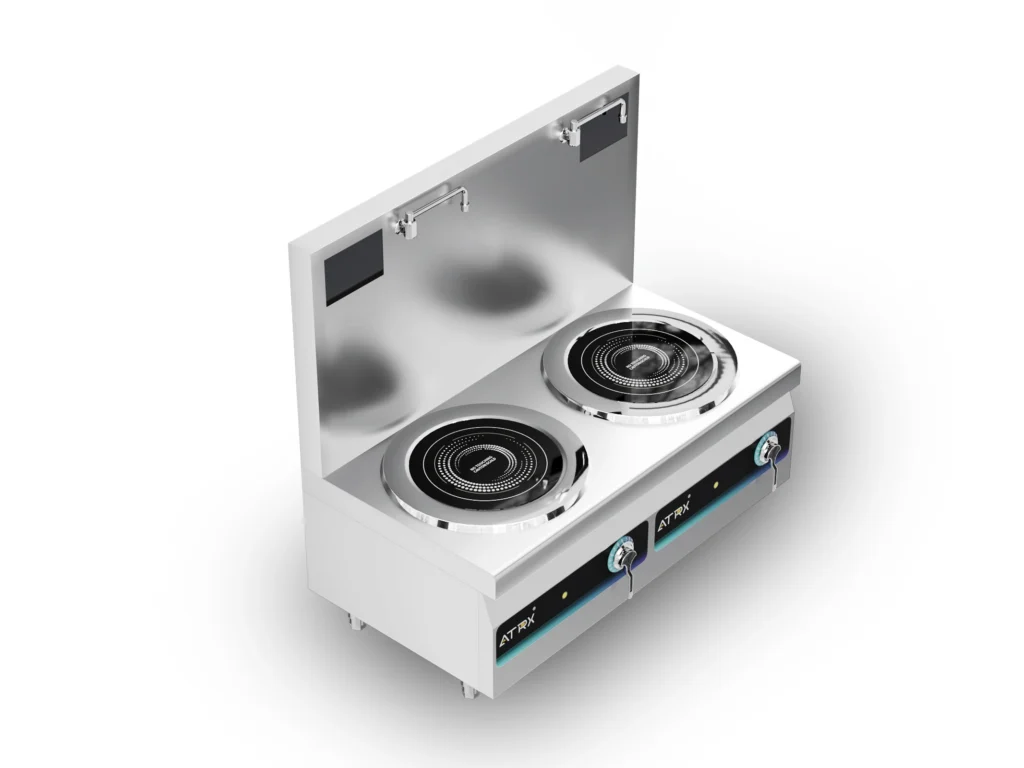
Easy-to-Clean Double Induction Stock Pot Burner, 2 x 18kW
Floor Commercial Induction Double Stock Pot Burners | 18KW*2
Value of the 220V Front-to-Back 2-Burner Induction Cooktop
Clean in Place Without Moving the Pot
The kettle stays in its frame for cleaning; the handwheel sets a comfortable tilt angle, eliminating the need to carry a large pot to the wash area at close-down.
Tilting the Kettle Makes the Inner Wall Easier to Scrub
Tilting exposes the base and inner wall, so staff can see and clean oil or food residue without leaning deep into the kettle from the rim.
Wash Water Drains with Gravity
After scrubbing, wash water flows along the tilted surface to the discharge outlet and receiving container, reducing repeated scooping and keeping cleaning at one station.
Inquiry UsView Specifications
01 / SPECIFICATIONS
Product Specification
Product Name
Product Model
Power(Kw)
Voltage(V)
Product Size
Product Material
Hs Code
02 / GETTING STARTED
How To Operate This Machine
Step 1
Place your commercial induction cooker in position and connect the power cable based on the required voltage. Make sure all wiring is done correctly before turning on the unit.
Step 2
Once powered on, place your induction cookware on the commercial induction cooker, prepare your ingredients, and get ready to start cooking.
Step 3
Turn the knob from 0 to your desired setting to begin cooking. During the cooking process, simply adjust the knob between levels 1 to 8 to control the heat output to your needs.
Step 4
Once cooking complete,then turn the knob back to 0 to power off the unit. Wipe down and clean the surface of your commercial induction cooker to keep it in top condition.
03 / QUALITY ASSURANCE
Easy-Clean Tilting Commercial Induction Soup Kettle: Six Checks for Durable Washdown and Safe Tilting
01
Lock the SS304 Specification Before Production
Before fabrication, our team locks the ordered SS304 grade into purchasing, fabrication, and acceptance records so all three functions work from one written specification. A vague material claim can otherwise survive into production and undermine the easy-clean promise once grease and wash water are in daily contact. For a kettle cleaned in place, a known steel grade gives the cleaning routine a consistent surface to work with.
02
Clean the Fixed Bowl Without Removing It
Clean-in-place design verification confirms that the kettle remains integrated with its tilting frame and does not have to be removed for cleaning. A removable bowl adds lifting, realignment, and storage steps that can slow changeover between large batches. After draining, the handwheel sets a working angle for scrubbing the inner wall, draining wash water, and checking cleanliness at one station.
03
Inspect Welds and Surfaces Before Final Assembly
Fabrication inspection follows laser cutting, CNC bending, welding, and surface finishing, with dimensions, cut edges, bend geometry, weld appearance, and mounting positions checked item by item. A burr or distorted mounting face can create a cleaning trap or interfere with tilt clearance after assembly. Problems are corrected upstream before the easy-clean surfaces reach final fit-up. For the easy-clean kettle, that means fewer burrs, seams, or mounting gaps where residue can collect.
04
Prove the Tilting Frame Before Assembly
Tilt-frame validation confirms that the handwheel holds the kettle at the required cleaning angle without continuous support from the operator. A frame that shifts after transport can make the working angle unstable and force staff to brace the kettle while cleaning. The assembled unit therefore goes through vibration testing, followed by a functional check to confirm that fasteners and tilt response remain normal. This helps the kettle hold its cleaning angle after transport and repeated tilt cycles.
05
Verify Control Parts and Boards Before Use
Control validation checks incoming power modules, capacitors, coils, and connectors against the order, supplier label, and physical markings, with key electrical parameters sample-tested. A control fault can interrupt the tilt cycle or washdown routine even when the mechanical frame is sound. Boards are soldered after moisture removal, then aged and checked under thermal cycling, damp heat, and salt spray before use. During washdown and tilt cycles, that lowers the chance of a control fault interrupting cleaning.
06
Run Every Tilting Unit at Full Load Before Shipment
Full-load release follows four inline inspections and two hours of loaded aging, with power, temperature rise, fan operation, protection action, and operating response checked before dielectric testing. A unit can look ready after assembly yet develop a loose connection or unstable tilt response once it is handled and loaded. Results stay on file, and the nameplate and packaging are applied only after acceptance. The cleaning workflow then starts with a tilting unit that has already completed its loaded operating cycle.
All results above are from our own factory. See related pages below.
Production Line Center Manufacturing Machines PCB Assembly Center04 / COOKING APPLICATIONS
Easy-Clean Tilting Commercial Induction Soup Kettle: Noodle Counters, Canteens, and Central Kitchens
Own factory
CE certified
OEM available
Noodle Soup and Porridge Shops
The 80 L and 100 L models suit noodle shops, porridge shops, breakfast shops, and small hotel kitchens making pork-bone stock, chicken stock, rice porridge, millet porridge, and red-bean soup. After a long cook, the oil film and starch residue on the base can be removed at closing by tilting the kettle, draining the remaining soup, and cleaning the inner wall, leaving a clean starting point for the next batch.
School and Factory Canteens
Suitable for school, hospital, and factory canteens making white rice porridge, oatmeal, corn soup, mung-bean soup, beef stew, and potato stew. The 150 L model suits centralized service; after the meal, tilt the kettle to let soup and stew residue flow out more easily, reducing repeated scooping from a deep pot before cleaning the inner wall.
Central Kitchens and Meal Distribution
Suitable for chain-restaurant central kitchens, group-catering distribution, and banquet kitchens making stocks, curry, gravy, cream soup, and batch sauces. The 200 L model uses an integrated kettle structure that reduces residue gaps created by a removable inner vessel; when changing recipes, drain, tilt-clean, and inspect the base before starting the next batch, reducing carryover of fat and thick sauce.
FAQs
Frequently Asked Questions
We've gathered the most common questions buyers ask before placing their first order — browse through and find the answers that matter most to you.
The Kettle Is Fixed—Do I Have to Remove It to Clean?
No—daily cleaning stays at the kettle because it is fixed in the tilting frame. Turn the handwheel to a working position, drain the soup, clean the inner wall directly, and return the kettle to its working position; there is no need to lift out a large pot, find another place for it, or realign it with the frame, so draining, cleaning, and resetting stay at one station with less handling.
Can Porridge and Soup Residue Be Drained Completely?
Loose residue and wash water drain freely at the cleaning angle, but thick porridge, bean-based soup, or large pieces of braised meat may need a manual first pass. The tilted kettle gives residue a direct path toward the discharge outlet and into a receiving container below, so there is no need to stand at the rim scooping water repeatedly; for heavy residue, loosen it with a soft scraper, then use water and a soft brush on the base and wall. Do not use steel wool or a hard metal scraper aggressively, as this can scratch the stainless steel surface.
Can Cleaning Water Get into the Controls?
No—when cleaning is performed correctly, water inside the kettle flows along the tilted wall and out through the discharge outlet. The control panel, cooling area, and wiring points only need wiping with a damp, wrung-out cloth and are not part of the internal wash; separating kettle-interior cleaning from surface cleaning of the electrical area completes the day’s cleaning while reducing the chance of water entering electrical parts. Do not spray a direct stream of water at the control panel, cooling vents, or electrical connectors.
Can 304 Stainless Steel Still Stick?
Yes—SS304 is not a nonstick coating, so thick porridge, cream soup, or high-protein stock can still stick to the base. Stir appropriately and adjust heat to the ingredient to reduce scorching; the kettle tilts, the base can be seen and scrubbed directly, and the 304 inner wall is easy to clean daily, with prompt cleaning usually easier than waiting for residue to dry and harden and helping preserve the surface. Avoid storing strongly acidic or salty soups for long periods, and do not use highly corrosive cleaners.
Does Cleaning Slow Down Multi-Batch Service?
Not noticeably, provided between-batch cleaning becomes a fixed procedure. There is no need to remove or move the kettle: drain the soup, rinse away loose solids, check the base and discharge outlet, and reset to move quickly to the next batch; for the 100 L model, the product page describes a drain, rinse, and reload sequence in under 8 minutes. That figure covers basic between-batch cleaning, not close-down deep cleaning, and thick porridge or heavy-oil soup bases may need longer, so judge by the actual residue and the final cleaning result.
——07 / Factory quote & RFQ
Partner with a Trusted Commercial Induction Cooker Manufacturer
Whether you need wholesale commercial induction cookers, an OEM product line or a commercial kitchen project configuration, send a focused commercial brief. An ATRX team member can review the product, power, certification and customization requirements before quotation.
Useful information to include:
Target country · Product category · Application · Voltage / phase · Estimated quantity · Required certifications · OEM / branding needs