

—— PRODUCT HIGHLIGHTS
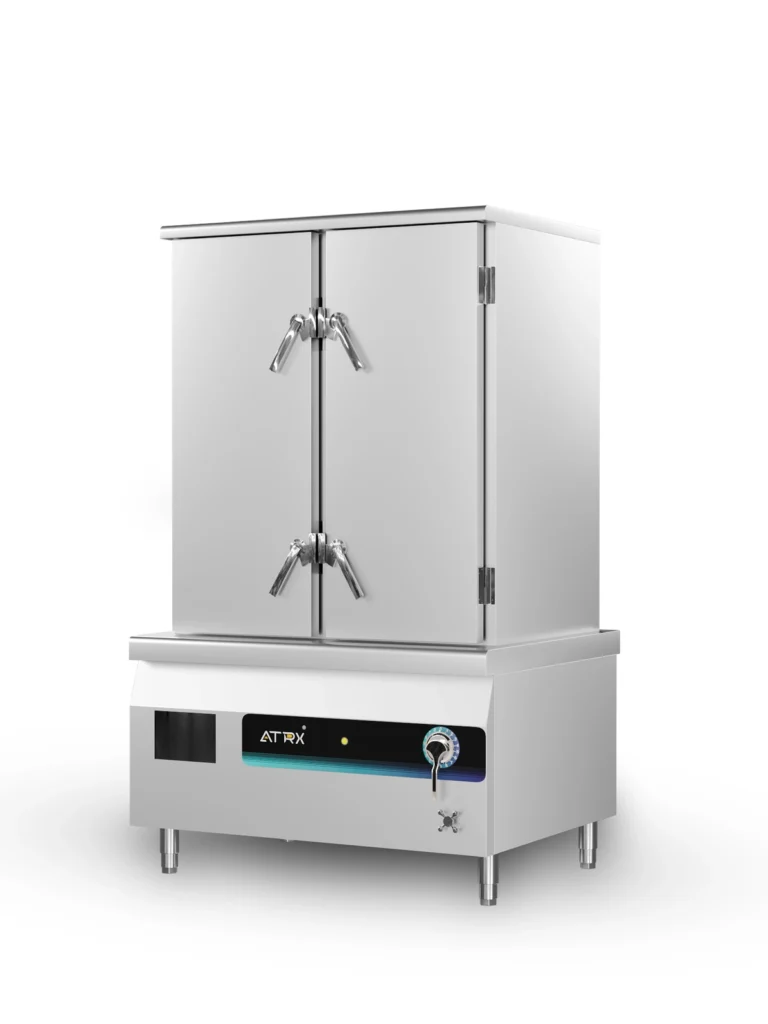
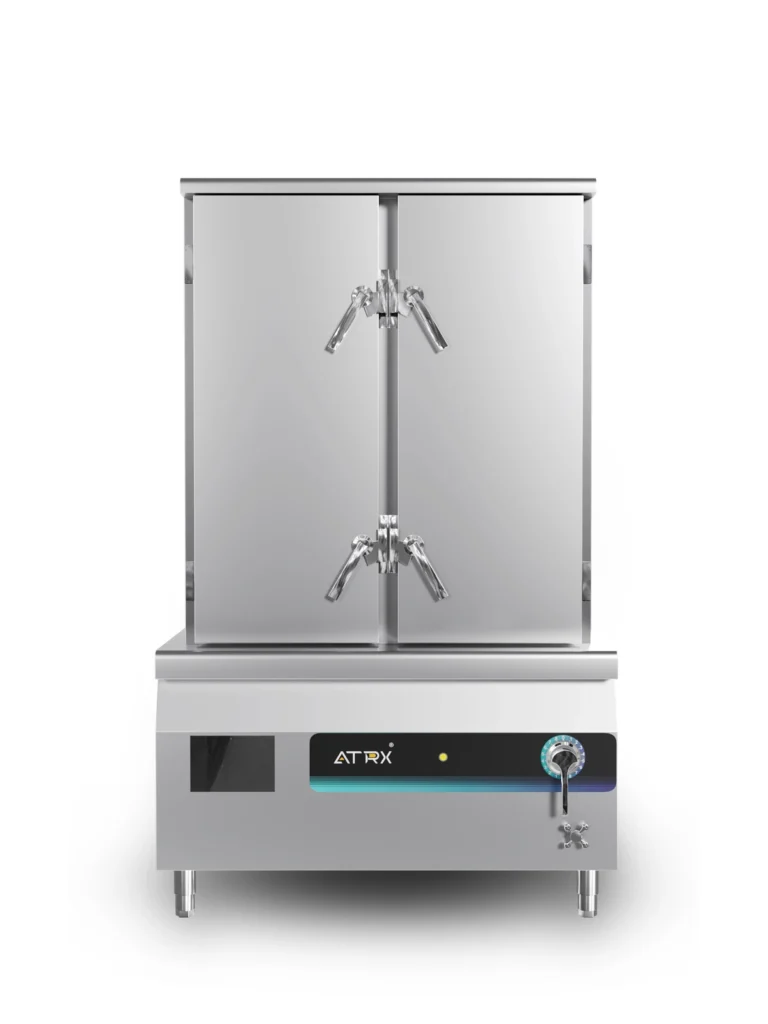
Commercial Induction Double Door Rice Steamer | 25KW
90%+ Heat Goes Straight Into Steam
Induction heats the water tank directly instead of warming the air around it, so over 90% of the energy turns into steam. Gas steamers usually waste nearly half their fuel as lost heat.
Leftover Heat Gets Reused Automatically
After each batch, the system recycles residual heat to pre-warm fresh water before the next cycle starts. That means less electricity to reach full steam again and shorter wait times between batches.
Energy Bills Drop by 30–50%
Because so little energy is wasted, daily running costs are roughly 30–50% lower than a gas or traditional electric steamer. Most kitchens recoup the price difference within about 12–18 months.
24 Trays in One Shared Chamber
Both doors open into a single steam cavity, so all 24 trays—each holding about 3.5 kg of rice—cook at the same temperature. One full load produces around 84 kg of rice, enough for 600–720 servings.
Basic Specification
Product Name
Product Model
Power(Kw)
Voltage(V)
Product Size
Product Material
Hs Code
How To Operate This Machine
Step 1
Place your commercial induction cooker in position and connect the power cable based on the required voltage. Make sure all wiring is done correctly before turning on the unit.
Step 2
Once powered on, place your induction cookware on the commercial induction cooker, prepare your ingredients, and get ready to start cooking.
Step 3
Turn the knob from 0 to your desired setting to begin cooking. During the cooking process, simply adjust the knob between levels 1 to 8 to control the heat output to your needs.
Step 4
Once cooking complete,then turn the knob back to 0 to power off the unit. Wipe down and clean the surface of your commercial induction cooker to keep it in top condition.
6-Step Quality Checking of this Machine | Every Unit
Every testing machine shown below is physically present in our factory — no fabrication.
PERFORMANCE
Dust-free PCB assembly
- Every board built in a sealed cleanroom, no dust or grease particles get trapped under components — eliminates 40% short-circuit failures compare to competitors.
Electric Heating Constant Temperature Drying Oven
- Bakes out all moisture from PCBs before soldering — boards that skip this step blister and crack under high-power heat within months.
Electric Heating Constant Temperature Incubator
- Every board is heat-aged for hours to force weak solder joints to fail in our lab, not in your kitchen after installation.
Constant Temperature and Humidity Test Chamber
- Simulates years of steam and humidity from a real commercial kitchen to verify no board corrosion or short circuits develop over time.
Salt Spray Test Chamber
- Tests every metal part and connector against aggressive corrosive vapor — the same oils, acids, and moisture your cooker faces daily in a commercial kitchen environment.
Thermal Shock Test Chamber
- Mimics the hundreds of rapid heat-up / cool-down cycles your cooker endures every single day, cracking any weak solder joint before it ever ships.
What Food Can You Cook With It?
Rice, Glutinous Rice, Millet, Mixed Grains
Steam spreads evenly through the shared cavity, so every tray of rice cooks at the same pace. Each tray holds about 3.5 kg, and the high efficiency of induction heating means a full 24-tray load uses noticeably less power than a gas steamer of similar size.
Dim Sum & Steamed Breads
The sealed doors keep steam pressure steady inside, which is exactly what dough-based foods need to rise properly and stay soft. Induction power control holds the temperature stable, so there are no sudden heat spikes that can dry out bun skins or dumpling wrappers.
Seafood & Vegetables
Fast steam from the induction coil means seafood and vegetables spend less time exposed to heat, keeping more of their natural flavor and nutrients. The heat-recovery feature also keeps the cabinet at a consistent temperature between loads.
FAQs
Frequently Asked Questions

Most People Curious
We've gathered the most common questions buyers ask before placing their first order — browse through and find the answers that matter most to you.
Submit Your InquiryHow much energy does this induction rice steamer save compared to gas?
Induction steamers typically run at around 90–95% thermal efficiency, while gas models sit between 45–58%. In practice, that means this cabinet uses roughly 30–50% less energy to steam the same amount of food. For a kitchen running several full loads a day, those savings add up fast.
How does the heat-recycling system work?
Once a steaming cycle finishes, heat left inside the cavity is used to pre-warm the fresh water flowing into the tank. Because the water is already warm when the induction coil kicks in again, the cabinet reaches full steam faster and uses less power per cycle.
How long before the steamer pays for itself?
That depends on your electricity rate and how often you use it, but most commercial kitchens see the cost difference covered in about 12–18 months. The main driver is the 30–50% drop in daily energy spending. Over a typical five-year equipment life, the total cost of ownership tends to come in well below a comparable gas unit.
Do all 24 trays of rice really cook evenly?
Yes. Both doors share one open cavity with no divider in between. Steam rises from a single water tank at the bottom, fills the whole chamber, and reaches every tray at the same pressure and temperature. Each tray holds about 3.5 kg of rice, and the finished result is consistent from top shelf to bottom shelf.
What else can this steamer cook besides rice?
It handles three broad food types well. Grains like glutinous rice and millet steam just as evenly as white rice. Dim sum items—baozi, mantou, siu mai—stay soft and properly risen thanks to steady sealed-cavity pressure. Seafood and vegetables keep more of their flavor and nutrients because the induction coil generates steam quickly and the heat-recovery system holds a stable temperature between loads.