

Why are more kitchens switching to commercial induction cooktops?
05/11/2026
Estimated reading time: 3 minutes

⚡Short note: Commercial induction cooktops optimize kitchen operations with steady heat, flexible layout and simple daily upkeep
- Workflow fit: Countertop induction serves as heating nodes in kitchen processes, cutting chef movement by 30% during peak meal serving hours.
- Heat control: Induction concentrates heat only on pot bottoms, keeping kitchen ambient temperatures steady during extended working periods.
- Operational uniformity: Digital power settings standardize heat output, realizing consistent cooking results across different staff shifts.
- Cleaning ease: Flat glass surfaces avoid burnt residue buildup, reducing daily cleaning time by about 25 minutes for each cooktop station.
Why Are More Restaurants Switching to Commercial Induction Cooktops?
If you are searching for this question, you are often not looking to hear abstract technologies, but to know right away: why more and more kitchens are putting countertop induction cooktop for restaurants into actual workstations. The answer for many restaurants is actually very pragmatic – it is more like a heating node that can be embedded into the workflow, rather than a device that requires working around it.
1. More controllable meal preparation rhythm, stable fire power response, making it easier to maintain consistency across different shifts
2. Easier countertop environment, reduced thermal burden and visual pressure in open or compact kitchens
3. More flexible workstation layout, countertop form can be close to the sauce area, preparation area or food pickup window
4. Easier standardized operation, allowing new staff to quickly integrate into established processes
In a busy kitchen, it is often not a lack of equipment, but a lack of a “buffer point” that can make the workflow connection smoother. You may have seen such a scene: a steak is about to be served, and the chef does not return to the main cooking range, but gently reheats the sauce with a small countertop induction unit next to the food pickup window. It seems like just a small move, but it keeps the entire line in rhythm – this is the real reason why more and more restaurants are starting to change their equipment structure.

In some restaurant cases, chefs’ experience of traditional gas kitchens has been described as “It’s almost suffocating“. This description of the high-temperature and fume environment has also made electrified kitchens part of industry discussions (Reference: Restaurant Decarbonization and Kitchen Electrification Trends). The key here is not the news itself, but to illustrate that when the kitchen environment becomes an operational issue, restaurants will naturally look for more flexible heating methods, and countertop restaurant-grade induction just fits this direction of change.
How Commercial Induction Cooktops Improve Kitchen Workflow
Many people think restaurants replace equipment to pursue stronger fire power, but in actual back kitchens, stability is often more important than speed. Imagine a sauce area serving multiple workstations at the same time – if the fire power fluctuates too much, chefs need to adjust their rhythm frequently; when the heating response is more linear, the entire area is like being “calibrated”.
Countertop induction unit acts more like a detailed tool here – it does not dominate the entire dish, but makes key steps more predictable. Some people compare this change to switching from an analog clock to a digital clock – the time does not speed up, but every step is clearer.
Why Countertop Environment Has Become the Starting Point for Changes in More Kitchens
With the increase in open kitchens and small-space kitchens, the heat and noise brought by equipment have begun to be amplified. Customers standing outside the bar can see the chef’s movement rhythm and also feel the change in space temperature. Some restaurants have begun to concentrate high-heat equipment in the back area, while using countertop induction unit in the front area for precise heating, improving both the visual experience and the working experience.
This change did not happen suddenly; it is more like a gradual evolution: when kitchens start to focus on employee experience, energy conservation discussions, and space design, countertop restaurant-grade induction gradually becomes a natural choice.
When this choice shifts from “trial” to “standard configuration”, many operators will further compare different power structures and countertop layout methods. At this time, you can extend your understanding by checking commercial countertop induction solutions, to see how commercial induction cooking equipment is truly embedded into different kitchen structures from the aspects of size, power range, and workstation combination methods.
Why Countertop Equipment Is More Acceptable After Workstations Are Split
If a kitchen ten years ago was like a one-way highway, now it is more like a multi-node network. Some people are specifically responsible for plating, some handle sauces, and others are responsible for final temperature adjustment at the food pickup window. Countertop cooktops are like small modules that can be inserted into the workflow at any time – they do not replace the main cooking range, but make the connection between different workstations smoother.
For example, during peak hours, if every reheating has to return to the main cooking range, the chef’s movement route will become longer; when heating nodes are scattered to different workstations, the process will become more compact. This change is not a theory, but an operation method gradually formed by many kitchens in practice.
Why It Is More Like a “Workflow Tool” Rather Than a Single Device
When restaurants start to emphasize standardization, the role of equipment is also changing. In the past, the heat level relied more on personal experience; now, some kitchens hope to enable different chefs to achieve the same results through fixed gears and clear steps. After being placed in a fixed position, countertop electric induction workstation often undertake tasks with high repeatability, such as low-power reheating, short-time heating, or stable heat preservation.
From a distance, it is just a small device on the countertop; but from a process perspective, it is more like a node that silently maintains the rhythm. When kitchens gradually shift from “fire power centers” to “workflow centers”, this small and flexible heating method will become more common and easier to integrate into the real operation rhythm of modern commercial kitchens.
How Induction Cooktop Design Changes Commercial Kitchen Efficiency
When kitchens start to re-evaluate equipment configuration, what managers really care about is often not the form of flame, but efficiency, rhythm, and controllability. The induction cooktop for restaurants leads this equipment upgrade trend, and for countertop induction unit, the core reason why they are increasingly adopted is that they directly change the kitchen operation process. Specifically reflected in:
1. Faster opening: No need for ignition and gas pre-inspection, can work immediately after power on.
2. More stable meal serving: Instant power response, reducing waiting and fire power errors.
3. More compact standing position: Low radiant heat design, making the operation area more concentrated.
4. More efficient cleaning: Flat countertop does not carbonize, significantly shortening closing time.
5. More standardized training: Digital control is replicable, allowing new employees to get started faster.
If you imagine a kitchen as a production line running at high speed, countertop induction system does not change a single node, but the fluency of the entire line. In the past, kitchens organized their actions around flames; today, kitchens organize their rhythms more around time and parameters. This difference is often reflected in details, and details are the key to determining operational efficiency.

Opening and Peak Hours: Rhythm Changes from “Waiting for Fire Power” to “Controlling Power”
When opening in the morning, the traditional gas process often includes ignition confirmation, gas valve inspection, and observation of flame stability. These steps are not complicated in themselves, but they will interrupt the rhythm. The structure of countertop electric induction workstation is more direct: plug in the power, set the power, put the pot on to heat – the whole action is more like starting a device, rather than managing a fire source. What is compressed is not just a few minutes, but the speed of entering the working state when opening.
The difference is more obvious during the evening peak. Suppose a dozen orders come in at the same time, one pot is stir-frying, and another pot needs to keep low temperature to thicken the sauce. If the fire power response is lagging, the chef has to “predict” through experience, and the rhythm is easily slowed down. The instant power response of induction weakens this waiting – adjusting the gear changes immediately, and the fire power change is clearly visible. The rhythm thus becomes predictable, and predictability is precisely one of the core variables of commercial kitchens. When the time error of each dish is compressed, the order scheduling pressure is no longer random fluctuations, but a controllable range.
Space and Standing Position: Continuous Movements Brought by Reduced Heat
In an open flame environment, heat diffuses to the surroundings, and chefs often need to adjust their positions back and forth between the high-temperature area and the ingredient preparation area. Being surrounded by heat waves for a long time, movements are prone to become hasty or tired. Countertop electric induction workstation generates heat only in the bottom area of the pot, and the countertop itself remains relatively low temperature, making the operation space more continuous. The ingredient preparation area can be closer to the heating area, and pots can slide and adjust on the flat panel without being limited by the stove rack structure. Standing positions are more compact, movements are more coherent, and kitchen operation is like a stable track, rather than fragmented movement interrupted by heat waves.
This change is particularly obvious during busy periods. When the ambient temperature is more stable, chefs’ attention is more focused on the dishes themselves, rather than fighting against heat. Movements are simplified, physical exertion is dispersed, and the work rhythm of the entire team is more unified.
Cleaning Logic: From Concentrated Burden to Decentralized Processing
Closing time is often the most energy-consuming stage of the day. The scorch marks and oil stains around the gas burner need to be handled centrally, with high time and physical costs. The flat glass panel of countertop induction unit changes this. Spilled soup will not be continuously scorched into coke lumps, and usually only needs to be wiped during operation intervals. Cleaning is no longer a task that erupts centrally in the evening, but is dispersed throughout the working process.
This change is not conspicuous, but it will affect the scheduling structure and closing time. When the cleaning burden is reduced, the work pressure in the last hour decreases, and employees’ state is more stable. The kitchen process thus becomes more balanced, rather than tight at the beginning and loose at the end.
Training and Replication: Making Processes a System Rather Than Experience
In commercial kitchens, personnel turnover is inevitable. Traditional fire power control relies on experience, and new employees often need to master the heat level through observation and repeated practice. Countertop restaurant-grade induction turns fire power into quantifiable parameters through digital power or temperature display. Training no longer relies on “watching the flame”, but is executed according to set values.
This standardization capability means that processes can be replicated, rather than only mastered by senior chefs. When the team scale expands or branches increase, the operation rhythm is easier to maintain consistency. For users who are searching for countertop induction unit, the focus is often not just on energy saving or environmental protection, but on how to improve process stability through equipment design.
Why are more kitchens switching to commercial induction cooktops?
Because when equipment structure directly optimizes opening speed, meal serving rhythm, space layout, cleaning methods, and training efficiency, the choice is no longer a single technical preference, but an active upgrade of operational logic. Countertop induction system does not simply replace flames, but reshape the time structure of the kitchen, making the rhythm more controllable and the process smoother. If you are thinking about the combination of different countertop heating units in actual kitchens, you can also focus on checking induction systems for commercial kitchens, compare the number of different workstations, power distribution, and placement logic, and then judge which structure matches your meal serving rhythm better.
Why Restaurant Owners Are Choosing Induction Technology
When more and more kitchens start to focus on induction unit (countertop type), many owners have actually gone through a process from watching to trying. Rather than chasing new technologies, it is about finding a solution that makes it easier to control the daily operation rhythm. Let’s put the answer first – most restaurant owners choose to replace countertop induction unit, often focusing on several very realistic motivations:
• More stable cost structure: The way of using electricity makes it easier to predict expenses, allowing operators to plan budgets in advance
• More direct onboarding for personnel: Touch control gears reduce reliance on experience, enabling new employees to enter the working state faster
• More flexible countertop space: Countertop structure is suitable for different kitchen flow lines, especially compact operation counters
• Simpler cleaning and maintenance: Flat design reduces oil stain dead corners, making daily closing more efficient
Many owners first truly realize these changes not in equipment exhibition halls, but next to the busy meal serving line. Some people will ask, is it really just the difference in equipment? When the kitchen rhythm is disrupted, owners care more about stability than a single fire power indicator. After putting the answer first, let’s break it down slowly – we will find that behind these choices is actually a change in operational thinking.
Real Pressure of Operating Costs: Stable Output Is More Important Than Extreme Fire Power
From Pursuing Fire Power to Pursuing Rhythm
During the lunch peak, chefs often need to complete multiple orders continuously. If the equipment output is erratic, even if the fire power is strong, it may disrupt the entire process. The stable power adjustment of countertop electric induction workstation makes the kitchen more like a smoothly running production line, rather than relying on personal experience to make up for differences.
Someone once compared this change to switching from manual transmission to automatic transmission – it does not make the speed faster, but makes the operation smoother. When owners start to pay attention to daily energy consumption reports, they find that a stable electricity usage mode is easier to manage. The problem of worrying about gas fluctuations in the past is gradually reduced, and kitchen costs also become more transparent. This change seems subtle, but it will continue to accumulate in long-term operations.
Reality of Personnel Management: Digital Countertop Equipment Lowers Learning Threshold
Differences When Newcomers Face the Operation Counter for the First Time
The catering industry has frequent personnel turnover. When new employees enter the kitchen, if they face complex fire power control, they are prone to nervousness or misoperation. The digital interface of countertop induction unit makes the operation steps clearer, and even basic cooking can be completed through fixed gears.

Imagine a newly hired employee standing in front of the operation counter before the evening peak – what he would rather see is clear gears, not flames that need to be adjusted repeatedly. For owners, this not only shortens training time, but also reduces reliance on individual experienced employees. Kitchens no longer rely entirely on “veterans leading newcomers”, but gradually form replicable operation processes.
Changes in Space and Flow Line: Flexible Layout Brought by Countertop Structure
Real Choices When Kitchen Area Is Compressed
In recent years, many restaurants have begun to re-plan space, leaving more area for front-of-house experience. The back kitchen has become more compact, and the way equipment is placed has changed accordingly. Countertop restaurant-grade induction can be directly placed on stainless steel countertops, and this flexibility allows the kitchen to be recombined like a jigsaw puzzle.
In some open kitchens, customers can see the entire cooking process. The equipment runs quietly, without exaggerated flame visuals, but makes the environment look tidier. When adjusting the flow line, owners will find that countertop equipment is easier to integrate into the existing layout without the need for large-scale renovations. This seemingly simple change has shifted the kitchen from a fixed structure to a more flexible modular thinking.
Long-Term Maintenance Logic: Reducing Operational Risks Caused by Downtime
Viewing Equipment Choices from Daily Closing Cleaning
Many operators truly realize the difference in equipment during the cleaning stage after closing. When employees finish a day’s work and need to quickly tidy up the countertop, countertop induction unit with flat structures are often easier to wipe.
Comparing a kitchen to a continuously running machine, equipment maintenance is like regular lubrication. The simpler the structure, the less likely it is to slow down the rhythm. For owners, reducing one unexpected downtime may mean avoiding chaos during peak hours. Equipment does not take the initiative to change the operation mode, but it will slowly affect the stability of the kitchen in daily details.
The transformation of many kitchens does not happen suddenly, but is a choice gradually formed in countless busy moments. When owners start to shift their focus from single performance to overall operation, countertop induction system becomes a logical answer.
Where Are Commercial Induction Cooktops Being Adopted the Most?
When kitchens really start to consider replacing equipment, they have often encountered some practical problems: crowded space, accelerated meal serving rhythm, re-planned energy structure, or rising management pressure. Combined with actual market trends, the scenarios where countertop restaurant-grade induction is adopted are mainly concentrated in the following categories:
• Small and medium-sized catering kitchens with dense peak meal serving and compact space
• Mall stalls and light catering formats that emphasize flexible layout
• Open or front-display restaurant spaces
• Commercial kitchens in new projects with priority planning of power systems
• Institutional kitchens (hospitals, schools, group meals) that emphasize safety and standardized management
If your kitchen operates in these environments, the transformation is often not “following the trend”, but a choice to adapt to changes in the business structure. Let’s further break down why these scenarios are more likely to adopt countertop induction unit combined with actual operational logic.
Small and Medium-Sized Catering Kitchens Under Peak Rhythm
During the evening peak, the kitchen rhythm is often compressed to the limit. Pots are densely placed, and the operation flow line must be precise to every step. If the equipment is bulky and has high heat dissipation, the space will be further squeezed, and efficiency will naturally decrease.
Countertop induction unit is more likely to be adopted in this environment due to their compact structure and rapid power response. Heat is mainly concentrated on the bottom of the pot, and the ambient temperature rise is relatively small, which is particularly important for kitchens with limited area. Compared with fixed large stove bodies, countertop units are more convenient to rearrange according to the menu structure, forming a more reasonable operation flow line.
When kitchens shift from “experience-based operation” to “process-based management”, the controllability and stability of equipment will be prioritized.
Mall Stalls and Light Catering Formats
Mall stalls or light food stores in office buildings usually have limited area but require high-frequency meal serving. The menu structure may be continuously adjusted according to market feedback, and the equipment layout also needs to maintain flexibility.
In such environments, countertop electric induction workstation is more attractive. No complicated gas pipelines are needed, and installation and adjustment are more convenient. The single-pot independent operation mode is suitable for small-scale, high-frequency production, and does not rely on a complete set of large stove systems. Equipment can be recombined according to changes in business direction, and this flexibility is particularly important for brands that iterate quickly.
The more limited the space, the more equipment needs to be “lightweight” and modular – this trend directly promotes the adoption of countertop induction equipment.
Open and Display-Type Restaurant Spaces
When the kitchen becomes a visible area for customers, equipment is no longer just a tool, but part of the space. The visual impact of open flames may be traditional, but in modern catering spaces, restraint, tidiness, and stability are often more popular.
Countertop induction system has a higher transformation rate in open spaces, mainly because their flameless structure and countertop tidiness are more in line with modern design language. Heat is concentrated on the bottom of the pot, reducing air fluctuations and also improving the comfort of customers dining close by. The operation process is quieter and more controllable, and the overall presentation is more conducive to brand image expression.
When the kitchen moves from the backstage to the foreground, equipment choices will naturally adjust to a more “presentable” direction.
New Commercial Kitchens and Environments with Priority Power Planning
In the planning stage of new commercial complexes or central kitchens, equipment selection often depends on the energy structure. If the power system has been fully reserved and the gas approval process is complicated, adopting countertop induction unit will be smoother.
From a planning logic perspective, a power-priority structure enables more direct equipment access. Countertop units can be combined modularly, and later expansion and replacement are also more flexible. For commercial projects that hope to unify management and maintenance standards, this structure is easier to integrate into the overall system design.
Without the restrictions of historical equipment structures, decisions are often more rational, and countertop induction equipment thus becomes a natural choice.
Institutional Kitchens Emphasizing Safety and Standardized Management
Scenarios such as hospitals, schools, and corporate group meals have higher requirements for risk control and operational norms. Personnel shifts are frequent, experience levels vary significantly, and managers pay more attention to the controllable boundaries of equipment.
In such environments, the adoption rate of countertop electric induction workstation is gradually increasing. The flameless structure reduces gas-related risks, and digital power control reduces misoperation. Independent countertop units facilitate zonal management and also make it easier to form standardized processes.
When operational goals focus on safety and stability, the modularity and predictability of equipment become key factors.
Overall, the transformation to countertop induction system is not fully rolled out, but is more concentrated in scenarios with compact space, high-frequency meal serving, display needs, priority power planning, and high management density. When kitchen operations revolve around efficiency, space utilization, and controllability, equipment choices will naturally change accordingly, and countertop structures are actively adopted by more and more kitchens under this logic. Especially in restaurant environments that emphasize detail presentation and precise temperature control, this countertop structure is easier to be incorporated into the core operation area. You can also extend your reading to Application Cases of Commercial Countertop Induction Cooktops in Fine Dining Restaurants to see how induction cooking in commercial kitchens is applied in actual layout methods in refined kitchens.
Technical Comparison: Countertop Commercial Induction Cooktop vs. Traditional Gas Cooktop
| Technical Aspect | Countertop Commercial Induction Cooktop | Traditional Gas Cooktop |
|---|---|---|
| Heat Response Speed | Instant (power adjustment takes effect immediately) | Laggy (flame adjustment requires time to take effect) |
| Heat Radiation | Low (heat is concentrated on pot bottom only) | High (heat diffuses to surrounding environment) |
| Cleaning Complexity | Low (flat glass panel, no carbonization of spills) | High (burner gaps trap oil stains and scorch marks) |
| Startup Time | Seconds (power on and use immediately) | Minutes (ignition, gas inspection, flame stabilization) |
| Training Difficulty | Low (digital power settings, standardized operation) | High (relies on personal experience of flame control) |
| Cost Predictability | High (electricity consumption is stable and predictable) | Low (gas prices fluctuate, consumption hard to estimate) |
Frequently Asked Questions (FAQ)
Q1: How long does it take to train a new employee to operate a countertop commercial induction cooktop?
A1: On average, new employees can master basic operations of the induction cooktop for restaurants and other countertop induction units within 1-2 shifts, thanks to their digital power control and standardized gear settings. In contrast, training for traditional gas cooktops usually takes 1-2 weeks as it relies on experience to judge flame intensity and heat levels.
Q2: Can countertop commercial induction cooktops fully replace traditional gas cooktops in commercial kitchens?
A2: Countertop induction unit are not designed to fully replace traditional gas cooktops. They serve as supplementary heating nodes to optimize workflow (e.g., reheating sauces, low-temperature insulation, final temperature adjustment at food pickup windows). Gas cooktops remain necessary for high-heat cooking tasks like large-batch stir-frying, while restaurant induction cooktop system and industrial induction cooktop models enhance overall process efficiency by decentralizing heating tasks and reducing movement between workstations.
About the author
Kristen | 18-Year Experience | China
Commercial Induction Cookers Industry
Commercial Induction Cookers Industry
Related Posts
Induction Cooker vs Gas Stove for Hot Pot Restaurants: Which Is Better?
05/25/2026
No Open Flame in Mall Hot Pot Restaurants — Is an Induction Cooker the Only Option?
05/24/2026
Why Are Hot Pot Restaurants Switching to Commercial Induction Cookers?
05/23/2026
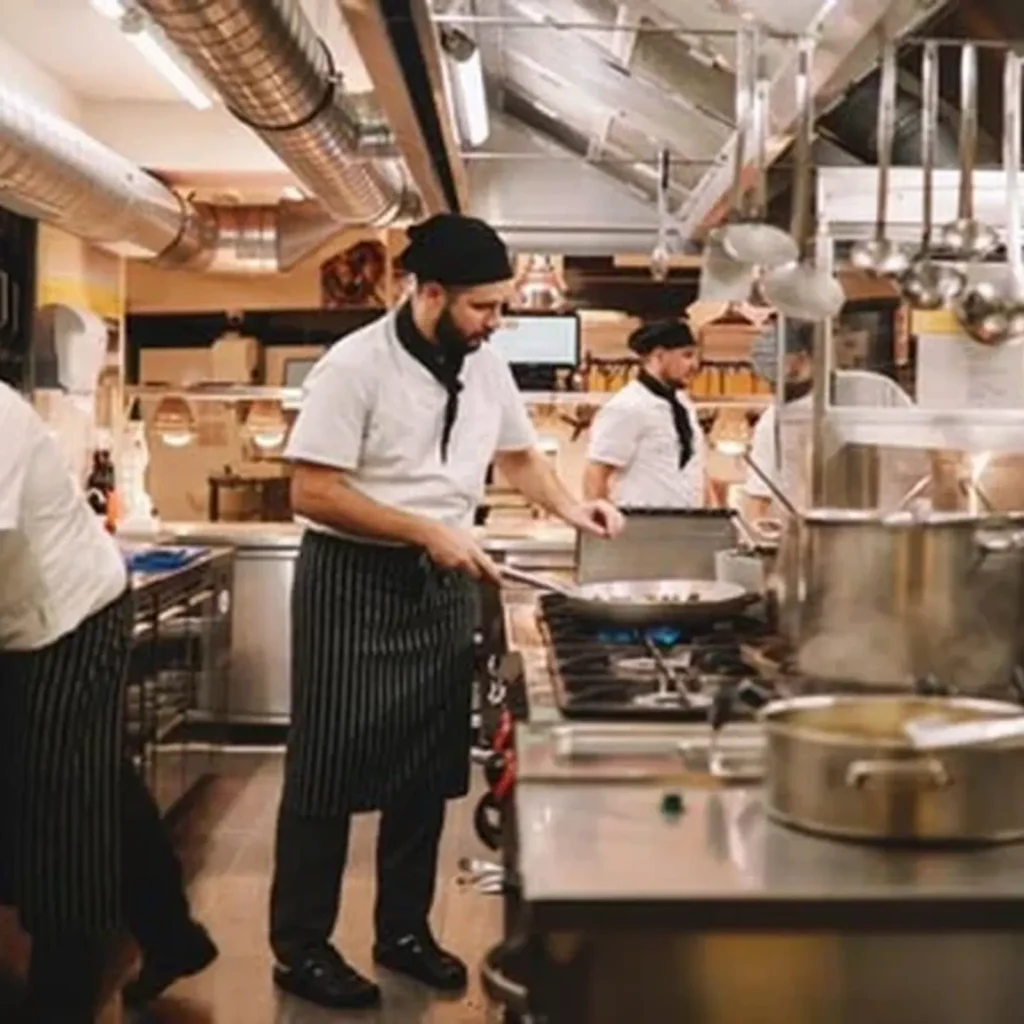
How to Safely Operate Commercial Induction Cooktops: 8 Professional Kitchen Guidelines
05/12/2026
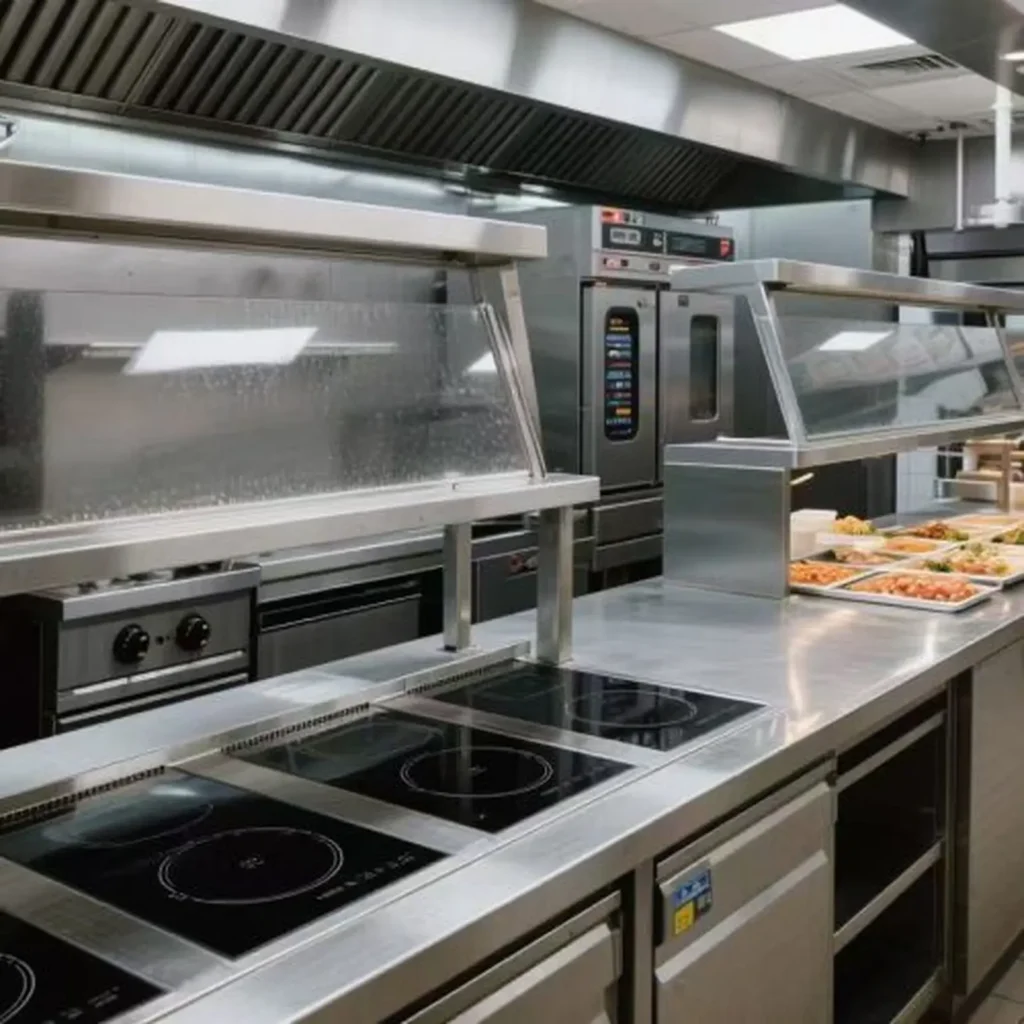
Anyone Has Experience with Invisible Induction Cooktops? Here’s How to Choose the Right One
05/12/2026
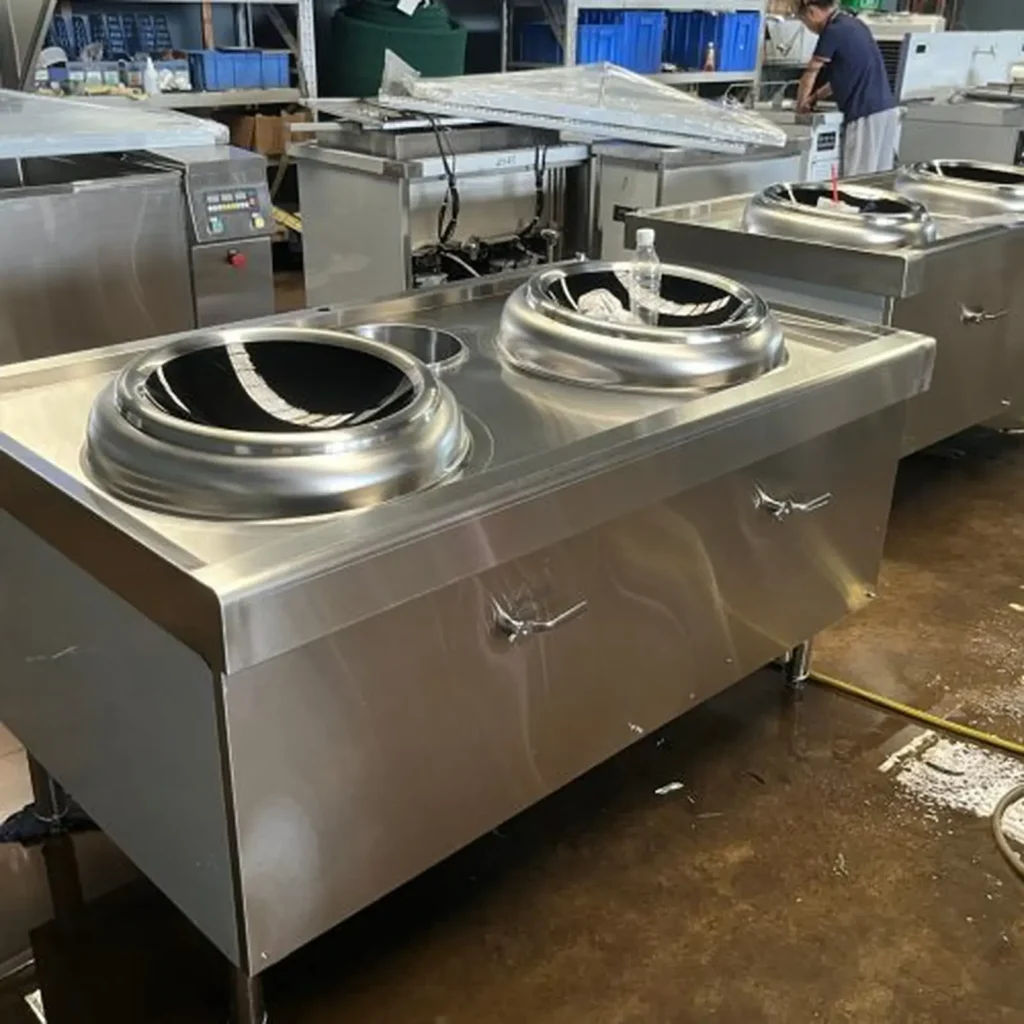
How To Chose One Commercial Induction Wok Stove For Wok Cooking
05/12/2026
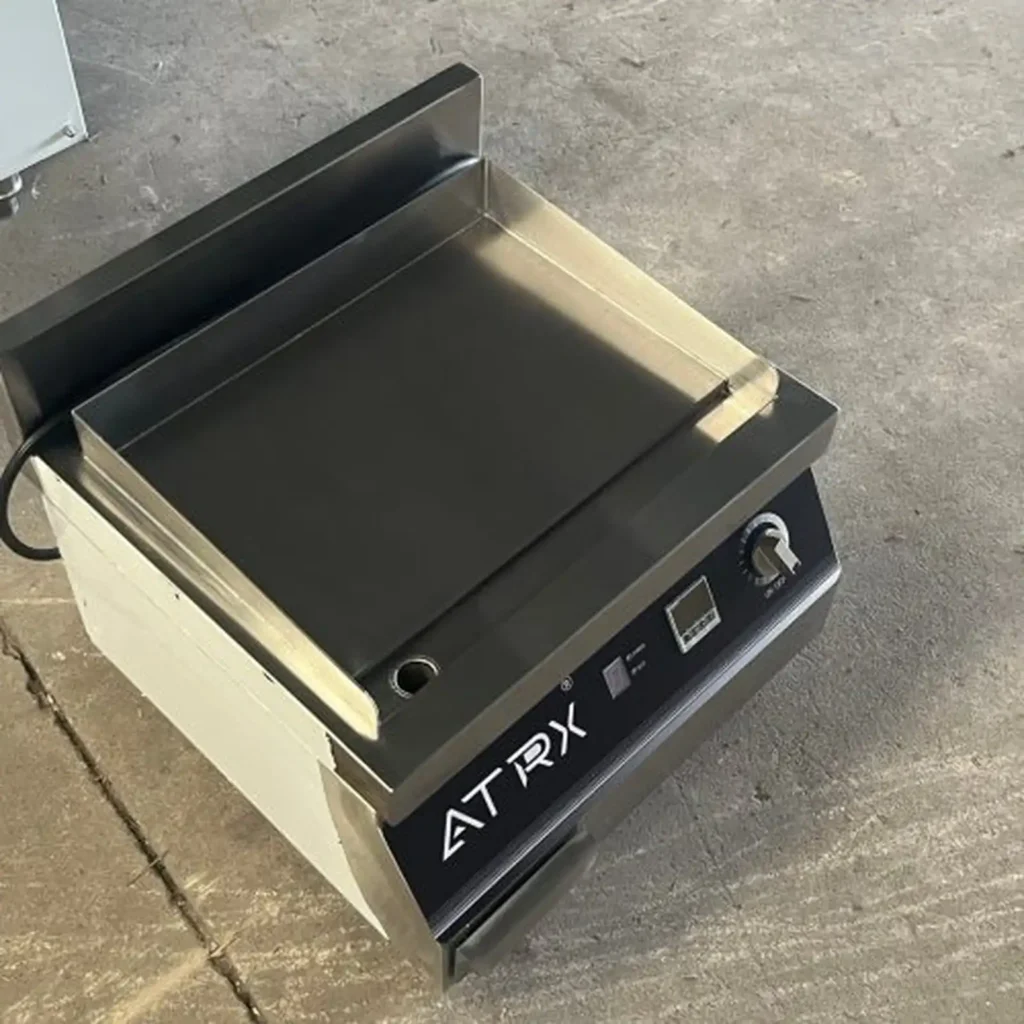
What is the Best Commercial Induction Griddle for Heavy-Use Kitchens?
05/12/2026
Best Commercial Induction Fryer for Restaurants 2026: The Right Pick for Your Kitchen Type
05/12/2026
commercial induction fryer vs electric fryer | Differences
05/12/2026

What Foods Can a Commercial Induction Fryer Cook
05/12/2026