
Best Commercial Induction Fryer for Restaurants 2026: The Right Pick for Your Kitchen Type
Which Type of Commercial Induction Fryer for Different Situations?
Before investing in a commercial deep fryer, the most critical step isn’t comparing brands — it’s figuring out exactly which type of equipment your kitchen actually needs. Choosing the wrong model doesn’t just waste your budget; it can slow down your entire kitchen during peak service hours. Commercial induction fryers fall into three broad categories based on capacity and structure, and each one corresponds to a different operational scale and use case.
Countertop Single-Tank: The Best Value Choice for Small Kitchens
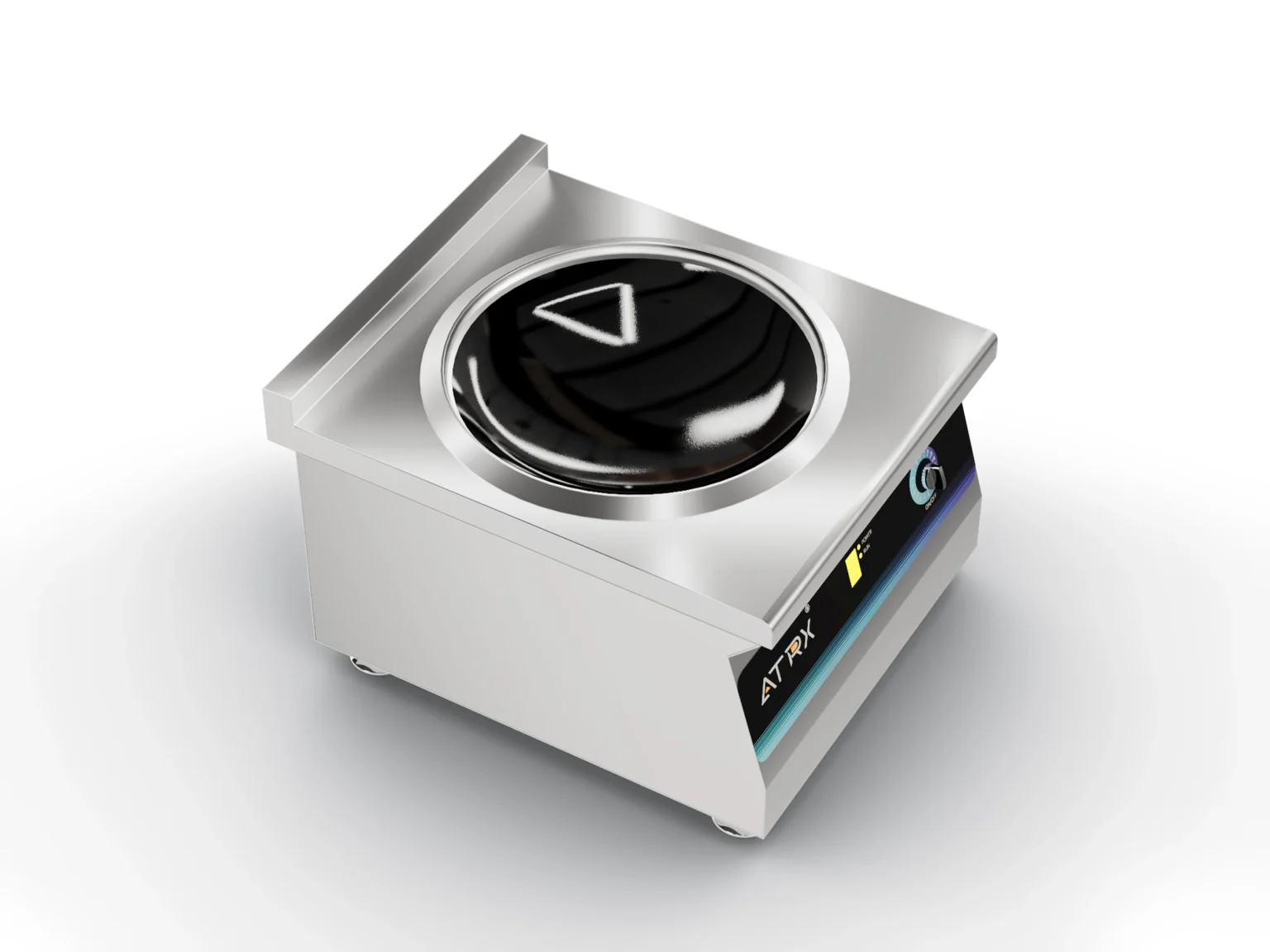
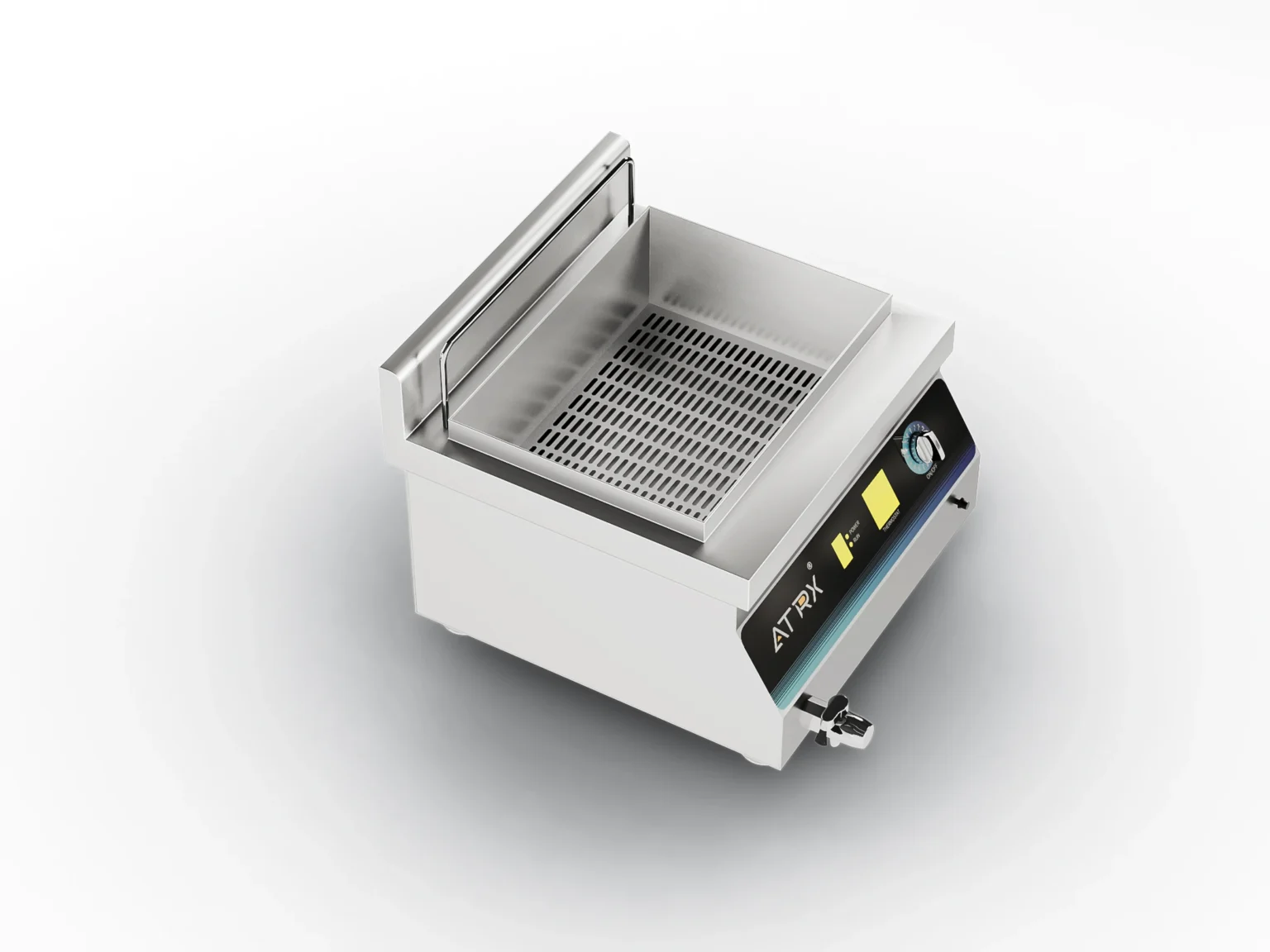
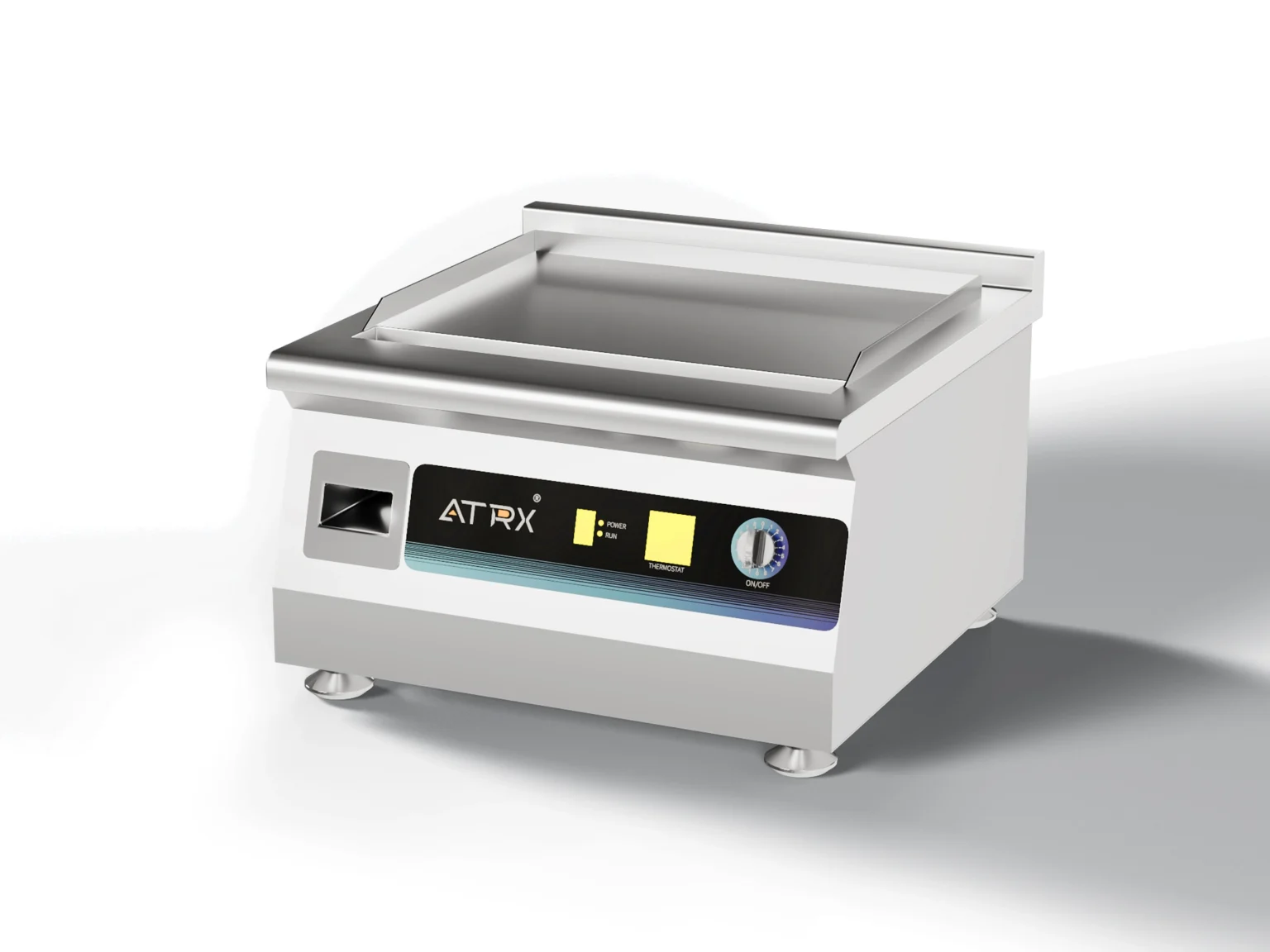
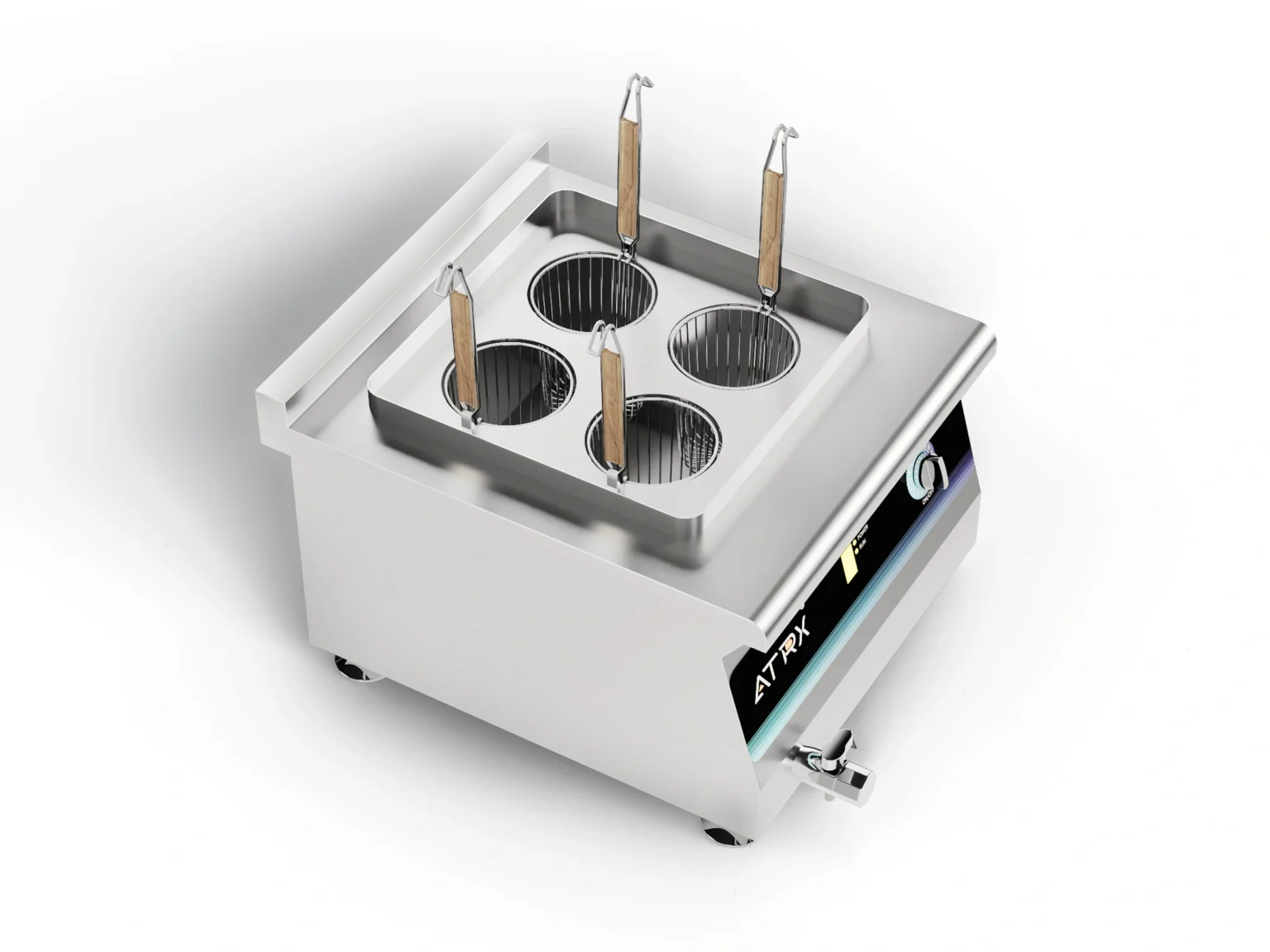
If you run a small restaurant, snack stand, or street food stall with a daily output of fewer than 100 portions, a countertop single-tank induction fryer is almost tailor-made for you. This type of unit typically has an oil tank capacity ranging from 8.7L to 13L. It has a compact footprint and sits directly on a prep counter, saving precious floor space. Most importantly, it runs on standard 220V power — truly plug-and-play, with no electrical upgrades required, significantly reducing upfront installation time and cost.
Here are the scenarios where a countertop single-tank fryer fits best:
- Small quick-service restaurants and street stalls: With daily output below 100 portions, the equipment doesn’t need to run at full capacity all day. A single-tank unit fully covers peak-hour demand without over-investing in a larger machine.
- Space-constrained kitchen environments: The countertop form factor occupies minimal space and can be placed anywhere on a prep surface. It’s especially suitable for kitchens smaller than 10㎡ where every square foot counts.
- Startup operations without electrician support: The 220V plug-and-play design means you can start cooking on day one — no need to schedule electrical work before opening, dramatically shrinking your setup timeline.
- Budget-conscious new restaurant brands: Compared to dual-tank or floor-standing models, a single-tank countertop unit is less expensive to purchase, and combined with zero installation costs, it’s one of the best ways to keep initial fixed investment low.
Countertop Dual-Tank: The Quick-Service Workhorse for Multi-Item Menus
When your menu requires frying two or more types of food simultaneously — such as french fries and fried chicken, or seafood and vegetarian items cooked separately — a countertop dual-tank induction fryer becomes the better choice. The core advantage of this type is that both tanks are independently temperature-controlled. You can set each tank to the temperature required by a different food item, completely eliminating cross-contamination of flavors.
Whether it’s a food safety requirement (such as separating halal food from non-halal) or simply a matter of preserving product quality, the dual-tank design provides far greater operational flexibility. One important note: because each tank has its own independent electromagnetic heating system, each tank requires its own dedicated circuit. Always confirm with an electrician that your kitchen’s electrical load can handle this before installation.
| Comparison Dimension | Countertop Single-Tank | Countertop Dual-Tank |
|---|---|---|
| Simultaneous frying categories | 1 only | Up to 2, no flavor cross-contamination |
| Temperature control | Single zone | Independent control per tank |
| Power supply requirements | Single circuit, 220V | Dedicated circuit per tank |
| Menu complexity suitability | Simple, single-item menus | Multi-item quick-service menus |
| Installation complexity | Very low — plug and play | Moderate — requires electrician assessment |
| Recommended daily output | Under 100 portions/day | 100–200 portions/day |
Floor-Standing High-Capacity: Industrial-Grade Configuration for Central Kitchens and Chain Stores
For central kitchens, chain restaurant brands, or large quick-service enterprises, the output capacity of the first two categories is clearly insufficient. A professional kitchen fryer in floor-standing, high-capacity format is the standard configuration for these environments. Tank capacities start at 27L and can go up to 72L, with heating power typically exceeding 10kW, enabling rapid oil temperature recovery to sustain continuous high-intensity service without slowdowns.
Many models in this category also come standard with an automatic basket-lift function, which raises the fry basket automatically when the set timer expires. This reduces manual intervention, lowers the risk of operator error, and improves the consistency of the finished product. Of course, industrial-grade equipment comes with higher installation requirements — professional electrical wiring and equipment anchoring are typically needed — so factor these costs into your overall budget before purchasing.
Before deciding whether to upgrade to a floor-standing high-capacity model, it’s worth evaluating yourself across three dimensions. First, production pressure: if your kitchen regularly experiences “fryer queues” during lunch and dinner rushes, your current equipment has become a bottleneck, and the large tank and high power of a floor-standing model will solve this at the root. Second, standardization requirements: chain locations demand strict consistency in color, texture, and doneness for every portion served. The auto basket-lift paired with precision timer controls minimizes the impact of human error on output quality.
Third, long-term return on investment: while the purchase and installation costs of a floor-standing model are significantly higher than countertop equipment, their per-hour output advantage in high-traffic environments continuously amortizes the upfront investment — often making them the more economical choice over the full equipment lifecycle.
Ultimately, the logic for choosing a commercial induction fryer is straightforward: output volume determines capacity, menu structure determines the number of tanks, and operational scale determines the equipment tier. Before looking at specs and prices, identify your actual needs first — that’s how you ensure every dollar is well spent.
Which Commercial Induction Fryers Are Worth Buying in 2026?
The commercial kitchen equipment market in 2026 is more complex than ever. Finding the best commercial fryer for restaurants means looking past spec sheets and price tags — the right unit is the one that precisely matches your kitchen’s scale, electrical setup, and table-turn rate. The following kitchen scenarios map directly to verified, genuinely purchase-worthy options on the market today.
Top Pick for High-Output Restaurants: ATRX 27L Floor-Standing Commercial Induction Fryer
For full-service restaurants operating 12+ hours a day with extremely high table-turn rates, the core question is no longer “is it capable enough?” — it’s “can it hold up?” The ATRX 27L floor-standing model is purpose-built for exactly this kind of high-intensity environment. Here’s why it fits the high-output restaurant profile across every key dimension:
- Floor-standing structure designed for continuous high-intensity operation: Unlike countertop models positioned for lighter use, the ATRX floor-standing fryer is permanently installed on the kitchen floor. With a footprint of 450×800×(800+150)mm, its stable, low center of gravity allows it to handle sustained peak-hour pressure without being constrained by counter space.
- Clean-room PCB assembly process — 40% lower component failure rate: All ATRX products are assembled in a dedicated clean-room environment. Each unit undergoes 48 hours of PCB testing and 12 hours of full-machine burn-in testing before leaving the factory. According to ATRX’s published data, this process reduces component failure rates by 40% compared to conventional production environments — directly translating into lower unplanned downtime risk.
- CE certified, compliant with ISO9001 / ISO14001 / RoHS standards: The unit holds EU CE certification and complies with ISO9001 quality management, ISO14001 environmental management, and RoHS hazardous substance restriction standards — suitable for purchasing environments with import compliance requirements.
Best Budget Pick for Small Restaurants: NAKS IFD30 Dual-Tank Induction Fryer
Not every restaurant needs industrial-grade specs. For small food service operations just getting started or working within a tight budget, the NAKS IFD30 dual-tank model offers a genuinely balanced option. This unit holds ETL certification (compliant with both NSF and FCC standards), with third-party verification of safety compliance — no barriers to entering the North American market.
Each tank features an independent 3,000W heating system with independent temperature control, so both tanks operate without interfering with each other. You can fry different food items simultaneously and boost service output without adding staff. The unit’s countertop width is just 22.7 inches (approximately 57.6cm), a reasonable footprint for space-limited small restaurant prep areas. Market pricing typically falls in the $1,200–$1,800 range, making it one of the more competitive ETL-certified dual-tank restaurant deep fryer options currently available.
| Specification | NAKS IFD30 Details |
|---|---|
| Model | IFD-30 |
| Certifications | ETL / NSF / FCC |
| Number of tanks | Dual tank (independently controlled) |
| Power per tank | 3,000W |
| Total power | 6,000W |
| Power supply | 208/240V, dedicated circuit per tank |
| Unit dimensions (W×D×H) | 22.7″ × 18.8″ × 16.1″ (576×478×410mm) |
| Oil capacity per tank | 15 lb (approx. 6.8L) |
| Total oil capacity | 30 lb (approx. 13.6L) |
| Body material | Stainless steel front panel and side panels |
| Included accessories | Dual fry baskets (optional large and small sizes) |
| Warranty | 1-year limited warranty |
| Market reference price | $1,200 – $1,800 |
Best for Food Trucks: Lestov Dual-Tank Countertop Induction Fryer (LT-TZL-B105)
Food truck kitchens operate on a completely different set of selection criteria than fixed restaurants: space is extremely limited, there’s no gas line infrastructure, equipment must travel with the vehicle, and it still needs to handle sustained load during peak service hours. The Lestov LT-TZL-B105 dual-tank countertop induction fryer stands out in this niche — with overall dimensions of just 450×530×(300+100)mm and a net weight of 30kg, it’s a high-volume fryer genuinely sized for mobile kitchens.
This model runs on 220V single-phase power with a voltage tolerance range of 180–240V — truly plug-and-play, with no gas piping or three-phase circuit upgrades required. For a food truck that frequently moves between locations, this means fast setup every time you open for service. The dual tanks hold a combined 18L of cooking oil (each tank measures 390×338mm with a depth of 140mm) and come with two independent fry baskets (310×165×145mm), allowing different food categories to be fried simultaneously — boosting menu flexibility without increasing the equipment footprint.
On the temperature control side, this model is equipped with a German Infineon IGBT module, delivering dynamic temperature accuracy of ±3°C and static accuracy of ±1°C across a range of 60–190°C. An 8-level magnetic power control dial allows instant switching from low-temperature slow frying to high-temperature fast frying. The sloped-bottom oil tank paired with a filter-type steel valve effectively strains residue, enabling quick and safe oil changes even in the confined space of a mobile kitchen.
The unit holds CE certification, carries an IPX4 splash-proof rating, and comes with a 1-year warranty. It currently represents one of the best-balanced countertop dual-tank induction fryer options available for food truck operators who need both performance and portability.
Pitco: Easy to Find Parts, Easy to Repair
Pitco is the most frequently mentioned commercial fryer brand across Reddit’s foodservice communities — and the core reason isn’t that it’s high-end, it’s that it’s reliable and easy to fix. In the r/Chefit community, which has over 260,000 subscribers, a widely discussed thread specifically about the best commercial fryers for 2026 featured user entropybender writing directly: “We switched to Pitco a few years back and haven’t looked back, the parts are way easier to source and service techs actually stock them. If you’re buying anyway, look at the Pitco SG14 or the Frymaster MJ45 since both have better valve longevity and you can usually get a local service contract on them.”
This quality of being “repairable, with findable parts, and service providers willing to take the job” is the hidden value that many small and mid-sized restaurants prize most in real-world operations. After all, the revenue lost from a single day of equipment downtime often far exceeds the cost of the part itself. Here’s a more detailed breakdown of why Pitco consistently earns genuine recommendations from industry professionals:
- Mature parts supply chain — service techs typically stock inventory: Pitco has been a fixture in the North American commercial kitchen equipment market for decades. Its replacement parts have entered mainstream commercial equipment retail channels. Whether it’s a gas valve, thermostat, or ignition module, local service technicians typically carry stock — no waiting for overseas shipping or special orders, significantly shortening equipment downtime.
- Recommended model — Pitco SG14: longer valve life, local service contracts available: The SG14 series uses the Solstice technology platform, delivers 110,000 BTU of heat output, and holds 40–50 lbs of oil. Its valve assembly is more durable than comparable competitors at the same price point, and in most regions, annual maintenance contracts can be signed with local equipment service providers — further reducing the risk of unplanned failures.
- “Even the cheap ones outlast everything” — industry reputation: In the same Reddit thread, user alaninsitges added: “Pitcos, even the cheap ones, will outlive us all. And when you do need a new part, they cost like eight bucks.” This line precisely captures Pitco’s core value proposition — not piling on premium features, but delivering longevity and repairability that keeps restaurants running reliably over the long term.
- “The Ford of fryers” — simple, reliable, predictable: User Fox-Mclusky559 in the same thread described Pitco as the Ford of fryers — “no fancy features, built to spec, parts will wear and need service, but the overall logic is simple and manageable.” That predictability is a non-trivial operational advantage for small and mid-sized restaurants that can’t afford a dedicated equipment engineer on staff.
Henny Penny: Top-Tier Quality
In the commercial fryer market, Henny Penny has consistently held a position in the premium tier — and the specific reasons supporting its price premium are concrete: all Henny Penny fryers come standard with a built-in filtration system. This is not common across comparable brands; many manufacturers only offer built-in filtration as an optional add-on on high-end models, while Henny Penny makes it standard across the entire product line.
In the Reddit thread mentioned above, industry professional TaylorKaTomCFSP from KaTom (a prominent U.S. commercial equipment supplier) directly highlighted this advantage: “Henny Penny makes great fryers that come at a higher price point, but their built-in filtration systems can help you save money in the long run by freeing up labor time and maximizing oil life.”
The practical value of a built-in filtration system plays out across two dimensions. First, it extends cooking oil lifespan — filtered oil shows measurable improvements in quality and smoke point, directly reducing daily oil consumption costs. Second, it automates the entire filtration process — filtering and hot-oil return are handled internally by the machine, with no need for staff to manually transport hot oil or operate separate filtration equipment. This saves significant time and physical effort in what is otherwise a high-risk task for workers.
For high-volume, continuously operating restaurants, the long-term reduction in operating costs that comes from the initial equipment investment is an accounting exercise absolutely worth doing carefully.
| Comparison Dimension | Standard Built-in Filtration (Henny Penny) | No Built-in Filtration (Standard Commercial Fryer) |
|---|---|---|
| Oil filtration method | Automatic — no manual operation required | Staff manually operates external filtration equipment |
| Time per filtration cycle | Completes in minutes; hot oil returns in-place | Requires cooling, transporting, filtering, and pouring back — significantly longer |
| Staff safety risk | No contact with large volumes of hot oil — extremely low risk | Transporting hot oil carries burn and spill hazards |
| Cooking oil lifespan | Significantly extended — saves daily oil costs | Oil degrades faster — more frequent oil changes required |
| Long-term operating cost | Higher upfront equipment price; lower total long-term cost | Lower upfront price; ongoing labor and oil costs accumulate |
| Best for | High-volume restaurants running long daily hours | Lower-volume kitchens with tighter budgets |
How Do You Tell a Good Commercial Induction Fryer from a Bad One?
In the commercial kitchen equipment market, quality varies wildly and price differences can reach several times over. Two units that look nearly identical on the outside can perform worlds apart during peak service hours. To genuinely evaluate whether an induction fryer is worth investing in, rather than relying on a salesperson’s verbal promises, you need to master three core judgment dimensions that can be verified on the spot: the brand and specs of the IGBT chip, the material and thickness of the oil tank steel, and the unit’s temperature recovery speed. Get clear on these three checkpoints, and the vast majority of substandard products on the market have nowhere to hide.
① Ask Directly: Which Brand’s IGBT Chip Does It Use?
The IGBT (Insulated Gate Bipolar Transistor) is the core power component of a commercial induction fryer. It controls the high-frequency alternating current that drives the induction coil to generate heat, and its quality directly determines whether the equipment can operate stably under continuous high-load conditions. When evaluating a unit, ask the seller directly: “What brand and model of IGBT does this use?” Here’s the complete evaluation process:
- Verify that the brand name is searchable: The seller must be able to name a specific brand — such as Infineon or Mitsubishi. These two are universally recognized as the top-tier suppliers in the global industrial IGBT space. A specific model number can be cross-checked against official websites or third-party component databases. There is no legitimate reason to be vague about this.
- Be cautious of vague claims like “imported high-quality chip”: If the seller’s answer is “imported premium components” or “international brand parts” without ever providing a specific brand or model number, treat this as a serious red flag. In commercial kitchen procurement, an inability to identify the chip source typically signals the use of low-end components from opaque origins.
- Understand the real gap between industrial-grade and off-brand: Industrial-grade IGBTs from Infineon, Mitsubishi, and comparable manufacturers typically handle peak current loads 3 to 5 times higher than off-brand alternatives. This means that during lunch and dinner rushes — with orders coming in continuously — the equipment won’t trigger protective frequency reduction due to current overload, keeping your service pace steady and uninterrupted.
- Request physical photos of the chip or screenshots from the service manual: Reputable manufacturers’ after-sales documentation will clearly state the IGBT model. If the manufacturer cannot provide any verifiable written materials, it’s advisable to rule out that product entirely.
- Assess the long-term operational risk: Low-end chips are highly prone to failure under high-temperature, high-load conditions. The cost of repair downtime will far exceed whatever you saved on the purchase price. The lifespan of an industrial-grade IGBT is one of the key factors determining whether the entire unit will deliver stable service for five years or more.
② Press the Oil Tank Sidewall With Your Hand — Listen for the Sound and Feel for Flex
Many buyers inspect only the fryer’s external finish, overlooking the single action that most reliably reveals build quality: pressing the oil tank sidewall with your finger while listening carefully. If you can feel noticeable elastic flexing under pressure, or if the tank wall produces a hollow “thud” sound, the steel gauge is seriously insufficient. This isn’t just a structural concern — it’s a ticking cost problem for your future operations.
The industry standard for commercial induction fryer oil tank sidewalls is 304 stainless steel at 1.2mm thickness or greater. Grade 304 stainless steel (also known as 18/8 austenitic stainless steel) contains 18% chromium and 8% nickel, offering excellent corrosion resistance and heat resistance. In the commercial kitchen environment — subject to constant exposure to oil, cleaning chemicals, and steam — it maintains structural integrity and is the internationally recognized standard material for food-grade equipment.
In stark contrast, a large proportion of products on the market use Grade 202 steel (low-nickel or nickel-free stainless). Grade 202 costs significantly less than Grade 304 and is nearly indistinguishable by visual inspection alone. However, its corrosion resistance is far inferior. In the high-humidity, high-salt, chemically intensive environment of a commercial kitchen, rust spots often begin to appear within months, creating food safety concerns and dramatically shortening equipment lifespan.
Beyond the physical tap-test for steel gauge, reputable manufacturers should proactively provide material test reports. Where feasible, applying a drop of copper sulfate solution to a weld seam is a quick field method to distinguish Grade 304 from Grade 202 — the most direct chemical identification approach available on-site.
③ Measure the Temperature Recovery Time — Your Real Confidence During Peak Service
The first two checkpoints are static hardware inspections. This third checkpoint is a live performance stress test, and it’s the metric that most directly reflects the real commercial value of a fryer. Temperature recovery speed (Recovery Time) measures how quickly a fryer returns to its target oil temperature after cold food is added. In a continuous high-volume service scenario, this single number directly determines how many portions you can turn out per hour and whether the quality of every batch is consistent.
Testing happens across two scenarios. The first is a cold oil preheat test: starting from room-temperature cold oil, time how long it takes to reach 180°C. A qualified commercial induction fryer should reach this temperature within 5 to 8 minutes. If it exceeds this window, there are clear deficiencies in heating power or energy transfer efficiency — and every day’s opening shift will waste time waiting unnecessarily.
The second scenario is a frozen fry recovery test: with oil stabilized at 180°C, add a standard portion of frozen french fries (approximately -18°C) and time how long it takes for the oil to return to the set temperature. A high-quality commercial induction fryer should recover within 10 to 18 seconds. Once recovery time exceeds 30 seconds, every subsequent batch of fries is being cooked in oil below the ideal temperature — the result is soft exteriors, increased oil absorption, poor texture, and a queue of backed-up orders during peak hours that directly translates into lost revenue. Recovery speed is a combined expression of three systems working in sync: the IGBT power chip, the induction coil design, and the temperature control algorithm.
| Test Item | Test Conditions | Passing Standard (Quality Fryer) | Failing Indicators and Risks |
|---|---|---|---|
| Cold oil preheat time | Room-temp cold oil → 180°C | ≤ 8 minutes | >10 minutes; long wait at open, high energy waste |
| Oil temperature recovery after frozen fry load | 180°C oil → add -18°C frozen fries → return to 180°C | 10 – 18 seconds | >30 seconds; inconsistent product quality, missed orders at peak hours |
| Oil temperature stability across consecutive batches | 5 consecutive loads, 30-second intervals | Temperature variation ≤ ±5°C | Variation >15°C; inconsistent texture, accelerated oil oxidation |
| IGBT overload protection trigger frequency | Full-load continuous operation for 1 hour at peak | 0 instances of frequency reduction or power cut | Frequent protection triggers; service interruptions directly impacting revenue at peak hours |
Taken together, a commercial induction fryer that a professional kitchen can genuinely trust must have a transparent and verifiable chip source, steel specs that hold up to scrutiny, and temperature performance that can be validated on the spot. Any weakness in any one of these three areas is likely to manifest during high-intensity operations as repair downtime, product quality complaints, or lost orders during peak service — returning the “savings” from the original purchase price many times over.
How Much Should You Budget for a Commercial Induction Fryer?
Many kitchens only look at the sticker price when purchasing a commercial deep fryer. But the real budget is made up of three components: equipment purchase price, installation and upgrade costs, and monthly operating expenses. Adding all three together gives you the number you actually need to be prepared for.
Equipment Purchase Price
Commercial induction fryer prices vary significantly depending on model and capacity. One baseline worth knowing in advance: induction models cost approximately 20%–40% more than equivalent-output gas fryers. This premium is primarily driven by the more sophisticated electronic temperature control systems and heavier stainless steel construction. However, this price gap can typically be recovered through operational savings within 12 to 18 months of use — specific calculations follow below.
| Model Type | Best For | Purchase Price Range | Notes |
|---|---|---|---|
| Countertop single-tank | Small restaurants, quick-service, ghost kitchens | $800 – $2,000 | Compact footprint, moderate frying volume, ideal entry-level choice |
| Countertop dual-tank | Medium-to-high output, multi-item menus | $1,200 – $3,500 | Best balance of flexibility and capacity; strongest value for money |
| Floor-standing high-capacity | Chain QSR, cafeterias, large banquet kitchens | $3,000 – $8,000 | Strong peak output; some industrial models price higher |
Installation Costs
The most direct installation advantage of an induction fryer is no gas line required. The combined costs of cutting channels, welding fittings, and safety inspections for gas equipment typically total $500 to $2,000 — and switching to induction skips all of that entirely. There’s no need to close the kitchen for gas infrastructure work either.
That said, induction fryers do have specific electrical requirements. Models rated 5kW and above generally require a dedicated 208V or 240V circuit — not a standard 110V outlet. If your kitchen is primarily gas-equipped or was built some years ago, your current electrical panel may not have these circuits available. Having a licensed electrician conduct an on-site assessment is the safest approach. If an upgrade is needed, the cost typically falls between $300 and $800 — a one-time fixed cost with no further surprises once it’s done.
Monthly Operating Costs
Using a 6kW model as an example, operating 10 hours per day at the U.S. commercial electricity average of $0.12/kWh:
- Compared to a gas fryer: A gas fryer with equivalent output typically costs $280 to $350 per month in gas alone — that’s $64 to $134 more per month on fuel, adding up to over $760 in annual savings.
- Lower oil replacement costs: Electromagnetic induction heating provides even temperature distribution with minimal oil temperature fluctuation, slowing oil oxidation and extending oil change intervals by approximately 30% compared to gas fryers. This translates to an additional $50 to $100 per month in oil savings.
- Combined monthly savings: Together, these two factors mean monthly operating costs are approximately $114 to $234 lower than a comparable gas fryer — meaning the 20%–40% purchase premium is typically fully recovered within 12 to 18 months.
Choosing the best commercial fryer for restaurants ultimately comes down to matching the right equipment to the right kitchen. The right unit keeps every service rush running smoothly; the wrong one quietly drains profits through downtime, missed orders, and repair bills during your busiest hours. The six models covered in this article — from the ATRX industrial floor-standing unit to the Lestov food truck countertop model, to the durable v
About the author

Commercial Induction Cookers Industry