

How Commercial Induction Cookers Are Delivered On Time and In Full | ATRX
06/22/2026
Estimated reading time: 2 minutes

This article explains one thing clearly — when you place a bulk order for commercial induction cookers, how do you ensure commercial induction cooker delivery doesn’t go wrong on date or quantity? ATRX breaks every order into four tightly controlled stages, locking time at production scheduling and locking quantity at outbound shipping. During peak season, rush orders are absorbed by reserved capacity and safety stock — without squeezing existing orders. This guide helps you understand the delivery control logic on the supplier side, so you can judge before placing an order whether a supplier can truly deliver on time and in full.
IN THIS ARTICLE
How Orders Are Processed From Start to Finish After Confirmation
The Four Stages From Start to Finish
After an order is confirmed, it doesn’t go straight to the workshop floor. There is a fixed internal routing path — goods can only be loaded for shipment after all four stages are completed. Last year, a procurement manager from a Malaysian chain restaurant group visited the factory for an audit. The project manager opened the backend system on the spot and walked him through his 300-unit high-power commercial induction cooker order, screen by screen, from beginning to end.
He later wrote in his audit report: “Who is responsible at each node, which step it’s stuck at, and when it moves to the next step — everything is visible in the system.”
- Stage 1: Material Confirmation
Once an order is entered, the warehouse team immediately verifies all materials needed for this batch — core modules, ceramic glass panels, stainless steel housings, and various electronic components — checking whether they are in stock or in transit. Only when the kit completion rate reaches 100% does the system status change to “Ready for Scheduling,” and this stage is considered passed. - Stage 2: Production Scheduling
The production planner reviews current line capacity, considers the delivery date, and inserts this order into the production calendar, locking in the start date and projected completion date. Once the work order is generated and issued to the corresponding production line, this stage is complete. - Stage 3: Production Execution
The production line works according to the work order — assembly, aging tests, and finished product inspection. Each unit passes final inspection individually before being warehoused. Only when the full quantity is warehoused and inspection reports are filed is this stage considered complete. - Stage 4: Outbound Shipment
The logistics department packs, labels, and loads containers. The tracking number is fed back to the customer. The order is officially closed only when goods have physically left the factory and logistics information is trackable.
The four steps are tightly chained. If the completion marker of the previous step isn’t triggered, the next step won’t start. When the team reviewed all order data for the full year of 2024, one finding stood out: strictly enforcing “confirmed completion before release” actually made overall delivery time shorter than the previous approach of “pushing forward while still confirming.”
If you want to understand what specific processes assembly and aging tests go through and what each step does, see this article: How Commercial Induction Cookers Are Manufactured, which breaks down the complete manufacturing process step by step from raw materials to finished units coming off the line.
How Long Each Stage Takes Until Delivery Is Complete
After placing an order, the one thing customers want to know most is: when exactly will my goods arrive? The delivery time quoted isn’t a number pulled out of thin air — it’s calculated by adding up the duration required for each of the four stages.
Taking a standard-specification, 500-unit commercial induction cooker order as an example, here’s the time breakdown:
| Stage | What’s Done | How Long | Completion Criteria |
|---|---|---|---|
| Material Confirmation | Verify material stock and in-transit status | 2–3 business days | 100% kit rate, status changes to “Ready for Scheduling” |
| Production Scheduling | Insert into production calendar, lock start date | 1–2 business days | Work order generated and issued |
| Production Execution | Assembly, aging, final inspection, warehousing | 7–12 business days | Full quantity warehoused, inspection reports filed |
| Outbound Shipment | Packaging, labeling, container loading, handoff to logistics | 1–2 business days | Goods leave factory, tracking number available |
Total: 11–19 business days. When the sales team tells customers “estimated 15 business days to ship,” this table is what’s behind it. Each segment has a corresponding time window — it’s not based on gut feeling. With this number, customers can work backward to determine the receiving date and arrange installation teams to arrive on site in advance.
For custom non-standard models or large-volume orders, the material and production stages take longer, but the calculation method is the same — add up each segment, then report the number. In internal project meetings, one phrase is repeated constantly: “The delivery date given to customers must be a completed addition problem. ‘About’ and ‘as soon as possible’ are not allowed.” This rule has been running for three years, and the most obvious change on the customer side is fewer follow-up calls — because they can calculate approximately when the goods will arrive on their own.
How Delivery Time Is Locked During Production — Production Scheduling Control
When buying commercial induction cookers in bulk, what’s the biggest fear? The delivery date arrives but production isn’t finished, or the goods arrive and the count is short. These two issues look simple, but behind them is the entire chain from scheduling to outbound. The solution is straightforward — lock time at the moment of scheduling, lock quantity at the outbound step. Don’t rely on people watching; rely on production scheduling control mechanisms to catch errors.
Once the Production Schedule Is Set, No Ad-Hoc Insertions Are Made
Once an order is confirmed, the first action is not “arrange production as soon as possible,” but rather cutting the entire production cycle into fixed blocks. How many days each block spans, how many units it produces, and which processes it covers — all are locked in. Once locked, that time becomes the exclusive resource for this order. Other orders cannot be inserted or pushed in.
In 2024, a Southeast Asian chain restaurant procurement manager came for a factory audit and specifically pulled up the historical records on the scheduling board. What he saw was: from the day his order was confirmed, how many units should come off the line each day and which process they should be at — all clearly marked in the system, with not a single day occupied by someone else. He later placed repeat orders three times in a row and never again mentioned “I need to come check progress early.”
Specifically, four rules lock down “on time”:
- Exclusive blocks — no borrowing, no yielding. After scheduling is confirmed, each day’s capacity slot belongs exclusively to this order. No matter how urgent someone else’s rush order is, your time won’t be touched. “Being bumped by someone else’s order” simply cannot happen at the rule level.
- Daily output targets are written on the scheduling day. It’s not the workshop supervisor deciding on the morning of — the system states in black and white: how many units come off the line on which day, which process ends on which date. The delivery date isn’t a vague “by end of month” — it’s the sum of each day’s calibrated increments.
- Deviations are corrected the same day — never accumulated until the end. The system compares actual output against planned values daily. If today falls short, correction is triggered today. You don’t discover “it’s not going to make it” close to the deadline — the moment it slips on day one, it gets pulled back.
- Block durations cannot be compressed. There’s no such thing as “cramming it all out with overtime in the last three days.” Every commercial induction cooker is completed at normal production tempo. The delivery date is simply the natural result of all blocks proceeding in orderly sequence.
One more data point worth mentioning: the internal Q3 2023 review found that after implementing this system, delivery delays caused by scheduling drift dropped from an annual average of 4 occurrences to zero. This data was later included in a procurement evaluation report by a visiting Middle Eastern distributor.
How Quantity Is Locked With a Dedicated Verification Process
Production is complete and goods are in the staging area — can they be loaded directly? No. There is a mandatory verification gate at the outbound stage: unit-by-unit checking, box-by-box matching. If the system doesn’t release, goods cannot ship. Human memory is unreliable; process controls are reliable. This is what ensures bulk order fulfillment actually means the correct count reaches the customer’s warehouse every single time.
The table below shows the three outbound verification checkpoints. If any one fails, goods cannot leave:
| Checkpoint | What’s Done | Pass Criteria |
|---|---|---|
| First Gate: Unit-by-Unit Verification | Each unit’s serial number is matched one-to-one against the order details; model, specification, and wattage are verified item by item | All entries must match — not a single unit can be misaligned |
| Second Gate: Pre-Sealing Summary | After grouping by box, boxes × units is cross-checked against order total; accessory lists are confirmed simultaneously | Total units, total boxes, and accessory count — all three must match |
| Third Gate: System Release | After the first two gates pass, order status changes from “Pending Verification” to “Approved for Shipment” — only then can logistics handoff proceed | System determines automatically; manual override is not possible |
The key is the third gate. This isn’t something that can be released with a signature — even if the first two gates show “passed” on paper, if the unit-by-unit verification data in the system hasn’t closed out, the status stays stuck and nothing ships.
In early 2024, the warehouse team encountered a case: a packer accidentally put two units in the same box. The unit count was correct but the box count was wrong. The system caught it immediately. Unbox, reposition, re-scan — only after passing was it released. The customer was completely unaware this happened, but from an internal perspective, this is precisely proof that the checkpoints are genuinely blocking, not just for show.
Outbound verification is the final gate in the delivery process, but quality control goes far beyond this one checkpoint. From incoming material inspection to in-process patrol checks to final inspection, for details on how quality is controlled throughout the entire production process, see: Commercial Induction Cooker Quality Control System.
How the On-Time Delivery System Works During Peak Season
Anyone in commercial induction cooker procurement knows that peak season is the toughest time. Orders flood in simultaneously — some are planned large batches, others are rush additions triggered by end-user projects suddenly being greenlit. Once a supplier’s capacity is strained, delivery dates are the first thing sacrificed. Delayed one week, then another — the customer’s entire project timeline gets thrown off.
ATRX can still deliver on time and in full during peak season — not by “working overtime and rushing madly,” but because the on-time delivery system itself has reserved space built in for exactly this kind of pressure.
How Capacity Buffer and Safety Stock Are Designed
1. Daily scheduling always retains elastic capacity.
There is an iron rule: scheduling never fills to maximum. Daily production is controlled within a set percentage of total capacity, with the remainder specifically reserved for sudden orders. When peak season orders arrive, there’s no need to add production lines on the fly or scramble for outsourced factories — the reserved capacity is activated directly to absorb them.
A Malaysian procurement manager once visited for an audit before peak season and noticed the workshop wasn’t running at full load. He was puzzled at the time: not enough orders? Then he himself added a rush batch of high-power commercial induction cookers during peak season and received scheduling confirmation within three days. That’s when he understood — the “white space” on the shop floor isn’t idle capacity; it’s a safety net reserved for customer rush orders.
2. Core materials are not purchased per-order but maintained at safety stock levels.
Commercial induction cookers have several key materials with long supply lead times: IGBT modules, ceramic glass panels, and custom coil discs. Waiting until an order is received to procure them means missing the window entirely. The approach is the opposite — based on historical shipment volumes and market trends, these materials are pre-stocked to a safety level, with inventory available year-round in the warehouse.
When a rush order arrives, material kit completion can be confirmed the same day. There’s no “waiting in line for materials.” After the 2023 peak season, an internal review was conducted, and the result was unambiguous: every single rush order that year — not one was delayed due to material shortages. Zero.
3. The essence of this design: absorbing uncertainty in advance.
When does peak season arrive? Which customer suddenly needs to add orders? No one can predict precisely. But this system doesn’t gamble on luck. Capacity buffer is the first line of defense; safety stock is the second. With both layered together, the system always has reserves. For procurement managers, this means you no longer need to lock in orders months early out of fear that “the supplier can’t handle peak season.” Rush orders placed on short notice already have a reserved spot in the system.
How Rush Orders Are Handled Without Affecting Existing Orders — Peak Season Rush Order Management
When a rush order comes in, the first reaction isn’t to say yes — it’s to evaluate. The planning department first verifies three things: how much elastic capacity remains, whether material inventory is sufficient, and whether existing order schedules will be affected. Only after all three are confirmed clear does it issue a delivery commitment to the customer. This is the core of peak season rush order management — rigorous assessment before any promise is made.
The core logic of this mechanism is four words: buffer absorbs increment. Rush orders use capacity from the reserved elastic space and materials from safety stock, running on a completely independent track from already-scheduled orders. There is no “robbing Peter to pay Paul.” The table below shows the standard internal response rhythm after a rush order enters:
| Response Phase | Specific Action | Completion Deadline |
|---|---|---|
| Receipt & Entry | Rush order enters system, priority level marked | Within 2 hours |
| Capacity Assessment | Verify available elastic capacity, confirm no impact on existing schedule | Within 12 hours |
| Material Check | Confirm safety stock covers rush order material requirements | Within 12 hours |
| Delivery Confirmation | Issue verified, definitive delivery commitment to customer | Within 24 hours |
| Scheduling Execution | Rush order enters elastic capacity channel, independent scheduling begins | Immediately after delivery confirmation |
This process provides two-way protection for customers. When you place a rush order, the delivery date you receive has been double-verified against capacity and materials — it’s not a number casually thrown out by sales. If you already have an order in scheduling, someone else’s rush order will not push your delivery date back.
Your rush order won’t delay others, and others’ rush orders won’t delay you. This point is especially critical during peak season.
If you’re interested in overall production line scale, daily capacity, and how mass production is organized, this article provides more detailed explanation: Commercial Induction Cooker Mass Production Capability.
For procurement managers, this means the delivery date you receive is verifiable and back-calculable — not just a vague “we’ll arrange it as soon as possible.”
The system described above is what stands behind every delivery commitment. To see how this translates into actual product lines and order options, visit ATRX as a manufacturer and evaluate firsthand. Below are the questions procurement managers ask most often once they’ve understood the process.
Common Questions People Ask
Q: My project requires phased delivery. Can orders be shipped in multiple batches at my specified time points?
Yes. ATRX supports splitting a single order into multiple delivery batches, with each batch independently scheduled and independently going through the outbound verification process. You simply need to specify the quantity and desired arrival time for each batch when placing the order. The system will lock dedicated capacity blocks and materials for each batch separately, with no interference between batches. Tracking numbers for split shipments are also fed back batch by batch, making it convenient for you to arrange on-site installation according to your project milestones.
Q: After placing an order, I realize the specifications need to change (such as power level or panel size). Will this cause the entire order’s delivery date to be rescheduled?
It depends on which stage the change occurs. If you’re still in the material confirmation stage, specification adjustments can be updated directly with minimal or zero impact on delivery time. If production execution has already begun and material substitution or process changes are involved, those portions require re-evaluation. A revised delivery date will be provided within 24 hours. Portions unaffected by the change continue on the original plan — the entire order won’t be torn down and restarted.
About the author

ATRX Team| 18 Years Commercial
Induction Cooker Manufacturer in China
Induction Cooker Manufacturer in China
Related Posts
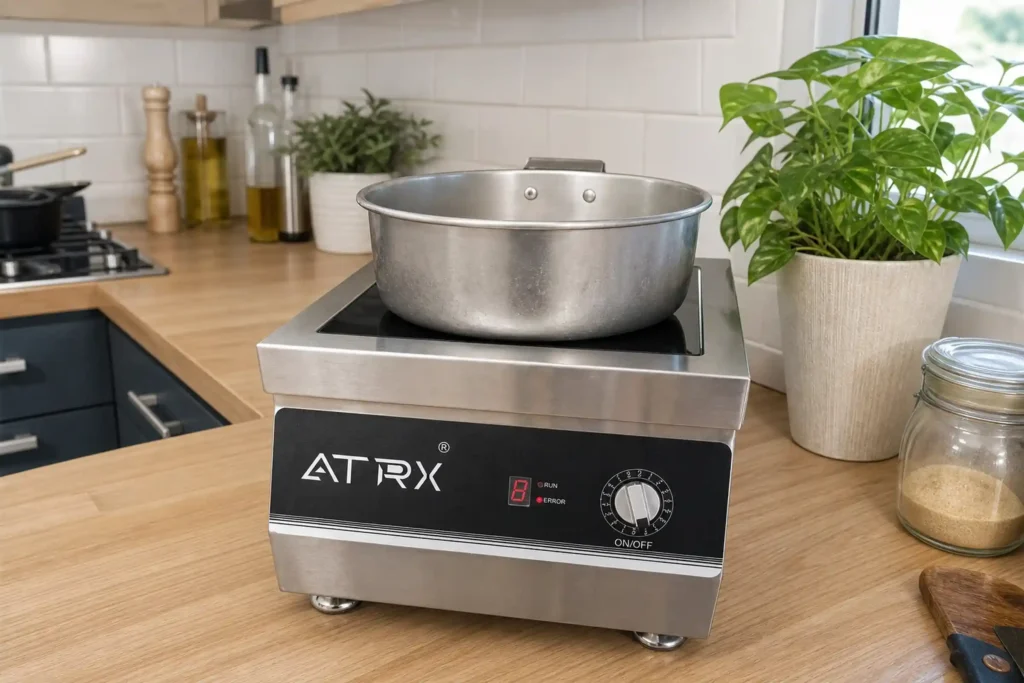
What Is a Commercial Induction Cooker and How Does It Work
08/13/2026
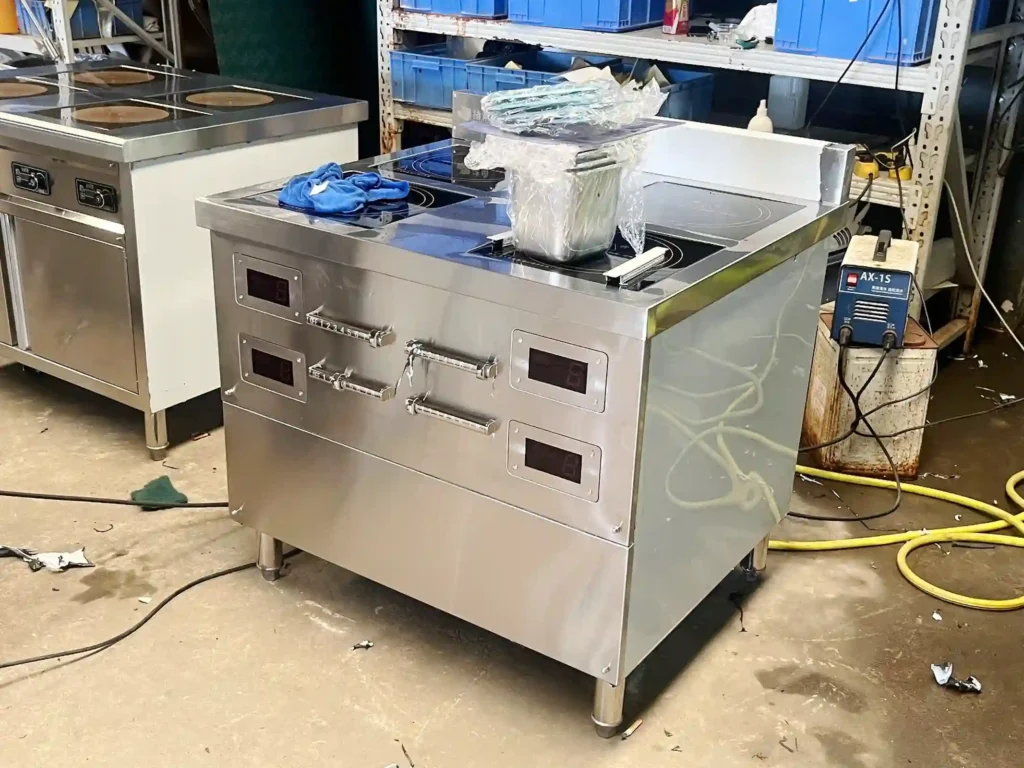
Commercial Induction Range for Hotel Kitchens: How to Choose the Right Model
08/11/2026
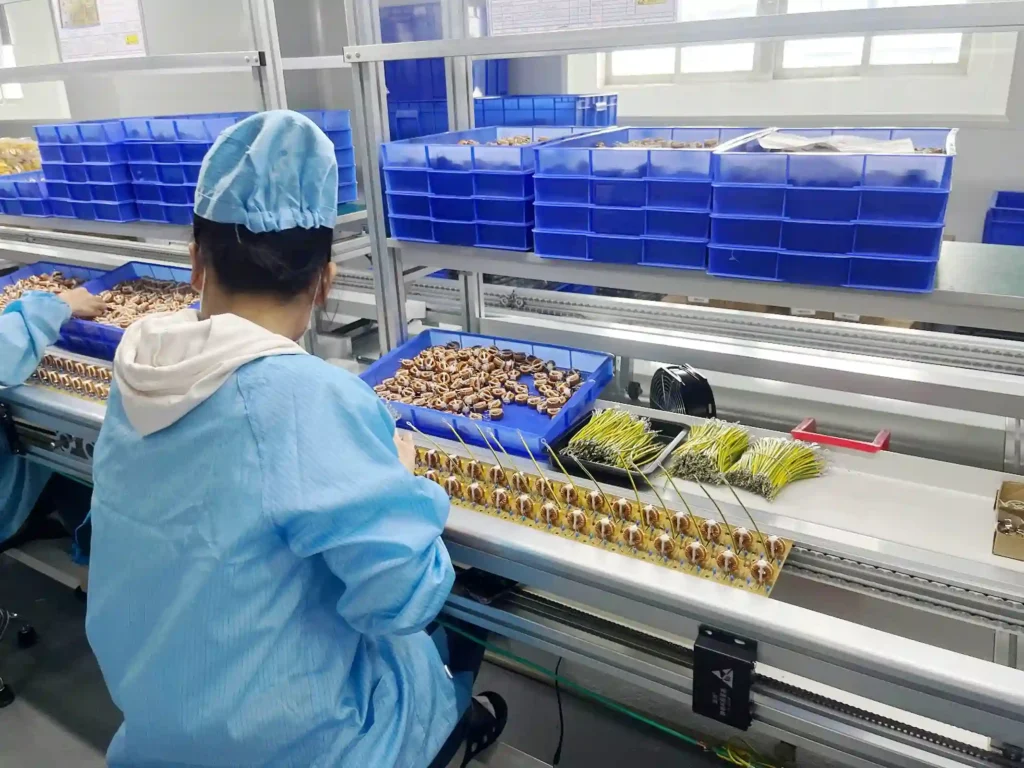
Reliable Commercial Induction Cooktop Manufacturer in China | OEM & ODM Solutions | ATRX
08/09/2026
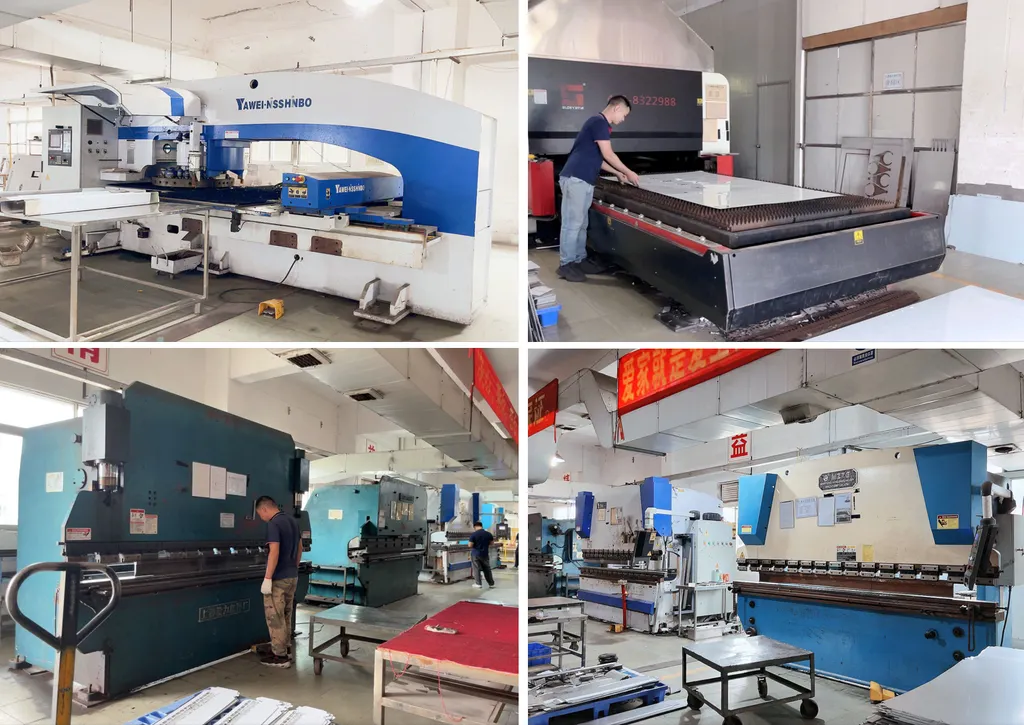
10 Best Commercial Induction Cooker Manufacturers & Supplier Selection Guide [2026]
08/07/2026
Tilting Skillet & Bratt Pan: How to Choose the Right One for Your Commercial Kitchen
08/06/2026

Commercial Induction Cooker for School Cafeteria: How to Pick the Right High-Power Unit
08/04/2026

Ghost Kitchen Equipment List: Checklist & Buying Guide for Delivery-Only Kitchens
08/02/2026
Gas vs Infrared vs Induction: Commercial Wok Range Comparison for Chinese Restaurants
07/31/2026
What Cookware Works on Induction? Compatibility Guide & Best Materials Explained
07/28/2026

Best Commercial Induction Cooktop for Restaurant: Types, Specs & Buying Guide (2026)
07/26/2026