

How to Find a Reliable Commercial Induction Cooker Factory in China
06/17/2026
Estimated reading time: 3 minutes

TL;DR: There are tons of commercial induction cooktop factories in China. The hard part isn’t finding them—it’s telling the real ones from the fakes. This guide gives you three practical filters: depth of technical communication, production line focus, and trial order performance. Use them early to weed out traders and assembly shops before they waste your time or money. By the end, you’ll have a clear, low-cost framework to judge a factory’s true capability before you commit to a bulk order.
IN THIS ARTICLE
What Should a Reliable Commercial Induction Cooktop Factory in China Look Like?
When you try to find a reliable factory in China for commercial induction cooktops, the real challenge isn’t a shortage of options. It’s the opposite—too many choices, too little clarity. Prices are easy to compare. Lead times are negotiable. But the factory’s core capability? That’s what decides whether your partnership runs smoothly over the long haul. Two characteristics matter most at the screening stage.
Independent R&D Capability Is the First Thing to Check
A factory worth your trust should be able to talk tech with you—clearly and confidently. This isn’t just a nice-to-have. It’s something you can test in the very first conversation.
Here’s a real example. A Southeast Asian client’s previous supplier had batch IGBT burnout three months after delivery. The factory took nearly six weeks to respond. Why? They had no in-house R&D team. They had to wait for a third-party solution provider to even begin troubleshooting.
Here’s how you can test this yourself during early conversations:
1. Ask them to explain their power solution choices. A factory with genuine R&D will tell you why they picked a specific topology for a 3500W unit—and what trade-offs they considered between efficiency, cost, and stability. If the answer is just “we use a mature solution” with no details, they’re probably running someone else’s design.
2. Throw real-world technical questions at them. Try something like: “Does low atmospheric pressure at high altitude affect heat dissipation?” Or: “How do you manage mainboard temperature during 12+ hours of continuous use?” Engineers with real experience will break it down logically. Those without will dodge the question or give a generic “no problem, we’ve tested it.”
3. Ask for product iteration history. Request the version changelog for the same model over the past few years. How many mainboard upgrades? How many revisions to the cooling structure? What software protection logic changed? Real R&D means constant improvement. No changes in years? That’s a red flag for a pure assembler.
4. Watch how they communicate. Do their engineers bring ideas to you? Do they proactively discuss trade-offs and alternatives? Or do they just answer what you ask—passively, vaguely? The first type has ownership over the product. The second is probably repeating scripted answers.
This “tech conversation” filter costs you nothing. But it reliably removes the factories most likely to cause problems down the line.
Focused Factories Beat Diversified Ones
In China’s appliance manufacturing hubs, you’ll find plenty of factories that claim to “do everything.” Induction cooktops, rice cookers, air fryers, blenders—all on the same line, same procurement system. The issue isn’t scale. It’s attention.
An internal supply chain review showed a clear pattern. Over the past three years, clients who bought from multi-category factories had noticeably higher rates of batch quality issues compared to those who bought from focused suppliers. The logic is simple. Commercial induction cooktops run 10+ hours a day under heavy load. When a factory splits its attention across a dozen product types, the quality details for any single product suffer.
A factory that only does commercial induction cooktops is different. Its entire operation—suppliers, workers, engineers—serves one purpose. Suppliers have been vetted over years for the right component specs. Line workers assemble the same product daily, building muscle memory and consistency you can’t get by switching between categories every week.
Engineers in a focused factory have solved the same category of problems hundreds of times. Their design decisions are backed by real field data, not guesswork. All of that accumulated expertise shows up in the machine you receive.
Here’s a quick comparison:
| Dimension | Focused Commercial Induction Cooktop Factory | Diversified Small Appliance Factory |
|---|---|---|
| R&D Resources | 100% on one category. Fast iteration. | Split across many products. Limited per-item investment. |
| Supply Chain | Long-term partnerships with component suppliers. Clear specs. | Scattered purchases. Weaker bargaining power and oversight. |
| Worker Proficiency | Same product daily. High assembly consistency. | Frequent line switches. More errors. |
| Issue Response | Engineers know common faults cold. Fast fixes. | Cross-category coordination needed. Slower. |
| Product Maturity | Years of refinement on one product type. Proven stability. | Some models rushed to market for category expansion. |
Checking a factory’s product line is one of the fastest external signals you can use. If its website, showroom, and catalog are all commercial induction cooktops from top to bottom, focus is probably real. If products span totally unrelated categories, ask directly: what share of revenue comes from commercial induction cooktops? That answer alone can save you a lot of time.
Beyond focus, other hard indicators include owned production lines, valid certifications, and traceable bulk shipment records. These help confirm whether a China induction cooktop manufacturer is the real deal. For detailed methods on verifying these, see: How to Choose a Truly Reliable Commercial Induction Cooktop Manufacturer.
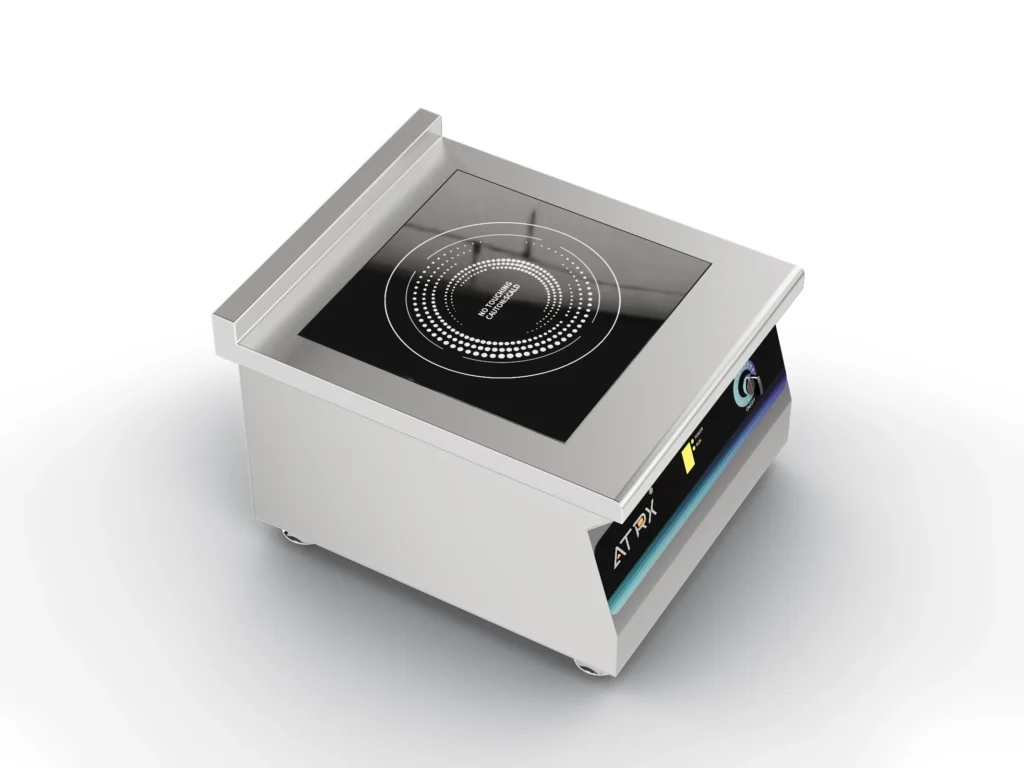
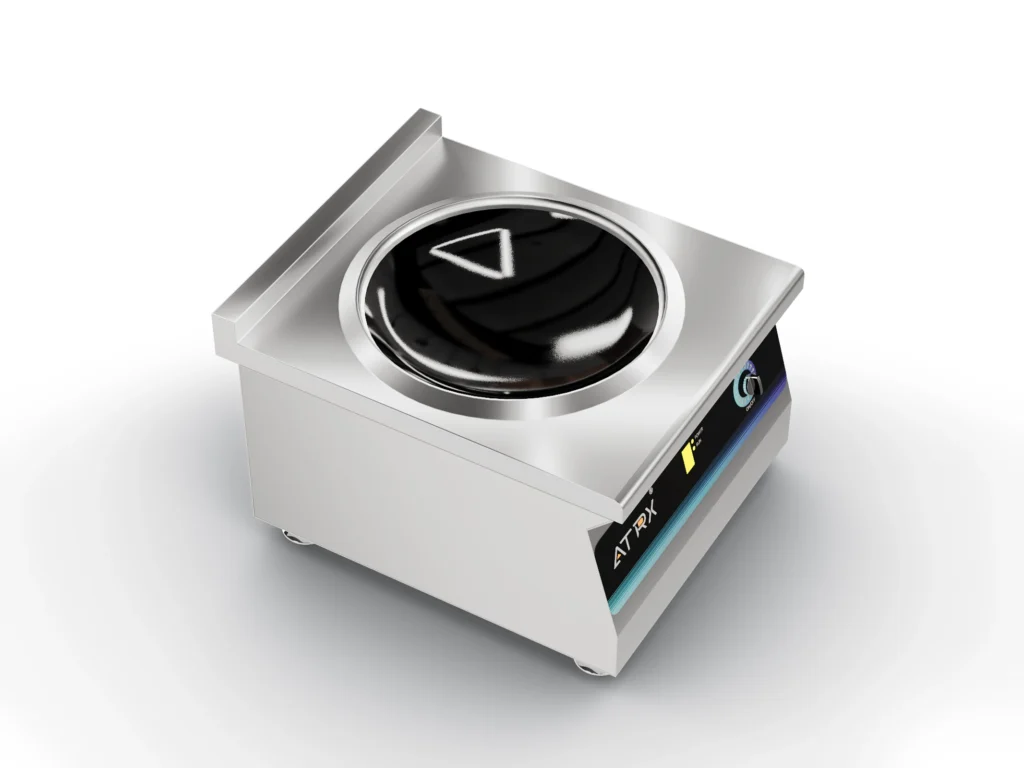
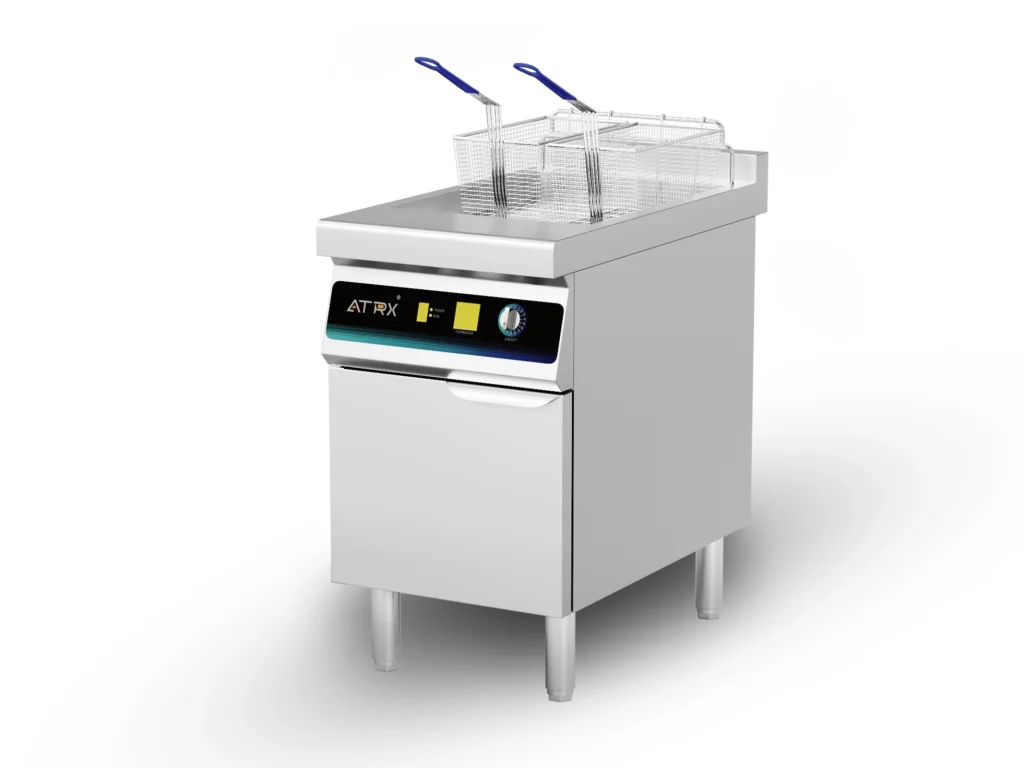
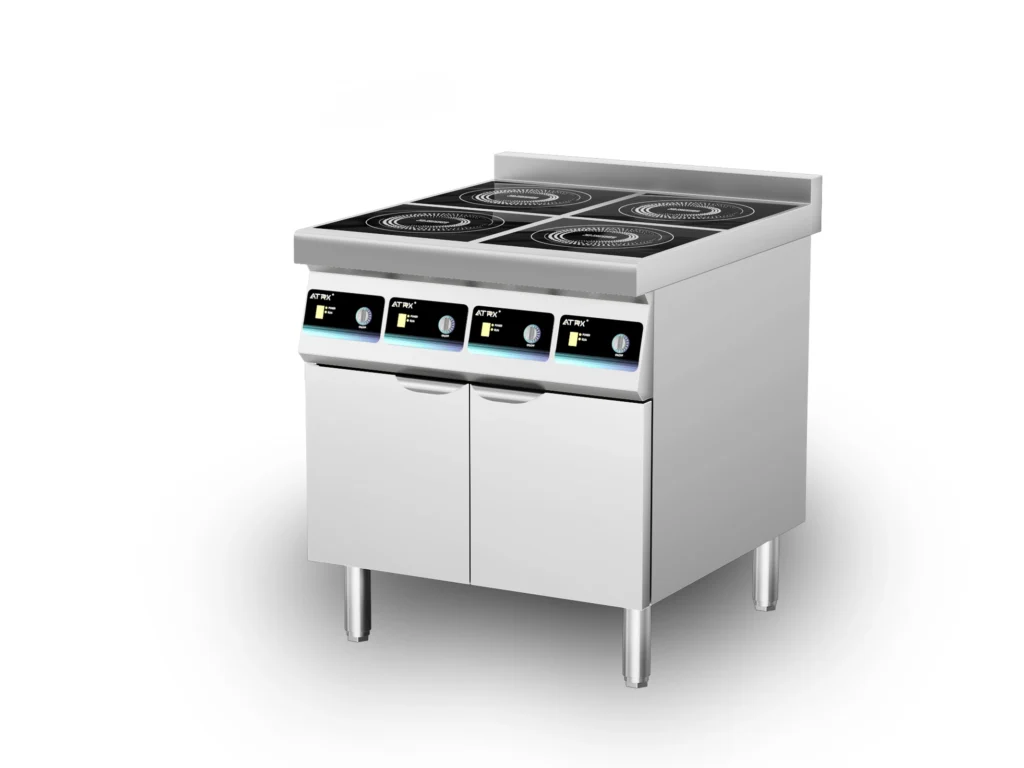
To give you a sense of what “focused” looks like in practice—here’s a product lineup from a single factory where every model, from countertop flat cookers to floor-standing wok burners, shares the same core power platform and engineering team.
How Do You Verify a Factory’s Real Production Capability?
Finding a factory that says it specializes in commercial induction cooktops is easy—on Alibaba, at trade shows, or through a quick search. The hard part is knowing if it actually manufactures anything. Is it a real factory with its own lines? Or just an assembler? Or worse—a trading company with a nice website?
Every commercial induction cooktop supplier will claim “advanced production lines” and “ISO certified” on their homepage. Those words have almost zero filtering value. Only two things actually prove capability: seeing the hardware in person, and testing execution with a real order.
Equipment, Line Layout, and QC Execution Are What Matter On-Site
When you visit a factory, here’s what to actually look at:
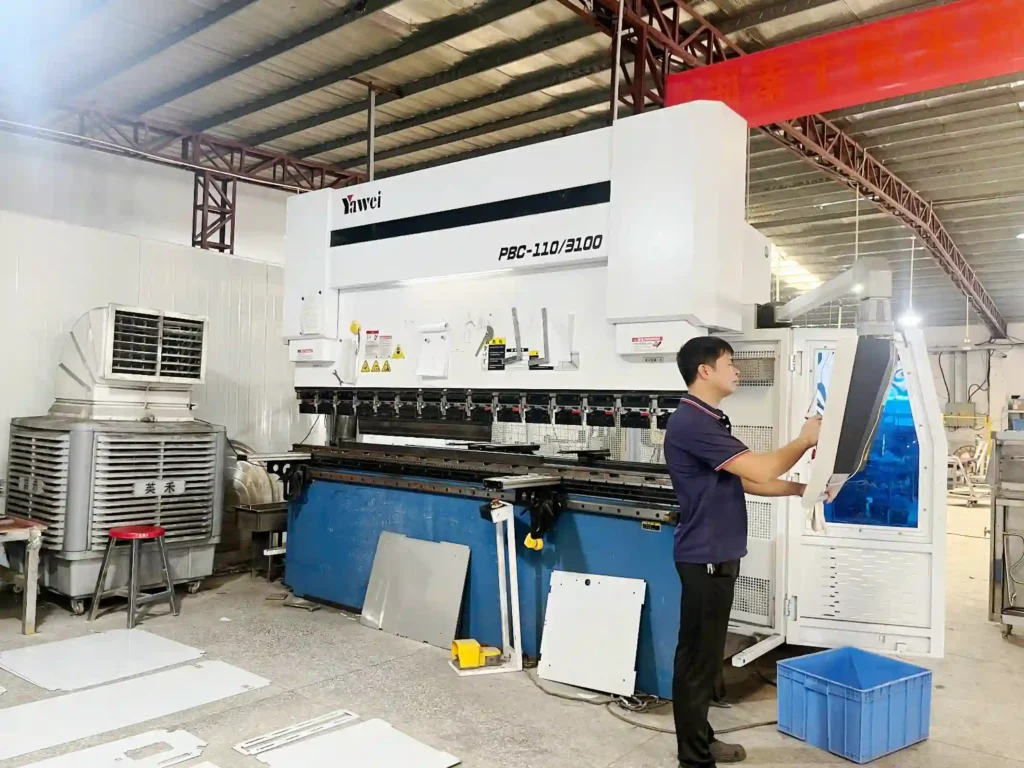
1. IGBT soldering equipment. This is the heart of a commercial induction cooktop. Power and reliability depend directly on IGBT soldering quality. Look for professional reflow soldering equipment, dedicated soldering stations, and post-solder inspection steps. If you see a dust-free SMT workshop with fully automated reflow lines, that factory has invested where it counts. Manual soldering at this stage means inconsistent products—period.
2. Is the aging test line actually running? A real factory will have machines on the aging line powered on and running at full load during your visit. Not sitting cold. Not unplugged. If you see machines with no power connected, that “test line” is set dressing. The products coming off it will reflect that.
3. Production line flow. A well-organized line moves logically: coil winding → mainboard SMT → assembly → testing. Materials should be staged neatly, not piled on the floor. If there’s no clear zoning, if semi-finished goods are stacked randomly between stations, the factory can’t reliably handle batch orders.
4. Is QC being done—or just displayed? An ISO 9001 certificate on the wall means nothing by itself. Ask specific questions: How do you inspect incoming IGBTs? How many hours of aging does each finished unit go through? How do you trace defective products back to source? A factory with real commercial induction cooktop quality control will give you specific answers—inspection records, clear pass/fail criteria, documented rejection processes. Vague or confused answers mean the system is just for show.
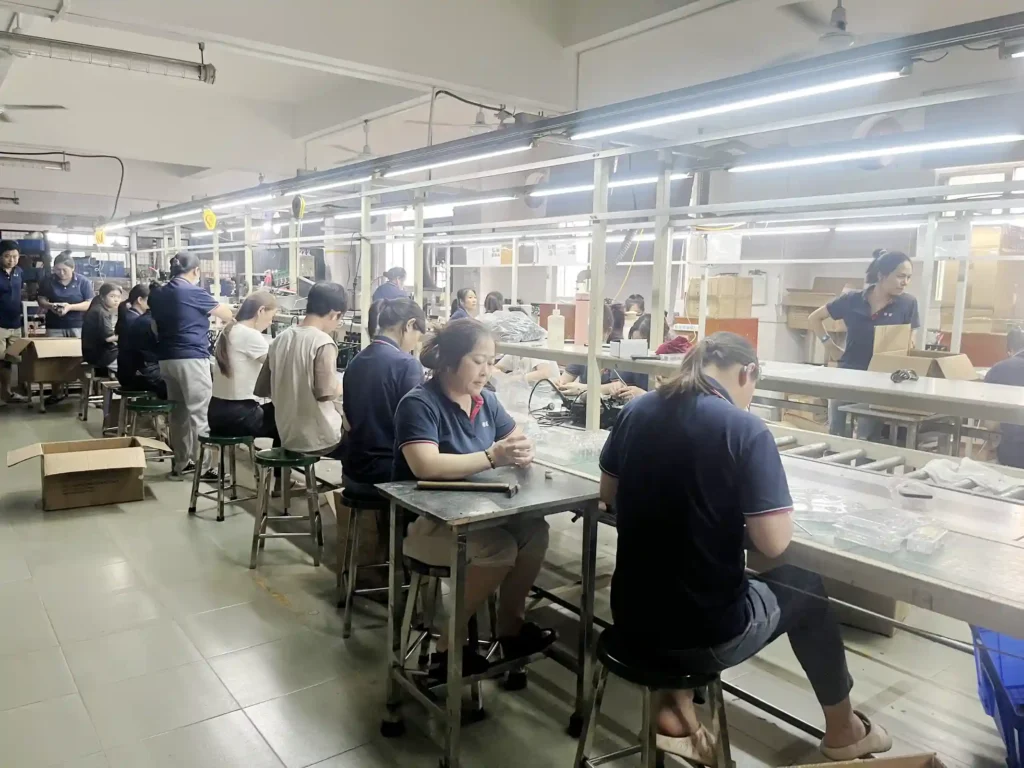
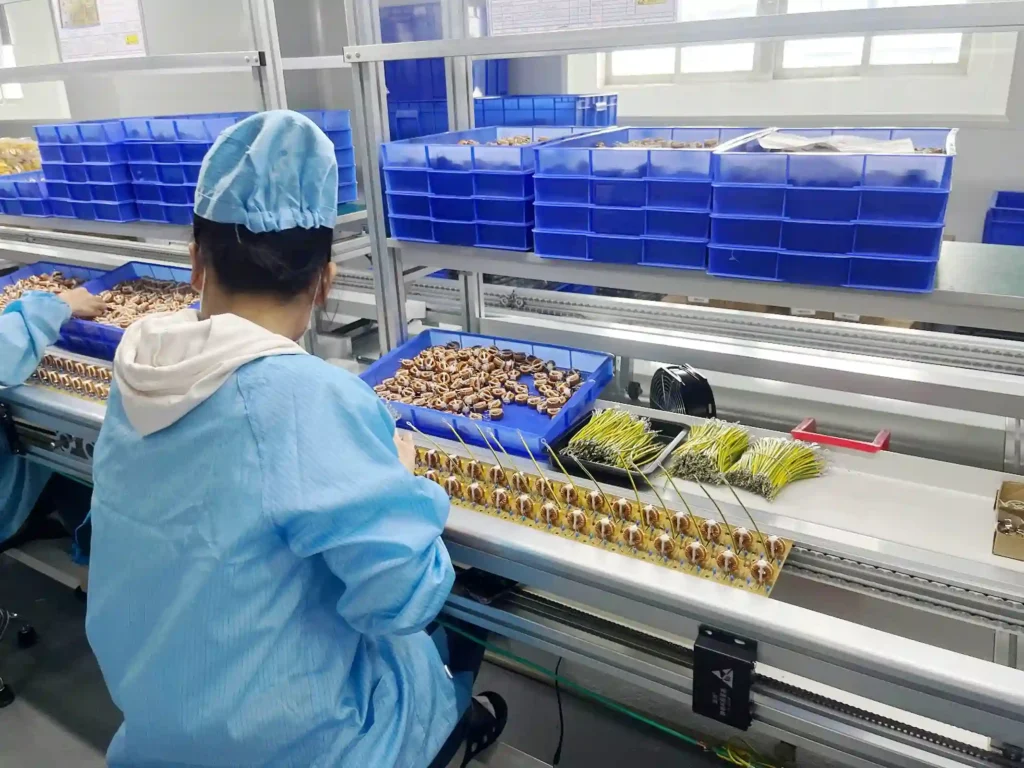
For reference, this is what a dust-free PCB assembly environment looks like when it’s running in production mode—not cleaned up for a visitor walk-through, but operating under standard shift conditions with positive-pressure airflow and full gowning protocol active.
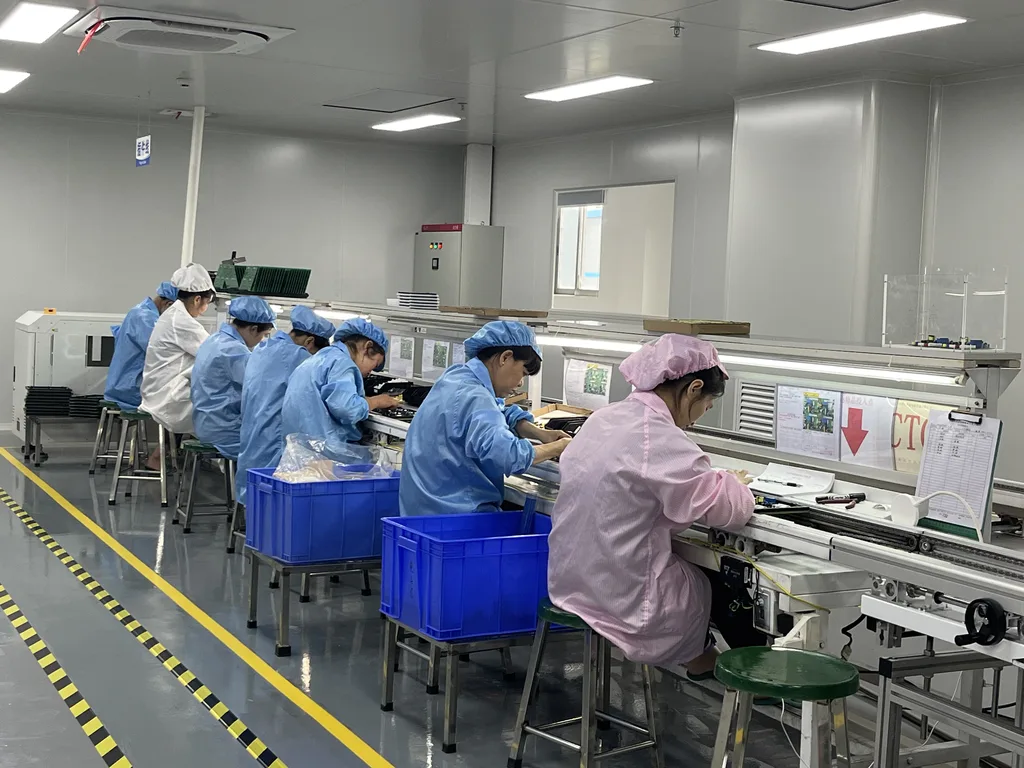
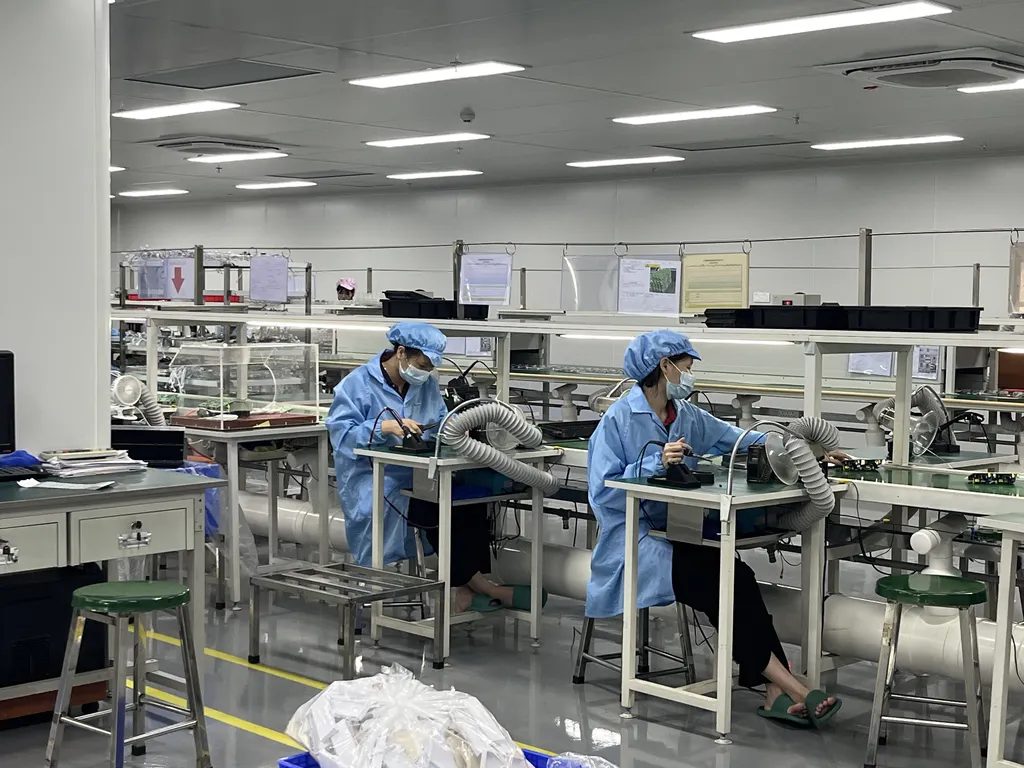
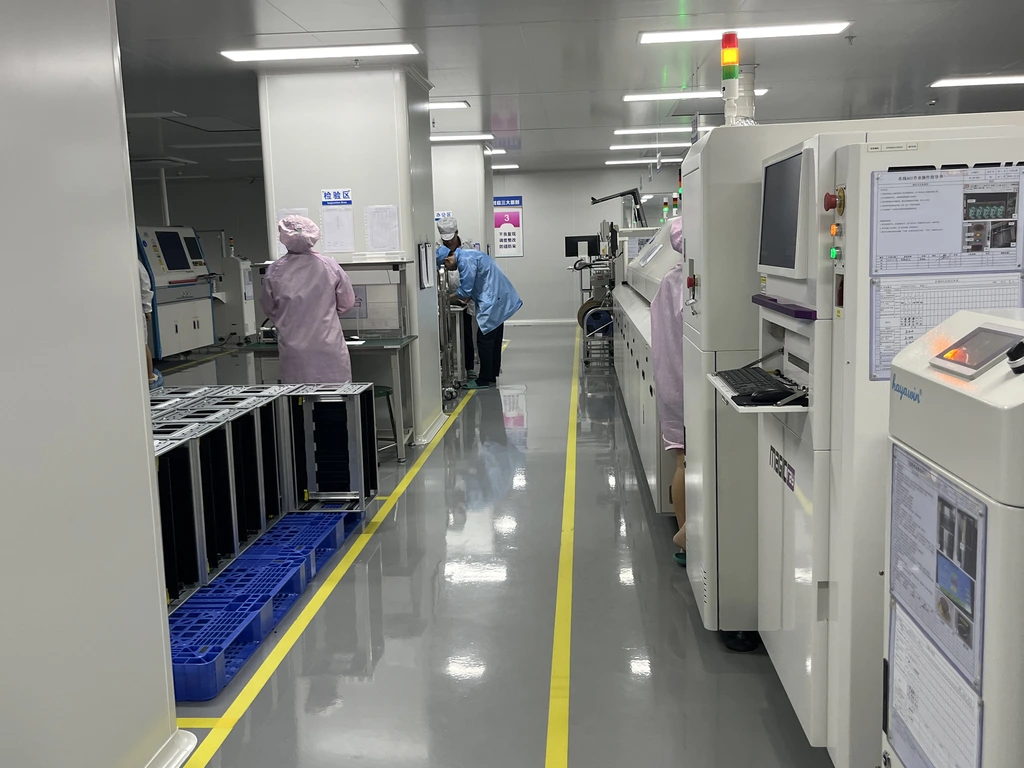
For a complete breakdown of what a proper QC system covers—from incoming material checks to final unit-by-unit sign-off—read: Commercial Induction Cooktop Quality Control Full Process Analysis.
Trial Orders Tell the Truth
A good factory visit is encouraging. But the real proof is execution. A small sample order is the cheapest, most effective test you can run.
The sampling stage exposes things no amount of conversation can: Are lead times accurate? Is workmanship stable? How fast does the team respond to custom requests? You only see these answers when real money is on the table. Internal data consistently shows that over 80% of long-term partnerships began with a trial order of just 3–5 units. That’s enough to stress-test the process without overcommitting.
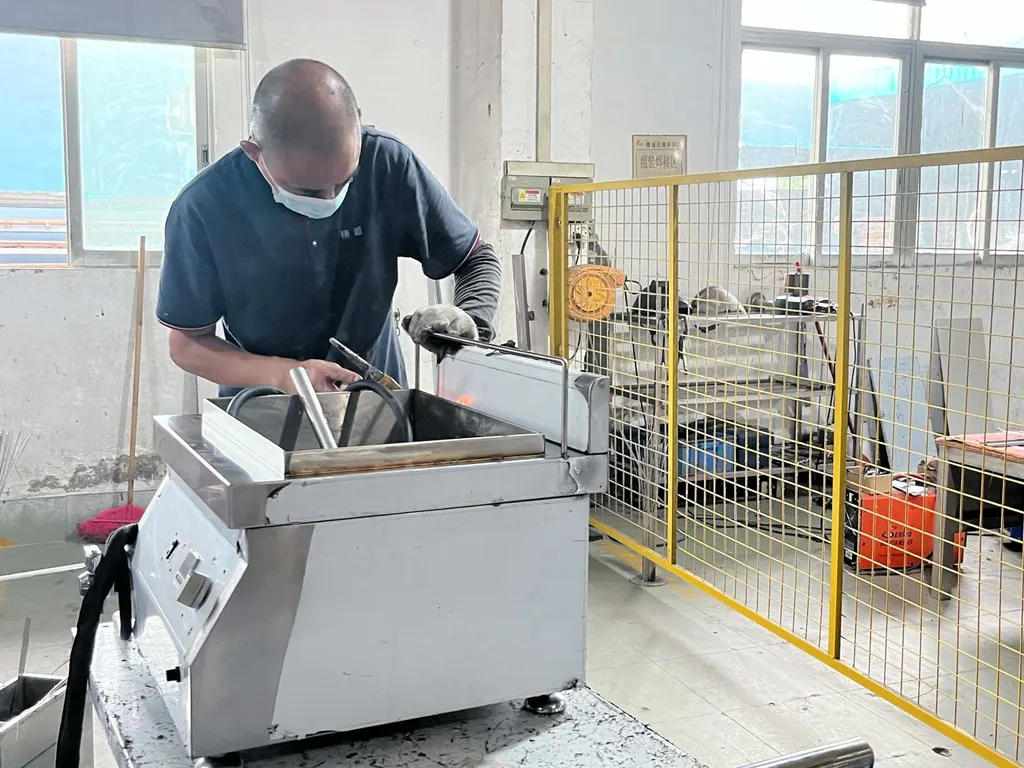
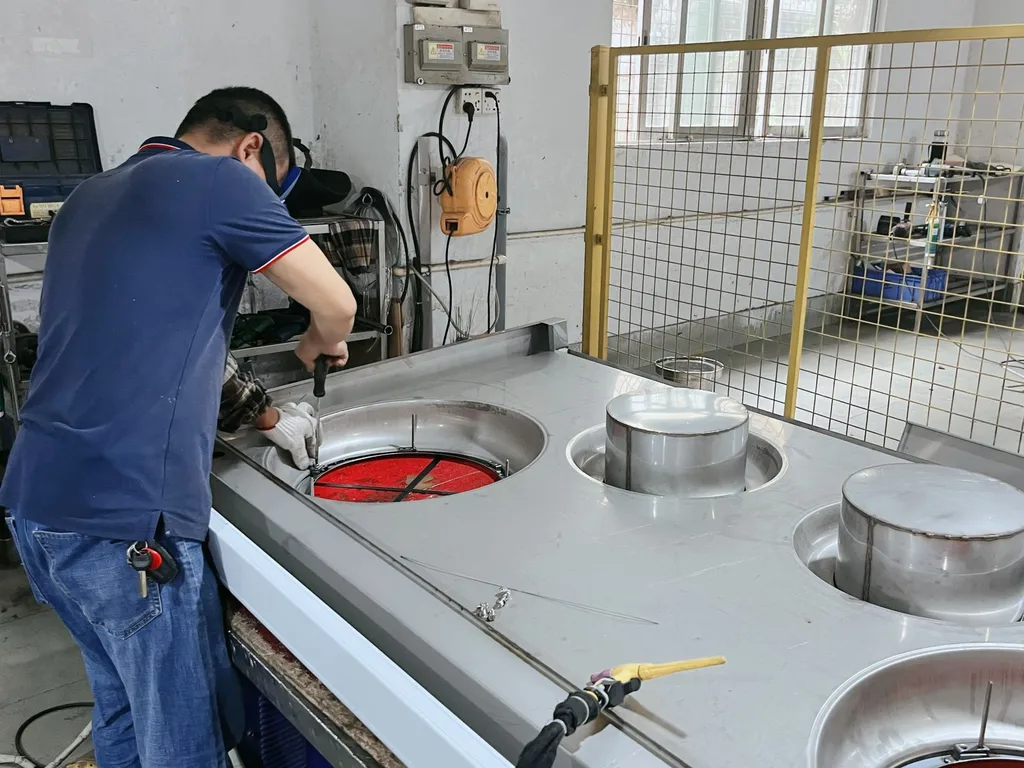
What does “taking a small order seriously” actually look like on the floor? In the photo below, even a 5-unit sample spare patrs batch goes through individual power verification—each unit tested against the spec sheet one by one before packing.
Here’s what separates capable factories from weak ones at the trial stage:
| Stage | Capable Factory | Weak Factory |
|---|---|---|
| Technical Solution | Full proposal in 1–2 days: circuit topology, BOM, and rationale. | Days of delays. Vague or incomplete proposals. |
| Sample Lead Time | Clear timeline (usually 7–12 days). Delivered as promised. | Promises “fast” but keeps pushing back. Excuses keep changing. |
| Sample Quality | Matches the confirmed spec. Measured power equals rated power. | Deviates from plan. Rough finish. Details off. |
| Custom Requests | Engineering team responds directly. Quick feasibility assessment with timeline. | Goes through multiple people. Comes back vague or “can’t do it.” |
| Problem Handling | Flags issues proactively. Offers solutions immediately. | Goes silent. Blames suppliers. Avoids responsibility. |
One Middle Eastern distributor tested this firsthand. He ordered the same 5kW tabletop unit from three factories at once. Only one delivered on time with samples that matched specs exactly. The other two were 11 and 17 days late. One sent a unit that measured just 4.3kW—well below the 5kW it claimed. His conclusion: “A trial order is the most honest test. No one can hide behind slides at that point.”
Don’t rush into a large order. Run a small trial first. Test the full chain: order confirmation, production scheduling, QC, packaging, shipping. Once you’ve seen how they execute under real conditions, you’ll know exactly whether this factory deserves your volume.
How Do You Quickly Screen Factories Online?
Most overseas buyers start their search online. That’s fine—but the search results will dump dozens of similar-looking suppliers on you. The key is spending your contact time wisely. You want to identify the 2–3 worth a deeper conversation and skip the rest. Two dimensions help you do this fast.
Website Content Depth Tells You More Than You’d Think
Before you hit that inquiry button, spend a few minutes actually reading the factory’s site. It’s the fastest free due diligence you can do. Buyers who’ve been through the process all say the same thing: the clues were right there on the website—they just didn’t look closely enough the first time.
Here’s what to check:
Are product specs listed in detail? A serious factory gives you specific numbers for each model—rated power, voltage range, coil diameter, panel material, cooling method. Not vague marketing language like “high power” or “energy efficient.” Detailed specs mean the factory knows its own products inside out.
Is there real technical explanation of product design? Things like coil layout logic, chassis airflow design, and control board functionality—the more specific, the better. This signals a factory that understands the full design-to-production chain, not just one that resells.
Are images from real production environments? Look for actual workshop photos, production line shots, assembly close-ups, even QC process images. These are hard to fake and won’t appear on a trading company’s site. If all you see is a few polished renders and a contact form, move on.
Is there application-scenario content? Equipment recommendations for fast-food kitchens, hotel central kitchens, cafeteria setups—this kind of content requires real project experience to produce. It can’t be copied from a competitor. If it’s there, the factory has depth.
First Reply Quality Beats First Reply Speed
Lots of buyers equate fast responses with good service. In this category, that’s misleading. What the first reply contains matters far more than how quickly it arrives.
Factories that become long-term partners almost always do the same thing after receiving an inquiry: they ask questions first. They want to understand your scenario before recommending anything. Factories that fire back a generic price list without asking a single question? Those are the ones that cause headaches later—on quality, delivery, or technical support.
Use this table to evaluate first replies:
| Dimension | Professional Response | Red Flag Response |
|---|---|---|
| Needs Confirmation | Asks about your use case, daily hours, local voltage. | Sends a price list. Asks nothing. |
| Recommendation | Suggests specific models for your scenario. Explains why. | Lists all models. Tells you to pick. |
| Technical Guidance | Flags things you might miss—ventilation needs, cookware requirements, clearance specs. | Says nothing technical unless you ask first. |
| Communication Style | Offers video calls or messaging to dig deeper into your needs. | Emails only. Standardized docs. No real engagement. |
| Pricing Clarity | Explains what’s included at the quoted price—specs, services, terms. | Gives a number with no context. You can’t tell what you’re comparing. |
When you’re comparing multiple suppliers, rank them by reply substance—not reply speed. The ones who invest time understanding your situation before recommending anything are the ones worth building a relationship with.
Finding a reliable commercial induction cooktop factory in China comes down to using the right filters early. Can they go deep on technical conversations? Is their production line focused on this one category? Does their trial order execution hold up under scrutiny? These three checks are enough. Get them right, and you avoid the quality disasters and delivery delays that plague buyers who skip due diligence. Choose the right factory first, and everything else gets easier.
If you’ve read this far, you already know what to look for—R&D depth, production focus, and execution that holds up under real orders. The factory below checks all three. It’s been doing only commercial induction cooktops since 2007, out of a 20,000 m² facility in Dongguan.

ATRX has focused exclusively on commercial induction cooktop R&D and manufacturing since 2007. Products ship to 50+ countries. OEM and ODM both supported. If you want direct access to engineers and full visibility from sample to bulk delivery, visit the ATRX official website to see the product lineup and how the process works.
Common Questions People Ask
Q1: A factory quoted way below market average. Does that mean better value?
Not necessarily. The cost structure of commercial induction cooktops is fairly transparent. If a price is unusually low, ask where the savings come from. Did they use a cheaper IGBT brand? Thinner coil wire? Skip aging tests? A low price by itself isn’t a problem. Not being able to explain it clearly—that’s the problem.
Ask for the full BOM and testing standards that correspond to their quote. Then compare apples to apples.
Q2: I can’t travel to China for a factory visit. How else can I verify they’re real?
Remote verification works—if you make them show you things live. Ask for a real-time video of the workshop with a specific marker you choose. For example, have someone write today’s date on a whiteboard, then film the production line running behind them. On a video call, randomly ask to see a specific workstation or batch of in-progress units.
Real factories have no reason to refuse these requests. Shell companies and traders will find excuses to avoid them. That response alone tells you a lot.
About the author
Kristen | 18-Year Experience | China
Commercial Induction Cookers Industry
Commercial Induction Cookers Industry
Related Posts
How ATRX Handles OEM Commercial Induction Cooker Custom Orders
06/21/2026
How ATRX Built Its Commercial Induction Cooker Production Line
06/19/2026
How to Find a Reliable Commercial Induction Cooker Factory in China
06/17/2026
Commercial Induction Cooker Quality Control — How ATRX Does It
06/16/2026
How ATRX Mass-Produces 3–40kW Commercial Induction Cookers
06/15/2026
Can Aluminum Containers Be Used on Induction Cooktops?
06/14/2026
How Commercial Induction Cookers Are Made — ATRX Full Manufacturing Process
06/13/2026
Is Induction Cooktop Radiation Dangerous to Your Health?
06/12/2026
How to Choose a Commercial Induction Cooker Manufacturer — Why ATRX Is Trustworthy
06/11/2026
Why Open Kitchens Keep Choosing Induction Over Gas and Ceramic Cooktops
06/09/2026