

COMMERCIAL
INDUCTION COOKTOP
Engineered for high-volume performance. Our commercial induction cooktops — also known as commercial induction burners and commercial induction hot plates — deliver unshakeable stability and precision power to the world’s most demanding professional kitchens.
Choose Your Configuration — From
Single Burner to 6-Burner Powerhouse
From compact single-zone induction burners to heavy-duty 4-burner commercial induction cooktop stations, find the perfect match for your production line volume.
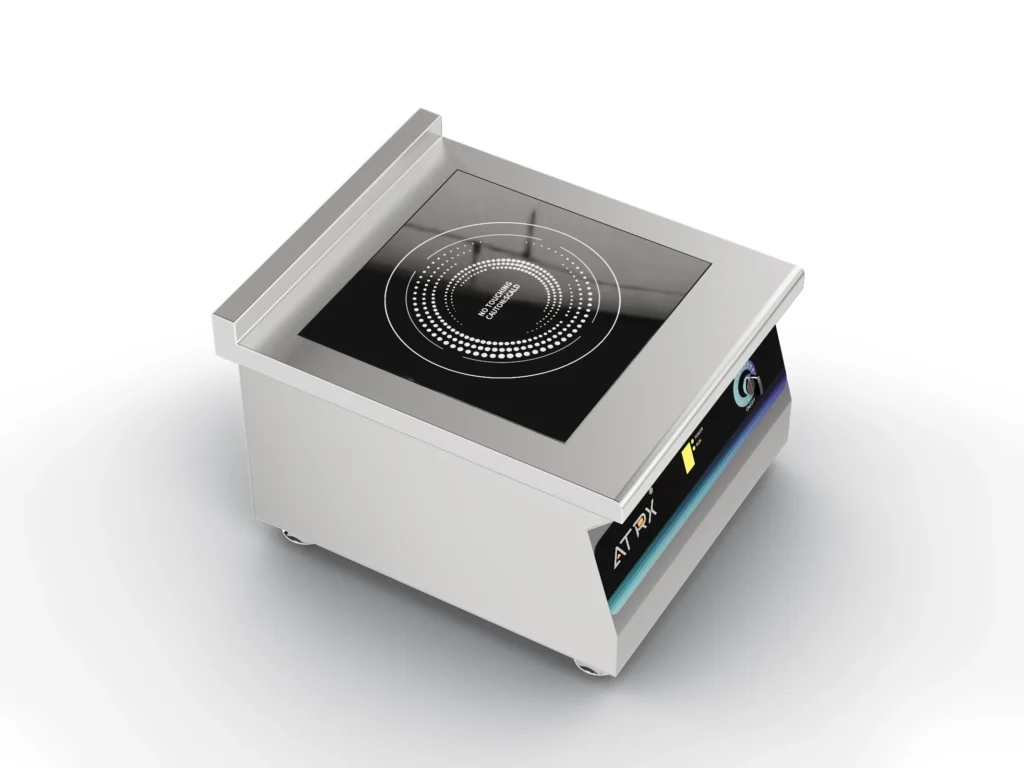
SINGLE ZONE FLAT
Best For: Omelet stations, tableside cooking, or light sauce work.
3500W/5000W Output
1-8 Level Power Seting
220V/Single Phase Volt
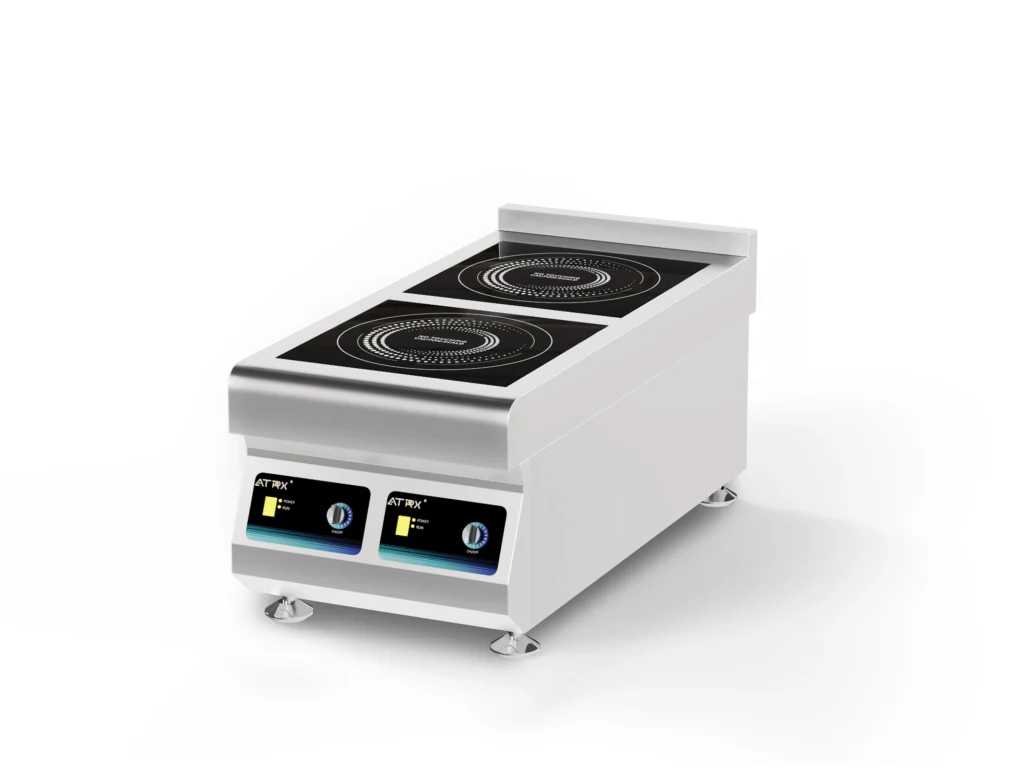
DOUBLE BURNER FLAT
Best For: Small restaurants, food trucks, or dual-station cooking.
3500W/5000W Output
1-8 Level Power Seting
220V/Single Phase Volt
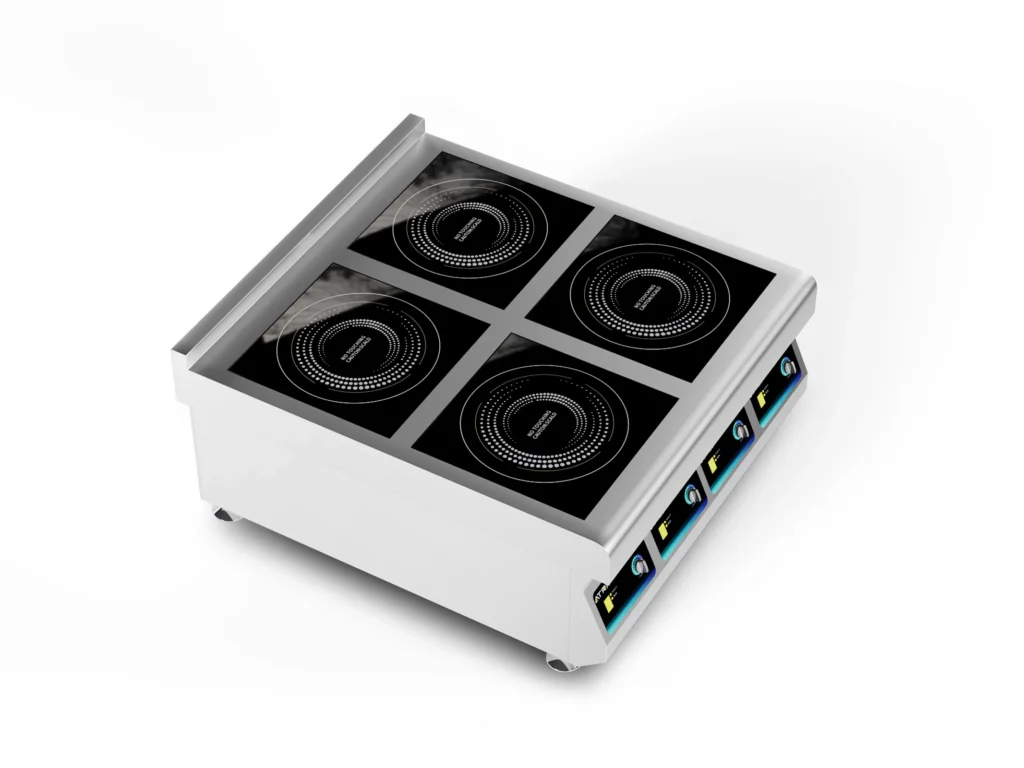
4-BURNER STATION
Best For: High-volume kitchens, banquet prep, or central kitchen lines.
3500W/5000W Output
1-8 Level Power Seting
220V/Single Phase Volt
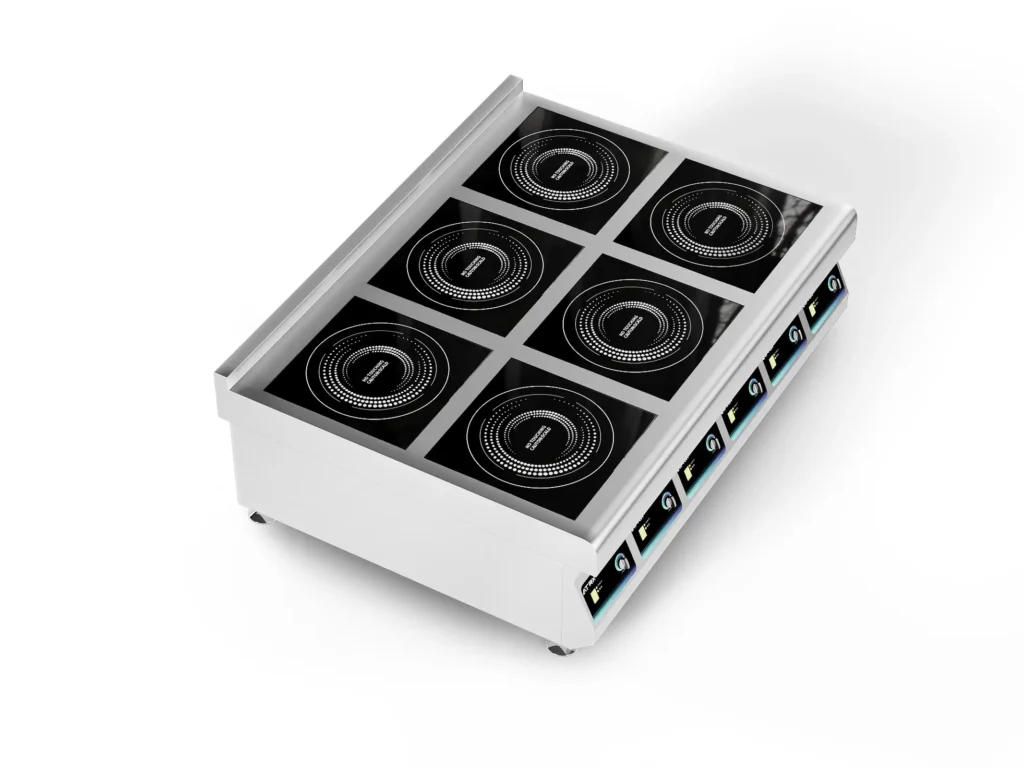
6-BURNER POWERHOUSE
Best For: Large-scale operations, hotel kitchens, or catering production.
3500W/5000W Output
1-8 Level Power Seting
220V/Single Phase Volt
HOW COMMERCIAL INDUCTIONCOOKTOPS WORK
Unlike gas or electric radiant, induction uses electromagnetic energyto heat the cookware directly. A copper coil beneath the glass surfacecreates a magnetic field that reacts with iron-based cookware,generating heat within the pan itself.
This “direct-to-vessel” heat transfer eliminates the energy wasteassociated with open flames or heated elements, keeping the kitchencooler and significantly reducing energy costs.
SPEED
Boils 1 Gallon of water inunder 4 minutes.
PRECISION
Maintain temperatureswithin +/-1 degree.
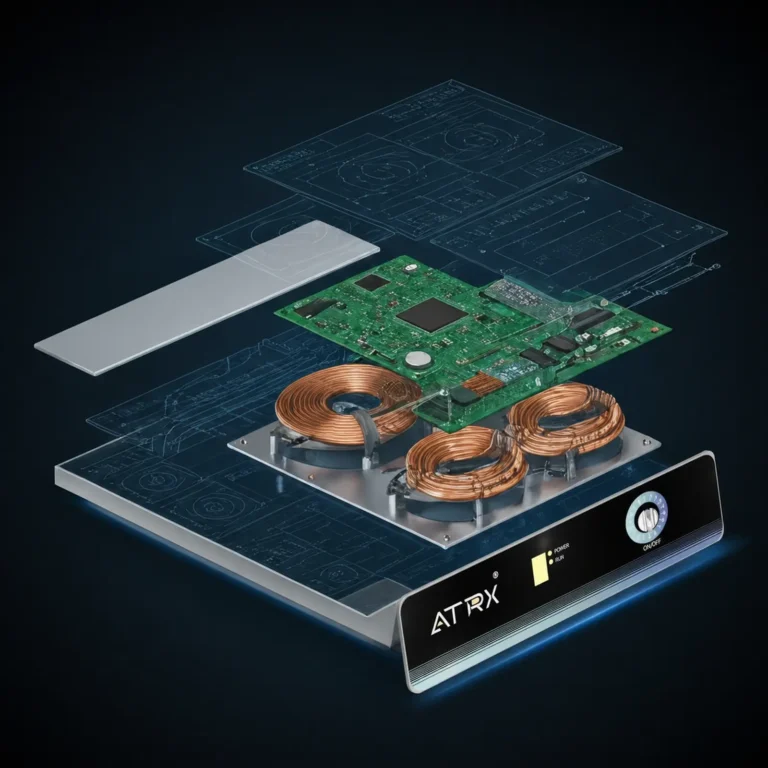
Commercial Induction Cooktop vs. Gas
A commercial induction cooktop — whether labeled as a commercial induction burner, an induction hot plate, or a countertop induction unit — uses electromagnetic technology to heat cookware directly. Compared to traditional gas ranges, commercial induction cooktops offer faster heating, higher energy efficiency, and a safer cooking surface with no open flame. The comparison below highlights the key differences for professional kitchen operators.
| FEATURE | PRECISION INDUCTION | TRADITIONAL GAS RANGE |
|---|---|---|
| Efficiency | ~90% | ~35-40% |
| Boil Time (2L) | 4-5 mins | 9-10 mins |
| Ambient Heat | Minimal | Extremely High |
| Cleaning | Instant Wipe-down | Difficult (Grates/Burners) |
| Fire Safety | No Open Flame | High Fire/Gas Risk |
| Control | Digital (Precise) | Analog (Estimated) |
| Air Quality | Clean | Combustion Byproducts |
| Installation | Electrical Plug | Gas Lines & Venting |
| Pot Safety | Auto-Pan Detect | Always On |
| HVAC Costs | Low Load | High Load |
| Maintenance | Low (Filter Cleaning) | Moderate to High |
Key Benefits for Commercial Kitchens
Energy Efficiency
Commercial induction cooktops transfer roughly 90% of the energy consumed directly to the pan, compared to only 35-40% for gas. This means significant savings on monthly utility bills.
Safety
Without open flames or glowing elements, the risk of kitchen fires and burns is dramatically reduced. Units also feature auto-shutoff if no pan is detected.
Speed
By heating the pan directly, induction boils water and sears proteins much faster than gas or electric. In a high-volume kitchen, these saved seconds turn into minutes of increased throughput.
Durability
Constructed with high-gauge stainless steel and heavy-duty ceramic glass, our units are engineered to survive the rigors of 24/7 commercial operation.
Precise Control
Digital controls allow chefs to dial in exact temperatures. Whether you're holding a delicate chocolate sauce at a simmer or searing a steak at peak heat, the consistency is unmatched.
Installation Flexibility
Countertop induction units don't require expensive gas line extensions. As long as you have the appropriate electrical outlet, you can expand your cooking capacity anywhere.
Compatible Cookware Guide
Ensure your tools are as precise as your equipment.
Works With
- Cast Iron & Enameled Cast Iron
- Magnetic Stainless Steel (All-Clad, Heavy Base)
- Carbon Steel Woks & Pans
- Induction-Ready Aluminum (Steel Clad Bottom)
Does Not Work
- Pure Copper & Brass
- Aluminum without Steel Base
- Ceramic, Glass, or Stoneware
- Non-magnetic Stainless Steel
THE QUICK MAGNET TEST
Not sure if your pans will work? Grab a standard refrigerator ncompatible. If it slides off or has no attraction, it won't heat up
agnet. If it sticks firmly to the bottom of the pan, it's induction
Built for Every High-Volume Operation
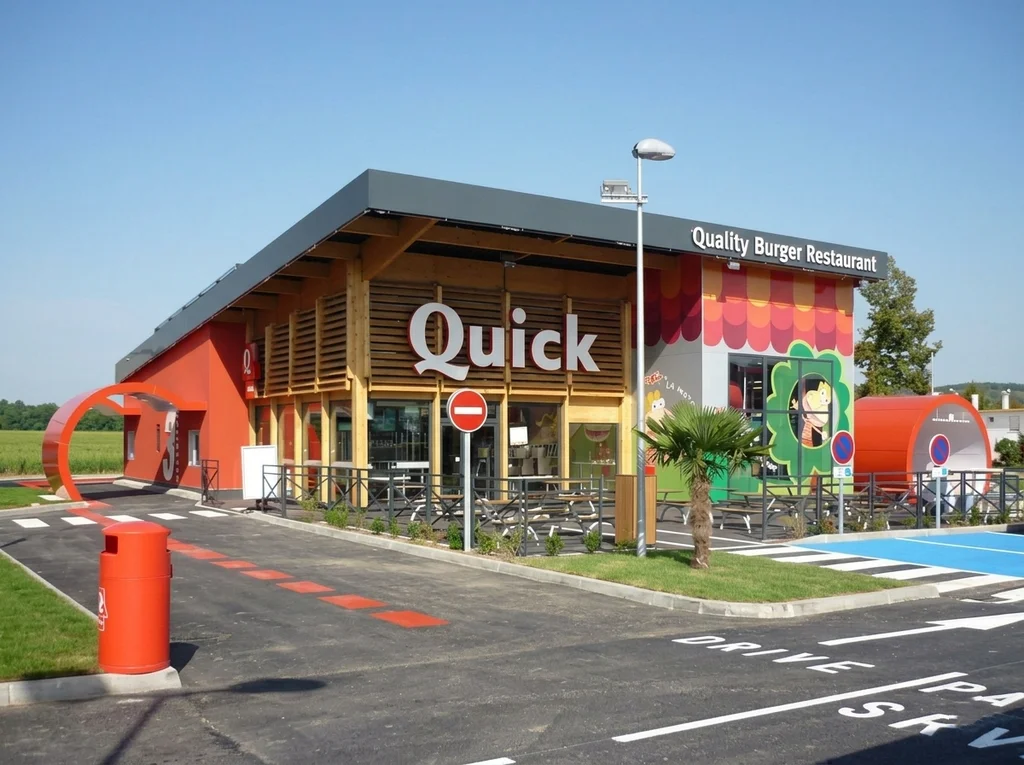
RestauranT
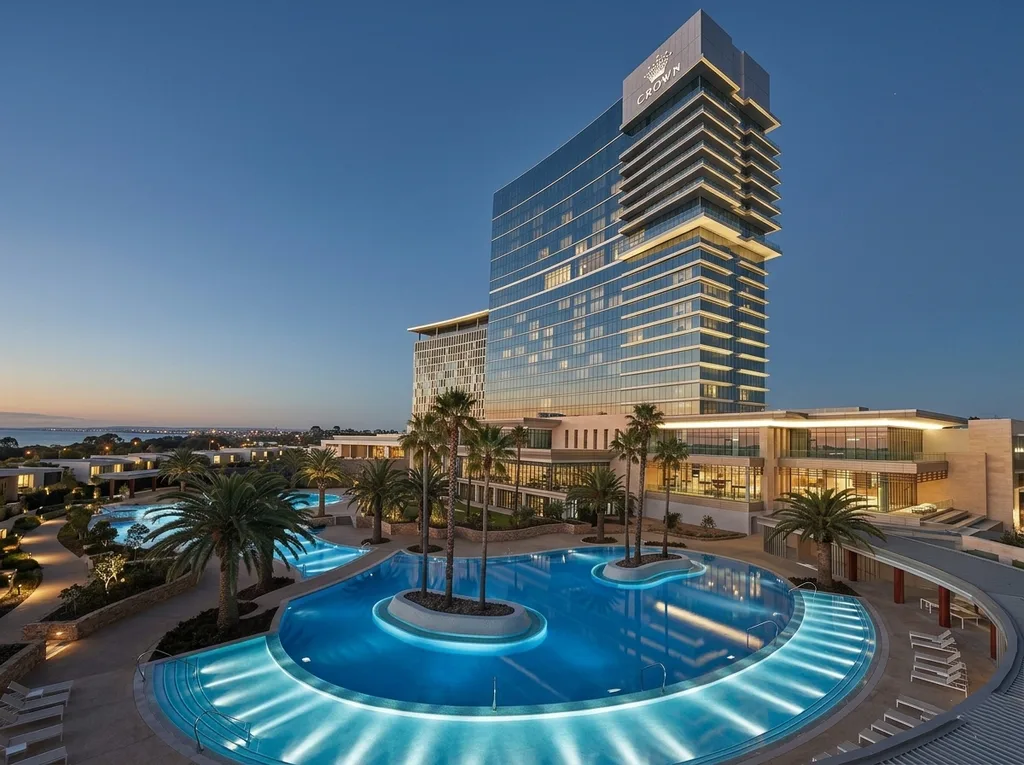
Hotel Chian

SchoolS
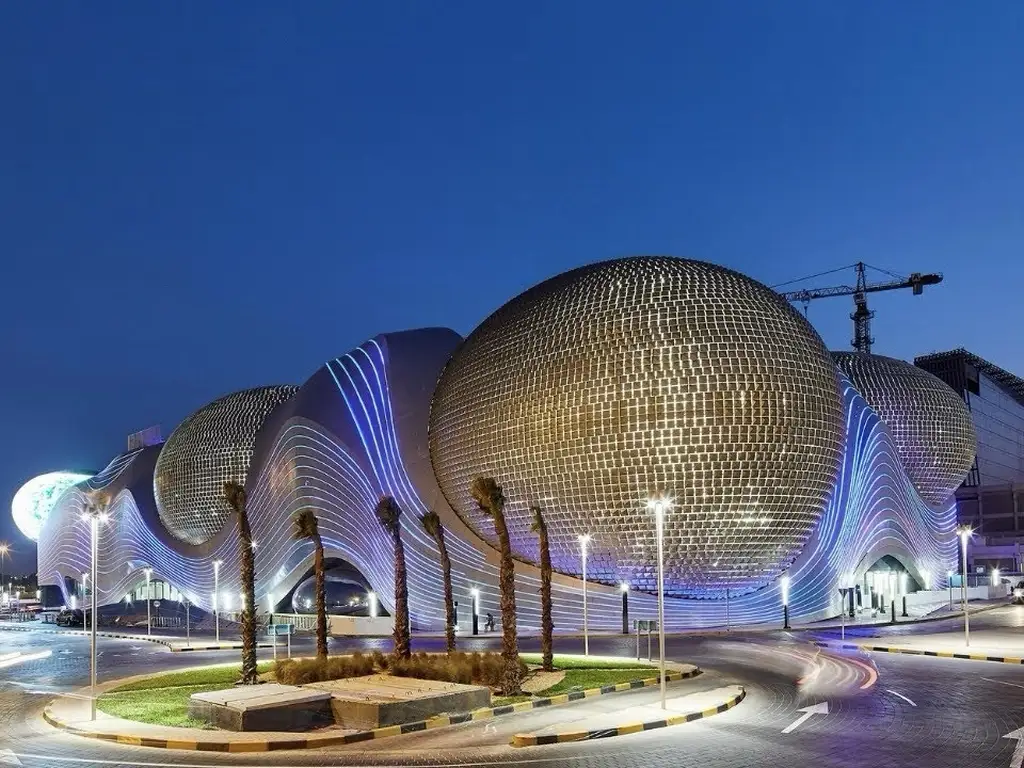
Shoping mall

Hospital
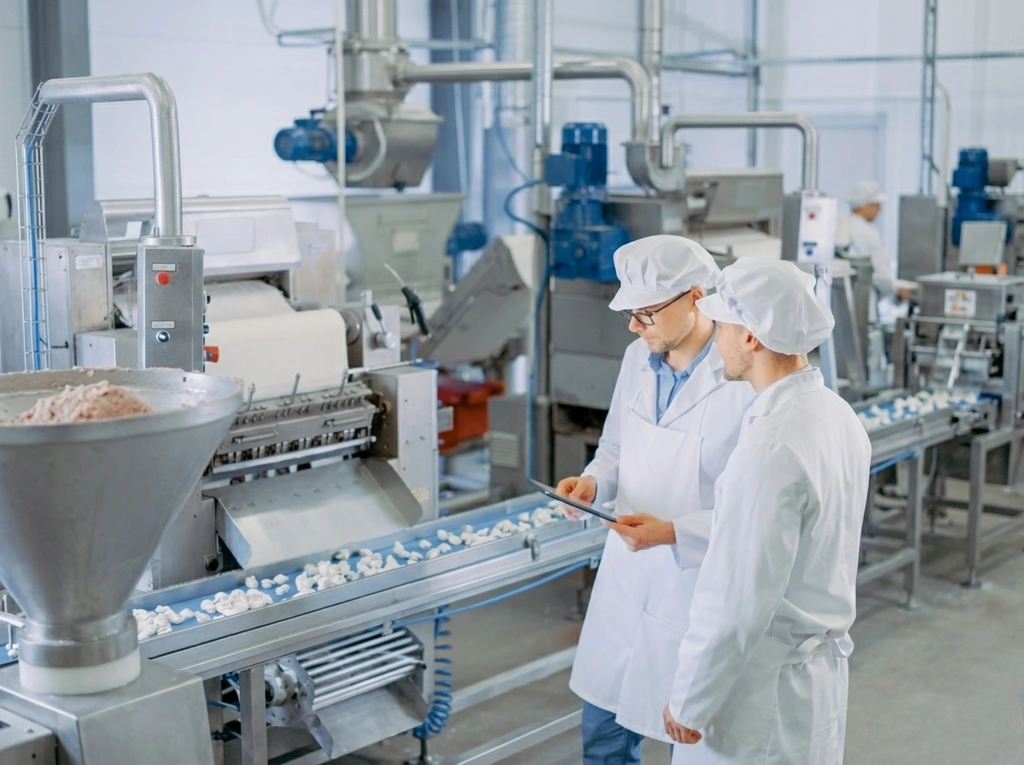
Food process
How to Choose the Right Commercial Induction Cooktop
1
Number of Burners
Match burner count to your kitchen volume. More stations, faster output.
1
Power Output
2.5kW for gentle cooking, 5.0kW for high-heat sauté. Pick wattage by your menu.
1
Voltage
Check your kitchen circuit first. 220V for light duty, 380V for high-power models.
1
Shipping
Decide your shipping term that works for you — EXW, FOB, CIF, or Door to Door
FAQ MOST PEOPLE INTEREST
What is the difference between a commercial induction cooktop, a commercial induction burner, and a commercial induction hot plate?
These three terms describe largely the same type of equipment but are used in slightly different contexts. A commercial induction burner usually refers to a single-zone countertop unit — one heating zone in a standalone housing. A commercial induction hot plate describes the same product, with "hot plate" being the more common term on retail platforms and in casual industry usage. A commercial induction cooktop can refer to a single-zone unit like a burner or hot plate, but also extends to multi-zone configurations — 2-burner, 4-burner, or 6-burner setups where multiple induction zones are integrated into a single cooking surface.
What power output should I choose for a commercial induction cooktop?
For auxiliary or light-duty cooking tasks, a single-zone commercial induction cooktop in the 1.8kW to 3.5kW range is usually sufficient. For primary cooking stations in mid-sized restaurants, 5kW to 8kW per zone offers the heat output needed during peak service. Multi-burner configurations with 4 to 6 zones typically provide 6kW to 10kW per zone, with total system power ranging from 20kW to 40kW, suitable for high-volume hotel and buffet kitchens.
Can I use any cookware on a commercial induction cooktop?
No. Commercial induction cooktops require magnetic-compatible cookware — typically cast iron, carbon steel, or stainless steel with a magnetic base. Non-magnetic materials like aluminum, copper, and glass will not work on an induction surface. A simple magnet test on the bottom of your cookware can confirm compatibility.
Are the controls reliable for kitchen use?
Consumer induction cooktops use capacitive touchscreens that struggle with wet or greasy hands. Commercial units typically use sealed membrane panels or physical knobs, which handle kitchen conditions better. The control board and cooling fan are the components most likely to need attention over time — the coils themselves are solid-state and rarely fail. As with any electronics in a commercial kitchen, moisture management around the unit matters for longevity.
Do I need special cookware?
Yes, but most commercial kitchens already have compatible pans. The rule: the base must be magnetic. Cast iron, carbon steel, and magnetic stainless steel all work. Pure aluminum and copper do not, unless they have a bonded magnetic base. Test with a fridge magnet — if it sticks to the bottom of the pan, it will work on induction. Round-bottom woks are problematic because contact with the flat surface is minimal; flat-base versions are needed for wok cooking on induction.
How do I clean and maintain them?
Because the glass surface does not heat up on its own, spills do not bake on the way they do on gas ranges. A damp cloth after service handles most cleanup. For stuck-on residue: wait until cool, use a ceramic cooktop cleaner and a plastic scraper. Avoid steel wool, abrasive pads, and bleach-based products — they scratch or cloud the glass. The one maintenance task that matters most: clean the cooling vents (usually on the sides or rear) weekly with a soft brush. Clogged vents cause overheating shutdowns. Internally, there are no igniters, valves, or burners to service — maintenance requirements are lower than gas equipment overall.