

PRODUCT HIGHLIGHTS
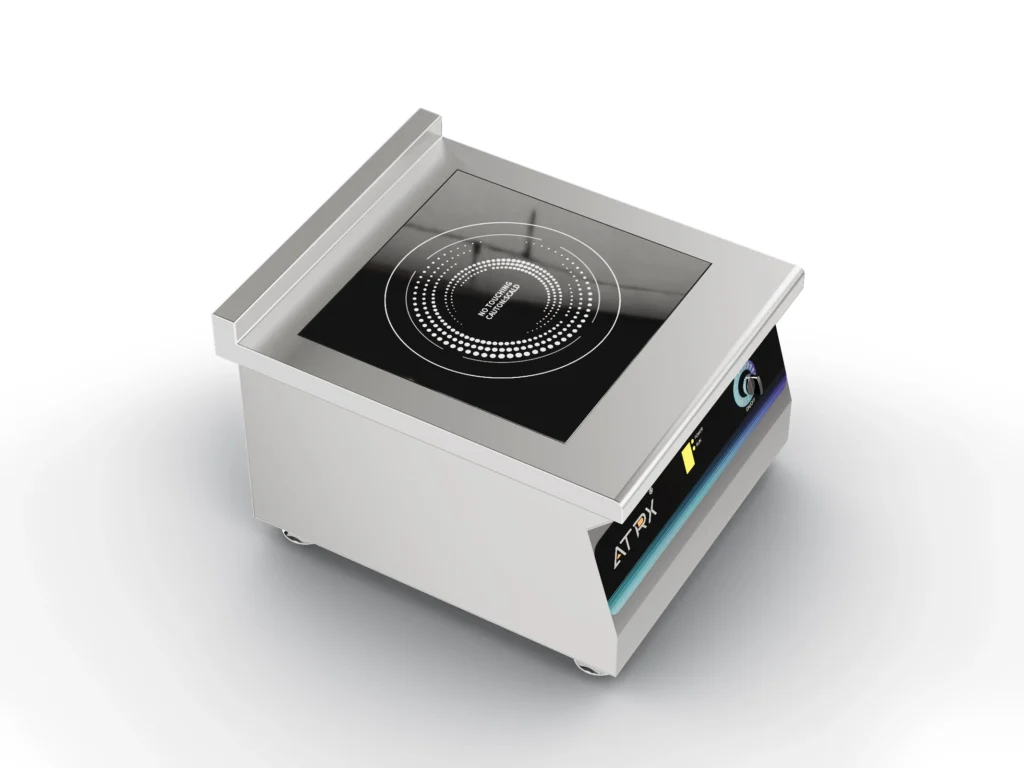
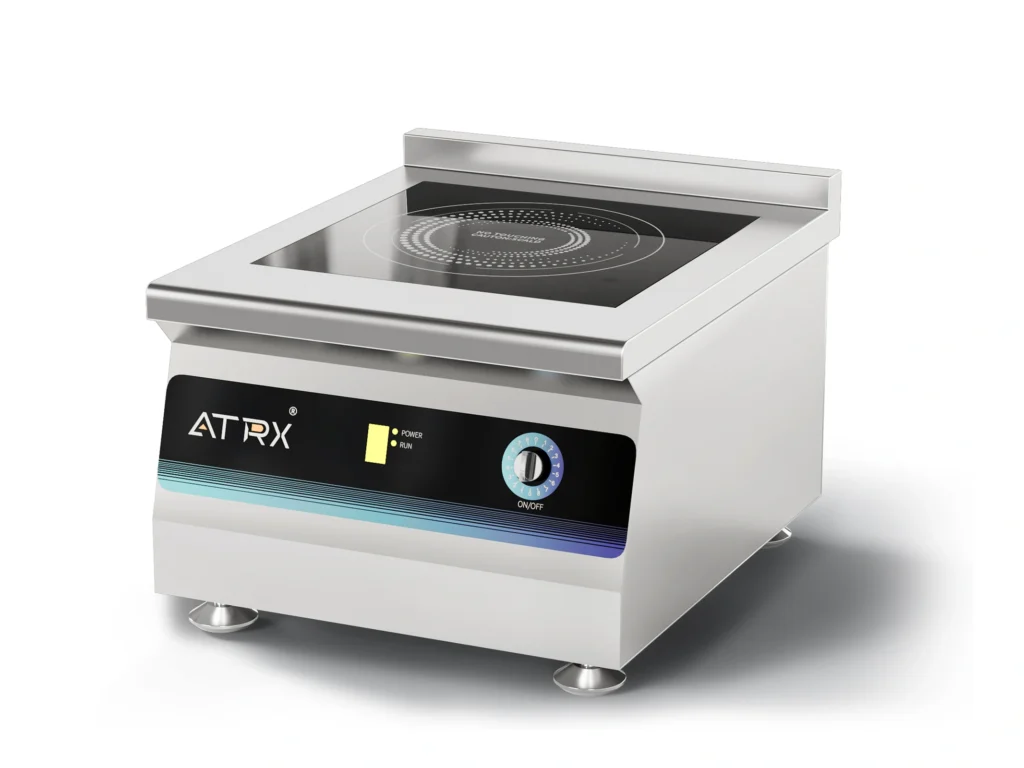
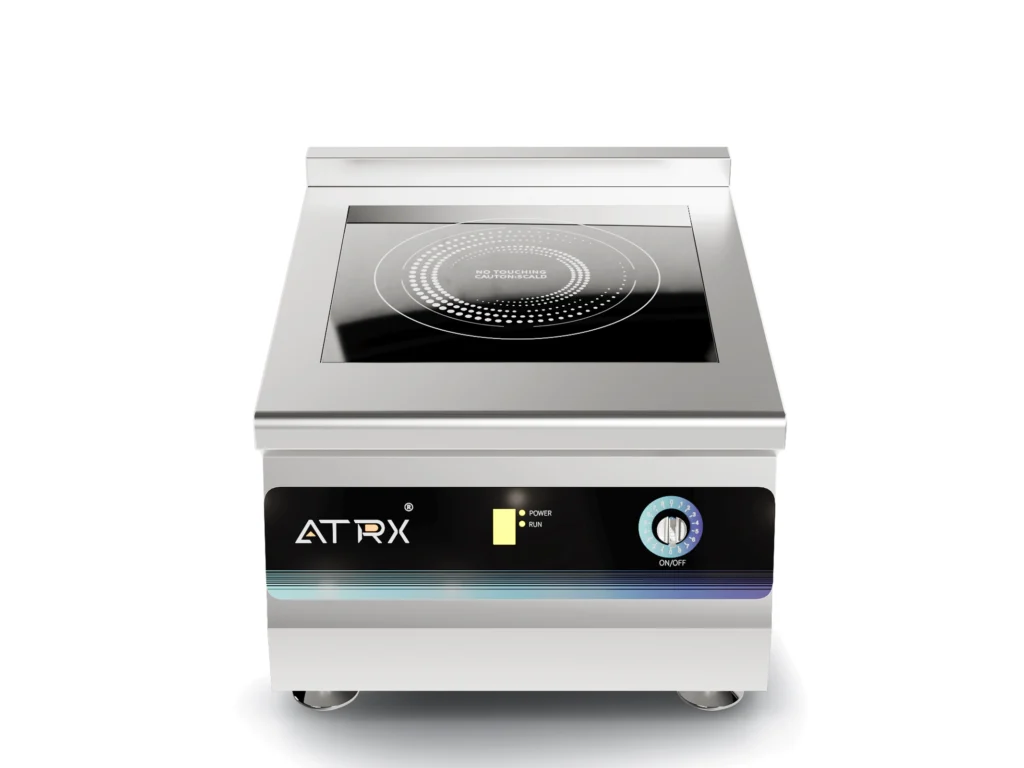
3.5kW/5kW 220V Flat Induction Cooktop
Countertop Induction Flat Cooker | 3.5KW
Value of the 220V Front-to-Back 2-Burner Induction Cooktop
Fits Compact Countertop Layouts
At about 420 × 470 mm, the AT-CTP-003 fits a narrow worktop, prep table, or food cart, adding a separate cooking position without crowding prep and packing.
Adds an Independent Single-Burner Cooking Position
The 3.5kW flat single burner adds a separate worktop position for searing, sides, or sauce, keeping small made-to-order jobs off the busy main range.
Flat Surface Simplifies End-of-Shift Cleaning
With no raised grate or gas line, the flat cooktop provides one continuous surface. After cleaning, it returns to prep or storage, useful on tight counters.
Inquiry UsView Specifications
01 / SPECIFICATIONS
Product Specification
Product Name
Product Model
Power(Kw)
Voltage(V)
Product Size
Product Material
Hs Code
02 / GETTING STARTED
How To Operate This Machine
Step 1
Place your commercial induction cooker in position and connect the power cable based on the required voltage. Make sure all wiring is done correctly before turning on the unit.
Step 2
Once powered on, place your induction cookware on the commercial induction cooker, prepare your ingredients, and get ready to start cooking.
Step 3
Turn the knob from 0 to your desired setting to begin cooking. During the cooking process, simply adjust the knob between levels 1 to 8 to control the heat output to your needs.
Step 4
Once cooking complete,then turn the knob back to 0 to power off the unit. Wipe down and clean the surface of your commercial induction cooker to keep it in top condition.
03 / QUALITY ASSURANCE
Assembly and Heat-Dissipation Testing of the 3.5kW Flat Single-Burner Induction Cooktop
01
Cooktop Fit and Fixing Inspection
At incoming inspection, we check the cooktop's dimensions, flatness, and edge condition for chipping, cracks, or surface defects. During installation, our team confirms the housing opening and support points before fixing the cooktop in place; if the fit is uneven, we check the dimensions and support interface instead of forcing it flat with over-tightened screws. A warped panel or weak support is caught before assembly, so it does not become a cooktop that rocks or loses pan contact. On a café prep line or food-truck counter, the surface stays level and the pan sits flat for steady searing and egg frying.
02
304 Stainless Steel Housing Dimension Check
In our sheet-metal workshop, we cut, punch, and bend the 304 stainless steel housing to the part drawings, then check the first article for profile, hole positions, and bend dimensions before mass production. After welding, we recheck distortion and confirm that the top frame, cover plate, and internal brackets fit correctly, with sharp edges deburred. Left unchecked, dimensional drift could become gaps, misalignment, or a forced fit. In a compact cooktop for café and food-truck use, the coil, panel, and controls stay aligned within the housing, which also keeps the wipe-down surfaces free of exposed ledges.
03
Coil Positioning and Fixing Inspection
At the coil-winding station, we preset turns, spacing, and winding tension by model and power rating, then check dimensions and electrical parameters after fixing and curing. When the coil goes into this 3.5kW flat model, our team verifies that its center aligns with the heating zone and that supports, insulation, and spacers are all present; after fixing, we recheck for looseness. The target is an off-center or loose coil that would create a hot spot or slow heating on one side. For cafés, food trucks, and small counters, the check supports even heat under a flat-bottom pan during searing, egg frying, and short-batch work.
04
Control Board Solder Joint and Connection Inspection
On our line, every control board goes through component placement, soldering, automated optical inspection, and manual review. We check model, position, and orientation during installation, then look for missing parts, misalignment, insufficient solder, and bridges between adjacent joints; connectors are checked for full insertion and correct orientation. Abnormal boards are reworked or quarantined and released to final assembly only after electrical and powered functional checks. Weak connections are caught before they can affect startup, power adjustment, or heating output. In a compact cooktop handling back-to-back café or food-truck orders, the controls respond predictably instead of turning a busy service into an intermittent fault.
05
Air Duct and Cooling System Inspection
At the cooling-station check, our team confirms the fan model, voltage, connector, and mounting direction, then checks clearance around the heat sink so the harness cannot block airflow or touch the blades. During assembly, we inspect contact surfaces for cleanliness and install thermal and insulating materials as specified; after assembly, we check fan operation, airflow, and abnormal noise. The unit then runs through a full-unit heating test while we recheck cooling performance. On a café or food-truck line, cooling is checked as a system, so a reversed fan or blocked duct is caught before heat builds around the controls. That lowers the risk of a heat-driven shutdown during back-to-back orders.
06
Power-Level Test Run and Factory Recheck
Before shipment, our final-test team connects each unit to a 220V single-phase supply and checks the knob, indicator light, and heating response at every power level, along with fan operation. Before the cover goes on, we inspect terminal connections, harness routing, and any pinched wires; after assembly, the unit undergoes insulation and dielectric-strength testing. We then run a simulated transport shake test and recheck for internal looseness and normal function. A dead level, loose terminal, or transport-related fault is caught before packing. A café, food truck, or banquet station then receives a cooktop whose levels and fan have been checked after the shake test.
All results above are from our own factory. See related pages below.
Production Line Center Manufacturing Machines PCB Assembly Center04 / COOKING APPLICATIONS
Compact Kitchen Applications of the 3.5kW Flat Single-Burner Induction Cooktop
Own factory
CE certified
OEM available
Breakfast and Light-Food Shops
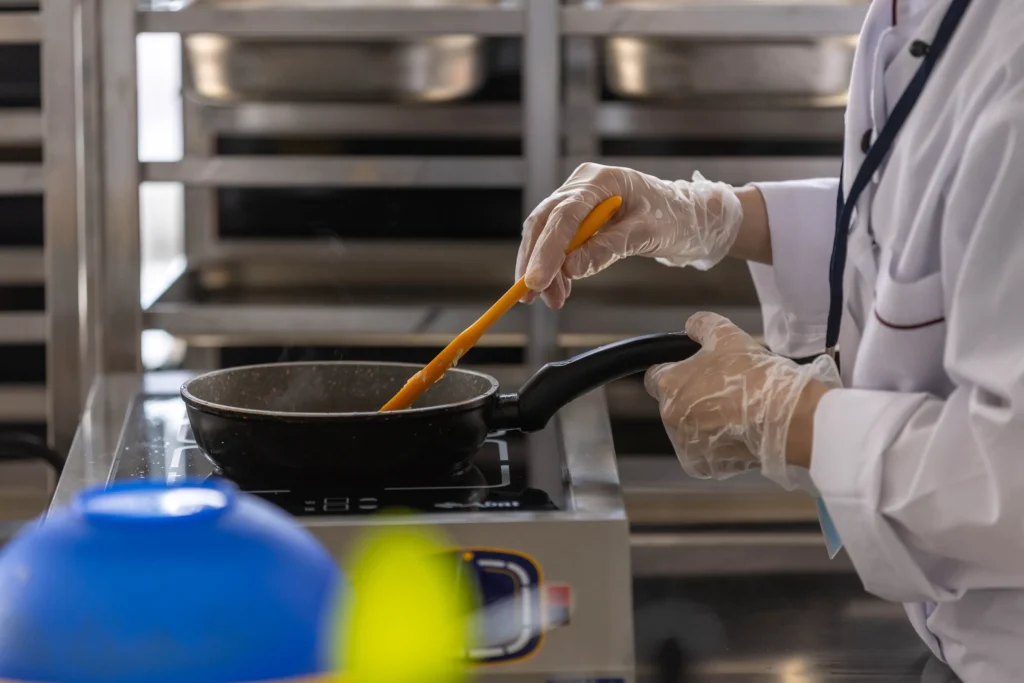
In cafés, brunch spots, and light-food shops, this 3.5kW flat single-burner induction cooktop handles hot-sandwich fillings, fried eggs and bacon, and seared chicken breast, mushrooms, and vegetables. With an induction-compatible flat frying pan, it turns a narrow counter into a made-to-order cooking position for small hot dishes.
Food Trucks and Small Counters
On market food trucks, pop-up counters, and takeout windows, the compact single-burner cooktop is set up around one made-to-order dish at a time: searing burger patties, stir-frying noodles, or making a small pot of soup. The operator changes between an induction-compatible frying pan and a small stockpot according to the menu.
Banquet and Off-Site Catering Stations
For wedding banquets, hotel buffets, and corporate catering, the same 220V flat cooktop works as a live finishing station for steak, salmon, and small hot dishes. Where suitable 220V power and exhaust ventilation are available, staff can sear and plate on site with an induction-compatible frying pan.
FAQs
Frequently Asked Questions
We've gathered the most common questions buyers ask before placing their first order — browse through and find the answers that matter most to you.
Is 3.5kW Enough for Commercial Use?
Yes—3.5kW is enough for single-pan commercial work such as fried eggs, seared meat, fried noodles, and small pots of soup in breakfast shops, light-food outlets, food trucks, and live banquet stations. Heat-up time depends on pan mass and thickness. A larger, thicker pan absorbs more heat before the food starts cooking. The 1–8 knob lets low levels hold and simmer while high levels handle boiling, searing, and short stir-fries. If large stockpots or several pans are routine, move up to a higher-power or multi-burner model.
Which Pans Work on a Flat Induction Cooktop?
Use a flat, magnetic pan whose base covers the heating ring at the center of the cooktop. Cast iron, magnetic-base stainless steel, and multi-layer pans with a magnetic base couple to the coil; aluminum, copper, and glass do not. A base that is too small concentrates heat in the center, while a warped base sits unevenly and can cause intermittent heating or an error code. Before changing pans, do the magnet test and set the pan flat on the center ring; that is the deciding check.
Can the 220V Flat Single-Burner Model Use a Standard Outlet?
No—this is not a plug-and-play household appliance. The 220V rating does not make this 3.5kW unit suitable for a standard outlet; at full load it draws about 15.9A, so the circuit needs 2.5mm² copper wire and a 20A residual-current breaker, with the outlet and wiring rated for the same load. Shared circuits, thin extension cords, and old outlets that already run warm are not acceptable. Have an electrician confirm the circuit, grounding, and residual-current protection before connection, and upgrade any part that is undersized.
Can a Flat Induction Cooktop Replace a Concave Wok Cooker?
No, not for round-bottom wok cooking. A flat cooktop can replace a concave cooker only when the menu uses flat-bottom pans, stockpots, or shallow flat-bottom woks for frying, boiling, stewing, and holding. A round-bottom wok contacts the flat zone at one point and cannot be tossed vigorously with stable heat. If round-bottom stir-frying is central, choose a concave cooker; on this flat model, keep the base flat and use pushing, turning, and folding instead.
How Do I Manage Overheating During Continuous Service?
Protect airflow first, then match the pan and power level to the dish. Heat leaves the housing through the air inlet and outlet, and every unit is checked for heating and cooling before shipment, but a fan cannot compensate for blocked vents, high ambient temperature, or a pan that does not sit flat. Keep the intake and exhaust clear, leave space from walls and cabinets, and keep cloths and packaging away from the vents. Use high levels for searing and short stir-fries and lower levels for simmering and holding; if protection trips, switch off and let the unit cool before restarting.
——07 / Factory quote & RFQ
Partner with a Trusted Commercial Induction Cooker Manufacturer
Whether you need wholesale commercial induction cookers, an OEM product line or a commercial kitchen project configuration, send a focused commercial brief. An ATRX team member can review the product, power, certification and customization requirements before quotation.
Useful information to include:
Target country · Product category · Application · Voltage / phase · Estimated quantity · Required certifications · OEM / branding needs