

Gas vs Infrared vs Induction: Commercial Wok Range Comparison for Chinese Restaurants
07/31/2026
Estimated reading time: 2 minutes

This guide compares gas forced-air, infrared, and induction wok ranges side by side for Chinese full-service restaurant kitchens. It walks you through a complete evaluation framework — starting with an “effective heat output” formula that cuts through misleading thermal input and BTU numbers, then matching burner type to your cuisine and stir-frying intensity, and finally verifying gas supply, electrical capacity, and exhaust airflow before you place an order.
IN THIS ARTICLE
Effective Heat Output: The One Number That Reveals Real Wok Range Performance
The core of choosing cooking equipment for a Chinese full-service restaurant is comparing “effective heat output”—not the thermal input number on the spec sheet. Effective heat output = Thermal input (kW) × Thermal efficiency (%). That’s the heat that actually reaches the bottom of your wok. On top of this, you need to verify three flash-frying performance indicators during a live stove trial: heat-up speed, sustained high-temperature stability, and heating coverage uniformity. These tell you whether the equipment can meet the plating standards of Chinese full-service dining. Below, we break down the specific evaluation methods and benchmarks across two dimensions: spec calculation and hands-on testing.
Comparing the Effective Heat Output of Three Types of Commercial Stoves
When buying commercial stove equipment, “thermal input” is the first number most people check on the spec sheet—and the one most likely to mislead. Thermal input is measured in kW. It represents the total heat released by fuel per unit of time. But this heat doesn’t all reach the wok bottom. Some gets carried away by surrounding air. Some escapes through the stove body itself. The share that actually reaches the wok and heats your food depends on a second parameter: “thermal efficiency.”
Here’s an effective heat output comparison for three types of commercial stoves, calculated with this formula. The energy efficiency grades for gas wok ranges reference China’s national standard GB 30531-2014, Minimum Allowable Values of Energy Efficiency and Energy Efficiency Grades for Commercial Gas Cooking Appliances, which sorts Chinese stir-fry burners into tiers (Grade 1 ≥ 45%, Grade 2 ≥ 35%, Grade 3 ≥ 25%). The thermal efficiency for commercial induction wok ranges references the measured average across 30 product samples cited in the draft-for-comment version of the corresponding national standard (roughly 88%–92%).
| Equipment Type | Thermal Input (kW) | Thermal Efficiency | Effective Heat Output (kW) |
|---|---|---|---|
| Gas wok range (Grade 3 efficiency — national standard minimum threshold) | 50 | ≈25% | ≈12.5 |
| Energy-efficient gas wok range (Grade 1 efficiency) | 35 | ≈45% | ≈15.75 |
| Commercial induction wok range | 15 | ≈90% | ≈13.5 |
A note for readers using BTU ratings: In North America, commercial wok range output is commonly expressed in BTU/h rather than kW. The conversion is straightforward: 1 kW ≈ 3,412 BTU/h. So the 50 kW gas range in the table above carries a thermal input of roughly 170,600 BTU/h, the 35 kW energy-efficient model about 119,400 BTU/h, and the 15 kW induction range about 51,200 BTU/h. Regardless of which unit you use, the principle stays the same — multiply thermal input by thermal efficiency to get effective heat output, the number that actually determines cooking performance.
The numbers tell a clear story. A gas wok range with 50 kW thermal input—but only meeting the national standard’s minimum threshold—delivers about 12.5 kW of effective heat output. A 35 kW Grade 1 energy-efficient gas range actually reaches 15.75 kW. And a commercial induction wok range rated at just 15 kW? Thanks to 90%+ thermal efficiency, it puts out 13.5 kW of effective heat—already beating the Grade 3 gas range whose thermal input is more than three times higher.
This efficiency gap lines up with the public assessment by the U.S. Department of Energy, which states that induction stoves can be up to three times more efficient than gas stoves.
Once you get the spec sheet for any candidate equipment, run this formula to calculate the effective heat output. Then line up all candidate models side by side. This step takes less than five minutes, but it frees you from the “higher thermal input = stronger fire power” trap—and makes sure your budget goes toward equipment that actually cooks better.
Gas vs Infrared vs Induction Wok Range — Real Performance in High-Heat Stir-Frying
For high-heat stir-frying in a Chinese full-service restaurant, mainstream commercial wok ranges fall into three categories. Forced-air high-flame burners deliver the strongest fire power burst—22 to 35 kW of open flame per burner head—making them the go-to for Sichuan, Hunan, and other heavy-oil, intense-heat cuisines. Infrared high-flame burners offer higher thermal efficiency (65%–75%) with even, stable heat output, well suited for Cantonese small-dish stir-fry and premium Chinese dining. High-power commercial induction wok ranges hit 85%–92% thermal efficiency and need no gas, making them a practical pick for mall-based restaurants and areas with strict environmental regulations—but single-burner power must reach at least 15 kW for flash-frying.
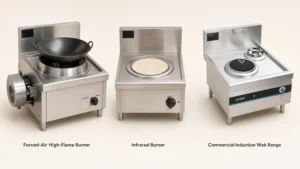
No single burner type is categorically better than the others. The right choice comes down to matching your cuisine intensity and venue conditions. Think of this section as a commercial wok stove buying guide for operators who need to evaluate all three technologies head to head. Below, we walk through their performance differences in real flash-frying scenarios and explain how to make the right call for your situation.
Forced-Air High-Flame Burners, Infrared Burners, and Commercial Induction Wok Ranges — How They Actually Differ in Flash-Frying Performance
Put all three burner types in the same scenario: during the lunch rush, a chef needs to plate 15 flash-fried dishes in 40 minutes. Each dish goes from ignition to plating in under two minutes. At this pace, the differences between the three show up fast.
1. Fire Power Burst — A Three-Way Comparison
Forced-air high-flame burners are currently the strongest option for fire power burst in Chinese flash-frying. A blower fan forces air into the combustion chamber for thorough gas-air mixing. Single-burner thermal input typically runs 22 to 35 kW, with high-end models pushing up to 50 kW. The instant a chef opens the gas full throttle, flame temperature can top 1,000°C. Open flame wraps directly around the wok bottom and sides. Wok temperature drops hard when ingredients hit the pan, but the forced-air flame pushes it back up within seconds.
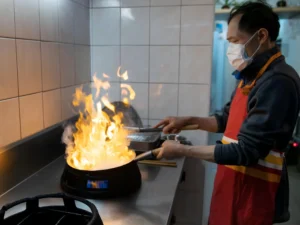
Infrared high-flame burners work differently. Gas combusts inside a sealed furnace chamber and heats a ceramic plate, which then emits infrared radiation to transfer heat. Thermal efficiency can reach 65%–75%—noticeably higher than the 55%–65% range of forced-air burners. But the “instant slam of heat that burns through the wok” feeling is clearly weaker than direct open-flame contact.
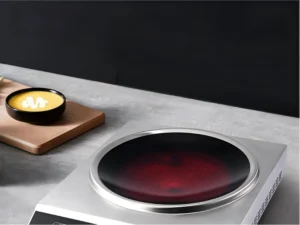
Commercial induction wok ranges have the highest thermal efficiency of the three, typically 85%–92%. Nearly all the energy goes straight to the wok bottom. But electromagnetic induction heating produces no flame wrapping around the wok walls. The moment a chef tosses the wok off the cooktop surface, heating stops. The “feel” of the fire power burst is fundamentally different from a gas burner.
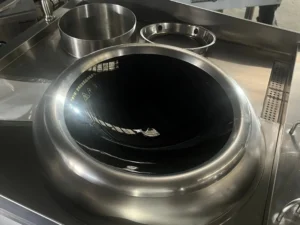
2. Temperature Response — A Three-Way Comparison
The biggest fear in flash-frying is a steep wok temperature crash after ingredients hit the pan, followed by sluggish recovery—turning a “stir-fry” into a “stew.” Forced-air high-flame burners rely on sheer sustained open-flame output to muscle the temperature back up. Simple and blunt, but it works. As long as gas supply is stable, there’s essentially zero lag in fire power recovery.
Infrared burners heat up more evenly and linearly. Their edge is more uniform heat distribution across the wok bottom. But when a big batch of ingredients hits the wok and causes a sudden temperature crash, recovery isn’t as aggressive as a forced-air burner. For dishes like dry-fried green beans or flash-fried pork kidney—dishes that are extremely sensitive to any break in wok temperature—chefs often feel it’s “half a beat behind.”
Induction wok ranges offer the highest temperature control precision of the three. High-end models keep temperature fluctuation within a very narrow band. But recovery depends on power reserve. If a single burner only puts out 12 kW, fire power will “fall behind” the chef’s tossing rhythm during continuous plating. At 20 kW or above, though, recovery speed can actually approach gas-burner levels.
3. Sustained High-Load Operation — A Three-Way Comparison
Forced-air high-flame burners show virtually no output drop during sustained high-load runs. As long as gas line pressure holds and the blower fan works normally, fire power from the first dish to the thirtieth stays the same. The downside is low thermal efficiency—a lot of heat spills into the kitchen, pushing ambient temperature up noticeably. In summer, prolonged operation takes a real physical toll on kitchen staff.
Infrared burners also deliver stable sustained performance. Higher thermal efficiency and enclosed combustion mean less waste heat in the kitchen, so working conditions are noticeably better than with forced-air burners. The trade-off: the ceramic plate ages and wears under long-term high-temperature impact, and may need replacement after one to two years of heavy use.
Induction wok ranges have an edge in sustained stability. No combustion components to wear out, and the kitchen stays the coolest of the three. During supply testing for an overseas chain-restaurant client, our team measured a 20 kW ATRX commercial induction wok range running at full load continuously for over 10 hours with no power output drop—something that’s very hard to verify quantitatively on a gas burner. That said, induction wok ranges place high demands on the electrical system. When multiple units run at full load at the same time, the power distribution capacity must keep up, or the units will auto-throttle.
How to Determine the Right Wok Range Type Based on Your Cuisine Intensity and Venue Conditions
The section above covered how the three burner types differ in real flash-frying scenarios. But there’s no single “best” answer—it comes down to your cuisine positioning and your venue’s actual conditions. Use the commercial wok range sizing guide below to quickly zero in on your match.
| Decision Dimension | Forced-Air High-Flame Burner | Infrared High-Flame Burner | High-Power Commercial Induction Wok Range |
|---|---|---|---|
| Best-suited cuisine intensity | Sichuan, Hunan, Northeastern Chinese, and other cuisines dominated by heavy-oil, high-flame flash-frying | Cantonese small-dish stir-fry, premium Chinese dining, fusion cuisines that balance flash-frying with precise fire control | Adaptable to all cuisines, but power must match cuisine intensity |
| Single-burner power reference range | 22–35 kW (high-end up to 50 kW) | 65%–75% thermal efficiency; perceived fire power slightly lower than a forced-air burner at the same rated power | 15 kW minimum for flash-frying; 20 kW+ recommended for Sichuan/Hunan cuisines |
| Gas infrastructure requirements | Requires a stable gas pipeline supply | Requires gas; ceramic-plate models recommended | No gas needed; runs on electricity only |
| Suitable venue locations | Street-level standalone units, restaurant floors with dedicated exhaust ducts | Same as forced-air, but with lower kitchen heat load | Mall-based restaurants, office-tower podium units, areas with strict environmental regulations, venues without gas access |
| Chef adaptation cost | Lowest — operating habits identical to traditional high-flame wok stations | Low — slightly different heat-up rhythm but easy to adapt to | Higher — heat interruption when tossing the wok off the surface and lack of visible flame feedback require an adjustment period |
| Long-term operating cost | Highest gas consumption; kitchen cooling and ventilation costs are also high | 20%–30% less gas than forced-air; overall cost is moderate | Lowest energy cost, but upfront electrical capacity expansion may involve additional investment |
If your restaurant runs Sichuan, Hunan, or similar cuisines where heavy-oil, high-flame flash-frying is the core selling point—fast plating, every dish needing full wok hei—a forced-air high-flame burner is essentially the first choice. A single burner at 22 kW or above delivers the open-flame burst closest to a traditional wok master’s habits. Dry-frying, flash-frying, oil-passing—none of these high-temperature, short-duration techniques get compromised. These restaurants typically sit in street-level standalone units or on floors with dedicated exhaust ducts. Gas and ventilation conditions are fully met, so the high heat spillover and combustion exhaust of forced-air burners are entirely manageable.
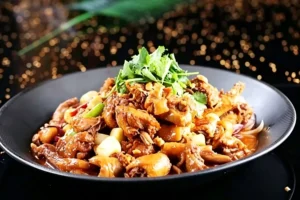
If your restaurant serves Cantonese small-dish stir-fry, premium Chinese cuisine, or fusion dishes—where flash-frying isn’t 100% of the menu and you also do a lot of pan-frying, casserole baking, and slow-simmering—your selection logic should shift. Instead of chasing “ultimate fierce flame,” look for “sufficient fire power with stable temperature control.” That’s where infrared high-flame burners shine. Their uniform heating and higher thermal efficiency handle medium-to-high-intensity flash-frying well, while also excelling at medium-to-low-intensity precision cooking. Gas cost runs 20%–30% lower than forced-air burners—a meaningful difference for operators watching overall costs. And if the restaurant has a few signature dishes that demand extreme fire power, you can always pair forced-air and infrared burners in the same kitchen.
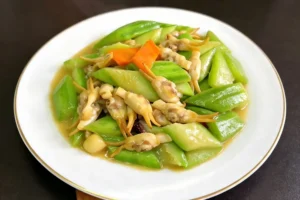
If your restaurant is in a shopping mall, an office-tower podium, or an area with strict environmental regulations where gas simply isn’t available, a commercial induction wok range isn’t just one option—it’s the only practical path. The critical task here is getting the power level right. For Chinese full-service flash-fried dishes, single-burner power must hit at least 15 kW. If the cuisine leans Sichuan or Hunan and plating volume is high, go straight for 20 kW or 25 kW models. Insufficient power reserve during peak hours will visibly drag down plating speed.
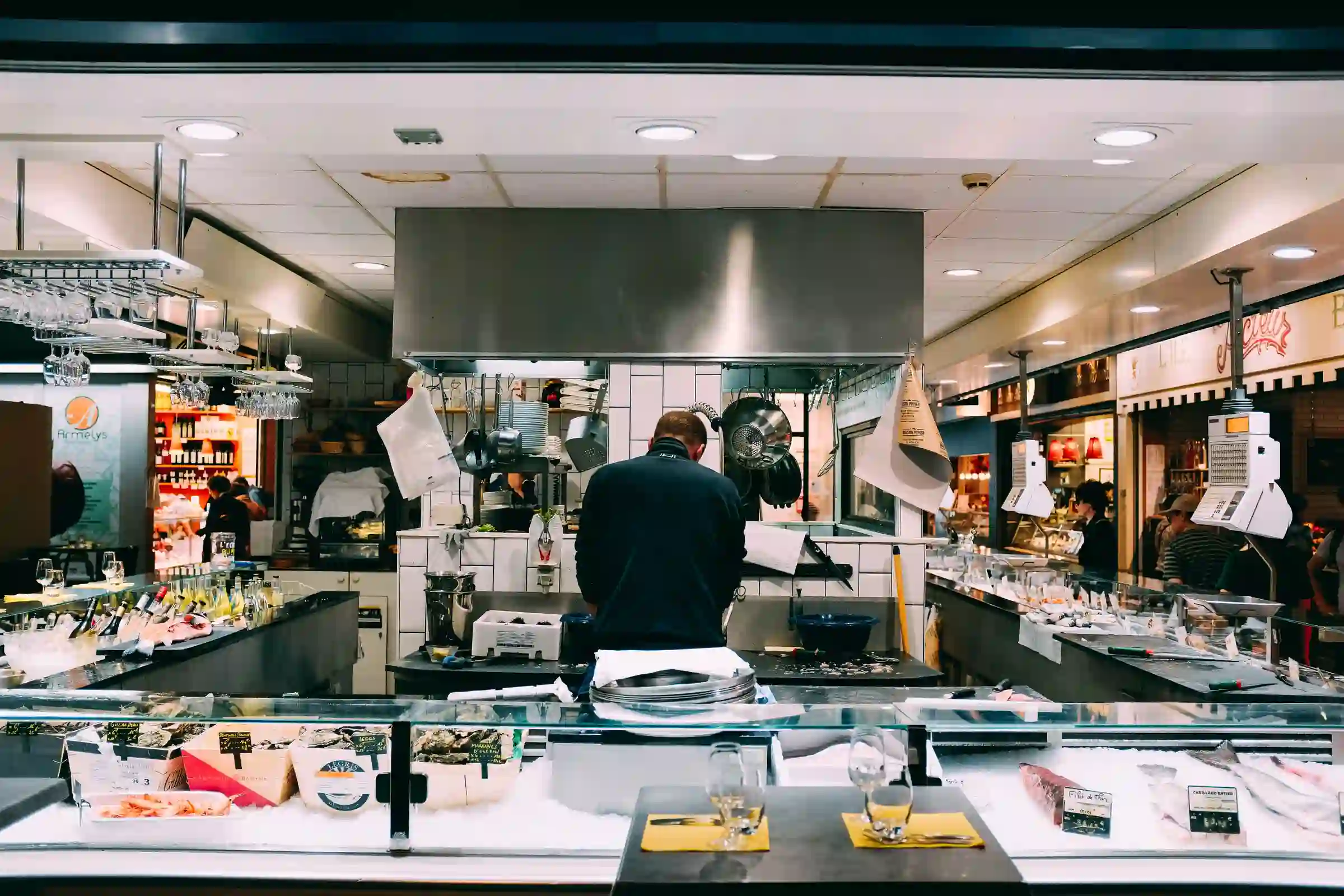
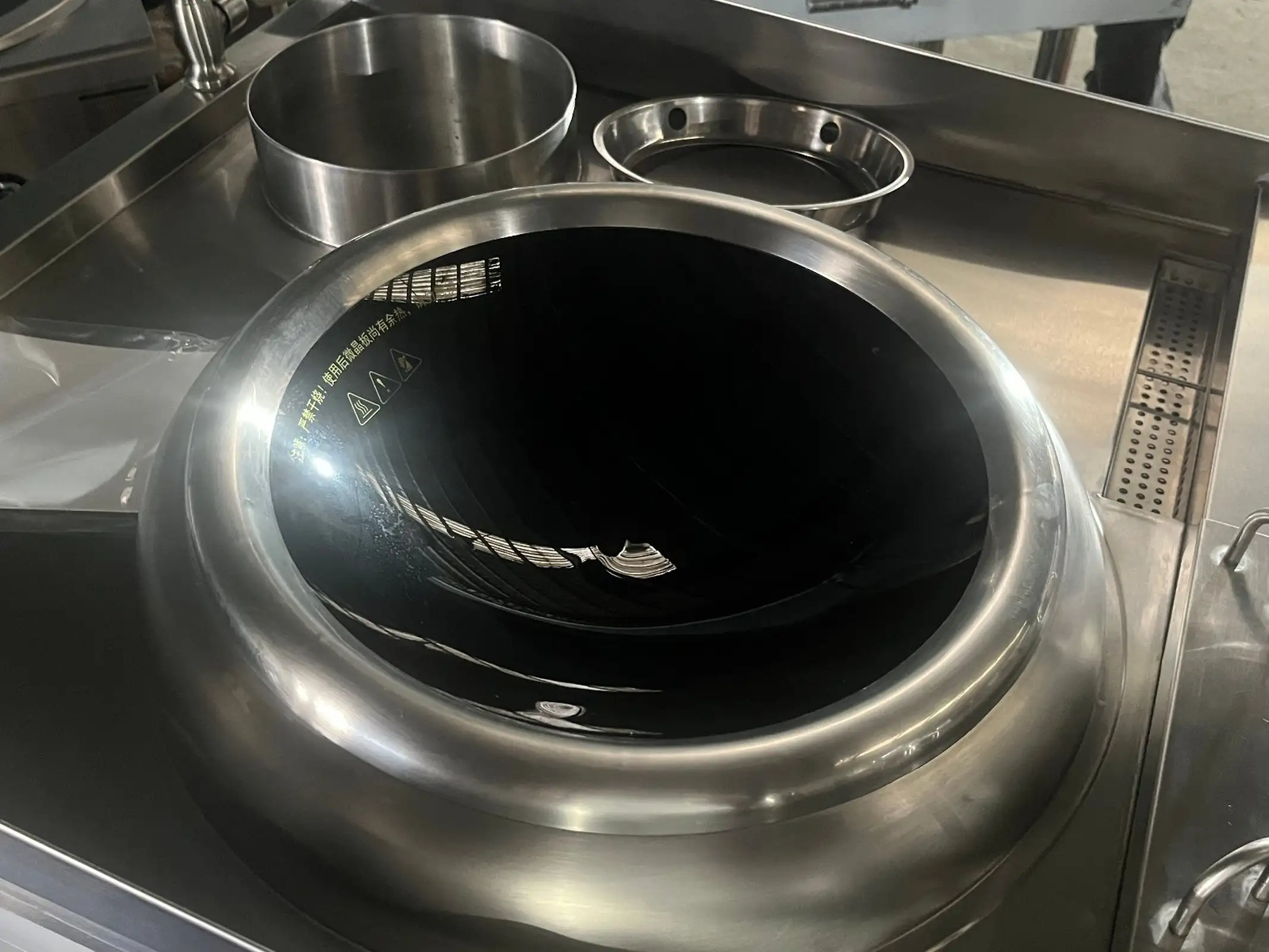
Also confirm in advance whether the venue’s electrical capacity can handle the load. A 20 kW three-phase induction wok range draws close to 30 A at full load. Running multiple units at once puts serious demands on the power distribution system. Sort this out with property management and the power utility before renovation starts—not after you’ve bought equipment that can’t be powered.
If the comparison above already has you leaning toward a commercial induction wok range, the next step goes beyond power level. You’ll also need to check body dimensions and countertop compatibility, verify electrical infrastructure in detail, and assess long-term maintenance costs. For a complete breakdown of all these dimensions, see our complete buyer’s guide to commercial induction wok ranges—power to installation, all in one read.
Gas, Electrical, and Exhaust Capacity: Pre-Purchase Checks for Multi-Burner Kitchens
If you are running multiple burners at once, two conditions must be nailed down at the selection stage. First: whether the gas pipe diameter flow rate and total electrical capacity can cover peak demand—all burner heads at full load at the same time. Second: whether the exhaust system airflow can handle the total cooking fume volume from multiple burners flash-frying in parallel.
Both calculations must happen before you buy equipment. Insufficient energy supply means fire power drops when multiple burners are on simultaneously. Insufficient exhaust capacity means fume blowback and kitchen temperatures you can’t control. Discover either problem after installation and you’re looking at a tear-out. Below, we break down the specific calculation methods and benchmarks for each condition.
Is Your Gas Pipe Diameter and Electrical Capacity Sufficient? — Back-Calculate the Energy Supply Ceiling from Peak-Hour Full-Load Demand
The stove selection process usually starts by working backward from your menu structure and plating volume to figure out burner types and quantities: how many wok ranges, how many steamers, whether you need a stock-pot burner or claypot station. This part can be roughed out during early planning. But many operators jump straight from here into procurement, skipping a critical calculation: can the gas pipe diameter flow rate and total electrical capacity from the property actually handle all burner heads at full throttle during peak hours? The math isn’t complicated. Follow these steps:
Step 1: Record the rated energy consumption for each piece of equipment. For gas equipment, find “rated thermal input” (in kW) on the nameplate. For induction equipment, find “rated power” (also in kW). For reference, a commercial single-head high-flame wok range usually has a rated thermal input between 30 and 60 kW. A commercial induction wok range typically has a rated power between 12 and 30 kW. Auxiliary equipment like steamers and claypot stations have their own parameters. List every piece of equipment in your kitchen plan and write down the rated value for each one.
Step 2: Add up all rated values to get the theoretical peak load. Say your kitchen plan has 4 gas high-flame wok ranges at 45 kW thermal input each, plus 2 induction steamers at 15 kW each. Gas-side peak total: 180 kW. Electrical-side peak total: 30 kW. Don’t forget that the electrical side also includes lighting, refrigerators, air conditioning, and other fixed loads—not just cooking equipment.
Step 3: Compare the peak figures against the energy supply ceiling from the property or gas utility. On the gas side, confirm that the maximum flow rate for the gas pipe diameter entering your restaurant covers the total gas consumption of all burners firing at once. On the electrical side, confirm that the total capacity allocated to your unit (in kVA or kW), minus non-cooking loads, still leaves enough headroom. Many commercial properties lock in electrical capacity at lease signing. Gas pipe diameters get laid during building construction as a one-time install. Changing either after the fact costs far more—and takes far longer—than most operators expect.
Step 4: If total demand exceeds the ceiling, adjust the plan now—at the selection stage. Three common paths work here. First, cut the number of burner heads to lower total load. Second, swap some high-consumption models for lower-consumption alternatives. For example, ATRX commercial induction wok ranges typically carry a rated power lower than the equivalent thermal input of a traditional gas range at comparable cooking output—worth evaluating when capacity is tight. Third, apply to the property and gas utility for capacity expansion early. Expansion involves approval processes and extra engineering costs, so the sooner you start, the less it delays your opening.
(When running selection comparisons for clients, we also reference the U.S. Department of Energy’s public evaluation data. Their conclusion matches real-world feedback: induction stove efficiency can be up to three times that of gas. That means the input power needed for the same cooking output is far lower than the equivalent thermal input of gas equipment.)
Exhaust Airflow Must Be Calculated in Sync with Wok Range Quantity — A Great Stove Is Wasted If the Exhaust Can’t Keep Up
Once you’ve confirmed gas and electrical supplies are sufficient, there’s one more condition that often gets pushed to the renovation stage but should be locked down alongside stove selection: can the exhaust system’s airflow handle the cooking fumes from all wok ranges flash-frying at the same time?
Chinese cooking—especially flash-frying—generates extremely high instantaneous fume volumes. Industry field measurements show that instantaneous fume output during flash-frying can be 3 to 5 times that of regular stir-frying. When multiple wok ranges are all firing during peak hours, total fume volume increases linearly—or even faster—with the number of burner heads. If the exhaust system is sized on a vague sense of “roughly enough” instead of being precisely matched to burner count, peak hours will almost certainly bring fumes that can’t clear, spiking kitchen temperatures, and blowback into the dining area. That hits the chef’s rhythm and dish quality directly.
The industry uses two standard methods to calculate exhaust airflow. In practice, take the higher of the two values. The first method calculates by burner count: referencing the guidance in China’s Emission Standard of Cooking Fume (GB 18483-2001), recommended exhaust volume per standard Chinese wok station is 2,000–2,500 m³/h. High-flame burners producing heavier fumes should use the upper end. The second method estimates by kitchen air-change rate: Chinese kitchens are typically calculated at 40–50 air changes per hour. Multiply kitchen floor area by ceiling height to get the volume, then multiply by air changes per hour for total exhaust requirement. Here’s how the two methods compare:
| Calculation Method | Applicable Scenario | Formula | Example (5 wok stations / 50 m² kitchen / 3 m ceiling height) | Result |
|---|---|---|---|---|
| By burner count | Use preferentially when equipment types and quantities are confirmed | Exhaust volume = per-station exhaust volume × number of stations | 2,500 m³/h × 5 stations | 12,500 m³/h |
| By air-change rate | Use for rough estimation when the equipment plan isn’t fully finalized | Exhaust volume = area × ceiling height × air changes/h | 50 m² × 3 m × 50 changes | 7,500 m³/h |
| Actual selection principle | — | Take the higher of the two methods | — | 12,500 m³/h |
This point bears repeating: exhaust airflow calculation must happen in sync with stove selection—not “pick the stoves first, deal with exhaust later.” The reason is simple. Once the airflow number is set, it cascades into exhaust duct diameter, fume purification equipment capacity, and exhaust fan power rating. All of these involve duct pre-embedding and equipment manufacturing lead times.
If the number of wok ranges changes later—say, from 3 to 5—the exhaust system may need a complete redo starting from the duct diameter. Time and cost implications are hard to predict. The right approach: at the same stage where you lock in wok range count and model, calculate total required exhaust airflow. Use that number to check whether existing duct diameters and fume purifier capacity can handle it. At the same time, confirm that makeup air volume reaches 70%–80% of exhaust volume to maintain proper kitchen negative-pressure balance.
Stove selection and exhaust capacity confirmation are a linked decision. Split them apart and you create hidden risks. A great stove is wasted if the exhaust can’t keep up.
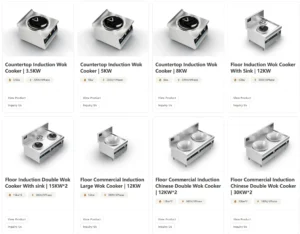
If your selection plan includes commercial induction wok ranges and you’ve already confirmed power and electrical distribution conditions, you can explore ATRX’s full line of commercial induction wok ranges currently available—floor-standing models from 8 kW to 30 kW. These support customization by voltage, power tier, and external dimensions to fit different markets and kitchen layouts.
Common Questions People Ask
Q1: On a limited budget, should I prioritize spending on wok ranges or the exhaust system?
Prioritize the exhaust system. Individual wok ranges can be upgraded and swapped out one at a time later. But once exhaust ductwork and purification equipment are installed, expanding capacity means tearing out ceilings, rerouting ducts, and resubmitting for approval. The hidden losses from a forced shutdown for renovation far outweigh the price gap on the equipment itself. We recommend setting aside no less than 15%–20% of total kitchen equipment investment for the exhaust system.
Q2: If plating volume is low at opening, can I buy lower-power wok ranges first and upgrade once business picks up?
Not recommended. Once burner power is set, the gas pipe diameter, electrical circuit, and exhaust airflow built around it are all sized to that spec. Swapping in higher-power burners later will very likely trigger a chain reaction of energy supply and exhaust modifications. The smarter move is to select equipment based on peak plating volume at planned full capacity, and simply control how many burners run simultaneously in the early period to keep daily energy costs down.
Q3: Can gas burners and induction wok ranges be mixed in the same kitchen?
Yes—and this is actually a fairly common setup. A typical pairing: forced-air high-flame burners on the primary stir-fry stations for full wok hei, with commercial induction ranges on auxiliary stations handling slow-simmered soups, braised dishes, and other items that don’t need open flame. One thing to watch: a mixed setup requires gas and electrical peak loads to be calculated on two separate tracks. The kitchen exhaust design must also cover both combustion exhaust from gas burners and cooking fumes from induction stations.
Q4: Besides thermal input and thermal efficiency, what other spec-sheet parameters are easy to overlook but matter in daily use?
Keep an eye on three items. First, for gas ranges: the applicable gas type and rated gas pressure. A gas-type mismatch will directly cause fire power problems or even safety hazards. Second, for induction ranges: the power supply spec (single-phase vs. three-phase, rated amperage). This decides whether your existing wiring can connect directly. Third, for all equipment: the match between external dimensions and countertop cutout size. Different brands of commercial stoves vary a lot in wok-ring diameter and body depth. Check these in advance so you don’t find out at installation time that the countertop needs to be reworked.
About the author
ATRX Team| 18 Years Commercial
Induction Cooker Manufacturer in China
Induction Cooker Manufacturer in China
Related Posts
How to Install a Built-In Induction Cooktop: A Step-by-Step Guide
09/17/2026
How to Clean a Commercial Deep Fryer: A Step-by-Step Guide
09/13/2026
High Quality Commercial Induction Cooker Manufacturer
09/09/2026
Automatic Wok Machine: Types, Specifications, Applications and Buying Guide
08/18/2026
What Is a Commercial Induction Cooker and How Does It Work
08/13/2026
Commercial Induction Range for Hotel Kitchens: How to Choose the Right Model
08/11/2026
China Commercial Induction Cooker Manufacturer
08/09/2026
10 Best Commercial Induction Cooker Manufacturers & Supplier Selection Guide [2026]
08/07/2026
Tilting Skillet & Bratt Pan: How to Choose the Right One for Your Commercial Kitchen
08/06/2026

Commercial Induction Cooker for School Cafeteria: How to Pick the Right High-Power Unit
08/04/2026