

Commercial Induction Range for Hotel Kitchens: How to Choose the Right Model
08/11/2026
Estimated reading time: 2 minutes

Buying a commercial induction range for a hotel kitchen is not difficult because of the technology itself. The real challenge is choosing the right model.
This article does not explain the basic principles of induction cooking. It also does not compare induction with gas. We assume you have already decided to use induction equipment. This hotel kitchen induction range buying guide focuses on how to choose the right model based on six practical factors: power, installation type, number of burner zones, safety features, build quality, and supplier service.
IN THIS ARTICLE
- Choosing the Right Power Level for Your Hotel Kitchen
- Freestanding, Drop-In, or Countertop: Which Type Fits Each Hotel Area
- How Many Burner Zones Does Your Hotel Kitchen Need
- Safety Features and Certifications Hotel Kitchens Should Check
- How to Judge Build Quality for Heavy Hotel Kitchen Use
- How to Compare Models and Choose the Right Supplier
Choosing the Right Power Level for Your Hotel Kitchen
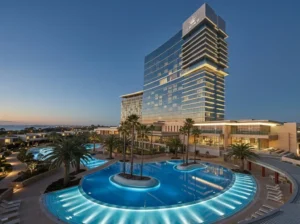
When choosing a commercial induction range for hotel use, power should be the first thing you check. The right power level depends mainly on your hotel’s seating capacity and service speed.
For a boutique hotel with 50–100 seats, 3.5–5 kW per burner zone is usually enough for daily service. A business hotel with 150–300 seats usually needs 5–8 kW per burner zone. A large banquet hotel or resort with 500+ seats often needs high-power models in the 8–15 kW range for large-batch cooking.
More power is not always better. If the power is too high, you may pay for electrical capacity you do not really need. If the power is too low, the kitchen may not keep up during peak service.
Power Requirements by Hotel Seating Capacity
Based on hotel projects supplied across Southeast Asia and the Middle East in recent years, we have seen clear differences in power demand between different hotel types. The table below gives a practical reference for hotel kitchen induction range power output in kW.
| Hotel Type | Seating Capacity | Recommended Power per Burner Zone | Typical Scenario |
|---|---|---|---|
| Boutique Hotel / B&B-style Hotel | 50–100 seats | 3.5–5 kW | Simple menu, manageable output, mainly breakfast service |
| Mid-size Business Hotel | 150–300 seats | 5–8 kW | Multiple meal periods, more menu variety |
| Large Banquet / Resort Hotel | 500+ seats | 8–15 kW | Large pots, batch cooking, concentrated banquet plating |
The difference becomes clearer in daily operation. A 5 kW burner zone can bring 20 liters of water to a boil in roughly 7 minutes. For a 300-seat business hotel breakfast rush, that is just about acceptable. If the burner drops to 3.5 kW, the same job may take more than 12 minutes.
A hotel breakfast service window is often only around two hours. An extra 5 minutes on one task may not sound serious. But when it happens across several dishes, it can slow down the entire service rhythm.
The opposite problem also happens. If a 50-seat boutique hotel installs 8 kW burner zones, the kitchen will have more power than it needs. But the electrical upgrade cost and daily energy use will also increase. In that case, the return is usually not worth it.
Another detail is easy to miss: not every burner zone on one unit needs the same power level. Stir-frying needs high heat. Soup needs steady low heat. Holding or warming only needs a very low setting.
When comparing models, choose units with multiple power levels. At least 8 settings is a good baseline. This allows one commercial induction range to handle more cooking tasks in a hotel kitchen.
The method above works backward from seating capacity to choose power. If you want a more detailed explanation of different kW levels, cooking performance, and suitable dishes, this complete guide to commercial induction hob power selection gives a more technical breakdown.
Check Your Hotel’s Electrical Capacity Before Choosing Power
This is a common mistake in hotel procurement.
One hotel client in the Middle East selected a 6-burner model with 8 kW per burner zone. After the equipment arrived, they found that the kitchen only had single-phase power. It could not support the unit. The hotel then had to spend nearly two months on electrical retrofitting. This overlapped with the pre-opening period and delayed the soft-opening foodservice launch.
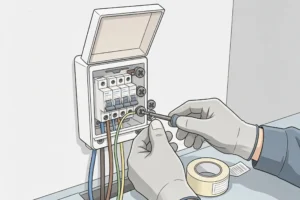
Before placing an order, ask your hotel engineering team to confirm three points.
Power supply type: Commercial induction units above 5 kW usually require three-phase power, such as 208V or 380V. Single-phase power cannot normally support high-wattage models.
Circuit capacity: Each unit needs a dedicated circuit. The breaker amperage must match the equipment’s power draw. For example, a 6-burner unit with a total power of 30 kW on 380V three-phase power needs about a 46A breaker.
Overall distribution headroom: A hotel’s electrical system is more complex than a standalone restaurant. Kitchen equipment, guest room floors, ballroom lighting, audio systems, and central HVAC may all share parts of the same distribution system. Before adding high-power kitchen equipment, confirm that the total load will not exceed the panel capacity.
If this step is ignored, breakers may trip during peak hours. The problem may affect not only the kitchen, but also guest rooms and public areas.
Confirm these electrical conditions before final selection. If the kitchen cannot support the equipment, either choose a lower-power model or arrange an electrical upgrade first. Do this before the equipment arrives, not after.
Freestanding, Drop-In, or Countertop: Which Type Fits Each Hotel Area
A hotel kitchen is not one single space. The main kitchen, buffet station, open kitchen, banquet hall, and temporary event area all have different needs.
When comparing freestanding vs drop-in commercial induction ranges for hotel use, the key question is simple: where will the unit be used, and what job does it need to do? Countertop units are also important when the hotel needs flexible or temporary cooking stations.
In one hotel, all three installation types may be used at the same time. The goal is not to choose one “best” type for every area. The goal is to match each type to the right use case.
If you also want to understand the structural differences between these three types, such as heat dissipation design, core module mounting, and shell load-bearing, you can read this in-depth comparison of commercial induction cooktop structure types. These design details affect how long the equipment lasts under high-intensity hotel use.
Freestanding: The Core Equipment for the Main Hotel Kitchen
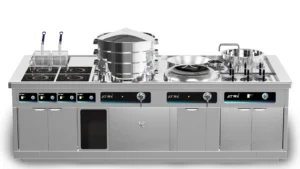
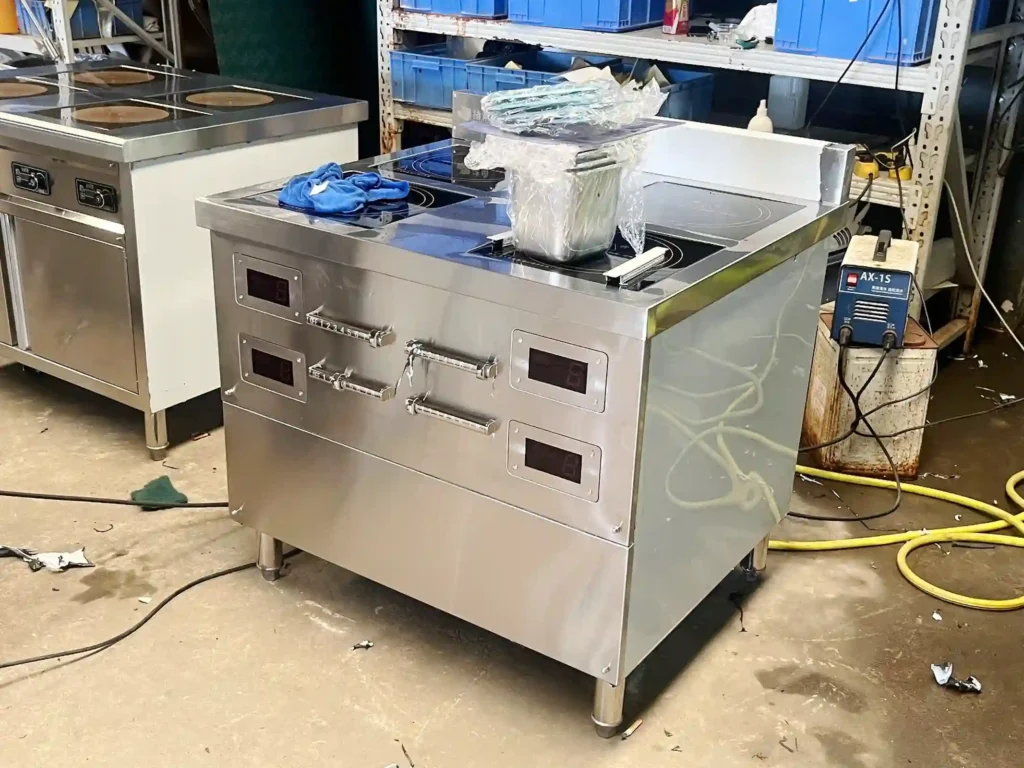
Freestanding commercial induction ranges are the most traditional and widely used type. They come with their own base. Many models also include an oven or storage cabinet underneath.
For a hotel’s main kitchen, freestanding units are often used at fixed production stations. These are the stations used for daily stir-frying, soup preparation, sauce cooking, and other core cooking tasks.
The advantages are clear. Freestanding units are highly integrated. They have strong load-bearing capacity. They are also stable during long hours of continuous operation.
A 6-burner freestanding unit is usually around 120–150 cm wide. This fits well into many standard main kitchen workstations.
The limitation is also clear. Once installed, the unit is not easy to move. If the kitchen layout changes later, the position of the freestanding unit is basically fixed.
Before choosing this type, check the kitchen floor plan carefully. Make sure the unit will not block staff traffic or interfere with nearby equipment.
Drop-In: The Better Choice for Buffet Counters and Open Kitchens
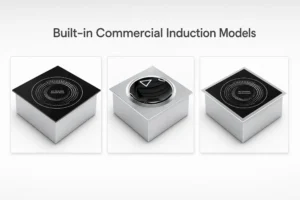
A drop-in commercial induction cooktop is built into the countertop. After installation, only the glass panel is visible on the surface. The control panel is usually placed on the front side of the counter, so it does not take up countertop space.
This gives the cooking area a clean and integrated look.
For guest-facing hotel areas, drop-in units are often the best choice. This includes made-to-order egg stations at breakfast buffets, executive lounge cooking counters, lobby bar live kitchens, and other semi-open areas.
These spaces need real cooking performance. But the equipment also needs to match the hotel’s interior design. It should not look like an industrial appliance placed in a polished guest area.
Before installation, the countertop must be cut to the correct size. Each brand and model may have different cutout dimensions.
When choosing a drop-in commercial induction cooktop for hotel kitchen use, ask the supplier for installation drawings first. Then confirm the dimensions with the contractor. Also check whether the countertop material can support the cutout.
Once installed, a drop-in unit is not easy to remove or relocate. So the layout should be confirmed before installation begins.
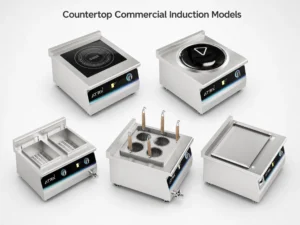
Countertop: Flexible Cooking for Banquets and Temporary Setups
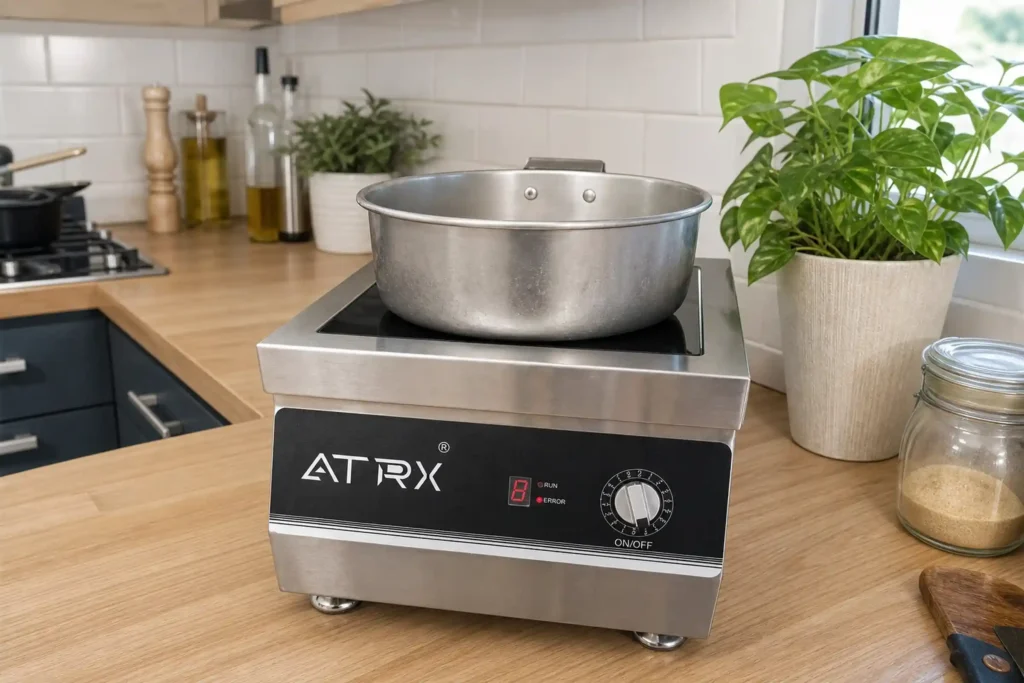
Countertop units are the most flexible type. Place the unit on a suitable surface, connect the power, and it is ready to use. After the event, it can be stored away.
Hotels often need temporary cooking stations. For example, live cooking in a banquet hall, poolside BBQ events, in-room dining reheating, or made-to-order dessert stations during conference breaks.
These scenarios do not need permanent equipment. They need cooking capacity for a specific time and place. The next event may happen in a completely different area.
Countertop commercial induction units are the only type that can support this level of flexibility.
When choosing a countertop model for hotel use, check two practical details.
First, check the table load capacity. Folding banquet tables usually cannot carry as much weight as stainless steel kitchen counters. A commercial dual-burner countertop induction unit may weigh 10–15 kg by itself. After adding cookware and ingredients, the total load becomes much higher. Confirm that the table can handle the weight before use.
Second, check the power supply at the event location. Outdoor poolside or garden areas often do not have enough electrical capacity. Standard outdoor waterproof outlets are usually rated at only 10–16A. That is not enough for many high-wattage commercial induction units. Ask the hotel engineering team to prepare a temporary power line in advance.
How Many Burner Zones Does Your Hotel Kitchen Need
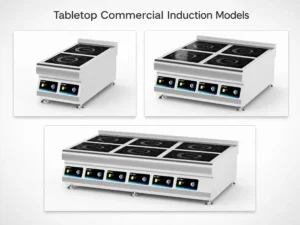
The most reliable way to calculate burner zone quantity is to start from the busiest meal period.
List all cooking tasks that must happen at the same time. Each task usually needs one burner zone. The total number is your minimum requirement.
For example, a 200-seat business hotel breakfast buffet may need fried eggs, porridge, soup, sauces, hot milk, bacon, sausages, and backup reheating at the same time. That can easily require at least 6 burner zones.
Not enough burner zones will limit plating speed. But too many burner zones also increase equipment cost and electrical load. The right number should match real service demand.
Start from the Busiest Meal Period
The method is simple. Write down every cooking task that must run at the same time during peak service. Then count how many burner zones are needed.
Here is a breakfast buffet example for a 200-seat business hotel:
| Cooking Task | Burner Zones Occupied |
|---|---|
| Live fried eggs / pancakes | 1 |
| Porridge / oatmeal | 1 |
| Hot soup | 1 |
| Sauces / hot milk | 1 |
| Bacon / sausages | 1 |
| Backup for replenishment or quick reheating | 1 |
| Total | At least 6 |
This is only for breakfast. If the hotel also serves banquet dinners with several main courses being prepared at the same time, the demand for burner zones will be even higher.
If one 6-burner unit is not enough, you can combine multiple units. But check two things first. Make sure there is enough counter or floor space. Also make sure there are enough dedicated electrical circuits. Two 6-burner units running at the same time can double the electrical load.
Besides burner quantity, two details also affect real kitchen efficiency.
Burner zone spacing: Hotel breakfast stations often use a large porridge pot and a flat frying pan at the same time. If the burner spacing is too tight, pot handles may block the next burner zone. In that case, a 6-burner unit may only give you 4 usable zones in real operation.
When checking the specification sheet, look at the center-to-center distance between burner zones. Compare it with the largest cookware your kitchen uses regularly.
Independent temperature control: A hotel kitchen may fry eggs on high heat, simmer porridge on low heat, and keep another pot warm at the same time. Each burner zone needs independent power and temperature adjustment.
If one burner setting affects another burner, the unit will be inconvenient in a busy hotel kitchen.
Safety Features and Certifications Hotel Kitchens Should Check
Safety features are not optional extras for hotel kitchens. They are basic screening requirements.
When checking commercial induction range safety features for hotel kitchen use, focus on four must-have functions: overheat protection, empty-pot detection, at least IPX4 waterproof rating, and accidental-touch lockout.
For certifications, North American markets usually look for UL, NSF, and FCC. European markets usually look for CE.
If a model does not meet the required safety and certification standards for your market, remove it from the shortlist.
Automatic overheat power cutoff: Hotel kitchens often run from early breakfast prep to late dinner service. A working day of 12–16 hours is common. Overheat protection is important in this environment. If the internal temperature exceeds the safety limit, the unit should cut power automatically. This helps prevent failure during long periods of high-load use.
Empty-pot detection: If no pot is placed on the burner zone, the unit should not start heating. This prevents accidental dry heating and helps protect the panel. In a hotel kitchen, several staff may use the same equipment during different shifts. The risk of someone turning on a burner and forgetting the pot is higher than in a small kitchen with one chef.
Waterproof rating of at least IPX4: Hotel kitchens often have strict cleaning procedures. Many higher-end hotels wash down counters and equipment surfaces after each meal period. If the equipment has poor waterproof protection, water may enter the unit and cause short circuits. For hotel use, IPX4 or higher is a practical baseline.
Accidental-touch lockout: In buffet stations, banquet halls, or semi-open kitchens, guests or service staff may touch the control panel by accident. A lockout function helps prevent unwanted temperature changes or accidental activation.
For certifications, check the nameplate and ask the supplier for matching certificates.
| Certification | Applicable Market | Core Scope |
|---|---|---|
| UL | North America | Electrical safety. It helps confirm that the equipment will not cause electric shock or fire under rated conditions. |
| NSF | North America | Sanitation standards. It checks whether materials and construction meet commercial food hygiene requirements. |
| FCC | North America | Electromagnetic interference control. It helps ensure that the induction range does not interfere with nearby electronic devices. |
| CE | European Union | Covers requirements such as the Low Voltage Directive, LVD, and Electromagnetic Compatibility Directive, EMC. |
FCC certification is easy to overlook. Some low-cost models skip it to reduce cost. But hotel kitchens often have many electronic systems nearby. These may include POS terminals, in-room dining paging systems, kitchen display systems, KDS screens, and temperature probes.
If electromagnetic interference is too high, these devices may malfunction. During banquet service, this can cause serious disruption. If the ordering system or expediting screen fails during peak service, the entire banquet rhythm may be affected.
According to the ENERGY STAR commercial electric cooktop certification standards, certified commercial induction units must reach at least 80% cooking efficiency per burner zone. This can also be used as a reference when comparing energy efficiency during hotel procurement.
One practical step is very important. Ask the supplier to provide the certification certificate for each model. Then check whether the model number on the certificate exactly matches the model you plan to buy.
Some manufacturers certify only selected models, but use “UL-certified” or similar wording across broader marketing materials. Always verify by model number.
How to Judge Build Quality for Heavy Hotel Kitchen Use
A commercial induction range used in a hotel kitchen must handle long hours, high heat, high humidity, frequent cleaning, and daily impact from cookware.
To judge whether a model can survive 12–16 hours of intensive daily use, focus on three parts: the housing, the panel, and the core electronic components.
A good baseline is 304 stainless steel housing, a glass-ceramic panel of 5 mm or thicker, and IGBT modules from recognized brands such as Infineon, Mitsubishi, or Fuji.
Housing Material
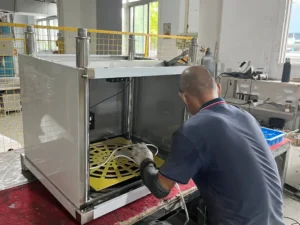
304 stainless steel is the baseline material for commercial kitchen equipment.
Lower-grade stainless steel, such as 201 stainless steel, may develop rust spots within one or two years in humid environments. This is especially common in coastal hotels.
Humidity is not the only issue. Many higher-end hotels also use alkaline cleaning agents to wipe equipment after each meal period. Lower-grade stainless steel may corrode faster under this kind of repeated chemical exposure.
Besides material grade, check the thickness. If the housing is thinner than 1.0 mm, it may be more easily damaged by daily bumps and thermal deformation.
Also check the weld quality. Rough welds do not just look poor. They can also trap grease and dirt, which may create problems during hotel kitchen hygiene inspections.
Panel Quality
Commercial induction range panels are usually made from glass-ceramic or black crystal ceramic.
In a hotel kitchen, the biggest test is not only high temperature. It is also thermal shock.
For example, a pot of boiling soup may be removed from the panel, and a cold pot may be placed on the same area immediately. This creates a sudden temperature change.
Panels that are 5 mm or thicker usually perform better under thermal shock than thinner 3–4 mm panels.
In our internal testing, a 5 mm glass-ceramic panel survived 2,000 cycles of 300°C thermal shock without cracking. In the same batch, 3.5 mm panels began to show micro-fractures at around 800 cycles.
Core Electronic Components
The IGBT module is one of the most important components in a commercial induction range. It directly affects power stability and service life.
Brand-name IGBT modules, such as Infineon, Mitsubishi, and Fuji, usually show less performance decline during long full-load operation than unknown modules.
The cooling system also matters. If the fan capacity is too weak, or if the air intake is poorly positioned, the IGBT temperature may keep rising during high-load operation. The unit may then reduce power to protect itself.
For a hotel, this can be a serious problem during banquet dinner service. Banquet plating is usually planned around fixed timing. Appetizers, main courses, and desserts all need to move in sequence.
If the induction range suddenly reduces power during the main-course push, the chef’s rhythm is disrupted. The service timeline for the whole table may be affected.
The Foodservice Consultants Society International, FCSI, noted in an industry feature report that commercial-grade induction cooker manufacturers continue to improve durability, with heavy-duty glass panels and high-quality components becoming more common in professional kitchen equipment.
When evaluating a supplier, ask three direct questions:
What brand of IGBT module do you use?
What is the panel thickness?
What grade of stainless steel is used for the housing?
Suppliers who understand their product quality can usually answer these questions clearly. If the answer is vague, such as “all imported components,” but no specific brand or specification is given, check more carefully.
How to Compare Models and Choose the Right Supplier
After the basic requirements are clear, compare models side by side.
For hotel use, focus on 9 core parameters: power per burner zone, number of burner zones, installation type, number of temperature control levels, external dimensions, voltage requirements, safety certifications, material specifications, and warranty period.
Supplier screening is just as important. Check after-sales service coverage, spare parts response speed, installation support, sample testing options, and similar hotel project experience.
Good specifications are not enough if service support is weak. Hotel kitchens cannot afford long downtime.
Which Parameters Matter Most When Comparing Models
You do not need to compare every line on a specification sheet. Too much information can make the decision harder.
Focus on the parameters that directly affect hotel kitchen operation.
| Comparison Dimension | Why It Matters | How to Evaluate |
|---|---|---|
| Power per burner zone, kW | Directly affects cooking and plating speed | Match it with the power requirement calculated earlier |
| Number of burner zones | Determines how many cooking tasks can run at the same time | Match it with the burner zone count calculated from peak service |
| Installation type | Determines whether the equipment fits the target area | Choose from freestanding, drop-in, or countertop |
| Number of temperature control levels | Affects cooking precision | At least 8 levels is recommended; more is better |
| External dimensions, mm | Must fit the planned workstation or counter | Compare installation drawings with the kitchen floor plan |
| Voltage / phase requirements | Determines whether the hotel electrical system can support the unit | Confirm with the hotel engineering department |
| Safety certifications | Compliance is a basic requirement | Check UL, NSF, FCC, or CE based on your market |
| Housing / panel materials | Affects durability and service life | Use 304 stainless steel and 5 mm+ glass-ceramic panel as a baseline |
| Warranty period | Reflects the manufacturer’s confidence in product durability | Core component warranty should be at least 2 years; longer is better |
A practical method is to create a spreadsheet. Put these 9 parameters across the top. Then list each shortlisted model in a separate row.
This makes the comparison much clearer. Do not rely only on impressions. When the data is placed side by side, the differences are easy to see.
How to Screen Suppliers for Hotel Procurement
Choosing the supplier is just as important as choosing the model. For hotels, it may be even more important.
If a restaurant has equipment downtime, it may be able to adjust operations for a short time. A hotel usually cannot. Guests still expect breakfast, room service, banquet meals, and restaurant service to continue.
When screening suppliers, focus on these points.
After-sales service network coverage: Does the supplier have a service team or authorized service partner in your country or region?
A hotel cannot simply stop service and wait for repairs. If a 200-room hotel loses kitchen capacity for one day, it can affect foodservice revenue, guest satisfaction, and online reviews. Fast response matters.
Spare parts supply turnaround: Ask how quickly the supplier can provide critical parts such as IGBT modules and control panels.
If important parts need to be shipped from overseas and take two or three weeks, the hotel may have to operate with reduced capacity during that whole period.
On-site installation and commissioning support: Check whether the supplier provides installation guidance or can arrange technical support on-site.
Freestanding and drop-in units have specific installation requirements. A hotel engineering team may not always have experience with commercial induction range installation.
Sample unit trial policy: Ask whether the supplier can provide a sample unit for real kitchen testing before a large order.
A hotel kitchen is different from a laboratory. Testing the unit in real service conditions is more useful than only reading a specification sheet.
Similar hotel project experience: Ask whether the supplier has supplied hotels of a similar scale or use case before.
If possible, request a reference check. Ask how the equipment performed in actual use, whether problems occurred, and how quickly the supplier responded.
One final suggestion: before placing the order, ask the supplier for equipment failure rate data.
Not every supplier will provide it. But this is exactly why it is useful. Marketing phrases like “built to last” are easy to write. Failure rate data is harder to fake and more useful for procurement decisions.
At this stage, your selection criteria should be clear. You should know the required power level, installation type, burner zone quantity, safety certification requirements, build quality baseline, and supplier screening standards.
The next step is to compare real models one by one. You can start with the ATRX full-range commercial induction cooker product catalog, browse by equipment type, and check each model against your hotel kitchen requirements.
About the author
ATRX Team| 18 Years Commercial
Induction Cooker Manufacturer in China
Induction Cooker Manufacturer in China
Related Posts
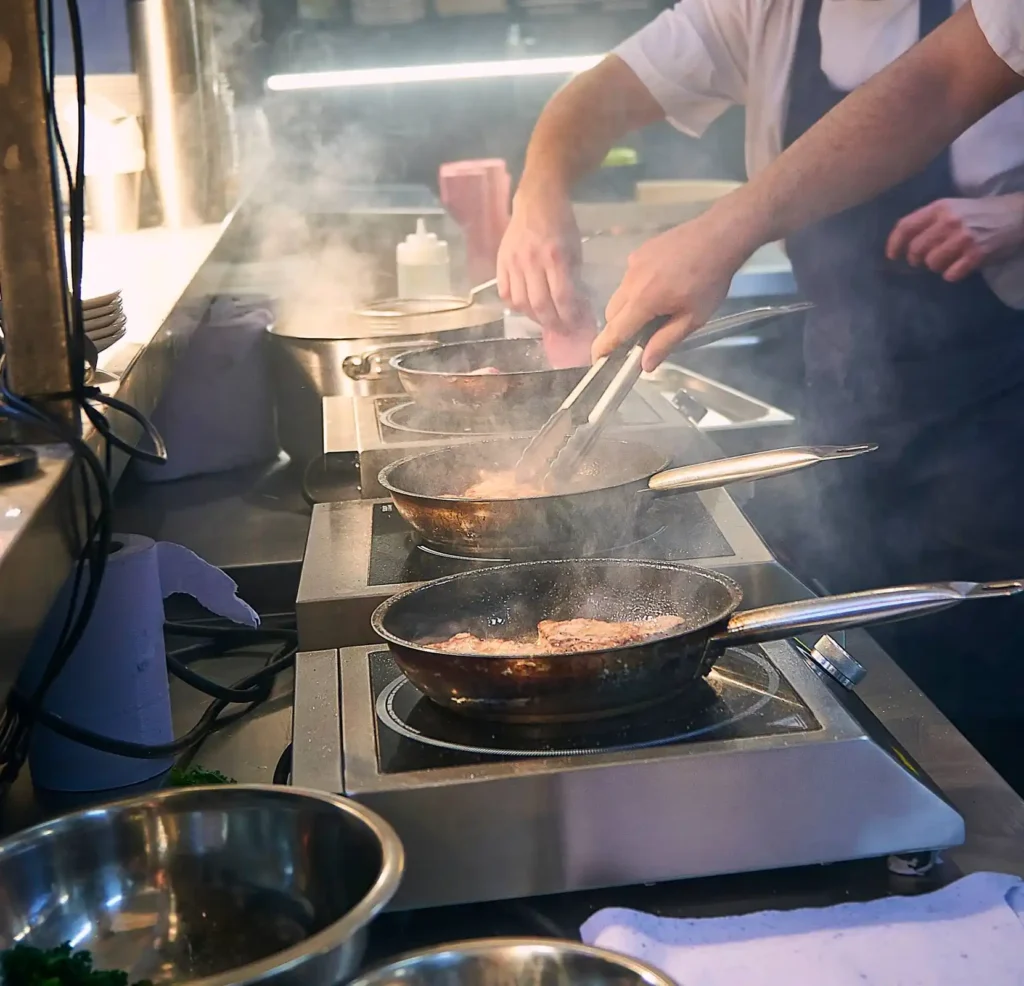
Best Commercial Induction Cooktop: Types &Buying Guide
10/09/2026
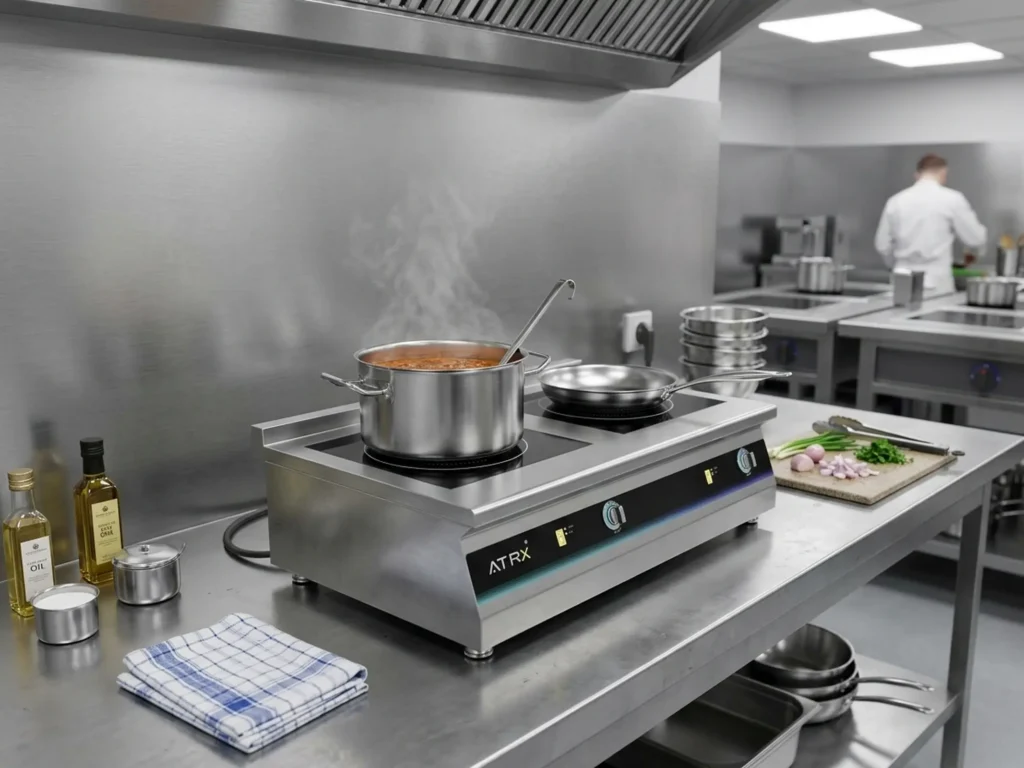
Commercial Double Hob Induction Cooker | Types, Power, and Installation Guide
10/05/2026
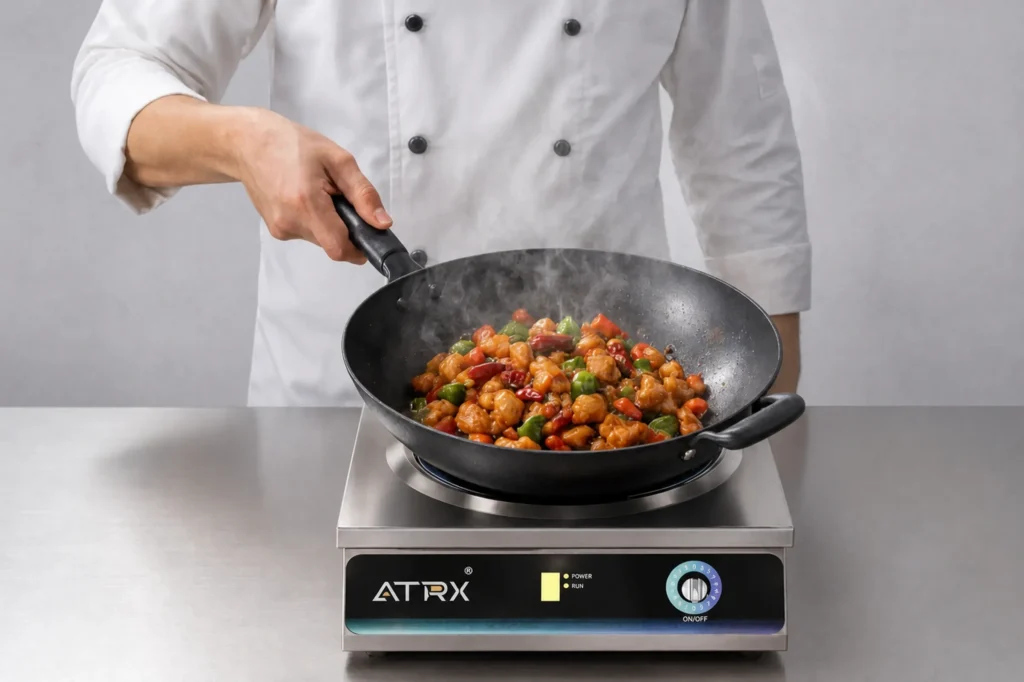
Commercial Induction Cooker 3500W: Model Selection, Commercial Power and Installation
09/29/2026
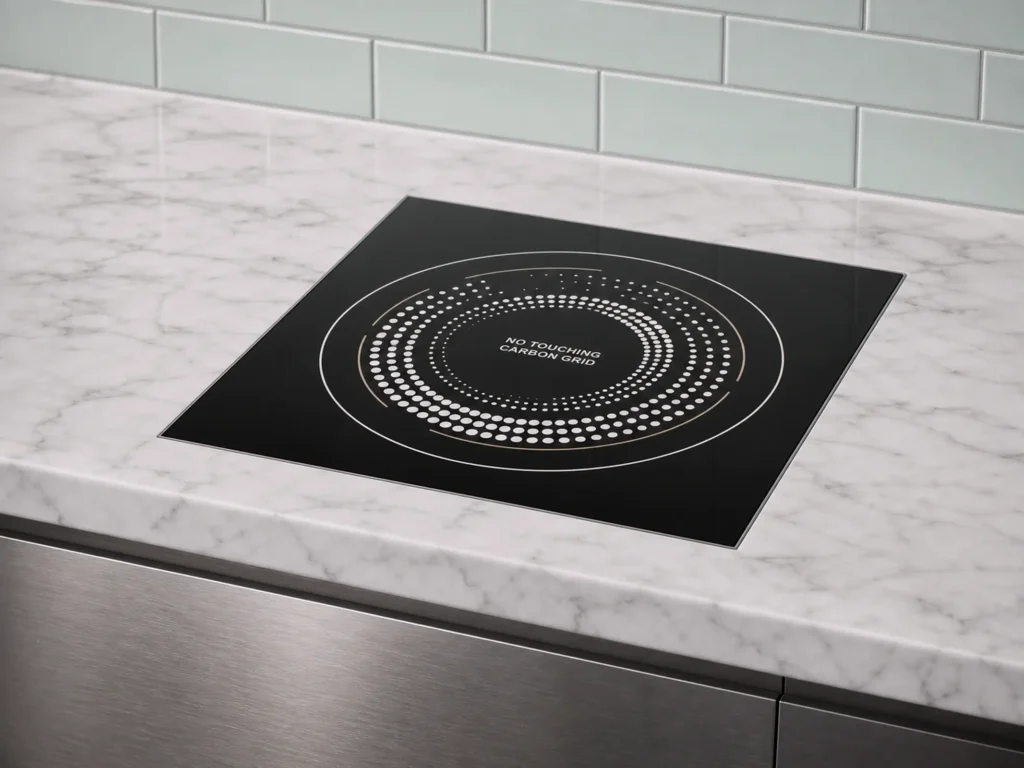
How to Install a Built-In Induction Cooktop: A Step-by-Step Guide
09/17/2026
How to Clean a Commercial Deep Fryer: A Step-by-Step Guide
09/13/2026
High Quality Commercial Induction Cooker Manufacturer
09/09/2026
Automatic Wok Machine: Types, Specifications, Applications and Buying Guide
08/18/2026
Commercial Induction Range: How to Choose the Right Size, Power, and Configuration for a Commercial Kitchen
08/15/2026
What Is a Commercial Induction Cooker and How Does It Work
08/13/2026
Commercial Induction Range for Hotel Kitchens: How to Choose the Right Model
08/11/2026