
Commercial Induction Cooker for School Cafeteria: How to Pick the Right High-Power Unit
08/04/2026
Estimated reading time: 2 minutes
Switching a school cafeteria to induction cooktops sounds simple — just buy a stove, right? But once procurement starts, the questions pile up. How much power do you actually need? Can the wiring handle it? Will the pots you already have still work? How many units should you buy? This guide walks through every decision point where cafeteria buyers most often go wrong. From equipment types to electrical requirements, from power matching to real cost breakdowns, it gives procurement managers a clear path from start to finish.
IN THIS ARTICLE
- What Type of Commercial Induction Cooker Does a School Cafeteria Need
- How Much Power Is Enough for a Cafeteria Induction Cooktop
- Check Your Kitchen’s Electrical Capacity Before You Buy
- Can You Keep Using Your Existing Pots and Pans
- What Safety Features Matter Most in a School Kitchen
- Induction vs. Gas: Which One Fits a School Cafeteria Better
- How Much Can a Commercial Induction Cooker Actually Save
- Purchasing Checklist for School Cafeteria Induction Cookers
What Type of Commercial Induction Cooker Does a School Cafeteria Need
Countertop, Built-in, or Freestanding — How to Pick
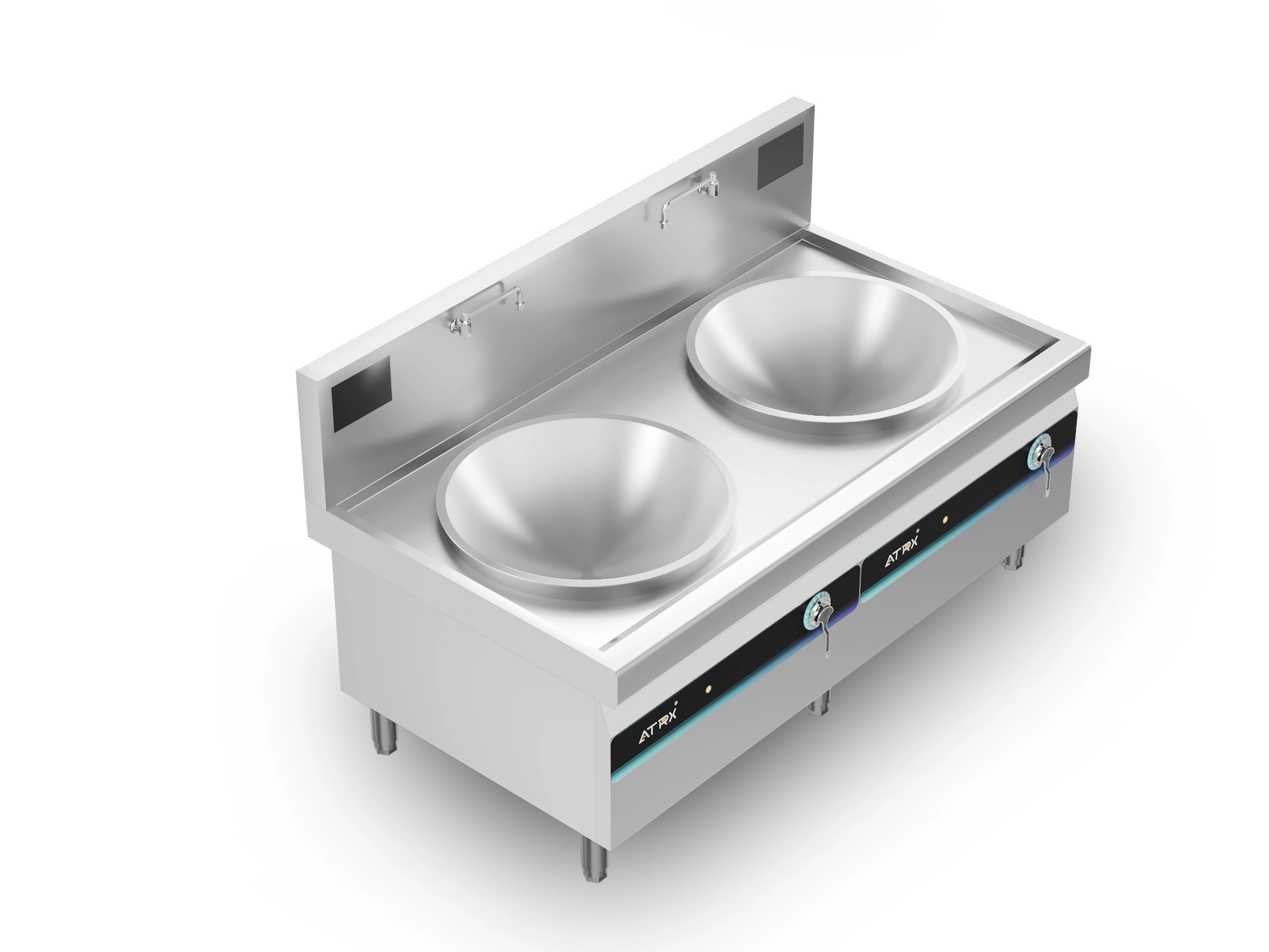
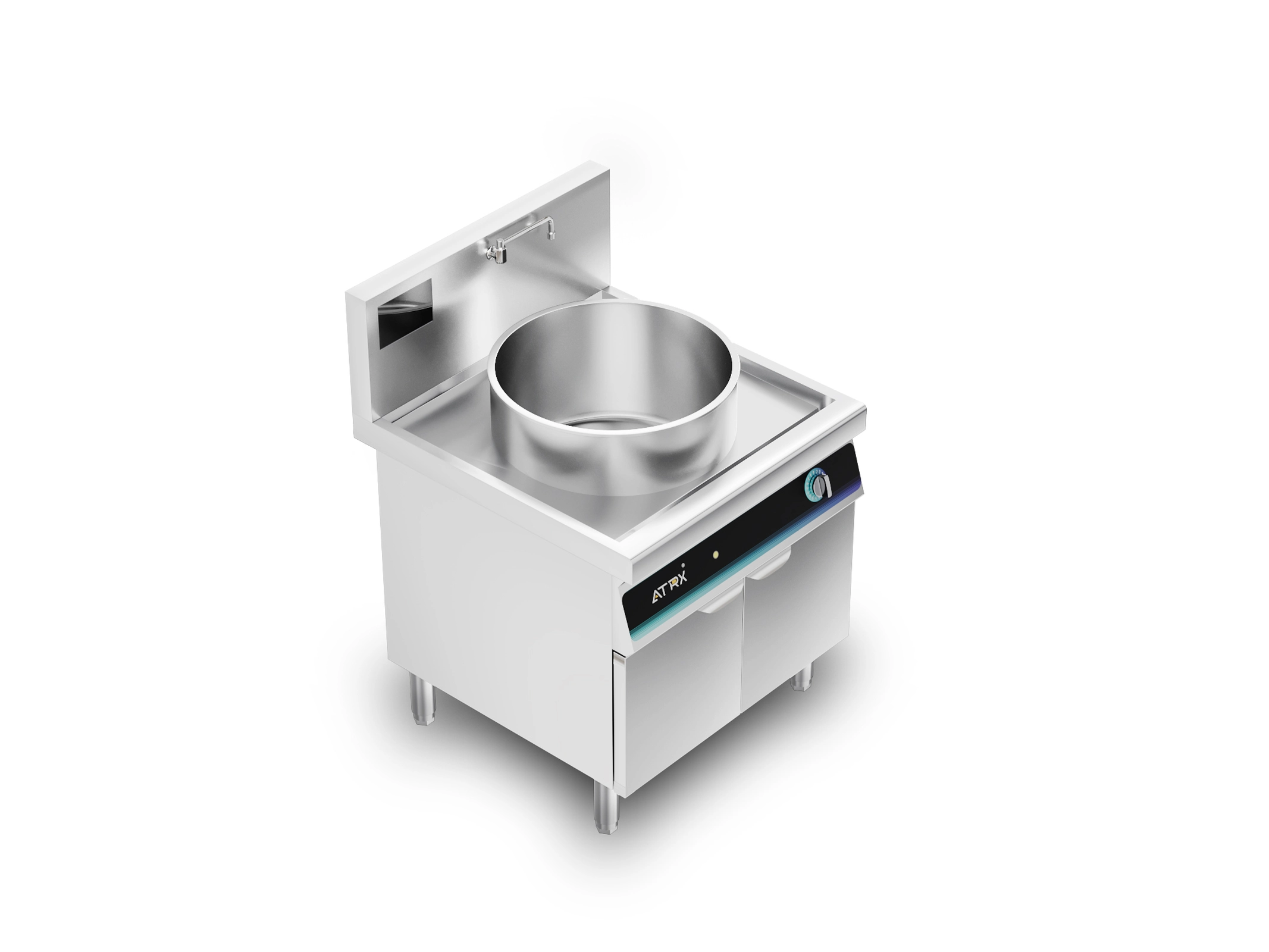
Commercial induction cookers for school cafeterias come in three main types: countertop, built-in, and freestanding. Freestanding high-power induction wok cookers (8kW–15kW) do the heavy lifting for stir-fry stations. Built-in units (3.5kW–5kW) suit fixed workstations like soup pots or steamers. Countertop models (around 3.5kW) are best for breakfast windows or pop-up serving counters. Most cafeterias need a mix of all three, matched to what each station actually does.
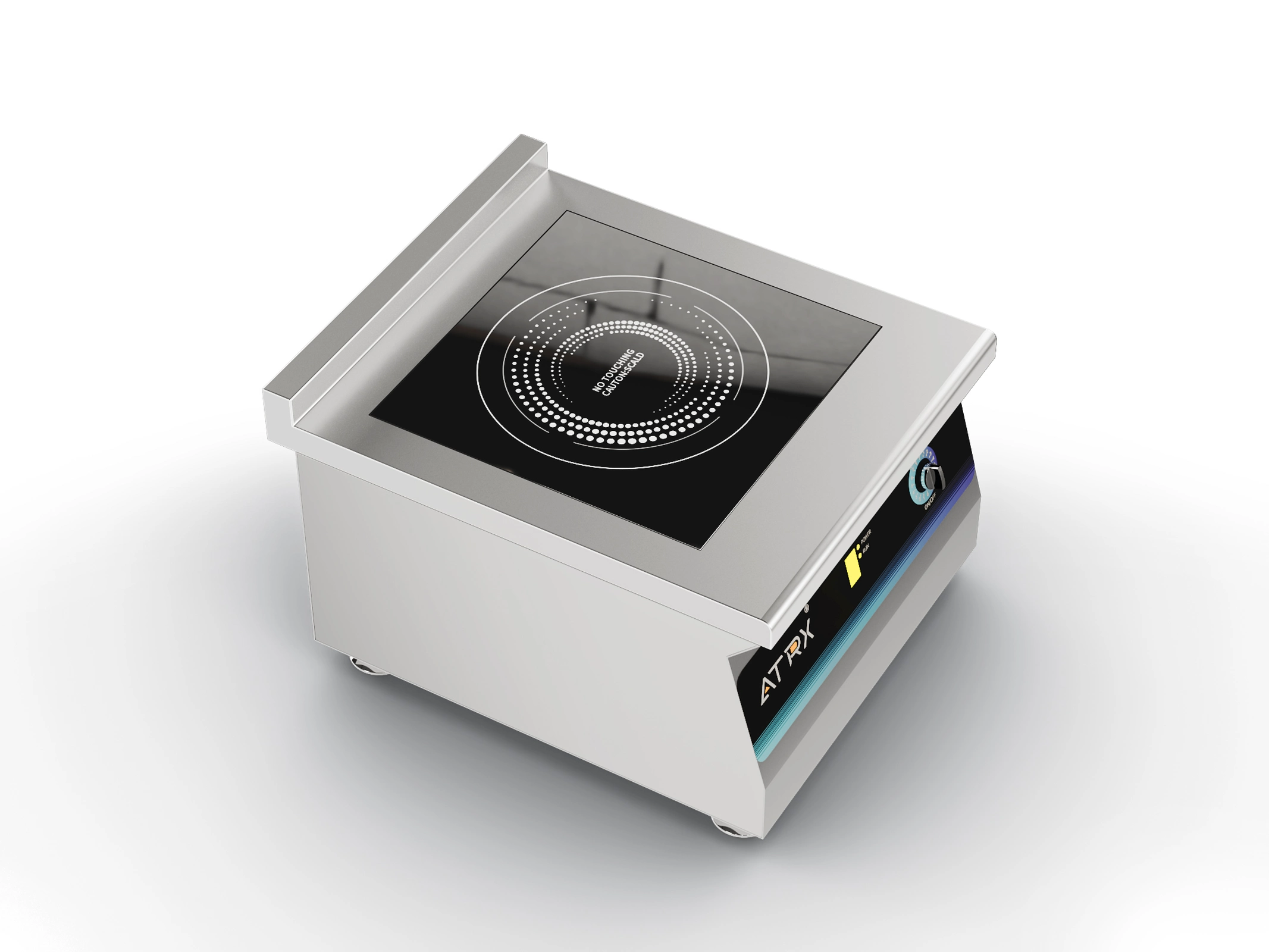
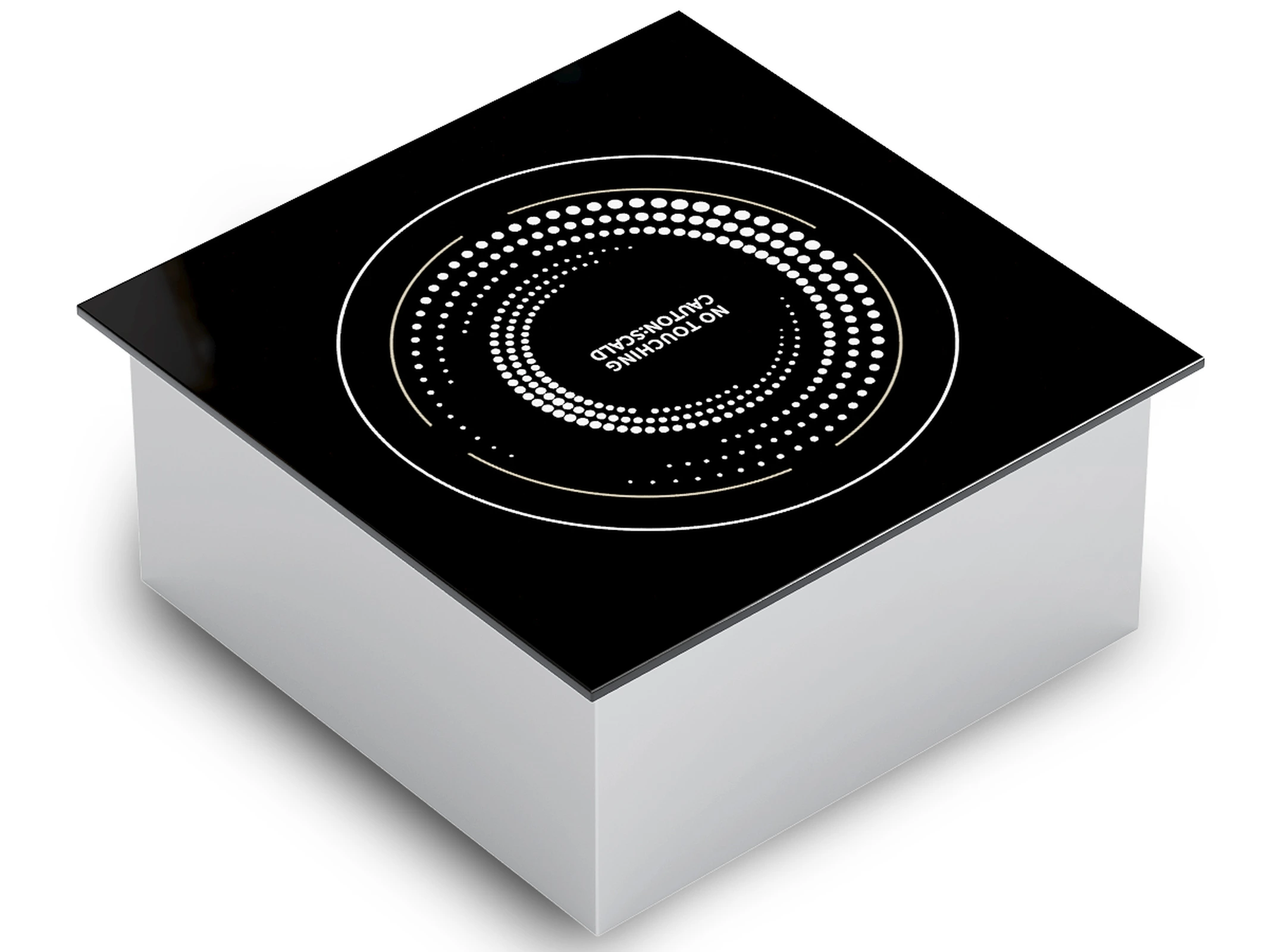
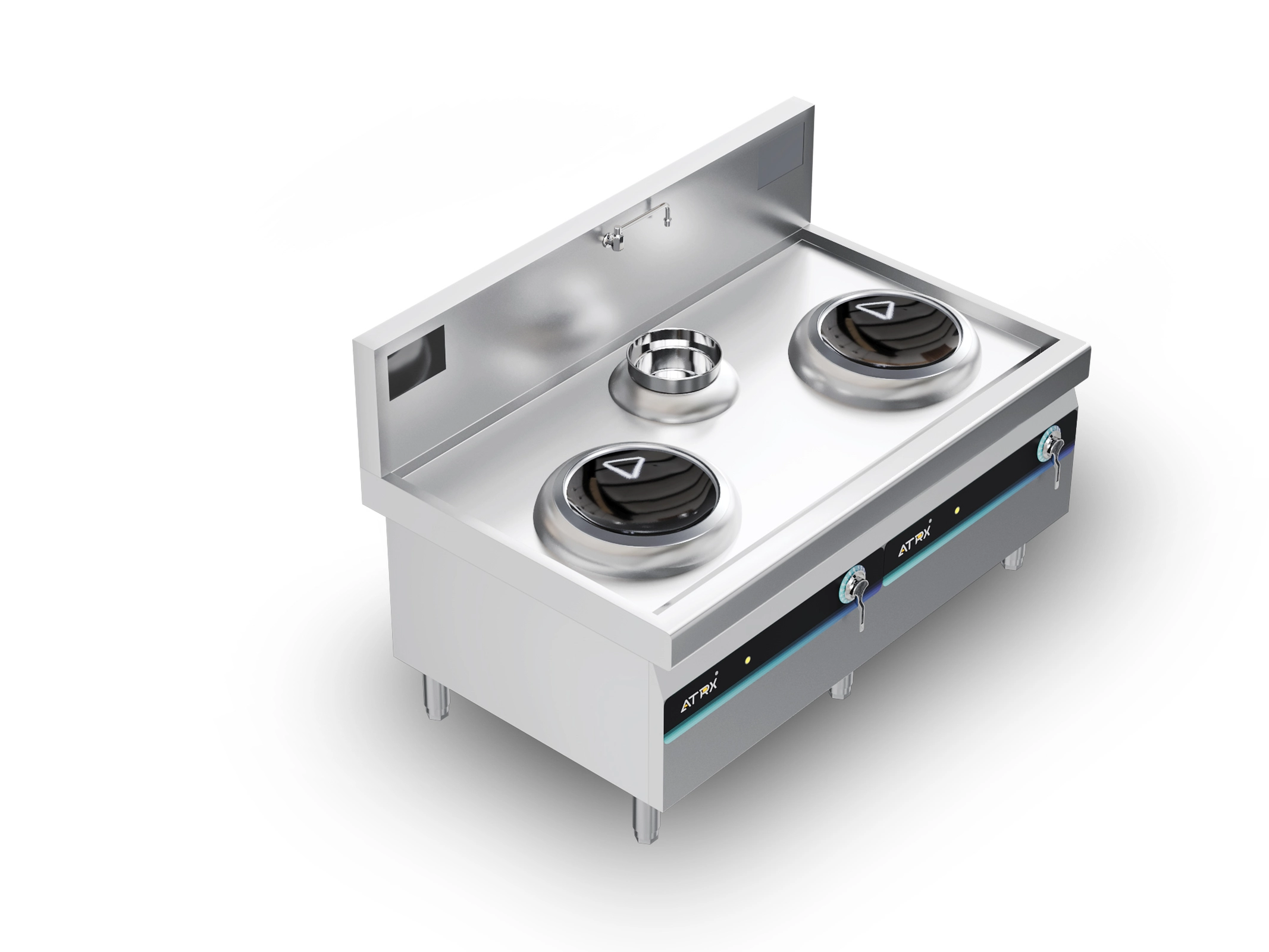
One thing to settle upfront: school cafeterias must use commercial-grade equipment. These stoves run 4 to 6 hours straight every day. The kitchen stays hot and humid year-round. Power starts at 3.5kW minimum. A household induction cooker won’t survive that kind of use — don’t try to cut costs by mixing them in.
For a deeper look at how commercial and household induction cookers differ — and how the various types break down — we cover that in a separate article: Commercial Induction Cooker Buying Guide & Classification. This guide focuses only on the school cafeteria scenario.
With that out of the way, here’s how the three installation types compare side by side:
| Comparison | Countertop | Built-in | Freestanding Wok Cooker |
|---|---|---|---|
| Installation | Place on any countertop | Recessed into the counter, sits flush | Standalone floor unit with built-in frame |
| Power Range | ~3.5kW | 3.5kW–5kW | 8kW–15kW |
| Portable? | Yes — move it wherever you need it | No — fixed in place | No — fixed in place |
| Best For | Temporary windows, breakfast counters, pastry kitchen backup | Fixed stations like soup pots and steamers | Main stir-fry stations, large-batch cooking, heavy stewing |
| Typical Tasks | Noodles, warming soup, small reheats | Soup, porridge, steaming — steady moderate loads | High-volume wok stir-fry, bulk meal output, large stews |
In practice, school cafeterias rarely buy just one type. Freestanding units go on primary stations, built-ins go on secondary ones, and countertops fill in wherever something temporary is needed. The right approach is matching equipment to each station’s job.
A Typical Equipment Combo for School Cafeterias
Here’s a ready-to-use configuration framework for procurement managers:
Primary stir-fry stations get freestanding high-power wok cookers, 8kW to 15kW. These handle the daily lunch and dinner rush — big batches, fast output. Everything depends on these units for speed and volume.
Soup and steaming stations get built-in mid-power cookers, 3.5kW to 5kW. They’re dedicated to porridge, soup, hot drinks — anything that runs at low power for a long time. Flush with the counter, they save space and keep things easy for staff.
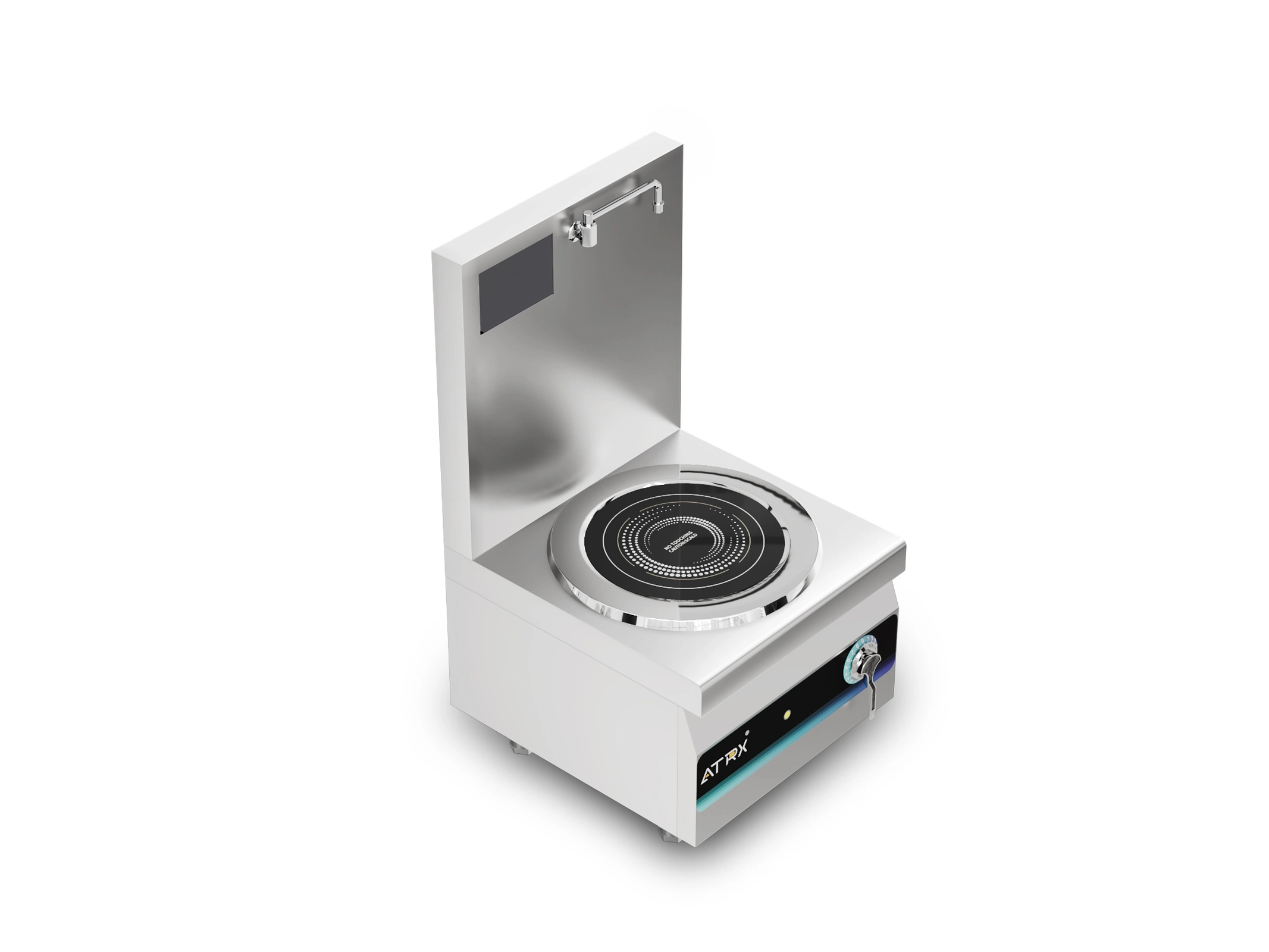
Temporary counters or breakfast windows get countertop units at around 3.5kW. Noodle station for breakfast today, soup warmer for the extra counter tomorrow. Wherever you need heat, just move it there.
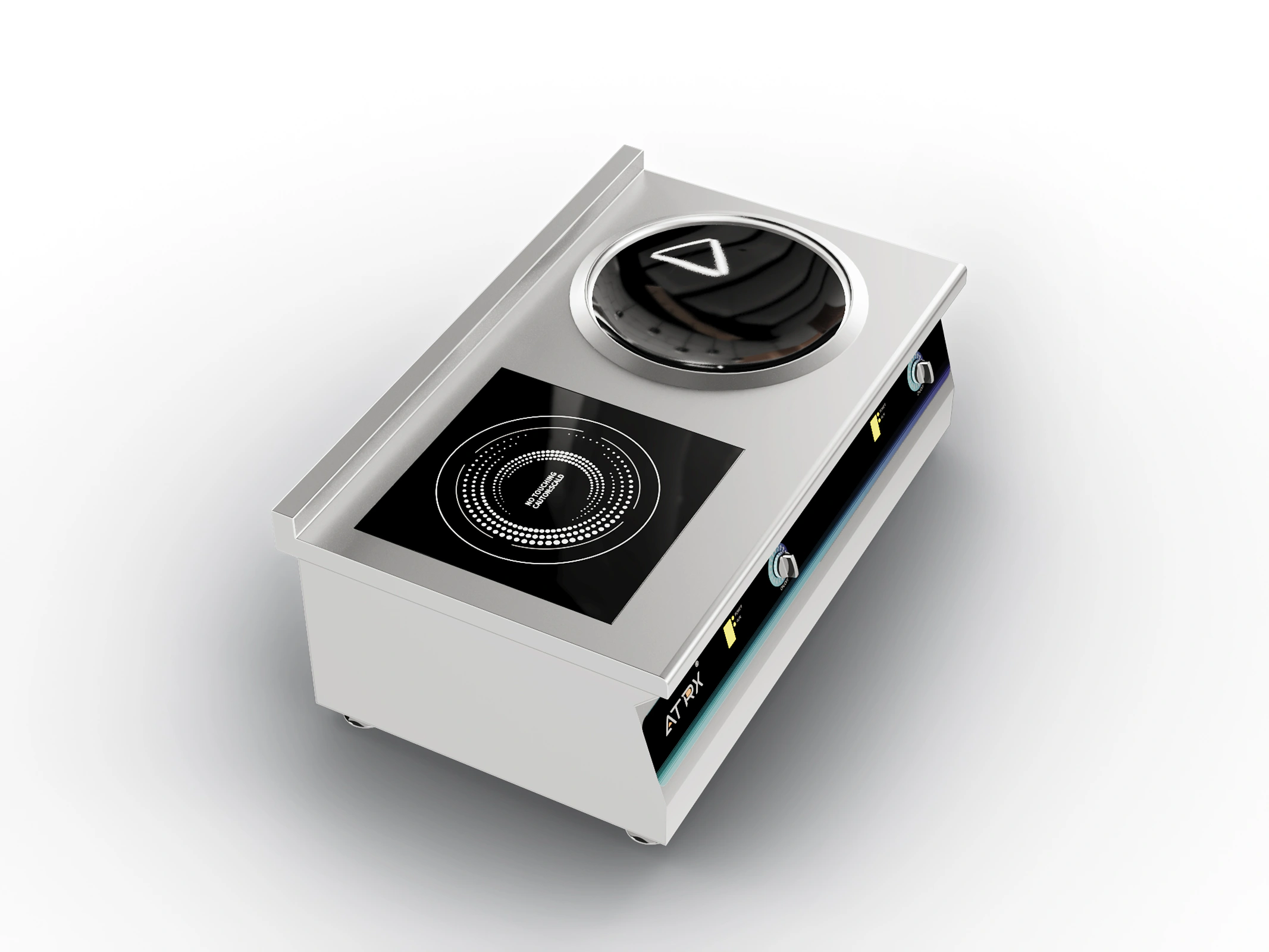
Why does this combo work? Every station does its own job. The main wok cookers focus entirely on stir-frying. The auxiliary units handle the lighter stuff. Nothing bottlenecks at the main stove.
Now flip it: if you buy all freestanding 15kW units, you’re running a 15kW cooker just to simmer soup — that’s money and power wasted. If you buy all countertop 3.5kW units, they can’t handle large-wok stir-frying at all.
One caveat — the above is a framework, not a fixed answer. Every school has different counter layouts, menus, and headcounts. You’ll still need to fine-tune the exact number of units and power levels for your specific situation.
How Much Power Is Enough for a Cafeteria Induction Cooktop
Which Power Level Fits Which Cooking Task
The right power level depends on what you’re cooking and how many people you’re feeding. 3.5kW handles porridge and noodles. 5kW covers moderate stir-frying and steaming. 8kW drives large-wok stir-frying. 12kW–15kW tackles heavy-duty batch cooking with tens of kilograms per load. A cafeteria under 300 diners usually needs 1–2 units at 8kW. Over 1,000 diners? Plan for 3–5 units at 12kW–15kW. Matching power to the task matters far more than chasing the biggest number on the spec sheet.
Bigger isn’t always better. What matters is whether the power fits the actual job. Here’s the breakdown:
| Power Level | What It Handles | Where It Goes |
|---|---|---|
| 3.5kW | Porridge, warming soup, noodles, small reheats | Breakfast window, pastry kitchen, temporary counter |
| 5kW | Moderate stir-frying, stewing, steaming | Secondary stir-fry station, steaming workstation |
| 8kW | Large-wok stir-frying, batch meal production | Main stir-fry station in mid-size cafeterias |
| 12kW–15kW | Extra-large wok flash-frying, tens of kg per batch | Main stir-fry station in large cafeterias, heavy-duty output |
A quick example of what goes wrong: put a 15kW cooker on a soup station, and the soup is the same soup — you just paid more for equipment and electricity. Put a 3.5kW on the main stir-fry station, and the wok can’t recover heat after food goes in. Dishes come out watery. Service speed drops.
The right method: list every dish the cafeteria makes each day, assign each task to a station, then figure out the power each station needs. The task decides the power — not the other way around.
How Many Burners Do You Need Based on Headcount
Different cafeteria sizes need very different setups. Here’s a rough framework:
| Headcount | Main Wok Cookers | Auxiliary Cookers | Notes |
|---|---|---|---|
| Under 300 (small) | 1–2 × 8kW | 1 × 3.5kW for soup | Covers two meals a day |
| ~500 (medium) | 2–3 × 8kW–12kW | 1–2 auxiliary units | More burners to share the load |
| 1,000+ (large) | 3–5 × 12kW–15kW | Multiple auxiliary units | Peak-hour pressure demands parallel cooking |
But this is just an estimate. Three variables shift the real number. First, menu complexity — an all-stir-fry menu needs far more wok stations than one built around steamed or stewed dishes. Second, how tight the serving window is. Finishing lunch in one hour versus two hours puts completely different pressure on equipment.
Third, whether other appliances share the load. If a large steamer handles steamed dishes, your wok cookers don’t have to. Before buying, list exactly how many servings of how many dishes each meal requires and how fast they need to be ready. Then take that list to your supplier and work out the specifics together.
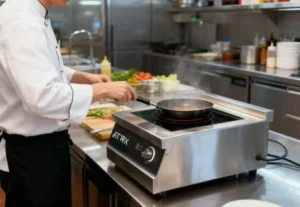
One Big Unit or Several Smaller Ones
This comes up in nearly every procurement discussion. One 15kW cooker versus three 8kW units — similar total power. Which is the better call?
One high-power unit (say 15kW): bigger per-batch output, efficient for concentrated rushes, takes up less space. The downside: if it breaks, that station is dead. A stove going down during lunch rush is exactly the scenario no cafeteria manager wants. A single 15kW unit also hits the electrical circuit hard — your power supply must have plenty of headroom.
Multiple mid-power units (say three 8kW): if one goes down, the other two keep running and meals don’t stop. The electrical load spreads out more evenly too. The trade-off: you need more operators and more counter space.
Our recommendation: go with multiple mid-power units. The logic is straightforward — a cafeteria cannot skip meals. Redundancy that keeps you running when something breaks is worth more than peak efficiency from a single machine.
A real example: one middle school originally planned to buy two 15kW wok cookers. The facilities manager asked the supplier, “What happens if one breaks?” They switched to four 8kW units instead. A year in, one unit had a control board failure. The other three covered the lunch rush with no disruption at all.
The only exception: if the kitchen is genuinely too tight for multiple units and the electrical supply can fully handle it — then a single high-power cooker makes sense.
Why Large-Batch Stir-Frying Demands More Than Just High Wattage
Cafeteria stir-frying is nothing like restaurant stir-frying. A restaurant does a pound or two per batch. A cafeteria dumps tens of kilograms into the wok at once. All that cold or room-temperature food crashes the wok temperature instantly. If the cooker can’t bring the heat back fast enough, the food steams instead of fries — soggy, mushy, pale, and tasteless. Cooks call it “smothering the wok.”
So don’t just look at peak wattage. Two performance factors matter just as much:
Temperature recovery speed. How fast does the cooker pull the temperature back up after food goes in? Faster recovery means crispier, better-textured dishes. You can’t judge this from a spec sheet. The only reliable test is on-site with real food.
Low-power stability. Soup and porridge need a steady, gentle simmer. If the cooker can’t hold consistent output at low settings — pulsing on and off instead — the broth surges and stalls, and porridge scorches on the bottom. A solid commercial unit offers at least 8 power levels and keeps output smooth even at the lowest setting.
Here’s what to ask the supplier: set up two on-site tests. First, large-batch stir-fry — dump a full load of vegetables into a hot wok and watch how fast the temperature comes back and whether the food releases excess water. Second, low-heat simmer — run the cooker at minimum for 30 minutes on a pot of soup and watch whether the flame stays steady. If both tests check out, the equipment is solid.
When ATRX shipped a batch of 12kW wok cookers to an international school in Malaysia last year, the client ran their own acceptance test. They dropped 25 kg of shredded cabbage into a hot wok all at once and tracked the bottom temperature with an infrared gun. The reading fell from 210°C to about 140°C, then climbed back above 185°C within 11 seconds. The chef said there was no noticeable excess moisture when the cabbage was plated.
That recovery speed works well for most cafeteria cooking. The client did note that higher-moisture ingredients like bean sprouts do better when added in two batches instead of all at once.
Check Your Kitchen’s Electrical Capacity Before You Buy
What Voltage and Wiring Does Each Power Level Need
Units at 3.5kW or below can run on 220V single-phase power. Anything from 5kW to 8kW needs a dedicated 380V three-phase line. At 12kW–15kW, you’ll need independent breakers and 6–10mm² copper conductors. When several cookers run at the same time, their loads stack up. Before buying anything, have an electrician measure what your distribution panel can actually deliver. If the existing capacity falls short, budget for electrical upgrades before you place the order.
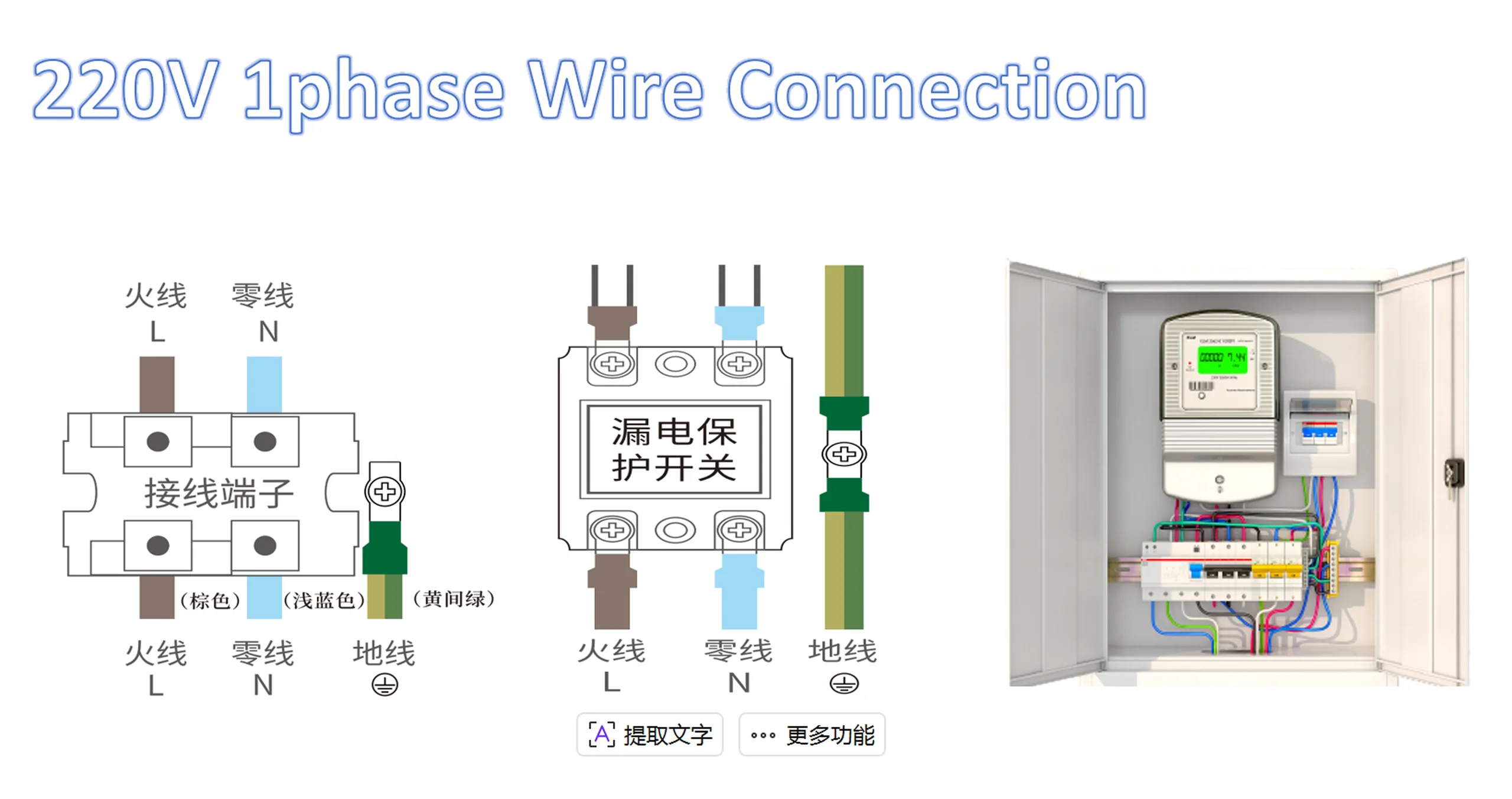
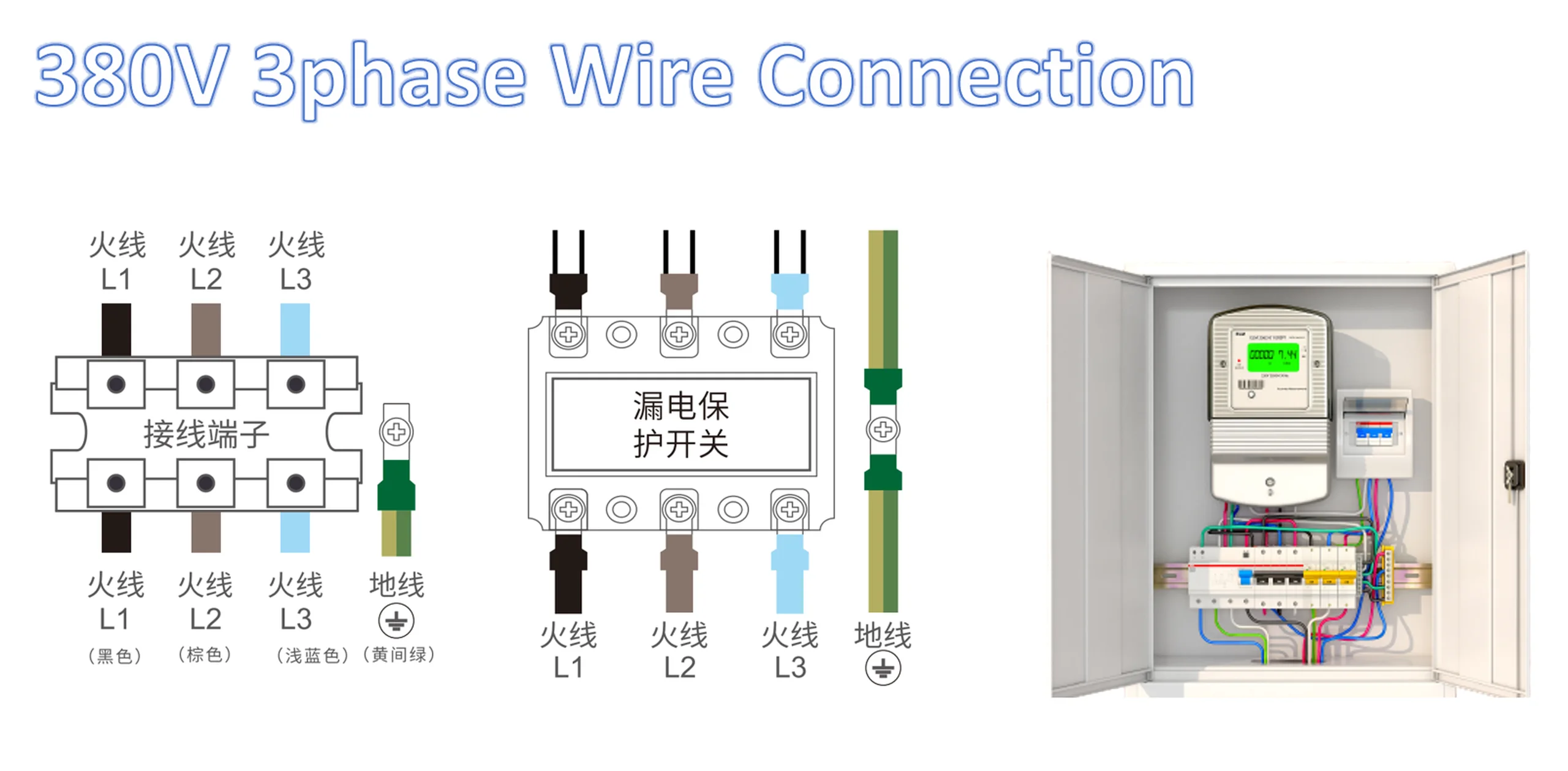
This is the step procurement managers skip most often. Equipment gets chosen, paid for, and delivered — and only at installation does someone find out the power isn’t enough. It happens all the time. Here’s what each power tier requires:
| Power Range | Voltage | Wiring | Watch Out For |
|---|---|---|---|
| Under 3.5kW | 220V single-phase | Standard outlet works, but a dedicated circuit is better | Don’t share the line with other high-draw appliances |
| 5kW–8kW | 380V three-phase | Dedicated circuit, electrician-installed | You can’t just plug it into a wall socket |
| 12kW–15kW | 380V three-phase | Dedicated line, independent breaker, min. 6mm² (up to 10mm²) copper | High demand on panel capacity — verify before purchasing |
Pay special attention to cumulative load. One 8kW unit might look fine on the circuit. But three running at full power at once means 24kW — and that’s before you add steamers, refrigerators, exhaust fans, and everything else. The total can easily blow past the cafeteria’s existing transformer capacity.
So the first step isn’t choosing equipment. It’s having an electrician check how much capacity the distribution panel actually has. That number tells you what you can buy and how many. Get the electrical picture first, then talk equipment. That order matters.
What If an Older Cafeteria Doesn’t Have Enough Power
Plenty of school cafeterias were built 10 or 20 years ago. The original wiring was sized for a gas kitchen — lights, fridges, exhaust fans — maybe a few tens of kilowatts total. Nobody planned for high-power induction cookers.
Retrofitting that kind of kitchen means the electrical gap is the first thing you have to solve. The usual problems: total capacity is too low, so breakers trip the moment a big cooker turns on; wiring is too thin, so cables overheat under sustained load — a genuine safety risk; or there are simply no 380V three-phase connections in the kitchen at all.
The fix typically takes two steps. Step one: apply to the school’s facilities department for a capacity upgrade or a bigger transformer. This goes through the utility company, and approval can take a while — start early. Step two: upgrade the kitchen’s internal wiring — heavier copper conductors, dedicated circuits with independent breakers, three-phase connections where needed.
One cost you must build into the procurement budget from the start: the renovation itself. Don’t submit a budget based on equipment prices alone. Rewiring can run anywhere from a few hundred to several thousand dollars, depending on how much work the kitchen needs.
The smart sequence: once you’ve decided to go with induction but before placing the order, nail down the renovation plan and cost together. Equipment that arrives but can’t be installed — or gets installed but can’t be turned on — is an entirely avoidable headache.
Can You Keep Using Your Existing Pots and Pans
Which Pots Work on Induction and Which Don’t
Induction cookers only heat pots made of magnetic, iron-containing material — the kind a magnet sticks to. The raw iron woks, wrought iron woks, and cast iron pots common in cafeterias all work straight away. Aluminum pots and non-magnetic stainless steel don’t. The test takes two seconds: hold a magnet to the bottom. If it sticks firmly, you’re good. Also check that your large pots aren’t wider than the cooker’s coil — if the pot bottom extends past the heating zone, you’ll get hot spots in the center and cold edges.
Here’s the basic principle: induction works by generating eddy currents in the pot bottom through an electromagnetic field. That only happens if the pot is ferromagnetic — meaning a magnet grabs onto it.
The iron woks most school cafeterias already use — raw iron and wrought iron — are fully compatible. No need to replace them. Cast iron works too, and actually performs well on induction because it’s thick and holds heat. Magnetic stainless steel like 430 grade is also fine.
What doesn’t work: aluminum pots, copper pots, and some stainless steel. The confusing one is stainless steel — 304 grade isn’t magnetic on its own. Unless the pot has a bonded magnetic base layer, it just sits on the cooker and nothing happens.
Testing is dead simple. Magnet on the bottom. Sticks firmly? Works. Doesn’t stick, or barely holds? Won’t work.
For your budget: if the cafeteria mostly uses iron woks, you probably don’t need to spend anything on new cookware. But if you have aluminum pots or non-magnetic stainless steel in rotation, factor in the cost of replacements. Don’t end up with cookers you’ve paid for and pots that won’t heat.
Making Sure Large Pots Fit the Cooker’s Heating Zone
Every induction cooker has a coil inside. The area that coil covers is the actual heating zone. The pot bottom needs to sit within it to heat evenly. If the pot is much wider than the coil, the center gets hot and the edges stay cold. You end up with food that’s cooked in the middle and raw on the sides.
School cafeteria woks typically run 40 cm to 60 cm across, sometimes larger. When choosing a cooker, always confirm with the supplier that the coil’s effective diameter matches your pots. Freestanding wok cookers come with large concave coils made for big round-bottom woks, so this usually isn’t a problem.
But if you’re planning to pair countertop or built-in cookers with large pots, check carefully. Their coils are generally smaller, and oversized pots may not heat evenly on them.
One more thing on panel material: go with glass-ceramic if you can. Glass-ceramic sits above Mohs 7 in hardness; ordinary tempered glass is around 5.5. That gap matters when heavy iron woks slide across the surface every day. Tempered glass scratches up fast. Glass-ceramic holds up far longer, and the lower replacement frequency actually saves money over time.
What Safety Features Matter Most in a School Kitchen
The Four Non-Negotiables, Plus One Extra for K–12 Schools
Four safety features are non-negotiable when buying commercial induction cookers for a school cafeteria: automatic overheat shutoff, dry-burn alarm with auto-shutoff, leakage protection, and overvoltage/undervoltage protection. For primary and secondary schools, a child lock or panel lockout adds another layer. Don’t just trust the sales brochure — ask the supplier for the actual CCC-certified test report covering each feature.
School cafeterias aren’t regular restaurants. The diners are students. Any incident — even a small one — can escalate fast. The bar for safety features needs to be high.
Go through these one by one before you sign anything:
Automatic overheat shutoff. Kills the power when internal temperature spikes abnormally. This is the last line of defense before equipment damage — or worse, fire.
Dry-burn alarm and auto-shutoff. Stops heating when the pot has no water or food in it. Cafeteria staff juggle multiple stoves at once. Forgetting to turn one off during a rush isn’t unusual. This catches that mistake.
Leakage protection. Kitchen floors are wet all the time. Leakage protection is the most basic electrical safety requirement. Not optional.
Overvoltage/undervoltage protection. School cafeterias are prone to voltage swings, especially during the midday peak. Without automatic protection, abnormal voltage fries the mainboard at best. At worst, it triggers a bigger failure.
For K–12 schools, also look for a child lock or control lockout. Yes, the kitchen should be off-limits to students. But one more barrier between a curious hand and a hot cooker is always worth having.
And one last point: don’t stop at the brochure. Ask for the product’s official test report. Confirm that every safety feature listed has actually been tested and certified. A document beats a sales pitch every time.
Induction vs. Gas: Which One Fits a School Cafeteria Better
Efficiency, Safety, and Cost — Side by Side
On balance, commercial induction cookers are a better fit for school cafeterias than gas stoves. Thermal efficiency tops 90% (gas sits below 50%). There’s no open flame and no gas leak risk. Annual energy costs tend to be lower. The main hurdle is electrical — you need enough power and dedicated wiring. If the capacity is there, or you’re willing to do a one-time upgrade, induction wins on both safety and long-term cost.
This question comes up in almost every school administration meeting on the topic. Here’s the short version:
| Factor | Commercial Induction Cooker | Gas Stove |
|---|---|---|
| Thermal Efficiency | Over 90% | Under 50% |
| Safety | No open flame, no gas leak risk, surface doesn’t heat directly | Open flame, gas leak risk |
| Installation | Sufficient electrical supply + dedicated wiring | Gas lines + forced exhaust system |
| Yearly Running Cost | Typically lower (efficiency gap is the main reason) | Higher over time |
Third-party testing backs this up. A lab study by the Electric Power Research Institute (EPRI), conducted for the California Energy Commission, measured gas stoves at roughly 35%–42% efficiency and induction at 76%–84% — close to double (source: ACEEE/EPRI – Induction Cooking Technology Design and Assessment).
The takeaway is clear. If your cafeteria’s electrical capacity is sufficient — or you’re prepared for a one-time wiring upgrade — induction cookers are the stronger choice on both safety and long-term operating cost. In a school environment especially, “no open flame” and “no gas leak” are often the deciding factors for administrators.
We’ve published a longer breakdown comparing thermal efficiency, actual monthly costs, and cooking experience between the two — with calculations across different electricity and gas rate scenarios. If you need the full data: Gas Stove vs. Induction Cooker: An In-Depth Energy Efficiency Comparison.
How Much Can a Commercial Induction Cooker Actually Save
What’s the Real Gap Between Electricity and Gas Bills Each Year
For a cafeteria feeding about 1,000 people, an induction setup typically saves roughly $2,000 to $3,500 per year on energy compared to gas — though the exact amount depends on local rates. Induction equipment costs more upfront, and there’s the wiring upgrade to factor in. But add up equipment, installation, and five years of running costs, and the induction option usually breaks even within 1–2 years. After that, every year is net savings.
Saying “induction saves money” is too vague on its own. A concrete scenario makes it real.
Take a school cafeteria serving 1,000 diners, running lunch and dinner, with the main cookers on for 5 to 6 hours a day.
Gas stove scenario: at about 45% thermal efficiency, daily gas consumption runs roughly 30–40 cubic meters. At typical commercial rates, that puts monthly gas cost in the range of $400–$600, or roughly $5,000–$7,000 per year.
Induction scenario: at about 92% thermal efficiency, the energy needed for the same cooking work drops sharply — nearly double the efficiency means roughly half the energy. Monthly electricity runs about $200–$350, or roughly $2,500–$4,200 per year.
The gap: around $2,000 to $3,500 in annual savings. Local electricity and gas prices vary widely, so treat this as a range — but the direction and scale are consistent.
The reason comes down to one thing: the efficiency gap. Over half the heat from a gas stove goes into the air — it heats the kitchen, not the food. An induction cooker puts 90%+ of its energy straight into the pot. The U.S. Department of Energy’s publicly available data supports this — showing that induction efficiency can reach up to three times that of gas (source: U.S. DOE – Making the Switch to Induction Stoves or Cooktops).
Add Up the Full Cost Before You Decide
Don’t judge an induction cooker by its sticker price and call it “expensive” or “cheap.” The real number is the total cost of ownership over the equipment’s full life. It breaks down into three parts:
Part one — equipment cost. A commercial induction cooker typically costs more per unit than a gas stove at similar capacity. An 8kW commercial wok cooker might run 1.5 to 2 times the price of a comparable gas unit. That’s a fact.
Part two — installation and renovation. Electrical upgrades, dedicated wiring, breaker installation. These costs don’t exist in a gas scenario — though gas setups may carry their own pipeline and ventilation renovation expenses.
Part three — 5 to 8 years of running costs. Energy (electricity vs. gas) plus maintenance. Induction maintenance is minimal — clean the cooling fan intake of grease and dust now and then, check power cords and connectors, and you’re basically done. No gas line inspections. No burner replacements. Maintenance costs run noticeably lower.
Commercial induction cookers typically last 5 to 8 years. The biggest factor in lifespan is cooling system upkeep and kitchen humidity. Keep the air intake clear. Don’t let grease block the vents. The equipment holds up.
Stack all three parts into a 5-year comparison and the picture changes. Induction costs more at the start, but ongoing energy and maintenance savings usually close the gap within 1 to 2 years. Every year after that is pure savings.
A practical tip for procurement managers: build a simple two-column spreadsheet. Left side: gas option, 5-year total. Right side: induction option, 5-year total. List every line item. Present that to school management. Numbers are more convincing than quoting a single unit price.
Purchasing Checklist for School Cafeteria Induction Cookers
Before purchasing, confirm eight items one by one: equipment type, power configuration, electrical capacity, cookware compatibility, safety features, product certification, after-sales service, and total budget (equipment + renovation + operating costs). A heavy-duty induction cooker for a school canteen is a long-term investment — take the time to verify each point. Before signing any contract, require the supplier to run an on-site demo covering both large-batch stir-frying and low-heat simmering.
This checklist pulls together every key decision point from this guide. Print it, check each item off, and bring it when you meet with suppliers or compare products.
| No. | Checkpoint | What to Confirm | Done |
|---|---|---|---|
| ① | Equipment Type | Freestanding or built-in for main stations? Countertop or built-in for auxiliary? Each workstation’s type clearly assigned? | □ |
| ② | Power Configuration | Based on headcount and menu, how much power per station? Every station individually confirmed? | □ |
| ③ | Electrical Capacity | Current circuit capacity sufficient? Upgrade needed? Renovation budget set? | □ |
| ④ | Cookware Compatibility | Existing pots pass the magnet test? New cookware needed? | □ |
| ⑤ | Safety Features | Overheat, dry-burn, leakage, voltage protection — all present? Child lock needed for K–12? | □ |
| ⑥ | Certification | CCC certified? Official test report available? (For export: CE, NSF, UL as applicable?) | □ |
| ⑦ | After-Sales Service | Warranty length? Core components (IGBT module, coil) covered separately? Repair response time? | □ |
| ⑧ | Total Budget | Equipment + electrical renovation + projected annual running cost — does the total stay within budget? | □ |
One more thing before you sign: require the supplier to do a live demo. Test two scenarios yourself — big-batch stir-fry and low-heat simmer. Watching the equipment perform under real conditions tells you more than any spec sheet or sales deck.
If your main stations need a commercial induction wok for school-scale cooking, you can start with the ATRX commercial induction wok cooker product range — 8kW to 30kW, with specs that can be tailored to your cafeteria’s actual workload.
FAQ
Does a Commercial Induction Cooker Give Off Radiation? Is It Safe for Kitchen Staff?
It does produce an electromagnetic field while running. But at normal working distance — standing upright in front of the cooker, body at least 30 cm from the surface — field strength stays well below the safety limits set by the International Commission on Non-Ionizing Radiation Protection (ICNIRP). Any unit that has passed CCC or CE certification has been tested for electromagnetic emissions before it ships. Under normal use, there’s no health risk.
Independent research supports this. A Mie University (Japan) study measuring over 70 induction cookers found that at standard operating distance (~30 cm from center), magnetic field readings did not exceed ICNIRP public exposure limits (source: PMC – Measurement of Intermediate Frequency Magnetic Fields from Induction Cookers).
If kitchen staff still have concerns, two habits are enough: keep a normal standing distance while cooking — don’t lean your body against the cooktop. And anyone with a cardiac pacemaker should avoid prolonged close-range use. That second point isn’t unique to commercial models — it’s a standard note in every induction cooker’s safety manual.
Do You Still Need Kitchen Exhaust Ventilation with Induction Cookers?
Yes. Induction cookers don’t produce combustion exhaust — that’s a real advantage over gas. But cooking fumes don’t come from combustion. They come from food and oil hitting high heat, and that happens regardless of the heat source. Stir-fry or deep-fry anything and you’ll get fumes. The exhaust system stays.
The upside: without combustion gases in the mix, total exhaust volume in an induction kitchen is noticeably lower than in a gas kitchen. You can often spec a smaller exhaust system with lower fan capacity, which means lower operating costs too.
Exact requirements depend on local fire and environmental codes. Build the exhaust plan into your kitchen renovation from the start — don’t try to add it after the cookers are already installed.
About the author
ATRX Team| 18 Years Commercial
Induction Cooker Manufacturer in China
Induction Cooker Manufacturer in China
Related Posts
How to Install a Built-In Induction Cooktop: A Step-by-Step Guide
09/17/2026
How to Clean a Commercial Deep Fryer: A Step-by-Step Guide
09/13/2026
High Quality Commercial Induction Cooker Manufacturer
09/09/2026
Automatic Wok Machine: Types, Specifications, Applications and Buying Guide
08/18/2026
What Is a Commercial Induction Cooker and How Does It Work
08/13/2026
Commercial Induction Range for Hotel Kitchens: How to Choose the Right Model
08/11/2026
China Commercial Induction Cooker Manufacturer
08/09/2026
10 Best Commercial Induction Cooker Manufacturers & Supplier Selection Guide [2026]
08/07/2026
Tilting Skillet & Bratt Pan: How to Choose the Right One for Your Commercial Kitchen
08/06/2026

Commercial Induction Cooker for School Cafeteria: How to Pick the Right High-Power Unit
08/04/2026