
PRODUCT HIGHLIGHTS
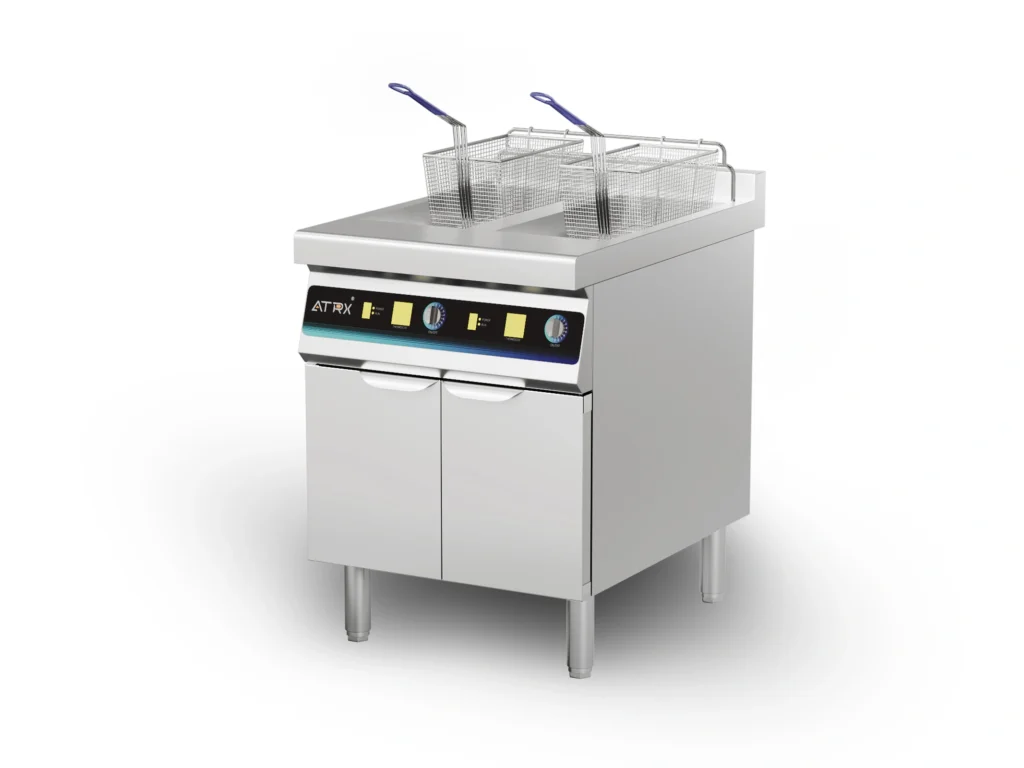
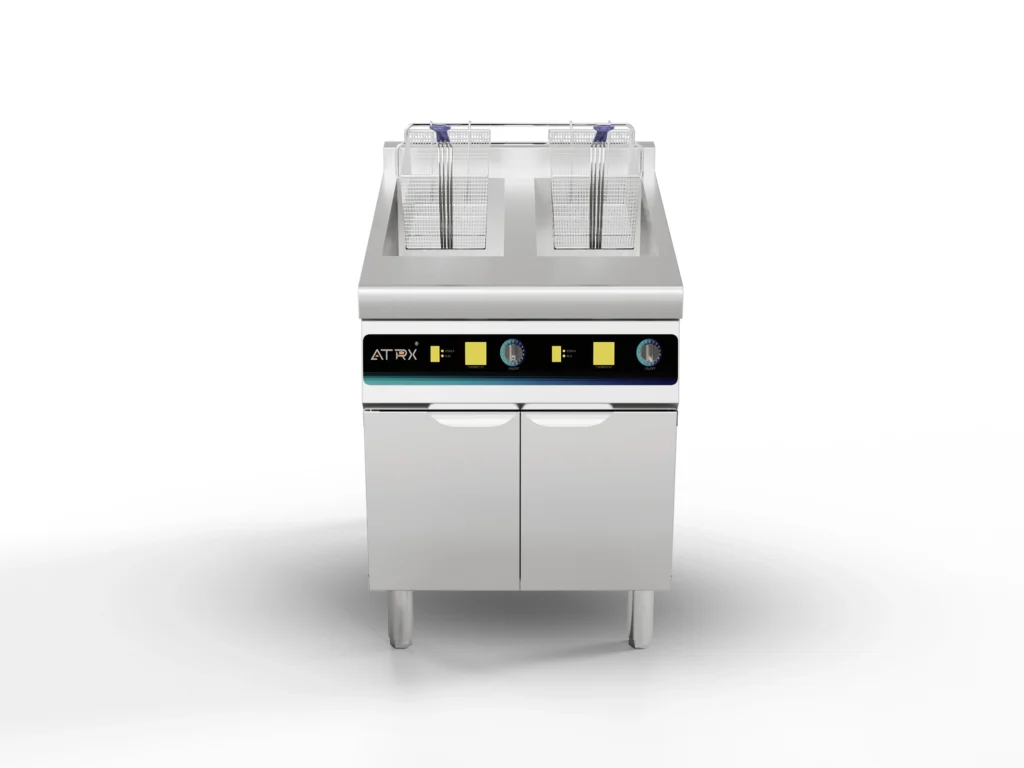
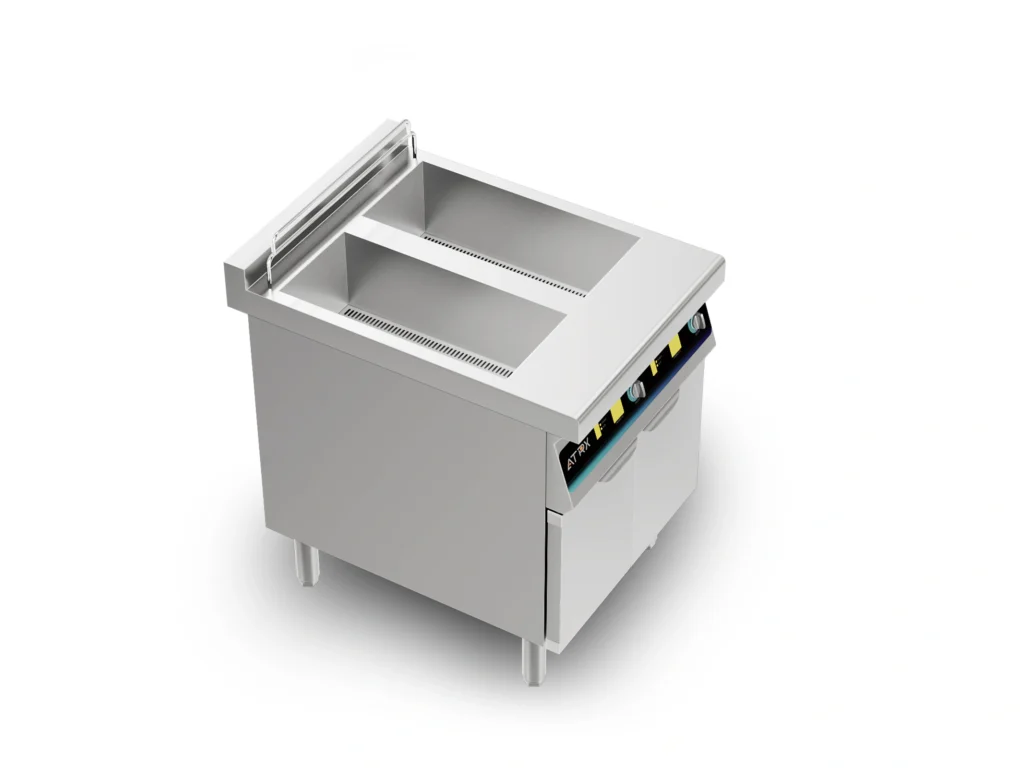
Double-Tank Induction Fryer with an Optional Cool Zone
Floor Induction Double Deep Fryer | 15KW*2
Value of the 220V Front-to-Back 2-Burner Induction Cooktop
Sediment Stays in the Low-Temperature Zone to Reduce Carbonization
Debris settles in the low-temperature zone instead of carbonizing in hot oil, slowing darkening and off-odors. Routine filtering is still required for consistent batches.
Reduced Carbonization Paired With Oil-Condition-Based Changes
Less heat reaches settled sediment, so oil ages more slowly; regular filtering lets one pot cover more batches. Change oil by TPC and store standards, not color or days.
Fewer Oil Changes and a Clearer Cost Picture
Normal cool-zone filtering reduces oil changes, disposal and changeover downtime. Savings show in monthly cost, but depend on menu, volume and oil management.
Inquiry UsView Specifications
01 / SPECIFICATIONS
Product Specification
Product Name
Product Model
Power(Kw)
Voltage(V)
Product Size
Product Material
Hs Code
02 / GETTING STARTED
How To Operate This Machine
Step 1
Place your commercial induction cooker in position and connect the power cable based on the required voltage. Make sure all wiring is done correctly before turning on the unit.
Step 2
Once powered on, place your induction cookware on the commercial induction cooker, prepare your ingredients, and get ready to start cooking.
Step 3
Turn the knob from 0 to your desired setting to begin cooking. During the cooking process, simply adjust the knob between levels 1 to 8 to control the heat output to your needs.
Step 4
Once cooking complete,then turn the knob back to 0 to power off the unit. Wipe down and clean the surface of your commercial induction cooker to keep it in top condition.
03 / QUALITY ASSURANCE
Cool-Zone Commercial Induction Fryer: Six Manufacturing Checks and Performance Validations
01
Cool-Zone Depth Set by Menu
For each cool-zone fryer, ATRX first confirms the menu, daily volume and 12L oil load per tank, then sets the sediment depth and temperature gradient and verifies them on a sample machine. Heavy-batter menus need more settling room than light-batter ones; matching the structure to the actual menu prevents the oil-life feature from being copied from the wrong application.
02
Heating Zone Separated From the Sediment Zone
At the tank-design stage, our engineers set the heating position and sediment space together, giving debris a stable low-temperature resting point without taking usable frying area from the fryer. If the zones are not separated properly, crumbs keep soaking in hot oil and carbonising; the sample check confirms that the cool-zone structure still leaves enough room for continuous fried-chicken and canteen batches.
03
Tanks: SS304 and Salt-Spray Testing
Cool-zone tanks are built in SS304 and checked after welding for distortion, fit and edge condition, while critical joints enter salt-spray testing for resistance to oil vapour, acidic residue and humidity. Long cleaning cycles can expose a weak weld or unfinished edge; screening those points helps preserve both tank integrity and the oil-life benefit during continuous fried-chicken or canteen use.
04
Controls: Clean Assembly and Drying
Cool-zone control boards are assembled in an enclosed dust-free area, dried before soldering and inspected before power-on so dust, oil mist and moisture do not sit under components. A board that starts clean but absorbs humidity can drift in temperature response; controlled assembly supports the steadier oil-temperature control needed to preserve the cool-zone benefit over long shifts.
05
Boards: High-Temperature and Constant-Humidity Testing
Finished cool-zone boards first undergo continuous high-temperature ageing, then enter a constant-temperature, constant-humidity chamber that simulates long exposure to kitchen steam and moisture. A board that only works when new can drift or shut down later; this test supports the stable temperature control needed to keep the cool-zone oil-life benefit from fading in continuous fried-chicken or canteen service.
06
Complete Unit: Thermal Shock and Full Load
Critical cool-zone parts first go through thermal-shock testing to expose weak joints and looseness, after which the finished unit runs at full load with 15kW × 2, 380V three-phase, 22.8A, 6 mm² copper wiring and a 32A residual-current device as the specified installation context, followed by insulation and grounding checks. This verifies that the cool-zone structure and electrical system can support continuous frying without losing the oil-life advantage.
All results above are from our own factory. See related pages below.
Production Line Center Manufacturing Machines PCB Assembly Center04 / COOKING APPLICATIONS
Cool-Zone Commercial Induction Fryer: Built for Fried Chicken, Fast Food and Continuous Canteen Catering
Own factory
CE certified
OEM available
Fried-Chicken and Fried-Fish Shops
When fried chicken, fish fillets and battered cutlets drop, breadcrumbs and batter keep shedding. Debris that settles into the cool zone sees less heat, so the oil does not darken, foam or take on burnt flavor as quickly; with normal filtering between lunch and dinner peaks, one pot of oil carries consecutive batches more smoothly and finished color stays more consistent.Fast-Food and Burger Shops
Fast-Food and Burger Shops
Fries, onion rings, nuggets and cheese sticks bring starch, ice crystals and moisture into the oil, and continuous peak frying clouds the oil fastest. Two tanks can run fries on one side and battered snacks on the other while the cool zone catches fine sediment, reducing flavor transfer and repeated carbonization so the counter does not have to stop for oil changes when orders are waiting.
Canteen and Group-Catering Kitchens
School, hospital and group-catering kitchens usually concentrate service into fixed windows with both fries and battered meat on the menu. The 15kW × 2 configuration with 12L per tank processes different foods separately; under normal filtering and cleaning, the cool zone moves fine debris out of the high-temperature area, helping oil condition carry across consecutive shifts and making end-of-shift filtering and cleaning more manageable.
FAQs
Frequently Asked Questions
We've gathered the most common questions buyers ask before placing their first order — browse through and find the answers that matter most to you.
How Does the Cool Zone Extend Oil Life?
The cool zone lets batter, breadcrumbs and fine debris settle below the heating area, reducing repeated carbonization of particles in high-temperature oil, which slows the development of dark oil, foam and burnt flavor and helps the oil stay usable longer. The core value of the cool zone is moving sediment out of the main high-temperature area. Normal frying temperatures still follow the food being cooked, and routine filtering still applies.
How Many Extra Days Can One Pot of Oil Last?
There is no fixed number of extra days, because the cool zone slows oil degradation rather than adding a calendar guarantee. It keeps batter, breadcrumbs and fine debris below the main high-temperature area so they carbonise more slowly, but oil life still depends on oil type, batter load, daily volume, temperature and filtering frequency. Judge the actual gain with colour, foam, odour and TPC testing against local standards; a before-and-after TPC check under the same menu and volume gives the store its real planning number.
Is the Cool Zone Standard or Custom?
The cool zone is a custom configuration, not a fixed add-on: its depth and temperature gradient are tuned to the menu, daily volume and 12L oil load per tank. That matters because heavy batter and debris need more sediment space than a light-batter menu; one fixed shape would either waste frying area or leave debris too close to the hot zone.
Does the Cool Zone Affect Output or Power Use?
No—the cool zone does not add power demand or reduce the 15kW × 2 unit’s output. The zone is created by the tank structure, not by a separate heater, so it changes where debris settles rather than taking heating capacity away from the oil. The 380V three-phase, 22.8A, 6 mm² wire and 32A RCD requirements still apply.
How Is the Cool Zone Cleaned Daily?
Clean the sediment area daily, because that is what keeps the cool zone working rather than letting debris bake back into the oil. After the unit cools, drain and filter the oil, use dedicated tools on the drain outlet and tank-bottom sediment area, then wash, rinse, dry fully and return the oil. Never add water to hot oil or spray the control panel and electrical areas; heavy-batter kitchens should increase filtering and deep-cleaning frequency according to the manual.
——07 / Factory quote & RFQ
Partner with a Trusted Commercial Induction Cooker Manufacturer
Whether you need wholesale commercial induction cookers, an OEM product line or a commercial kitchen project configuration, send a focused commercial brief. An ATRX team member can review the product, power, certification and customization requirements before quotation.
Useful information to include:
Target country · Product category · Application · Voltage / phase · Estimated quantity · Required certifications · OEM / branding needs