

—— PRODUCT HIGHLIGHTS
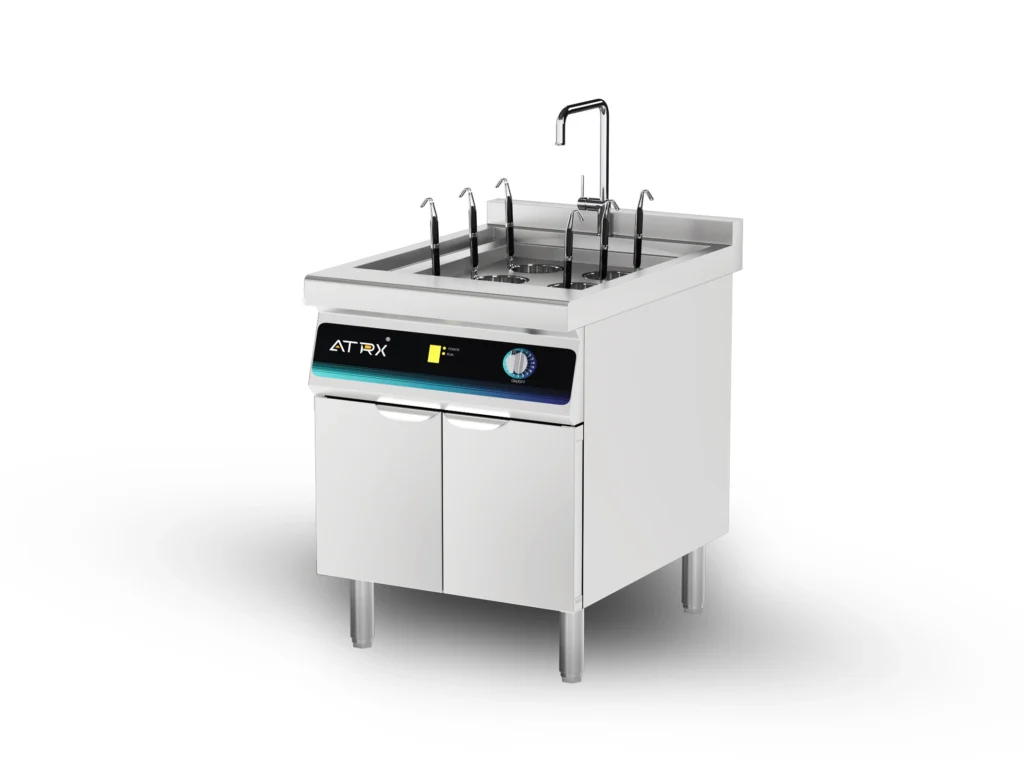
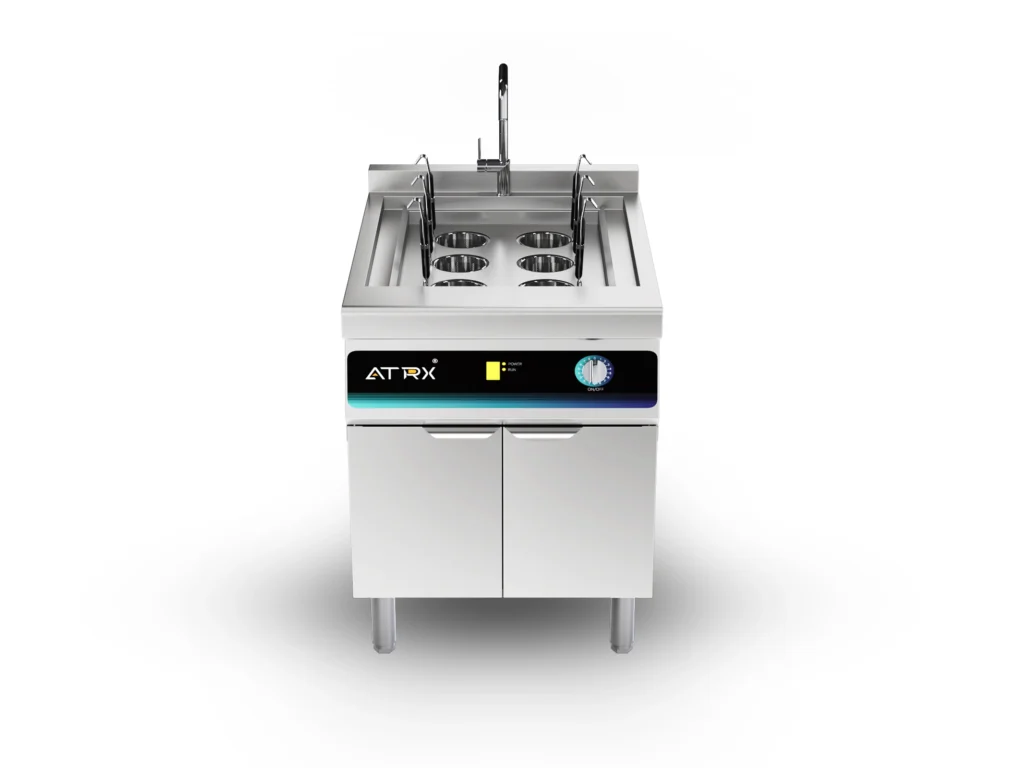
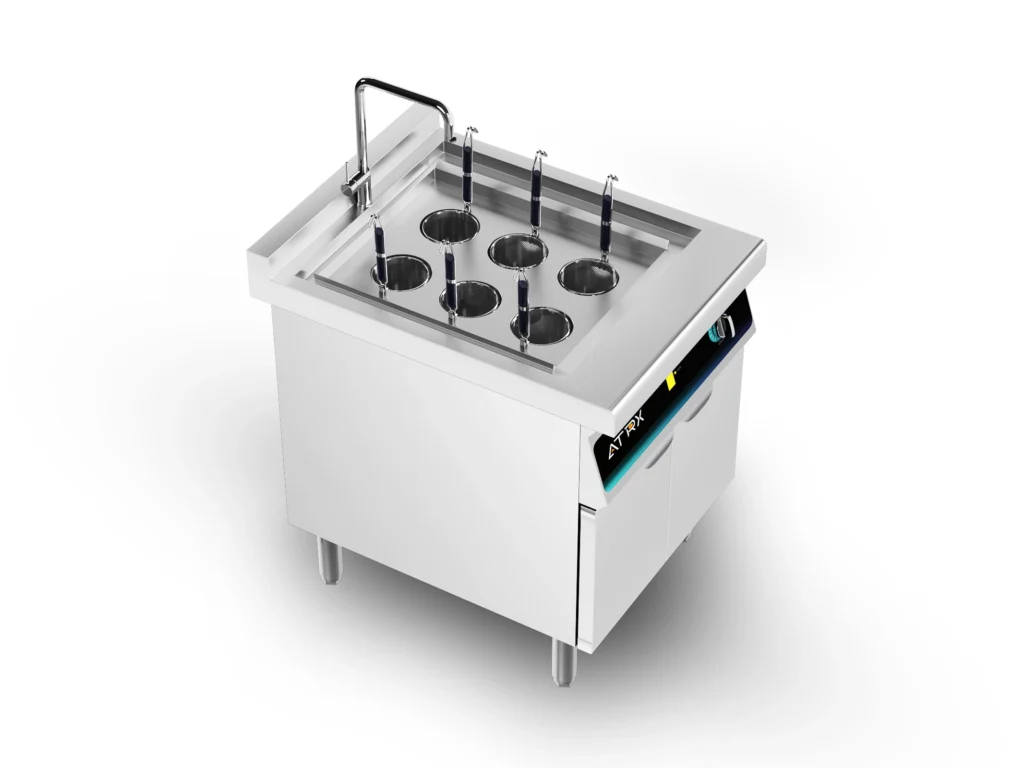
Floor Commercial Induction Pasta Cooker | 8KW
12-Second Boil Recovery
Drop 2kg of cold noodles in and the rolling boil returns in about 12 seconds — 4× faster than gas, keeping every batch out of the texture-killing "Mush Zone."
Direct Electromagnetic Heating
Heat is generated inside the steel tank wall itself, not conducted from a flame through air and metal. Temperature response is instant with zero thermal lag.
No More Mushy Noodles
Below 95°C, starch swells without sealing and noodles turn gummy. The 8KW power density blasts through this danger zone in seconds, locking in al dente bite.
Peak-Hour Output Stability
Whether it is the 1st bowl or the 200th, boil strength stays constant. Chefs never wait for reboil, so cook times stay predictable all through the rush.
Basic Specification
Product Name
Product Model
Power(Kw)
Voltage(V)
Product Size
Product Material
Hs Code
How To Operate This Machine
Step 1
Place your commercial induction cooker in position and connect the power cable based on the required voltage. Make sure all wiring is done correctly before turning on the unit.
Step 2
Once powered on, place your induction cookware on the commercial induction cooker, prepare your ingredients, and get ready to start cooking.
Step 3
Turn the knob from 0 to your desired setting to begin cooking. During the cooking process, simply adjust the knob between levels 1 to 8 to control the heat output to your needs.
Step 4
Once cooking complete,then turn the knob back to 0 to power off the unit. Wipe down and clean the surface of your commercial induction cooker to keep it in top condition.
6-Step Quality Checking of this Machine | Every Unit
Every testing machine shown below is physically present in our factory — no fabrication.
PERFORMANCE
Dust-free PCB assembly
- Every board built in a sealed cleanroom, no dust or grease particles get trapped under components — eliminates 40% short-circuit failures compare to competitors.
Electric Heating Constant Temperature Drying Oven
- Bakes out all moisture from PCBs before soldering — boards that skip this step blister and crack under high-power heat within months.
Electric Heating Constant Temperature Incubator
- Every board is heat-aged for hours to force weak solder joints to fail in our lab, not in your kitchen after installation.
Constant Temperature and Humidity Test Chamber
- Simulates years of steam and humidity from a real commercial kitchen to verify no board corrosion or short circuits develop over time.
Salt Spray Test Chamber
- Tests every metal part and connector against aggressive corrosive vapor — the same oils, acids, and moisture your cooker faces daily in a commercial kitchen environment.
Thermal Shock Test Chamber
- Mimics the hundreds of rapid heat-up / cool-down cycles your cooker endures every single day, cracking any weak solder joint before it ever ships.
What Food Can You Cook With It?
Asian Noodles
Ramen, udon, soba, and rice vermicelli need a violent boil to develop springy texture. The 12-second recovery keeps water turbulent after every cold drop, preventing clumping and soft, overcooked strands.
Italian Pasta
Spaghetti, penne, and fettuccine require sustained heat for al dente firmness. Instant induction reboil stops starch from dissolving into the water, so each piece holds its shape and bite at high volume.
Dumplings & Blanched Vegetables
Wontons, gyoza, broccoli, and bok choy depend on rapid, steady boiling to cook evenly and stay vibrant. Zero-lag heat response prevents the temperature crash that waterlog fillings and dull vegetable color.
FAQs
Frequently Asked Questions

Most People Curious
We've gathered the most common questions buyers ask before placing their first order — browse through and find the answers that matter most to you.
Submit Your InquiryHow fast does an induction pasta cooker recover boiling after adding cold noodles?
A well-engineered commercial induction pasta cooker can restore a rolling boil in roughly 12 seconds after a 2kg cold noodle drop. Gas models typically need 45–60 seconds because heat travels from flame to air to steel to water. Induction eliminates that chain — the electromagnetic field heats the tank wall directly, so energy hits the water the instant sensors detect a temperature dip. This keeps noodles out of the sub-95°C "Mush Zone" where they turn sticky and soft.
What is thermal shock in pasta cooking and why does it cause mushy noodles?
Thermal shock is the sudden temperature crash when cold food enters boiling water. If your noodle boiler lacks the power density to recover quickly, water drops below 95°C, boiling stops, and noodles sit in still water absorbing moisture without forming a proper starch seal. The result is gummy, clumped pasta. An 8KW induction system counteracts this shock almost instantly by generating heat inside the steel wall itself, maintaining the turbulent boil that keeps strands separated and textures firm.
Can an 8KW electric pasta boiler handle a full lunch rush without losing boil?
Yes. Induction operates at roughly 95% thermal efficiency versus about 40% for gas, so effective heating power reaching the water far exceeds what the wattage alone suggests. During back-to-back basket drops, recovery stays under 15 seconds per batch, eliminating the idle "wait-to-reboil" gap common with gas-fired units. A 380V three-phase power supply keeps energy delivery stable even under continuous heavy demand throughout peak service.
Why does my commercial pasta cooker lose its boil when I drop multiple baskets quickly?
Each basket of cold noodles absorbs a large amount of heat from the water. If total power output cannot replace that energy fast enough, temperature falls below boiling and stays there. Gas pasta boilers suffer most because of thermal lag — the delay between the burner ramping up and that heat actually reaching the water through layers of air and steel. Induction cooking removes this bottleneck entirely, generating heat within the tank wall so recovery begins the moment temperature shifts.
Is induction really faster than gas for reboiling a commercial noodle cooker?
Significantly. In side-by-side tests, a high-BTU gas pasta boiler took about 55 seconds to reboil after a 2kg frozen noodle drop, while a comparable induction unit recovered in roughly 12 seconds. The difference is pure physics: gas heats indirectly through convection and conduction across multiple layers, while induction converts electrical energy to heat directly inside the pot wall. Less wasted energy means faster recovery, higher throughput, and a noticeably cooler working environment for kitchen staff.