

Induction Cooktops for Open Kitchens
06/09/2026
Estimated reading time: 2 minutes

You’ve already decided on induction for your open kitchen. That part’s done. This article skips the “should you go induction” debate and goes straight into selection: which type fits your open kitchen, how to keep noise under control, what ventilation to pair it with, and which models to shortlist.
Everything here comes from 18 years of building commercial induction cooktops at the ATRX factory — plus real installation feedback from clients in over 50 countries.
IN THIS ARTICLE
- Single Zone, Multi-Zone, or Floor-Standing — Which Type Fits Your Open Kitchen
- How to Pick a Quieter Induction Cooktop for Open Kitchen Layouts
- Induction Cooktop Ventilation in Open Kitchens: Downdraft vs. Island Hood
- Open Kitchen Induction Cooktop Models — Side-by-Side Comparison
- Common Questions People Ask
Single Zone, Multi-Zone, or Floor-Standing — Which Type Fits Your Open Kitchen
Two things define an open kitchen: counter space is limited, and the cooking area shares air and sightlines with the dining room. Choose the wrong cooktop type and you’ll either choke your output or wreck the visual flow of the whole space.
Below is how the three main types compare — so you can match the right one to your setup.
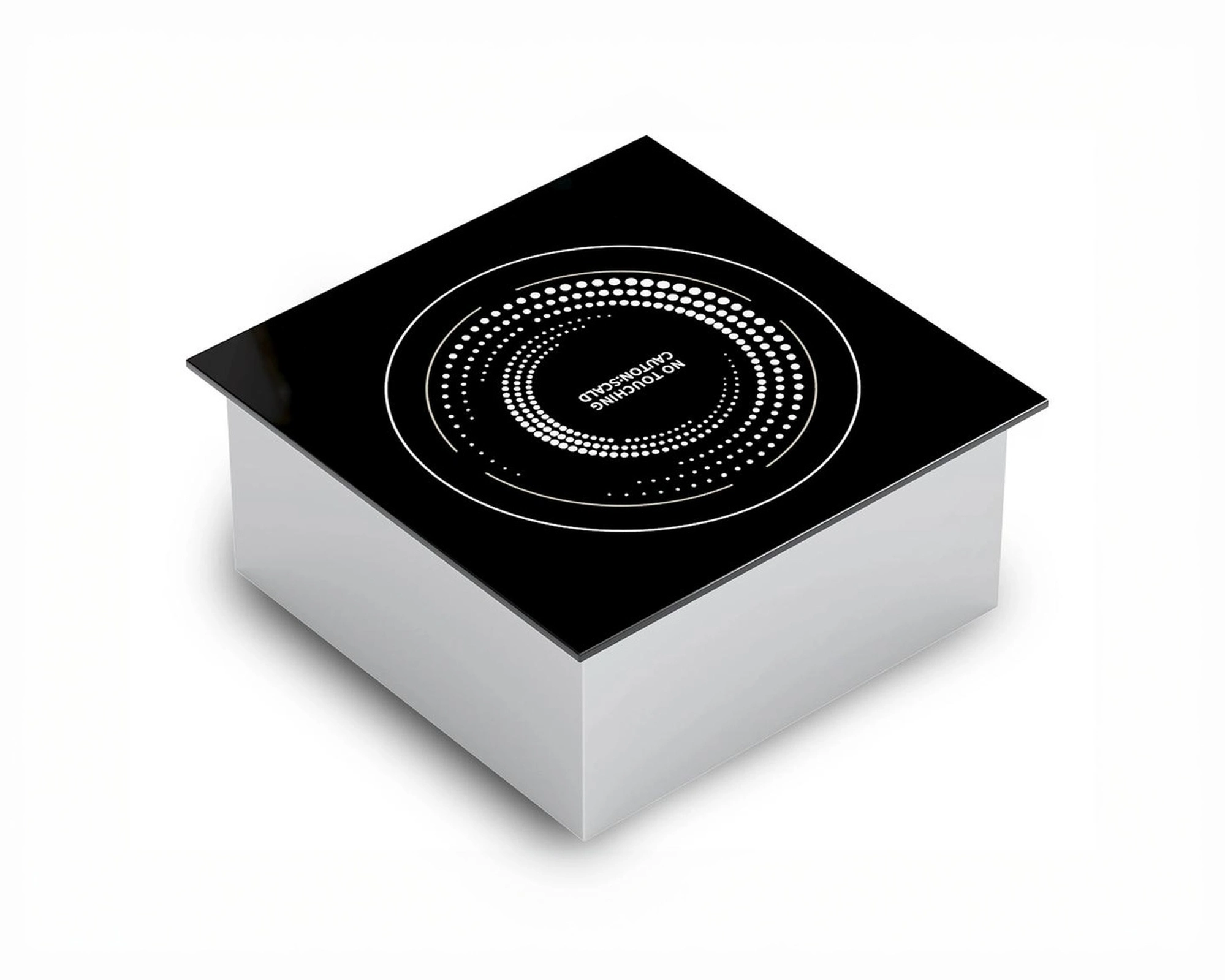
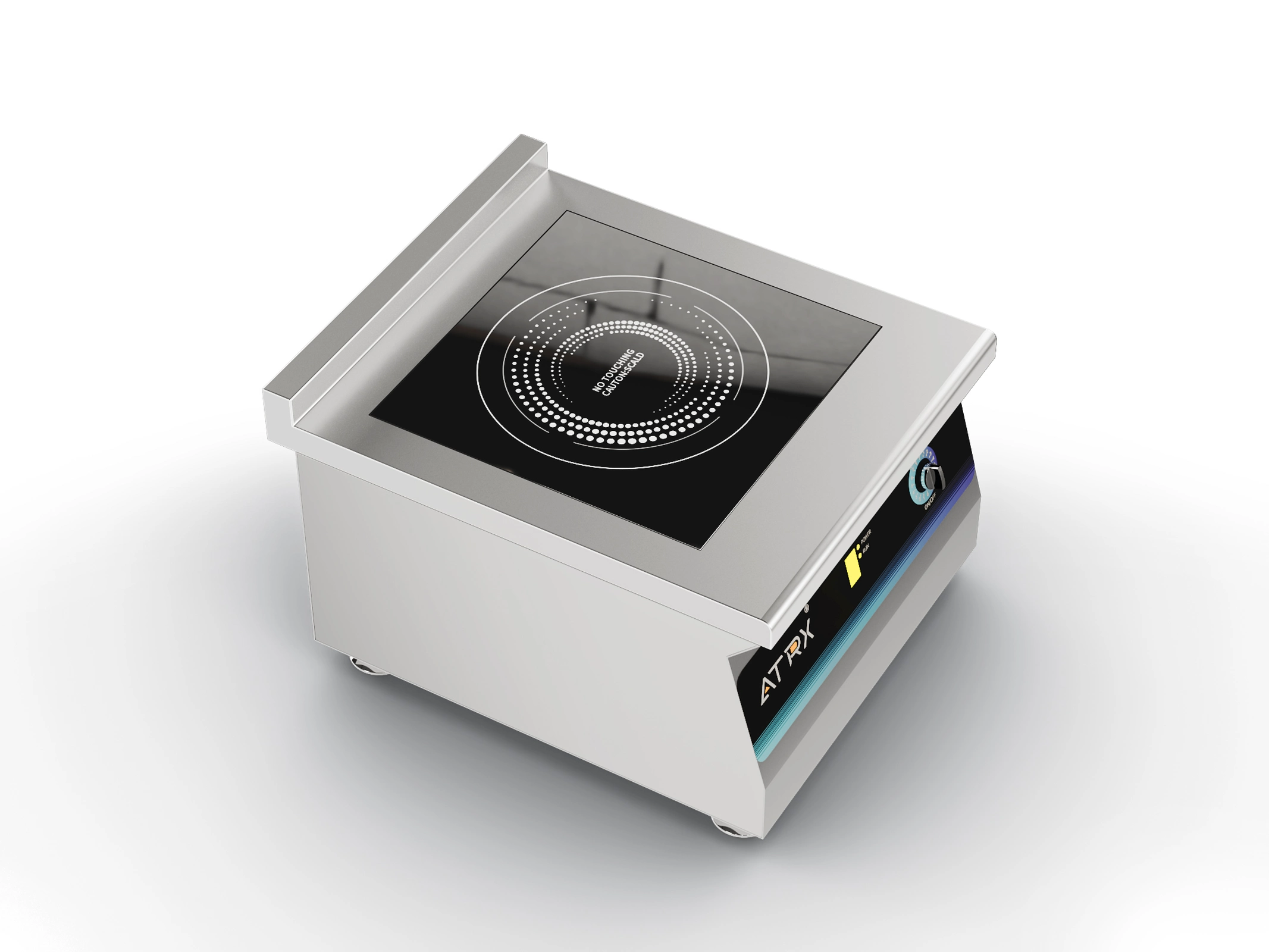
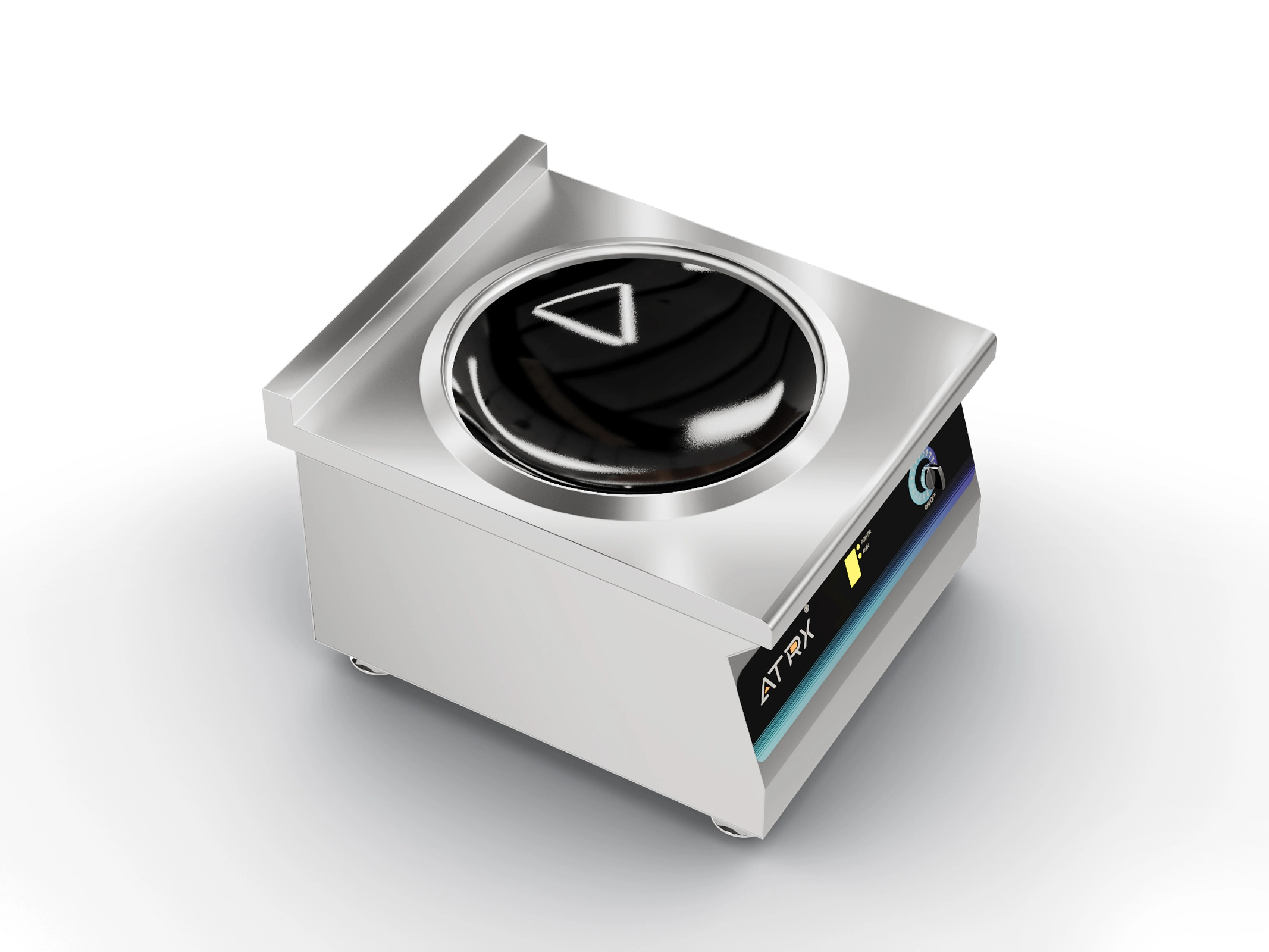
Single-Zone Induction Cooktops
One heating area. Small body. Goes wherever you need it. In an open kitchen, its biggest strength is that it barely takes up visual space — sits on the counter without dominating it, stores away without hassle.
Works well for:
- Bar counters, dessert stations, small display kitchens — one zone is enough, service pace isn’t heavy.
- A backup alongside a main multi-zone unit — the main station handles stir-frying, a single-zone keeps soup warm or heats sauce on the side.
- Pop-ups, catering gigs, off-site banquets — one person carries it, plugs into 220V, and starts cooking on the spot.
The ceiling is obvious: one pot at a time. If your open kitchen runs primary meal service, single-zone alone will bottleneck you. It’s a support player, not a main station.
Multi-Zone Induction Cooktops
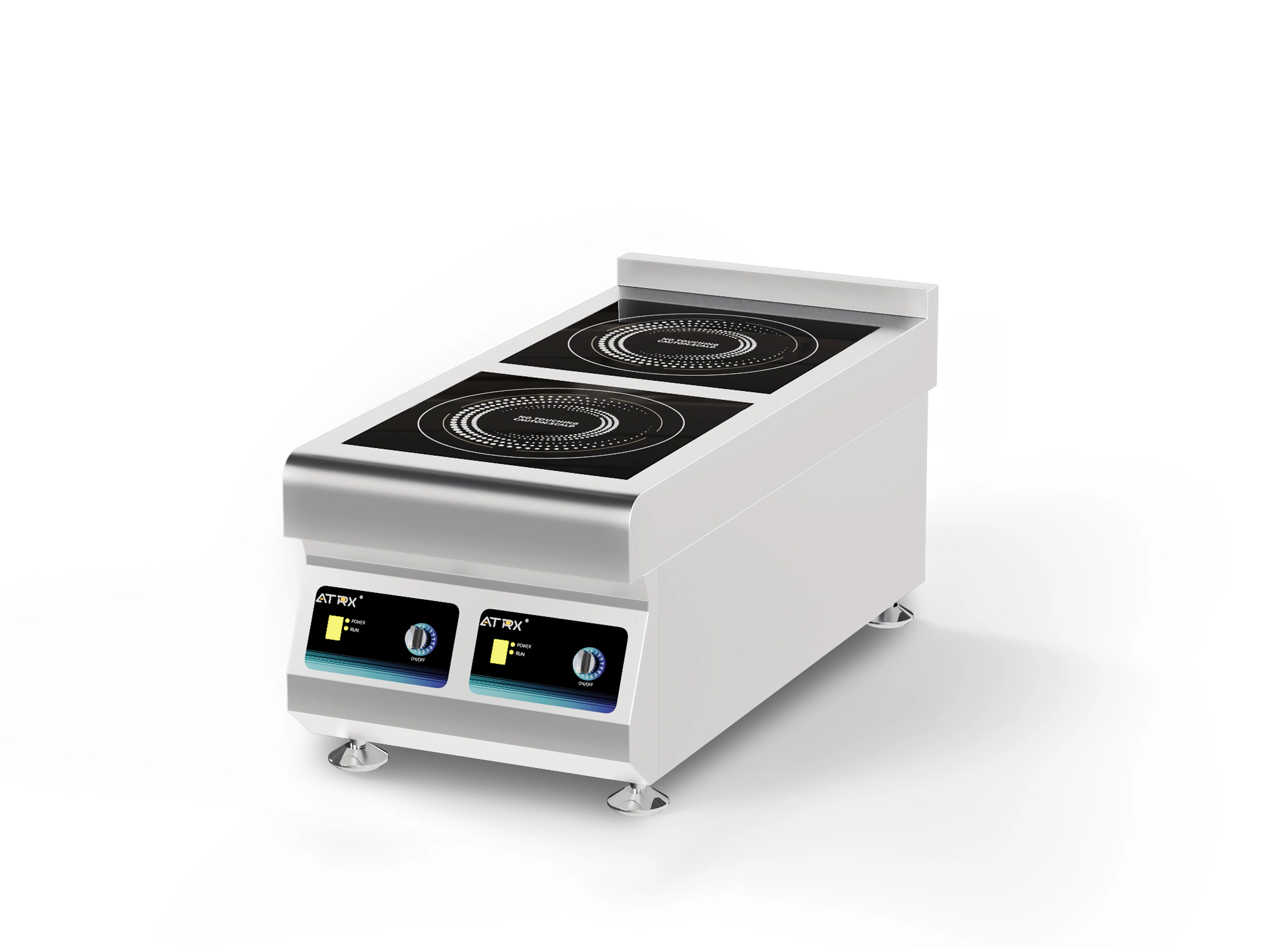
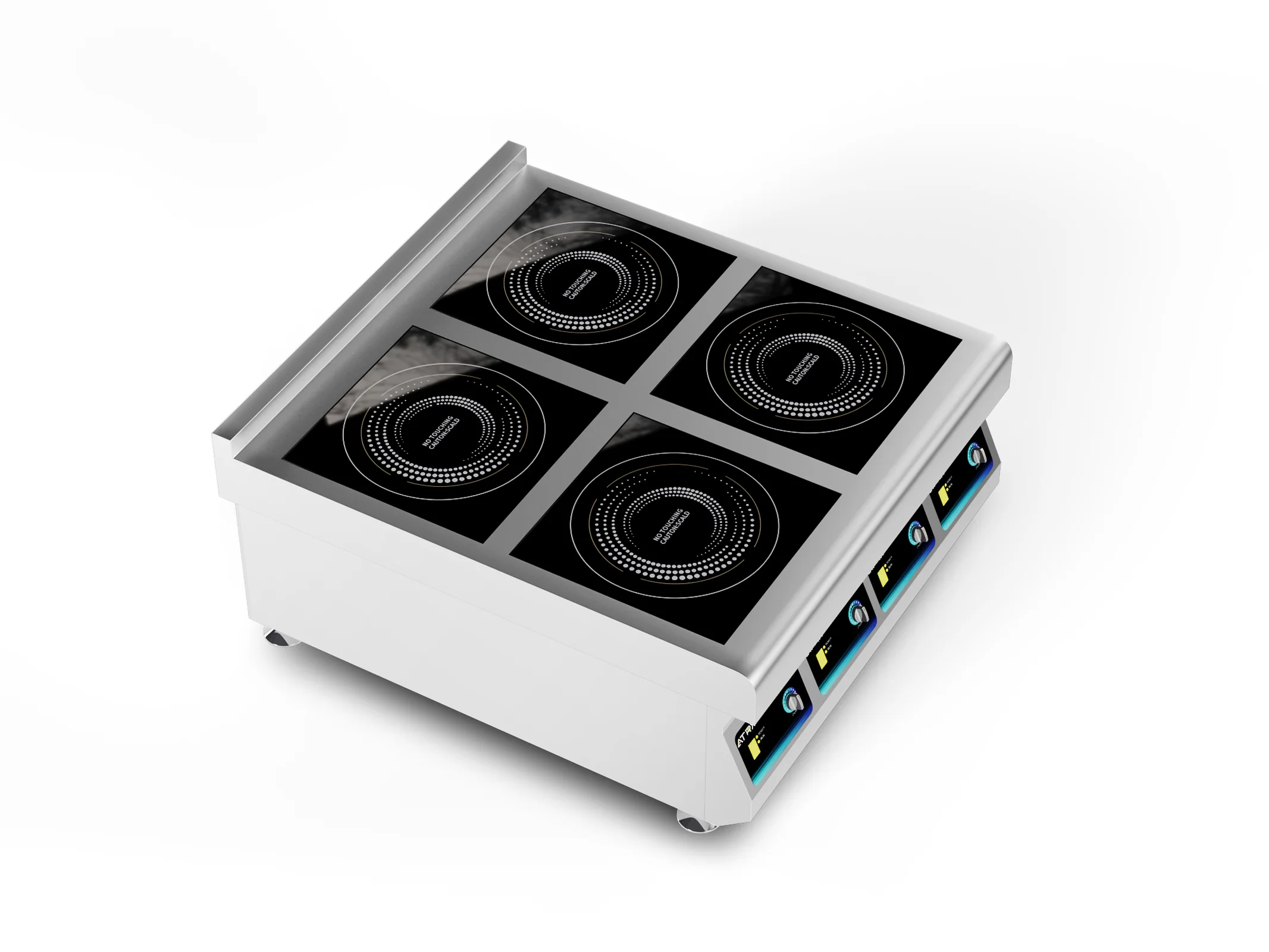
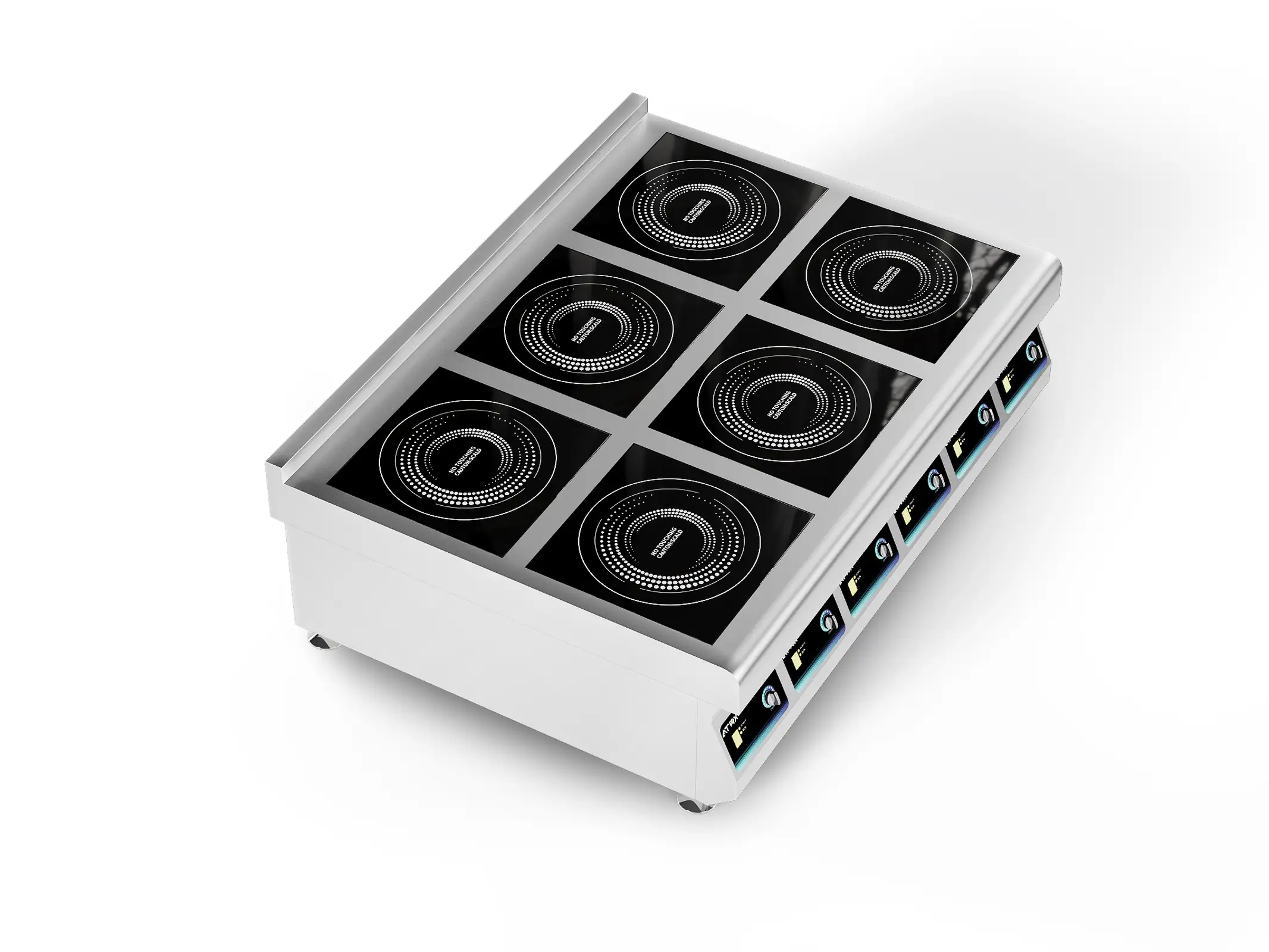
These are 2-zone, 4-zone, and 6-zone models — multiple cooking areas in a single body. Built for open kitchens with high output demands where chefs need several dishes going at once.
The advantages are direct:
- Higher throughput — four zones at once means one chef can run searing, stir-frying, boiling, and braising in parallel.
- Tighter footprint — one 4-zone unit takes less total space than four separate single-zone cooktops.
- Cleaner look — one stainless steel body, one unbroken glass-ceramic surface. Much neater in a front-of-house kitchen that guests can see.
But the practical limits are real:
| Spec | Dual-Zone (AT-CTPII) | 4-Zone (AT-CTSBZ) | 6-Zone (AT-CTLBZ) |
|---|---|---|---|
| Unit Size | 800×470mm | 700×800mm | 1050×800mm |
| Power per Zone | 3.5KW or 5KW | 3.5KW or 5KW | 3.5KW or 5KW |
| Power Supply | 220V single-phase, independent circuit per zone | 220V single-phase, independent circuit per zone | 220V single-phase, independent circuit per zone |
| Breaker | 3.5KW → 20A / 5KW → 32A | 3.5KW → 20A / 5KW → 32A | 3.5KW → 20A / 5KW → 32A |
The 6-zone model is over a meter long. Check two things before you commit: can your open kitchen counter physically fit it, and does your electrical panel have enough independent circuits? Equipment that arrives at a site that can’t support it is a bigger problem than picking the wrong model.
For reference, Hatco (a U.S. commercial kitchen equipment manufacturer) reports that commercial induction cooktops hit 85%–95% energy transfer efficiency — far above the 35%–40% you get from gas.
Floor-Standing Induction Cooktops
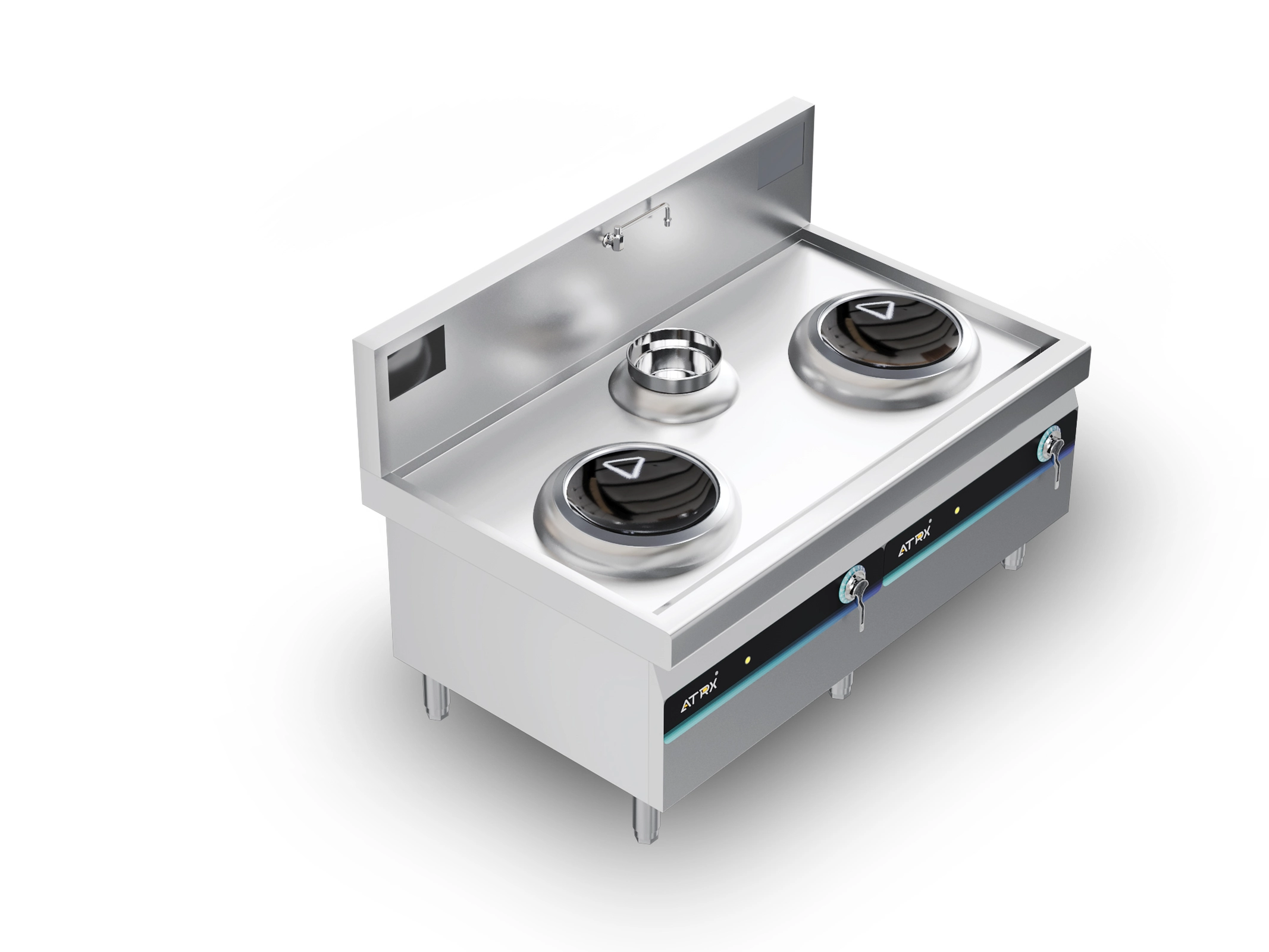
Floor-standing units have their own cabinet frame. No countertop cutout, no drop-in — just place on the floor and connect. The ATRX AT-FLLBZ series, for example, runs four zones at 20KW total on 380V three-phase, with a 1100×800×950mm footprint.
Most floor-standing units go into large back-of-house kitchens. But in certain open kitchen setups, they’re a practical fit.
Where they work: Open restaurant main cooking areas, large open kitchens with a freestanding island, high-volume Chinese display kitchens. In these spaces — especially where an induction cooktop sits on a kitchen island — the priority is firepower and output, not visual slimness.
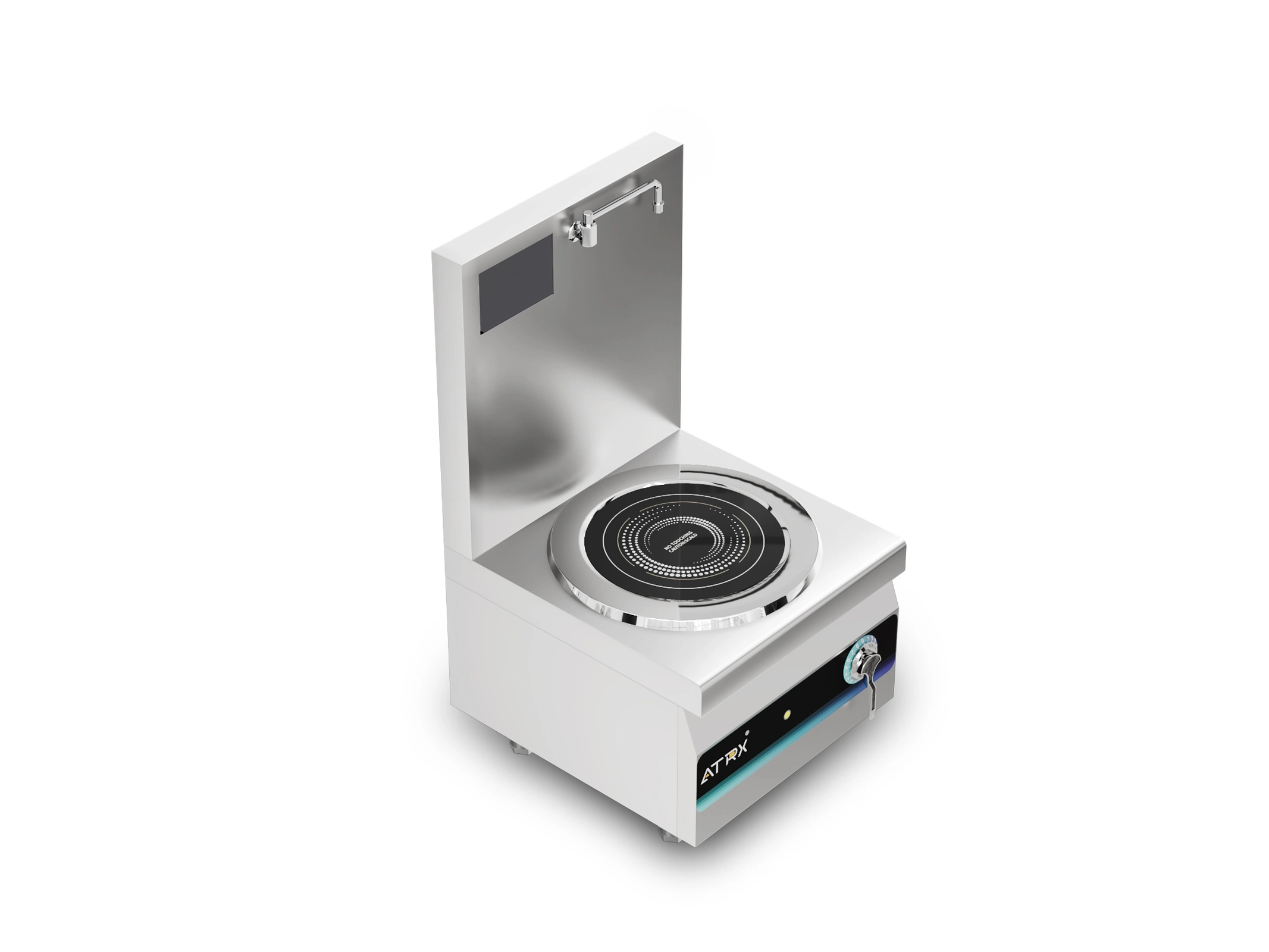
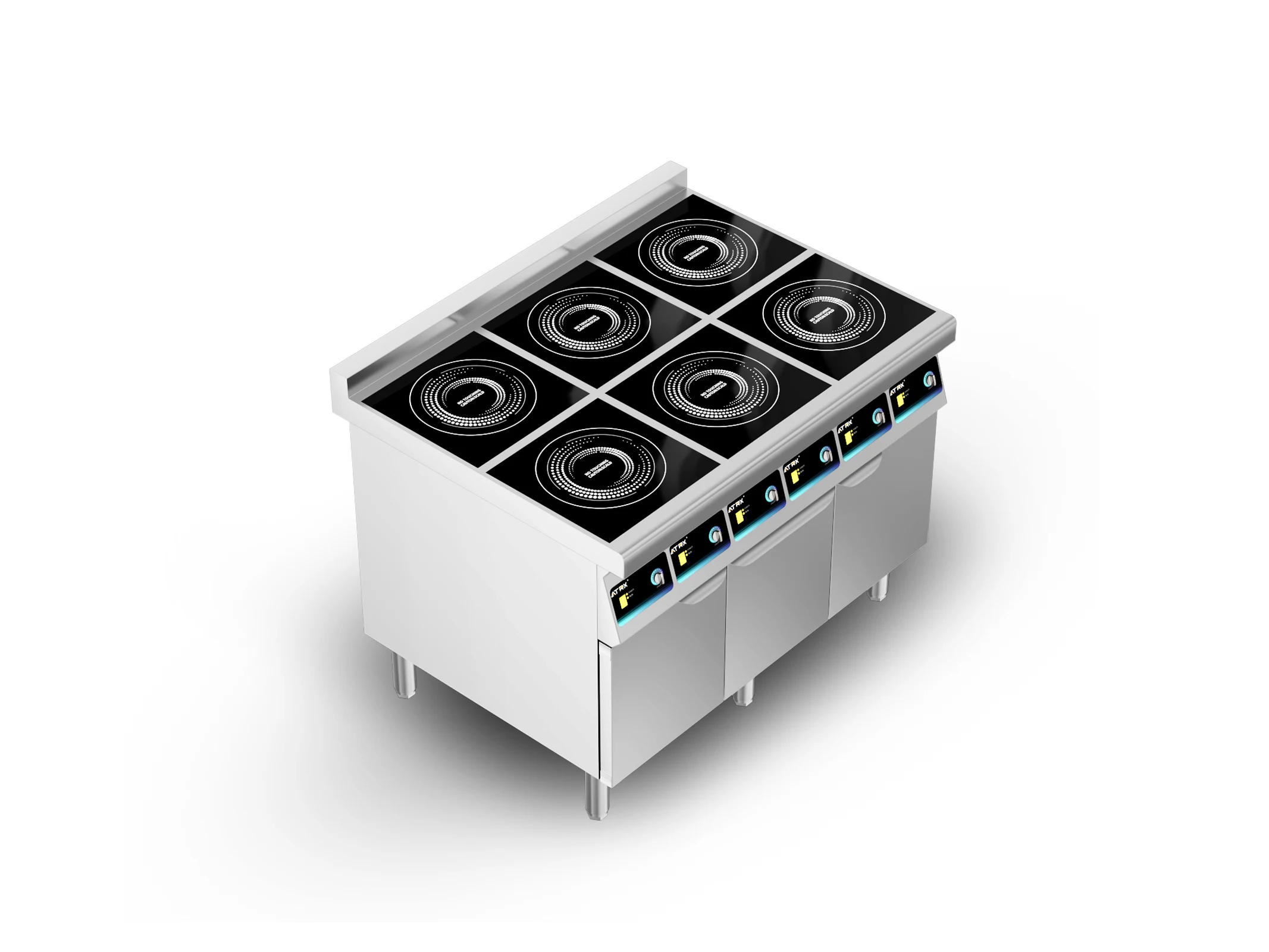
Where they don’t: Small open bars, Western light-meal counters, or any layout where “the cooktop should disappear into the counter” is the design goal. A floor-standing unit’s bulk and visual weight breaks the open, airy feel those spaces need.
Simple rule: if your open kitchen lets equipment be seen and output is priority one, floor-standing works fine. If you want the cooktop to vanish into the counter, go countertop or built-in.
How to Pick a Quieter Induction Cooktop for Open Kitchen Layouts
Closed kitchens have walls, doors, and exhaust hoods between the cooktop and the dining room. Open kitchens have none of that. Every sound the cooktop makes — fan hum, coil buzz, pot vibration — goes straight to the guest’s table.
A cooktop that’s perfectly fine in a back kitchen can turn into a noise complaint the moment you move it to an open front-of-house station. Same machine, completely different acoustic environment.
Bottom line: when you’re buying induction cooktops for open kitchens, noise isn’t a nice-to-have. It’s a must-check.
What to Look at When Choosing a Quiet Unit
Three things make noise during induction cooking: the cooling fan, the electromagnetic hum from the coil, and resonance from the pot base vibrating in the magnetic field. Fan noise is the loudest — and the one you can most easily control by choosing the right model.
Focus on these:
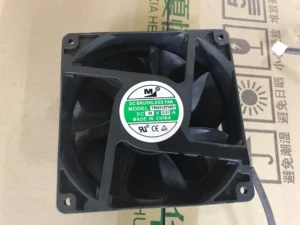
Fan type. DC variable-speed fans adjust their speed based on actual temperature inside the unit. Lower power means slower spin, less noise. Fixed-speed fans run at full blast no matter what heat level you’re on — constant drone, start to finish. In an open space, you’ll hear the difference immediately.
Power vs. noise. Higher wattage means a stronger magnetic field, which means louder hum. If you don’t need sustained 5KW, a 3.5KW model will be noticeably quieter. Many clients order 5KW and end up cooking at around 60% power most of the time. A 3.5KW unit would have done the job — and been much easier on the ears.
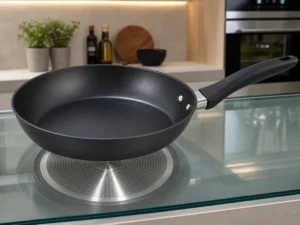
Cookware matters too. Thin-bottomed pans vibrate more in a magnetic field. Switch to something with a 3mm+ base — tri-ply stainless steel or cast iron — and the buzzing drops. That’s not the cooktop’s fault. It’s the pan.
A useful number: if the cooktop stays below 45dB at normal cooking power, most open restaurant environments (ambient noise around 55–65dB) won’t notice it at all.
Cooktop Hunter’s 2024–2026 lab tests found that noise between models can differ by up to 16dB at boost — pan thickness and coil isolation design are the biggest factors.
In our factory QC process, every unit goes through a full-load run that includes fan noise checks. For orders going to enclosed kitchens, clients rarely ask about this. For open kitchen orders, it comes up on almost every single one.
Induction Cooktop Ventilation in Open Kitchens: Downdraft vs. Island Hood
Induction produces zero combustion exhaust. That’s the core difference from gas. But “no combustion fumes” doesn’t mean “no ventilation.” Oil smoke, steam, and food odors still happen — especially when you’re frying or stir-frying at high heat.
In an open kitchen, those byproducts have no walls or doors to stop them. They drift straight to the dining area. Wrong ventilation setup means your guests smell grease, not food.
Two options dominate: downdraft and island hood. Each has a clear boundary.
Downdraft + Induction: When It’s Enough
A downdraft system sits inside or behind the counter and pulls fumes downward at surface level. The big win: zero visual obstruction. Paired with a flat induction surface, the entire cooking zone looks like a clean countertop. Nothing hanging from the ceiling.
Downdraft handles these well:
- Western food, light meals, simple prep — searing steaks, boiling pasta, making dressings. Smoke output is inherently low.
- Dessert stations, drink bars — virtually no heavy smoke.
- Buffet warming lines — the cooktop holds food temperature with almost no fume output.
Downdraft falls short here:
- Chinese wok stations — high-heat tossing throws large volumes of smoke upward. Downdraft pulls air down. Physics works against it.
- Heavy frying stations — sustained high-temp oil smoke overwhelms most downdraft units.
Quick test: if your main cooking method produces “no visible smoke or just light steam,” downdraft is enough. If you regularly see “a visible smoke column above the pan,” you need something stronger.
A highly upvoted Reddit thread in r/HomeImprovement backs this up: even without combustion fumes, frying smoke and odors still need to vent outdoors — especially with open island layouts.
Island Hood + Induction: When You Need One
An island hood mounts to the ceiling above the cooking zone and catches fumes as they rise. Physically, it’s the most efficient way to extract smoke.
Extraction power is far above downdraft. For Chinese open-display kitchens, teppanyaki stations, or any open setup with heavy smoke, an island hood isn’t optional — it’s required. Skip it, and the smoke downdraft can’t catch keeps drifting into the dining room.
The trade-offs are clear:
| Comparison | Downdraft | Island Hood |
|---|---|---|
| Extraction Power | Light to moderate smoke | Moderate to heavy smoke |
| Visual Impact | Nearly invisible | Large — partially blocks sightlines |
| Installation | Inside or behind counter | Ceiling support + duct routing needed |
| Best For | Western / light meals / buffet warming | Chinese wok / teppanyaki / frying |
| Cost | Lower | Higher |
The logic is simple: decide your cuisine and cooking intensity first, then pick the ventilation. Ventilation follows the food, not the cooktop. Induction removes combustion exhaust from the equation. The oil smoke from the food itself? That still needs handling.
Open Kitchen Induction Cooktop Models — Side-by-Side Comparison
This table matches ATRX models to real open kitchen scenarios. Every recommendation is based on actual client orders and installation results — not spec-sheet guesswork. If you’re comparing the best induction cooktop for an open concept kitchen in a commercial setting, start by finding your scenario below.
| Open Kitchen Scenario | Type | Model | Power | Size | Supply | Why This One |
|---|---|---|---|---|---|---|
| Bar / dessert counter / tea shop | Single-zone countertop | AT-CTP-003 | 3.5KW | 420×470×300mm | 220V single-phase | Smallest footprint. One person carries it. Plug in and go. Low visual presence — easy to move around. |
| Western / light-meal open kitchen | Dual-zone countertop | AT-CTPII-005 | 5KW×2 | 800×470×300mm | 220V single-phase (each zone on its own circuit) | Two zones, independent control. Sear on one, simmer on the other. Flat glass wipes clean in seconds — good for kitchens guests can see. |
| Buffet line / hotel banquet display | 4-zone countertop | AT-CTSBZ-005 | 5KW×4 | 700×800×300mm | 220V single-phase (each zone on its own circuit) | ±1°C temp hold — ideal for buffet warming. Four independent zones on one unit for warming or live cooking. |
| Chinese display / large open main kitchen | 6-zone countertop | AT-CTLBZ-003 | 3.5KW×6 | 1050×800×330mm | 220V single-phase (each zone on its own circuit) | Six stations running at once covers a complete Chinese service line. For high-volume open display kitchens with enough counter space. |
| High-output Chinese display / hotel central kitchen | Floor-standing | AT-FLLBZ-003 | 3.5KW×6 (380V) | 1100×800×950mm | 380V three-phase | No counter cutout needed. 20KW total handles peak-hour full-load cooking. For open kitchens where output comes first. |
How to use this table: Find the scenario that matches your open kitchen. If you’re between two, go by peak-hour demand — how many pans running at the same time during your busiest service tells you the minimum number of zones you need.
All models are CE-certified, full SS304 stainless steel, and available for OEM customization. If your open kitchen has specific counter dimensions or branding needs, reach out to our engineering team for a custom setup.
Common Questions People Ask
Q1: How much power does an open kitchen induction cooktop need?
Depends on your food and volume. Light meals, Western-style searing and grilling — 3.5KW per zone handles it. Induction puts over 90% of energy straight into the pan, so 3.5KW already outperforms a standard gas burner in real cooking output.
Chinese high-heat stir-fry or sustained deep-frying? Go with 5KW per zone. But don’t chase max wattage for its own sake — match it to your most common cooking intensity. More power means louder fans, and in an open kitchen that trade-off matters.
Q2: Does the countertop material matter when installing induction in an open kitchen?
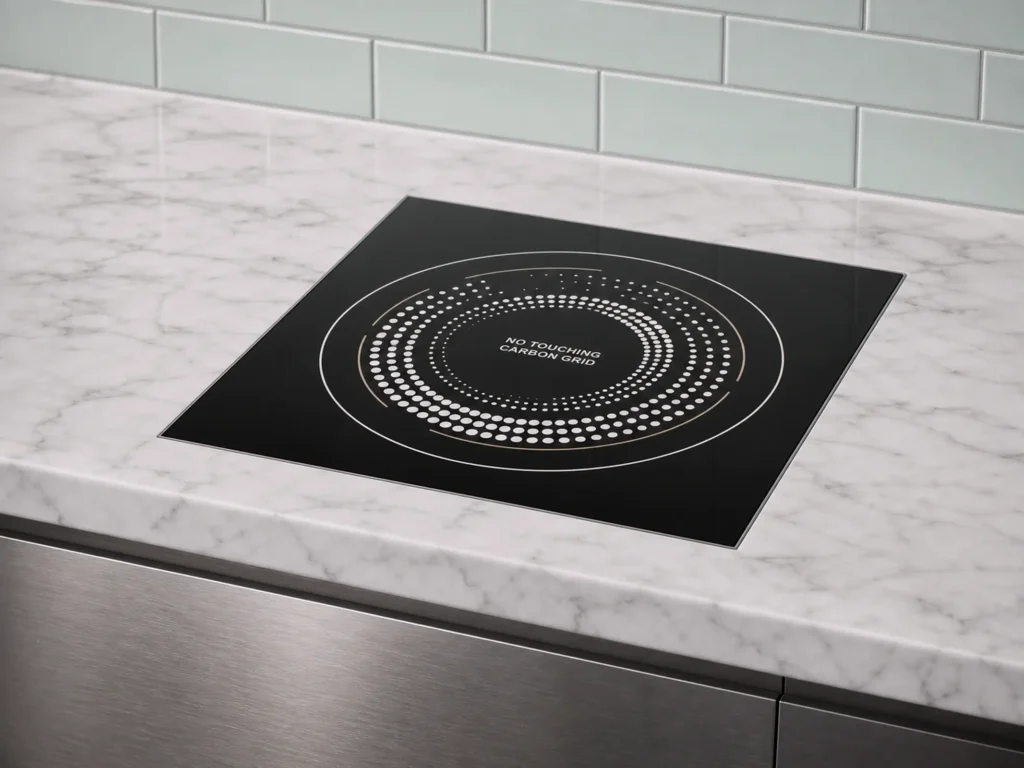
For countertop models that sit on the surface — no restrictions. Stainless steel, stone, wood, all fine. For built-in (drop-in) models that need a cutout, material matters more.
Granite, marble, and quartz all handle cutouts well, but they need professional cutting and polished edges to sit flush with the cooktop panel. In an open kitchen, the counter is also a display surface. Sloppy cutout work shows — and it shows to every guest.
Q3: Running multiple cooktops on one open kitchen counter — how should circuits be set up?
Each unit gets its own independent circuit and breaker. No sharing lines between cooktops. For 3.5KW: 220V single-phase, 20A breaker, 2.5mm² copper cable. For 5KW: 32A breaker, 4mm² cable.
Planning four or six units on one counter? Provision that many independent circuits during the build-out. Adding them later means opening walls and running new wire — in an open kitchen, that’s basically a full refit.
About the author

ATRX Team| 18 Years Commercial
Induction Cooker Manufacturer in China
Induction Cooker Manufacturer in China
Related Posts
How to Install a Built-In Induction Cooktop: A Step-by-Step Guide
09/17/2026
How to Clean a Commercial Deep Fryer: A Step-by-Step Guide
09/13/2026
High Quality Commercial Induction Cooker Manufacturer
09/09/2026
Automatic Wok Machine: Types, Specifications, Applications and Buying Guide
08/18/2026
What Is a Commercial Induction Cooker and How Does It Work
08/13/2026
Commercial Induction Range for Hotel Kitchens: How to Choose the Right Model
08/11/2026
China Commercial Induction Cooker Manufacturer
08/09/2026
10 Best Commercial Induction Cooker Manufacturers & Supplier Selection Guide [2026]
08/07/2026
Tilting Skillet & Bratt Pan: How to Choose the Right One for Your Commercial Kitchen
08/06/2026

Commercial Induction Cooker for School Cafeteria: How to Pick the Right High-Power Unit
08/04/2026