

Gas vs. Induction Cooktop: Which One Should You Choose?
07/21/2026
Estimated reading time: 2 minutes

Thinking about replacing your cooktop but stuck between gas and induction? This article breaks down the real differences in cooking performance, safety, cost, and installation—so you can pick the right one for your kitchen and the way you actually cook.
IN THIS ARTICLE
- How Gas and Induction Cooktops Heat Differently
- Cooking Experience: Which One Is Faster, More Precise, and Easier to Use
- Safety: Is Induction Really Safer Than Gas?
- Cleaning: Which One Is Easier to Wipe Down
- Cost: How Much to Buy, How Much to Run
- Switching from Gas to Induction: What to Prepare First
- Gas or Induction: How to Decide Based on Your Situation
How Gas and Induction Cooktops Heat Differently
The core difference between these two isn’t about which is more advanced. It’s about where the heat comes from and how it gets to the pot.
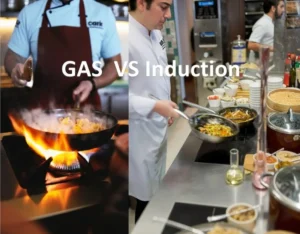
A gas cooktop lights a flame under the pot. But that flame doesn’t stay neatly underneath—it flares out to the sides, and a good chunk of heat escapes into the air before it ever touches the cookware. That’s why your face feels like it’s roasting when you stand next to a gas burner, and why the kitchen turns into a sauna in summer.
Induction works differently. A coil under the glass surface creates a magnetic field that makes the pot itself generate heat. The heat starts inside the metal of the cookware. It doesn’t pass through air. The cooktop surface barely gets warm.
Here’s what matters for your buying decision: with gas, heat has to cross an air gap to reach the pot, and a lot of it gets lost on the way. With induction, heat is born inside the pot—almost nothing is wasted. Every difference you’ll read about below—speed, temperature control, safety, energy use—traces back to this one thing.
Cooking Experience: Which One Is Faster, More Precise, and Easier to Use
How Much Faster Does Induction Boil Water and Preheat a Pan?
The speed gap is bigger than most people think.
Consumer Reports’ lab tests show that induction cooktops heat faster than any other type—well ahead of gas and standard electric. Yale Appliance ran their own side-by-side tests too: same pot of water, induction finished roughly 25%–50% faster than gas, depending on wattage and cookware.
In daily cooking, that looks like this: you’re rushing to boil noodles in the morning—on induction, the water is already rolling. On gas, it’s just starting to bubble. At dinner, when you’ve got three or four pots going, induction lets you move to the next step sooner and keeps the whole flow tighter.
But let’s be honest—if you’re not in a rush, if you mostly braise and simmer, the speed gap won’t feel like a big deal. Fast only matters if fast matters to you.
Consumer Reports’ lab results confirm that induction cooktops deliver the fastest heating across all cooktop types.

Which One Holds Temperature Better at Low Heat?
Two situations really test temperature control. One: you need to drop from a hard boil to a gentle simmer quickly. Two: you need steady low heat for a long time without scorching the bottom—think tomato sauce or melting chocolate.
On gas, you turn the knob and watch the flame. An experienced cook handles it fine, but it’s still guesswork. Even at the lowest setting, the flame flickers. Walk away for a minute and the sauce can burn on the bottom.
Induction controls temperature electronically. You press the button to lower the power, and the pot responds in a second or two. There’s no waiting for the flame to die down or for a heavy iron grate to cool off. Some mid-to-high-end induction models even let you lock in a target temperature—the cooktop holds it automatically, so you don’t have to babysit.
One piece of feedback from a customer stuck with us: a user who switched from gas said the first time he made Bolognese on induction, he kept stirring every few minutes out of habit. Then he noticed he didn’t need to. On the lowest setting, the sauce stayed perfectly steady—no scorching at all. He said that was the difference he never saw coming.
What Can Only Gas Do, and Where Does Induction Win?
For a lot of people, this is the section that settles the decision.
Gas is irreplaceable when you need an actual flame:
- Direct-flame charring. Blistering peppers or eggplant right on the fire to get that charred skin and smoky flavor—only open flame can do this. Induction’s flat glass surface can’t.
- Wok tossing for stir-fry. Real Chinese stir-fry depends on “wok hei”—food tumbling fast across a screaming-hot wok. Gas flames wrap around the bottom and sides of the wok, so the food stays in the heat zone even when it’s airborne. Induction only heats the bottom. The moment food leaves the surface, it’s off the heat.
- Flambé. You need a live flame to light the alcohol. Induction can’t do it.
Induction wins where precision matters:
- Slow braising, stewing, low-temperature cooking. Rock-steady heat, minimal fluctuation. You can walk away for hours.
- Melting butter, chocolate, or anything delicate. The lowest setting runs lower and steadier than gas. Much harder to overshoot.
- Dishes that need fast heat changes. Sear meat on high, then drop to a gentle simmer instantly—almost no delay.
Quickest way to decide: think about the three dishes you cooked most this past week. Your answer is probably already there.
Safety: Is Induction Really Safer Than Gas?
Open Flame: The Biggest Safety Gap
Gas has a real flame. That’s its cooking strength and its safety weakness at the same time.
Open flame means higher burn risk. A loose sleeve, a paper towel, a dishcloth—any of these can catch fire the moment they touch the flame. Forget to turn off the burner and it just keeps burning. Let a pot boil dry and things can get serious fast. U.S. Consumer Product Safety Commission (CPSC) data shows that gas cooktops are responsible for a larger share of home stove-related fires than electric models.
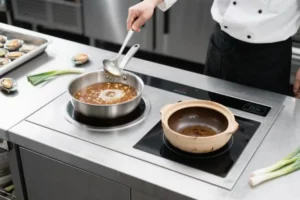
Induction works on a completely different principle. No pot on the surface, no heat. Even if a child bumps the controls, nothing happens. After you lift the pot off, the surface drops to near room temperature within seconds—far less chance of a residual-heat burn.
Induction isn’t risk-free, though. Manufacturers including GE and Wolf warn in their manuals that the electromagnetic field during operation could interfere with cardiac pacemakers or similar implanted devices. If that applies to anyone in your household, talk to a doctor before you buy.
If you have young kids at home, elderly family members with limited mobility, or you sometimes walk away mid-cook and forget the stove—the flame-versus-no-flame gap is worth weighing carefully.
Indoor Air: Gas Burns Fuel, Induction Doesn’t
This one gets overlooked a lot.
Gas cooktops burn natural gas, and that combustion releases nitrogen dioxide (NO₂), carbon monoxide (CO), and other byproducts. A 2022 Stanford study found that some gas stoves leak small amounts of methane even when they’re turned off. When you’re cooking without good ventilation, kitchen NO₂ can blow past the EPA’s outdoor safety limit in just minutes.
Induction burns nothing. Zero combustion, zero fumes.
To be fair: most households using gas with decent ventilation won’t run into health issues. But if someone in your home has asthma or sensitive lungs, or if your kitchen doesn’t vent well, the difference in emissions is a real consideration—not a theoretical one.
Stanford’s 2022 research found that gas stoves leak 0.8%–1.3% of the natural gas they use as unburned methane, with over three-quarters of the leakage happening while the stove is off. Currently, the government is encouraging the popularization of electromagnetic cooking technology in the market to gradually replace these gas appliances. (As I also referred to the video on this website, it provides detailed explanations of some specific situations regarding gas leakage.))
If your kitchen is open-plan, this gets worse. No doors, no walls to block it—combustion byproducts drift straight into the living space. For more on choosing a cooktop in that layout, see: Best Cooktop for an Open Kitchen.
Cleaning: Which One Is Easier to Wipe Down
This one’s simple.
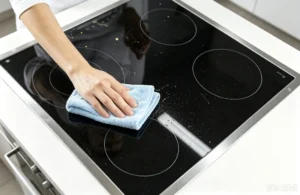
An induction cooktop is one flat sheet of glass. Oil splatter, spilled broth—wipe it with a damp cloth and you’re done. No crevices, no raised edges, no dead spots. And because the surface doesn’t get very hot, food residue rarely bakes on and bonds to the glass.
Gas is a different story. Cast-iron grates, burner caps, the gaps around the igniters—grease hides in all of them. A proper deep clean means pulling the grates off and scrubbing them separately. The narrow gaps around the burners need a small brush or a toothpick. Over time, oil buildup on the grates gets thicker and harder to remove.
If you do a lot of heavy-oil, high-heat cooking, you’ll feel this gap every day. Gas users who wipe down after each meal can keep it manageable—but compared to “one flat surface, one cloth, done,” the extra work is real.
Cost: How Much to Buy, How Much to Run
Upfront Price: How Much More Does Induction Cost, Brand by Brand?
Induction cooktops almost always cost more upfront than gas. But the gap depends heavily on the brand. Here’s how starting prices compare across major U.S. brands right now:
| Brand | Gas Starting Price | Induction Starting Price | Price Difference |
|---|---|---|---|
| Frigidaire | $698 | $898 | +$200 |
| GE | $629 | $1,619 | +$990 |
| Samsung | $749 | $1,199 | +$450 |
| LG | $799 | $1,299 | +$500 |
| Whirlpool | $658 | $1,499 | +$841 |
| KitchenAid | $949 | $2,598 | +$1,649 |
| Bosch | $1,599 | $4,149 | +$2,550 |
(Prices referenced from CNET reporting. Actual prices may vary by retailer and promotions.)
At the entry level, the difference can be as small as a couple hundred dollars (Frigidaire is only $200 apart). But in mid-range and premium tiers, the gap stretches to $1,000 or even several thousand. Worth noting: induction prices have been dropping steadily. The same tier of product cost noticeably more just three years ago, and the selection keeps growing.
Long-Term Costs: Energy Bills and Maintenance Over the Years
The purchase price is a one-time hit. What really adds up is the energy and maintenance bill over years of daily use.
Start with the energy side. Using New York State as an example (electricity rates above the national average), rough hourly running costs look like this:
- Gas cooktop: about $0.17–$0.20/hour
- Induction cooktop: about $0.35/hour
Per hour, gas looks cheaper. But there’s a catch people miss: induction turns over twice as much of its energy into actual cooking heat as gas does (85%–90% efficiency vs. 32%–40%). That means induction finishes the same dish faster and wastes less along the way. The real monthly difference is much smaller than the hourly number suggests.
And energy prices vary wildly by location. In places where electricity is cheap and gas is expensive, induction can actually cost less to run. We’ve published a full cost breakdown with different rate scenarios and efficiency data from the DOE and Frontier Energy in a separate article—check that one if you want the detailed math.
Then there’s maintenance. Gas cooktops have igniters, thermocouples, and burner caps—parts that wear out and may need replacing in three to five years. Induction has almost no mechanical wear parts, so routine maintenance costs stay very low. Yale Appliance analyzed over 33,000 service calls and found that induction cooktops have a lower overall repair rate than gas.
Yale Appliance’s 33,000+ service call analysis shows induction cooktops have a lower first-year repair rate than gas.
Bottom line: gas costs less per hour, but induction makes up ground over time through higher efficiency and fewer repairs. Which one saves more in the end depends on your local electricity and gas rates, and how much you cook each day.
If you run a restaurant, the math is completely different—turnover rate, idle-burn waste, and compliance costs all factor in. This piece walks through it for commercial operators: Induction vs. Gas for Hot Pot Restaurants: Cost and Safety Breakdown.
Switching from Gas to Induction: What to Prepare First
Electrical Circuit and Panel: Can Your Home Handle It?
This is the trap a lot of people fall into after they’ve already bought the cooktop.
An induction cooktop usually needs a dedicated 240V circuit—same level of power draw as a clothes dryer or central AC. If you’re currently on gas, your kitchen almost certainly only has standard 120V outlets. That won’t cut it.
In older homes, the problem can go deeper. It’s not just a missing circuit—the entire electrical panel may not have enough capacity. You’ll need a licensed electrician to check whether adding one circuit is enough, or whether the panel itself needs an upgrade.
Cost-wise, Yale Appliance quotes $2,500–$3,500 for the Boston area (circuit installation plus possible panel work). Numbers vary by region, but the ballpark is similar.
One piece of advice: get the electrician out before you buy the cooktop. Finding out it can’t be installed after it’s already sitting in your kitchen wastes money and time.
Cookware: Which Pots Work on Induction and Which Don’t?
Gas works with every pot you own. No thought needed. Induction is pickier—you’ll need to check what you’ve got before you commit.
Induction only heats ferromagnetic metals. Cast iron, carbon steel, stainless steel with a magnetic base—all fine. Pure aluminum, copper, glass, ceramic clay—put them on the surface and nothing happens.
Quick test: stick a fridge magnet on the bottom of the pot. If it holds, the pot works. If it slides off, it won’t.
Most households won’t need to replace everything. Cast-iron pans and carbon-steel woks are already compatible. A lot of stainless-steel pots have magnetic bottoms too. Usually you’re only swapping out a few aluminum or specialty pieces. At U.S. prices, three or four mid-range replacement pots run about $100–$300.
It’s not a big number, but it’s easy to forget. Add it to the cooktop price and the electrical work to get the real total cost of switching.
Gas or Induction: How to Decide Based on Your Situation
You’ve now seen how the two compare on speed, temperature control, safety, cleaning, cost, and installation. There’s no single right answer—it depends on what matters most to you.
You stir-fry with a wok often, you char food over open flame, you like cooking with fire you can see—gas is still the better fit. Induction can’t replace open-flame techniques.
You care more about cooking speed, precise heat control, safety at home, and easy cleanup—induction has a clear edge on all of those. If you have small children or elderly family at home, or your kitchen doesn’t ventilate well, induction’s safety features are especially worth the attention.
Your budget is tight, or you’re renting and can’t rewire—gas makes more sense for now. Between the higher purchase price, electrical upgrades, and new cookware, induction asks for a bigger upfront commitment. You can always switch later when the timing is right.
Neither cooktop is objectively better. Pin down the one or two things you care about most, and the choice gets clear. The real decision is about matching the technology to your actual kitchen and cooking life—not about chasing specs.
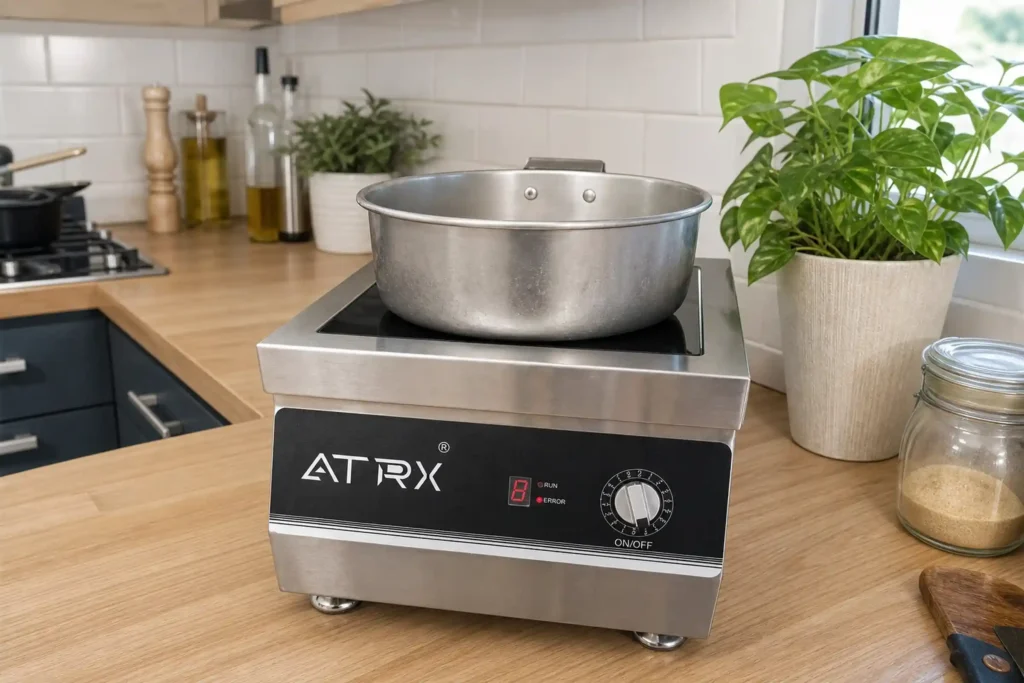
Already decided on induction? Next step: pick a unit that fits your space. Wattage, size, built-in or countertop—different setups need different models. Start here: ATRX Commercial Induction Cooktop Full Product Range.
Common Questions People Ask
Q1: Induction is useless during a power outage. Is that a dealbreaker?
Yes, induction is 100% electric. Power goes out, cooking stops. A gas cooktop’s electronic igniter needs power too, but you can light it with a match and keep going.
For most homes, outages happen a few times a year at most. Whether that’s a dealbreaker depends on how stable the grid is where you live. If blackouts are frequent in your area, give this one more weight.
Q2: My induction cooktop buzzes when it’s on. Is that normal?
Totally normal—not a defect. The buzz comes from the magnetic field vibrating the metal in the pot bottom (called magnetostriction). Higher power, louder sound. GE and Wolf both confirm in their FAQs that this is expected.
Heavy, flat-bottomed cookware—cast iron or tri-ply stainless steel—reduces the noise a lot. Most users say with the range hood on, they barely notice it. If you’re sensitive to sound, go hear one in person at a store before you buy.
Q3: Can’t decide—is a dual fuel range a good middle ground?
Dual fuel usually means a gas cooktop on top and an electric oven below. You get open-flame cooking plus the even, dry heat of an electric oven. But it’s not a compromise between gas and induction—the cooktop is still gas. You still have the flame, the combustion fumes, and the cleaning hassle.
If the real question in your head is “should I give up the open flame?”—dual fuel doesn’t answer that. It’s a better fit for people who already know they want gas on top and just prefer an electric oven.
About the author

ATRX Team| 18 Years Commercial
Induction Cooker Manufacturer in China
Induction Cooker Manufacturer in China
Related Posts
How to Install a Built-In Induction Cooktop: A Step-by-Step Guide
09/17/2026
How to Clean a Commercial Deep Fryer: A Step-by-Step Guide
09/13/2026
High Quality Commercial Induction Cooker Manufacturer
09/09/2026
Automatic Wok Machine: Types, Specifications, Applications and Buying Guide
08/18/2026
What Is a Commercial Induction Cooker and How Does It Work
08/13/2026
Commercial Induction Range for Hotel Kitchens: How to Choose the Right Model
08/11/2026
China Commercial Induction Cooker Manufacturer
08/09/2026
10 Best Commercial Induction Cooker Manufacturers & Supplier Selection Guide [2026]
08/07/2026
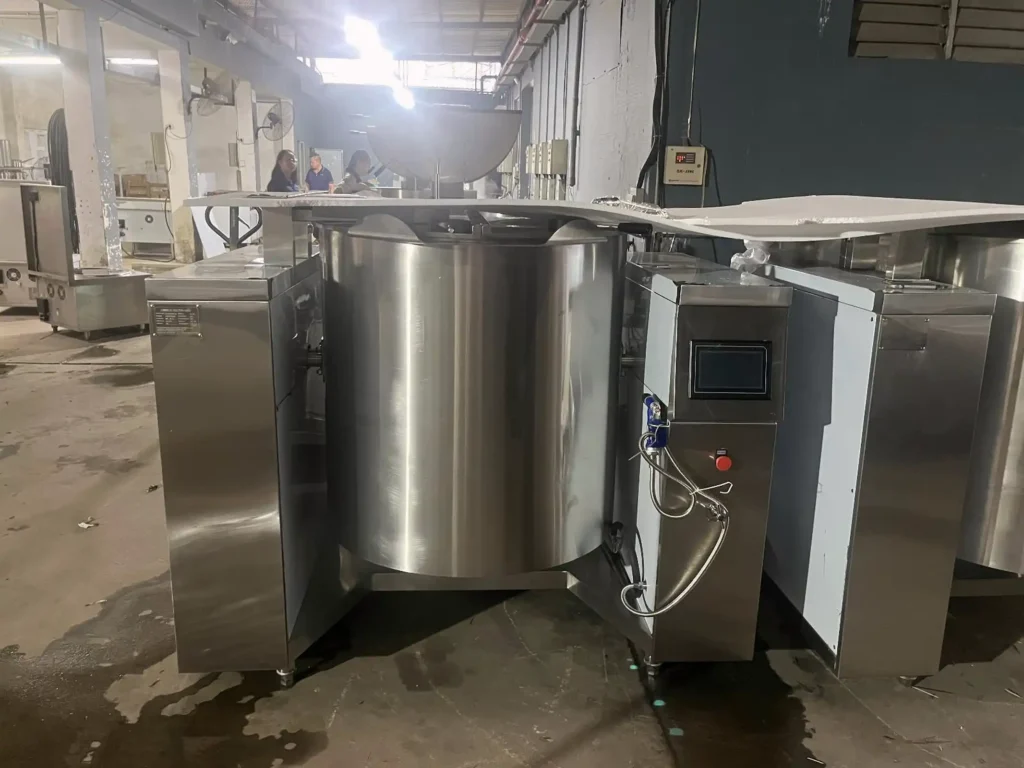
Tilting Skillet & Bratt Pan: How to Choose the Right One for Your Commercial Kitchen
08/06/2026

Commercial Induction Cooker for School Cafeteria: How to Pick the Right High-Power Unit
08/04/2026