

PRODUCT HIGHLIGHTS
Commercial Induction Cooktops for OEM & ODM | ATRX
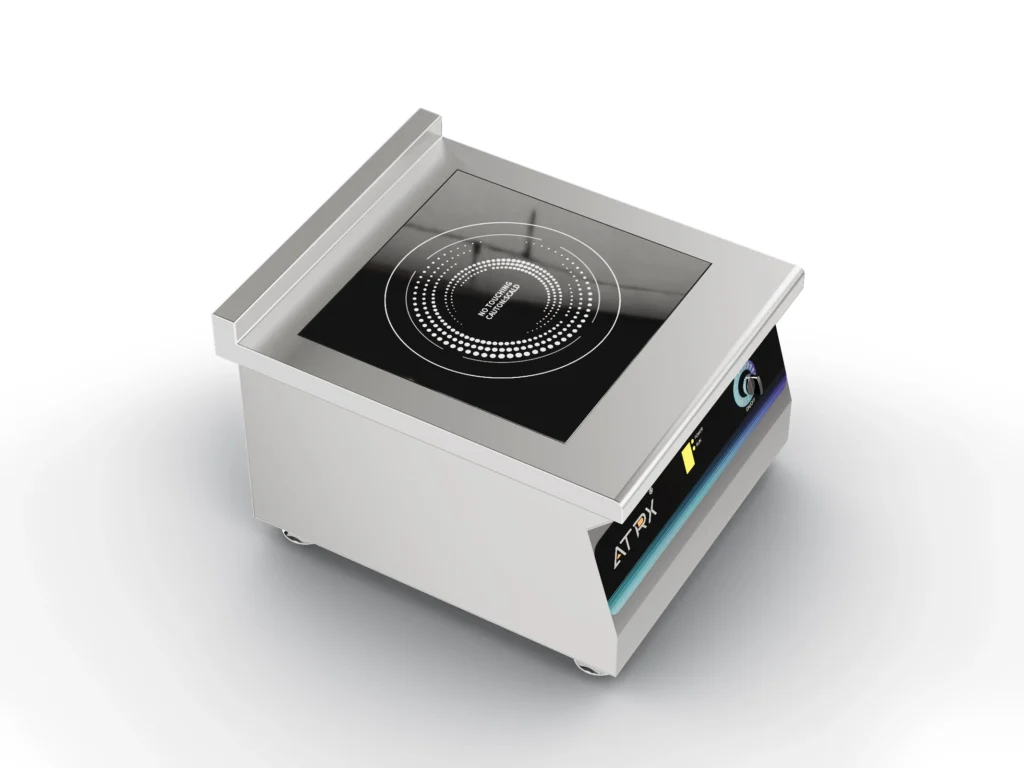
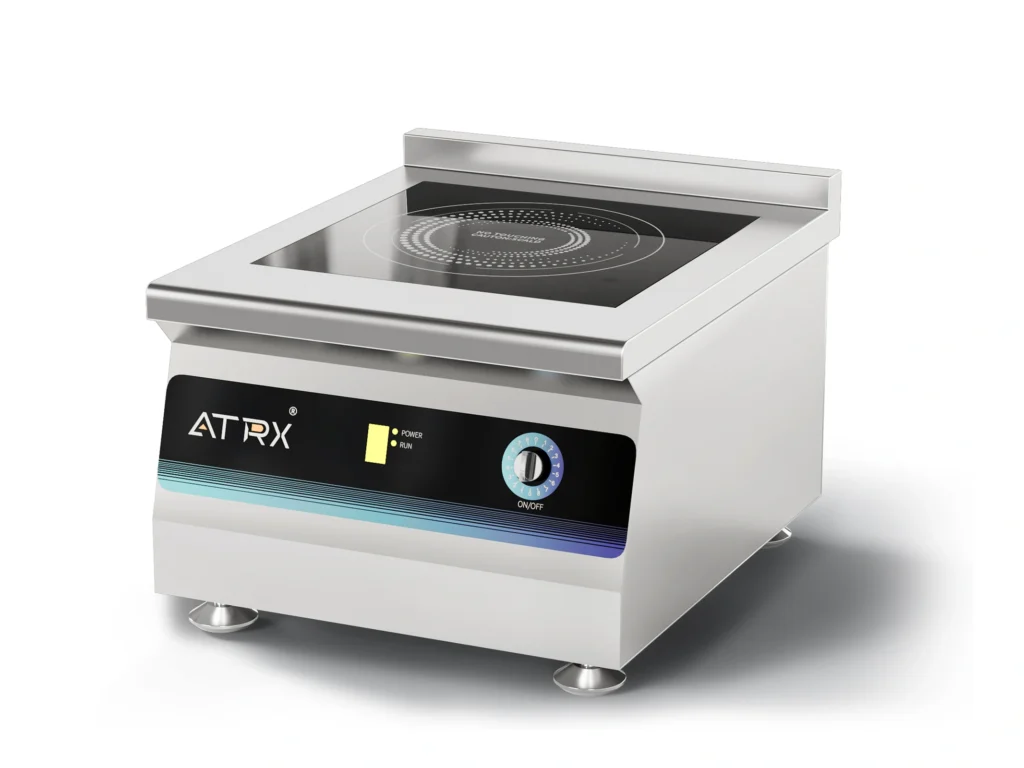
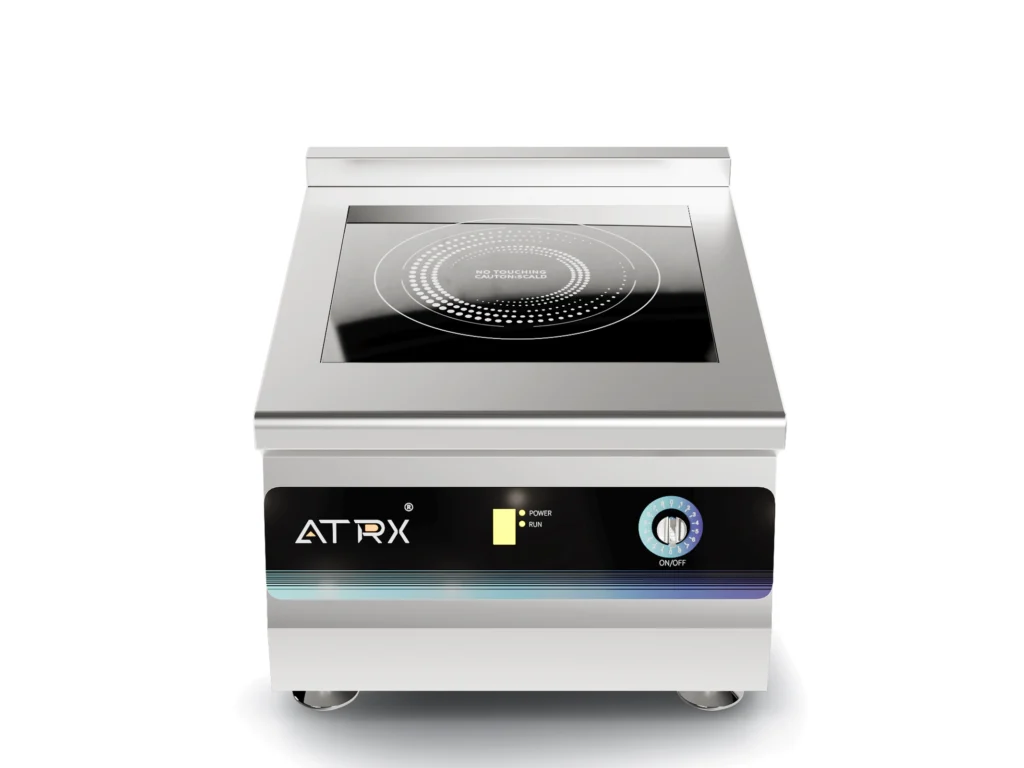
Countertop Induction Flat Cooker | 5KW
Value of the 220V Front-to-Back 2-Burner Induction Cooktop
Electrical Specifications Configured for the Target Market
ATRX matches voltage, phase, frequency, power, and wiring to the target market, so buyers can confirm the electrical specification before production.
Support for Private-Label Customization
We customize the 304 stainless steel housing, panel, logo, manual, packaging, display language, and power levels, giving ODM buyers a private line on a proven platform.
Consistent Quality Across Bulk Deliveries
We inspect boards, coils, branding, nameplates, buttons, and every power level unit by unit, including full-power runs, so repeat orders match the approved standard.
Inquiry UsView Specifications
01 / SPECIFICATIONS
Product Specification
Product Name
Product Model
Power(Kw)
Voltage(V)
Product Size
Product Material
Hs Code
02 / GETTING STARTED
How To Operate This Machine
Step 1
Place your commercial induction cooker in position and connect the power cable based on the required voltage. Make sure all wiring is done correctly before turning on the unit.
Step 2
Once powered on, place your induction cookware on the commercial induction cooker, prepare your ingredients, and get ready to start cooking.
Step 3
Turn the knob from 0 to your desired setting to begin cooking. During the cooking process, simply adjust the knob between levels 1 to 8 to control the heat output to your needs.
Step 4
Once cooking complete,then turn the knob back to 0 to power off the unit. Wipe down and clean the surface of your commercial induction cooker to keep it in top condition.
03 / QUALITY ASSURANCE
Production Quality and Testing Process for OEM/ODM Commercial Induction Cooktops
01
Key Incoming Material and Electrical Parameter Screening
At goods-in, our QC team checks power modules, capacitors, coils, and connectors against the order, bill of materials, supplier label, and part marking, then checks glass-ceramic panels for thickness, flatness, and edge cracks. Key components are also sampled and retested for electrical parameters, and abnormal batches do not go to the line. Mixed batches and wrong parts are caught before assembly, lowering the risk of a private-label run drifting from the approved BOM. For an OEM/ODM cooktop supplied to a neighborhood shop or hotel chain, every unit starts from traceable material, which helps repeat orders stay consistent.
02
304 Stainless Steel Housing Dimension Verification
In our sheet-metal shop, we check the 304 stainless steel housing against the drawings for hole positions, openings, and bend lines, then laser-cut, punch, bend, and weld it. Each batch confirms first-article dimensions before production continues; after welding, we check distortion, weld seams, burrs, and sharp edges, and trial-fit the panel, control box, brackets, and cover. If hole or bend errors appear, they are stopped before they become misaligned panels, airflow deviations, or misplaced board brackets. On a private-label OEM/ODM order, the customer's panel, logo, and cover then fit the same housing pattern across the batch.
03
Board-by-Board Control Board Inspection and Traceability
Our own clean workshop handles SMT, soldering, and through-hole assembly for every control board, with soldering temperatures set by board type and component. After soldering, our team checks for missing parts, displacement, bridges, insufficient solder, and cold joints, then runs functional and release checks on every board; abnormal boards are reworked or quarantined before final assembly. The purpose of board-level inspection is to keep defects from creating unit-to-unit variation, while the process stays traceable inside our own workshop. For a private-label cooktop supplied in repeat bulk deliveries, the approved sample's control response is easier to reproduce from batch to batch.
04
Coil Positioning and Cooling Component Verification
At the coil-winding and final-assembly stations, we preset turns, spacing, and tension by model and power, then check the cured coil's dimensions and electrical values. During final assembly, our team confirms coil position, supports, insulation, and gaps, and checks the fan's model, voltage, connector, mounting direction, airflow path, and clearance; the harness must not touch the blades. A misplaced coil or restricted airflow is caught before the unit is closed, lowering the risk of unit-to-unit heating variation. In an OEM/ODM program, the finished cooktop is meant to match the performance approved in the sample, not drift after bulk delivery.
05
Assembly Process and Electrical Safety Confirmation
At each workstation, the operator checks the parts against the order, assembles to the workstation instructions, and then confirms fit, clearance, and wiring; the process card travels with the unit and the unit cannot move on until the station passes. Before the cover is closed, our team separately checks grounding, harness routing, foreign objects, and screws, and after final assembly the unit undergoes insulation, dielectric-strength, and other electrical safety tests. For a private-label batch, one non-conforming unit is enough to create a problem; the workstation checks catch a wrong part, pinched wire, or missed ground before packing. An OEM/ODM program serving hotel chains and other multi-site customers then follows the same approved build for every unit.
06
Final Inspection of Unit Function, Load, and Configuration
On every finished unit, our final inspectors check the display, switch, buttons, and power response at each level, then run full-power heating, cooling, and vibration checks. Applicable protections such as over-temperature and no-pan detection are verified against the actual configuration; we then check the housing, logo, panel language, voltage nameplate, accessories, and packaging, and recheck the lot against the sampling standard. Before the carton is sealed, the configuration is checked so a private-label mismatch does not reach the customer. For an OEM/ODM order, the shipment leaves with the approved nameplate language, voltage configuration, accessories, and packaging.
All results above are from our own factory. See related pages below.
Production Line Center Manufacturing Machines PCB Assembly Center04 / COOKING APPLICATIONS
Target-Market Applications for OEM/ODM Commercial Induction Cooktops
Own factory
CE certified
OEM available
Neighborhood Shops: Configured for the Market
For neighborhood shops, the OEM/ODM commercial induction cooktop can be configured around the local market and a compact counter: breakfast shops fry eggs, pancakes, and sausages and keep stock warm; noodle shops and casual restaurants stir-fry toppings, simmer small pots of soup, and sear meat; beverage shops boil water and heat tea base. The 3.5kW and 5kW 220V single-phase models suit street-side and neighborhood shops with limited counter space, and voltage, wiring, panel language, and branding can be adjusted for the target market.
Hotel Chains: Standardized Configuration
For hotel and chain projects, the same OEM/ODM commercial induction cooktop can serve hotel breakfast omelet and pancake stations, open cooking stations in all-day dining restaurants, fixed hot-food stations in chain fast-food restaurants, and small shared cooking positions used by different brands in shared kitchens. Panel language, power levels, logo, and packaging can be standardized so different properties follow the same operating method, which also simplifies replenishment and new-store rollouts.
Mobile Catering: Customized to the Power Supply
For mobile catering, the OEM/ODM commercial induction cooktop can be configured to the target market's power supply for food-truck prep areas, market pop-up stalls, wedding and event catering, and temporary outdoor counters. It can sear burgers, fry eggs and pancakes, boil soup, heat sauce, or simmer small pots to order, while voltage, wiring, panel, and packaging are specified for mobile kitchens with a stable power supply or generator.

FAQs
Frequently Asked Questions
We've gathered the most common questions buyers ask before placing their first order — browse through and find the answers that matter most to you.
How Do I Choose Between 3.5kW, 5kW, and 8kW Models?
Choose by batch size first, then by the site’s power supply. The 3.5kW model fits smaller batches or counters with limited spare electrical capacity; 5kW suits fast-food, casual-dining, and hotel counters with a faster pace; 8kW is for fixed kitchens with 380V three-phase service and higher demand, while the first two use 220V single-phase. For OEM/ODM, voltage, frequency, wiring, and plug can be configured for the target market, but the electrical platform has to be re-matched, not just the plug changed. The 8kW housing is larger, so confirm counter space and installation position before ordering.
Can a Commercial Induction Cooktop Run Continuously for Long Periods?
Yes, it can run for several hours of high-frequency use when airflow is clear and the duty cycle has been validated. A cooling fan, defined air path, and over-temperature protection manage heat. Every unit also runs at full power before shipment with power, temperature, cooling, and protection response observed. For an OEM/ODM order, validate the sample with the actual cookware, ambient temperature, and peak/off-peak pattern. State the continuous operating time in the order standard, and ask for the test record before promising 24-hour full-power operation.
Can All Existing Cookware Be Used?
No—induction needs a magnetic base, not just any pan. Cast iron, carbon steel, magnetic stainless steel, and pans with a magnetic base usually work; pure aluminum, pure copper, glass, ordinary ceramic, and non-magnetic stainless steel do not. The base also has to be flat and sized to the heating zone, and heating an empty pan dry is outside normal use. For bulk shipments, put target-market cookware recommendations and unsuitable materials in the local-language manual to reduce returns.
Does the Standard Model Adjust Power or Temperature?
It adjusts power, not temperature. The standard model uses a 1–8 knob, not a set temperature in °C, so the cook chooses a level by food, pan, and what is happening in the pan. An OEM/ODM project that needs a temperature-control mode, timer, or different level logic must confirm platform support and test it with actual cookware and load. Do not market adjustable power as precise temperature control.
How Do I Calculate Actual Power Consumption?
Use actual power multiplied by actual operating time; rated power is the maximum input, not a fixed 5kWh every hour after switch-on. Heating, boiling, simmering, and holding each draw power for different portions of the hour, so the duty pattern matters. A 5kW unit at full power for 1 hour is theoretically 5kWh, and turning down or switching off during that hour lowers the figure. For bulk projects, run a sample energy test with the target cookware and menu, then calculate operating cost with local electricity rates.
——07 / Factory quote & RFQ
Partner with a Trusted Commercial Induction Cooker Manufacturer
Whether you need wholesale commercial induction cookers, an OEM product line or a commercial kitchen project configuration, send a focused commercial brief. An ATRX team member can review the product, power, certification and customization requirements before quotation.
Useful information to include:
Target country · Product category · Application · Voltage / phase · Estimated quantity · Required certifications · OEM / branding needs