
PRODUCT HIGHLIGHTS
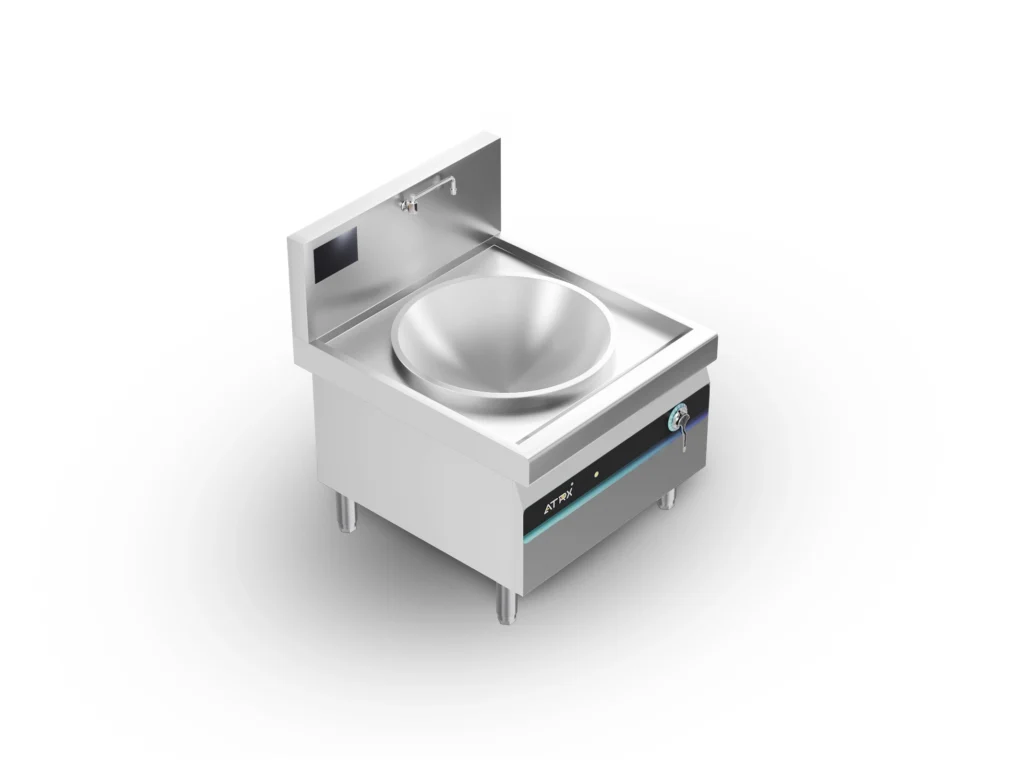
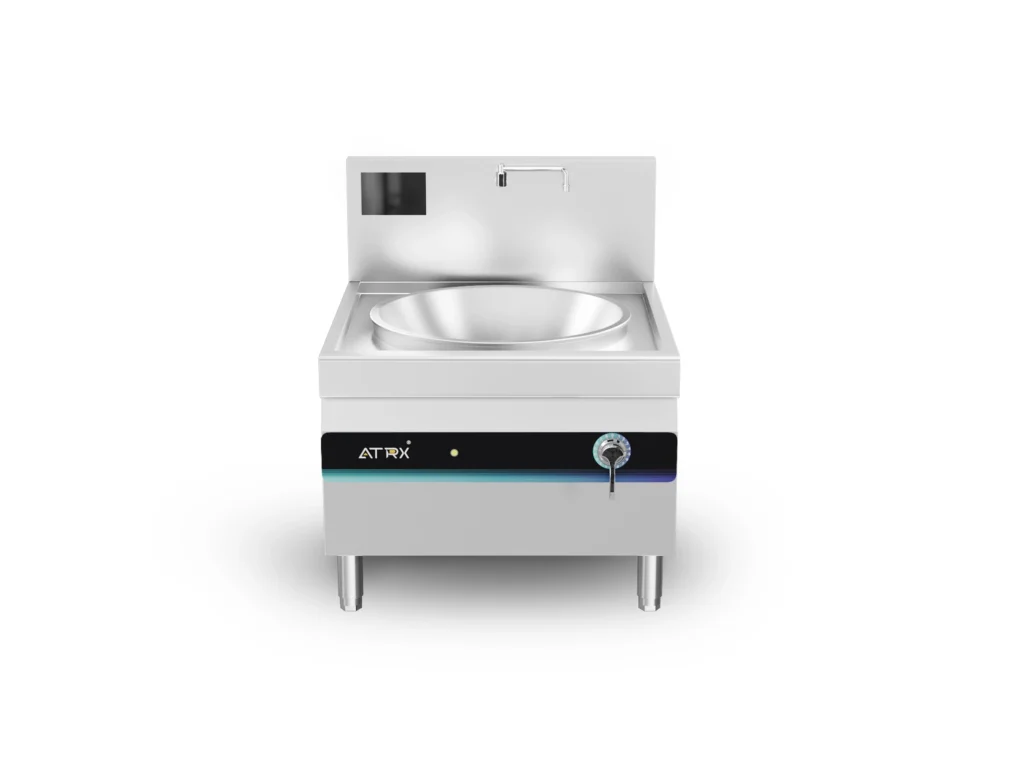
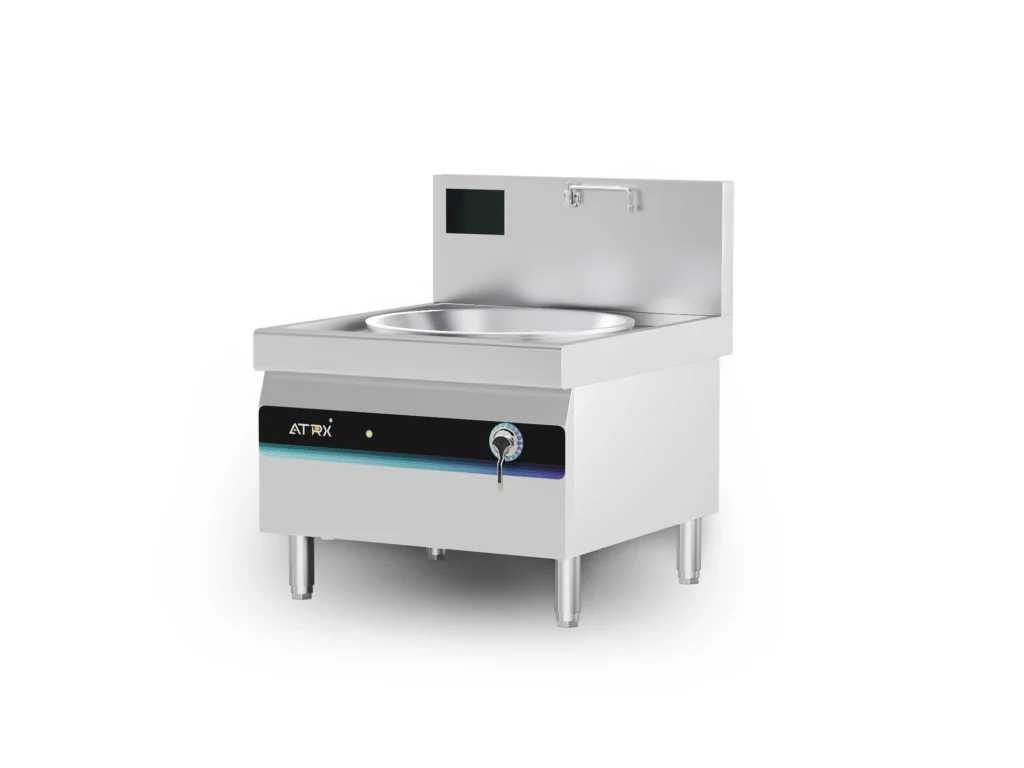
20kW Zero-Emission Commercial Induction Wok Cooker
Floor Commercial Induction Large Wok Cooker | 20KW
Own factory
CE certified
OEM available
Zero On-Site Cooking Emissions
No CO, CO₂, or NO₂ produced at point of use. This floor induction wok cooker removes 100% of Scope 1 gas combustion from your commercial kitchen — a direct, auditable gain for ESG reporting.
Runs on 100% Renewable Power
The 380V three-phase electric wok range integrates with solar PV, wind grids, or green power contracts. When paired with clean electricity, it delivers genuinely carbon-neutral cooking operations.
Supports Green Certifications
Switching from a gas wok burner to this induction unit earns credits under Green Restaurant Association, LEED, and EcoChef programs — and may unlock regional electrification rebates.
Proven in Sudima Hotels NZ
Sudima Hotels replaced gas woks with induction at East Restaurant, Auckland. EECA-monitored data confirmed lower energy use and reduced greenhouse gas output — a replicable ESG blueprint.
Inquiry UsView Specifications
01 / SPECIFICATIONS
Basic Specification
Product Name
Product Model
Power(Kw)
Voltage(V)
Product Size
Product Material
Hs Code
02 / GETTING STARTED
How To Operate This Machine
Step 1
Place your commercial induction cooker in position and connect the power cable based on the required voltage. Make sure all wiring is done correctly before turning on the unit.
Step 2
Once powered on, place your induction cookware on the commercial induction cooker, prepare your ingredients, and get ready to start cooking.
Step 3
Turn the knob from 0 to your desired setting to begin cooking. During the cooking process, simply adjust the knob between levels 1 to 8 to control the heat output to your needs.
Step 4
Once cooking complete,then turn the knob back to 0 to power off the unit. Wipe down and clean the surface of your commercial induction cooker to keep it in top condition.
03 / QUALITY ASSURANCE
6-Step Quality Checking of Every Unit
Every testing machine shown below is physically present in our factory — no fabrication.
01
Dust-free PCB assembly
Every board built in a sealed cleanroom, no dust or grease particles get trapped under components — eliminates 40% short-circuit failures compare to competitors.
02
Electric Heating Constant Temperature Drying Oven
Bakes out all moisture from PCBs before soldering — boards that skip this step blister and crack under high-power heat within months.
03
Electric Heating Constant Temperature Incubator
Every board is heat-aged for hours to force weak solder joints to fail in our lab, not in your kitchen after installation.
04
Constant Temperature and Humidity Test Chamber
Simulates years of steam and humidity from a real commercial kitchen to verify no board corrosion or short circuits develop over time.
05
Salt Spray Test Chamber
Tests every metal part and connector against aggressive corrosive vapor — the same oils, acids, and moisture your cooker faces daily in a commercial kitchen environment.
06
Thermal Shock Test Chamber
Mimics the hundreds of rapid heat-up / cool-down cycles your cooker endures every single day, cracking any weak solder joint before it ever ships.
04 / COOKING APPLICATIONS
What Food Can You Cook With It?
Own factory
CE certified
OEM available
High-Heat Stir-Fry Dishes
Fried rice, chow mein, and vegetable stir-fries need fast, intense heat. This 20KW commercial induction wok cooker delivers it across the full 800mm surface, producing deep char caramelisation and clean wok hei — with zero combustion pollutants.
Large-Volume Steamed Foods
The 60-litre pot handles bulk dim sum, dumplings, and steamed buns in one batch. Precise temperature hold cuts reboil waste, lowering per-batch energy use compared to gas-fired wok stations.
Slow-Braised & Simmered Dishes
Braised meats, curries, and bone stocks need hours of stable low heat. This floor-standing induction wok range adjusts power in under 100ms, avoiding overshoot and using up to 40% less energy than LPG — shrinking both cost and carbon footprint.
FAQs
Frequently Asked Questions
We've gathered the most common questions buyers ask before placing their first order — browse through and find the answers that matter most to you.
How does a commercial induction wok cooker cut carbon emissions versus gas?
Gas wok burners release CO₂, NO₂, and CO every time they fire. This 20KW induction wok produces none of those on-site — eliminating Scope 1 cooking emissions entirely. Pair it with renewable electricity and lifecycle emissions drop over 90%. That gives hotel chains and restaurant groups a clear, data-backed line item for ESG sustainability reports.
Can this induction wok help our restaurant earn green certifications?
Yes. Removing gas combustion scores points in Green Restaurant Association, LEED, and EcoChef certification programs. Induction converts 83–92% of input energy to heat versus 38–45% for LPG, which strengthens energy-efficiency scoring. The switch also supports applications for government electrification rebates in the US, UK, and New Zealand.
Has any hotel group proven ESG results by switching to induction woks?
Sudima Hotels in New Zealand — the country’s first CarboNZero-certified hotel brand — installed an induction wok at East Restaurant, Auckland. EECA monitored real-time data against the old gas unit and confirmed measurable drops in energy use and greenhouse gas output. The group now plans to replace all remaining gas cooking equipment at end of life.
Does this floor induction wok cooker work with 100% renewable energy?
It runs on standard 380V/3-phase electricity, fully compatible with solar PV, wind power, or green energy purchase agreements. Unlike gas, which always emits CO₂ through combustion, renewable-powered induction produces zero greenhouse gases — enabling verified net-zero kitchen claims in ESG filings and sustainability certifications.
What government incentives exist for switching commercial kitchens from gas to induction?
The US Inflation Reduction Act offers up to $840 per induction unit. Los Angeles mandates 40% restaurant emission cuts by 2030; Massachusetts bundles electrification subsidies. New Zealand’s EECA co-funds commercial gas-to-electric conversions. The UK’s SRA reports electrified kitchens save up to 20% on annual energy costs. Check your local energy authority for current programs.
——07 / Factory quote & RFQ
Partner with a Trusted Commercial Induction Cooker Manufacturer
Whether you need wholesale commercial induction cookers, an OEM product line or a commercial kitchen project configuration, send a focused commercial brief. An ATRX team member can review the product, power, certification and customization requirements before quotation.
Useful information to include:
Target country · Product category · Application · Voltage / phase · Estimated quantity · Required certifications · OEM / branding needs