

How Do Induction Cookers and Electric Stoves Really Compare in Daily Use?
05/11/2026
Estimated reading time: 2 minutes

In a commercial kitchen, 8 minor scalding accidents occurred in the traditional electric stove area within 6 months, all caused by accidental contact with the uncooled cooktop during busy periods — this is not an accidental operational oversight, but a hidden danger inherent in the equipment’s characteristics. The American Council for an Energy-Efficient Economy (ACEEE), a U.S. energy efficiency research institution, clearly stated in its research that traditional electric stoves “struggle to quickly switch from high heat for stir-frying to low heat for slow stewing” due to high thermal inertia. Popular Science, a professional media outlet, provided key data: their energy efficiency is only about 74%, far lower than the maximum 90% efficiency of induction cookers. These safety and efficiency pain points hidden in the daily operations of commercial kitchens are the reality that countless kitchen staff face every day. What exactly are the core differences between these two heating devices, and how does induction vs electric stove stack up in real-world use? How to choose one that suits the needs? Next, starting from practical scenarios, we will break down their actual performance one by one.
Ease of Operation: Induction Cookers vs Electric Stoves
What is operational convenience? Is it laboratory data? No, it is the “handiness” repeatedly verified in the chaos of commercial kitchens. For frontline operators, a “easy-to-use” device is never just about its performance under ideal conditions — it is more about whether it remains controllable when interrupted and when quick decisions need to be made.

Lunch rush hour: the order reminder system beeps, “Urgent order: black pepper beef tenderloin, to be served within 5 minutes!” A commercial induction cooker is powered on, the knob is turned, the power is set, and heating is established almost synchronously. The cookware heats up within 3 seconds, with no extra steps and no ambiguous feedback. This kind of precise “what you set is what you get” smoothness is perhaps what the kitchen needs most. It should be noted that this certainty of operational feedback is not consistent across all induction equipment. Such operational consistency is a key advantage in induction cooktop vs electric cooktop comparisons, as it reduces the room for human error in high-pressure environments.
But what about traditional electric heating equipment? Its heating relies on heat transfer from heating elements to the cooktop and then to the cookware — how can it be “ready immediately” after being powered on? The heating tube heats up first, then transfers heat to the cooktop, and finally to the cookware, taking at least 10 seconds for the entire process. If you were in this situation, wouldn’t you be tempted to adjust the gear repeatedly? It’s perfectly normal! In a kitchen where “every second counts as money”, waiting itself is anxiety, and anxiety can easily turn into misoperations — inaccurate cooking heat, increasingly chaotic operations. Is this the operator’s fault? No, it is the device’s startup logic that may not keep up with the rhythm of some kitchens.
The difference becomes more obvious when adjusting the firepower frequently. When adjusting the power of a commercial induction cooker, the action and the state inside the pot are almost “seamless”: reducing 8kW to 3kW, the rolling soup immediately changes from violent to gentle — no need to predict, no need to wait, and corrections can be made instantly when seeing the change. This may be a practical relief for high-rhythm kitchens; induction stove heat control excels in immediate responsiveness, allowing seamless power adjustments that align with the dynamic needs of busy cooking. In contrast, traditional electric heating equipment often tests the ability to “predict in advance” — after adjusting the gear, the heat will not change immediately, and you have to plan the next step while the current state remains unchanged. What if the judgment is wrong? You can only wait for the heat to slowly decrease. Most kitchens may not be able to afford the recovery cost of such mistakes frequently.
The American Council for an Energy-Efficient Economy (ACEEE) has long made it clear in a professional report: traditional electric stoves “struggle to quickly switch from high heat for stir-frying to low heat for slow stewing”. Why is this? It is precisely the “high thermal inertia” of the heating elements and glass cooktop — the temperature of the heating tube can reach over 600℃ when working, and even if the power is cut off, it takes several minutes to cool down; the glass cooktop has slow heat conduction, and the accumulated heat is released slowly, forming a “double drag”. In actual measurements, it takes 2 minutes and 15 seconds for an electric stove to reduce the temperature inside the pot by 100℃ when adjusted from maximum to minimum power, while an induction cooker only takes 18 seconds — this structural limitation may become a certain obstacle in a busy kitchen.
During peak hours in a commercial kitchen, operators have to manage 4-5 pots, listen to order reminders, endure noise, and avoid crowds — what happens if the device feedback is not intuitive? It forces people to keep “guessing”: “I adjusted to medium gear just now, should the oil temperature have risen by now?” “If I cook this soup for another two minutes, will it burn the bottom?” This continuous prediction is an invisible cognitive burden. As for induction cookers? Even if interrupted temporarily, you can look back at the state inside the pot and know what to do without recalling “where I left off last time” — relying on real-time status rather than historical memory, this is perhaps one of the cores of ease of use, isn’t it?
When multiple people collaborate, the clarity of the operation logic may narrow the gap between different people. Commercial induction cookers allow newbies to operate stably within 1-2 shifts and form unified habits; however, when traditional electric heating equipment is used by people with more and less experience, the results often vary — isn’t this a potential problem for kitchens that need shifts and pursue consistent food quality?
After long hours of continuous operation, the difference in ease of use turns into physical and mental fatigue. Repeated prediction, correction, and confirmation consume attention little by little. Devices with direct feedback make the operation rhythm smoother and reduce useless work; while devices relying on thermal inertia often make operators more and more tired as they use them.
In the end, the operational difference between commercial induction cookers and traditional electric heating equipment does not lie in “whether they can heat”, but in “whether they can remain controllable in complex environments”. In commercial kitchens, the immediacy of operational feedback, the ease of resuming operations, and the degree of reliance on experience — these three points largely affect whether the device is easy to use. Regarding the differences in these dimensions, we have a practical comparison article titled commercial induction cookers vs traditional electric stoves which often summarizes them as: whether the device relies on prediction, whether it allows immediate correction, and whether it continuously amplifies human errors in high-frequency operations.
Safety Compared: Induction vs Electric Stoves
Safety in commercial kitchens is never about “whether problems will occur”, but about “whether risks can be kept out as much as possible during long-term, high-frequency use”. Crowded personnel, fast pace, frequent operations, and often interrupted attention — the safety design of equipment is hidden in these details, and the gap between induction cookers and traditional electric heating equipment gradually emerges in these details. Another critical aspect in induction cooktop vs electric cooktop safety is high-temperature exposure control, which directly impacts the risk of accidental scalds.
High-Temperature Exposure Range: Is the Risk Concentrated or Diffused?
Have you ever thought that most scalds in commercial kitchens are not caused by “intentionally touching high temperatures”, but by “unintentionally getting close”? Why is this? Because the high-temperature area of the device determines the boundary of risk to a certain extent. The heating of an induction cooker occurs inside the cookware, and the cooktop itself is not a heat source — the only truly high-temperature area is the small area covered by the cookware, usually no more than 20 cm in diameter, and the rest is almost at room temperature. This clear safety boundary significantly reduces the risk of scalding when personnel shuttle around or touch it temporarily.
But traditional electric heating equipment is completely different. Its cooktop itself is a heat source, with heating tubes evenly distributed. The entire cooktop heats up after being powered on, and the edge temperature can also exceed 100℃, with the high-temperature area reaching more than 40 cm in diameter. What’s more troublesome is that even after stopping heating, electric stove residual heat can persist for half an hour — the center of the cooktop is still 80℃ after 15 minutes, and the edge is 60℃. This diffused high temperature blurs the safety boundary, relying more on the operator’s experience and vigilance — but in a busy kitchen, who can keep an eye on whether the cooktop has cooled down at all times? The 8 minor scalding accidents in a kitchen within 6 months were mostly caused by accidental contact with the uncooled edge of the electric stove, which is a lesson.
Passive Protection Capability Under Interrupted Operations and Abnormal States
In commercial kitchens, changing ingredients and temporarily leaving the post are normal — can the device block risks on its own in such “incomplete operation states”? Induction cookers give a relatively clear answer: within 3 seconds of removing the cookware, the main heating power is automatically cut off, leaving only standby power, and no more heat is emitted. Even if the cookware has residual heat, it is limited to the cookware itself and can drop to a safe temperature within 5 minutes — risks are quickly truncated.
But what about traditional electric heating equipment? Even if the cookware is removed, the residual heat of the heating tube still heats the cooktop, and it takes more than 30 minutes to cool down. The danger of electric stove residual heat is further amplified when the cookware is removed, as the heating tube continues to radiate heat through the cooktop without automatic shutoff. During this period, risks of accidental contact can only be prevented by human reminders, warning signs, and physical isolation — but when busy, won’t these protective measures be ignored? A catering safety report shows that about 60% of scalding accidents caused by electric stoves occur during the “window period” when the device is shut down but not completely cooled, and most are due to missing or blocked warning measures.
Safety Amplification Effect Caused by Multi-Person Collaboration and Personnel Flow
Risks in commercial kitchens are often “superimposed by multiple people’s activities” — the more frequent the personnel flow, the more important the safety margin around the equipment is. The high-temperature area of induction cookers is concentrated; even if two people operate side by side, accidentally touching each other’s cooktop when turning around to pass ingredients will most likely not cause scalding; however, the entire cooktop of traditional electric stoves is at high temperature after continuous operation. Even if you are familiar with the device yourself, it is difficult to fully ensure that others will not accidentally touch it when passing by, cleaning, or handover — this risk is not due to operational errors, but to the thermal distribution characteristics of the device itself, can it be easily avoided? A kitchen safety survey shows that when multiple people collaborate, the probability of accidental contact scalding with electric stoves is relatively higher, and most are caused by non-operators (such as cleaners and food passers) accidentally touching them.
Safety Friendliness to New Employees and Temporary Staff
Should equipment safety “rely on experience”? In kitchens with high personnel turnover and temporary support, there is a greater tendency to not rely on it excessively. The high-temperature boundary of induction cookers is easy to understand at a glance: the area covered by the cookware is hot, and the rest is cool. Newcomers do not need to learn and can judge risks by intuition. A test by a catering training institution shows that new employees can accurately point out the high-temperature area within 5 minutes of first contacting an induction cooker, with an accidental contact risk rate of only 2%.
However, traditional electric heating equipment relies on experience to a certain extent: which areas are still hot, when they can be touched, how long to wait — all these have to be learned gradually. Newcomers may think “it’s safe when the indicator light is off” and reach out rashly, leading to scalding; won’t this reliance on experience amplify the safety risks for newbies? Data provides a reference: the accidental contact risk rate of newbies operating electric stoves for the first time is relatively high.

Differences in Risk Accumulation During Long-Term Operation
Over long-term use, the probability of safety accidents is affected by equipment characteristics. Equipment with long high-temperature exposure time and large range has a relatively higher possibility of accidental errors turning into actual accidents during high-frequency use. Data shows that kitchens using traditional electric stoves have annual lost work and medical costs due to scalding about 3 times that of kitchens using induction cookers; while the safety accident rate of induction cookers is about 1/8 that of electric stoves — concentrating risks and truncating them quickly is perhaps one of the keys to reducing accident probability in the long run.
Impact of Safety Design on Operational Psychological Burden
Safety design also affects operators’ attention. When using traditional electric stoves, you have to constantly pay attention to “not touching the cooktop” and “staying away from high-temperature areas”. This continuous vigilance distracts attention from cooking; while induction cookers have clear risk boundaries, no need to be on guard all the time, allowing operators to focus more on cooking and collaboration — after 6 hours of continuous work, the rate of food errors caused by distracted attention of people using electric stoves is 25% higher than those using induction cookers, which is the difference.
Summary: The Essence of Safety Differences
The safety gap between induction cookers and traditional electric heating equipment does not lie in whether there is basic protection, but in “whether risks can be concentrated, identified, and quickly truncated”. In commercial kitchens, equipment with limited high-temperature areas and controllable abnormal states is more conducive to building a stable and manageable safety environment — this is perhaps one of the core demands of many kitchen managers.
Cleaning and Maintenance: Induction vs Electric Stoves
Cleaning in commercial kitchens is never “done when free”, but “must be completed quickly and efficiently”. High-frequency operation and short preparation time make the cleaning difficulty of equipment directly affect labor costs and operational efficiency — induction vs electric stove cleaning differences are stark in commercial settings, where speed and efficiency are paramount. The differences between induction cookers and traditional electric stoves in cleaning and maintenance are relatively obvious.
Induction Cookers: Faster Cleaning, Standardized Operations Unaffected by Employee Experience
Why are induction cookers easy to clean? The core lies in their design — a flat glass or ceramic glass cooktop, with heat concentrated only at the bottom of the cookware, so the countertop will not be scorching hot. Spilled ketchup, butter, soup will not be continuously heated and carbonized; after cooling slightly for 5 minutes, it can be wiped clean with a damp cloth, and basically no stubborn stains will form. If you are a kitchen cleaner, such equipment may be a “blessing”, isn’t it?
There are no exposed heating plates, so soup and oil will only stay on the surface and not seep into gaps; the cooktop of modern commercial induction cookers is scratch-resistant, water-repellent, and oil-repellent, and even slight collisions with cookware will not easily leave marks. This design advantage is reflected in every cleaning detail:
- Cleaning tools: only a damp cloth + neutral detergent, at most a little non-abrasive special detergent, no need to find extra special tools;
- Time efficiency: 1-2 minutes per unit for daily cleaning, and only 5 minutes for in-depth cleaning after shifts — for kitchens operating 12 hours a day, cleaning alone can save 1 hour of labor, which is a relatively practical demand for many commercial kitchens.
Electric Stoves: More Complex Cleaning, Residues Hard to Remove
Cleaning traditional electric stoves is relatively more cumbersome. They rely on metal heating plates or heating tubes to generate heat; the cooktop is at high temperature for a long time, so spilled oil and food residues are easy to burn and carbonize, sticking to the heating plate and being difficult to remove. Before cleaning, you have to wait for the equipment to cool completely for 1 hour, otherwise you will either burn your hands or clean it incompletely; then you have to use a metal scraper, steel wire brush, and strong degreaser to scrape and brush little by little to remove the stains.
However, such operations are easy to wear the non-stick coating of the heating plate, making it easier to get dirty later, forming a cycle of “the more you clean, the easier it gets dirty”; improper operation may also scratch the wiring, causing short circuits. Its cleaning pain points are also hidden in details:
- Cleaning tools: metal scrapers, steel wire brushes, degreasers, none can be missing, with high procurement costs and high operation difficulty;
- Time efficiency: 10-15 minutes per unit for daily cleaning, more than 20 minutes for in-depth cleaning, and it also depends on people’s experience — newbies may brush for a long time but still not clean it thoroughly. Long-term incomplete cleaning will cause uneven heating of the heating plate due to food residues, and even damage it. The replacement rate of heating plates within 12 months is about 20%, while the replacement rate of induction cooker cooktops is about 2% — this gap in loss is worth paying attention to.
Long-Term Maintenance Costs: Low Maintenance Requirements of Induction Cookers vs High Maintenance Costs of Electric Stoves
Although the initial investment of induction cookers may be 1.2-1.5 times that of electric stoves, the long-term comprehensive cost is often lower. The maintenance frequency of commercial kitchen equipment is directly linked to work intensity — electric stoves need maintenance once a month (cleaning heating plates, inspecting heating tubes, tightening wiring), with a single maintenance cost of about $200, 4 times that of induction cookers; while induction cookers only need maintenance once every 6 months, with a single maintenance cost of about $50, only requiring panel inspection and line tightening, with almost no loss.
In kitchens with high-frequency use, cleaning electric stoves not only takes time and labor but also often causes equipment damage due to improper cleaning, leading to additional costs and downtime for repairs — these hidden costs add up to a significant amount. Induction vs electric stove cleaning also affects long-term equipment durability, as electric stoves suffer more from harsh cleaning methods that wear down components over time.
External Citation: International Media Recognition of the Cleaning Convenience of Induction Cookers
Reasons to be Cheerful, an international professional media outlet, put it directly: “Induction stovetops require only a quick wipe-down to clean.” This sentence hits the pain point of commercial kitchens — the pressure on operators comes not only from cooking but also from equipment maintenance. Induction cookers use a simple cleaning process to save time for the kitchen, allowing everyone to focus on serving food instead of “struggling with stains”. Taking a commercial kitchen with an average daily output of 500 meals as an example, the cleaning link alone can save 1 hour of labor cost every day. Calculated based on 30 operating days a month, 360 hours of labor can be saved throughout the year, converted into labor costs of about $7,200 (based on a kitchen labor cost of $20 per hour) — such savings are quite considerable.

Comprehensive Comparison: Induction Cookers Have More Significant Advantages in Cleaning and Maintenance
The cleaning advantage of induction cookers is not “can be cleaned”, but “fast, standardized, and low loss”; traditional electric stoves are relatively “slow, complex, and easy to damage”. For commercial kitchens, less cleaning time and less equipment downtime mean more efficiency and lower costs — in an environment of high-frequency operation and personnel shifts, this is perhaps one of the core competitiveness of induction cookers.
Comparison Table of Core Technologies and Usage Characteristics Between Commercial Induction Cookers and Traditional Electric Stoves
| Comparison Dimension | Commercial Induction Cookers | Traditional Electric Stoves |
|---|---|---|
| Operational Feedback Delay | 1-3 seconds, power adjustments immediately reflected in pot state | 10-20 seconds, need to wait for heat conduction to perceive changes |
| High-Temperature Exposure Range | Only pot contact area (diameter ≤20cm), rest near room temperature | Entire cooktop and edges (diameter ≥40cm), overall high-temperature diffusion |
| Abnormal State Protection | Heating power cut off within 3 seconds of pot removal, risks quickly truncated | Requires over 30 minutes to cool down after heating stop, no automatic risk cutoff |
| Daily Cleaning Time | 1-2 minutes per unit, wipe with damp cloth only | 10-15 minutes per unit, need tools like scrapers and steel wire brushes |
| Cleaning Tool Requirements | Damp cloth, neutral detergent, no special tools | Special tools like metal scrapers, steel wire brushes, degreasers |
| Energy Efficiency Level | Up to about 90% (Popular Science data) | About 74% (Popular Science data) |
| Maintenance Frequency | Once every 6 months, only panel inspection and line tightening | Once a month, including heating plate cleaning and heating tube inspection |
| Accidental Contact Scald Risk | Low, only short-term high temperature at pot contact area, overall risk controllable | High, entire cooktop remains high temperature for long time, edges prone to accidental contact scald |
| Newcomer Adaptation Period | Stable operation achievable within 1-2 shifts | 1-2 weeks of experience accumulation needed to predict thermal inertia impact |
| 12-Month Equipment Loss Rate | Panel wear rate 5%, no need to replace heating elements | Heating plate coating damage rate 35%, replacement rate about 20% |
Which One Should You Choose for Your Kitchen?
Choosing equipment for a commercial kitchen is not about “which is better between induction cookers and electric stoves”, but about “which is more suitable for your daily operations” — when deciding on induction vs electric stove for your commercial kitchen, what really affects the user experience is never a single parameter, but whether the equipment characteristics can align with your needs in the long run. Are you also struggling with: how to choose exactly? In fact, “selecting based on needs” is not an empty phrase — just ask yourself a few practical questions, and the answer will naturally emerge.
First Layer of Judgment: Is the Equipment Used “Continuously and High-Frequently” or “Phaseally”?
Is your kitchen running 24/7 with more than 200 meals served per hour, or only used intensively during breakfast and dinner? If it is used continuously and high-frequently, the energy efficiency difference of the equipment will be significantly amplified. Taking a 10kW device as an example, the traditional electric stove has an energy efficiency of 74%, so 2.6kW of electrical energy is dissipated as useless heat per hour; using it for 12 hours a day wastes 31.2 kWh of electricity. In contrast, the induction cooker has a maximum energy efficiency of 90%, wasting only 1.2 kWh of electricity per day, saving 600 kWh of electricity per month. Based on an industrial electricity price of $0.15 per kWh, a single device can save $90 in electricity bills per month — this does not even include the hidden cost of increased air conditioning energy consumption due to kitchen temperature rise caused by electric stove heat dissipation.
Popular Science, a professional media outlet, has long provided data, as mentioned in a article: “Induction cooktops operate at up to 90 percent efficiency, compared to about 74 percent for traditional electric stovetops.” This set of data tells us: during long-term high-frequency use, the energy efficiency gap turns into tangible cost and experience differences. Therefore, induction cookers may be more suitable for kitchens with continuous meal service. However, if the usage frequency is scattered — for example, a café only heats food during breakfast time, or a private kitchen uses it occasionally, with daily usage time no more than 4 hours — the impact of energy efficiency differences is small. At this time, other factors need to be considered, such as initial procurement cost and compatibility with existing cookware.
Second Layer of Judgment: Is the Dish Structure “Highly Stable” or “Frequently Changing”?
Does your kitchen make standardized dishes for a long time, or frequently change menus and cooking methods? If the dishes are fixed and processes are repetitive, with high requirements for consistent food quality, then the “controllability” of the equipment is more important than anything else. After adjusting the power of an induction cooker, the temperature deviation is no more than 5℃, and induction stove heat control ensures temperature deviations stay within 5℃, critical for standardized dishes; while traditional electric stoves have a temperature deviation of more than 15℃ due to thermal inertia, which is prone to “tasty this time, bad next time” — this may not be suitable for chain restaurants and kitchens focusing on standardized dishes.
But if the kitchen specializes in fusion cuisine and customized cooking, frequently changing cookware and heating methods, then the “compatibility” of the equipment is more important. Traditional electric stoves do not require specific cookware; cast iron pots and ceramic pots can all be used; while induction cookers require cookware to be ferromagnetic, which may require additional pot replacement — at this time, traditional electric stoves can instead reduce the trouble of process adjustment. The key to selection is not “which is stronger”, but “which interferes less with existing processes” — do you agree?
Third Layer of Judgment: Does the Kitchen Rely More on “Personal Experience” or “Process Standardization”?
Is your kitchen staff stable with many senior employees, or has high turnover and needs newbies to get started quickly? If the core team are senior employees with more than 5 years of experience, the operational complexity of traditional electric stoves is not a problem — they can predict thermal inertia by experience and even use residual heat to make specific dishes. However, if new employees join every month and shifts are needed, the “ease of getting started” of the equipment is crucial.
Induction cookers have simple logic, allowing newbies to master them within 1-2 shifts and reducing human differences; while traditional electric stoves require newbies to take 1-2 weeks to figure out their characteristics, and the experience gap is directly reflected in the dishes — this may pose a certain hidden danger to large-scale kitchens pursuing consistent food quality. Selection is actually choosing “whether the kitchen relies on equipment or people in the future” — the answer is hidden in your personnel structure.
Fourth Layer of Judgment: Is It “Continuing Based on Existing Conditions” or “Optimizing for Long-Term Operation”?
Is your kitchen newly built with adjustable layout, or an old kitchen that cannot be renovated in the short term? A newly built kitchen can directly aim for long-term efficiency, choose induction cookers, and plan suitable circuits and ventilation; but if an old kitchen has insufficient circuit load, installing induction cookers requires circuit modification, with high costs and downtime — at this time, choosing electric stoves compatible with existing circuits is more practical. Many “technically better” solutions may bring unnecessary troubles if they do not fit existing conditions. Selection is not about “choosing the best”, but “choosing the most suitable for the moment and implementable” — this is a rational choice, isn’t it?
Back to the Core: Selection Is a “Matching Question”, Not a “Right or Wrong Question”
There is no absolute good or bad between commercial induction cookers and traditional electric stoves. Ultimately, induction vs electric stove selection hinges on your specific operational demands. Induction cookers have relatively obvious advantages in kitchens with high-frequency meal service and high personnel turnover; traditional electric stoves may be more suitable for kitchens with diverse dishes, stable personnel, and limited existing conditions. Data analysis from professional media is for reference; the real answer to selection is hidden in your usage frequency, dish structure, personnel mode, and realistic conditions. Only when equipment characteristics align with needs in the long run can the selection be considered correct — this can only be ultimately proven by day-to-day operations.
Frequently Asked Questions (FAQ)
- Q: What is the main difference in operational feedback delay between commercial induction cookers and traditional electric stoves?
A: Commercial induction cookers have an operational feedback delay of 1-3 seconds, with power adjustments immediately reflected in the state of the food in the pot. In contrast, traditional electric stoves have a delay of 10-20 seconds, as users need to wait for heat conduction to complete to perceive changes in the pot’s state. - Q: Why do traditional electric stoves have a higher risk of accidental contact scalding compared to commercial induction cookers?
A: Traditional electric stoves feature a high-temperature exposure range covering the entire cooktop and its edges (diameter ≥40cm) with overall high-temperature diffusion, and they require over 30 minutes to cool down after heating stops without automatic risk cutoff mechanisms. Commercial induction cookers only have the pot contact area (diameter ≤20cm) as the high-temperature zone, with the rest of the cooktop near room temperature. Additionally, induction cookers cut off heating power within 3 seconds when the pot is removed, quickly truncating risks, resulting in a much lower accidental contact scald risk. - Q: How do the long-term maintenance costs and loss rates of commercial induction cookers and traditional electric stoves compare?
A: Although the initial investment of commercial induction cookers is 1.2-1.5 times that of traditional electric stoves, their long-term comprehensive costs are lower. Induction cookers require maintenance once every 6 months (at a cost of about $50 per maintenance, involving only panel inspection and line tightening) with a 12-month panel wear rate of 5% and no need to replace heating elements. Traditional electric stoves need monthly maintenance (at a cost of about $200 per maintenance, including heating plate cleaning and heating tube inspection) with a 12-month heating plate coating damage rate of 35% and a replacement rate of about 20%.
About the author

ATRX Team| 18 Years Commercial
Induction Cooker Manufacturer in China
Induction Cooker Manufacturer in China
Related Posts
Industrial Induction Wok Burners (15 kW–30 kW): How They Differ from Standard Commercial Models
07/07/2026
Commercial Induction Wok Burners: Countertop vs. Built-In vs. Freestanding — Which Fits Your Kitchen layout?
07/06/2026
Commercial Induction Wok Range: What to Cook at Every Power Level (3.5 kW–30 kW)
07/05/2026
How to Choose the Best Commercial Induction Cooktop for Food Truck | 3-Step Guide
07/04/2026

Generator Can’t Power Commercial Induction Cooktop on Food Truck? — How To Fix It
07/03/2026
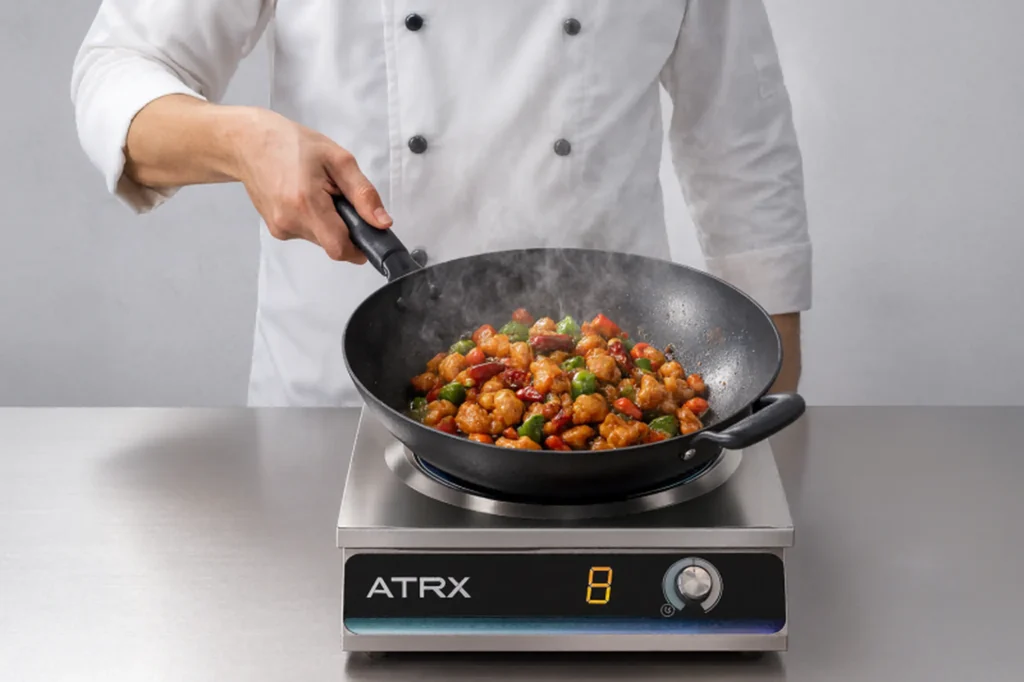
Commercial Induction Cooktop Operating Instructions: A Complete Guide for Professional Kitchens
07/02/2026
How to Choose a Commercial Induction Soup Cooker — A Buying Guide for Restaurant Owners
07/02/2026
Commercial Induction Pasta Cooker: The Ultimate Buying Guide
07/01/2026
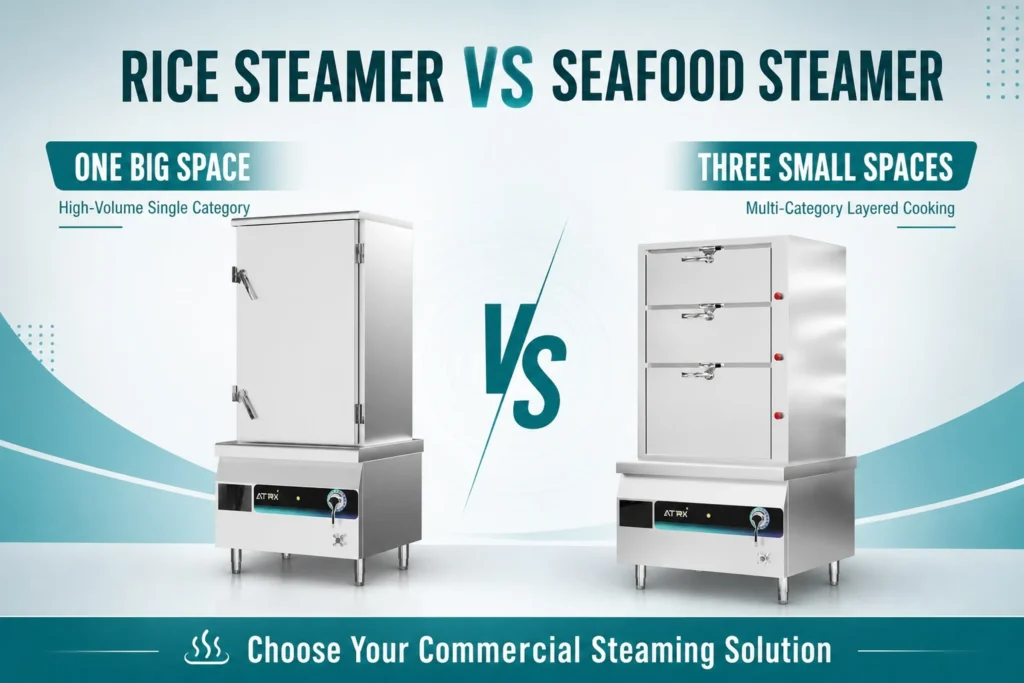
Commercial Induction Steamer Buying Guide: How to Choose Between Rice Steamers and Seafood Steamers
06/30/2026
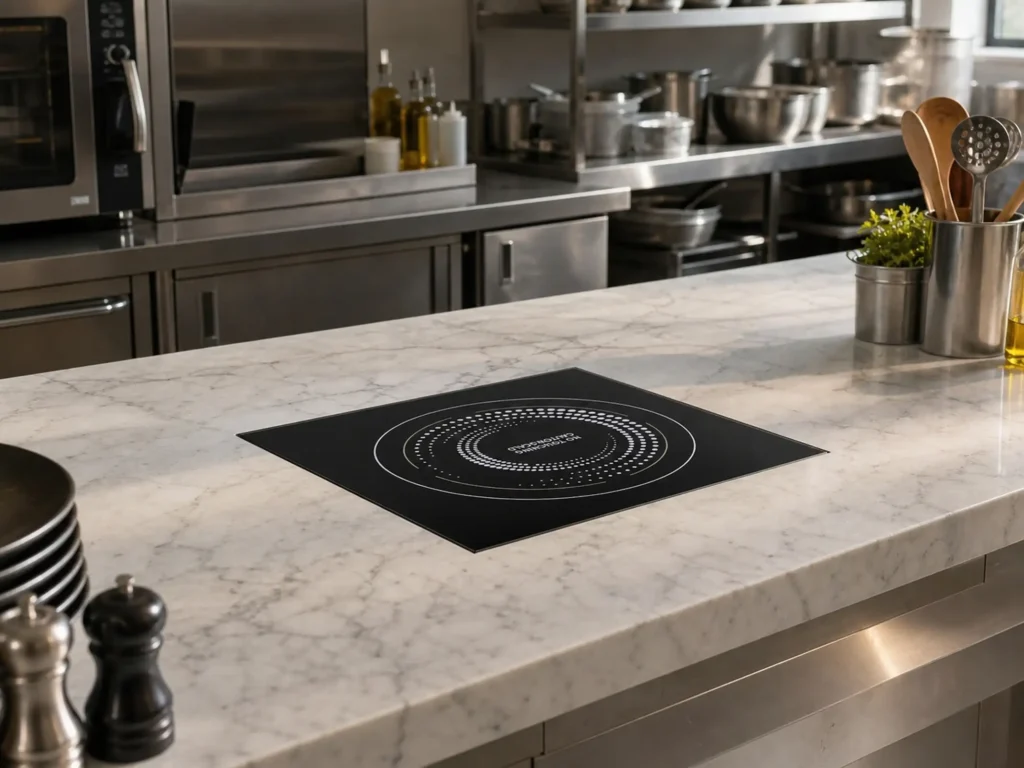
Commercial Induction Built-in Cooker: The Complete Guide to Seamless Kitchen Integration
06/29/2026