

Commercial Induction Pasta Cooker: The Ultimate Buying Guide
07/01/2026
Estimated reading time: 2 minutes

This guide uses real operational data to help you evaluate a commercial induction pasta cooker from every angle that matters — heating efficiency, peak-hour throughput, energy costs, and payback period. Every key number is broken down clearly. It also covers model selection and daily maintenance so you buy the right unit and use it the right way. One read, and you’ll have everything you need to make a confident decision.
IN THIS ARTICLE
Why Are Commercial Induction Pasta Cookers So Good?
Most restaurant owners hear “induction noodle cooker” and ask the same thing: “Is it really that much better?” Fair question. Gas pasta cookers have been the default for decades. The water boils, the noodles cook, nothing seems broken. But owners who have actually made the switch all say the same thing: “I can’t go back.” Let’s skip the technical jargon for now. Here’s what they notice first — and then a set of numbers to back it up.
Three Changes Restaurant Owners Notice First
After switching to an electric pasta cooker for restaurant use built on induction technology, the first things owners pick up on aren’t abstract metrics. They’re three very concrete, everyday differences:
1. Peak-hour service runs noticeably smoother.
During a lunch or dinner rush, noodles go in pot after pot. On a gas unit, the water temperature gets dragged down fast. By the third or fourth batch, the water hasn’t returned to a full boil — and the noodles that go in come out soft and mushy. Customers wait longer. Kitchen staff scramble. Induction responds to heat demand almost instantly. Water temperature recovers far faster, so even during nonstop high-volume service, the pot stays at a rolling boil. Every batch comes out the same. For fast-casual noodle shops, this single change is worth the upgrade on its own.
2. The monthly energy bill drops — and stays down.
This isn’t a one-month fluke. Owners consistently report sustained cost reductions after switching from gas to induction. The savings come from two places: higher thermal efficiency (less energy wasted as heat in the air) and smarter power control (the unit doesn’t run full blast when nobody’s cooking). We’ll break down the exact numbers in a later section. For now, know that the savings are real and repeatable.
3. The kitchen is cooler, and staff morale improves.
Gas cookers throw open-flame heat into the surrounding air nonstop. Standing next to one feels like standing by a bonfire — especially in summer. Induction has no open flame. Heat goes directly into the pot, so waste heat drops dramatically. The kitchen feels noticeably cooler. Air conditioning load drops with it.
That matters more than most owners expect. A cooler kitchen can reduce staff turnover — a hidden but very real cost saving.
These three changes — faster service, lower bills, a cooler kitchen — don’t require you to understand a single spec. You feel them every day you open for business. That’s the real reason so many owners who’ve made the switch say “I can’t go back.”
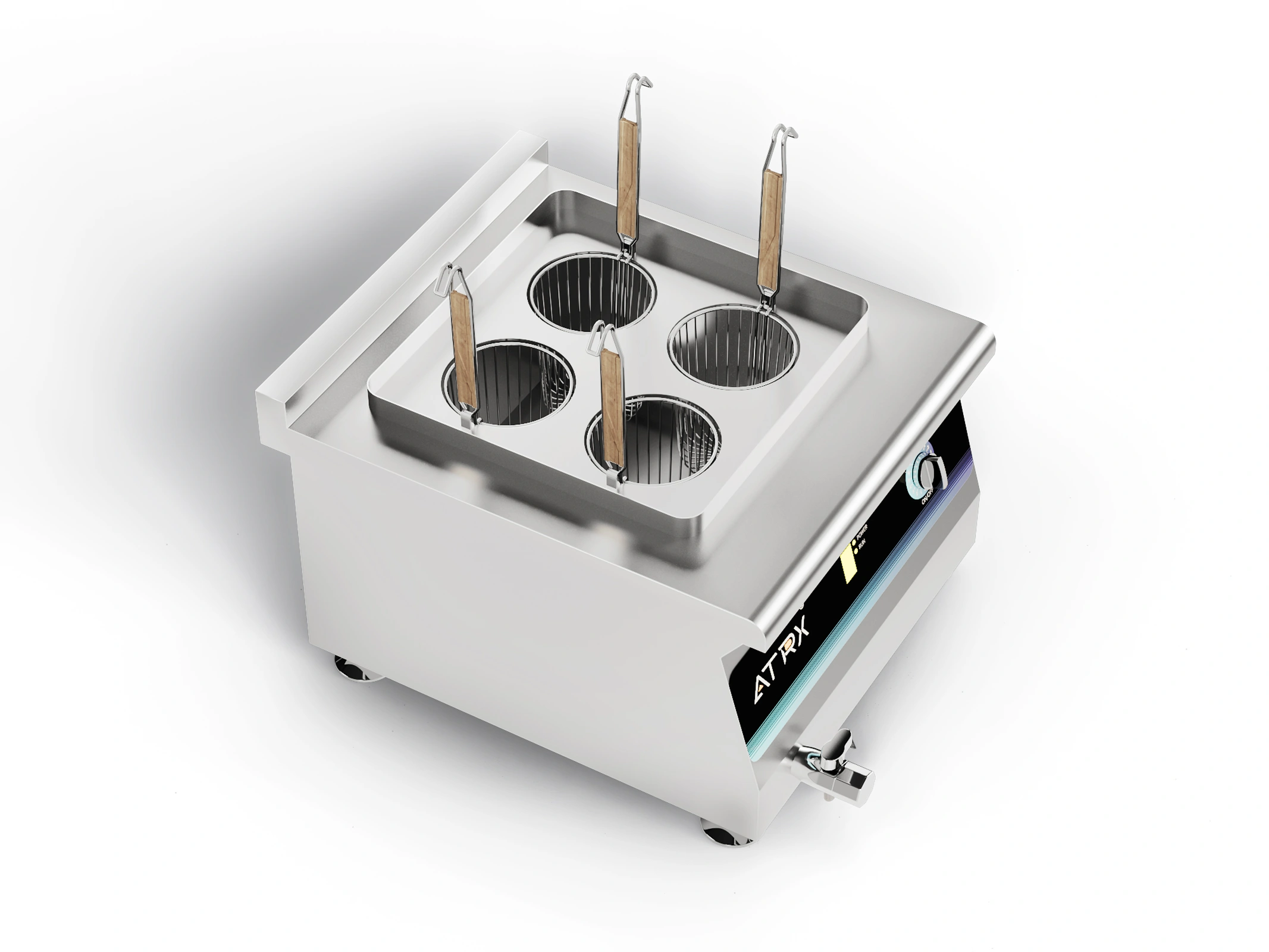
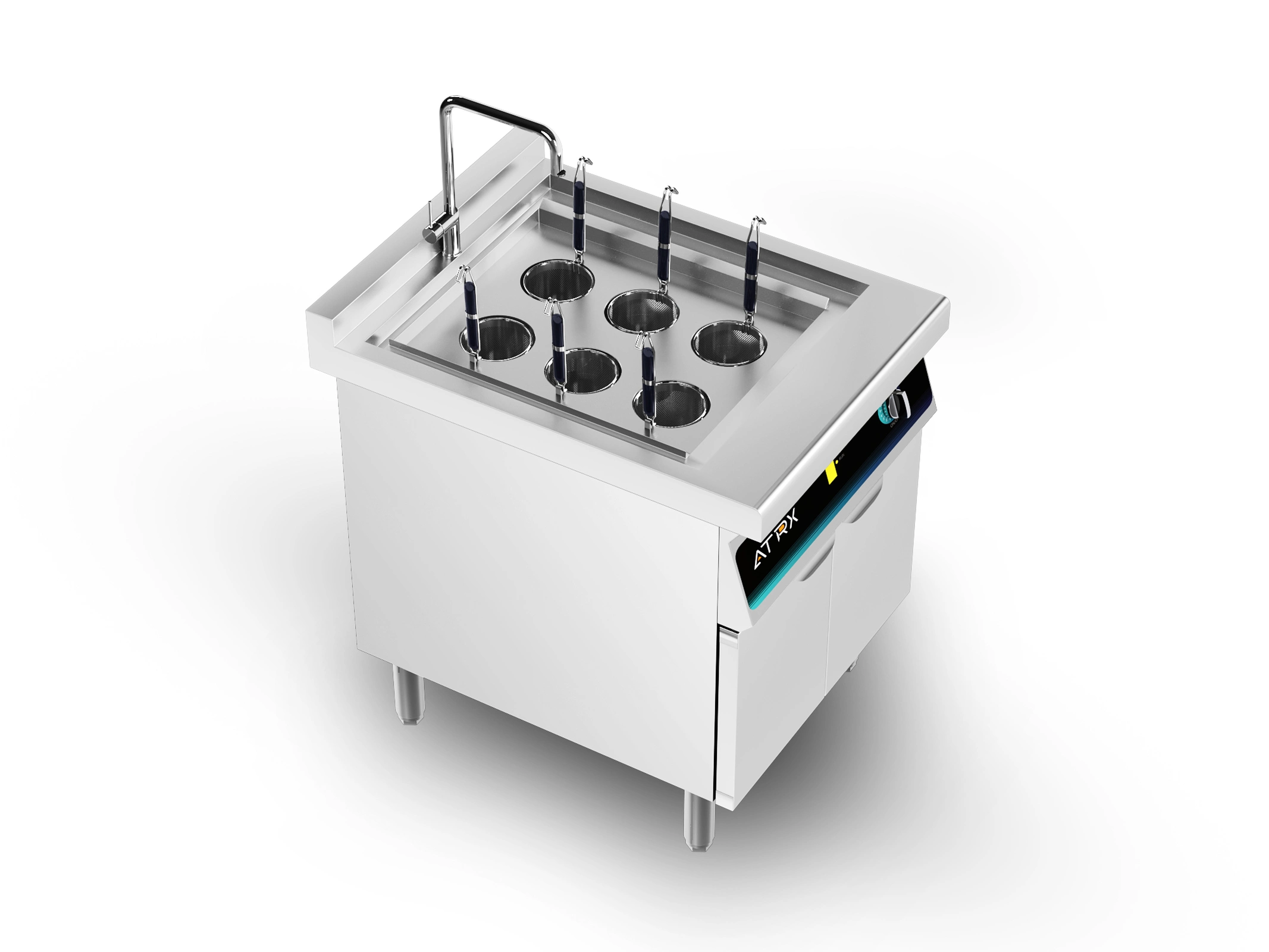
If you’re already considering an upgrade, start by browsing our commercial induction pasta cooker product line. Every model features independent basket design and zone-based temperature control, purpose-built for high-volume peak-hour service in chain restaurants, with factory-direct pricing available.
Compared to Gas, the Gap Is Enormous
If the descriptions above sparked your interest, this next set of numbers will seal it. When you compare induction pasta cooker vs gas, the gap isn’t marginal — it’s a different league. Here are the most important metrics side by side:
| Comparison | Commercial Induction Pasta Cooker | Commercial Gas Pasta Cooker |
|---|---|---|
| Thermal Efficiency | 90% – 95% | 40% – 55% |
| Time to Boil Same Volume of Water | ~3 minutes (6 cups of water) | ~8 minutes (same conditions) |
| Estimated Annual Operating Savings | $2,000+ savings vs. gas | — |
| Kitchen Waste Heat | Extremely low | High — over half the energy escapes as waste heat |
| Open Flame Risk | None | Yes |
Start with thermal efficiency. This tells you how much of your energy input actually heats the water. Commercial induction pasta cooking equipment hits 90%–95%. Over ninety cents of every dollar goes into the pot. Gas? Only 40%–55%. More than half the energy heats the air instead. That’s nearly a 2x gap.
Now look at speed. According to data from Hatco, a U.S. commercial kitchen equipment manufacturer, an induction cooktop boils six cups of water in about 3 minutes. Gas takes about 8 minutes under the same conditions (source). In a real service setting, those extra minutes add up fast — especially during continuous lunch and dinner rushes, where speed directly determines how many more tables you can turn.
Finally, the money. When you factor in the thermal efficiency gap, the extra HVAC load from waste heat, and the maintenance differences, commercial pasta cooker energy savings can reach $2,000 or more per year compared to gas at the same usage level. We’ll walk through the full math later. For now, just hold onto this: the gap between induction and gas is far bigger than most people think.
Why Are Induction Pasta Cookers Faster Than Gas?
The speed gap between induction and gas isn’t a marketing claim. It’s physics. Gas relies on an indirect heat chain: flame → pot wall → water. A huge share of the thermal energy never makes it to the water — it drifts into the surrounding air instead.
The U.S. Department of Energy puts gas stove efficiency at just 40%–50%. More than half the heat is wasted (Source: U.S. DOE — Making the Switch to Induction Stoves or Cooktops). An induction pasta boiler commercial kitchens rely on works completely differently. An alternating magnetic field generates heat directly inside the pot wall. No flame, no air gap. Energy goes straight from the coil into the metal and then into the water. Efficiency reaches 85%–95%.
We also have a video that visually demonstrates how much faster induction heating is compared to gas heating. If you’re interested, please refer to the following.
Same input power, radically different output. Induction puts nearly everything into the water. Gas loses over half to the exhaust hood. That physics gap drives the two speed advantages below.
Same Pot of Cold Water: Induction Boils It in Half the Time
The speed gap is over 2x. Industry testing shows that bringing about 20 liters of cold water from room temperature (~20°C) to a full rolling boil takes a 15 kW commercial induction noodle cooker roughly 8 minutes. A comparable gas unit with an 80,000 BTU burner? About 18 minutes.
Here’s why. Over 90% of the 15 kW induction input becomes heat in the water — that’s roughly 13.5 kW of effective heating. The 80,000 BTU gas burner has a raw thermal output of about 23.4 kW, but after 55%–60% dissipation losses, only 9–10 kW actually reaches the water. The induction unit delivers more usable power despite a lower nameplate rating.
Opening prep time gets cut in half. Every morning, you wait for the water to boil before the first bowl goes out. With induction, that wait shrinks by close to 10 minutes. For breakfast noodle shops or early-rush fast-casual spots, those 10 minutes can mean a dozen extra customers served before the competition is even ready.
Mid-service water changes stop being a crisis. When the water gets too starchy and needs a full swap, a gas unit forces a nearly 20-minute wait for fresh water to boil. That station is dead in the water — literally. An induction unit gets back to a rolling boil in about 8 minutes. The downtime is cut by more than half. Many noodle shop operators say this was the first improvement they noticed after switching — not the energy savings, but the fact that changing water mid-rush no longer caused panic.
During Peak-Hour Continuous Cooking, Recovery Speed Matters More Than Initial Boil
You only boil from cold once a day. The metric that actually tests your equipment is “recovery speed” — how fast the water gets back to a rolling boil after you drop in a basket of cold noodles. During lunch and dinner rushes, baskets go in back to back. If recovery is slow, you’re stuck in a loop: drop a basket, wait, drop the next, wait again. Service speed craters.
Here’s what testing shows. Drop about 2 kg of frozen udon into boiling water: a gas unit with an 80,000 BTU burner needs roughly 55 seconds to return to a full boil. The surface goes nearly still for close to a minute. A 15 kW induction unit? About 12 seconds. The water barely stops rolling. That’s nearly 4x faster.
This matters for quality, not just speed. When water temperature drops below about 95°C, the starch on the noodle surface can’t form a tight gel layer fast enough. The noodles soak up too much water, turn sticky, and clump together. That 55-second gas recovery window is exactly when the damage happens. And it gets worse with each batch — starch builds up in the water, slowing recovery even further.
A 15 kW induction unit pushes the water back to boiling within seconds. Every basket — first to last — cooks in a vigorous, full-boil state. One chain beef noodle operator told our ATRX team that before switching, quality dropped noticeably from the third basket onward during peak hours. He timed the recovery himself with a stopwatch. After upgrading to induction, recovery went from nearly a minute to just over ten seconds. His take: “The last basket chews exactly the same as the first.” That consistency is what induction pasta cooker efficiency looks like in practice.
The table below shows how that recovery gap translates into real throughput during a peak hour:
| Comparison | Gas Pasta Cooker (80,000 BTU) | Induction Pasta Cooker (15 kW) |
|---|---|---|
| Recovery Time After Adding 2 kg Frozen Noodles | ≈ 55 seconds | ≈ 12 seconds |
| Time Saved Per Basket | — | ~40 seconds |
| Cumulative Savings Over 30 Baskets in 1 Peak Hour | — | ~20 minutes |
| Extra Baskets Possible with Saved Time | — | 10+ additional baskets |
| Noodle Texture Consistency | Gets softer and stickier with each batch | Virtually no difference from first to last basket |
Fast recovery is the real backbone of peak-hour performance — it protects quality, protects speed, and protects your table turn rate.
How Much Can You Actually Save Per Year?
When it comes to upgrading equipment, most owners skip past the specs and ask one thing: how much money will this save me? This section talks only about money. We put the energy costs of traditional electric, gas, and induction pasta cookers side by side so you can see the math clearly.
Running 12 Hours a Day — Here’s Where the Money Goes
1. Traditional electric pasta cooker — the baseline. A typical 12 kW electric resistance pasta cooker runs on analog temperature control and keeps the water at a constant boil — full power, even when no orders are coming in. At 6 effective hours per day, that’s about 72 kWh. At the U.S. commercial rate of $0.16/kWh, daily cost is roughly $11.50.
2. Induction pasta cooker — on-demand heating changes the math. Swap in a 15 kW induction pasta cooker for commercial kitchen use. Induction heats on demand with near-instant recovery. Combined with smart temperature control and zone management, it doesn’t need to run at full power all day. Real-world average draw is about 5 kW, putting daily consumption at roughly 30 kWh — about $5.00 per day. That’s over $6 saved daily, or more than $2,400 per year.
3. Gas — cheaper per unit, but half the energy is wasted. Natural gas looks affordable on a per-unit basis. But gas thermal efficiency is only 40%–55% (per U.S. DOE data). Nearly half the heat goes into the air, not the water. Induction efficiency hits 85%–90% — virtually all of it goes into the pot.
There’s also a hidden cost most people miss. To avoid a 45+ minute reheat from cold, many cooks just leave the gas burner running all day — even during the dead hours between lunch and dinner. That idle burn alone can waste $6 or more per day.
4. The air conditioning bill adds up too. Gas equipment dumps up to 60% of its thermal energy into the kitchen. Your HVAC has to work overtime to compensate. Induction keeps almost all the heat inside the pot, so the kitchen runs cooler and the AC runs less. Industry estimates put this HVAC savings at $300–$700 per year. Add direct energy savings and indirect HVAC savings together, and a single induction unit easily saves over $2,000 annually.
The Higher Upfront Cost Pays for Itself in 12 to 18 Months
The sticker price is the first objection every owner raises — and it’s a fair one. A commercial induction pasta cooker typically costs $1,500 to $3,000 more than a gas unit of similar capacity. But you can’t judge the investment by the purchase price alone. You have to look at total cost of ownership.
With annual commercial pasta cooker energy savings of $2,000 or more, plus lower maintenance costs (no burners, ignitors, or gas valves to replace), the price premium pays for itself within 12 to 18 months. After that, every dollar saved is pure margin.
A well-built commercial unit lasts 10 years or more. That means roughly 18 months to break even, then eight-plus years of net savings. The question isn’t “is induction expensive?” It’s “are you willing to invest once and earn it back every year after?” The table below lays out the full timeline:
| Item | Gas Pasta Cooker | Induction Pasta Cooker | Difference |
|---|---|---|---|
| Equipment Purchase Price (Reference) | ~$2,500 | ~$4,500 | Induction costs +$2,000 more |
| Annual Energy Cost | ~$4,200 | ~$1,800 | Saves $2,400/year |
| Annual Maintenance Cost (Burners/Ignitors, etc.) | ~$400 | ~$100 | Saves $300/year |
| Annual HVAC Indirect Savings | — | ~$500 | Saves $500/year |
| Total Annual Savings | — | — | ~$3,200 |
| Payback Period | — | — | ~12–18 months |
| Net Savings Over 10-Year Equipment Life | — | — | ~$30,000 |
The table shows an optimistic best-case annual savings of ~$3,200. In practice, variables like local energy rates, daily run time, and seasonal demand mean most operators land in the 12- to 18-month payback range — still an excellent return by any commercial kitchen equipment standard.
Want to calculate your own electricity cost precisely? We have a dedicated article with a built-in calculator: Commercial Induction Cooker Power Consumption: Real Data & Cost. Enter your Rated Power (kW), Daily Usage Hours, Number of Units, and Electricity Rate ($/kWh) — and you’ll get your exact monthly spend.
How to Choose the Right Unit for Your Kitchen
From countertop to floor-standing, from 3.5 kW to 20 kW — the range of commercial pasta cooking equipment on the market can feel overwhelming. Many owners either get lost in model numbers or just pick one by gut feeling. It doesn’t have to be that complicated. Focus on two variables: your output volume tells you how big the unit should be, and your service pace tells you how powerful it should be. Get those two right, and you won’t buy wrong.
Calculate Your Output Volume First, Then Determine Tank Size and Basket Count
Start from your demand and work backward. How many portions per day? How many per hour during peak? A standard cooking basket handles 0.5 to 1.5 kg of noodles per cycle. That’s your baseline.
For small shops or stalls doing under 200 portions daily, a countertop 2- to 4-basket unit works fine. Tank capacity: roughly 20 to 40 liters. Above 300 portions per day, you need a floor-standing unit with 6 or more baskets and 80 to 180 liters of tank capacity. A bigger tank isn’t just about volume — more water means smaller temperature swings, which means more consistent texture.
If your menu has multiple items cooking at once — ramen, udon, and blanched greens, for example — go with a multi-tank model with independent temperature control. Different items in separate tanks means no flavor crossover and optimal settings for each. ATRX dual-tank models follow this logic: the main tank runs high power for noodles, the secondary runs lower power for vegetables. Each tank is controlled independently. Operators consistently tell us this setup outperforms single-tank, multi-basket configurations in real service conditions.
One rule to live by: size your capacity 10% to 20% above peak-hour demand. In this industry, “just enough” is “not enough when it gets busy.” A unit running at its ceiling leaves zero room for error when orders surge. Here’s a quick reference to match your volume to the right setup:
| Daily Output | Recommended Model | Baskets | Tank Capacity | Typical Use Case |
|---|---|---|---|---|
| Under 100 portions | Countertop compact | 2–3 | 15–20 L | Breakfast stalls, snack bars, food stands |
| 100–200 portions | Countertop standard | 3–4 | 20–40 L | Noodle shops, small fast-casual restaurants |
| 200–300 portions | Floor-standing standard | 4–6 | 50–80 L | Mid-size noodle restaurants, single chain outlets |
| 300–500 portions | Floor-standing large capacity | 6–9 | 80–120 L | Large restaurants, chain brand locations |
| 500+ portions | Floor-standing dual-tank large | 9+ | 120–180 L | Central kitchens, large-scale institutional cafeterias |
Higher Wattage Isn’t Always Better — Match Power to Your Service Pace
A common misconception: bigger wattage is always better. It’s not. Every commercial unit can boil water — that’s not the question. The question is whether water temperature holds up during continuous service. Every basket of cold noodles pulls the temperature down. Power is what pulls it back up. Match power to your service pace, not your tank size.
3.5–5 kW — Low-volume, steady flow. A few dozen portions per hour. Breakfast stalls, small community noodle shops, food stands. Paired with a 20–30 liter tank, this handles steady traffic easily. Runs on 220V single-phase — no electrical upgrades needed. Countertop form factor (roughly L500 × W470 mm) fits right on the prep counter.
8–10 kW — Moderate traffic, standard service. Upwards of a hundred portions per hour during peak. Recovery at this level is noticeably faster — three or four consecutive baskets and the water still comes back to boiling within about ten seconds. Floor-standing units, typically around L700 × W750 mm. Requires 380V three-phase power.
12–15 kW — High-intensity, sustained output. For large restaurants and chain outlets running 6 or even 9 basket positions at full speed. At this level, water temperature stays above 98°C even through extended peak-hour rushes. Single-basket cook time stays around 1 minute instead of stretching toward 2. Overall throughput improvement: up to 40% versus lower-powered units under the same service load.
The core variable is peak-hour portions per hour — not tank size. A large tank with insufficient power has plenty of water but not enough heating muscle. During a sustained rush, temperature keeps drifting down, noodles cook unevenly, times stretch, and the whole workflow bogs down.
The right approach: determine your peak pace first, then figure out how fast you need recovery, then match the power. And check your electrical capacity before you order — 3.5 to 5 kW countertop units run on 220V single-phase, but anything 8 kW and above typically needs 380V three-phase. If your existing wiring can’t handle it, you’ll need an upgrade. Factor that cost in during the selection stage, not after the equipment arrives.
How to Maximize Efficiency After Purchase
Buying the equipment is step one. What determines whether it keeps making you money is how you use and maintain it. Many restaurants invest in a commercial induction pasta cooker and enjoy great results for the first few months — then notice heating slowing down and temperature control drifting around the six-month mark. The problem usually isn’t the machine. It’s the habits around it. Get two things right, and your unit will perform like new for years.
The Daily End-of-Shift Cleaning Routine Is Non-Negotiable
The most important maintenance isn’t a quarterly deep service call. It’s ten to fifteen minutes at the end of every shift. Here’s the full routine:
- Power off and let it cool. Cut the power after closing. Wait about 15 minutes before cleaning. Hitting a hot stainless steel surface with cold water risks burns and can cause thermal shock damage to the interior.
- Wipe all key surfaces with food-grade cleaner and a scouring pad. Four zones matter most: tank interior, strainer baskets, basket racks, and the temperature probe. The priority target is starch residue. If left overnight, it hardens into a scale layer that reduces heat transfer efficiency and throws off the probe’s accuracy — leading to erratic water temperatures.
- Rinse at least twice with clean water, then dry the interior with a cloth. Rinsing removes cleaning agent residue so it doesn’t contaminate the next day’s cooking water. Drying prevents standing water from causing pitting corrosion — especially at weld seams and probe connections, which are easy to miss.
- Deep descale at least once a month. Mix white vinegar and water at 1:10, pour it into the tank, soak, scrub mineral deposits with a soft cloth, then rinse thoroughly with clean water and a small amount of detergent. If your water is hard, bump the frequency to every two weeks — or install a filter on the inlet. Scale on the heating surface acts like an insulating blanket. The unit has to push harder and longer to boil the water, wasting electricity and dragging down service speed.
During a routine follow-up visit, one of our ATRX after-sales engineers found that a client’s unit was heating noticeably slower than the other two identical machines on the same line. The culprit: nearly 2 mm of scale buildup on the tank bottom. The other two units — maintained on a consistent monthly descaling schedule — were still performing at factory-new levels after more than a year of daily use.
That’s consistent with a widely cited industry benchmark: commercial kitchen equipment on a regular maintenance schedule sees repair costs roughly 50% lower than the industry average. Fifteen minutes a day buys you longer equipment life, fewer breakdowns, and output that stays consistent shift after shift.
Multi-Basket Zoning + Power Levels = One Person Managing Multiple Stations Efficiently
Maximizing efficiency isn’t about pushing people harder. It’s about using the features already built into the machine. A standard commercial induction noodle cooker comes with 6 independent strainer baskets and an 8-level power dial. Each position operates on its own. Different positions can cook different items at the same time.
The most effective approach: build an “operation card” for every noodle type and ingredient. List the power level and cook time. Post it where the cook can see it. Staff follow the card — no guesswork, no experience required. New hires get up to speed fast.
Pair that with the built-in timer. Set a countdown per basket. When time’s up, the buzzer goes off. The cook lifts and drains. One skilled operator can monitor four to six positions at once — knowing exactly when to drop and when to pull. No overcooking. No missed orders. Higher-end models add auto-lift baskets that raise the strainer automatically, freeing hands for seasoning and plating.
Here’s a starting-point reference for building your operation cards. Fine-tune the times based on your specific noodle brands and thicknesses:
| Ingredient Type | Suggested Power Level (out of 8) | Reference Cook Time | Key Tips |
|---|---|---|---|
| Thin dried noodles / angel hair | Level 5–6 | 2–3 minutes | Gently agitate after dropping to prevent clumping |
| Medium noodles / ramen | Level 6–7 | 4–5 minutes | Keep water level sufficient to maintain a continuous boil |
| Udon (frozen) | Level 8 (full power) | 6–7 minutes | Frozen noodles cause a sharp temp drop; full power for fast recovery |
| Wide rice noodles / ho fun | Level 5–6 | 1.5–2 minutes | Short cook time — watch the timer and pull immediately |
| Blanched greens / broccoli | Level 4–5 | 1.5–2.5 minutes | Ice bath after pulling to preserve crunch and color |
| Dumplings / wontons | Level 6–7 | 5–6 minutes | After floating, cook 1–2 more minutes to ensure filling is done |
Master the “zoning + timing + standardization” playbook, and you’ll see a clear throughput jump during peak hours with the same headcount — compared to cooking by feel and experience alone. This kind of commercial pasta cooking equipment is built to let one person manage multiple cooking lines at once. The capability is already there. Use it right, and the efficiency follows.
About the author

ATRX Team| 18 Years Commercial
Induction Cooker Manufacturer in China
Induction Cooker Manufacturer in China
Related Posts
Best Commercial Induction Cooktop: Types &Buying Guide
10/09/2026
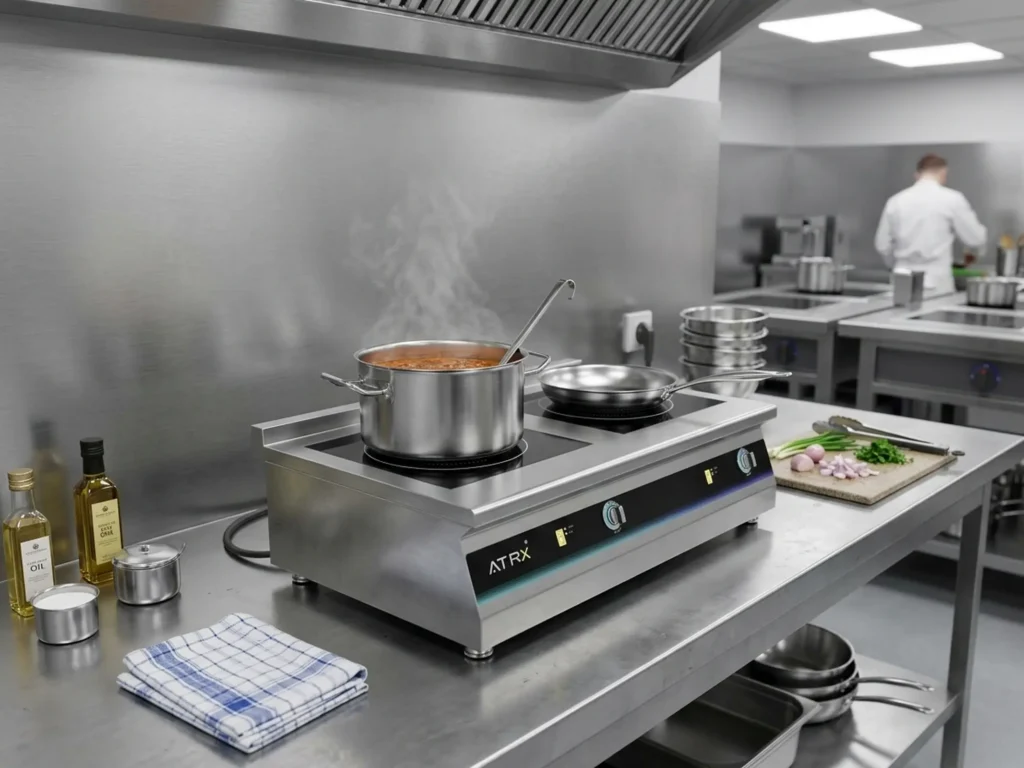
Commercial Double Hob Induction Cooker | Types, Power, and Installation Guide
10/05/2026
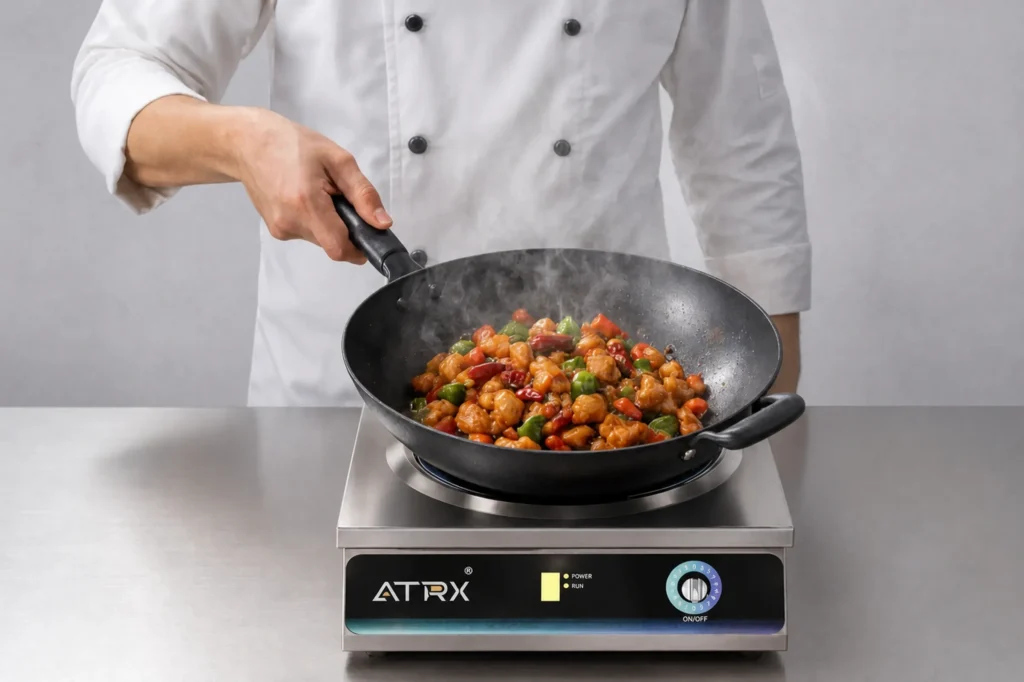
Commercial Induction Cooker 3500W: Model Selection, Commercial Power and Installation
09/29/2026
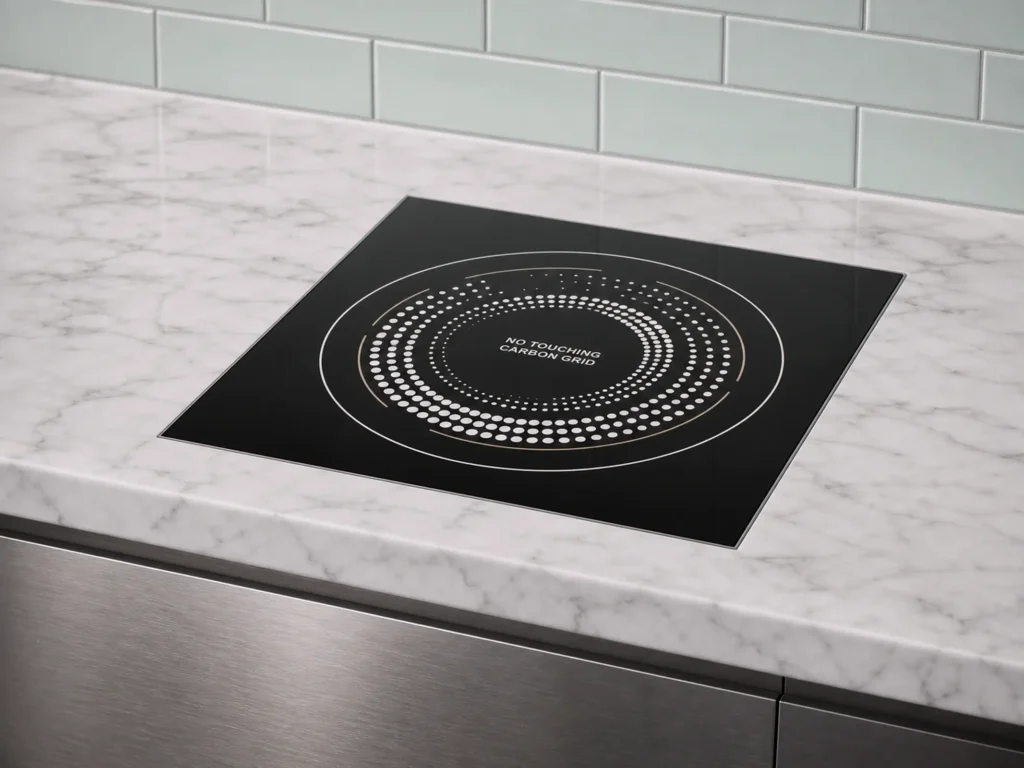
How to Install a Built-In Induction Cooktop: A Step-by-Step Guide
09/17/2026
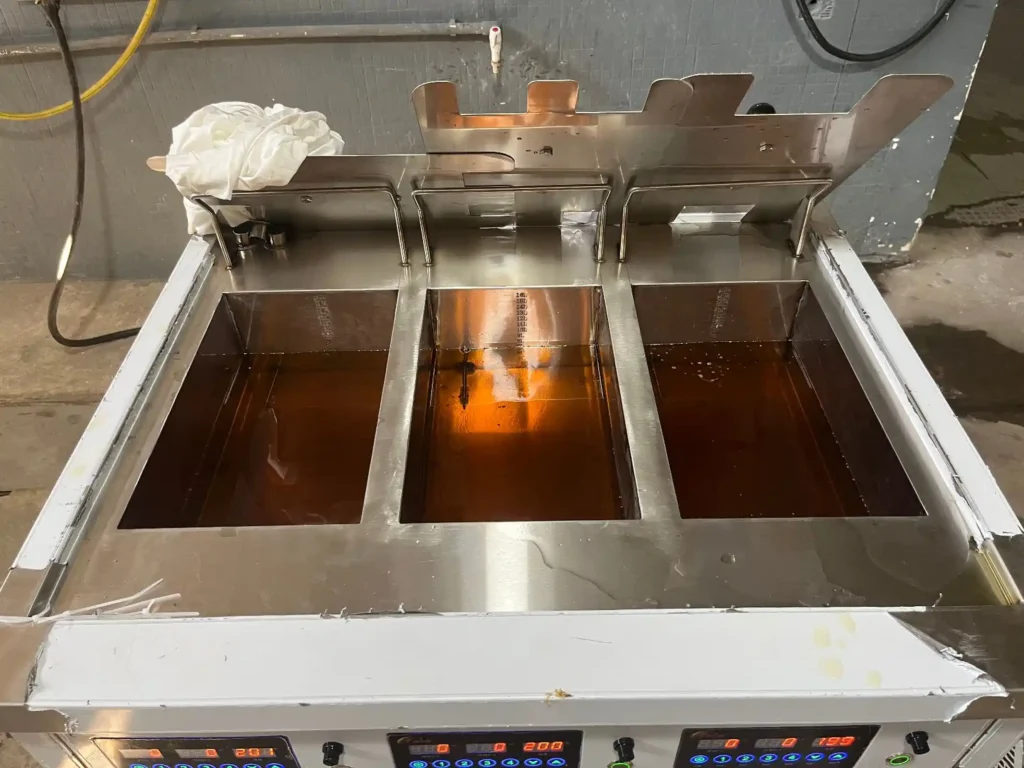
How to Clean a Commercial Deep Fryer: A Step-by-Step Guide
09/13/2026
High Quality Commercial Induction Cooker Manufacturer
09/09/2026
Automatic Wok Machine: Types, Specifications, Applications and Buying Guide
08/18/2026
Commercial Induction Range: How to Choose the Right Size, Power, and Configuration for a Commercial Kitchen
08/15/2026
What Is a Commercial Induction Cooker and How Does It Work
08/13/2026
Commercial Induction Range for Hotel Kitchens: How to Choose the Right Model
08/11/2026