

What Cookware Works on Induction? Compatibility Guide & Best Materials Explained
07/28/2026
Estimated reading time: 2 minutes

This guide helps you figure out whether the pots and pans you already own will work on an induction cooktop. It also breaks down how different cookware materials for induction actually differ — in heating speed, heat distribution, and day-to-day upkeep. The check itself is dead simple: grab a magnet, stick it to the bottom of your pan. If it holds tight, you’re good. No spec sheets required.
IN THIS ARTICLE
Which Cookware Materials Work on Induction — Cast Iron, Carbon Steel, Magnetic Stainless Steel & Enameled Cast Iron
The pan’s base must contain ferromagnetic material. That’s the one rule. Cast iron, carbon steel, magnetic stainless steel (like 430 grade), enameled cast iron, and non-stick pans with a magnetic base plate — all of these qualify as induction compatible cookware. Pure aluminum, pure copper, glass, and standard ceramic don’t contain any ferromagnetic component. They can’t interact with the cooktop’s magnetic field, so they simply won’t heat up. Quickest way to check: hold a magnet to the bottom. Sticks? It works. Doesn’t stick? It won’t.
The most common induction suitable pans and pots on the market fall into five categories. They all share one thing: enough ferromagnetic content to respond to the alternating magnetic field from the induction coil.
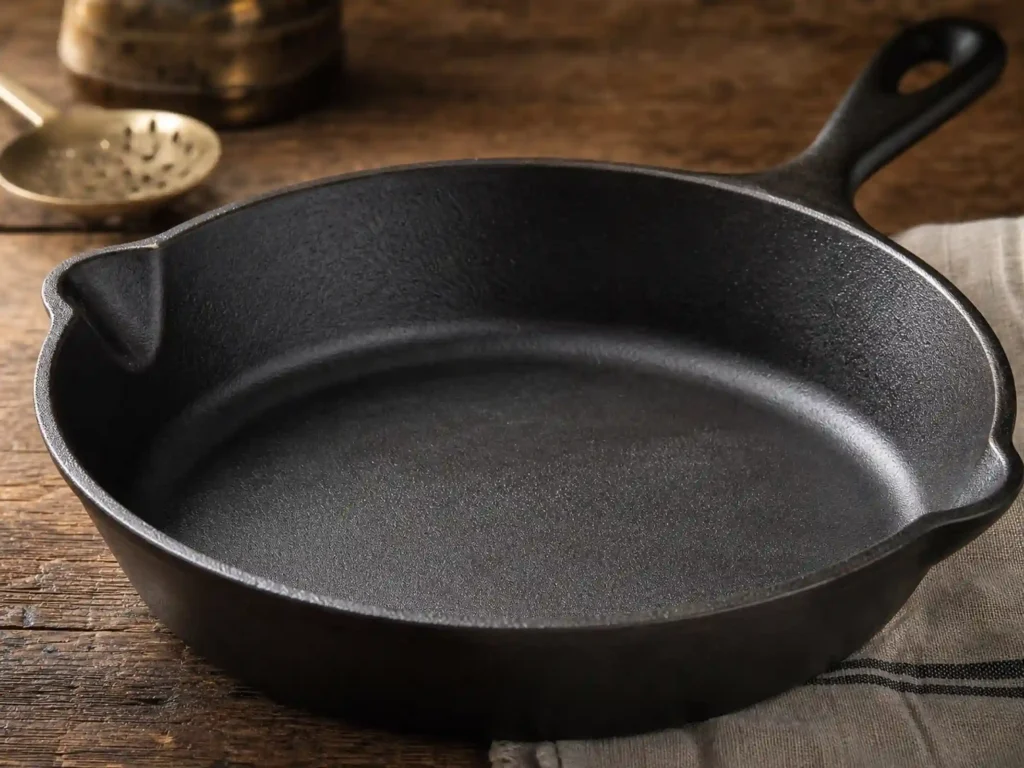
1. Cast Iron
Cast from an iron-carbon alloy, this material has extremely strong ferromagnetic properties. It couples with the induction field more efficiently than almost anything else. Set it on the cooktop and it gets recognized instantly.
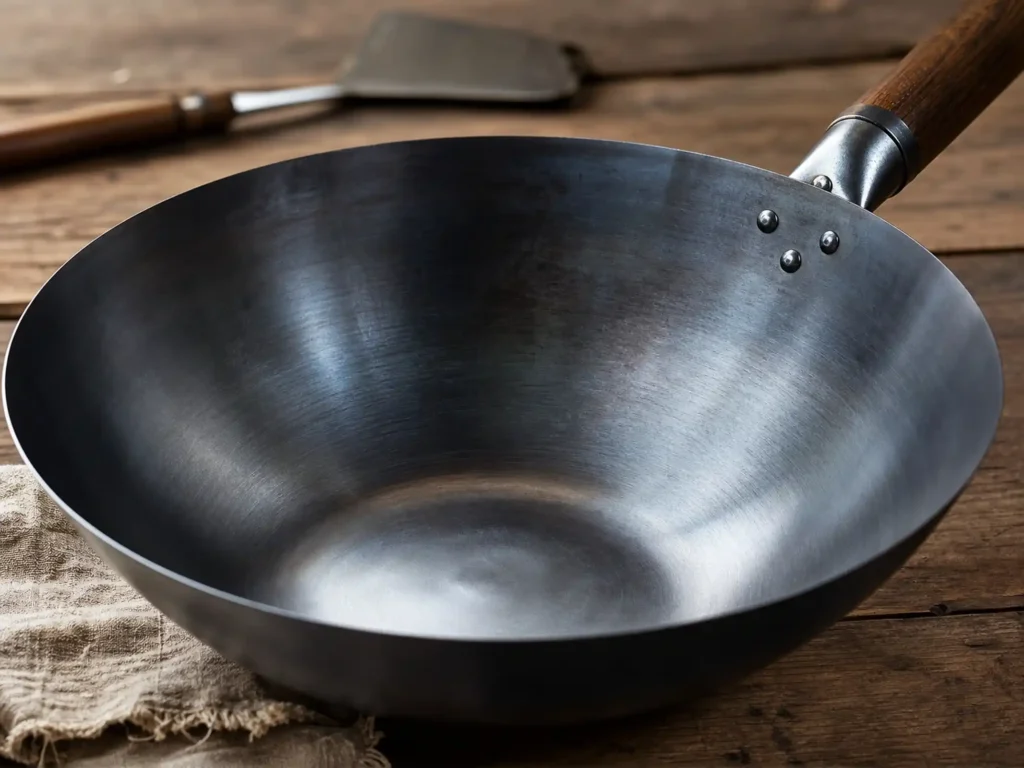
2. Carbon Steel
Mostly iron, with thin walls and excellent magnetic permeability. Induction cooktops detect it quickly, and it heats up fast.
3. Magnetic Stainless Steel (e.g., 430 Stainless Steel)
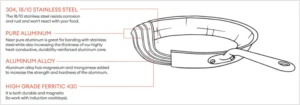
The key is the crystal structure — 430 stainless is ferritic, so it keeps its ferromagnetic properties and works fine on induction. But not all stainless steel qualifies. The widely used 304 grade has an austenitic structure with very weak magnetism. On its own as a pan base, it often can’t be reliably detected by the cooktop.
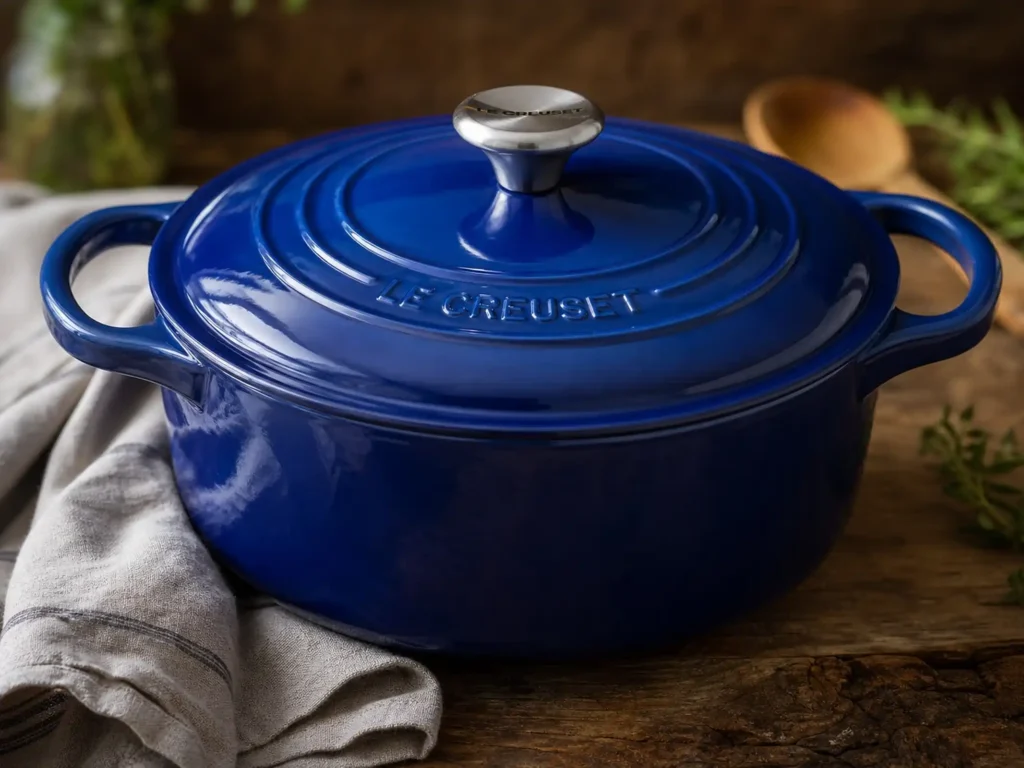
4. Enameled Cast Iron
This is just cast iron with a layer of enamel glaze fired onto the surface. The core is still ferromagnetic cast iron. The coating doesn’t block the magnetic field. Fully compatible.
5. Non-Stick Pans with a Magnetic Base Plate
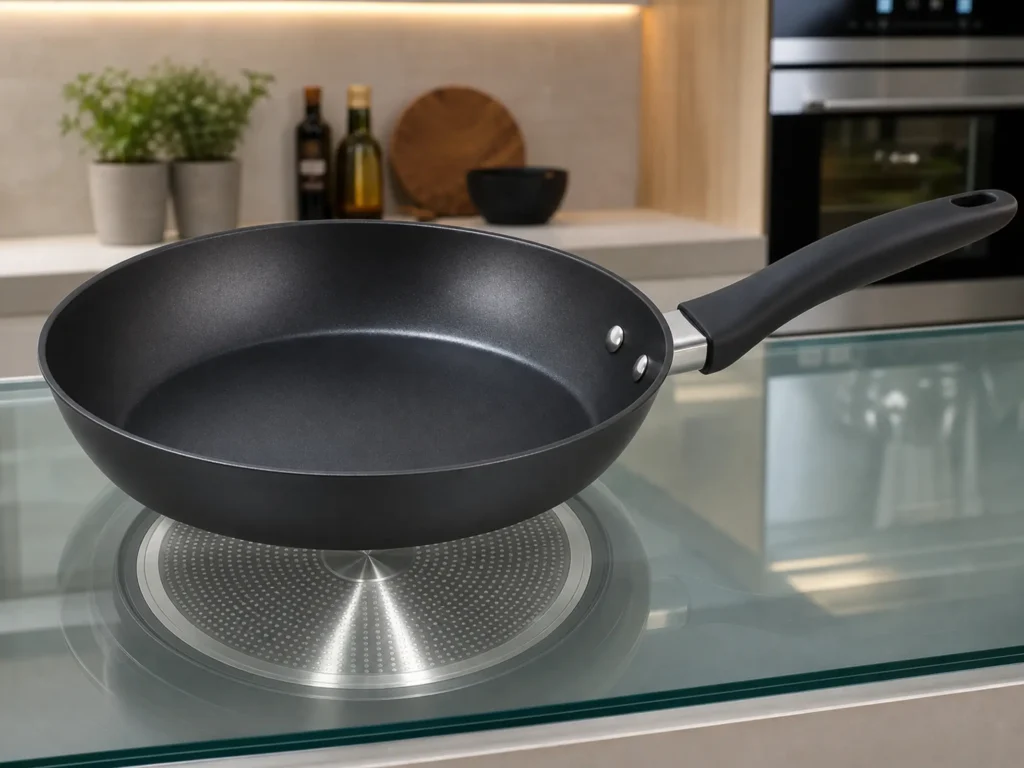
The pan body may be aluminum, but the manufacturer has bonded a layer of magnetic stainless steel to the bottom. That steel layer is what provides the ferromagnetic interface for induction heating.
The UK-based MECS research project reaches the same conclusion in its cookware quality assessment guide: only 400-series ferritic stainless steel (such as 430 and 409) passes the magnet test and works with induction, while 300-series stainless steel does not (MECS — Non-Technical Guidelines for Assessing the Quality of Induction Cookware).
Materials That Don’t Work — Pure Aluminum, Pure Copper, Glass & Standard Ceramic
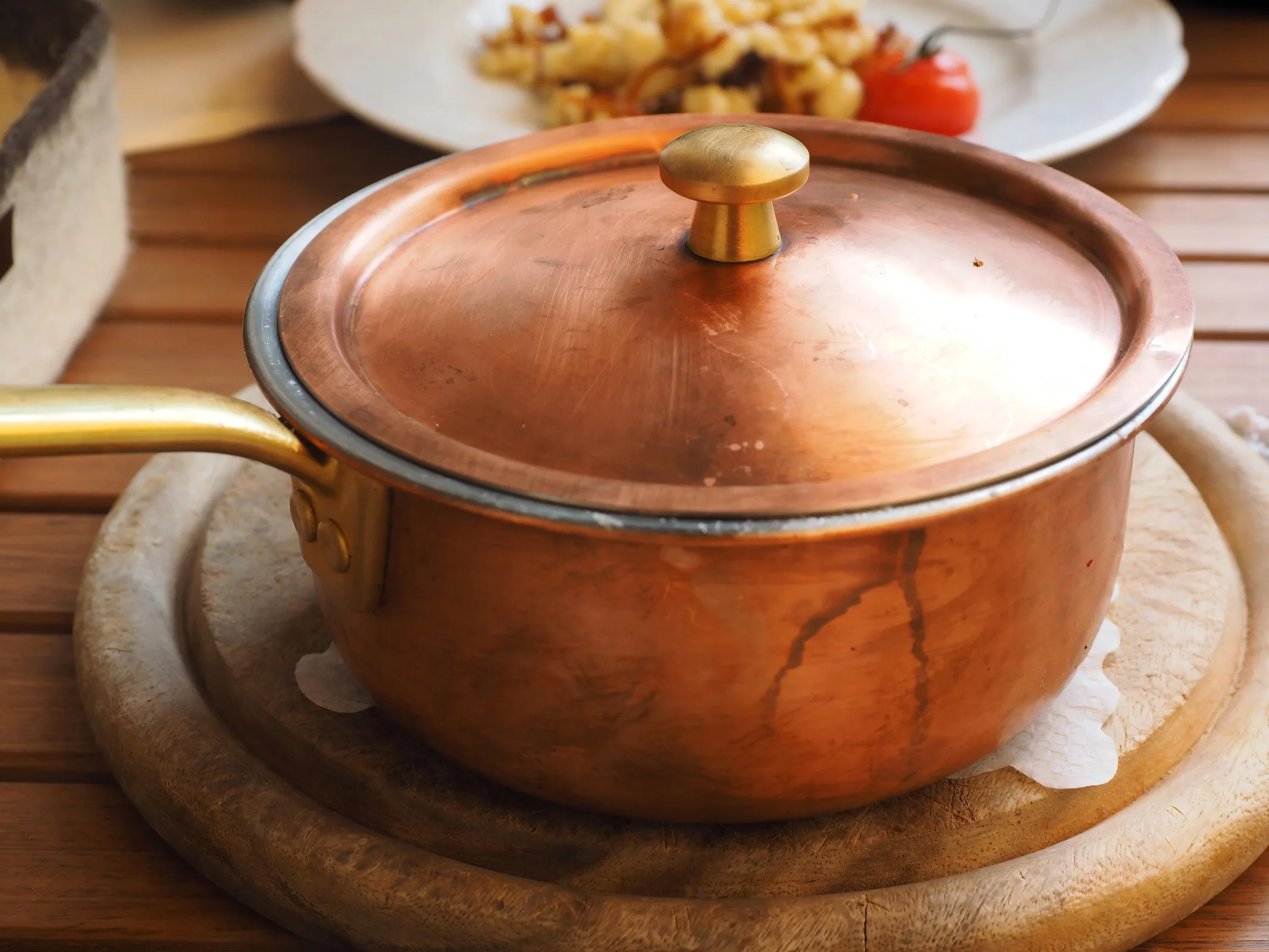
These materials have no ferromagnetic component. Put them on an induction cooktop and you’ll get either zero response or an error code.
| Incompatible Material | Why It Doesn’t Work |
|---|---|
| Pure Aluminum | Paramagnetic — can’t generate enough eddy currents in the cooktop’s alternating magnetic field to produce heat. |
| Pure Copper | Non-ferromagnetic. Great thermal conductor, but can’t couple with the induction field. |
| Glass | Not a metal. Neither conductive nor magnetic — completely outside the working principle of induction. |
| Standard Ceramic | Same as glass. No ferromagnetic content, no induction heating. |
One exception to watch for: some aluminum or copper pans come with a magnetic steel plate bonded to the bottom. The packaging will usually say “induction-ready” or “suitable for induction cooktops.” The pan body itself isn’t compatible, but that bottom steel layer provides the ferromagnetic interface the cooktop needs.

If your kitchen relies heavily on aluminum and you want to know exactly which aluminum pieces work and which don’t, see our detailed breakdown on whether aluminum containers can be used on induction cooktops.
The bottom line is simple: ferromagnetic base = works. No ferromagnetic base = doesn’t work. That one rule applies regardless of brand or price.
How Different Compatible Materials Perform on Induction
Knowing what cookware works on induction cooktop surfaces is only half the story — not all compatible materials perform the same way. Differences show up in two areas: heating performance and daily maintenance burden. Pure iron heats fastest. Carbon steel is close behind. Multi-ply stainless steel sits in the middle. Cast iron and enameled cast iron are slowest to warm up but hold heat most evenly. Below is a detailed induction cookware performance comparison across all five categories.
On the practical side, multi-ply stainless steel is lightest and nearly maintenance-free. Pure iron and carbon steel weigh less than cast iron but both need seasoning and rust prevention. Cast iron types are the heaviest, and bare cast iron demands the most upkeep. What you pick depends on whether you value speed or heat stability — and how much daily care you’re willing to put in.
Heating Speed and Heat Distribution Comparison
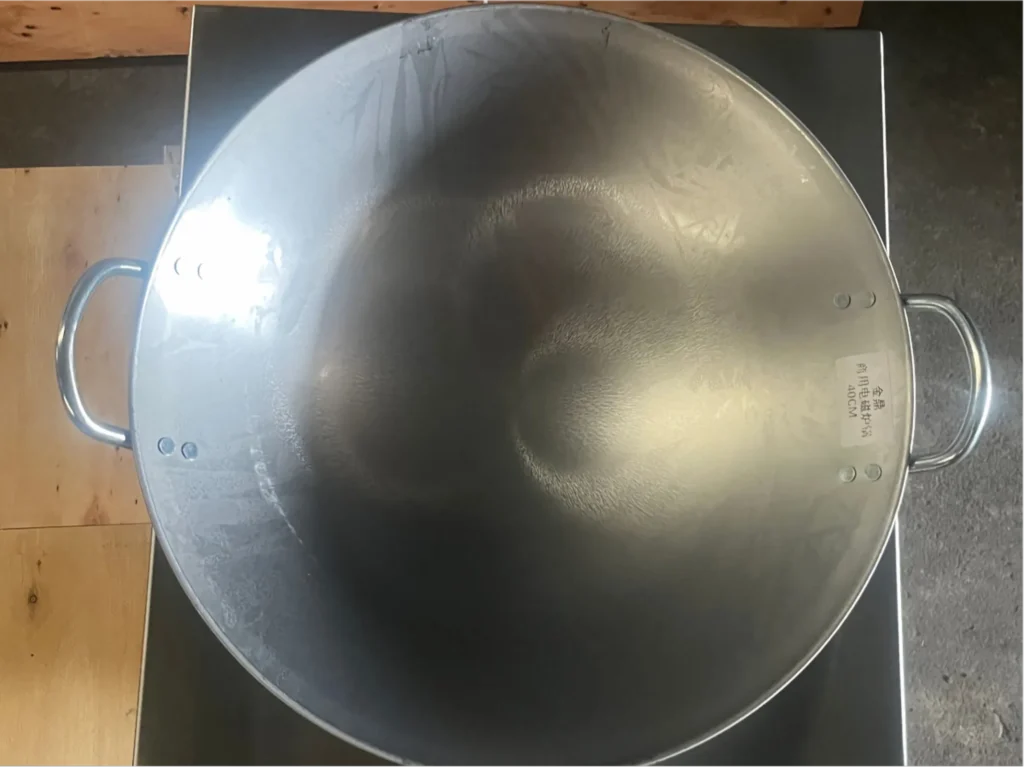
1. Pure Iron (Wrought Iron): Strongest electromagnetic response, fastest heating
Pure iron contains over 99% iron with nearly zero carbon. Its microstructure is almost entirely ferrite, giving it the highest magnetic permeability of any common cookware material. On an induction cooktop, it starts converting electromagnetic energy to heat the instant it makes contact. That’s why commercial induction cooktop manufacturers almost always pair their units with pure iron pans.
The trade-off: pure iron walls are typically thin. Heat concentrates right above the induction coil in the center, and the edges run noticeably cooler. When searing at high heat, watch where you place your food.
2. Carbon Steel: Fast heating, slightly weaker magnetic response than pure iron
Carbon steel contains 0.1%–2% carbon — much more than pure iron. That extra carbon forms pearlite and other mixed structures in the ferrite matrix, which interferes with magnetic domain movement. The result: lower magnetic permeability than pure iron.
On the cooktop, carbon steel still heats up fast — among the quickest of all materials — but a bit slower than pure iron at the same thickness. Like pure iron, thin-bottomed carbon steel pans are prone to center hot spots.
3. Multi-Ply Stainless Steel: Moderately fast, better uniformity in fully clad designs
Multi-ply stainless steel — especially fully clad versions with an aluminum or copper core — responds to induction reasonably fast. The conductive middle layer spreads heat outward from the center. But if only the base is clad (not the full body), the heat-spreading effect drops off and the upper sidewalls stay cooler.
Overall, it heats a step behind pure iron and carbon steel. However, a well-designed fully clad structure can actually beat both of them on heat uniformity.
4. Cast Iron and Enameled Cast Iron: Slowest to heat, best at holding steady, even heat
Thick walls and heavy mass mean these materials take the longest to fully heat through. The warm-up phase is noticeably slower than the three above.
Once up to temperature, though, the heavy body works like a thermal battery. It stores energy and releases it evenly across the entire surface. Center-to-edge temperature difference is minimal — ideal for slow braises, steak searing, or long simmers. Enameled cast iron behaves identically to bare cast iron here; the enamel glaze doesn’t affect heating.
MECS, a UK-based nonprofit, confirmed the efficiency gap in lab testing: iron cookware — the most common magnetic cookware for induction stove use — achieved 91% electromagnetic energy conversion efficiency, versus 87% for stainless steel (MECS — Not All Induction Cookware Is Created Equal). In our experience at ATRX, many buyers initially assume stainless steel performs about the same as iron on induction. Once they see the actual efficiency numbers, they understand why iron remains the default recommendation for commercial setups.
| Material | Heating Speed | Heat Uniformity |
|---|---|---|
| Pure Iron (Wrought Iron) | ★★★★★ Fastest — highest magnetic permeability | ★★★☆☆ Moderate — center hot spots in thin-walled models |
| Carbon Steel | ★★★★☆ Fast — slightly behind pure iron | ★★★☆☆ Moderate — thin bases also prone to hot spots |
| Multi-Ply Stainless Steel | ★★★★☆ Moderately fast | ★★★★☆ Good — better in fully clad construction |
| Cast Iron | ★★☆☆☆ Slower | ★★★★★ Excellent — even heat retention |
| Enameled Cast Iron | ★★☆☆☆ Slower | ★★★★★ Excellent — same as bare cast iron |
Weight and Daily Maintenance Comparison
Weight matters more than people think. A standard cast iron skillet runs 3.5–5 kg. An enameled cast iron Dutch oven can top 6 kg. Add food and one-handed pouring becomes basically impossible.
Pure iron and carbon steel pans are much thinner-walled. At the same diameter, they weigh roughly half as much as cast iron — sometimes less. Daily handling and stir-frying are noticeably easier. Multi-ply stainless steel is the lightest of the bunch, mostly 1–2 kg per piece. One-handed use is effortless.
Maintenance is the other divide. Pure iron and bare cast iron are high-maintenance: towel-dry after every wash, apply a thin coat of oil, and season regularly. Skip a step and rust appears fast.
Carbon steel follows the same pattern. A new carbon steel pan needs proper seasoning out of the box. After that, avoid prolonged soaking and acidic foods, or the seasoning layer breaks down. Enameled cast iron is easier — the glaze seals the iron from air, so no seasoning or oiling is needed. Just avoid dropping or banging it, because chipped enamel can’t be repaired.
Multi-ply stainless steel wins on convenience. It doesn’t rust, doesn’t need seasoning, cleans up with dish soap and a scouring pad, and most models are dishwasher-safe.
| Material | Weight Feel | Daily Maintenance Requirements |
|---|---|---|
| Pure Iron (Wrought Iron) | Light — thin walls, low weight, easy one-handed operation | High: dry and oil after each wash; regular seasoning required |
| Carbon Steel | Moderate — roughly half the weight of cast iron at the same size | Initial seasoning + regular upkeep; avoid soaking and acidic foods |
| Multi-Ply Stainless Steel | Light — most 1–2 kg, effortless one-handed use | Near zero: dish soap, scouring pad, dishwasher-safe |
| Cast Iron | Heavy — standard skillet 3.5–5 kg, hard to handle one-handed | High: dry and oil after each wash; regular seasoning required |
| Enameled Cast Iron | Heavy — Dutch ovens can exceed 6 kg | No seasoning needed, but avoid impacts that chip the enamel |
How to Tell If Your Existing Cookware Is Induction-Compatible
Two quick methods. First, hold a magnet to the bottom of your pan. Sticks firmly? Compatible. Doesn’t stick at all? Not compatible. Sticks weakly and slides off easily? Not recommended. Second, flip the pan over and look for a coil-shaped symbol on the base — that’s the standard induction-compatible marking. If it’s there, you’re confirmed. Older pans without any labeling? The magnet test covers you.
The Induction Cookware Magnet Test — Check Compatibility in 30 Seconds
Any magnet will do — a fridge magnet, a small block from the hardware store, even a magnetic phone case mount. Here’s the process:
Step 1: Place the magnet on the center of the pan’s outer bottom. That’s the spot directly over the induction coil where heating is strongest. Testing here gives the most accurate read on real-world performance.
Step 2: Let go and watch what happens. If the magnet holds firm and doesn’t budge, the base has enough ferromagnetic material. This pan works on induction. If the magnet falls right off, the material — pure aluminum, pure copper, non-magnetic stainless steel — has no ferromagnetic content. The cooktop can’t heat it. Rule it out.
Step 3: Watch out for the “in-between” result. The magnet sticks, but loosely — a light tap and it slides off. This usually means the pan contains a small amount of ferromagnetic material (common in some 18/10 stainless steels and multi-layer composite bottoms). The cooktop may detect it and start heating, but real-world cooking often brings problems: uneven base temperature, unstable power readings, flickering output, or intermittent shutoffs.
During factory testing at ATRX, we ran this exact comparison on a 3,500W commercial induction unit. The weakly magnetic pan could only hold steady at about 60%–70% of rated power output. Every few dozen seconds, power dipped and climbed back — a repeating cycle. Over extended use, internal machine temperature ran noticeably higher than normal.
In a commercial kitchen, that kind of “technically works” cookware isn’t worth the trade-off. Lower efficiency means longer ticket times and higher energy bills. Repeated power fluctuations also shorten the lifespan of the cooktop’s electronics.
So the magnet test comes down to this: Sticks firmly — use it. Doesn’t stick — skip it. Barely holds — replace it.
Check the Bottom Label — Look for the Induction-Compatible Symbol
There’s an even faster visual check: flip the pan over and look at the bottom markings. Most reputable brands now stamp a standardized symbol on their induction ready pots and pans. The icon looks like a coil — several zigzag or sawtooth lines, like the cross-section of a compressed spring. Some brands also print “Induction,” “Induktion,” or “Suitable for Induction Cooktops” next to it.
You’ll usually find it near the center of the base or close to the edge, alongside the brand logo and material info. One glance is all it takes.
If the symbol is there, the pan has passed the manufacturer’s induction compatibility test. When shopping for new cookware that works with induction, spotting this marking is the quickest filter — no spec lookups needed.
Some older pans or lesser-known brands may use fully compatible materials but never printed the symbol. No problem — just fall back on the magnet test. The table below covers the common labeling scenarios:
| Bottom Label Scenario | Induction-Compatible? | Recommended Action |
|---|---|---|
| Coil-shaped induction symbol present (with or without the word “Induction”) | ✅ Compatible | Use directly — no additional testing needed |
| No induction symbol, but material labeled as cast iron, carbon steel, or 430 stainless steel | ⚠️ Most likely compatible | Confirm with the magnet test — firm stick = good to go |
| No induction symbol; material labeled as aluminum, copper, or 18/10 stainless steel | ⚠️ Uncertain | Magnet test required — weak or no pull means not compatible |
| No labels at all; material unknown | ❓ Unknown | Magnet test is your only reliable method |
If you’re sourcing induction compatible cookware — whether for a commercial kitchen or a home setup — start with the three mainstream categories: cast iron, carbon steel, and magnetic stainless steel. Pick based on your cooking needs and how much maintenance you’re willing to handle. Any ferromagnetic cookware for induction within these groups will deliver solid, reliable results.
Once the cookware is sorted, the next step is making sure the cooktop itself fits your use case. If you’re also evaluating commercial units, check out our complete guide to commercial induction cookers for a breakdown of power levels, form factors, and kitchen requirements.
Common Questions People Ask
Q1: I already have a full set of cookware and don’t want to replace everything — is there a way to use incompatible pans on induction?
Yes. There’s an accessory called an “induction interface disc” — a flat ferromagnetic metal plate that sits between the cooktop and your pan. It acts as a magnetic bridge, letting aluminum, copper, glass, and other non-compatible cookware heat on induction.
The downside: adding that extra layer cuts heating efficiency by roughly 20%–30%. Warm-up is noticeably slower, and long-term energy costs go up. Fine as a stopgap, but not ideal as a permanent solution.
Q2: Two pans both pass the magnet test, but one costs several times more — does the price difference actually matter on induction?
It does, and often more than people expect. Among pans that pass the magnet test, base thickness, magnetic layer purity, and bonding quality all directly affect how well the pan couples with the induction field.
Cheaper pans often have a thinner magnetic base plate or a looser bond between plate and body. That leads to unstable power output, localized overheating, or — over time — the base plate separating entirely. When buying, go beyond “does the magnet stick” and check whether the base thickness is uniform and whether there are visible gaps between the magnetic plate and the pan body. Those details determine long-term stability and safety.
About the author
ATRX Team| 18 Years Commercial
Induction Cooker Manufacturer in China
Induction Cooker Manufacturer in China
Related Posts

Best Commercial Induction Cooktop: Types &Buying Guide
10/09/2026
Commercial Double Hob Induction Cooker | Types, Power, and Installation Guide
10/05/2026
Commercial Induction Cooker 3500W: Model Selection, Commercial Power and Installation
09/29/2026
How to Install a Built-In Induction Cooktop: A Step-by-Step Guide
09/17/2026
How to Clean a Commercial Deep Fryer: A Step-by-Step Guide
09/13/2026
High Quality Commercial Induction Cooker Manufacturer
09/09/2026
Automatic Wok Machine: Types, Specifications, Applications and Buying Guide
08/18/2026
Commercial Induction Range: How to Choose the Right Size, Power, and Configuration for a Commercial Kitchen
08/15/2026
What Is a Commercial Induction Cooker and How Does It Work
08/13/2026
Commercial Induction Range for Hotel Kitchens: How to Choose the Right Model
08/11/2026