

Commercial Induction Stove Electrical Requirements
06/03/2026
Estimated reading time: 2 minutes

You’ve picked your model. You’ve compared prices. But before you place the order, there’s one thing left to sort out — can your kitchen actually handle the electrical load? Is the voltage enough? How big a breaker do you need? What gauge wire should you run? Does the stove need its own circuit? Skip these questions now, and the equipment just sits in your warehouse when it arrives.
This article covers one thing: electrical requirements for commercial induction cooktop installation. We go step by step — voltage, breakers, wire gauge, code compliance — in the same order you’d check before installation. When you’re done, you’ll have a clear checklist to hand your electrician.
IN THIS ARTICLE
- How Many Volts Does a Commercial Induction Stove Need? Single-Phase vs. Three-Phase
- How to Size the Circuit Breaker by Power Rating
- What Wire Gauge Do You Need? Sizing and Routing
- Dedicated Circuits and Grounding: Two Non-Negotiables
- Which Electrical Codes Apply (NEC / IEC)
- Do the Math Before You Install: Is Your Existing Electrical Capacity Enough?
- Common Questions People Ask
How Many Volts Does a Commercial Induction Stove Need? Single-Phase vs. Three-Phase
Voltage is the first hurdle. Wrong voltage — the stove won’t connect. Right voltage but not enough capacity — it connects but can’t run properly. Before you compare brands or prices, confirm two things: what power your kitchen has, and what power your stove needs.
Voltage Requirements by Power Rating
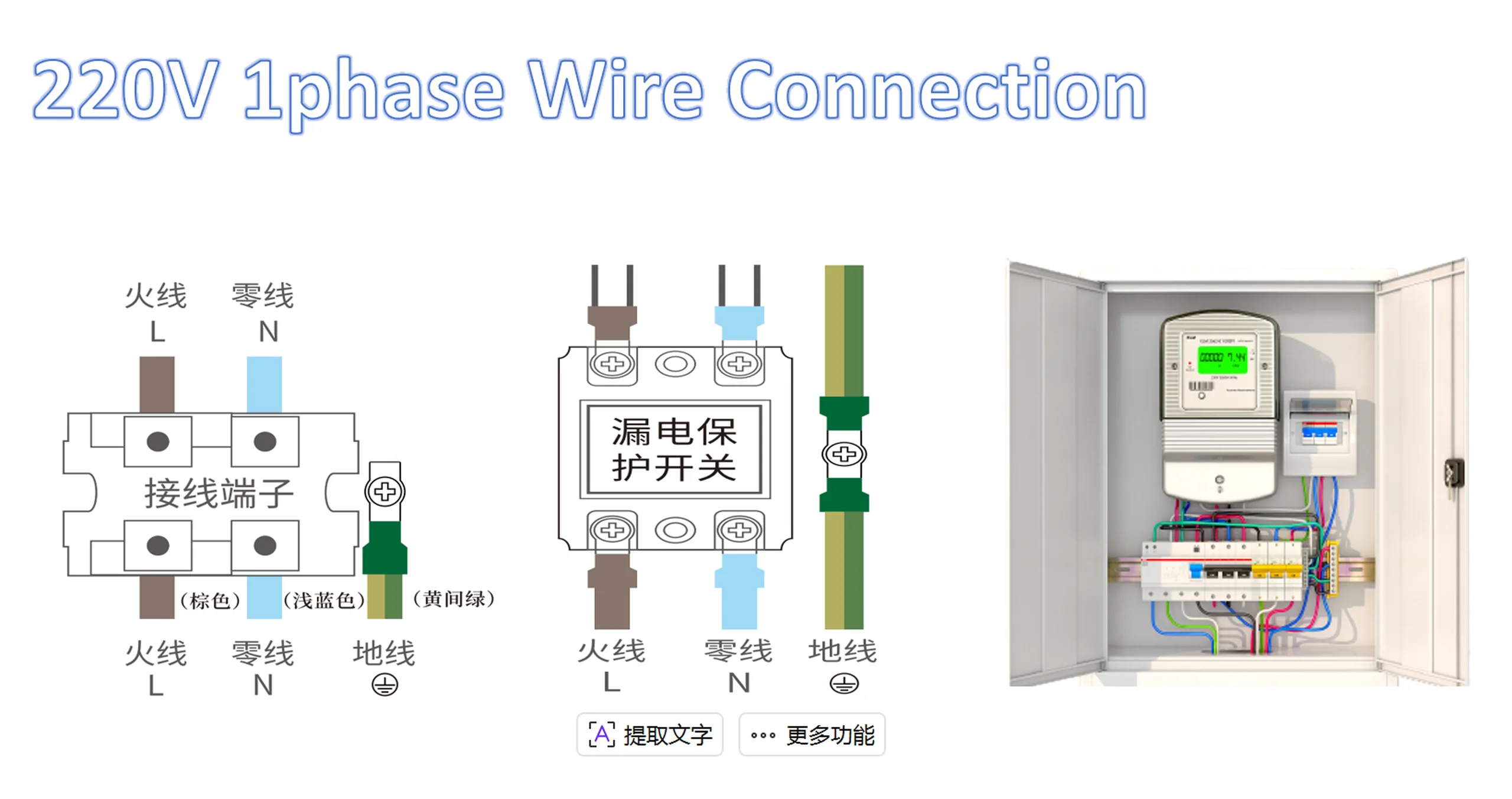
Higher power means higher voltage. This isn’t a recommendation. It’s a hard rule. Here’s how commercial induction stove voltage breaks down across single-phase and three-phase supply:
| Equipment Power | Required Voltage | Typical Equipment |
|---|---|---|
| Below 3.5 kW | 120V or 220V single-phase | Countertop clay pot cookers, warming units |
| 3.5 kW – 5 kW | 220–240V single-phase | Countertop flat cookers, small wok burners |
| 8 kW – 15 kW | 380V / 208–240V three-phase | Freestanding wok burners, stock pot stoves, fryers |
| 15 kW – 20 kW | 380V three-phase | Large wok ranges, high-power wok burners |
| 20 kW – 40 kW | 380V three-phase | Large stock pot stoves, factory canteen wok ranges |
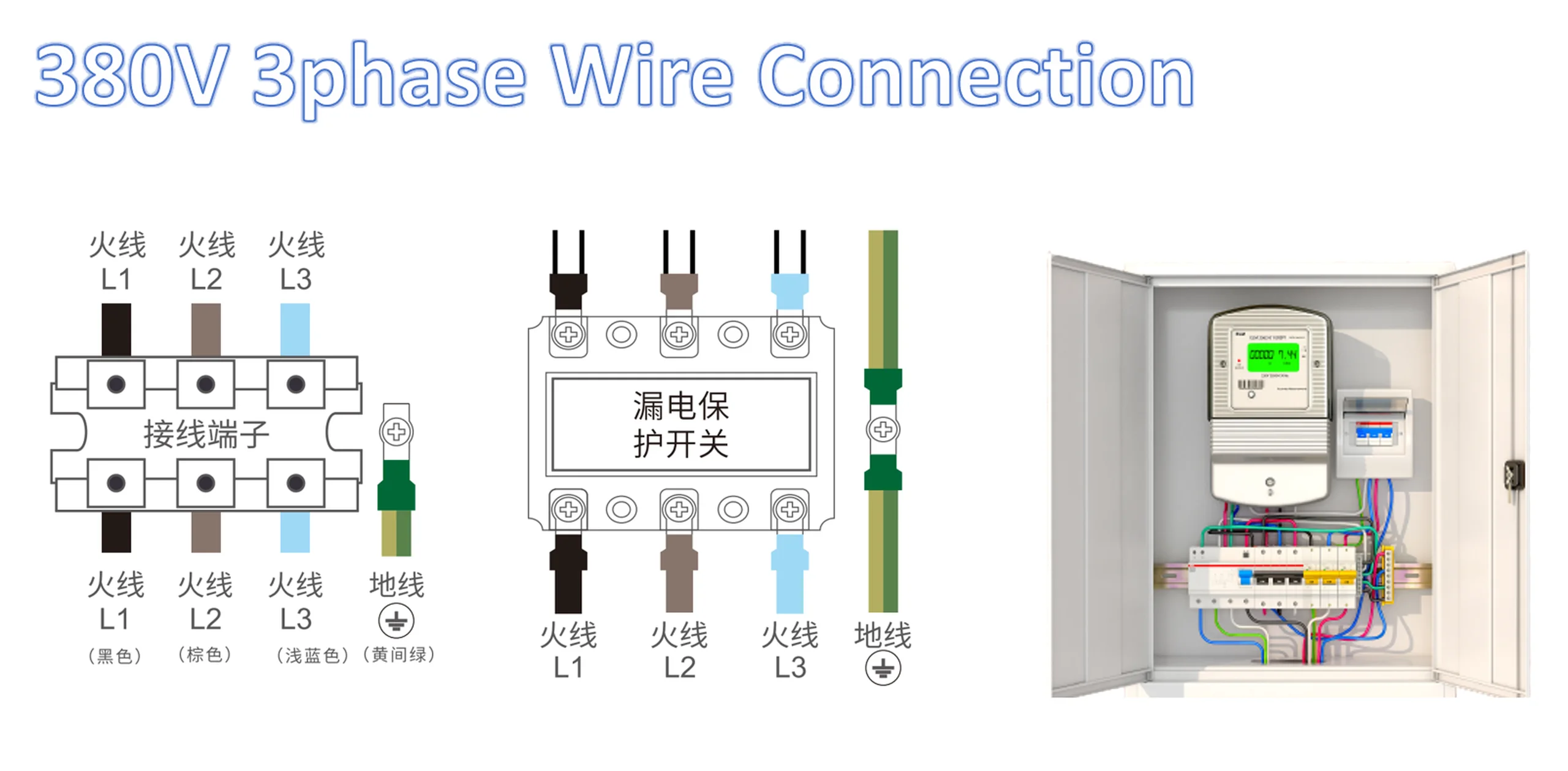
Anything 8 kW or above needs three-phase power. There’s no transformer trick or step-down module that gets around this. Force it onto 220V single-phase, and the best case is the machine won’t start. Worst case — the main board burns out.
Not sure what power rating you need yet? Start with this commercial induction stove power selection guide. Figure out the right wattage for your kitchen type and menu first, then come back here to match the electrical specs.
NYSERDA makes the same point in its buyer’s guide: most induction units need a dedicated 220–240V circuit and a 40–50A breaker. Full details are in the NYSERDA Buyer’s Guide to Induction Cooktops.
How to Size the Circuit Breaker by Power Rating
Voltage confirmed — next up is the breaker. Too small, and it trips all the time. Too big, and it can’t protect the circuit when something goes wrong. The rule is simple: match the commercial induction cooker circuit breaker size to the stove’s power rating.
Power Rating vs. Circuit Breaker Amperage
| Equipment Power | Supply Voltage | Operating Current (approx.) | Recommended Breaker | Typical Application |
|---|---|---|---|---|
| 1–3.5 kW | 220V single-phase | 4.5–15.9A | 16–20A | Cafés, snack bars, food stalls |
| 5–7 kW | 220V single-phase | 23–32A | 25–32A | Mid-sized restaurants, group meal kitchens |
| 8–10 kW | 380V three-phase | 12–15A | 20–25A | Large restaurants, hotel kitchens |
| 10–15 kW | 380V three-phase | 15–23A | 25–32A | Central kitchens, chain restaurant kitchens |
| 15–20 kW | 380V three-phase | 23–30A | 32–40A | Large wok ranges, batch cooking |
| 20–30 kW | 380V three-phase | 30–46A | 40–63A | Factory canteens, large-scale catering |
| 30–40 kW | 380V three-phase | 46–61A | 63–80A | Central kitchen heavy-duty stations |
For real-world examples of how electricians handle breaker and wire sizing, check this Reddit thread on wiring an 11 kW induction hob.
Here’s something worth noting: an 8 kW stove on 380V three-phase only pulls about 12A. That’s less than a 5 kW unit on 220V single-phase at 22.7A. Higher voltage means lower current — so the breaker and wire specs both come down.
This table is for one stove on one circuit. If you’re installing multiple units, each one gets its own breaker at these ratings. Don’t combine them.
Why You Can’t Size the Breaker at Full Load (The 80% Rule)
A lot of people think: the stove draws 32A, so a 32A breaker is perfect. It’s not.
The NEC (National Electrical Code) says continuous loads can’t exceed 80% of the breaker’s rating. Commercial induction stoves often run for hours straight during peak service. That counts as continuous.
The math: equipment current ÷ 0.8 = minimum breaker amperage.
Example — a 5 kW stove draws about 22.7A at 220V. Apply the 80% rule: 22.7 ÷ 0.8 ≈ 28.4A. You’d pick a 30A or 32A breaker.
Another example — a 20 kW stove on 380V three-phase draws about 30A. The math: 30 ÷ 0.8 = 37.5A. You’d go with a 40A breaker. In a commercial kitchen, “just enough” isn’t enough. Leave headroom so the breaker can do its job when something actually goes wrong.
What Wire Gauge Do You Need? Sizing and Routing
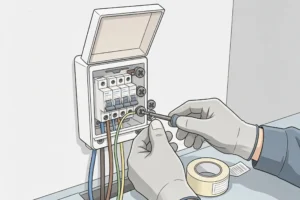
The right breaker means nothing if the wiring can’t keep up. Commercial induction stove wiring requirements come down to one thing: wire gauge. Too thin, and hours of high-current draw will overheat the line. In serious cases, that means melted insulation — or a fire.
Current Determines Wire Gauge: AWG and mm² Cross-Reference
North America uses AWG (American Wire Gauge). Most other regions use mm² (square millimeters). Here are the recommended gauges for common commercial power tiers:
| Equipment Power | Supply Voltage | Operating Current (approx.) | Recommended Wire Gauge (Copper) | AWG Equivalent |
|---|---|---|---|---|
| 3.5 kW | 220V single-phase | 16A | 2.5 mm² | 14 AWG |
| 5 kW | 220V single-phase | 23A | 4 mm² | 12 AWG |
| 8 kW | 380V three-phase | 12A | 2.5 mm² | 14 AWG |
| 10 kW | 380V three-phase | 15A | 2.5 mm² | 14 AWG |
| 15 kW | 380V three-phase | 23A | 4 mm² | 12 AWG |
| 20 kW | 380V three-phase | 30A | 6 mm² | 10 AWG |
| 30 kW | 380V three-phase | 46A | 10 mm² | 8 AWG |
| 40 kW | 380V three-phase | 61A | 16 mm² | 6 AWG |
Same pattern as before: 380V three-phase needs lighter wire than 220V single-phase at similar power levels. An 8 kW stove on three-phase only needs 2.5 mm². A 5 kW stove on single-phase already needs 4 mm². Three-phase doesn’t just give you stability — it cuts wire cost and makes installation easier.
These values assume short runs — panel to stove within 10 meters. Longer distances need extra attention.
Longer Wire Runs Mean Voltage Drop — Go One Gauge Thicker
The longer the wire from the panel to the stove, the more voltage you lose along the way. That’s voltage drop.
The NEC says branch circuit voltage drop should stay under 3%. Go beyond that, and the stove gets less voltage than it needs. Results: lower output, slower heating, or the low-voltage protection kicks in and shuts the unit down.
The practical fix: if the run is over 15 meters, go up one wire gauge from the table above.
A 5 kW / 220V stove normally takes 4 mm². But if the panel is 20 meters away, bump it to 6 mm². A 40 kW unit on a run over 15 meters goes from 16 mm² to 25 mm². For your specific layout, have the electrician run a voltage drop calculation — but “one gauge up” is a reliable rule of thumb.
Dedicated Circuits and Grounding: Two Non-Negotiables
Voltage, breaker, wire gauge — all set. But two things still get missed all the time: a dedicated circuit and proper grounding. A commercial induction cooker dedicated circuit isn’t optional. Neither is grounding. Both are code requirements.
Why a Commercial Induction Stove Can’t Share a Circuit with Other Equipment
Short version: sharing a circuit breaks code, and it causes real problems.
Commercial induction stoves aren’t like regular kitchen appliances. They pull high wattage, spike at startup, and run at sustained high load. Put one on a shared circuit with the fridge, exhaust fan, or even the lights, and the total current can blow past the circuit’s limit when everything runs at once.
Best case — the breaker trips over and over, and service grinds to a halt. Worst case — the wire overheats silently. You can’t see it from outside, but the fire risk is already there.
The right setup: one stove, one circuit, one breaker.
Customers have asked us: can one big breaker cover three or four stoves? No. Two problems. If one stove short-circuits, an oversized breaker may not trip fast enough. And when it does trip, the whole kitchen loses power at once. Separate circuits mean one fault stays isolated.
What Happens Without Proper Grounding? Grounding and Leakage Protection Basics
Commercial induction stoves have metal housings. If the insulation inside fails, current leaks to the casing. No grounding means anyone who touches it gets a shock.
Grounding gives that stray current a safe path — through the ground wire and back to earth, not through a person. Commercial kitchens are wet. Water on the floor is normal. That makes the shock risk much higher than in a typical space.
On top of grounding, every stove’s circuit also needs a Residual Current Device (RCD). An RCD detects leakage and cuts power automatically — usually within 30 milliseconds. On our ATRX 8 kW wok burners, the standard spec calls for a 16A RCD. Higher-power units (20 kW+) need a higher-rated RCD, but the trip sensitivity stays the same.
Two baseline requirements:
- Grounding resistance must meet local standards (typically ≤ 4Ω).
- Each stove’s dedicated circuit needs its own RCD.
Don’t use water pipes or gas pipes as a ground path. The ground wire must be an independent conductor connected to the grounding system. This gets overlooked a lot when older buildings are converted into commercial kitchens.
Which Electrical Codes Apply (NEC / IEC)
Stove selected. Power supply confirmed. But there’s one more gate: code compliance. Meeting the electrical requirements for a commercial induction cooktop doesn’t stop at hardware — the installation also has to satisfy the applicable regulations. Different markets follow different standards, but the logic is the same everywhere: make it safe, and make sure power can be cut fast if something goes wrong.
Key NEC Provisions Buyers Need to Know
If your kitchen is in North America — or if the stove you’re buying needs to meet North American standards — three NEC provisions matter most:
NEC 210.8(B) — GFCI Protection for Commercial Kitchens. The 2020 NEC requires GFCI protection on circuits in non-residential kitchens. For high-power, hardwired equipment like commercial induction stoves, GFCI is usually built into the breaker at the panel — not at the outlet like with small appliances. No GFCI, no passing inspection. For the full breakdown, see this IAEI Magazine analysis of kitchen GFCI rules.
Visible Disconnect. The NEC requires a disconnect switch within line of sight for any permanently installed commercial induction stove. You should be able to see and reach the breaker or isolation switch while standing at the equipment. In an emergency, nobody should have to run to another room to kill the power.
NEC 220.56 — Demand Factor for Commercial Kitchen Loads. This one’s for the electrician doing the overall load calculation. If the kitchen has multiple stoves and other electric heating equipment, the NEC lets you use a demand factor instead of adding up every device’s full rated power. That directly affects how the main panel and incoming service are sized.
Exporting to Europe, Australia, or other markets? You’ll need to follow IEC standards or local codes (like AS/NZS 3000 in Australia). The specific clauses are different, but the core requirements — dedicated circuits, grounding, leakage protection — apply everywhere.
Do the Math Before You Install: Is Your Existing Electrical Capacity Enough?
Everything’s confirmed on paper. Last step: can your existing electrical system actually handle the new load? A lot of people skip this. Then the equipment shows up, the power isn’t there, and it’s either a return or a work stoppage while they scramble to upgrade.
Three Steps to Check Your Remaining Capacity
No complicated formulas. Three steps:
| Step | What to Do | Example |
|---|---|---|
| Step 1 | Check your meter or supply contract for total capacity | 100 kVA |
| Step 2 | Add up all existing equipment’s rated power | 60 kW |
| Step 3 | Total capacity − existing load = what’s left | 100 − 60 = 40 kVA |
Now compare that remaining capacity to the stove you want to add. 40 kVA left and a single 15 kW stove? No problem. Two 20 kW wok burners at once (40 kW total)? You’re right at the limit. Keep a 10%–20% safety margin.
One detail: total capacity is in kVA, equipment power is in kW. For commercial induction stoves — mostly resistive loads — the numbers are close enough for a rough check. But if the kitchen also runs big motor-driven equipment like large mixers, kVA and kW will diverge. In that case, have your electrician apply a power factor correction before signing off.
Not Enough Capacity? How Long Does an Upgrade Take?
If the numbers don’t work out, don’t panic — but start early.
The process: apply to your local utility → wait for approval → utility runs the new wiring → inspection and power-on. That usually takes 2 to 4 weeks. Faster in urban areas, longer in remote spots or older buildings.
Build the upgrade timeline into your purchasing plan. If equipment lead time is 15 days but the upgrade takes 4 weeks, start the power application before you order the stove. Run both tracks at the same time. When the stove arrives, the power is ready. No delays to opening day.
Temporary or construction power won’t work as a substitute. Unstable supply can damage the equipment, and if it does, that’s outside warranty. The utility won’t cover it either.
Common Questions People Ask
Q1: My kitchen already has circuits. Can I plug the commercial induction stove straight in without running new wiring?
Maybe — it depends on three things: the voltage rating, wire gauge, and breaker size of the existing circuit. If you’re on a standard 220V / 15A circuit, it won’t handle anything above 3.5 kW. The wire is too thin and the breaker is too small. Force the connection, and you’ll get overheating and constant tripping.
Have an electrician come out with a multimeter and clamp meter. Get actual readings on voltage, wire gauge, and breaker rating. Then compare against the tables in this article. Often you don’t need to rewire the whole kitchen — just one dedicated run for the stove.
Q2: Do I need to upgrade my distribution panel before installing a commercial induction stove?
It depends on whether you still have open breaker slots and enough total capacity. If every position is taken, or if remaining capacity can’t cover the new stove’s power draw, you need an upgrade.
A common situation: an older commercial space with only 6 to 8 circuit slots, all occupied. The fix is either replacing the whole panel or adding a sub-panel. Cost and timing vary by region, but it’s usually faster than a utility capacity upgrade — around 1 to 2 weeks. Get the electrician to check your panel before you order the equipment, not after.
Q3: Can voltage instability or a sudden power outage damage the stove’s main board?
Yes. The IGBT modules and main control board in commercial induction stoves are sensitive to voltage swings. A sudden overvoltage spike — like when power comes back after a blackout — is one of the top causes of board failure.
Most reputable manufacturers build in basic overvoltage and undervoltage protection that shuts the unit down when voltage goes outside the safe range. That handles small fluctuations. But it may not survive a lightning strike or a major post-outage surge. If your area has unstable power, add an SPD (Surge Protection Device) to the stove’s dedicated circuit. It’s cheap, and it blocks most transient overvoltage events before they reach the board.
About the author

ATRX Team| 18 Years Commercial
Induction Cooker Manufacturer in China
Induction Cooker Manufacturer in China
Related Posts

Best Commercial Induction Cooktop: Types &Buying Guide
10/09/2026
Commercial Double Hob Induction Cooker | Types, Power, and Installation Guide
10/05/2026
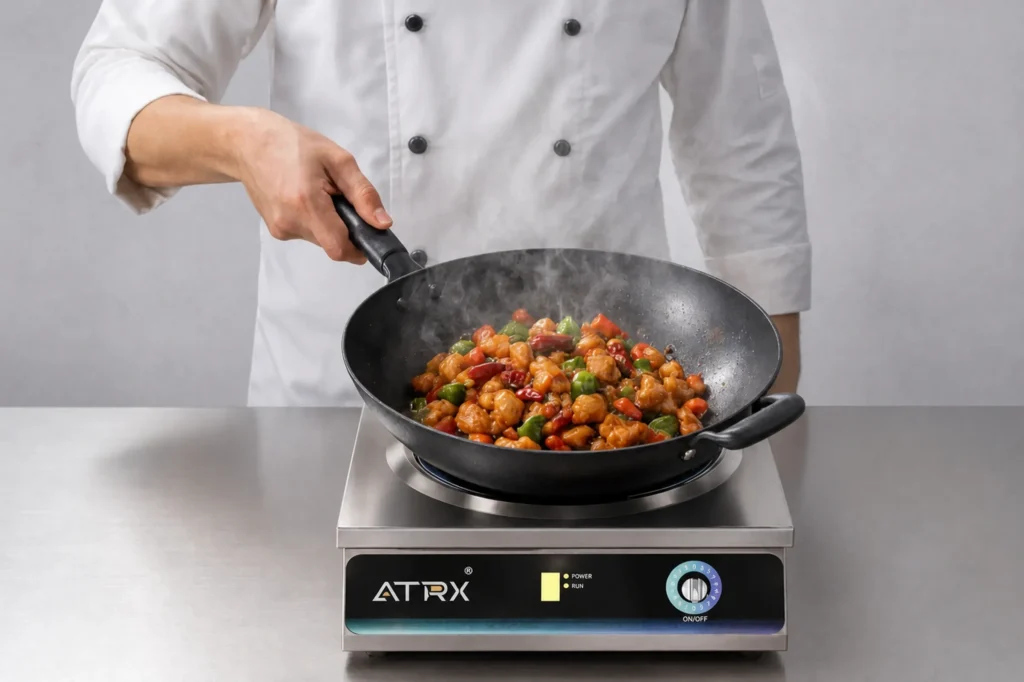
Commercial Induction Cooker 3500W: Model Selection, Commercial Power and Installation
09/29/2026
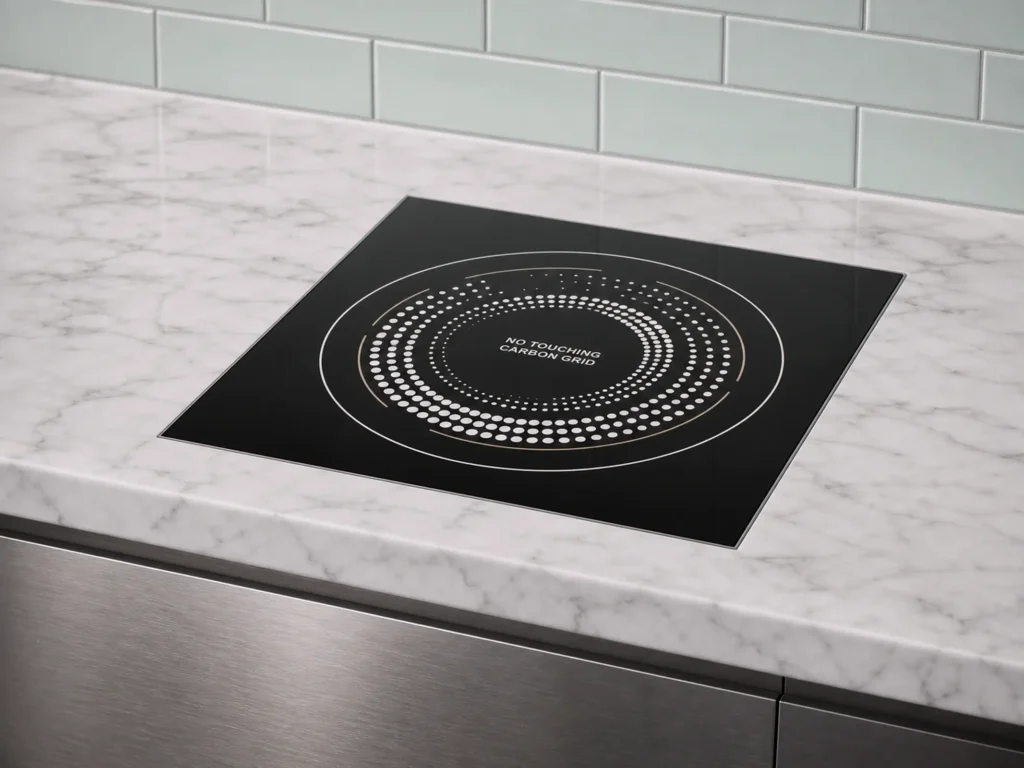
How to Install a Built-In Induction Cooktop: A Step-by-Step Guide
09/17/2026
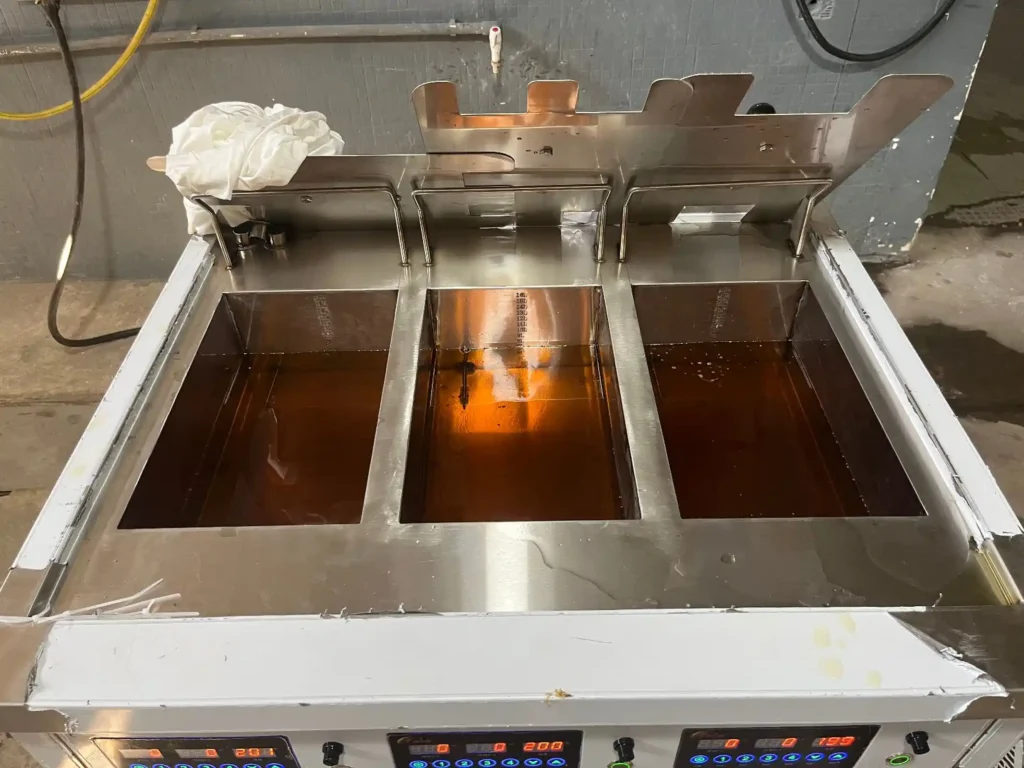
How to Clean a Commercial Deep Fryer: A Step-by-Step Guide
09/13/2026
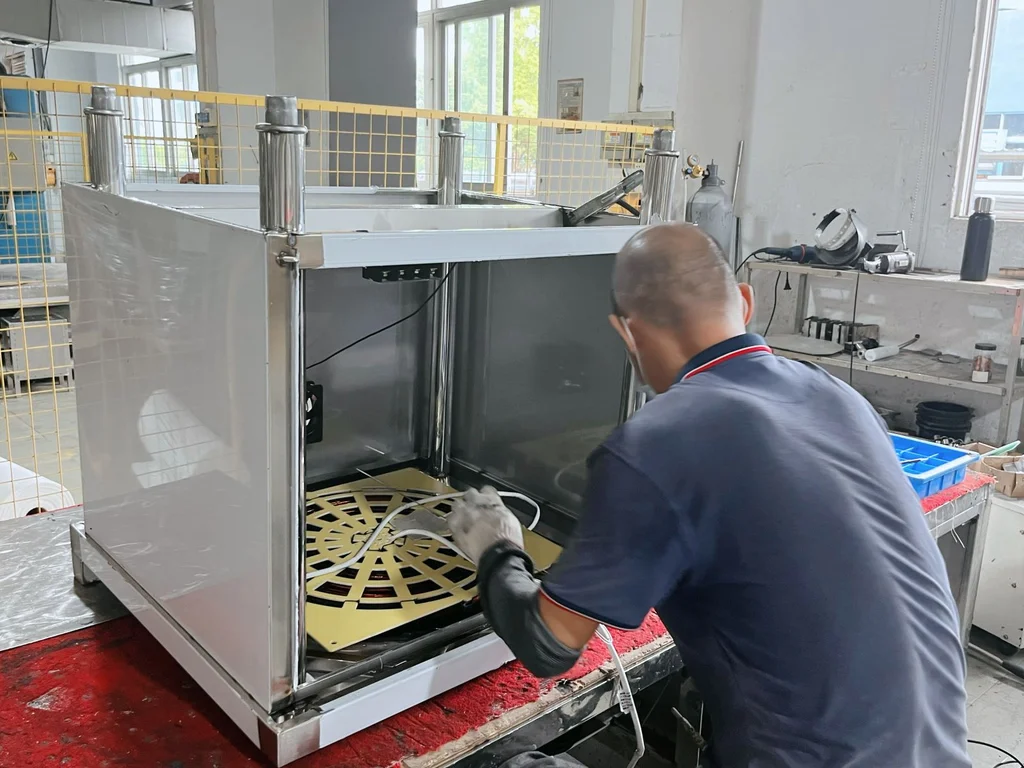
High Quality Commercial Induction Cooker Manufacturer
09/09/2026
Automatic Wok Machine: Types, Specifications, Applications and Buying Guide
08/18/2026
Commercial Induction Range: How to Choose the Right Size, Power, and Configuration for a Commercial Kitchen
08/15/2026
What Is a Commercial Induction Cooker and How Does It Work
08/13/2026
Commercial Induction Range for Hotel Kitchens: How to Choose the Right Model
08/11/2026