

Built-in vs Countertop Induction Cooktop for Commercial Use
06/29/2026
Estimated reading time: 2 minutes

This article is for buyers actively comparing built-in vs countertop induction cooktop for commercial use, getting ready to make a purchasing decision. We’re not going to debate whether induction is worth it — we’ll skip that and go straight to what matters: how each type is built, what it takes to install, which scenarios each one fits, and what repairs look like. The goal is to help you figure out which one actually matches your situation.
IN THIS ARTICLE
What’s Actually Different Between Built-in and Countertop Commercial Induction Cooktops?
A lot of first-time buyers think the only difference is “recessed into the counter” versus “sitting on top.” That’s not the whole picture. The installation form changes how the entire internal cooling system is designed — and that directly affects how long the unit lasts and how often it fails. Get these two points straight, and the rest of the selection logic falls into place.
Installation Works Differently
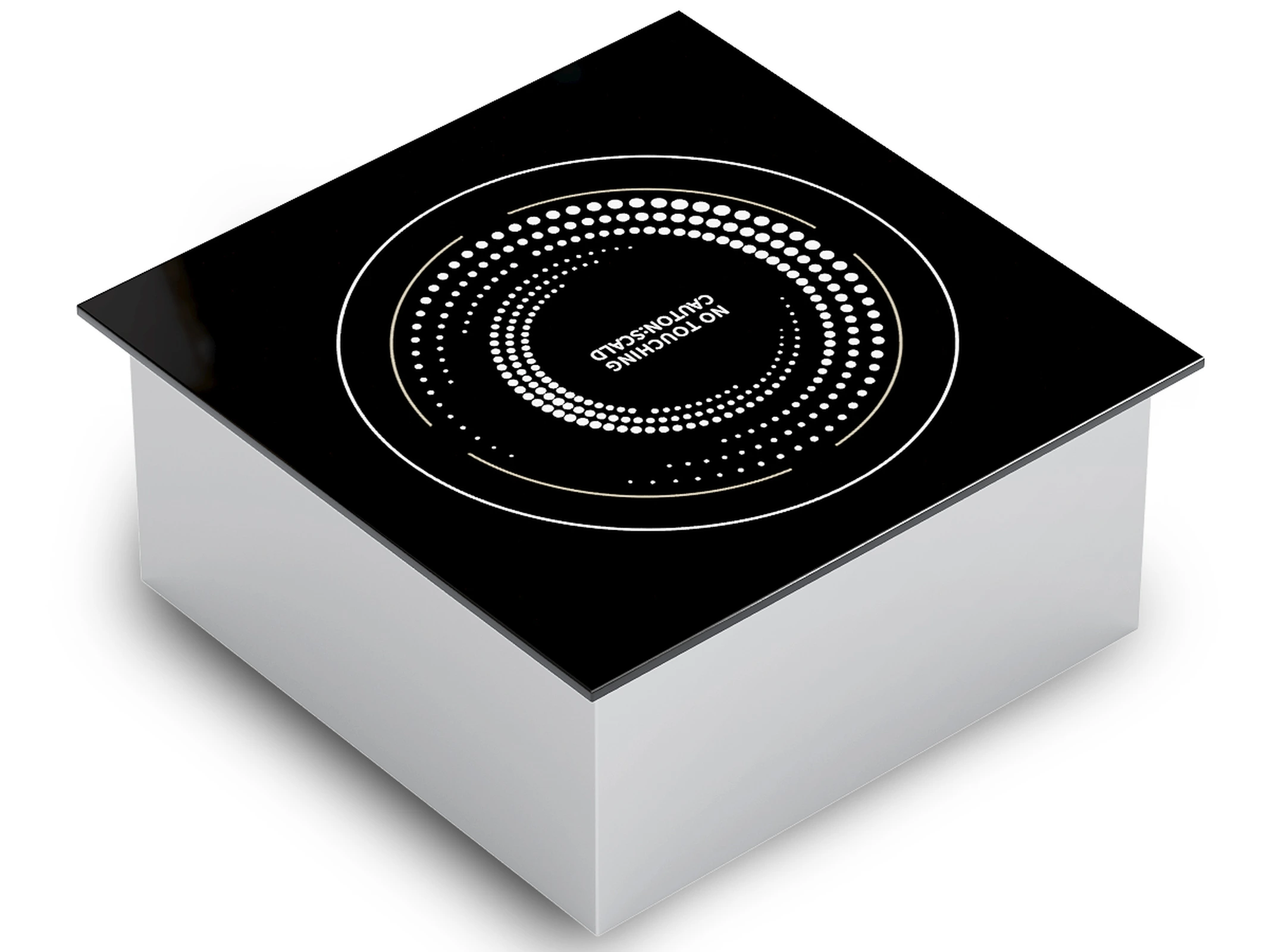
A countertop induction cooktop is simple. Put it on a work surface, plug it in, turn it on. It’s a standalone unit. No cuts, no modifications to your counter. One person can move it, reposition it, or put it in storage.
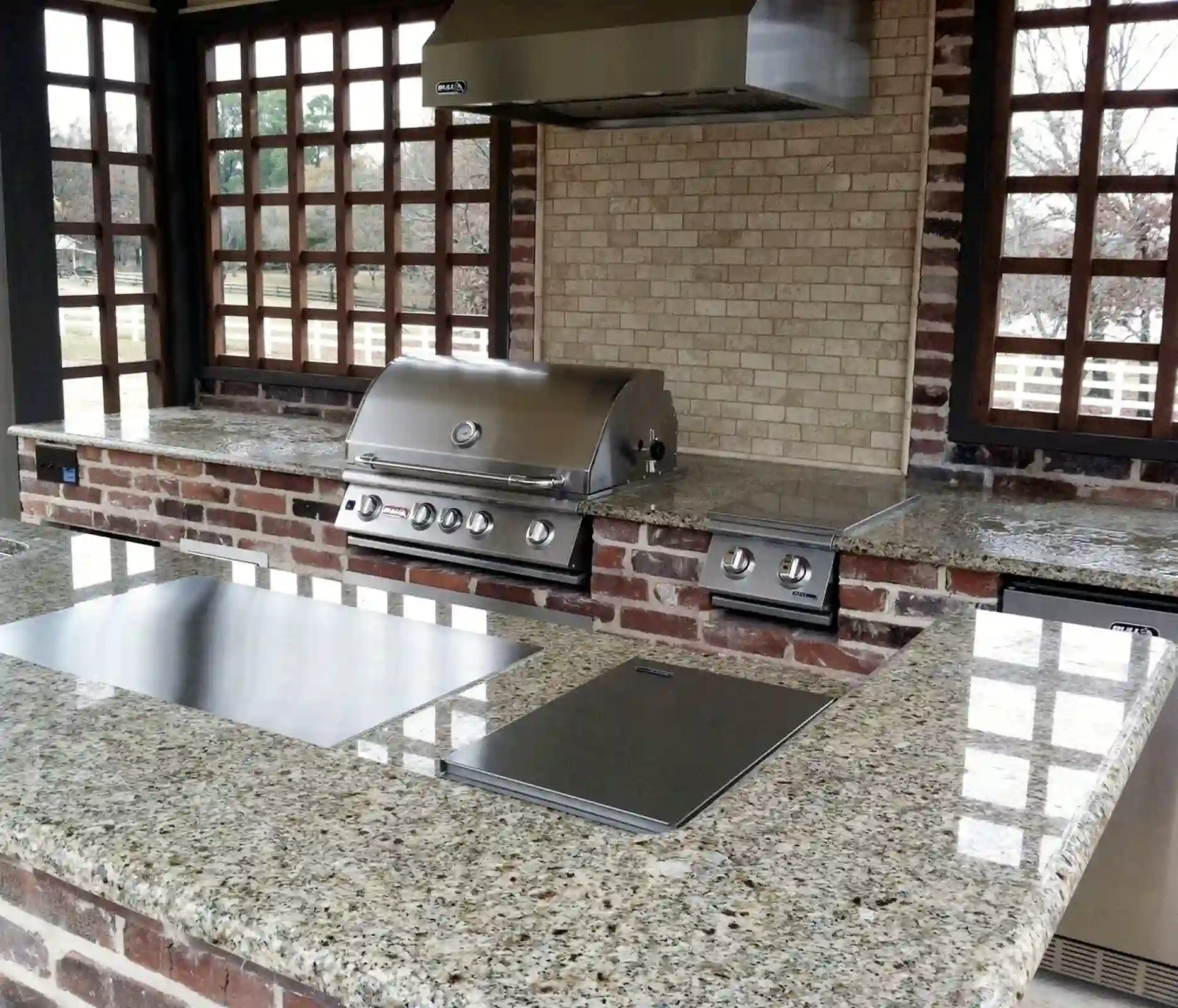
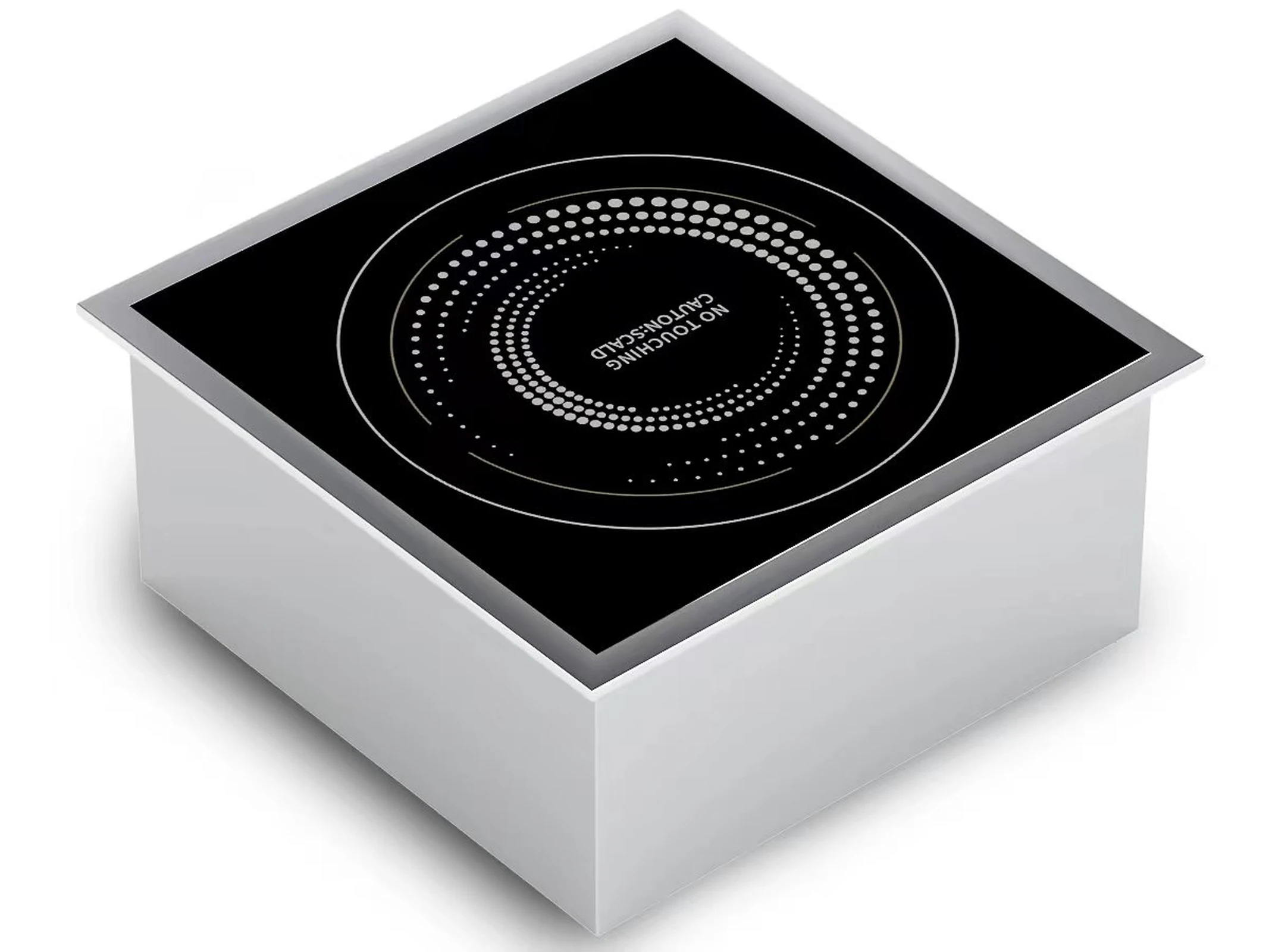
A built-in model is a different story entirely. You need to cut a precise opening in the countertop, then drop the unit in from above so it sits flush with the surface. Once it’s in, the unit and the counter become one piece — flat, clean, no protrusions. But it’s locked in place. You can’t just pick it up and move it.
| Comparison | Built-in (Drop-in) | Countertop (Portable) |
|---|---|---|
| Installation | Requires countertop cutout, recessed mounting | Placed directly on any surface, no modification needed |
| Relationship to countertop | Flush-mounted, becomes part of the counter | Sits independently, protrudes above the surface |
| Portability | Permanently installed, not easily moved | Can be relocated, repositioned, or stored at any time |
| Countertop requirements | Must be a material that supports precise cutouts | Only needs a flat, stable surface |

Cooling Works Differently
Countertop units sit in open air on all four sides. Air flows in from the sides or bottom, and hot air exits directly. The path is short and efficient. As long as you don’t block the intake vents, overheating is rarely a problem.
Built-in units are enclosed by the counter and cabinet once installed. That drastically shrinks the airflow channels. Heat can only escape through the gap underneath or through dedicated ducts. Many models need centrifugal fans for forced exhaust. Even then, cooling efficiency is still lower than a fully exposed countertop unit.
Hatco makes this point directly in its article on drop-in induction ventilation requirements: thermal shutdowns from poor ventilation in built-in units “will happen at peak service time.” That’s exactly when you can least afford to lose a cooktop.
Which Commercial Scenarios Suit Countertop vs. Built-in?
Structure and installation differences ultimately point to different use cases. When deciding on a commercial induction cooktop — drop-in or countertop — the real question isn’t “which is better.” It’s “what does your scenario need?”
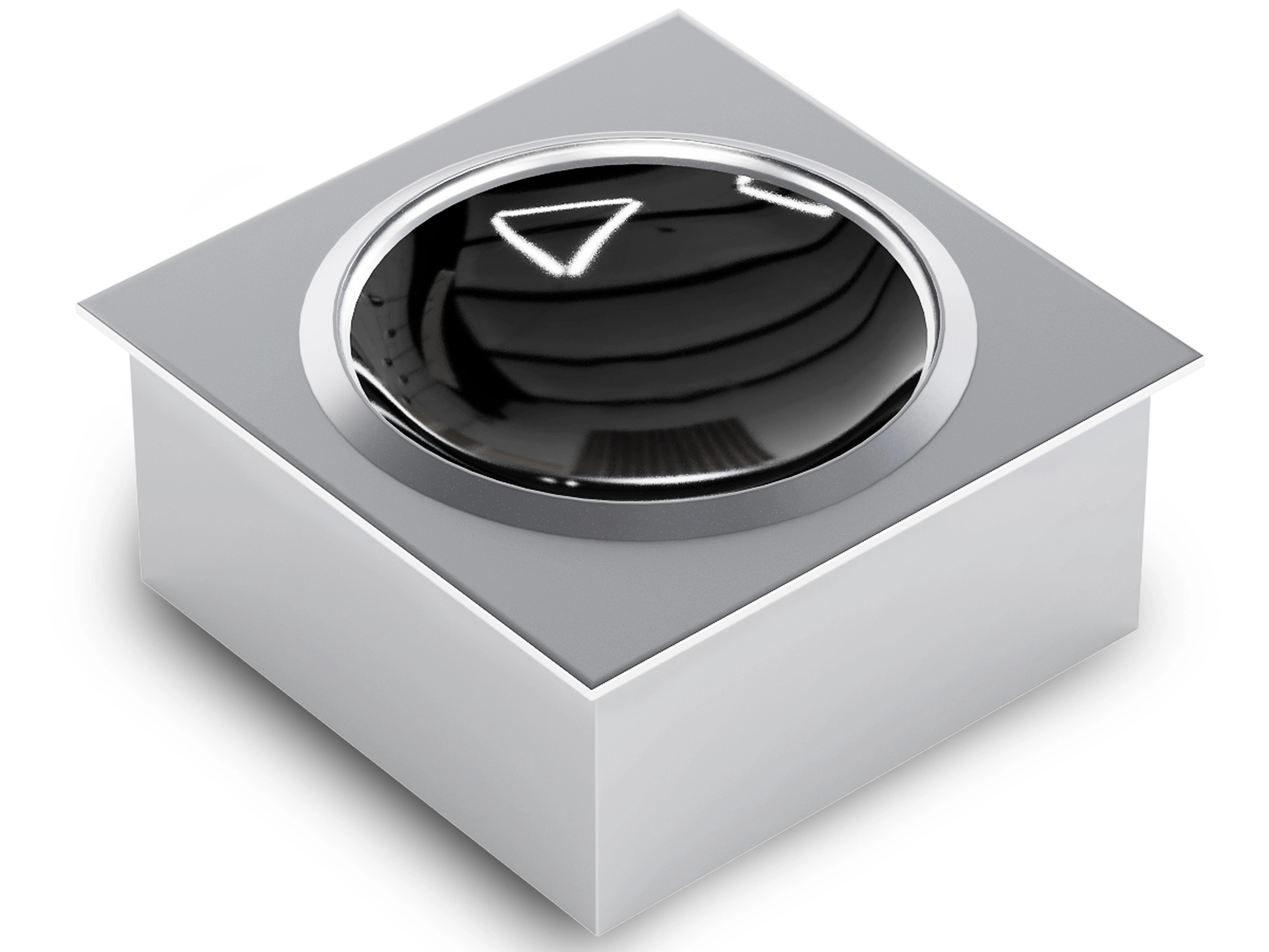
Fixed Back-of-House Stations — Built-in
Wok stations, sauce stations, the main chef’s counter — these positions are usually fixed. The counter layout doesn’t change often. A built-in unit sits flush with the surface, creating a completely flat work area with no extra footprint. Pots and pans slide freely across the counter without hitting a raised appliance edge.
Wasserstrom notes in its commercial induction range buying guide that drop-in units are popular in restaurant kitchens because they “blend in with countertops, resulting in a more natural look and smaller footprint.”
Stability matters too. A built-in unit is locked into its cutout. It won’t shift when a chef tosses a heavy wok or shoves a stockpot across the surface. A countertop unit on a smooth stainless steel counter can slide during aggressive cooking. Most models have rubber feet, but that’s not the same level of hold as a recessed installation.
Buffet Lines and Display Cooking — Built-in
Hatco positions its drop-in induction cooktops for three scenarios: back-of-house cooking, buffet lines, and display cooking. The last two have one thing in common — the equipment is right in front of guests.
A built-in unit recessed into a buffet counter gives you a completely flat surface. No protruding chassis, no exposed power cord. It looks clean and professional. More importantly, it’s safer — the counter area outside the cooking zone stays cool. If a guest brushes against it, no burn.
Countertop units stick up above the surface. There’s a risk of guests knocking them. Power cords need extra routing. For any front-of-house setup, these are real drawbacks. If you’re choosing a countertop vs built-in induction cooker for restaurant buffet or display cooking, the built-in clearly has the edge in safety and appearance.
Food Trucks, Pop-ups, and Outdoor Events — Countertop
Food trucks, pop-up kitchens, outdoor catering — they all share the same reality: no permanent venue, equipment has to travel, there’s no way to cut into a countertop, and power supply is usually limited.
Countertop models were made for exactly this. WebstaurantStore’s commercial countertop induction cooktop category is tagged “perfect for food trucks & small kitchens.” Vollrath positions its countertop line for “buffets and catering events.”
No installation. No counter modification. No dedicated 240V circuit. One person carries it to a new site, plugs in, and starts cooking. If you’re weighing a built-in vs portable induction cooktop for a commercial kitchen that also runs mobile events, the portable unit is the only realistic option for the road.
| Commercial Scenario | Recommended Type | Key Reason |
|---|---|---|
| Fixed back-of-house wok/sauce station | Built-in | Flush surface, locked in place, long-term stability |
| Buffet line / display cooking | Built-in | Flat and safe, professional look, guest-facing ready |
| Food truck / pop-up kitchen | Countertop | No installation, portable, 120V plug-and-play |
| Outdoor catering / events | Countertop | No fixed counter or dedicated circuit needed |
| Backup / emergency station | Countertop | Deploy on demand, doesn’t tie up a permanent station |
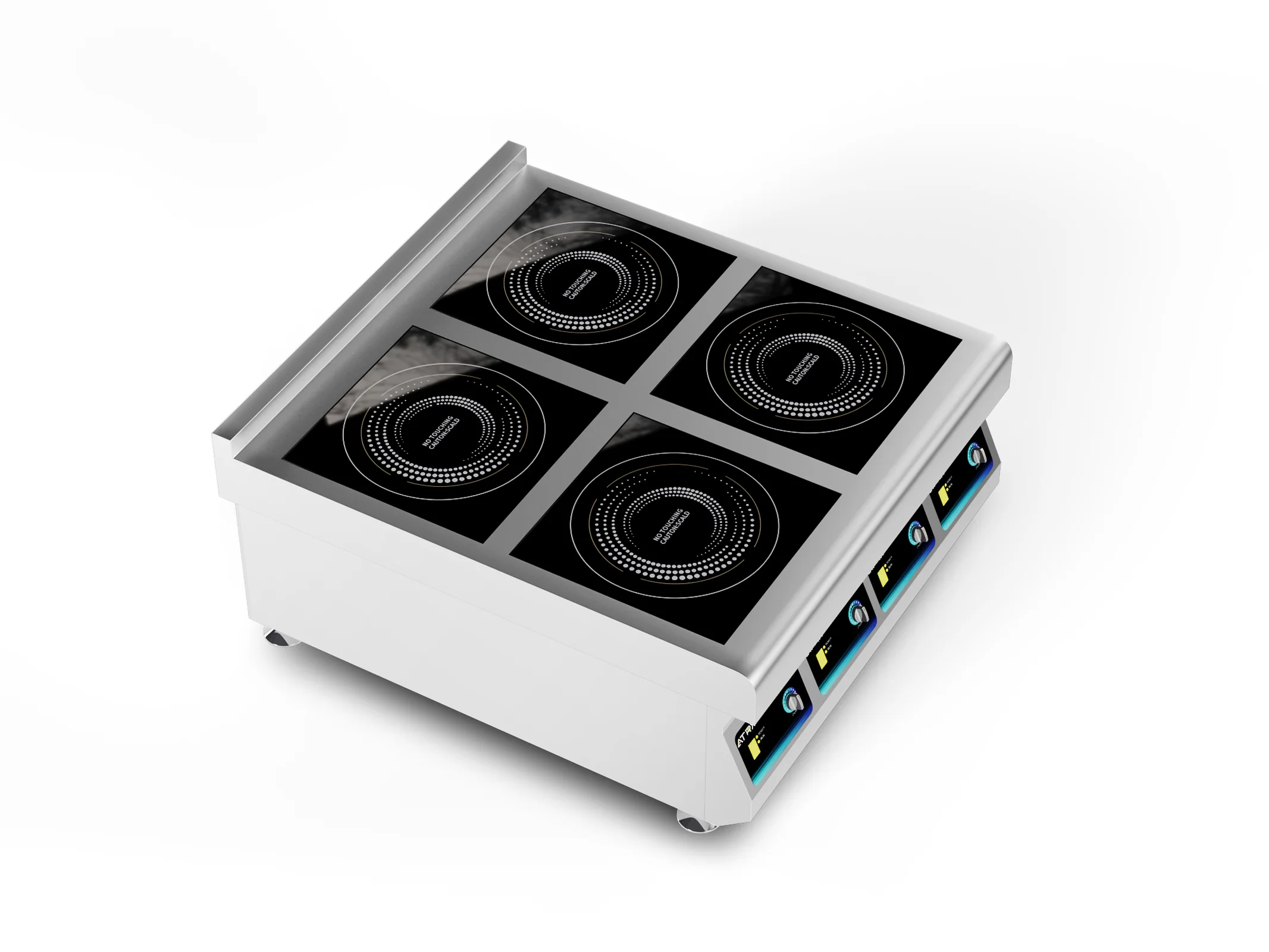
What If It Breaks? Repair Differences Between the Two Types
Choosing equipment isn’t just about how it works when everything’s fine. You also need to ask: what happens when it breaks? How hard is the fix? How long is the downtime? During a rush, every minute a cooktop is down means orders you can’t fill.
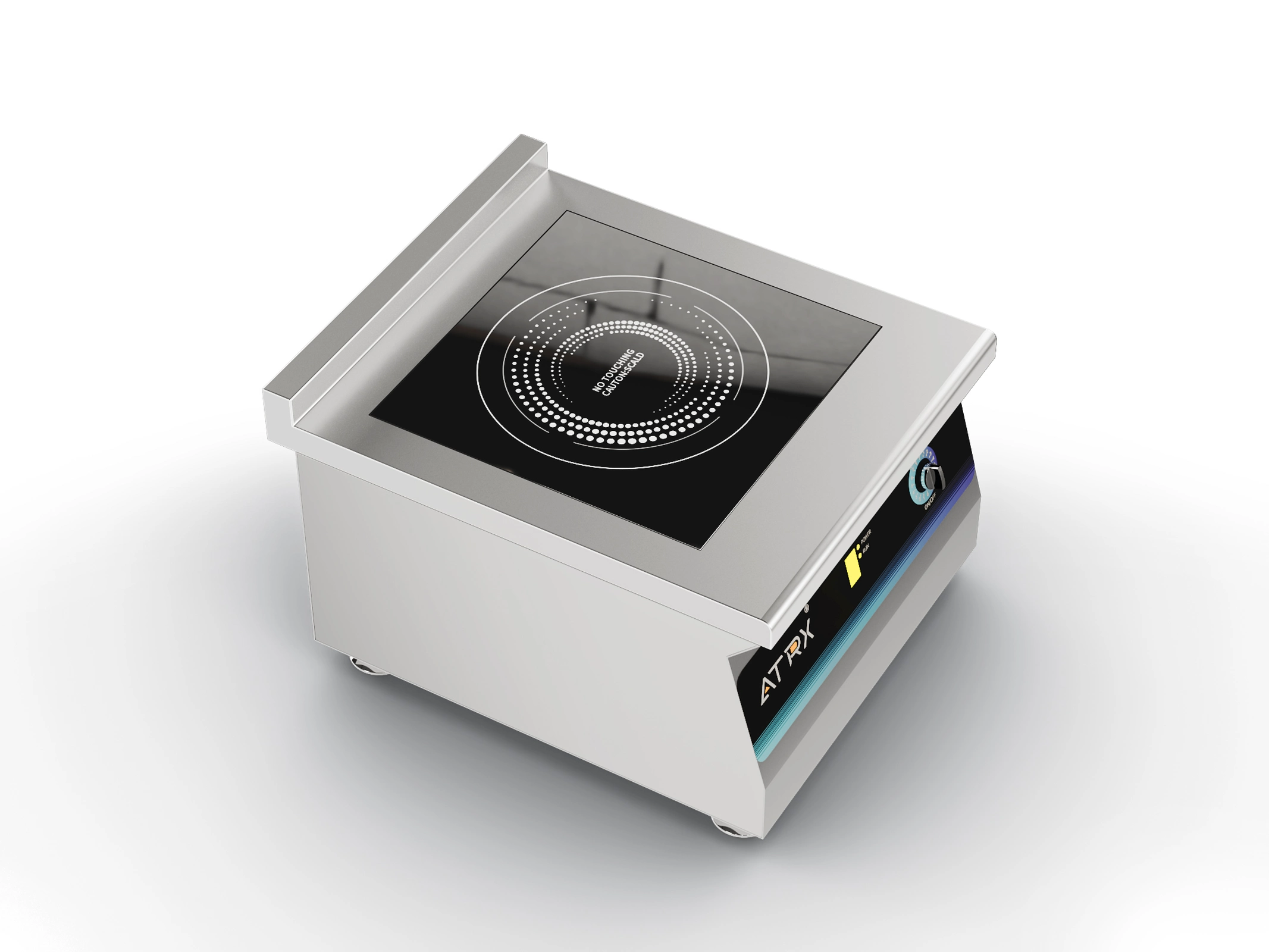
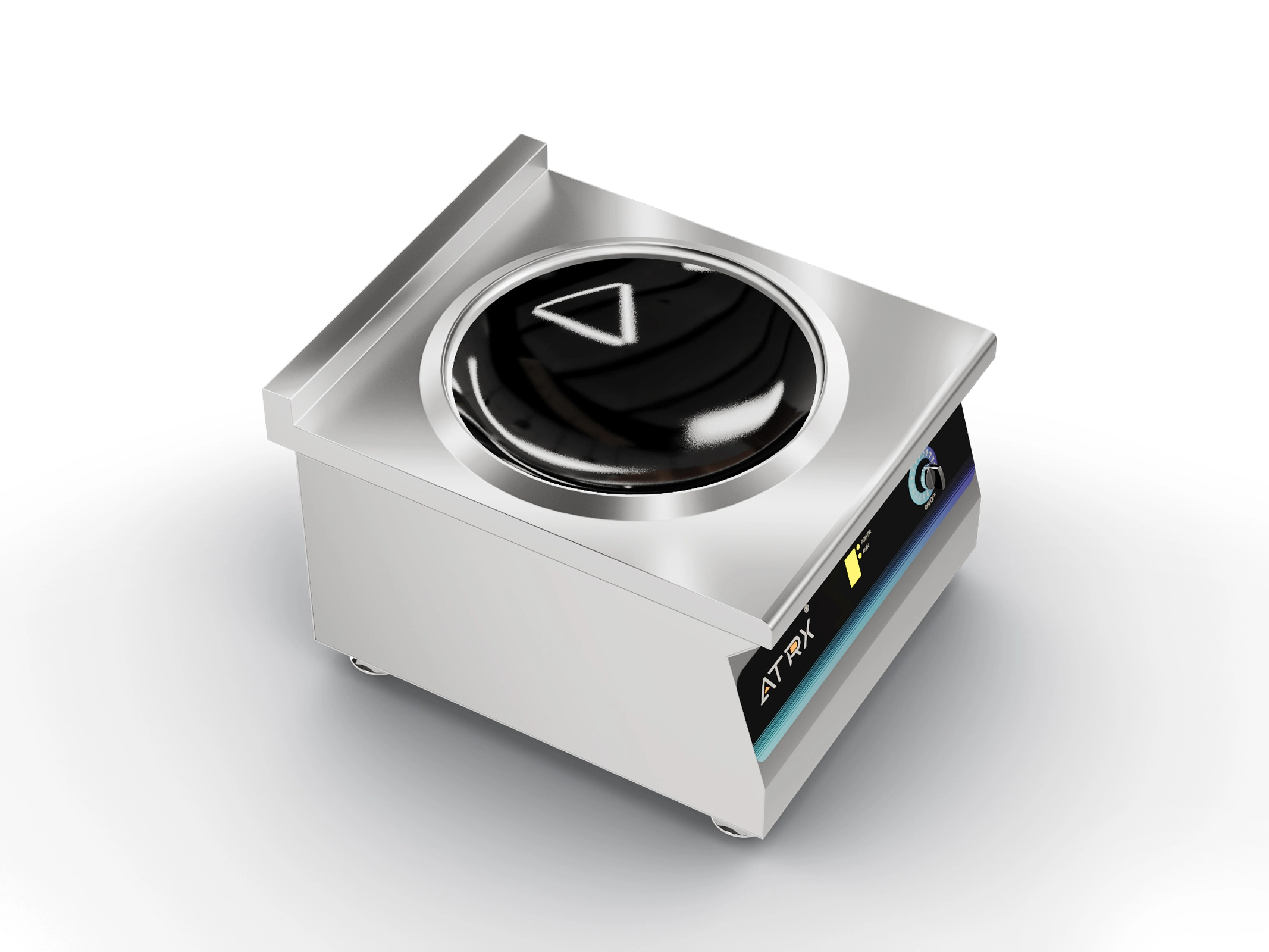
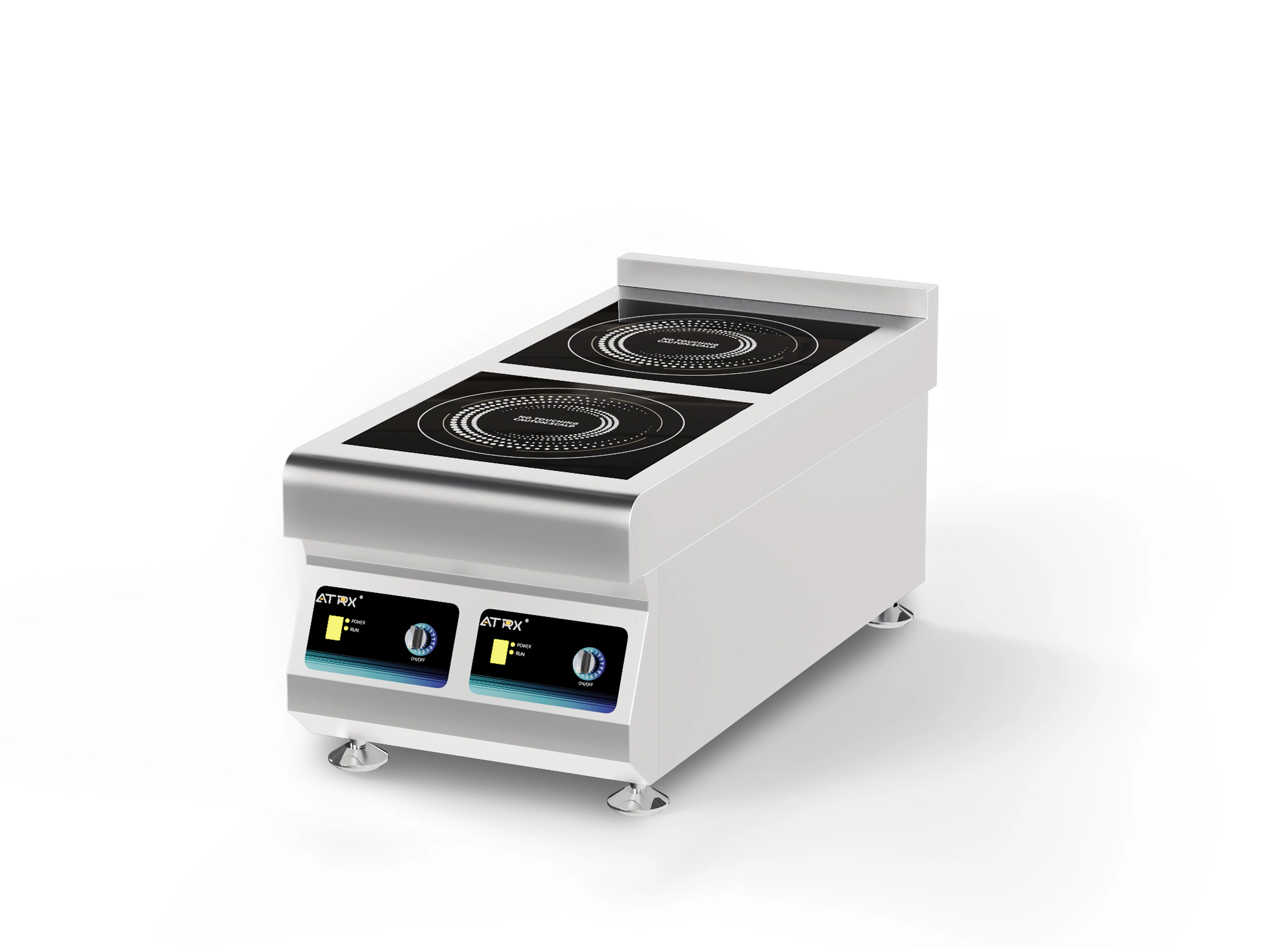
Countertop Breaks Down — Easy to Swap
The biggest maintenance advantage of a countertop unit is that it’s replaceable. Wasserstrom uses two words to describe countertop models in its buying guide: “cost-effective” and “easy to replace.”
The safest play in practice: keep a spare of the same model in your storage room. The second a unit fails, unplug it, set down the spare, plug in, power on. The whole swap takes a few minutes. Service barely notices.
The broken unit gets sent for repair later — no rush, no disruption to current business. This “swap, don’t repair on the spot” approach works especially well for chain restaurants and catering companies. Standardize on one model, and you can rotate spares across locations.
Built-in Breaks Down — Replacement Takes More Work
When a built-in unit fails, the repair process gets more involved. The machine is recessed inside a cabinet. You need to disconnect power, pull the entire unit out of the cutout, fix it, then reinstall — sometimes re-sealing it as well.
Hatco addresses this reality head-on in its drop-in ventilation requirements article: thermal shutdowns from inadequate cooling “will happen at peak service time.” When a unit goes down during the dinner rush, you can’t rip the counter apart on the spot. You can’t swap in a replacement in minutes like you would with a countertop model. That station stays offline until it’s fixed.
Commercial kitchen professionals on Reddit also point out that replacing a built-in unit means matching the original cutout dimensions. Switch to a different model, and you may need to recut the opening. The time and construction costs are significantly higher than with a countertop swap.
None of this means built-in is a bad choice on the maintenance front. But if you go built-in, plan ahead on two things. First, pick a model with a reliable cooling design to keep failure rates low from the start. Second, confirm parts availability and service response times with your supplier — so if something does go wrong, you’re not waiting days for a fix.
How to Decide Based on Your Kitchen Conditions
We’ve covered structure, installation, scenarios, and repairs. Now let’s pull the decision logic together in one place.
There’s no objectively “better” type. The drop-in vs countertop induction cooktop question for commercial kitchens always comes down to your specific conditions. Before you decide, run through this table:
| Your Kitchen Condition | Points Toward | Reason |
|---|---|---|
| Fixed stations, no layout changes planned | Built-in | Flush, clean, stable — won’t shift |
| Venue changes, or need to move equipment around | Countertop | Move, reposition, or store anytime |
| Counter material supports precise cutouts (stainless steel / stone) | Built-in eligible | Meets the physical requirements for recessed install |
| Leased space, can’t modify the countertop | Countertop | No cutout needed, leave no trace when you move out |
| Dedicated 240V circuit available or can be added | Built-in eligible | Meets the electrical demand for high-power units |
| Only standard 120V outlets, electrical upgrades not feasible | Countertop | 120V / 1800W plug-and-play |
| Service pace can’t tolerate any downtime | Countertop is safer | Keep a spare, swap instantly, downtime near zero |
| Redundant stations available for temporary coverage | Built-in acceptable | Failure impact can be absorbed |
| Equipment visible to guests (buffet / display cooking) | Built-in | Flush design, safe and professional-looking |
| Food truck / pop-up / outdoor event | Countertop | No installation, portable, no dedicated circuit needed |
There’s no one-size-fits-all answer here. The right choice between built-in vs countertop induction cooktop for commercial use depends entirely on your operation. Go through each row against your own kitchen conditions, and the answer will be clear.
Common Questions People Ask
Q1: Can I put a countertop commercial induction cooktop into a cutout and use it as a built-in?
Not recommended. Countertop units rely on open-air exposure on all four sides for heat dissipation. Stuffing one into a countertop cutout blocks the air intakes and triggers frequent thermal shutdowns. If you want a flush installation, go with a purpose-built drop-in model designed for enclosed cabinet airflow. Don’t try to retrofit a countertop unit.
Q2: Can I use both built-in and countertop induction cooktops in the same commercial kitchen?
Yes — and plenty of well-run commercial kitchens do exactly that. A common setup: built-in units at the main cooking stations (wok, sauté) for stability and a clean work surface, with countertop units at prep areas and sauce stations for flexibility.
One thing to plan for: the two types have different electrical needs. Built-in units usually require a dedicated 240V circuit. Countertop units run on standard 120V outlets. Factor both loads into your electrical layout from the start.
About the author

ATRX Team| 18 Years Commercial
Induction Cooker Manufacturer in China
Induction Cooker Manufacturer in China
Related Posts
How to Install a Built-In Induction Cooktop: A Step-by-Step Guide
09/17/2026
How to Clean a Commercial Deep Fryer: A Step-by-Step Guide
09/13/2026
High Quality Commercial Induction Cooker Manufacturer
09/09/2026
Automatic Wok Machine: Types, Specifications, Applications and Buying Guide
08/18/2026
What Is a Commercial Induction Cooker and How Does It Work
08/13/2026
Commercial Induction Range for Hotel Kitchens: How to Choose the Right Model
08/11/2026
China Commercial Induction Cooker Manufacturer
08/09/2026
10 Best Commercial Induction Cooker Manufacturers & Supplier Selection Guide [2026]
08/07/2026
Tilting Skillet & Bratt Pan: How to Choose the Right One for Your Commercial Kitchen
08/06/2026

Commercial Induction Cooker for School Cafeteria: How to Pick the Right High-Power Unit
08/04/2026