
China Commercial Induction Cooker Manufacturer
08/09/2026
Estimated reading time: 2 minutes

If you are looking for a commercial induction cooker manufacturer in China, this article is for you.
We are ATRX — a commercial induction cooker factory in Dongguan, Guangdong. We started in 2007 and have been focused on R&D and production of commercial induction cookers ever since. This is not an industry overview. It is a straightforward introduction from the manufacturing side: what we make, how we make it, and how we can work together.
IN THIS ARTICLE
- Who We Are – A Commercial Induction Cooker Manufacturer from China
- What Commercial Induction Cookers We Make
- Why Source Commercial Induction Cookers from China
- What International Certifications Our Commercial Induction Cookers Hold
- OEM and ODM – Build Your Brand with Our Factory
- Where Our Commercial Induction Cookers Are Sold
Who We Are – A Commercial Induction Cooker Manufacturer from China
About ATRX Factory
ATRX was founded in 2007. Our factory is in Dongguan, Guangdong Province — one of the cities with the densest concentration of commercial kitchen equipment manufacturing in China. From IGBT modules to stainless steel enclosures, every key supplier is within a two-hour drive. We set up here for one reason: supply chain speed.
The facility covers 20,000 square meters with 4 separate production lines, each assigned to a specific product category. We split them because the assembly process and testing protocol for a wok stove is completely different from a fryer. Running them on the same line would slow things down and create gaps in quality control.
Our R&D and Engineering Team
Inside the factory, we have 8 departments. Two of them drive everything about the product: the R&D Department and the Engineering Customization Department.
R&D handles circuit design, thermal simulation, and new product development. Engineering Customization does something different — it takes a customer’s OEM or ODM brief and turns it into a production-ready solution. Power settings, panel layout, control logic adapted for how people actually cook in the target market — that is their job.
Keeping these two teams separate means R&D stays focused on technology, and Engineering Customization stays focused on delivery. Neither gets pulled into the other’s workload.
On components, a few choices are worth calling out because they directly affect how long the machine lasts and how often it breaks down:
PCB Board — We use commercial-grade control boards with built-in protection for voltage fluctuation, overcurrent, and dry-burn. A lot of suppliers fit residential-grade motherboards into commercial enclosures. It costs less, sure. But a residential board is built for 1–2 hours of daily use. A commercial kitchen runs 12+ hours at full power, every day. The gap in heat dissipation, capacitor life, and circuit protection between those two scenarios is enormous.
Ceramic Glass Panel — We use 6mm as standard. Most of the industry uses 3–4mm. In a commercial kitchen, the panel takes more than heat. It gets hit by heavy pans, soaked in grease over time, and scrubbed hard during cleaning. Going from 4mm to 6mm doesn’t just add a little strength — the improvement in thermal and mechanical shock resistance is substantial. Panel cracking drops significantly, and so do your after-sales costs.
Cooling Fan — We use CE/UL certified fans with sealed bearings. Kitchen oil fumes and heat destroy ordinary fans within months. Sealed bearings keep grease out. Combined with thermistor-controlled speed adjustment, these fans handle 12+ hours of continuous operation without overheating.
These are not marketing points. They are engineering decisions that determine whether the machine still works reliably six months after it reaches the end user. In 2024, a Southeast Asian distributor opened up one of our units next to a competitor’s sample during a factory visit. His feedback afterward: the PCB quality difference was “obvious the moment the back cover came off.”
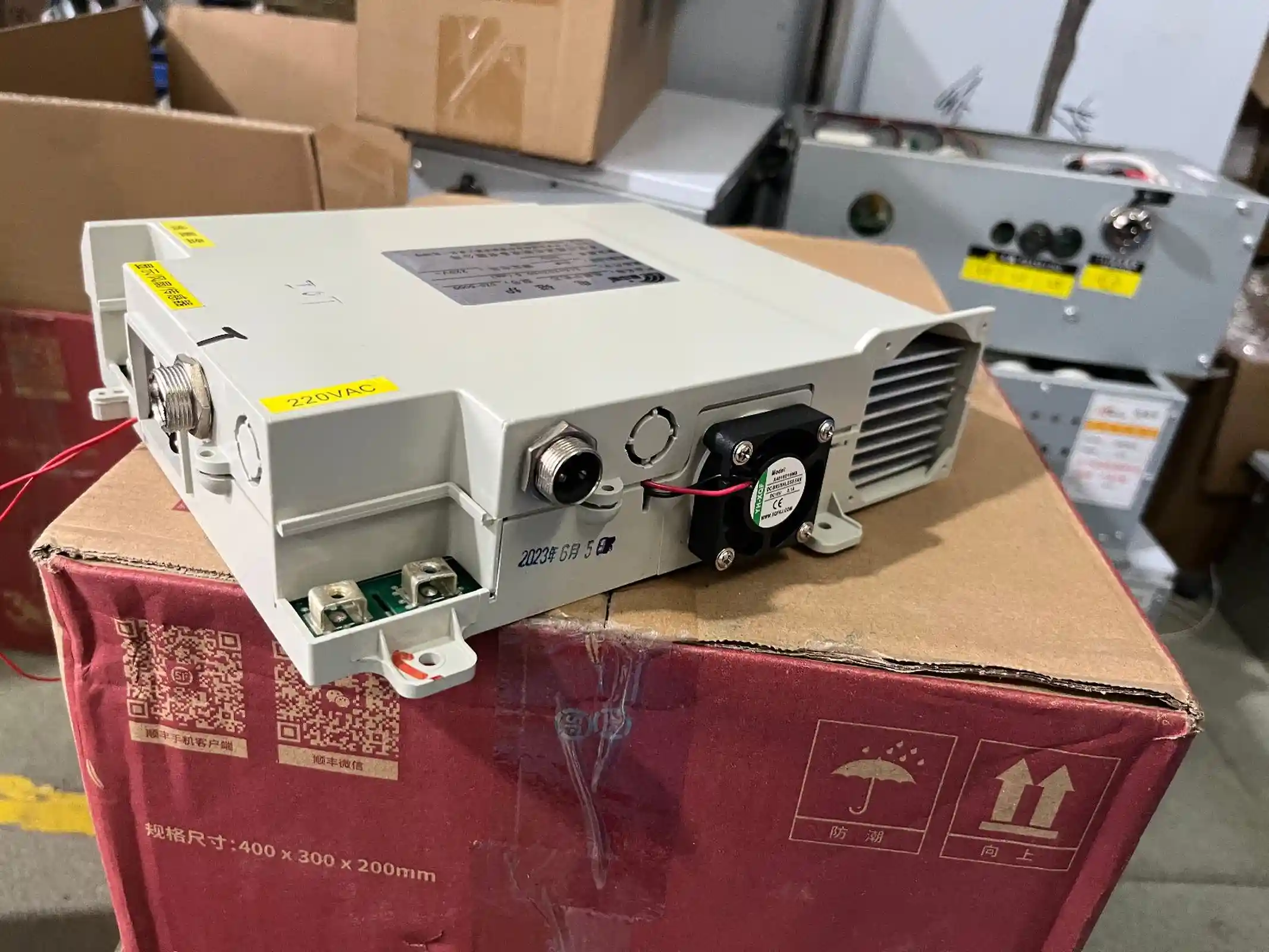
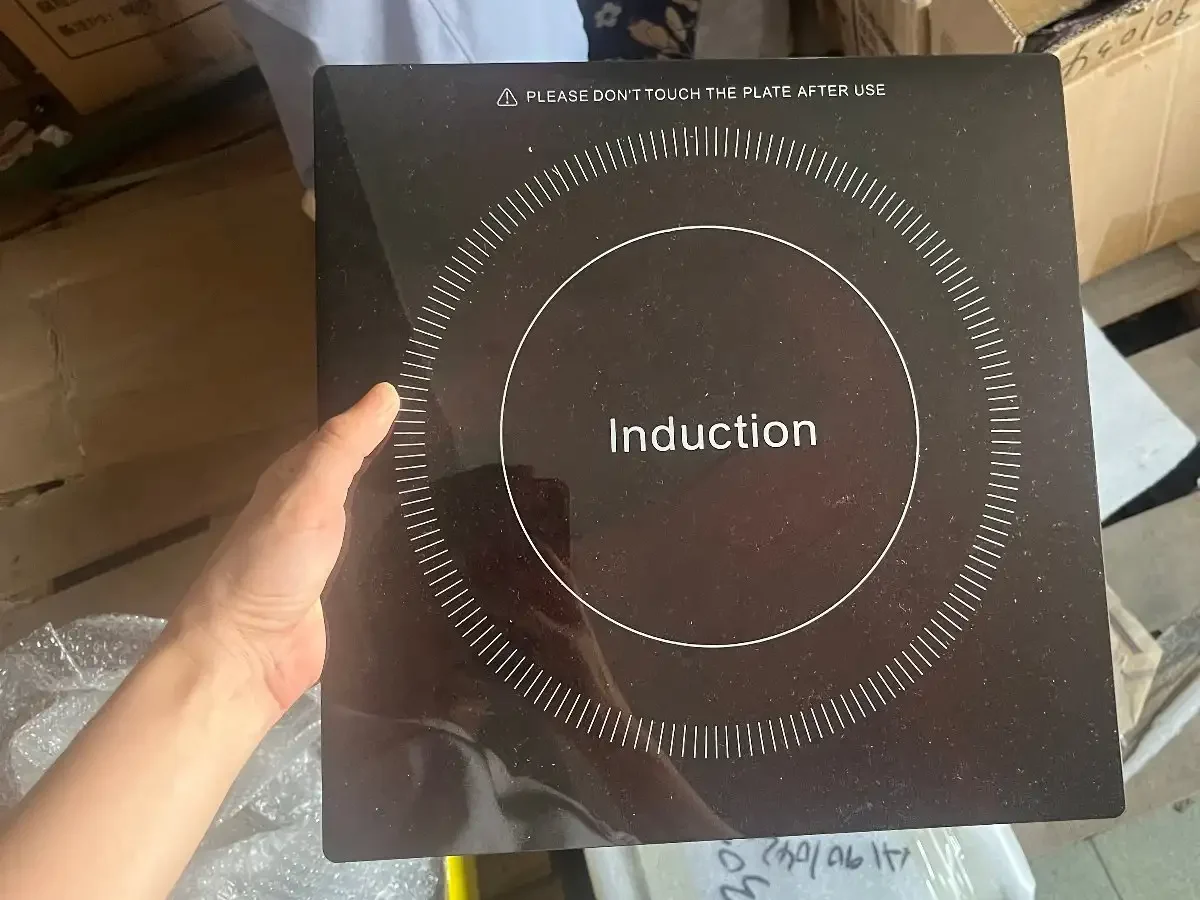
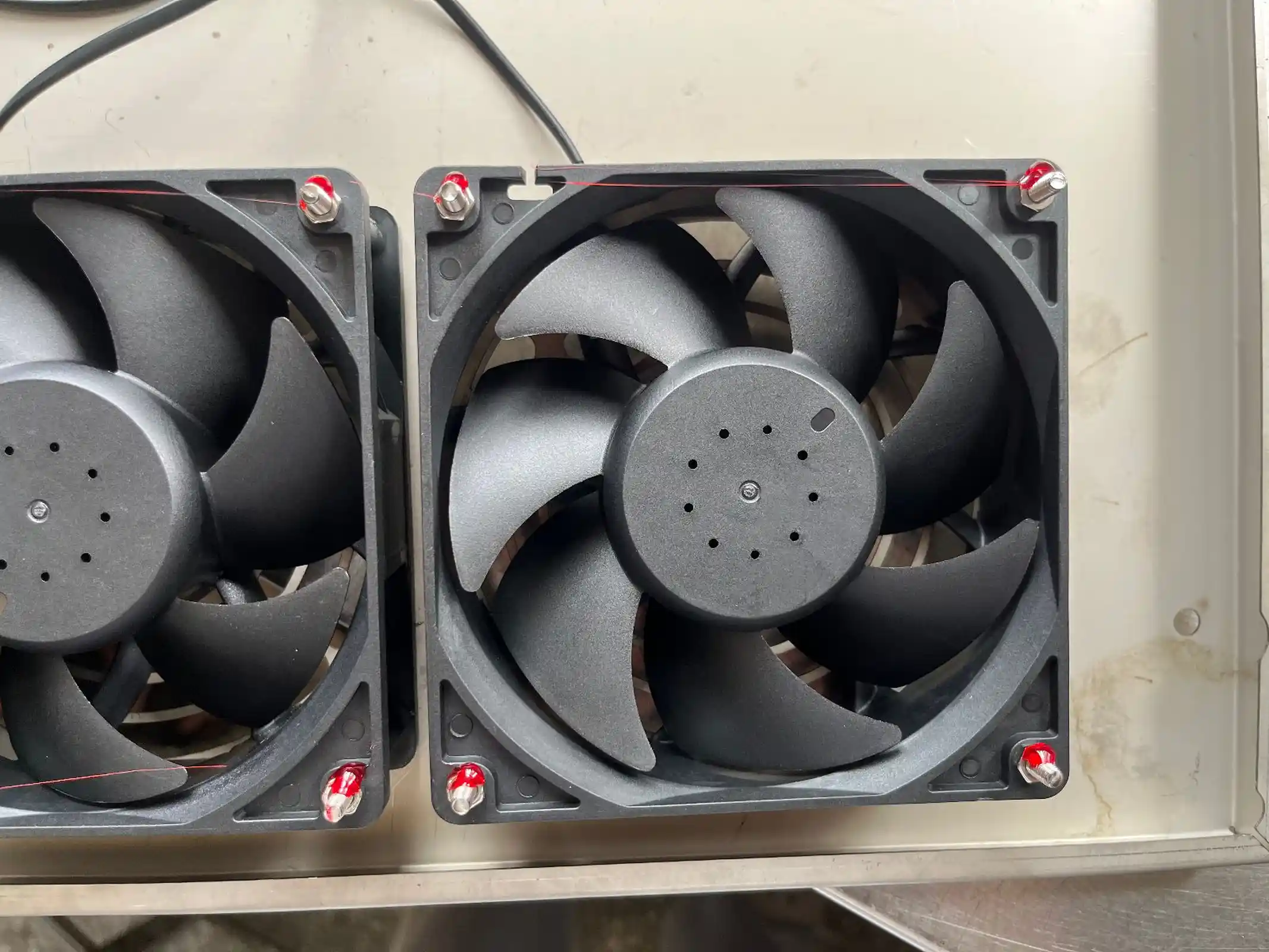
That is why we encourage every potential partner to visit and see for themselves. What is written on a spec sheet and what you find inside the machine are not always the same thing.
For more on how we select IGBT modules, copper coils, ceramic glass panels, and cooling fans — plus the 6 tests every unit passes before shipping — see our detailed breakdown here: High Quality Commercial Induction Cooker Manufacturer.
What Commercial Induction Cookers We Make
Our product line covers 10 series across every major commercial kitchen task: stir-frying, pan-frying, deep-frying, boiling, steaming, and warming. Below is a breakdown by equipment type with power ranges and configurations. Full specs for each model are on the respective product pages.
Induction Cooktops and Wok Stoves
These are the core cooking equipment in any commercial kitchen — and the highest-volume category that overseas buyers purchase from China.
| Product Type | Power Range | Installation |
|---|---|---|
| Tabletop Flat Induction Cooktop | 3KW – 8KW | Countertop, portable |
| Concave Induction Wok Stove | 3.5KW – 18KW | Tabletop / Freestanding |
| Multiple Zone Induction Cooker | 3.5KW per zone, 2/4/6 zones | Countertop / Built-in |
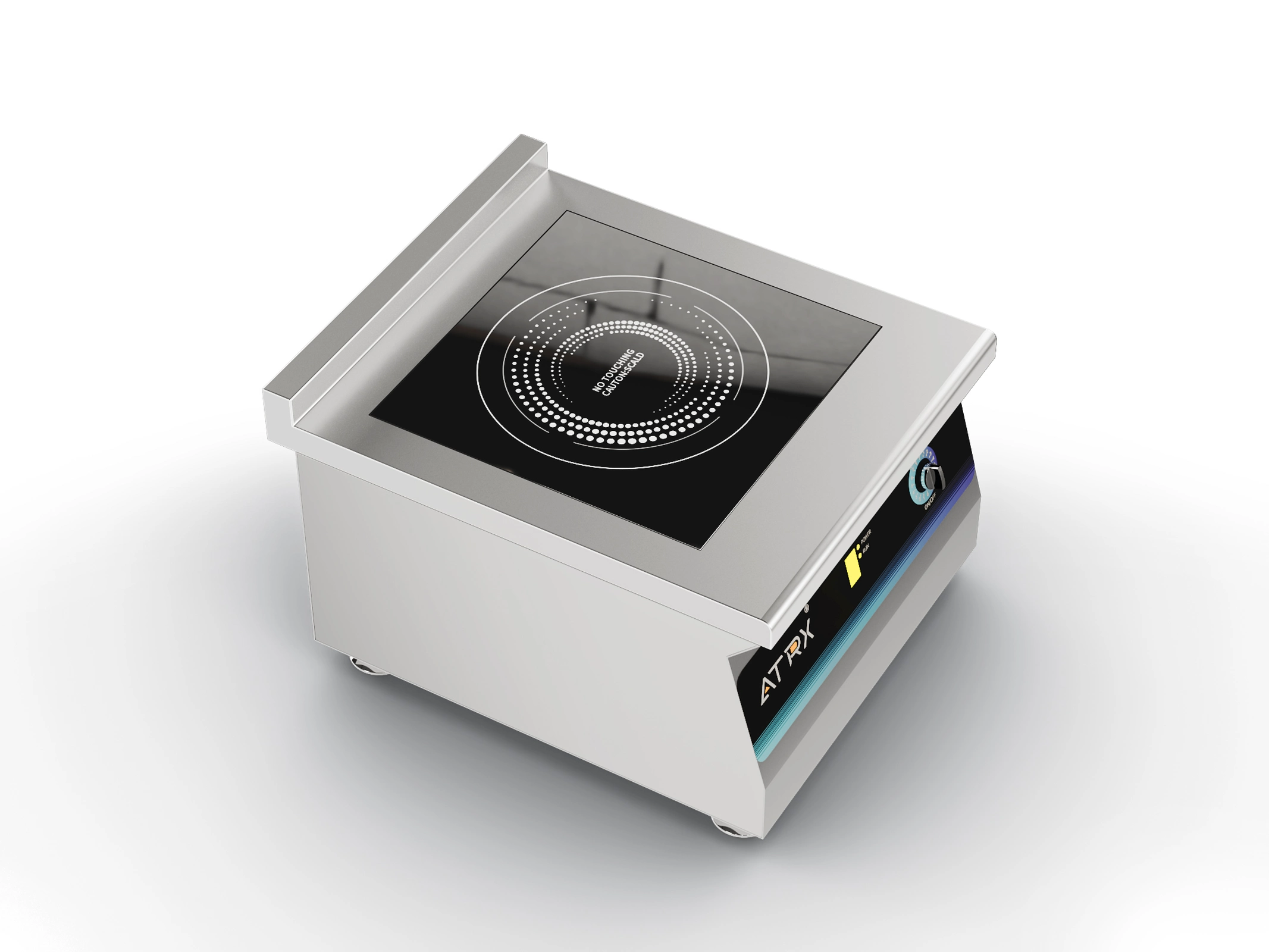
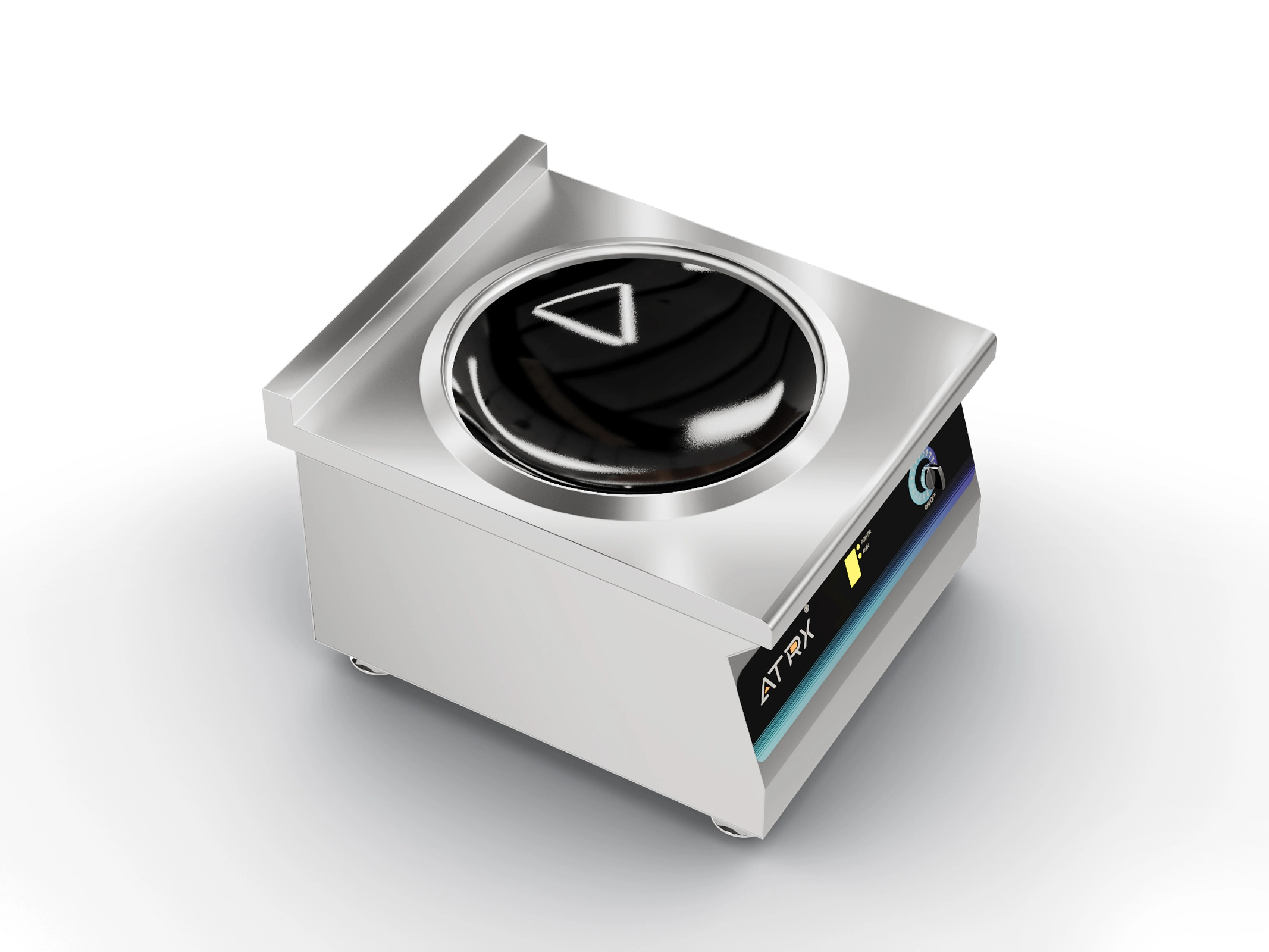
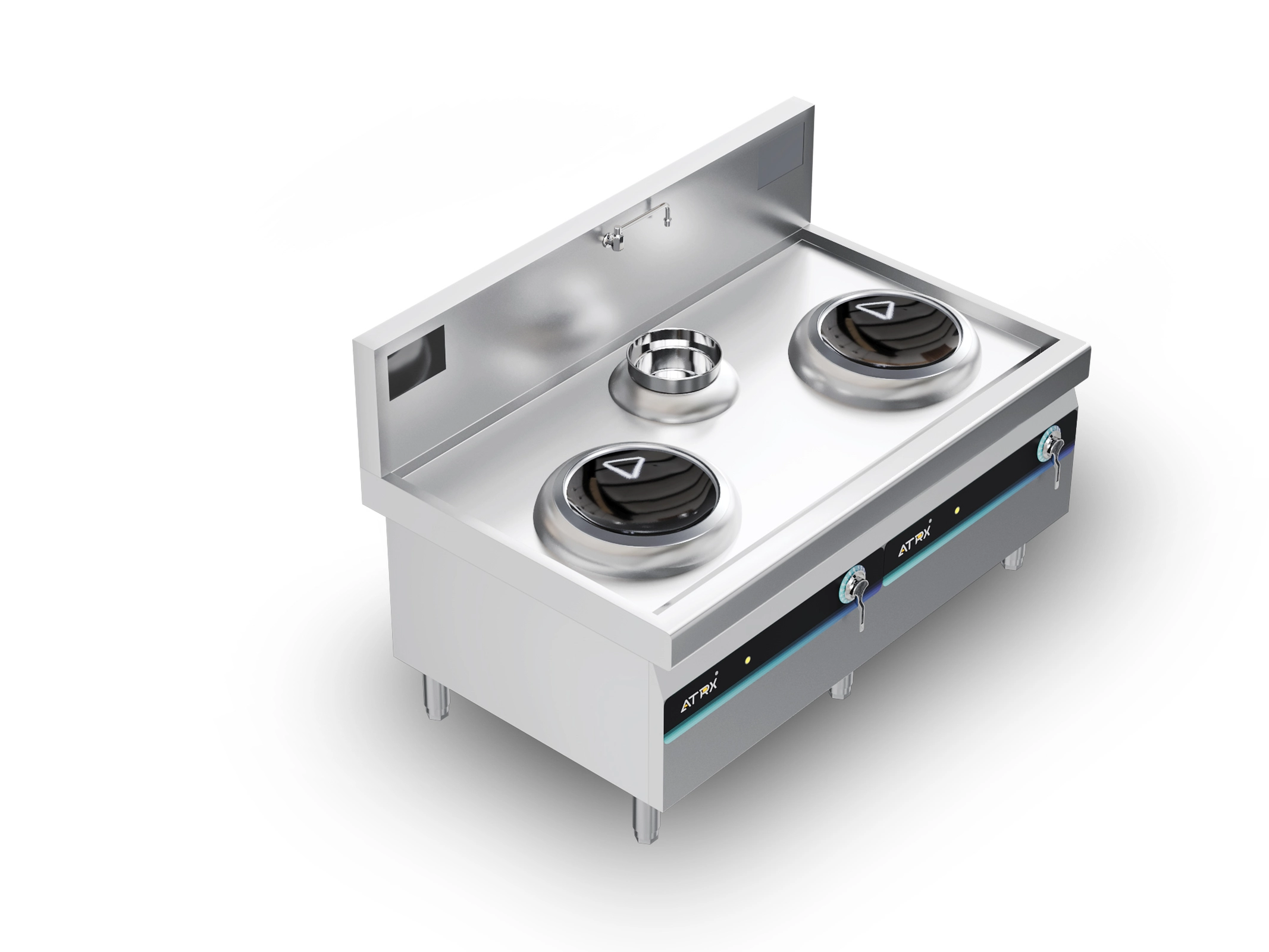
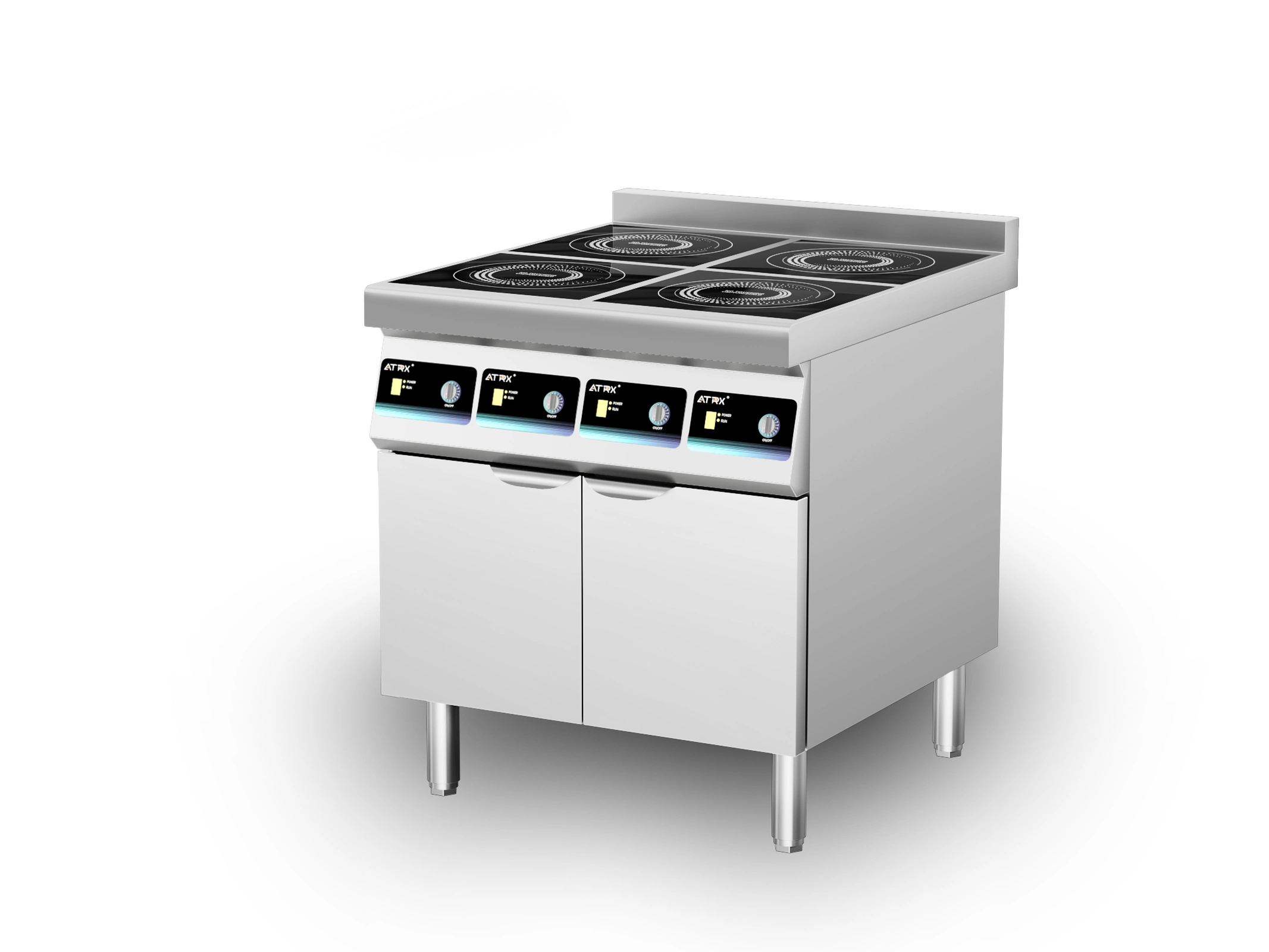
The concave wok stove is the product Chinese manufacturers are best known for globally. The concave burner was designed for round-bottom woks, and China — specifically Guangdong — is the most developed production base for this equipment. It is virtually the only region in the world that mass-produces both concave and flat induction cookers at scale.
Induction Fryers and Griddles
| Product Type | Power Range | Configuration |
|---|---|---|
| Induction Fryer | 3.5KW – 15KW per tank | Single / Double tank |
| Induction Griddle | 3.5KW – 15KW | Multiple surface sizes |
| Induction Pasta Cooker | 3.5KW – 15KW | 2–9 basket positions |
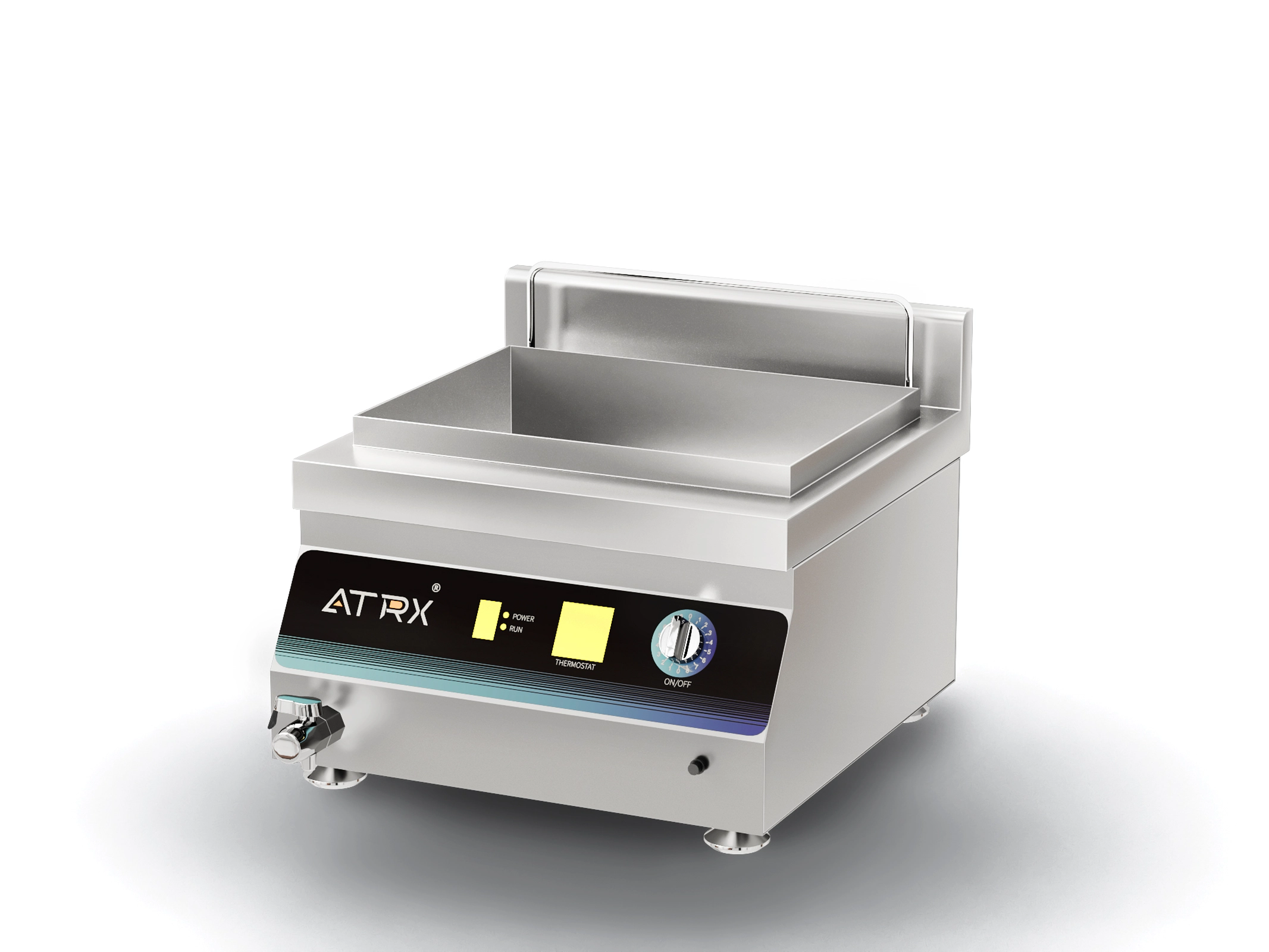
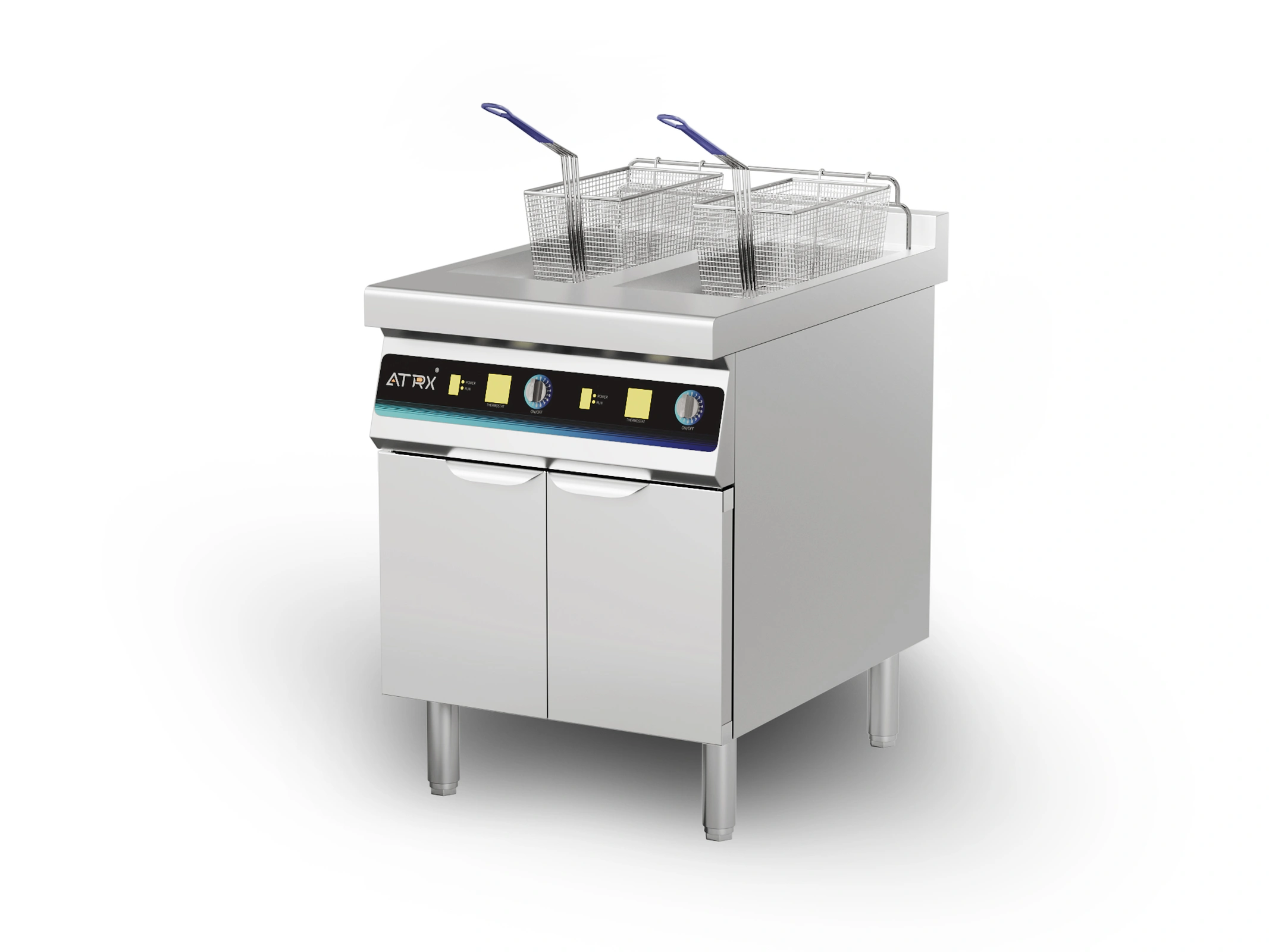
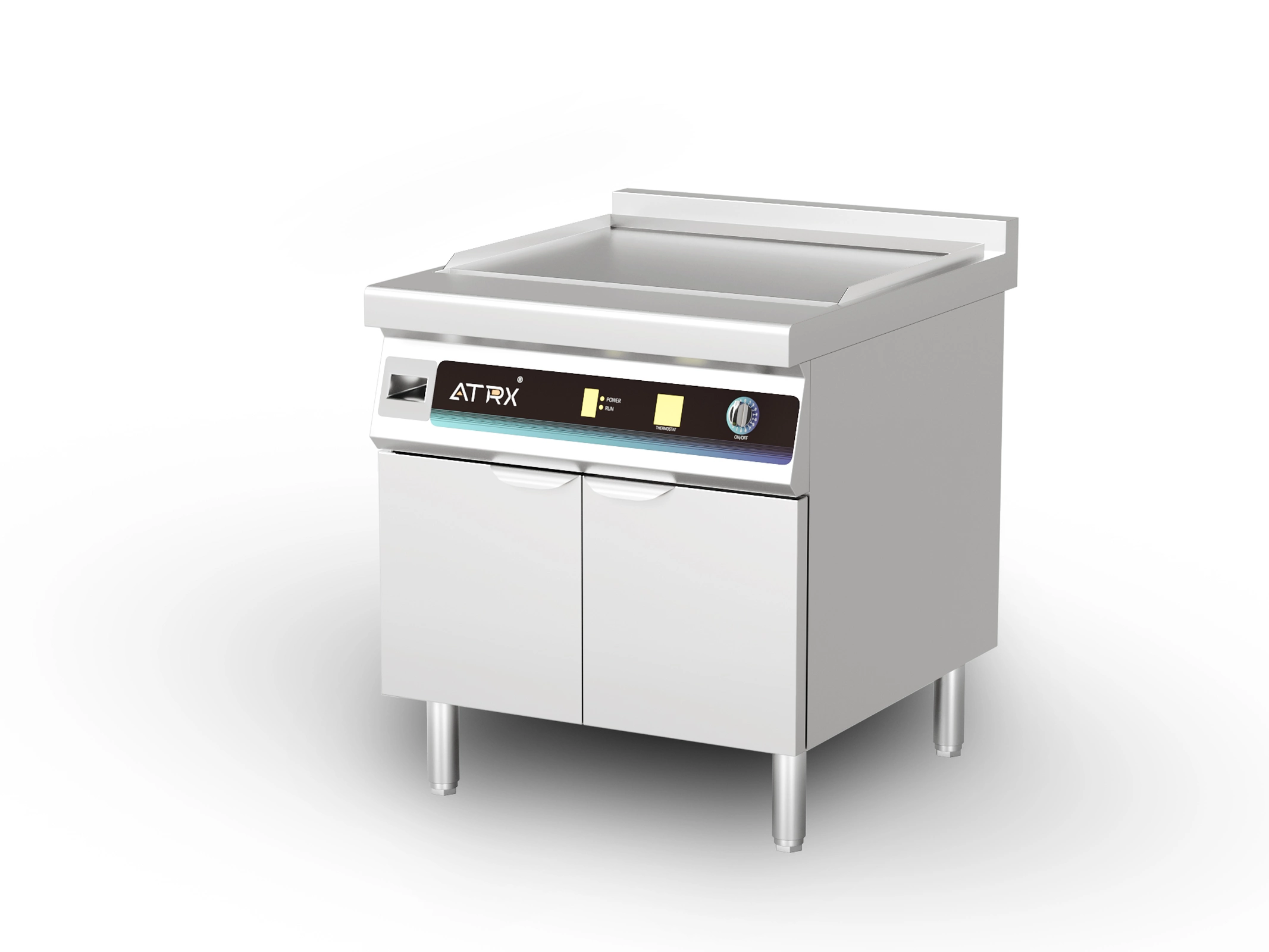
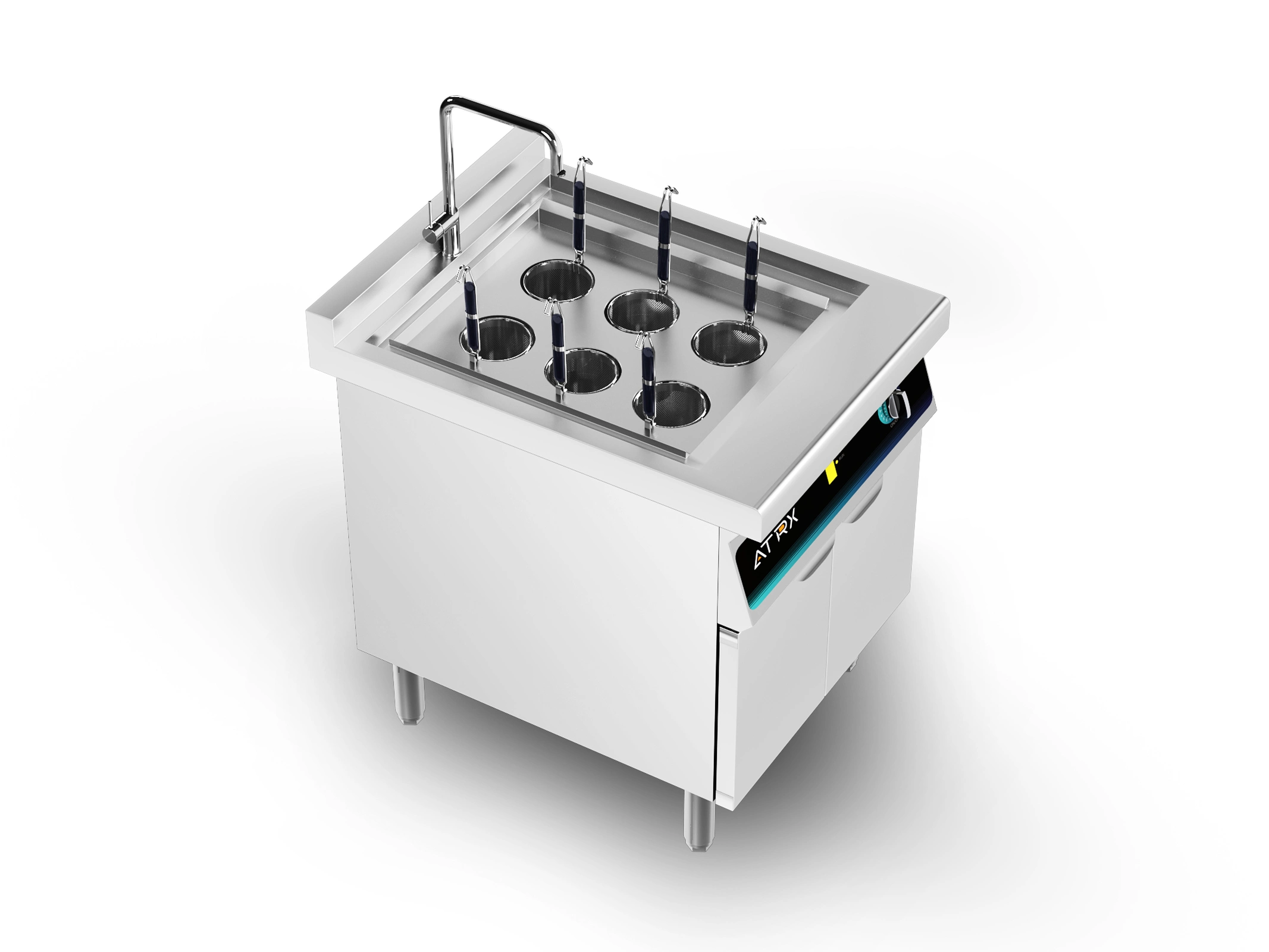
These are built for fast-food chains, Western restaurants, and noodle or pasta kitchens. For distributors, having all three categories under one roof means you don’t need a separate supplier for your fryer or griddle. One factory, one quality standard, one container.
Induction Soup Cookers and Steamers
| Product Type | Power Range | Installation |
|---|---|---|
| Induction Soup Cooker | 8KW – 30KW | Tabletop / Freestanding fixed / Freestanding tiltable |
| Induction Steamer | Commercial grade | Multi-tier steaming racks |
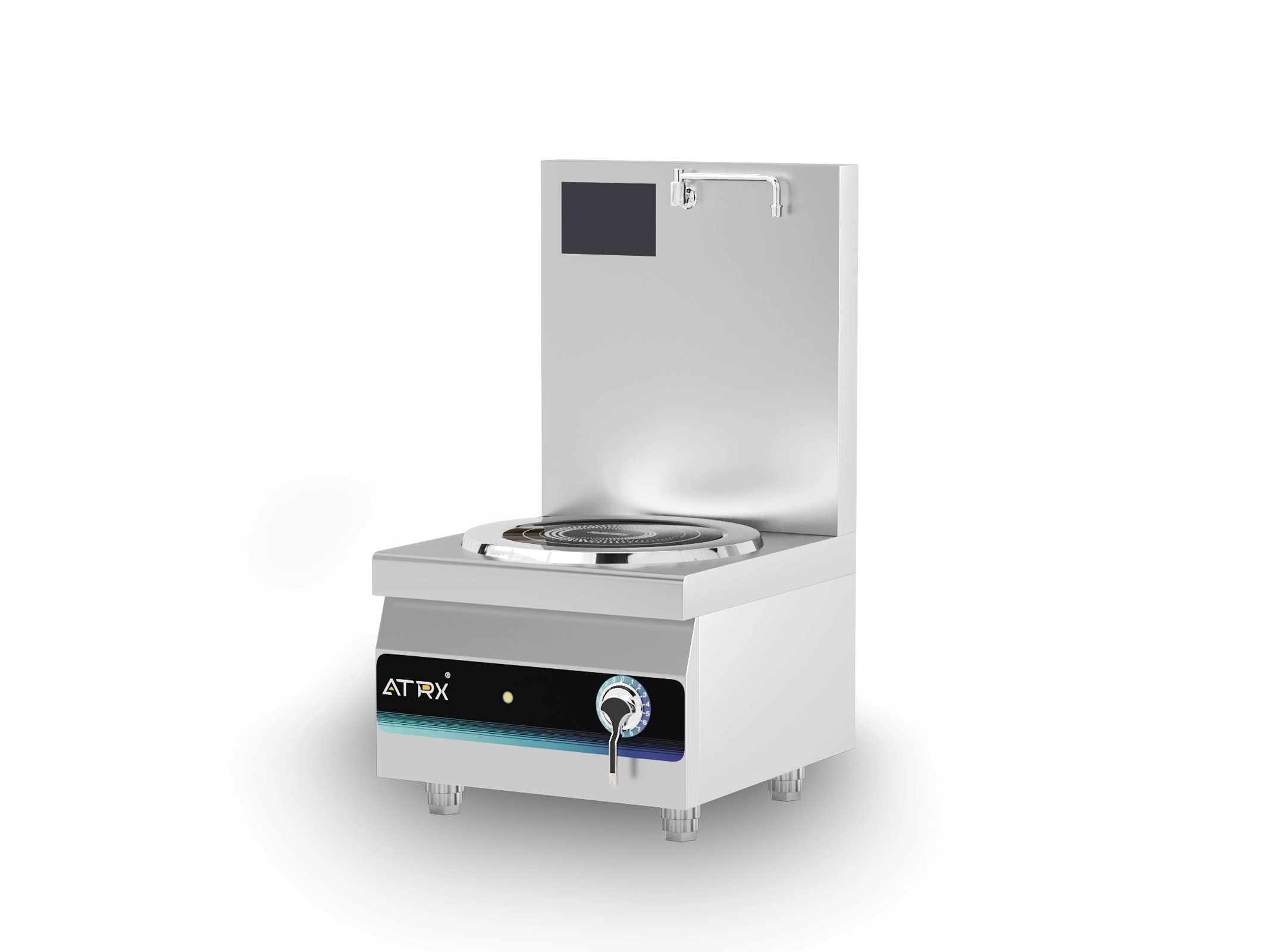
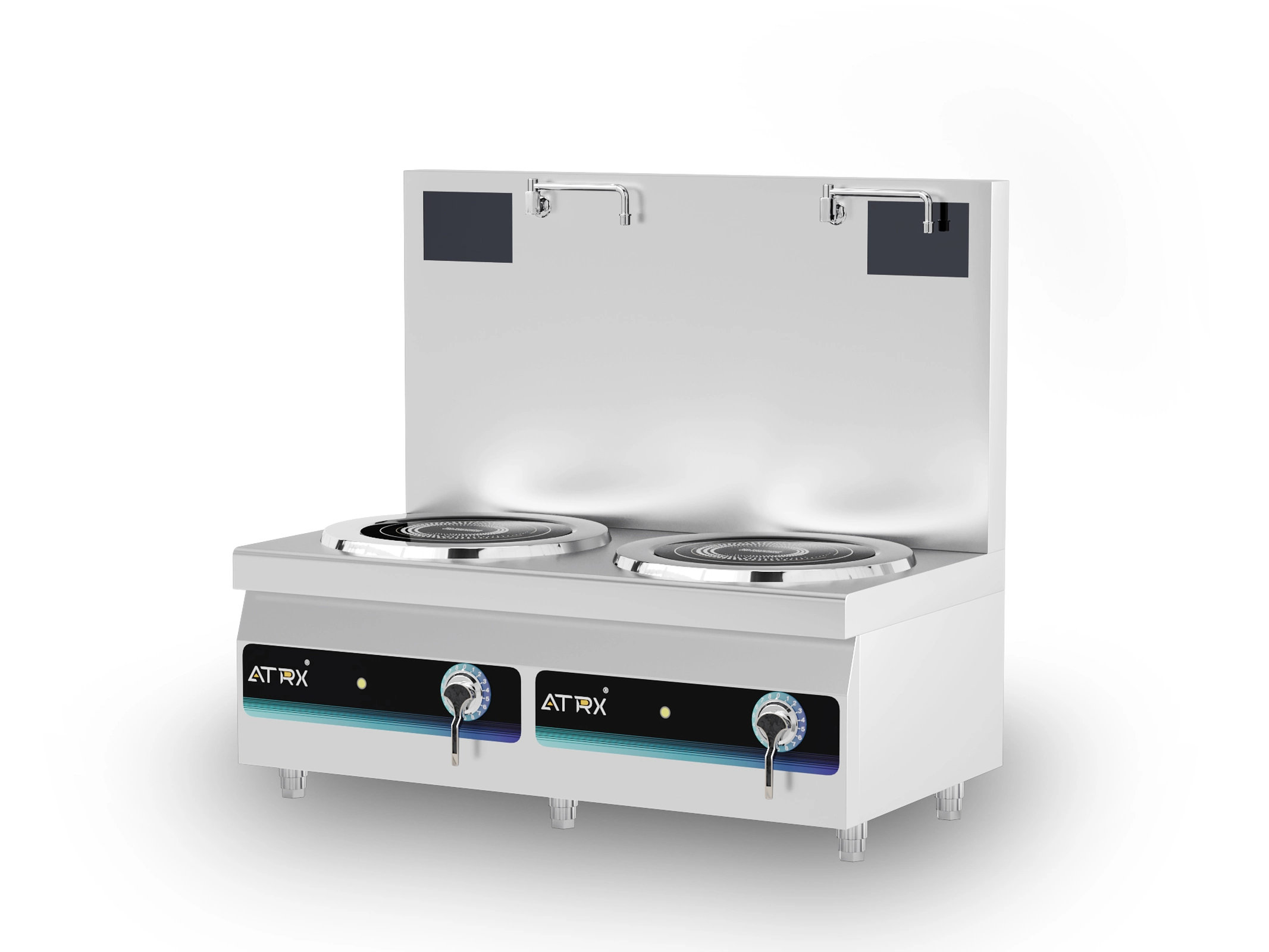
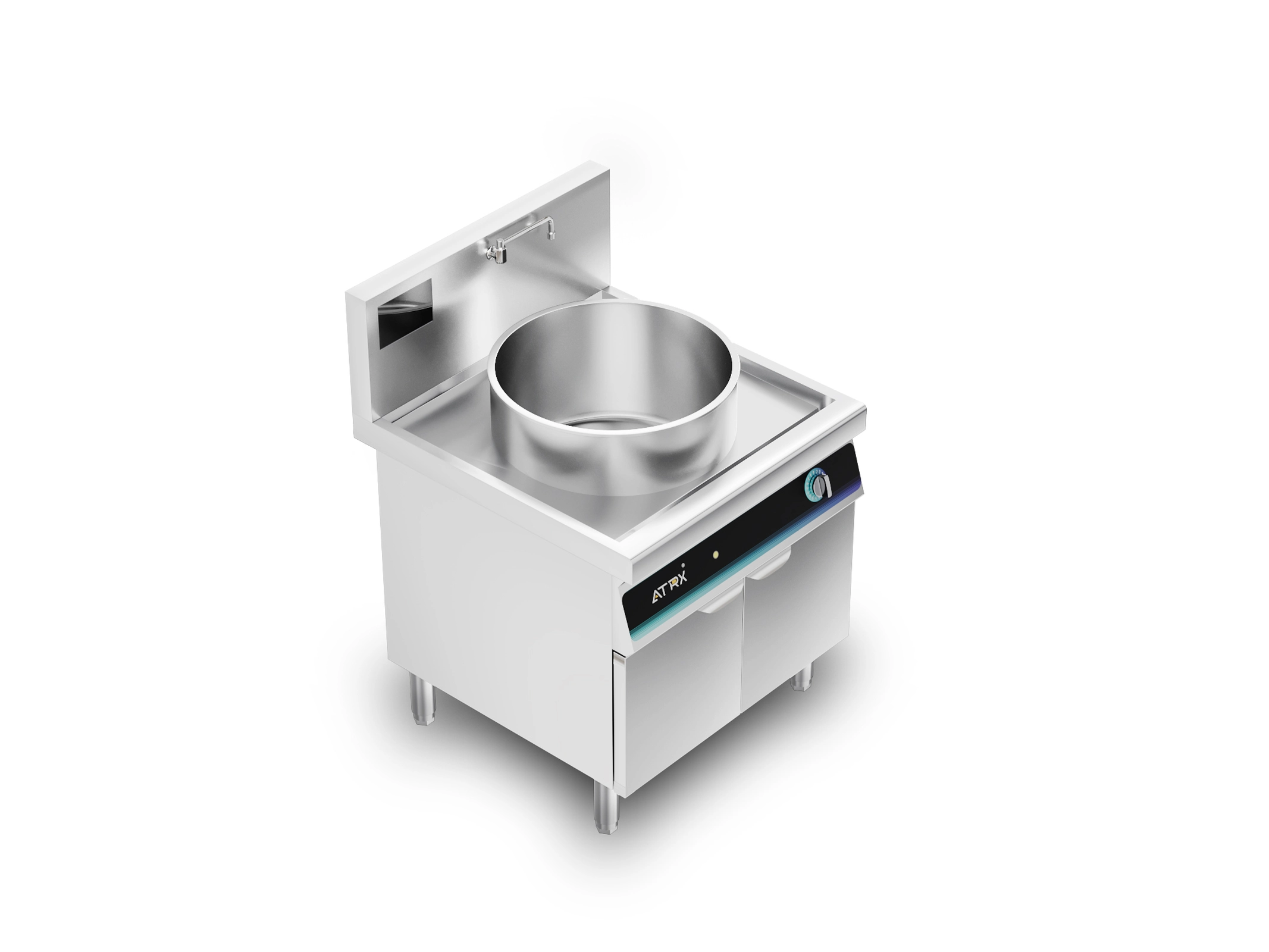
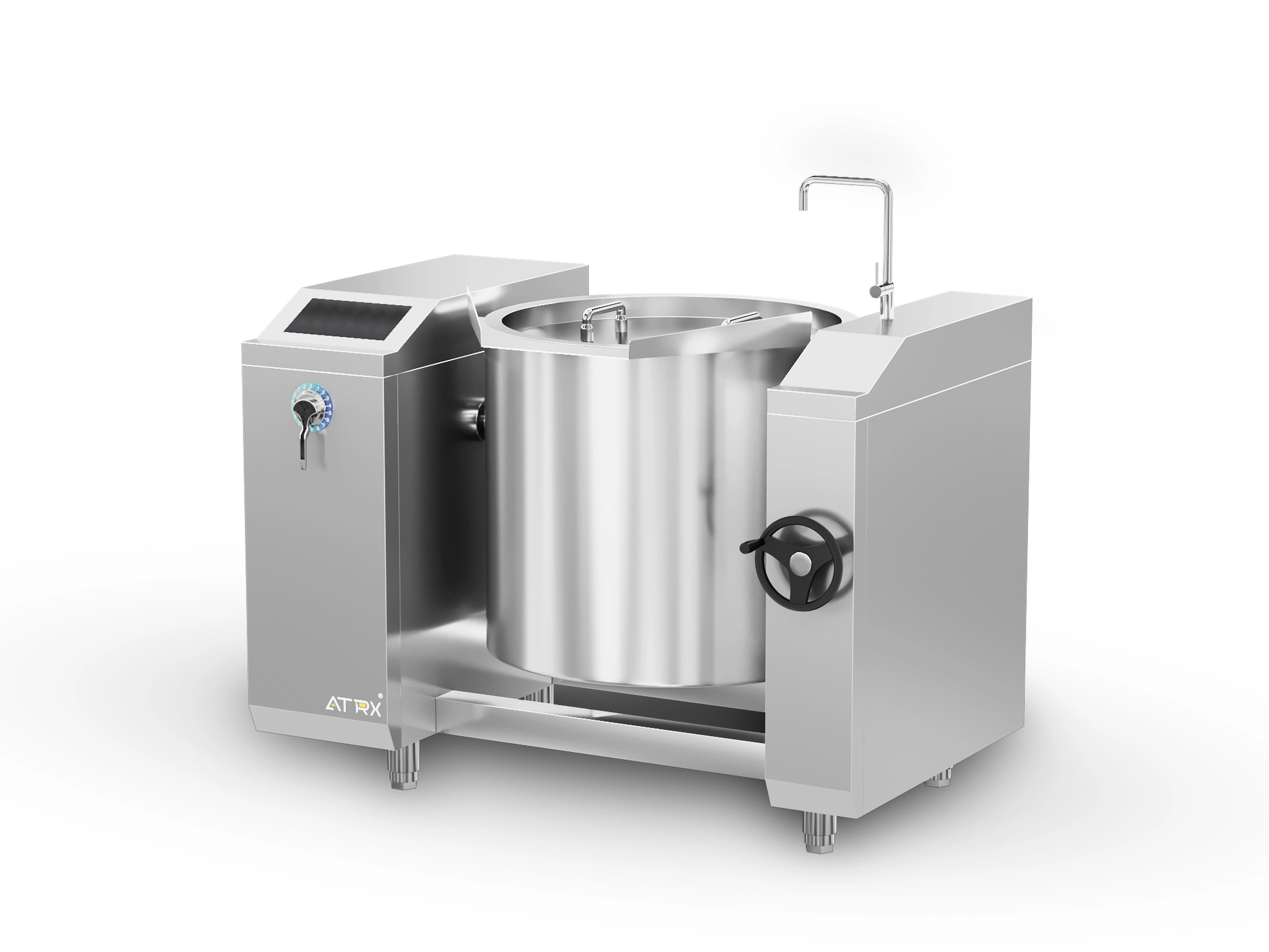
Soup cookers and steamers get less attention than wok stoves or fryers in a typical buying conversation. But in hotel and institutional catering projects, they are must-haves. We produce both in-house, and the specs and power output can be adjusted to fit the project.
Built-in Induction Cookers and Kitchen Project Solutions
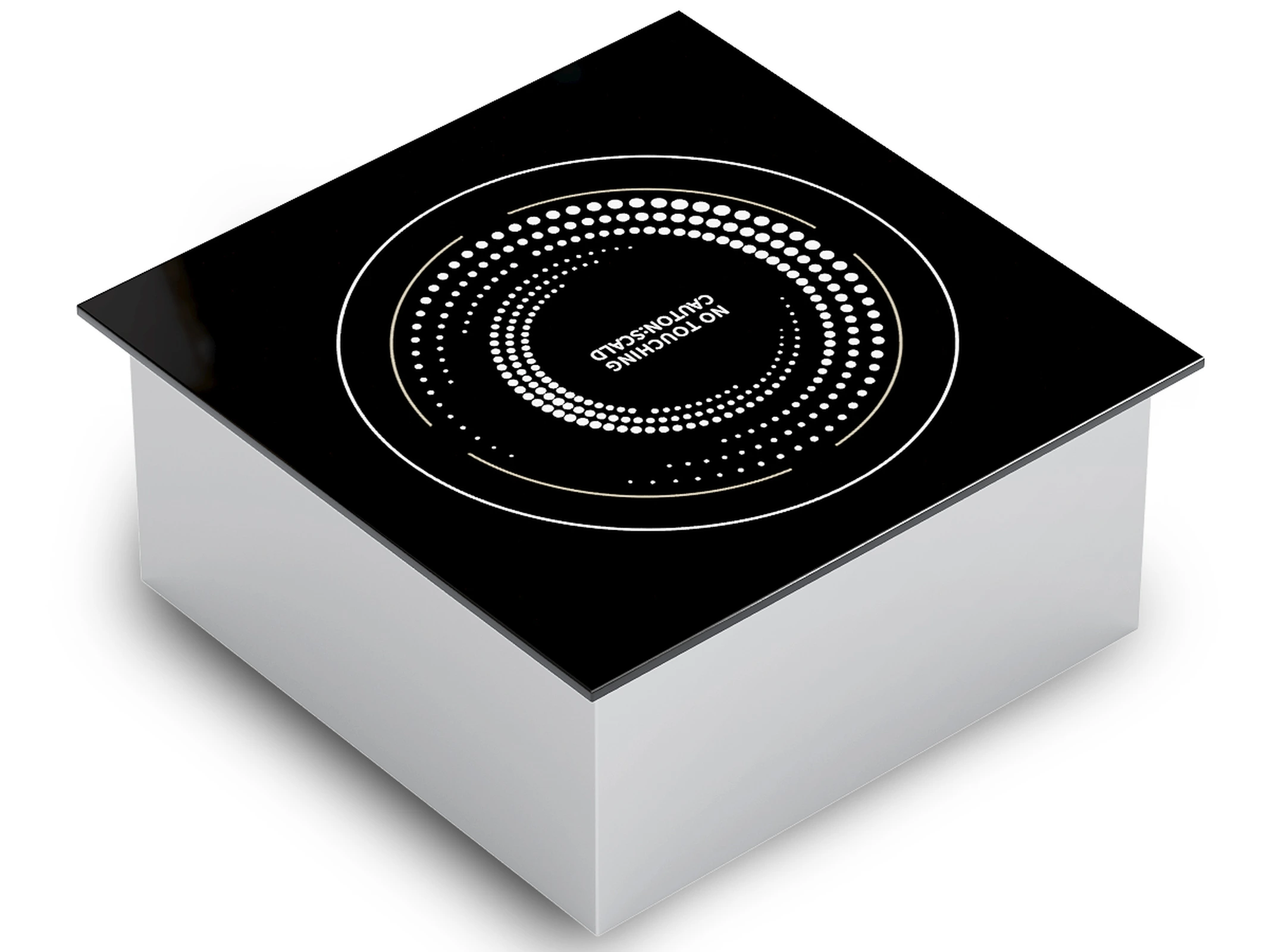
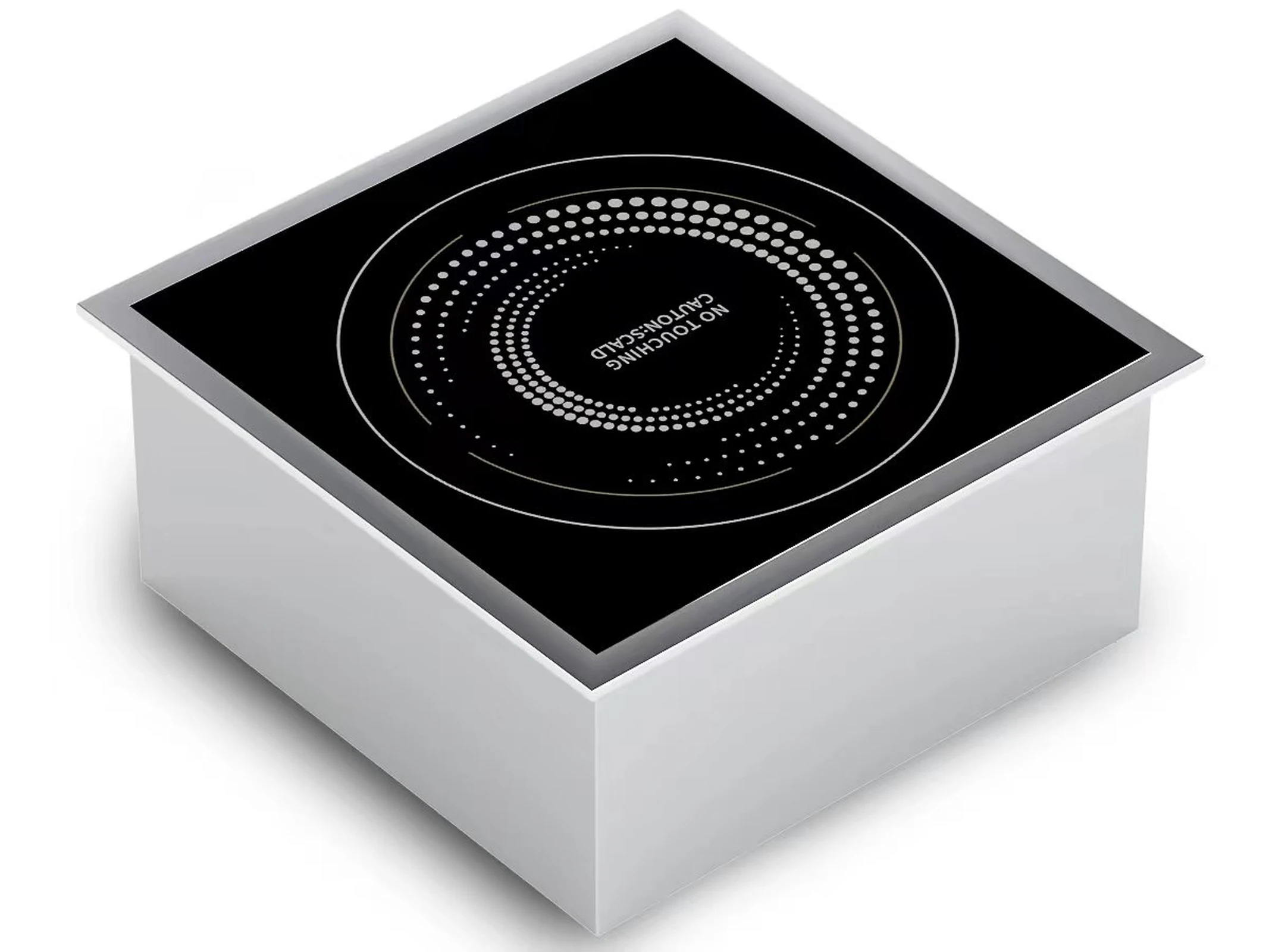
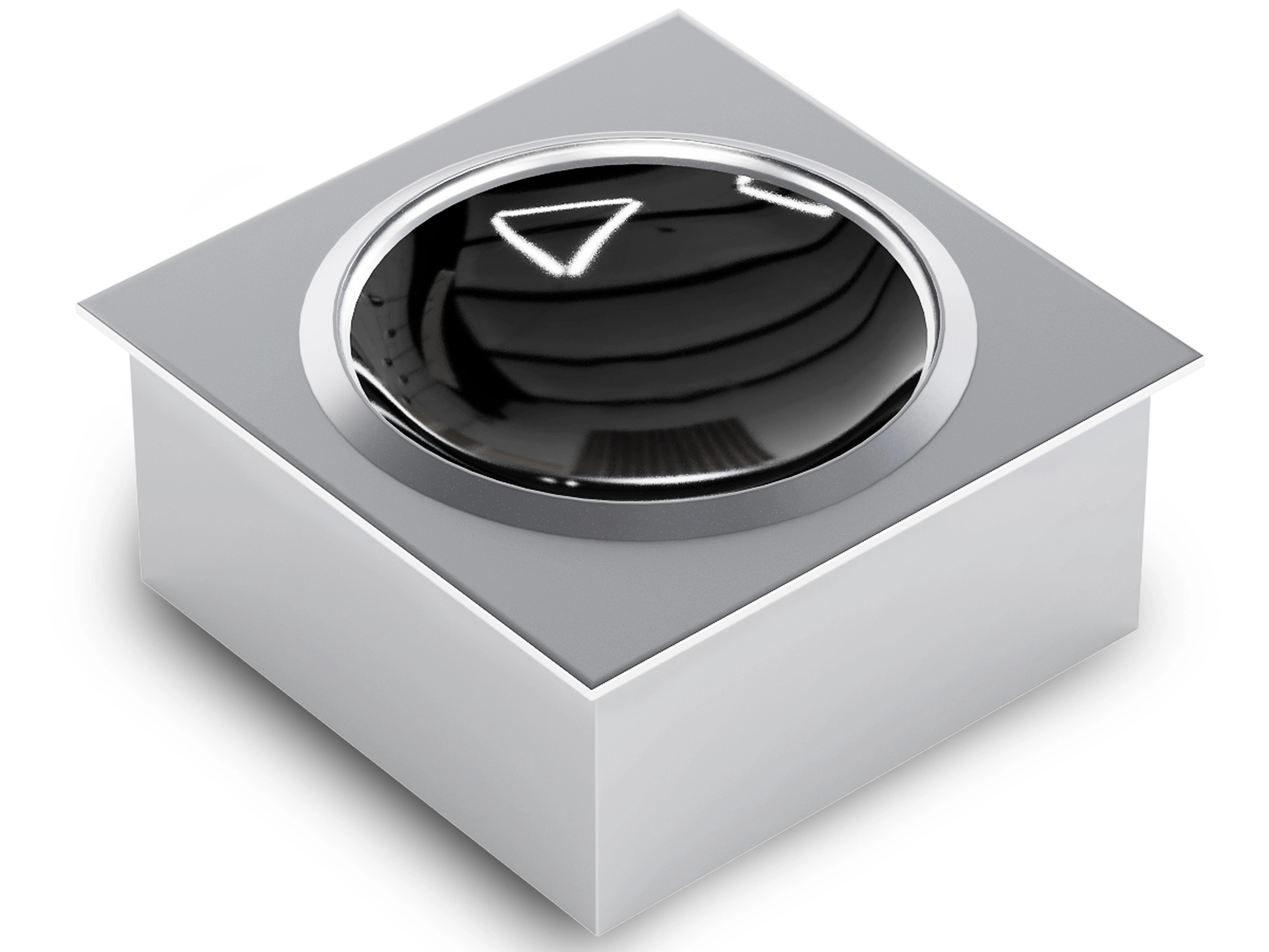
Built-in units sit flush inside stainless steel countertops. Both flat and concave types are available. Buyers in this category are usually not buying a single unit — they are putting together a full cooking line. Think hotel buffet counters, standardized chain restaurant kitchens, or tabletop-mounted hot pot setups.
We support custom cutout sizes and power combinations. If your project list includes wok stoves, fryers, soup cookers, and built-in units, we can quote it as one project, produce everything together, and ship it in one container.
Why Source Commercial Induction Cookers from China
The short answer is not just “because it’s cheaper.” Pricing is competitive, yes. But the real reason China is the go-to sourcing origin for commercial induction cookers comes down to structure — supply chain, capacity, and how the industry is organized.
Factory-Direct Pricing, No Middleman Layers
Buying directly from a China commercial induction cooker supplier means you pay the factory price. No trader margin. No agent markup. No distributor cut.
How much difference does that make? For the same spec, a direct FOB price from Guangdong is typically 15%–25% lower than buying through one or two intermediary layers. That gap is not about cutting quality — it is about cutting out the middleman.
Here is where it adds up: a trader’s margin usually runs 10%–15% of the end price. Add a regional distributor, and that is another 5%–10%. Stack them together and you see why factory-direct makes such a difference.
A Concentrated Supply Chain with Everything Nearby
Guangdong did not become the world’s main production region for commercial induction cookers by accident. A complete industrial cluster has formed here — and everything is close together.
From our Dongguan factory: IGBT module suppliers in Shenzhen are 40 minutes away. Ceramic glass panels from Foshan, 1.5 hours. Stainless steel sheets from Shunde, 1 hour. Mold shops, hardware vendors, packaging printers — all within the same radius.
What does that mean in practice? When you need a custom modification, we are not waiting on out-of-town suppliers or coordinating across time zones. Most supporting resources can be reached and delivered the same day. That directly shortens sampling and ramp-up timelines.
If a factory were in a region with a scattered supply chain, the same customization request would take an extra one to two weeks just in logistics. Inside the Guangdong industrial belt, that time cost is close to zero.
Enough Capacity to Keep Lead Times Stable
For B2B buyers, lead time reliability matters as much as price. Here is our standard lead time structure:
| Order Type | Lead Time | Notes |
|---|---|---|
| Stock Standard Models | 10 – 15 days | Finished or semi-finished goods, ships quickly after confirmation |
| OEM Custom Models | 25 – 35 days | Branding, packaging, voltage adaptation |
| ODM Deep Customization | 45 – 60 days | New tooling, motherboard changes |
These numbers reflect actual performance under normal scheduling. One thing to note: September through December is peak season across Guangdong’s kitchen equipment industry. Production slots tighten region-wide. If your order falls in Q4, placing it 1–2 months early is a smart move.
What International Certifications Our Commercial Induction Cookers Hold
Product Certifications: CE, CB, and Market Access
Commercial induction cookers require mandatory certification. Without the right one, your goods will not clear customs at the destination. Requirements vary by region — here is where we stand:
| Target Market | Required Certification | Status |
|---|---|---|
| European Union | CE + RoHS | Standard on all models, ships with the unit |
| International | CB | Available as a base for converting to other national certifications |
| North America | ETL / UL | Core components (fans, control modules) hold CE and UL; whole-unit ETL can be completed with the certification body |
| United Kingdom | UKCA | Arranged per project |
| Saudi Arabia & Gulf States | SASO | Arranged per project |
A practical note: some certifications — especially ETL and NSF — are not just “send the unit and get a pass.” They carry their own requirements for grounding protection, leakage, and electromagnetic compatibility that go beyond CE standards. If your target is North America, certification needs to start at the design phase, not after the product is finished.
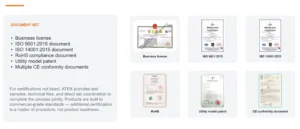
Tell us your target market when you send your inquiry. We will build certification requirements into the sample plan from day one.
How We Think About Quality Control
Our full QC process is detailed on our factory introduction page. Here is the one principle behind it: the earlier you catch a problem, the cheaper it is to fix.
A defective component caught at incoming inspection costs almost nothing — send it back to the supplier. Caught after assembly, it means tearing down the unit and reworking it — ten times the cost. Caught by the end user after delivery, and you are looking at return shipping, repair labor, and a damaged relationship.
That is why we inspect at four stages: incoming materials, after PCB assembly, full-load aging test on the completed unit, and final inspection before packing. Each checkpoint exists to stop problems before they get expensive.
Every unit we ship carries a traceable QC record with the inspector’s ID and the test data for that specific machine. Customers or their third-party inspection agencies are welcome to visit the factory for on-site checks.
OEM and ODM – Build Your Brand with Our Factory
More than 90% of our shipments are custom orders. This is not a side service — it is how we operate. As an OEM commercial induction cooker manufacturer, customization is our core business.
OEM: Your Brand, Our Production
The setup is simple: you own the brand and the market, we handle manufacturing and quality control.
On any of our existing models, we can customize your logo, nameplate, compliance labels, packaging design, manual language, shipping marks, and voltage or plug configuration. None of this requires new tooling or structural changes, so lead times stay close to standard.
ODM: Designed and Developed to Your Brief
ODM goes much further than putting your logo on an existing product. If you need a new model built for a specific market — with a different look, different power scheme, and a different control interface — that is ODM territory.
Here is what a typical ODM project involves. Voltage and frequency have to match the local grid — a 110V/60Hz board for North America is a completely different design from a 220V/50Hz board for Europe. Control logic has to suit local cooking habits — the power curve for slow pan-frying is nothing like the one for high-heat wok tossing. And the exterior needs to fit the aesthetic expectations of your target buyers. None of that is a cosmetic change. It starts at the PCB level.
MOQ and How We Typically Start
| Type | MOQ | Lead Time |
|---|---|---|
| Stock Standard Models | 30 units | 10 – 15 days |
| OEM | Negotiable per project | 25 – 35 days |
| ODM | Negotiable per project | 45 – 60 days |
If this is your first time sourcing commercial induction cookers from China, here is our honest recommendation: start with a small order. Get the product, test it, run a trial batch in your market, and go through the full cycle from purchase order to customs clearance once. The goal of that first order is not profit — it is proof. Proof that the product works, that the market responds, and that the partnership runs smoothly.
Most of our long-term partners started exactly this way — 30 to 50 units on the first run. Scaling up came after they had real data, not assumptions.
For a step-by-step walkthrough of how OEM cooperation works — from initial inquiry to shipment, including sample timelines, approval milestones, and what you need to prepare — see our full guide: OEM Commercial Induction Cooker Process.
Where Our Commercial Induction Cookers Are Sold
Key Export Regions and Buyer Profiles
We currently ship to over 50 countries. Here is how the main regions break down:
| Region | Typical Buyers |
|---|---|
| Southeast Asia | Restaurant chain procurement, kitchen equipment distributors |
| Europe | OEM brand owners, hotel equipment importers |
| North America | Restaurant equipment distributors, private-label clients |
| Middle East | Hotel kitchen projects, government procurement |
| South Asia / Africa | School and institutional catering, regional distributors |
What people buy varies by region. Southeast Asia leans toward high-power concave wok stoves — round-bottom wok cooking is central to both Chinese and local cuisines there. Europe and North America focus more on flat cooktops, griddles, and built-in units. Middle Eastern hotel projects tend to order full packages — wok stoves, fryers, soup cookers, and steamers, all in one go.
Our product range and voltage flexibility let us put together the right mix for each market.
Two Real Cooperation Cases
No client names below, but the scenarios and numbers are real.
Case One — A Southeast Asian distributor ordered 50 induction wok stoves as a market test. His end customer, a Chinese restaurant chain, confirmed the equipment met their requirements during daily use. Six months later, he came back with an order for over 200 units and started OEM branding with us. The full journey from trial to long-term partnership took about half a year.
Case Two — A European importer needed a tabletop commercial induction cooker with local voltage compliance and a clean, simple control panel. Our engineering team adjusted the power configuration and interface. OEM samples were delivered in 15 working days. After approval, the first 300 units were produced and shipped within a month. The total cycle from confirmed requirements to delivered goods was under two months.
Both cases followed the same pattern: start small, validate with real market feedback, then scale. That is the rhythm we recommend and the one that works best in practice.
If you are evaluating a Chinese commercial induction cooker manufacturer for your next project, send us an inquiry. Tell us your target market, the product types you need, your voltage requirements, and your estimated quantities. We will get back to you within 24 hours with a tailored product recommendation and factory pricing.
About the author
ATRX Team| 18 Years Commercial
Induction Cooker Manufacturer in China
Induction Cooker Manufacturer in China
Related Posts
Best Commercial Induction Cooktop: Types &Buying Guide
10/09/2026
Commercial Double Hob Induction Cooker | Types, Power, and Installation Guide
10/05/2026
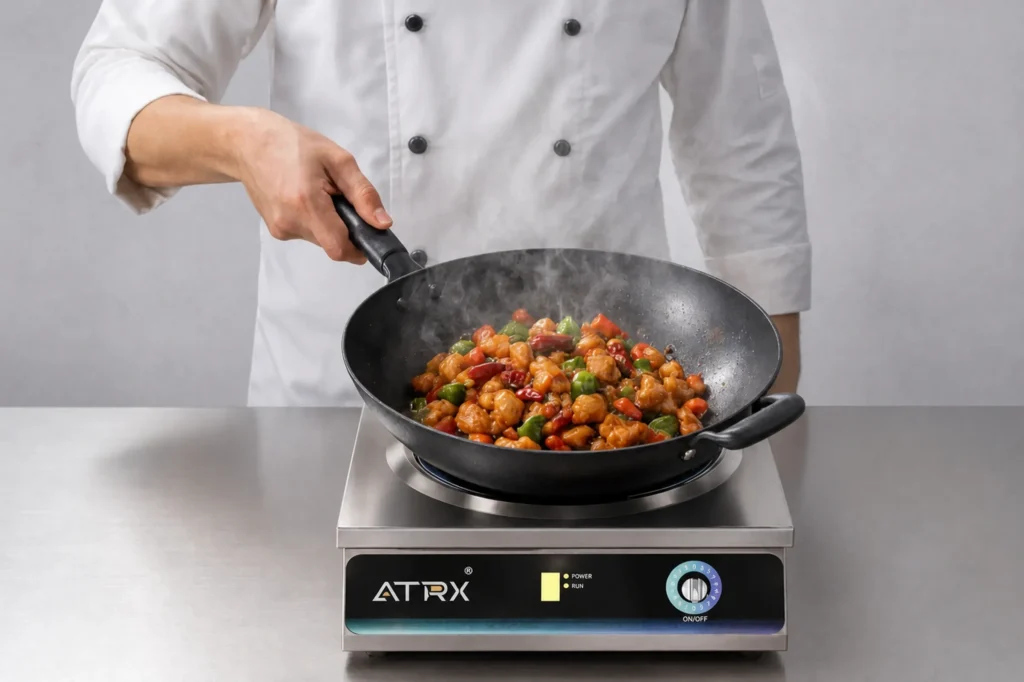
Commercial Induction Cooker 3500W: Model Selection, Commercial Power and Installation
09/29/2026
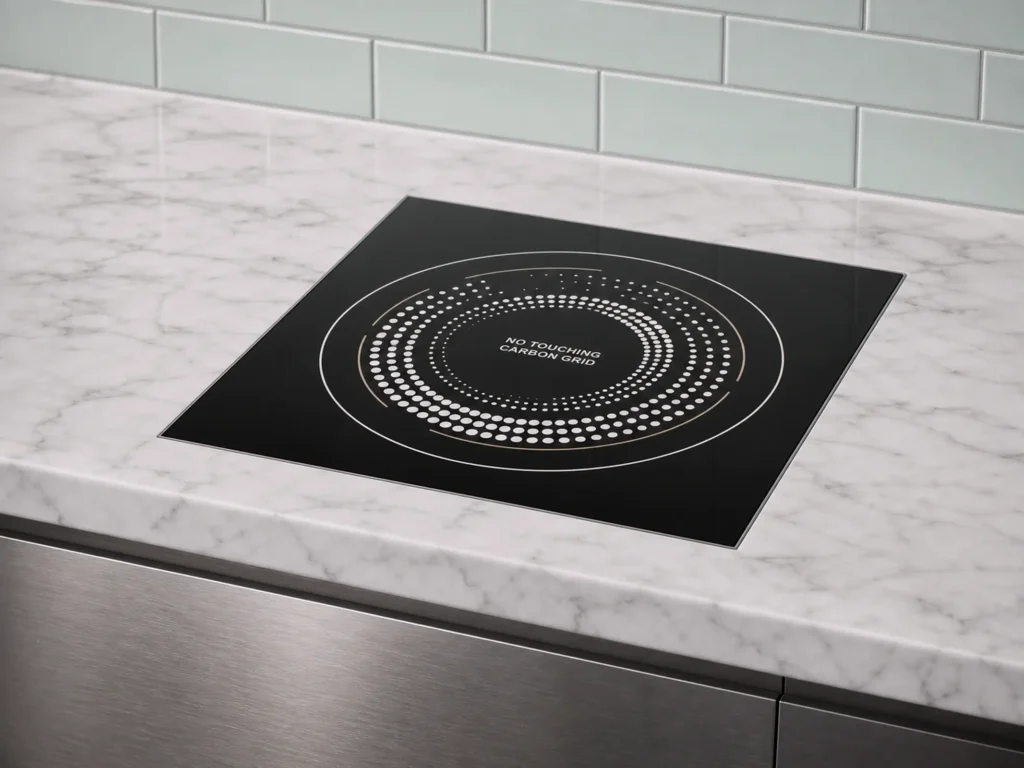
How to Install a Built-In Induction Cooktop: A Step-by-Step Guide
09/17/2026
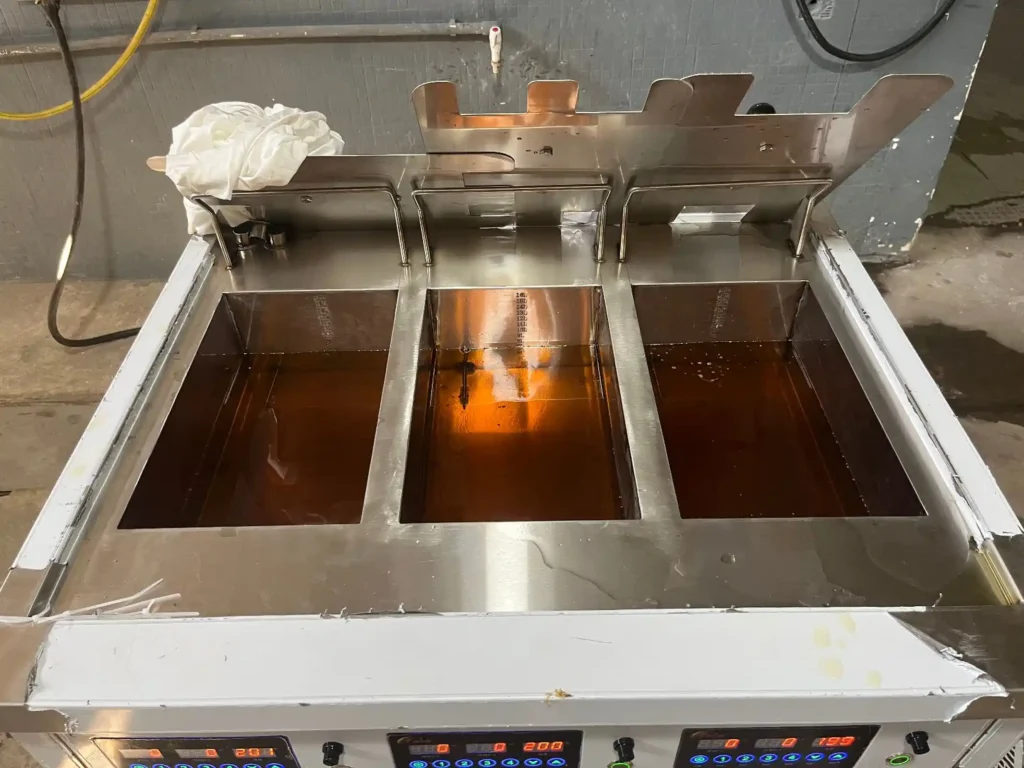
How to Clean a Commercial Deep Fryer: A Step-by-Step Guide
09/13/2026
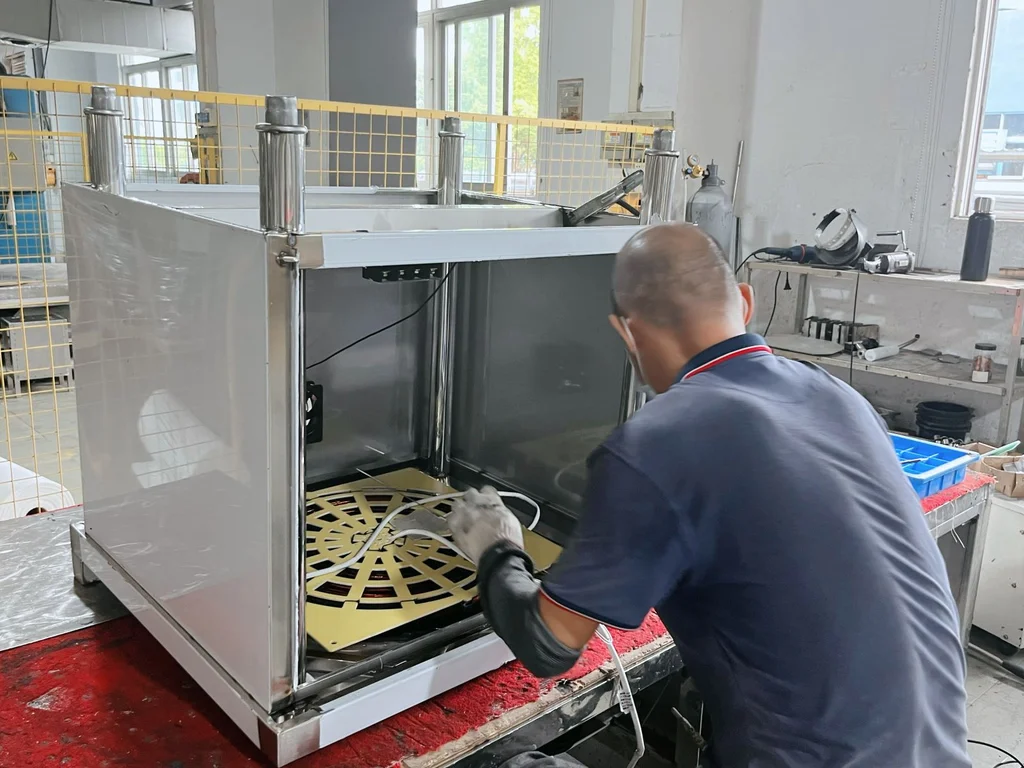
High Quality Commercial Induction Cooker Manufacturer
09/09/2026
Automatic Wok Machine: Types, Specifications, Applications and Buying Guide
08/18/2026
Commercial Induction Range: How to Choose the Right Size, Power, and Configuration for a Commercial Kitchen
08/15/2026
What Is a Commercial Induction Cooker and How Does It Work
08/13/2026
Commercial Induction Range for Hotel Kitchens: How to Choose the Right Model
08/11/2026