
Commercial Induction Range: How to Choose the Right Size, Power, and Configuration for a Commercial Kitchen
08/15/2026
Estimated reading time: 2 minutes

When selecting a commercial induction range, the key question is not which unit has the highest specifications. It is whether the equipment matches the kitchen’s menu, cookware, service volume, available installation space, and electrical supply. Insufficient power can slow heating and service, while an oversized configuration can increase electrical, ventilation, and purchasing costs.
This article focuses on practical selection for commercial kitchens. It explains which types of commercial induction equipment suit different applications and compares power, cooking-surface size, number of cooking zones, temperature control, energy management, kitchen integration, and supplier support. It also incorporates ATRX product information, test videos, and after-sales experience to help buyers connect specifications with real operating requirements instead of relying on marketing language alone.
IN THIS ARTICLE
- What Is a Commercial Induction Range, and Which Commercial Kitchens Need One?
- How to Choose the Right Power for a Commercial Induction Range
- How to Choose Cooking-Surface Size and the Number of Cooking Zones
- How to Match Equipment Configuration to the Menu and Kitchen Layout
- Which Commercial Induction Range Specifications Should You Check Before Buying?
- How to Compare Commercial Induction Range Suppliers
What Is a Commercial Induction Range, and Which Commercial Kitchens Need One?
A commercial induction range is induction-heating equipment designed for restaurants, hotels, central kitchens, food stalls, pop-up foodservice operations, and other professional cooking environments. It may be supplied as a single-burner countertop unit, multi-burner or multi-zone unit, built-in equipment, stock-pot cooker, wok cooker, or another specialized format, depending on the kitchen workflow.
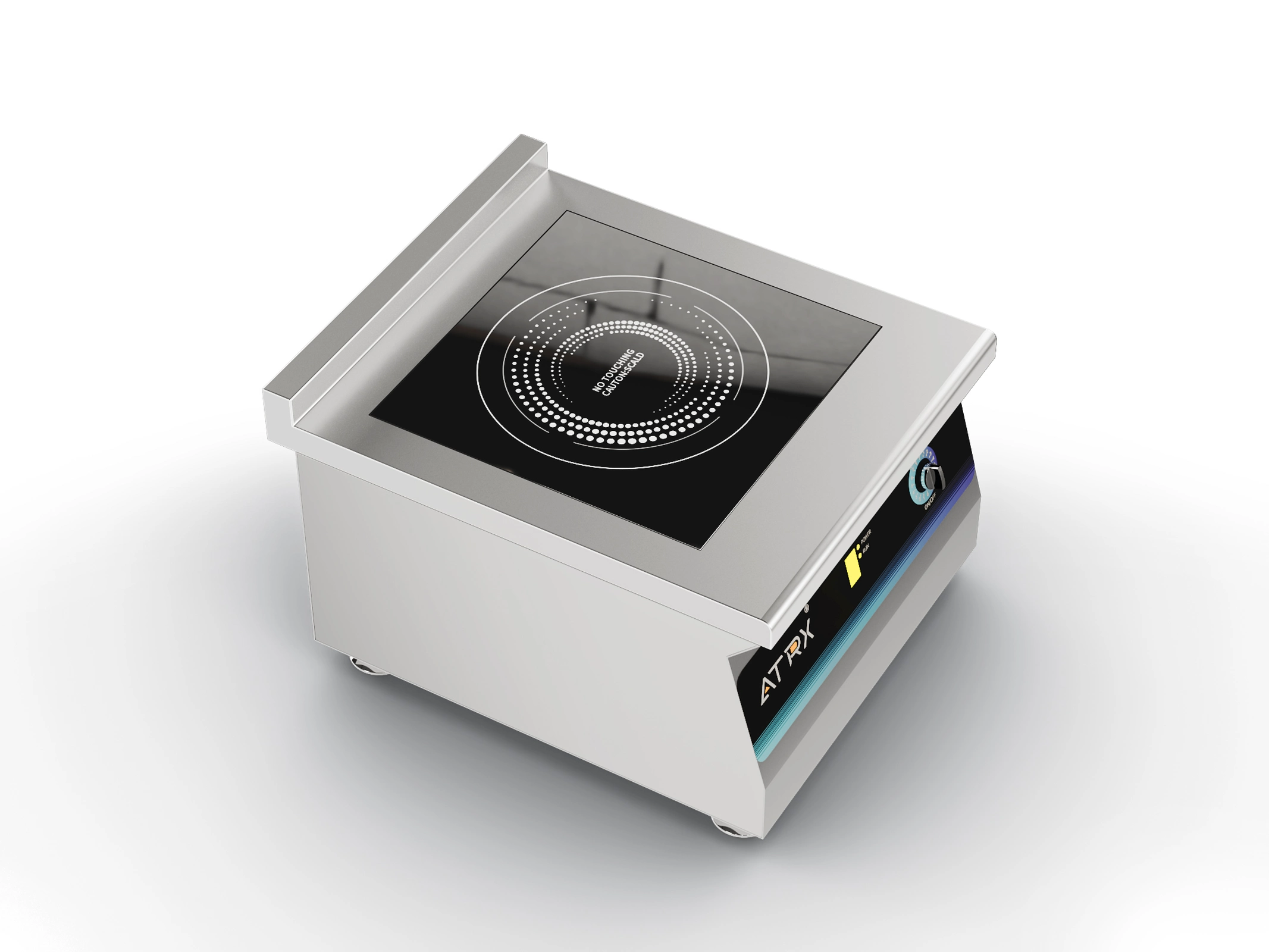
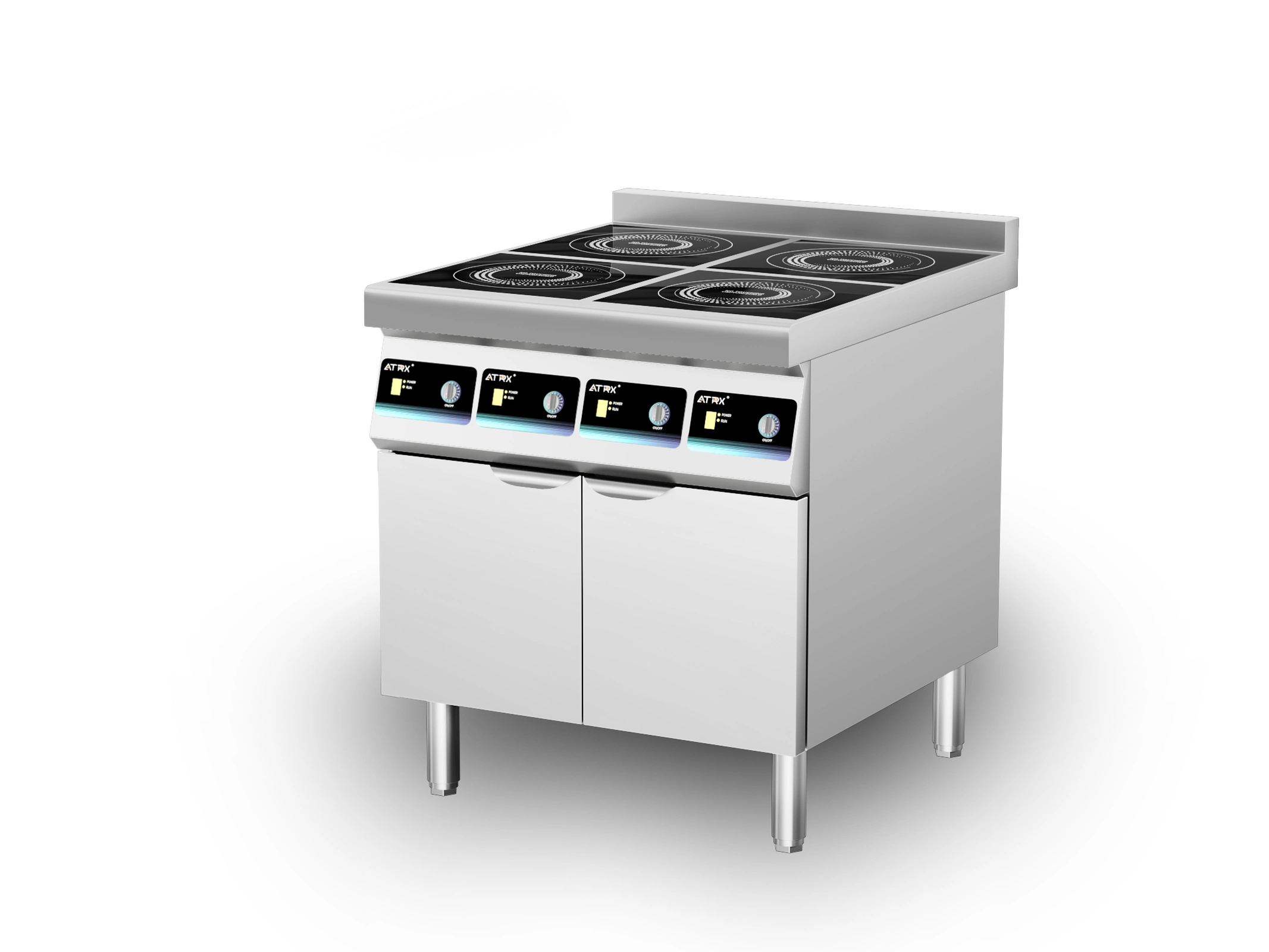
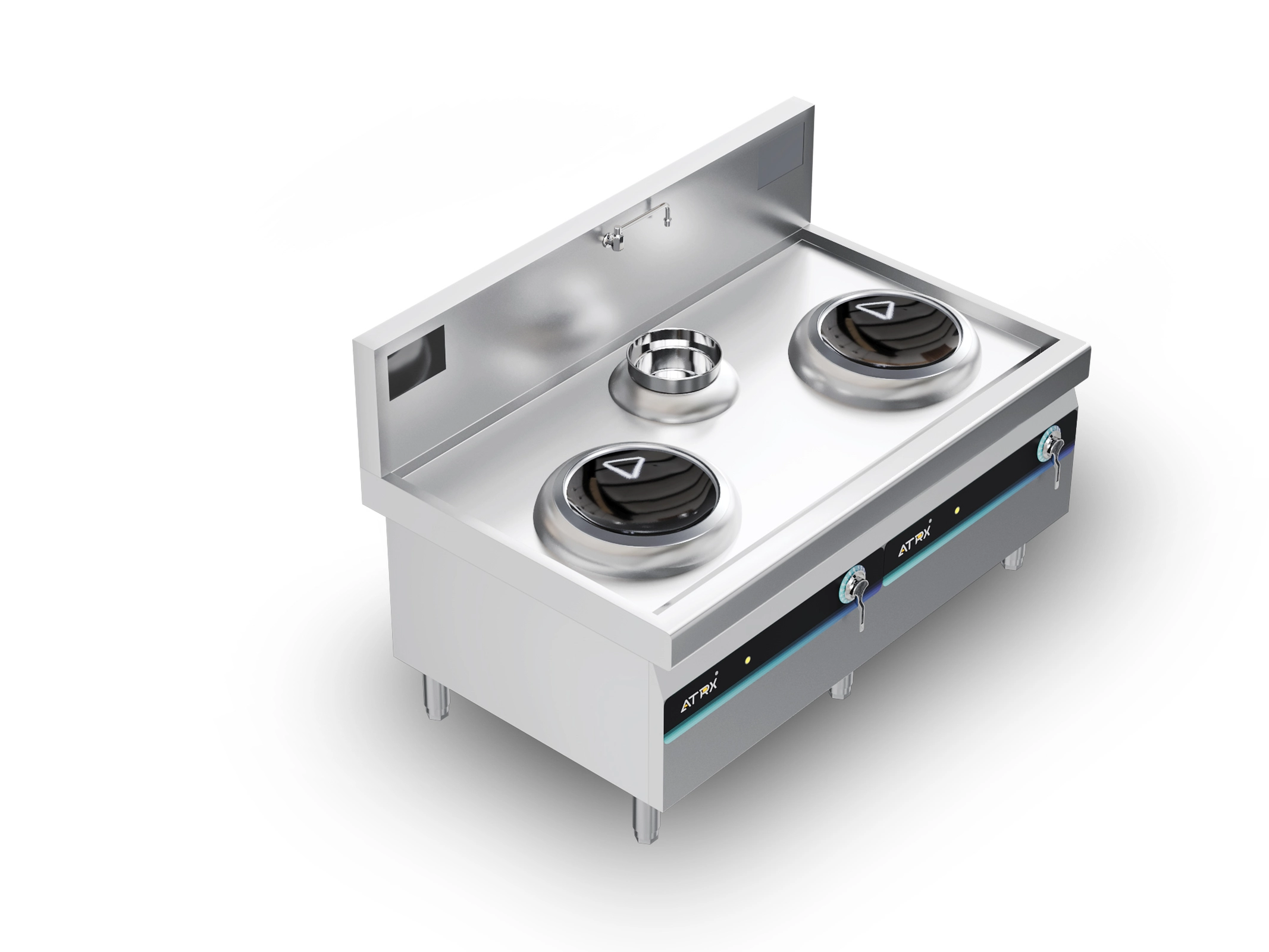
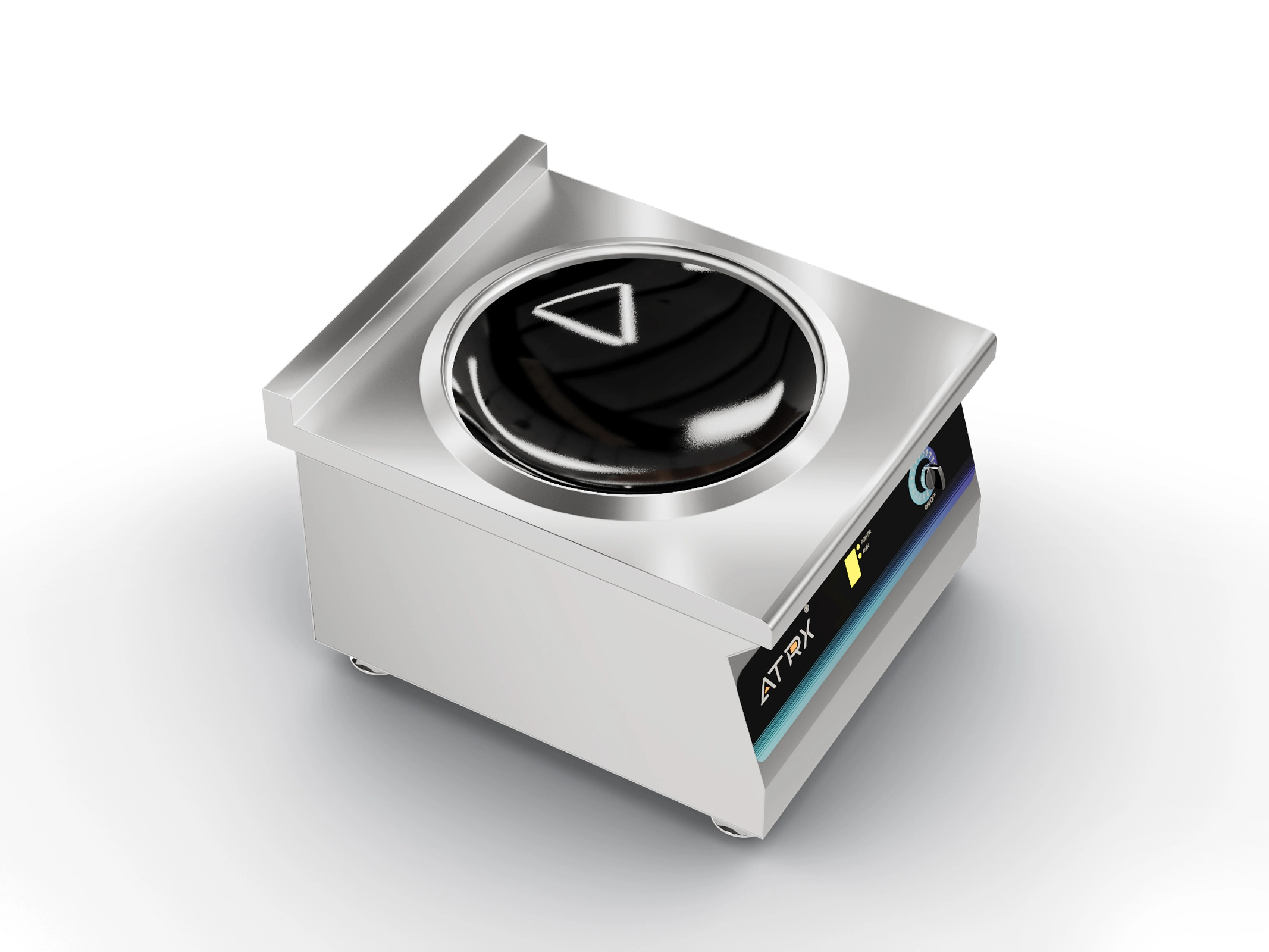
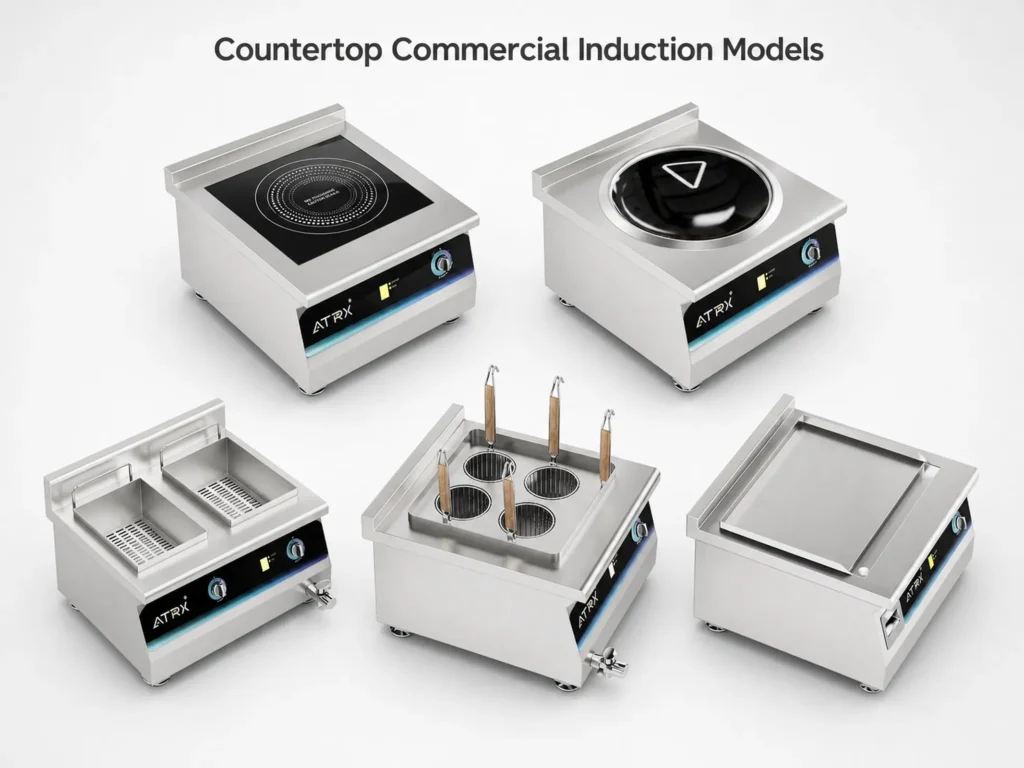
Based on the manufacturer’s product categories, a commercial induction range does not refer to one single physical format. ATRX’s commercial induction cooker product range includes countertop flat cookers, commercial induction wok cookers, multiple-zone induction cookers, induction fryers, induction griddles, induction pasta cookers, induction soup cookers, induction steamers, and built-in induction cookers. For buyers, this means the cooking task should be defined first, followed by the equipment format, rather than searching by product name alone.
How Do Commercial Induction Ranges, Countertop Induction Cookers, and Commercial Induction Stations Differ?
The terms “commercial induction range,” “commercial induction cooktop,” and “commercial induction stove” are often used interchangeably on product pages, but they do not necessarily describe exactly the same equipment structure. During procurement, focus on the actual configuration rather than the name alone.
- Single-burner or countertop units: These occupy relatively little space and suit additional cooking positions, temporary workstations, food trucks, or kitchens with limited room.
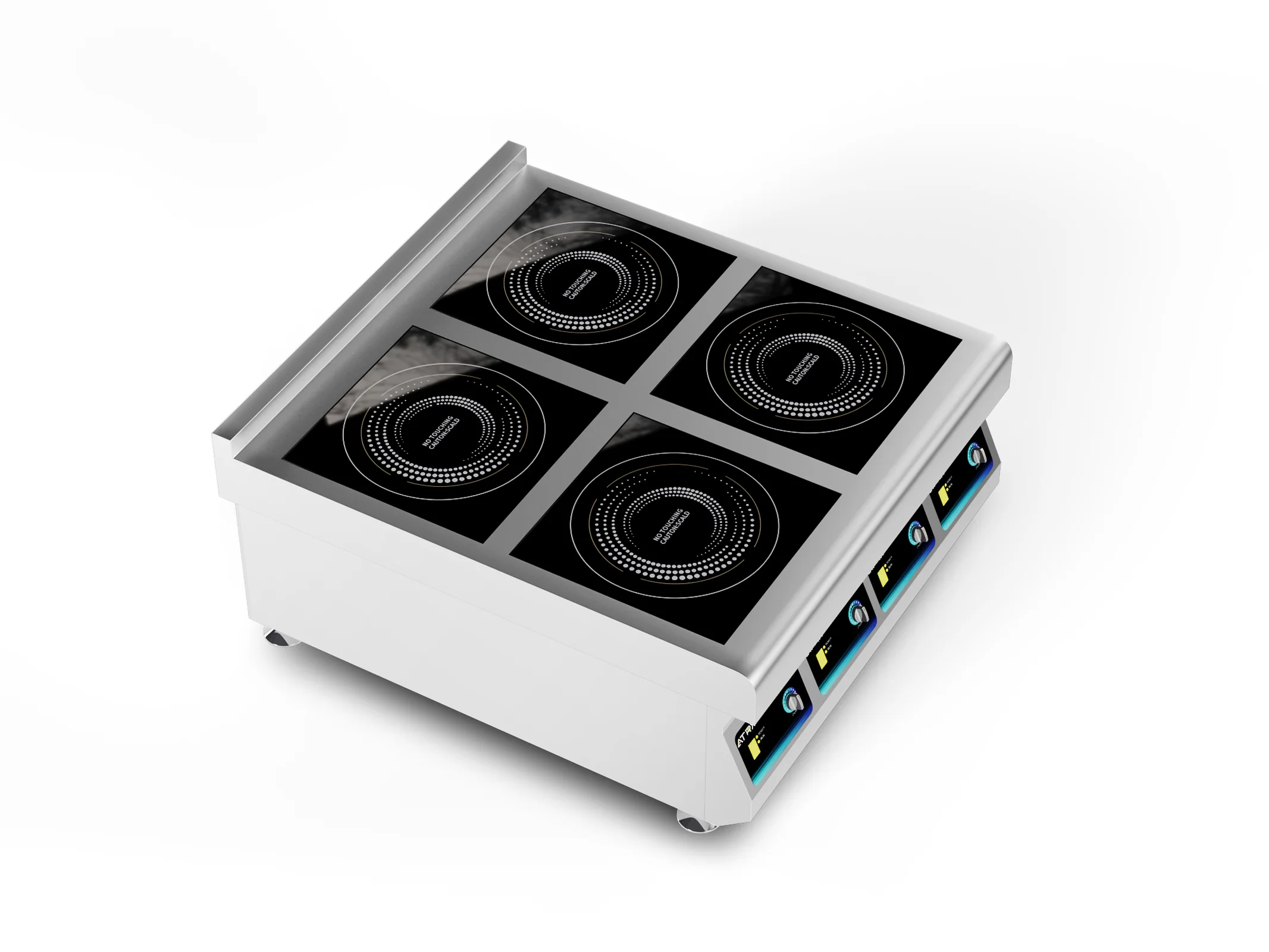
- Multi-burner or multi-zone units: These can handle several pans at the same time and suit restaurants and production kitchens that need parallel preparation.
- High-power wok cookers: These are generally designed for stir-frying, boiling, and other high-heat operations. Buyers should confirm the power per zone, cookware compatibility, and cooling method.
- Built-in or modular units: These can be integrated into a complete worktable, back-of-house production line, or modular kitchen, but the cutout dimensions and electrical conditions must be confirmed in advance.
Commercial induction ranges are therefore not a single-format product category. Before purchasing, determine whether the kitchen needs an independent cooking station, a continuous multi-zone cooking platform, or a dedicated unit for a specific type of dish.
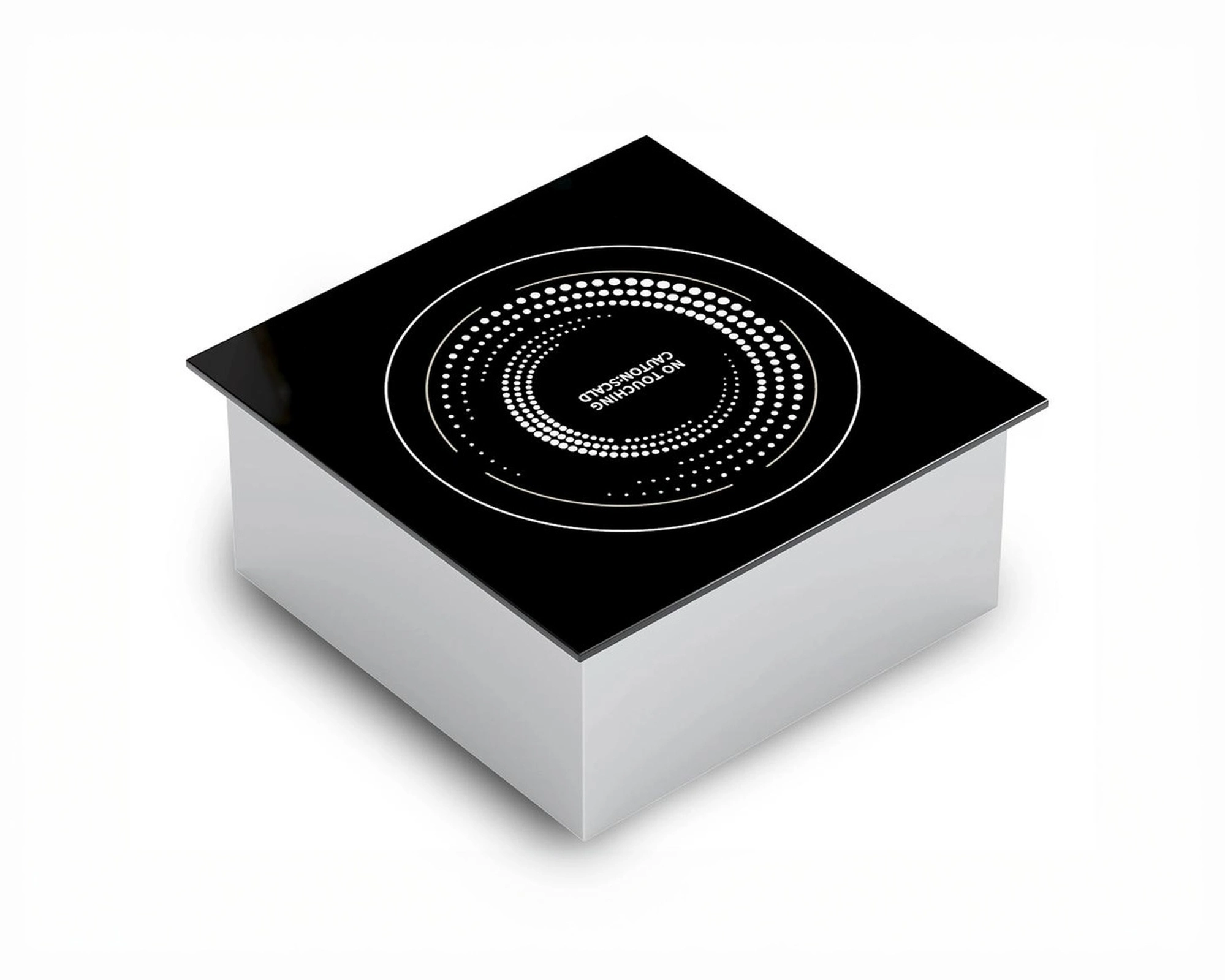
Swipe picture to view more product →
How to Choose the Right Power for a Commercial Induction Range
Power should be determined by cookware size, cooking method, peak service volume, and the number of burners used simultaneously. Purchasing based only on the idea that “more power is always better” can create unnecessary electrical requirements and may not suit every kitchen.
1,800W to 3,500W per Burner for Everyday Cooking Requirements
For many commercial-kitchen applications, approximately 1,800W to 3,500W per burner can serve as a reference range for everyday cooking. Lower power levels are generally suitable for smaller pans, auxiliary cooking positions, holding, and medium- or low-load operations. Higher power within this range is more suitable where faster heat-up and sustained heating are required for routine foodservice work.
ATRX’s practical selection experience reflects this distinction: 3.5KW is more commonly used for slow cooking, boiling, and general heating, while 5KW is more suitable for workstations that require faster heating or include stir-frying. This is a menu- and workflow-based judgment, however, and should not replace testing under actual operating conditions.
Rated power does not automatically equal real service capacity. Also check:
- whether the unit can maintain its rated output continuously;
- whether power is automatically distributed when several cooking zones operate at the same time;
- whether the voltage, current, and circuit capacity meet the requirements;
- whether the cookware base is properly matched to the coil area;
- whether the kitchen must operate continuously during peak service periods.
If the equipment will mainly be used for boiling, simmering, pan-frying, and standard cooking, determine the power from the menu load and cookware size rather than simply selecting the highest available rating.
5,000W and Above for Rapid Boiling and High-Heat Cooking
Equipment rated at 5,000W or above is generally more suitable for rapid boiling, continuous heating of large pots, high-temperature cooking, and other operations where heat-up speed is important. It provides greater power headroom for high-load work, but it also places greater demands on the electrical system, cooling, cookware, and operating safety.
This type of equipment is not necessary for every cooking position. If only a small number of tasks require high heat, high-power units can be installed as dedicated workstations instead of specifying the highest rating for every burner. This makes it easier to control total purchasing cost and peak electrical load.
How to Choose Between 3.5KW and 5KW for Stir-Frying and High-Heat Cooking
The main difference between 3.5KW and 5KW is the available power headroom and heating speed under high-load conditions. For a workstation using smaller cookware and mainly handling simmering or routine heating, 3.5KW may be sufficient. For positions that require faster heat-up, rapid temperature recovery, or stir-frying, 5KW generally provides more reserve.
In one configuration for a chain fast-food customer, using 3.5KW across the entire line would leave the high-load positions underpowered, while using 5KW for every burner would make the overall configuration unnecessarily large. The manufacturer’s solution was a customized mixed configuration—for example, two 3.5KW burners and two 5KW burners—so that different workstations could handle slow cooking, routine heating, and high-load cooking respectively. The case illustrates that all burners do not need to have the same rating; the important point is to match each position to its menu responsibility.(如果你想深入了解3.5KW or 5KW Which Induction Is Better? 可参考该该文章阅读。
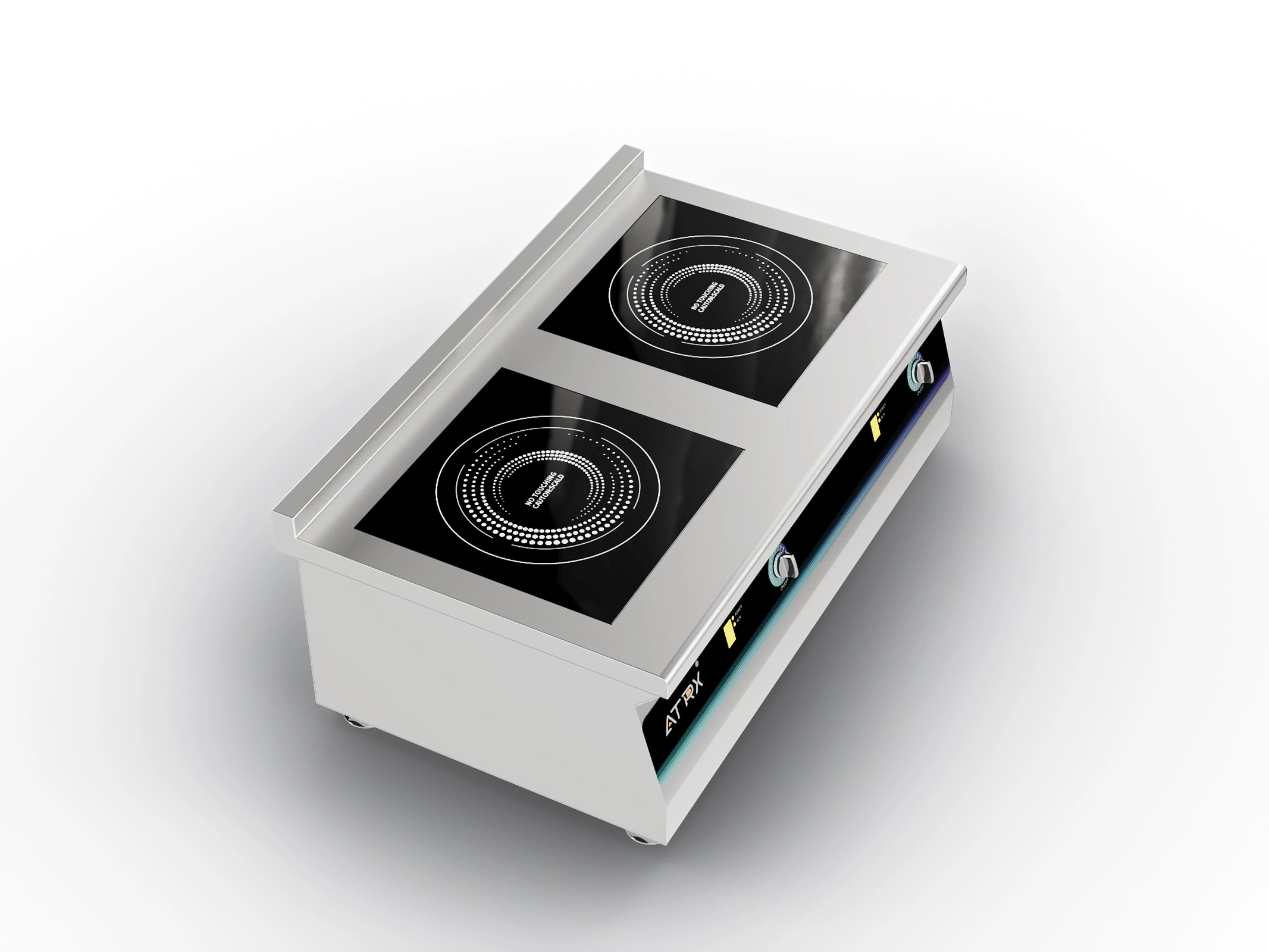
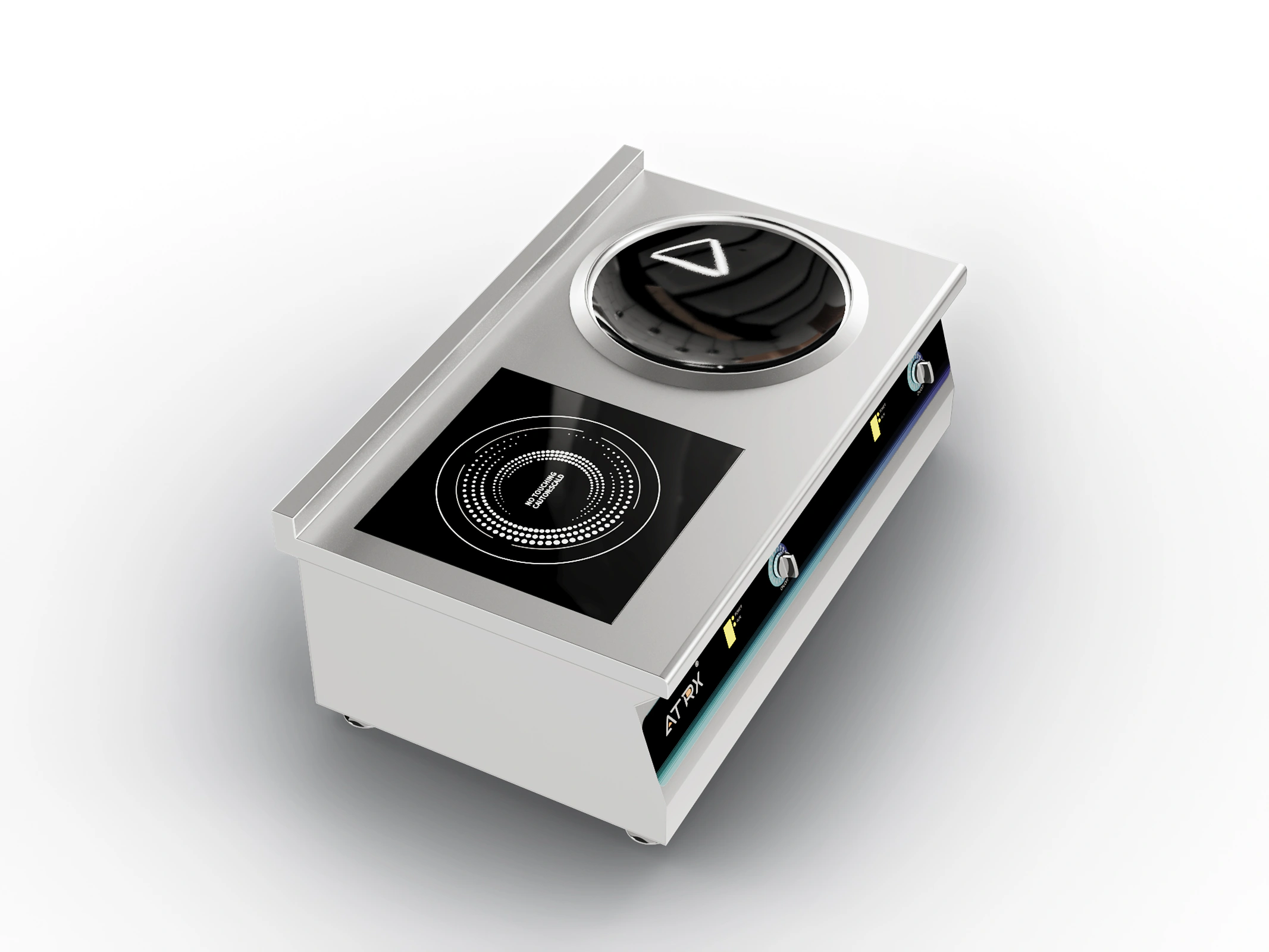
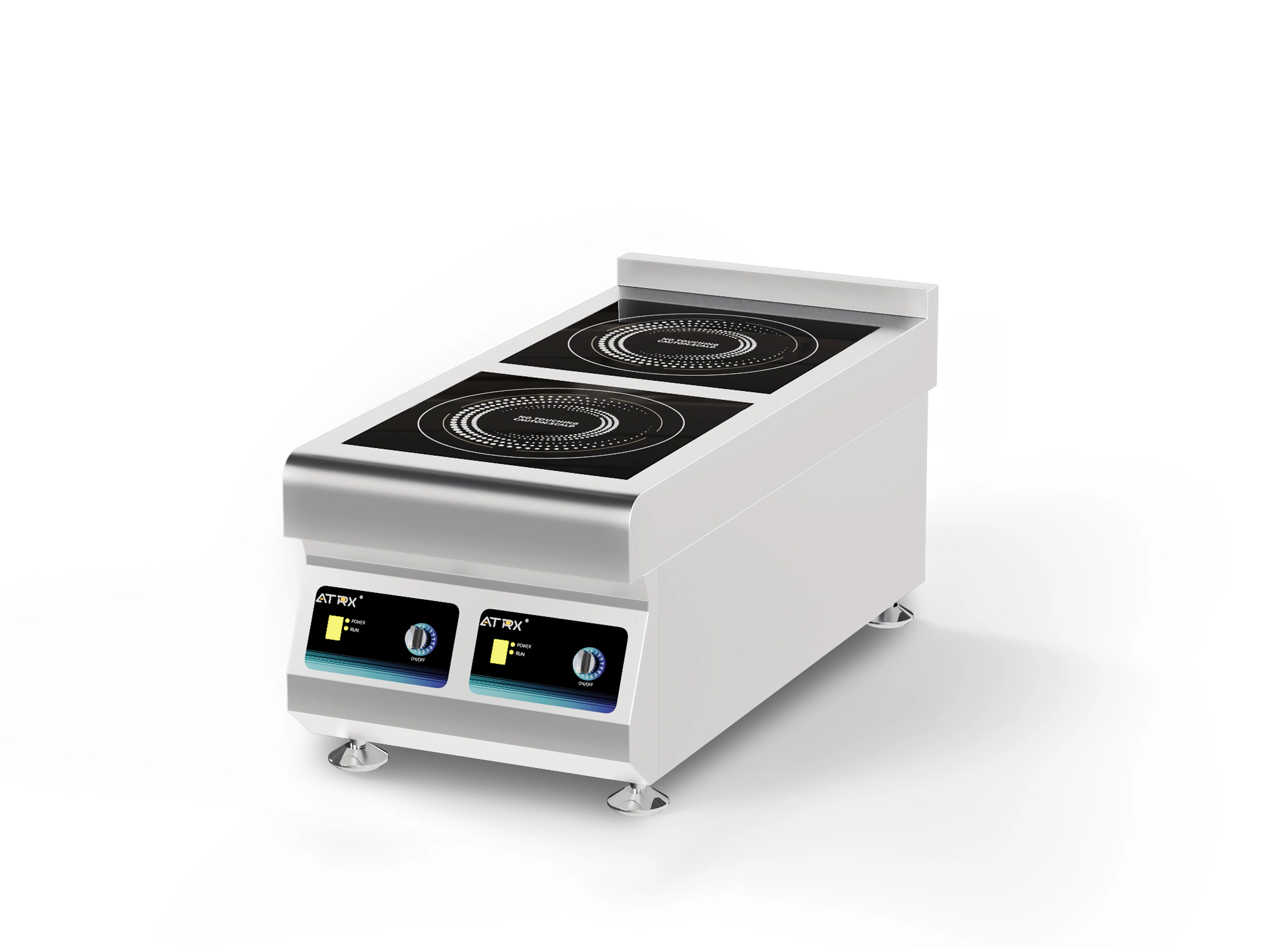
The following configurations can be verified in ATRX product information for countertop flat commercial induction cookers. Each project must still be confirmed against local electrical codes, the installation environment, and the exact order specification.
| Model | Rated Power | Power Supply | Product Size | Electrical Requirements in the Product Information | Suitable Application to Verify |
|---|---|---|---|---|---|
| AT-CTP-003 | 3.5KW | 220V, single-phase | 420 × 470 × 300mm | 15.9A; 2.5mm² copper cable; 20A RCD | Slow cooking, routine heating, auxiliary cooking positions |
| AT-CTP-005 | 5KW | 220V, single-phase | 420 × 470 × 300mm | 22.7A; 4mm² copper cable; 25A RCD | Faster heating and higher-load workstations |
| AT-CTP-080 | 8KW | 380V, three-phase | 500 × 550 × 380mm | 12.1A; 2.5mm² copper cable; 16A RCD | Larger cookware or continuous high-power requirements |
The “suitable application” column is a practical judgment based on the power ratings and the manufacturer’s selection experience, not a fixed promise for every menu. Installation must be confirmed by a qualified electrical professional in accordance with local requirements; the current and cable information in a table should not be used as a substitute for site-specific electrical design.
How to Choose Cooking-Surface Size and the Number of Cooking Zones
Cooking-surface size and the number of cooking zones determine whether the equipment can stably accommodate the cookware used most often and whether the chef can complete several steps at the same time. A surface that is too small can restrict cookware, while too many zones can make the worktable crowded, concentrate the electrical load, and create an inefficient workflow.
Single-Burner and Compact Units for Small Spaces or Auxiliary Positions
Single-burner and compact commercial induction ranges suit small back-of-house areas, temporary heating positions, prep areas, food trucks, and auxiliary workstations. ATRX product information shows that its AT-CTP-003 and AT-CTP-005 models use the same 420 × 470 × 300mm body size in different power versions, making them suitable for projects that need to compare power options within the same countertop footprint.
The priority when selecting this type of equipment is not the maximum number of features. It is whether the cooking surface can accommodate the usual cookware, whether the power meets the auxiliary task, and whether cooling and cleaning are practical. If the unit will only handle sauces, holding, or small-volume boiling, there is no need to specify a high-power multi-zone system for every task.
Multiple Cooking Zones for Preparing Different Dishes at the Same Time
Multi-zone commercial induction ranges suit restaurants and production kitchens that need parallel cooking. Different zones can handle boiling, simmering, holding, or stir-frying at the same time, reducing the time chefs spend waiting for one process to finish before starting the next.
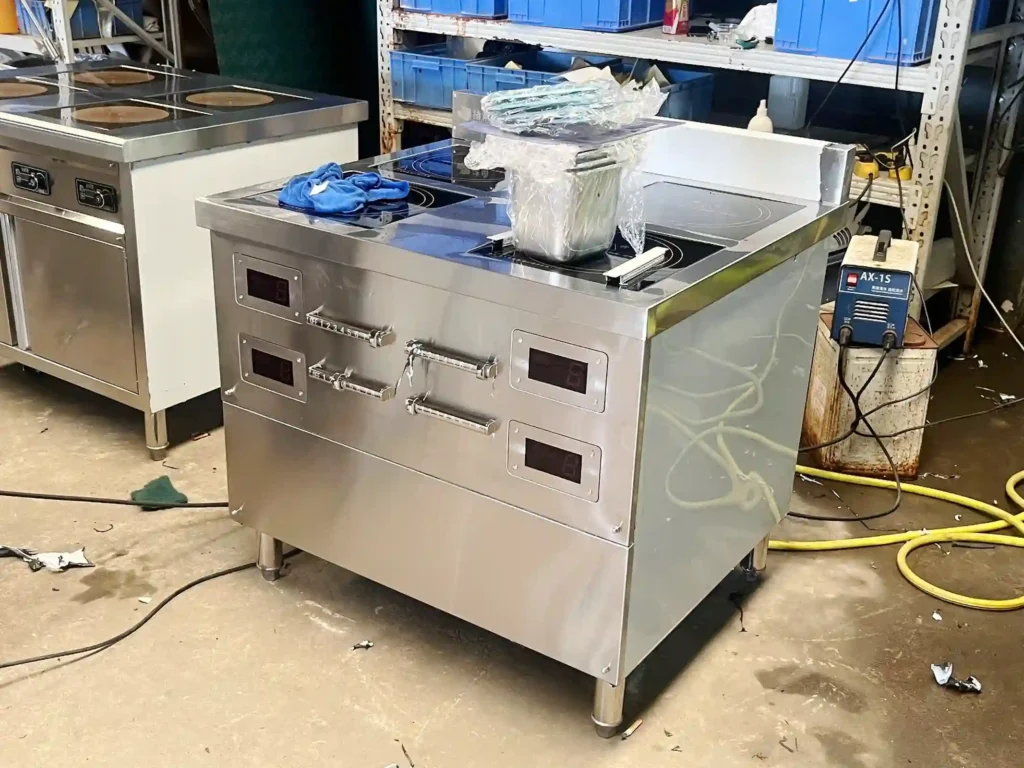
A multi-zone unit, however, is not simply several burners placed next to one another. ATRX’s four-burner equipment uses independent controls, with a separate switch box for each burner. All four burners can operate independently, or only two can be used when the workflow requires it. This differs from equipment in which all burners share a single total-power limit, so buyers should confirm the independent control arrangement and the actual electrical supply for each zone.
When purchasing multi-zone equipment, confirm:
- the independent power rating of each zone;
- whether the zones share total power when operating simultaneously;
- whether the control panel allows each zone to be identified and adjusted quickly;
- whether there is enough operating and cleaning space between zones; and
- whether the overall equipment dimensions suit the existing worktop and layout.
If the kitchen’s menu varies significantly between workstations, a multi-zone unit should ideally provide different power ratings or independent control rather than applying exactly the same setting to every zone.
Large Cooking Surfaces for Batch Cooking and Large Cookware
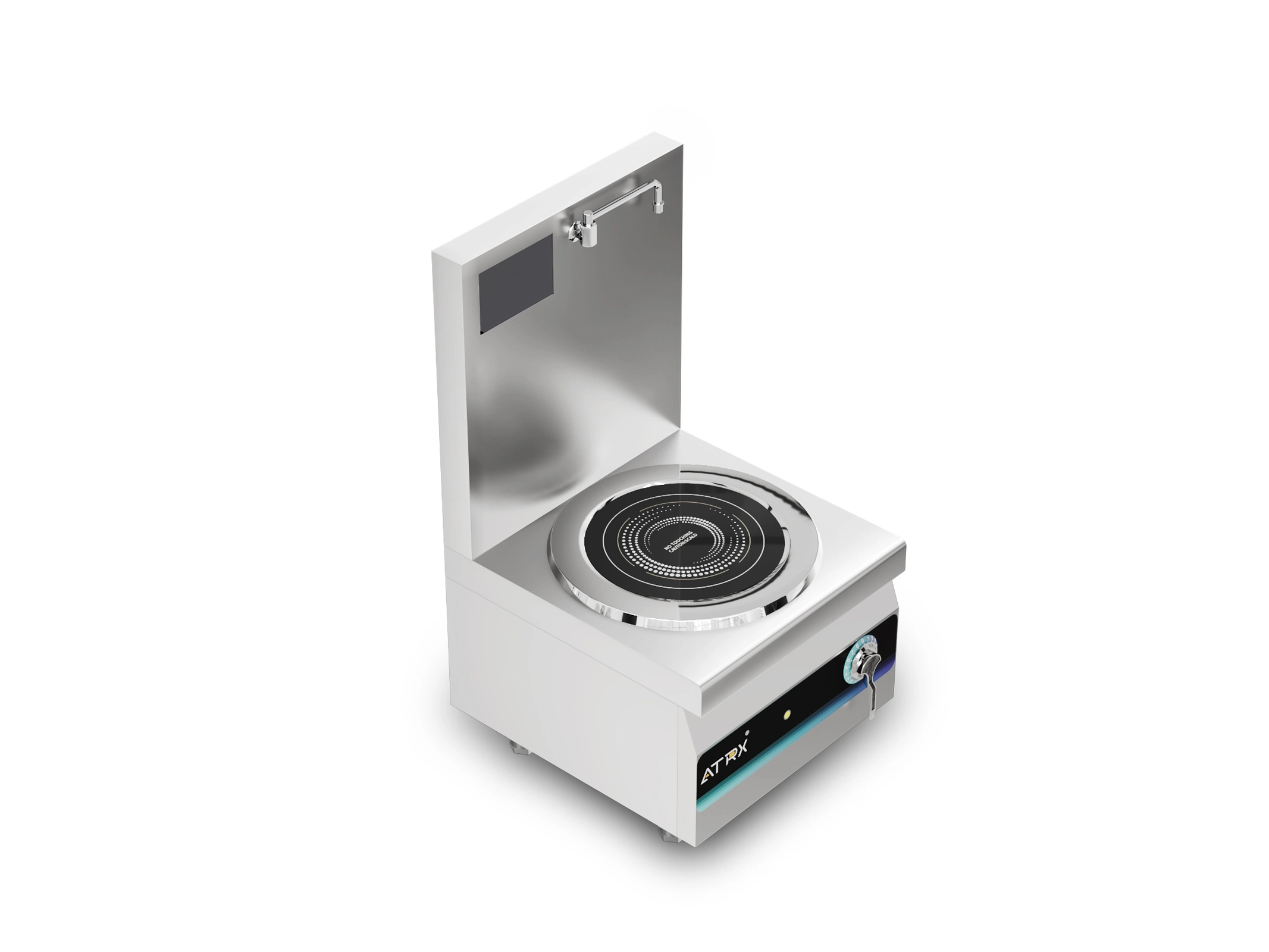
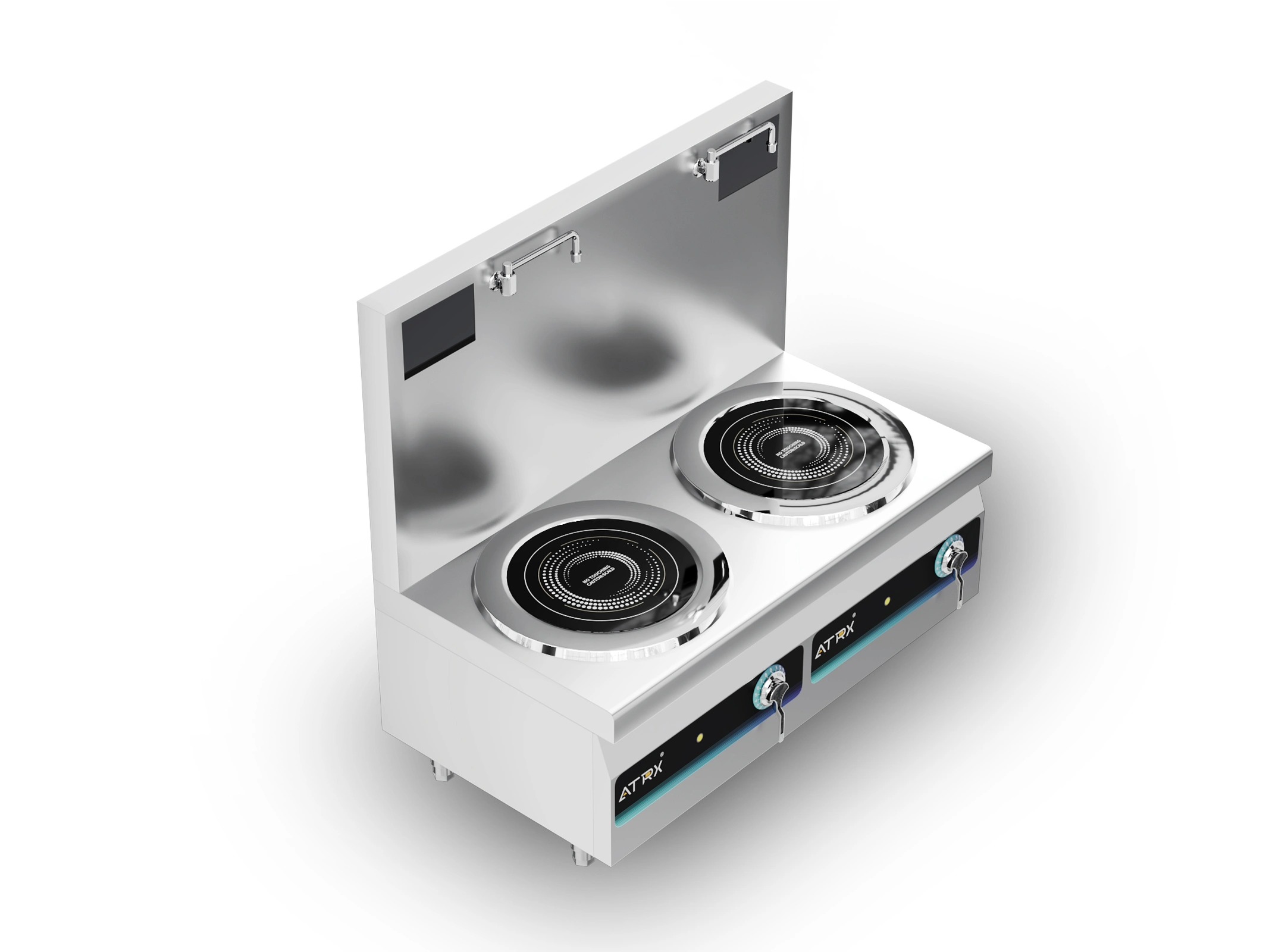
A larger cooking surface is more suitable for high service volumes, large-pot cooking, or tasks that require a larger contact area. The surface size should match the cookware base: if the cookware is much larger than the cooking surface, heating may become uneven and heat-up performance may decline. If the cookware is too small for the surface, the equipment’s capacity may not be used effectively either.
The manufacturer’s current practical guidance is to select cookware according to generally accepted cookware standards. As an initial reference, the cookware should not extend substantially beyond the glass surface. For large cookware, woks, or continuous high-temperature work, however, the supplier should still test the actual base diameter. The fact that a pan can physically sit on the glass is not enough.
Start by recording the cookware sizes used most often in the kitchen, then check the equipment’s stated cookware diameter, heating area, and load-bearing capacity. For large pots used during peak periods, also confirm cooling, power stability during continuous operation, and working space—not just the external dimensions of the glass surface.
How to Match Equipment Configuration to the Menu and Kitchen Layout
The same commercial induction range may suit one kitchen but not another. The menu determines the heat load and temperature-control requirements, while the layout determines equipment size, mobility, power-supply position, and working movement. Both should therefore be evaluated together.
Portable Induction Cookers for Catering Events and Pop-Up Kitchens
Portable commercial induction cookers suit catering, pop-up kitchens, temporary foodservice locations, food trucks, and other situations where equipment needs to be repositioned. Their value is ease of deployment, not the replacement of every fixed high-load cooking system.
According to the product information for one ATRX countertop flat cooker, the 3.5KW version uses a 220V single-phase supply and has a body size of 420 × 470 × 300mm. This type of size and power arrangement is more suitable for space-constrained projects, rapid relocation, or temporary additions to the cooking line. Buyers should still confirm the unit’s weight, stability after relocation, available cooling space, and whether the event site provides the required electrical supply.
High-Power Wok Cookers for High-Temperature Stir-Frying
High-power wok cookers and commercial induction ranges designed for high-temperature cooking suit stir-frying, rapid boiling, and workstations that need to recover temperature frequently. Selection should not be based on power alone. Buyers should also confirm cookware shape, heating area, control response, and the chef’s operating habits.
There is currently no publicly available ATRX customer case or high-temperature cooking comparison data that can be cited. Therefore, 5KW should not be presented as a guarantee for every high-heat stir-frying menu. A more reliable approach is to test the actual cookware and ingredients on site before purchase if the menu includes stir-frying or rapid heating of large pots, and to ask the supplier to explain continuous-operation and cooling conditions.
If the kitchen mainly uses flat-bottom pans, a standard flat cooking surface may be more appropriate. If the menu requires a wok, choose equipment that explicitly supports that cookware and cooking method. For continuous high-temperature work, also pay attention to cooling, cleaning, and service access so that the equipment is not operated under excessive load for extended periods.
Precise Temperature Control for Delicate Cooking and Baking
Delicate cooking, sauce preparation, melting, holding, and pastry work are more sensitive to temperature changes. The equipment should therefore provide sufficiently fine power levels or temperature settings and remain stable at low power instead of switching sharply between high and low output.
ATRX provided a temperature-control test video using a floor-standing soup cooker, while the manufacturer states that the temperature-control system is the same as that used in its other products. The test recorded a temperature-control result of approximately +1/-1.8°C. This can serve as a reference for understanding the stability of the control system, but the equipment, cookware, environment, and test procedure can all affect the result. Buyers should still validate performance using their own menu and cookware.
For menus that must be reproduced consistently, the control interface must also be easy for different employees to operate in the same way. Ask the supplier about the temperature-control method, adjustment interval, low-temperature stability, and actual test conditions, and review the temperature-control test video to see the test process.
Which Commercial Induction Range Specifications Should You Check Before Buying?
When comparing products, divide the specification review into external dimensions, electrical parameters, cooking performance, control method, maintenance conditions, and after-sales support. This avoids focusing only on power or marketing claims while overlooking whether the equipment can fit the kitchen and operate reliably.
Check Dimensions, Technical Features, and Temperature Settings
First check the external dimensions, cooking-surface size, number of zones, cookware range, and installation method. For built-in equipment, also confirm the cutout dimensions, worktop thickness, cooling space, and access for service. For countertop equipment, confirm the operating space after placement and the position of the power connection.
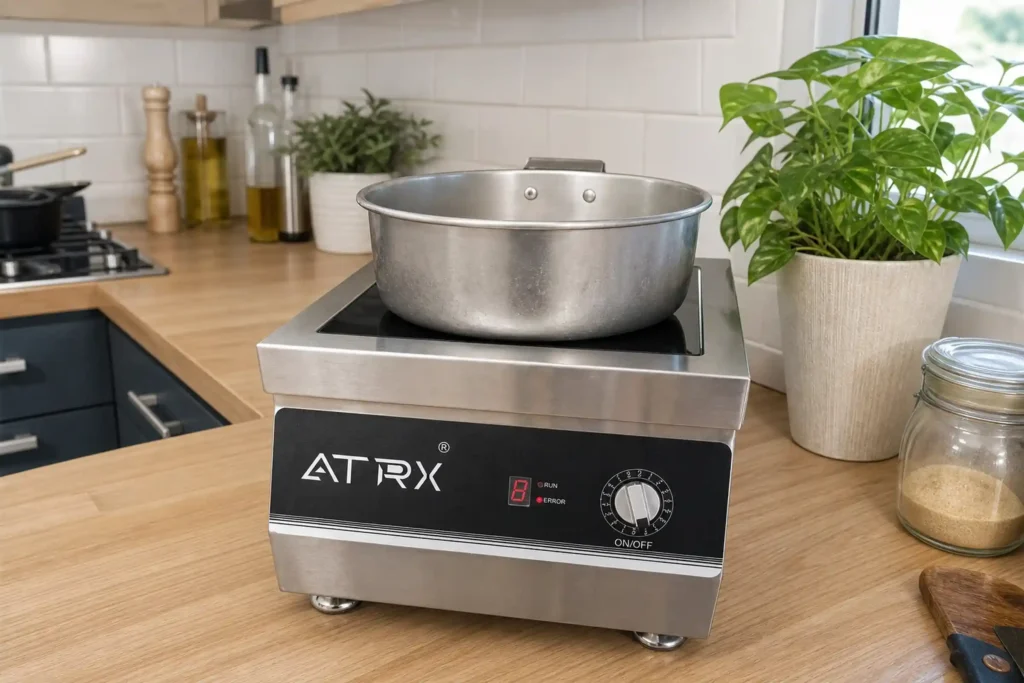
For technical features, focus on rated power, input voltage, control method, power levels, temperature settings, overheat protection, and cleaning requirements. One ATRX countertop product uses a knob with levels 1 through 8. Whether this control method suits the menu should still be judged through employee operating habits and testing with the actual cookware.
Do not infer performance from the product name alone. If a specification sheet does not clearly state a parameter, request complete information from the supplier rather than treating vague marketing language as a technical commitment. For product specifications, you can refer directly to the ATRX commercial induction cooker product range and then confirm the exact order version with the supplier.
Pay Attention to Power Sharing and Energy-Management Functions
When several cooking zones operate at the same time, equipment may distribute total input power between zones through power sharing. This can help the unit work within a limited electrical supply, but it also means that one zone may not maintain its maximum output continuously while other zones are operating.
ATRX’s four-burner configuration currently uses independent controls, and all four burners do not have to run at the same time. Each burner has an independent switch box and can be enabled or disabled according to the actual workflow. This helps buyers distinguish between two types of product: one in which the burners are relatively independent, and one in which several burners are limited by total power and dynamically distribute the available output. The final decision should always be based on the electrical specifications for the exact model.
When purchasing multi-zone equipment, distinguish between “maximum power per zone” and “total equipment power.” Confirm the distribution logic when two or more zones operate simultaneously and whether the equipment can prioritize a high-load zone. Energy-management functions can help control peak demand according to actual requirements, but fixed energy-savings percentages should not be promised without test data.
Check Durability, Warranty, and Kitchen-Integration Conditions
Commercial-equipment durability should be assessed through construction, operating conditions, and maintenance practices—not through adjectives such as “durable” or “heavy-duty.” Confirm the environments for which the panel and housing are designed, whether the controls are easy to clean, whether commonly replaced parts are available, and whether the equipment has clear maintenance requirements.
According to the manufacturer’s after-sales records, the more common failure point in ATRX products is the PCB, with a current brand-reported failure rate of approximately 1.5%. The manufacturer also reports that some customer units have been in continuous use for more than five years, with PCB repairs generally occurring after three to four years of use, while cleaning feedback has been positive. These figures represent the manufacturer’s after-sales experience and are not a guarantee of the service life of every individual unit, but they provide more practical context than generic claims of durability.
After-sales procedures should also be clarified before purchase. ATRX generally ships some spare parts with the order. If a PCB fails, replacement parts can be sent by air freight, with repair guidance provided by video. Buyers should still confirm the warranty scope for the specific order, responsibility for spare parts, shipping costs, availability of on-site service, and response times.
If the product will be integrated with a modular kitchen, worktable, or existing cooking line, confirm the installation dimensions, cooling direction, power connections, service access, and clearance from adjacent equipment in advance. ATRX’s product certification information can be included in the procurement-document review, but the project team should still confirm that the certificate covers the current model, target market, and specific electrical version.
How to Compare Commercial Induction Range Suppliers
Supplier comparison should not focus only on the number of models in a catalogue or the quoted price for one unit. For a commercial kitchen, it is more important to determine whether the supplier can provide clear specifications, configuration advice, installation support, and ongoing service.
Compare Product Range, Documentation, and Technical Support
First check whether the supplier can provide equipment suited to the kitchen’s requirements, such as single-burner countertop units, multi-zone equipment, high-power wok cookers, or modular systems. A broader product range is not automatically better. The key question is whether the supplier can explain the application conditions and limitations of each configuration.
Request a complete product catalogue, specification sheets, installation drawings, and the necessary electrical information. If a product page gives only vague power or dimensional information and the supplier cannot provide further documentation, procurement risk is higher. For a manufacturer such as ATRX, which supplies countertop cookers, wok cookers, multi-zone equipment, and built-in units, buyers should ask the supplier to identify the exact model rather than relying on a general reference to a “full product range.”
For technical support, confirm whether the supplier can answer questions about cookware compatibility, power sharing, installation, maintenance, spare parts, and warranty coverage. Professional support can reduce rework and downtime caused by incorrect equipment selection.
Request Specification Documents or Submit a Detailed Enquiry Before Purchase
When submitting an enquiry, provide the key requirements in one message whenever possible: kitchen type, common cookware sizes, main cooking methods, daily or peak-period volume, required number of cooking positions, available power supply, worktop dimensions, and whether the equipment needs to be mobile or built in.
At the same time, request the following information from the supplier:
- complete technical specifications and external dimensions;
- power per zone and total equipment power;
- power-distribution logic when multiple zones operate simultaneously;
- installation, cooling, and power-supply requirements;
- warranty, maintenance, spare-parts, and after-sales-support information;
- compatible cookware and any required testing recommendations; and
- certification documents applicable to the target market and exact model.
This makes quotations more comparable. For important projects, verify the sample-unit test, site installation conditions, and electrical load before placing the final order to confirm that the equipment can meet the actual kitchen workflow.
About the author
ATRX Team| 18 Years Commercial
Induction Cooker Manufacturer in China
Induction Cooker Manufacturer in China
Related Posts
Commercial Induction Cooker 3500W: Model Selection, Commercial Power and Installation
09/29/2026
How to Install a Built-In Induction Cooktop: A Step-by-Step Guide
09/17/2026
How to Clean a Commercial Deep Fryer: A Step-by-Step Guide
09/13/2026
High Quality Commercial Induction Cooker Manufacturer
09/09/2026
Automatic Wok Machine: Types, Specifications, Applications and Buying Guide
08/18/2026
Commercial Induction Range: How to Choose the Right Size, Power, and Configuration for a Commercial Kitchen
08/15/2026
What Is a Commercial Induction Cooker and How Does It Work
08/13/2026
Commercial Induction Range for Hotel Kitchens: How to Choose the Right Model
08/11/2026
China Commercial Induction Cooker Manufacturer
08/09/2026
10 Best Commercial Induction Cooker Manufacturers & Supplier Selection Guide [2026]
08/07/2026