

Commercial Deep Fryer: The Complete Guide to Types, Costs & Choosing the Right One
05/12/2026
Estimated reading time: 2 minutes

Maybe you’re trying to outfit a new kitchen and stuck choosing between gas, electric, or induction—or you’re wondering if that fancy induction model is worth the extra cash long-term. Whatever your spot, picking the right Commercial Deep Fryer isn’t just about grabbing the first one you see; it’s about matching the fryer to how you actually cook, your budget, and the space you have. This guide breaks down what you really need to know, from how each type performs on a busy shift to whether it’ll fit your monthly utility budget.
Table of Contents
- What Is a Commercial Deep Fryer
- What Types of Commercial Deep Fryers Are There?
- Electric vs Gas vs Induction Deep Fryers: Advantages and Drawbacks
- Where Are Electric, Gas, and Induction Commercial Deep Fryers Commonly Used
- Induction Fryer vs Electric Fryer: A Direct Comparison
- How to Decide Between Gas, Electric, and Induction Fryers for Different Kitchen Styles
- Frequently Asked Questions
What Is a Commercial Deep Fryer
Let’s start simple: a Commercial Deep Fryer is the workhorse you’ll see in busy cafes, fast-food spots, and restaurants—built to fry lots of food quickly, day in and day out. It’s not like the small fryer you might use at home; this unit is made with tough stainless steel, has more power, and holds way more oil, so it can handle 10+ hours of use (and frequent cleaning) without breaking a sweat. Every model is designed to meet the high demands of professional kitchens, where consistency and speed are non-negotiable.
Core Functions for Professional Kitchens
A Commercial Deep Fryer does more than just cook food—it helps you keep up with orders, make consistent food, and stay safe. Let’s break down what that means for your day-to-day:
First, there’s the heating system. Whether it runs on gas or electricity, it can heat a big vat of oil to a set temp (like 350°F/175°C) in minutes—super handy when the lunch rush hits and you need fries out fast. Even better, if you drop a basket of frozen chicken in, it bounces back to the right temp quickly, so you don’t end up with undercooked food.
Then there’s temperature control. Most models have a thermostat that keeps the oil at a steady temp, which is a big deal for consistency. Think about it: if you’re making 20 orders of chicken nuggets, you want each batch to be the same golden color and crispiness—no burnt ones, no soggy ones. That’s what this feature does.
Capacity matters too. The fry baskets are big enough to hold several pounds of food at once, so you can cook multiple orders in one go. That cuts down on wait times, which your customers will definitely appreciate.
And don’t forget the oil filtration system. A lot of models have this built-in, which sifts out food bits from the oil after use. This makes the oil last longer, so you don’t have to replace it as often—and that saves you money. Plus, it keeps the oil clean, so your food tastes fresh every time.
Common Foods and Applications
Chances are, a lot of your go-to menu items depend on a Commercial Deep Fryer. Here are the most common ones you’ll use it for:
Potato products are top of the list—fries (thin, thick, wavy), hash browns, even tater tots. Then there’s chicken: wings, nuggets, tenders, and whole fried chicken, all cooked to perfection. Seafood like fish fillets, shrimp, and calamari rings are also popular dishes. For appetizers, you’ve got onion rings, mozzarella sticks, and breaded mushrooms—all easy to make. And let’s not forget desserts—doughnuts, churros, and other sweet fried treats all come from it too.
Real-World Insight: A friend who owns a fried chicken shop told me about their unit: “The temperature stability is my favorite part. Even when I throw a frozen basket of wings in, the oil temp doesn’t drop much—so the skin stays crispy, and the meat cooks all the way through. I used to get complaints about uneven cooking, but not anymore.” It’s a small detail, but it makes a huge difference for customer satisfaction.
What Types of Commercial Deep Fryers Are There?
When you start shopping for a Commercial Deep Fryer, you’ll notice most models are grouped by how they heat up. The three main types are electric, gas, and induction—and each works differently, so it’s important to know which fits your kitchen best. This is the first step in figuring out how to choose a commercial deep fryer.
Electric Commercial Deep Fryer
Electric models are really popular, especially if you’re just starting out or your kitchen has easy access to electricity. Here’s how it works: there are heating elements (usually metal) either submerged in the oil or attached to the bottom of the fry pot. When you plug it in, these elements heat up and transfer that heat to the oil.
Installation is a breeze—most models just need a high-voltage outlet (like 208V or 240V) to work. That’s great if you’re in a space where open flames aren’t allowed, like a mall food court or a small café, where it’s the perfect fit. It’s also pretty low-maintenance since there’s no gas line or burner to worry about—just wipe it down and clean the heating elements occasionally.
One thing to note: if you’re planning to use it for super high-volume cooking (like 50+ orders an hour), the heat recovery might be a bit slower than gas models. But for most small to medium spots, it’s more than enough.
Gas Commercial Deep Fryer
Gas models are the traditional choice for busy kitchens—think big restaurants or fast-food spots that fry nonstop. It runs on natural gas or propane, and here’s how it works: a burner inside the unit burns the gas to create a flame, which heats up the bottom of the fry pot (or a heat exchanger), and that heat transfers to the oil.
The biggest plus here is power. It heats up fast and recovers temp quickly—even if you drop a huge basket of frozen fries in. That’s a lifesaver during peak hours when you can’t afford to keep customers waiting. Another upside is gas vs electric commercial fryer running cost: in most places, gas is cheaper than electricity, so you’ll save on monthly utility bills.
But there are trade-offs. Installation is more complex—you need a pro to hook up the gas line, and you’ll also need a strong vent hood to get rid of the fumes and heat. Once installed, it’s not easy to move, so you’ll need to plan your kitchen layout carefully.
Induction Commercial Deep Fryer
Induction models are the newer, techier option—and they’re gaining popularity for good reason. It works differently than electric or gas models: inside the unit, there’s an electromagnetic coil. When you turn it on, the coil creates a magnetic field, and when that field hits the metal fry pot, it makes tiny currents (called eddy currents) inside the pot. Those currents heat up the pot itself, which then heats the oil.
The best part? It’s the most energy efficient commercial deep fryer you’ll find. Almost all the energy goes into heating the pot—very little is wasted as extra heat. To understand the scientific principles behind this efficient heat transfer and how induction technology works in detail, you can refer to our specialized article: How Induction Cooktops Work. It also has amazing temperature control—you can adjust the temp in small increments, which is perfect for delicate foods that need precise heat.

It’s also safer and cleaner. The outside stays cool (only the pot gets hot), so there’s less risk of burns. And since there’s no flame or heating element, it’s easier to clean—just wipe down the surface. The commercial induction fryer advantages here include safety, efficiency, and ease of cleaning—all key for busy kitchens. The downside? It has a higher upfront cost than electric or gas models, and it needs a dedicated high-power circuit to run, so you’ll need an electrician to check your wiring. For high-volume kitchens (such as busy fried chicken restaurants or fast-food outlets) that want to leverage induction’s efficiency without compromising on capacity, ATRX offers the Double Tank Induction Commercial Fryer (220V)—a model that delivers fast heat recovery and precise temperature control for nonstop frying shifts.

| Fryer Type | Heating Principle | Typical Installation Requirement |
|---|---|---|
| Electric Commercial Deep Fryer | Heating elements (submerged or attached) transfer heat to oil when powered on. | High-voltage electrical outlet (220V/240V); no gas line needed. |
| Gas Commercial Deep Fryer | Burner combusts gas to create a flame, heating the fry pot directly. | Professional gas line connection; powerful ventilation hood required. |
| Induction Commercial Deep Fryer | Electromagnetic coil creates a field that heats the metal fry pot itself. | Dedicated high-power electrical circuit; no gas line or heavy venting. |
Electric vs Gas vs Induction Deep Fryers: Advantages and Drawbacks
Choosing between electric, gas, and induction models isn’t about picking the “best” one—it’s about picking that fits your kitchen. You’ll need to weigh upfront costs, how it performs on busy days, and long-term expenses like utilities. Let’s break down the pros and cons of each type.
Electric Commercial Deep Fryer
✓ Upfront cost is usually lower—great if you’re on a tight startup budget.
✓ Easy to install; just plug into a high-voltage outlet (no gas lines).
✓ Temperature control is solid—good for foods that need steady heat, like doughnuts.
✓ Doesn’t add as much heat to the kitchen as gas models—nicer for your staff.
✗ Heat recovery is slower when you add lots of frozen food—can slow down service during rushes.
✗ gas vs electric commercial fryer running cost leans toward gas here; electricity is often more expensive long-term.
Gas Commercial Deep Fryer
✓ Heats up fast and recovers temp quickly—perfect for high-volume spots like busy burger joints.
✓ gas vs electric commercial fryer running cost is a win here; gas is cheaper in most areas.
✓ Works even if the power goes out (as long as you have a manual control)—no lost sales.
✗ Installation is a hassle (and costly)—needs a pro for gas lines and a strong vent hood.
✗ Adds a lot of heat to the kitchen—can make summer shifts uncomfortable for staff.
✗ Temperature control isn’t as precise as electric or induction—might take some practice to get batches just right.
Induction Commercial Deep Fryer
✓ It’s the most energy efficient commercial deep fryer—uses almost all energy to heat the pot, so utility bills are lower.
✓ Temperature control is amazing—adjusts in small increments, great for delicate foods like tempura.
✓ Safe and cool to the touch—outside stays low temp, so less risk of burns.
✓ The commercial induction fryer advantages here include no fumes—cuts down on vent hood needs, good for small spaces.
✗ Upfront cost is the highest—might be a stretch if you’re just starting out.
A Deeper Dive into Costs and Efficiency
Let’s talk numbers—because that’s what really matters for your bottom line. First, gas vs electric commercial fryer running cost: in most regions, natural gas costs less per unit of energy than electricity. So if you’re using your fryer 8+ hours a day, a gas model could save you 30-40% on monthly energy bills. But remember, you have to add in the cost of installing a gas line and vent hood—those can be several hundred to a few thousand, depending on your space.
Now, commercial induction fryer vs electric: induction is more efficient, even if it uses electricity. An induction model has an efficiency rate of over 90%, meaning almost all the energy you pay for goes into heating the oil. Electric models are around 60% efficient, and gas models are about 50% (since some heat escapes into the air). So even if electricity is pricey, induction might still save you money long-term because it uses less of it.
Another cost factor: oil life. Induction and electric models keep oil temp more steady, which slows down oil breakdown. That means you can reuse the oil more times before replacing it—saving you money on oil purchases. Gas models, with their slightly less precise temp control, might make oil need replacing a bit sooner. The induction fryer advantages here also include longer oil life, which adds to long-term savings.
| Feature | Gas Commercial Deep Fryer | Electric Commercial Deep Fryer | Induction Commercial Deep Fryer |
|---|---|---|---|
| Energy Efficiency | ~50% (some heat escapes as waste) | ~60% (better than gas, but still some waste) | ~90%+ (very little waste—most efficient, making it the most energy efficient commercial deep fryer) |
| Heat Recovery | Excellent (fastest recovery for busy shifts) | Good (works for medium-volume use) | Excellent (nearly as fast as gas) |
| Temperature Precision | Good (works for most foods, but small fluctuations) | Very Good (steady for most menu items) | Exceptional (best for delicate or precise cooking) |
| Upfront Cost | Medium (higher than electric, lower than induction) | Lowest (most budget-friendly to buy) | Highest (most expensive to buy upfront) |
Where Are Electric, Gas, and Induction Commercial Deep Fryers Commonly Used
Each type has a sweet spot where it works best. It all depends on your kitchen size, how busy you get, and what you’re cooking. Let’s break down where you’ll usually see each type—and why they fit there.
Electric Commercial Deep Fryer: Flexibility for Small to Medium Spots
Electric models are perfect for places that don’t fry nonstop—think small cafes, convenience stores, or office canteens. For example, a convenience store that fries up a few batches of chicken nuggets or corn dogs throughout the day doesn’t need a gas unit’s power—an electric one handles that intermittent use just fine. This makes it a great commercial deep fryer for small kitchen setups, where space and usage volume are limited.
It’s also great for spaces where open flames are banned, like mall food courts or airport kiosks. Since it just needs a high-voltage outlet, you don’t have to worry about gas lines or heavy venting. If you’re looking for a commercial deep fryer for small kitchen setups (like a tiny takeout shop), an electric countertop model is a great fit—it doesn’t take up much space but still gets the job done.
I’ve seen a lot of new coffee shops use an electric model for things like churros or small batches of fries—they don’t need to fry all day, so the slower heat recovery isn’t a problem, and the low upfront cost helps with startup budgets. This aligns with how to choose a commercial deep fryer—matching it to your actual usage.
Gas Commercial Deep Fryer: Power for Busy, High-Volume Kitchens
Gas models are the backbone of busy restaurants and fast-food spots where frying is a big part of the menu. Let’s say you’re running a burger joint that goes through 100+ orders of fries a day—you need a unit that can keep up. A gas model heats up fast and recovers temp quickly, so you can keep pumping out batches without slowing down.
It’s also common in institutional kitchens, like school or hospital cafeterias, which need to feed lots of people in a short time. And if you own a dedicated fried chicken or fish and chips shop, a gas model is almost a must—its durability and low running cost (thanks to gas vs electric commercial fryer running cost savings) help keep your profits up.
One thing to note: these kitchens almost always have strong vent hoods to handle the heat and fumes, which is a must for gas models. If your kitchen doesn’t have that, it might not be the best fit.
Induction Commercial Deep Fryer: Precision for High-End or Space-Crunched Spots
Induction models are becoming more popular in high-end restaurants where chefs need precise control. For example, a restaurant that serves tempura or delicate fried seafood needs an exact oil temp—too hot, and the food burns; too cold, and it’s soggy. An induction unit’s precise temp control makes that easy.
It’s also great for open kitchens or small spaces, like a commercial deep fryer for small kitchen setups in a boutique hotel. For smaller operations—like café-bakeries making churros or small takeout shops frying occasional batches—ATRX’s Single Tank Induction Commercial Deep Fryer (220V) offers the same energy efficiency in a compact design that fits tight counter spaces. Since it doesn’t produce fumes or much heat, you don’t need a huge vent hood—so it fits well in spaces where aesthetics or size are important. The commercial induction fryer advantages here include space efficiency, which is key for small kitchens.

And let’s not forget food trucks. If you’re looking for the best commercial fryer for food truck use, an induction model is a strong candidate. Food trucks have limited space, so a compact induction unit works well. Plus, it’s the most energy efficient commercial deep fryer, so it doesn’t drain the truck’s power too quickly.
Eco-conscious spots also love it—since it’s the most energy efficient commercial deep fryer, it aligns with their sustainability goals. To explore further how induction technology reduces a kitchen’s carbon footprint (beyond just fryers), read ATRX’s detailed article on the Commercial Induction Cooker from an Eco-Friendly Perspective, which breaks down energy savings and waste reduction strategies. It’s a small way to cut down on energy use without sacrificing performance. This is another example of how to choose a commercial deep fryer—matching it to your values and space.
Induction Fryer vs Electric Fryer: A Direct Comparison
For kitchens narrowing the decision down to two electric-powered options—induction and conventional electric—the differences show up most clearly during sustained peak-hour service, not on a spec sheet.
The fundamental split is in how heat reaches the oil. A conventional electric fryer pushes heat through submerged heating tubes that warm the oil indirectly. An induction fryer generates heat directly in the pot body through electromagnetic induction, cutting out the intermediate transfer step entirely. That single structural difference drives every performance gap below.
Temperature recovery is where the gap hits hardest during a rush. When a full basket of frozen fries drops into a conventional electric fryer, oil temperature falls and the heating tubes need 30–45 seconds or more to pull it back. An induction fryer recovers within 10–15 seconds because the pot body itself is the heat source—there is no delay waiting for a tube to reheat. Over a dinner service with dozens of consecutive loads, that per-batch difference compounds into a measurably faster kitchen pace.
Temperature precision follows the same pattern. Conventional electric fryers carry thermal inertia from their heating elements—corrections are slow, and oil temperature can drift by ±4–5°C between batches. Induction fryers respond to power adjustments almost instantly, holding oil temperature within ±1°C of the set point. The practical result is uniform color and texture across an entire shift, not just the first few batches.
Energy conversion explains the operating cost difference. Induction fryers convert 85–90% of electrical input into usable heat in the oil. Conventional electric fryers lose a significant portion through the heating tubes and surrounding shell, achieving roughly 55–65% efficiency. For a kitchen running 10+ hours daily, this gap translates directly into lower monthly electricity bills with induction.
Cleaning and maintenance is a daily factor that accumulates over months. Conventional electric fryers have heating tubes permanently submerged in oil, collecting residue and making end-of-day cleaning slow and awkward—staff must work around the elements. Induction fryers have no internal heating tubes; the oil tank interior is a smooth, unobstructed surface that drains and wipes clean quickly.
Where conventional electric still fits: For a new small restaurant with a tight startup budget, moderate frying volume (not continuous peak-hour output), and a preference for simple, familiar equipment, conventional electric fryers remain a practical entry point. The lower purchase price and compatibility with standard kitchen wiring make them accessible without electrical upgrades. Once the operation scales and frying volume increases, upgrading to induction typically pays for itself within 12–18 months through energy and oil savings.
For kitchens where high staff turnover is a constant reality, equipment simplicity matters: conventional electric fryers have a shorter learning curve, and new hires can operate them after minimal training. Induction fryers are not complicated, but their faster thermal response can initially feel unfamiliar to cooks accustomed to traditional equipment—an adjustment that typically takes a few shifts to settle.
| Comparison Dimension | Commercial Induction Fryer | Conventional Electric Deep Fryer |
|---|---|---|
| Heating Method | Electromagnetic induction (direct pot-body heating) | Heating tubes (indirect heat transfer to oil) |
| Temperature Recovery After Loading | 10–15 seconds | 30–45+ seconds |
| Temperature Control Precision | ±1°C (real-time power adjustment) | ±4–5°C (thermal inertia from heating elements) |
| Energy Efficiency | 85–90% | 55–65% |
| Interior Cleaning | No heating tubes; smooth tank, fast cleanup | Tubes submerged in oil; slower, more difficult cleanup |
| Upfront Purchase Cost | Higher (advanced components) | Lower (proven, simpler build) |
| Power Infrastructure | May require dedicated circuit / electrical assessment | Compatible with most standard commercial wiring |
| Best Fit | High-volume, continuous frying; long daily operating hours | Moderate volume; startup budgets; simple operation priority |
If you need to understand the electromagnetic induction heating mechanism in detail—how the coil, magnetic field, eddy currents, and pot body work together step by step—read how a commercial induction fryer works. For kitchens that have already decided on induction and want specific model recommendations by kitchen size and budget, see the best commercial induction fryers for restaurants.
How to Decide Between Gas, Electric, and Induction Fryers for Different Kitchen Styles
Figuring out how to choose a commercial deep fryer doesn’t have to be overwhelming. It’s just about asking the right questions about your kitchen, your menu, and your budget. Let’s walk through the steps to make it easy.
Step 1: Check Your Energy Infrastructure First
This is the most important step—because if you don’t have the right setup, some options are off the table. Start by asking: do you have a gas line installed in your kitchen? If yes, you can choose between gas and electric (and maybe induction if your circuits are strong enough). If no, you’re looking at electric or induction—gas isn’t an option unless you want to pay for a gas line installation (which can be expensive).
For electric or induction, you’ll need to check your electrical circuits. Most models need a high-voltage outlet (220V or 380V), so call an electrician to make sure your wiring can handle it. If you’re planning to use multiple appliances at once (like a fryer and an oven), you’ll need to make sure the circuits can handle the total load. For induction, the circuits need to be even stronger—but an electrician can help you figure that out.
For example, if you’re leasing a space that used to be an office, it might not have a gas line or strong enough circuits for induction. In that case, electric is probably your best bet—even if gas has lower running costs. It’s about working with what you have.
Step 2: Look at Your Ventilation System
Ventilation matters more than you might think. Gas models produce a lot of heat and fumes, so you need a powerful commercial vent hood to suck those out. If your kitchen has a strong hood (the kind with a fan and filters that can handle high heat), gas is a solid option. But if your vent hood is small or you don’t have one (like in a mall kiosk), gas is a no-go—it’s not safe, and you’ll end up with a smoky, hot kitchen.
Induction models are the best choice for poor ventilation—it doesn’t produce fumes, and it only heats the pot, so there’s very little extra heat. Electric models are a close second—they don’t have fumes, but they do give off some heat, so you’ll still need a small vent hood. This is where commercial induction fryer vs electric comes into play: if ventilation is really tight, induction is better.
I know a food truck owner who went with induction because their truck couldn’t fit a big vent hood. They said it was a game-changer—no more smoky interior, and their staff didn’t get as hot during summer shifts. This is a great example of how to choose a commercial deep fryer by matching it to your space constraints.
Step 3: Think About Your Menu and How Busy You Get
Your daily use is a big factor. If you’re a busy spot that fries nonstop during rushes (like a fast-food joint), you need a unit with fast heat recovery. That’s where gas shines—it can handle 50+ orders an hour without slowing down. Induction is also good here—its heat recovery is almost as fast as gas, and it’s the most energy efficient commercial deep fryer.
If you’re a small café that fries occasionally (like churros on weekends), electric is perfect. You don’t need the power of gas or induction, and the lower upfront cost is a plus. For menus with delicate foods (like tempura or custom doughnuts), induction’s precise temp control is a must—you’ll get consistent results every time. The commercial induction fryer advantages here include precision, which is key for delicate dishes.
And if you’re a food truck, space and power are key. The best commercial fryer for food truck use is usually compact—either a small electric or induction model. You don’t have room for a big gas unit, and you don’t want to deal with gas lines in a tight space. This ties back to how to choose a commercial deep fryer by focusing on your unique needs.
Step 4: Balance Upfront Cost vs. Long-Term Savings
Budget is always a consideration. Let’s break it down: electric models have the lowest upfront cost—you can get a basic model for a few hundred dollars. Gas models are medium—you’ll pay more for the unit, plus installation costs. Induction models are the most expensive upfront—sometimes twice as much as electric.
But don’t just look at the purchase price—think about long-term costs. Gas has lower running costs (thanks to gas vs electric commercial fryer running cost savings), so if you use it a lot, it’ll pay for itself over time. Induction is the most energy efficient commercial deep fryer, so even though it’s expensive to buy, it saves you money on electricity and oil (since oil lasts longer). To calculate exactly how much you could save on utilities and oil replacements with an induction fryer over 1–5 years, refer to ATRX’s Commercial Induction Cooker Cost-Saving Guide, which includes real-world cost comparisons and ROI timelines. Electric is cheaper to buy but more expensive to run—so it’s good if you don’t use it much.
For example, if you’re a startup with a tight budget, electric makes sense—you can get up and running without spending too much. Once your business grows, you can upgrade to gas or induction. If you have the budget upfront and plan to use it 8+ hours a day, induction or gas will save you money in the long run. This is a key part of how to choose a commercial deep fryer—looking beyond the initial price tag.
Startup Story: A guy I know started a small takeout shop in a former office space. He wanted a gas unit at first, but the cost to install a gas line was way out of his budget—like several thousand dollars. So he went with electric. He said: “This electric model isn’t perfect—during the busiest Saturdays, I have to wait a minute for the temp to recover—but it let me open my doors without breaking the bank. Once I make more money, I’ll upgrade to a better unit, but for now, this works.” It’s a great example of working with your budget and adjusting later.
Step 5: Factor in Staff Turnover and Training Capacity
When staff changes frequently, equipment complexity becomes a direct risk to food quality. A cook who has never used the fryer before will be running it during peak service within days of being hired. Complex temperature programming, multi-step startup sequences, or unfamiliar thermal response patterns increase the chance of errors—wrong temperature settings, mistimed batches, inconsistent output.
Gas fryers and conventional electric fryers have the simplest learning curves: turn on, set temperature, lower basket, lift when done. Induction fryers are not difficult to learn, but their rapid thermal response feels different from traditional equipment—oil temperature changes faster after loading, and power adjustments take effect almost immediately. Cooks accustomed to slower-responding equipment may initially over-correct or misjudge timing. This adjustment typically settles within a few shifts, but in kitchens with constant turnover, that repeated learning curve is a real operational factor.
For operations where training capacity is limited and consistency must come from the equipment rather than the operator, prioritize intuitive controls and forgiving thermal behavior over raw performance specs.
Step 6: Match Equipment Ergonomics to Compact Kitchen Layouts
In small restaurants, food trucks, or kiosks, raw frying performance means little if the equipment creates physical friction during service. Awkward basket access, insufficient clearance for turning, staff crossing paths around a poorly positioned unit—these layout problems slow every shift and increase the risk of burns or spills.
Before selecting a fryer type, measure the actual workspace: counter depth, clearance above and beside the unit, distance from the fryer to the plating station. Countertop induction fryers typically have the smallest footprint and produce no combustion heat, making them the most layout-friendly option for tight spaces. Gas fryers require clearance for ventilation hoods and produce significant ambient heat, which compounds in small kitchens. Conventional electric fryers fall in between—compact models exist, but heating elements add bulk to the oil tank area.
The best fryer for a compact kitchen is not the one with the highest output—it is the one that fits naturally into the workflow without requiring staff to adapt their movements around it.
Frequently Asked Questions
What’s the real difference in gas vs electric commercial fryer running cost?
Here’s the short answer: in most places, natural gas costs less per unit of energy than electricity. So if you use your fryer 8+ hours a day, a gas model will usually save you 30-40% on monthly energy bills. But you have to factor in installation costs—gas needs a line and a vent hood, which can add several hundred dollars upfront. If you only use it a few hours a week, the savings from gas might not be worth the installation cost, so electric is better. This helps with how to choose a commercial deep fryer by weighing long-term costs.
Considering commercial induction fryer vs electric, is induction worth the price?
It depends on how much you use it. If you fry 20+ hours a week, yes—induction is worth it. Here’s why: it’s the most energy efficient commercial deep fryer, so it uses 40-50% less electricity than electric models. That adds up to big savings on utility bills. Plus, its precise temp control makes oil last longer (so you buy less oil), and it’s safer for staff (no hot surfaces). The commercial induction fryer advantages here—efficiency, safety, consistency—make up for the higher upfront cost. If you only fry occasionally, though, electric is more budget-friendly. This is a key point when learning how to choose a commercial deep fryer.
What is the most energy efficient commercial deep fryer available?
Induction models are hands down the most energy efficient commercial deep fryer. They have an efficiency rate of over 90%, which means almost all the energy you pay for goes into heating the oil. Compare that to electric (around 60% efficient) and gas (around 50% efficient)—a lot of energy is wasted as heat with those models. This efficiency doesn’t just save you money on electricity; it also means it doesn’t add as much heat to your kitchen, which can lower your AC bills in summer. It’s a win-win for your budget and your staff’s comfort. This info helps when figuring out how to choose a commercial deep fryer if efficiency is a priority.
As a first-time buyer, how to choose a commercial deep fryer?
Start with three simple questions: What’s my kitchen set up for? (Gas line? Strong circuits? Vent hood?) How much do I fry? (Occasionally? Nonstop?) What’s my budget? (Upfront vs. long-term?) Let’s break it down: if you have no gas line and fry occasionally, go electric—it’s cheap and easy to install. If you have a gas line and fry a lot, gas is good for low running costs. If you have strong circuits, fry a lot, and want efficiency, induction is great. Don’t overcomplicate it—pick the one that fits your current setup first, and you can upgrade later if you need to. And always ask for a demo if you can—see how it works in person. This step-by-step approach simplifies how to choose a commercial deep fryer.
What is the best commercial fryer for food truck operations?
The best commercial fryer for food truck use is usually a compact, electric or induction model. Here’s why: food trucks have limited space, so a countertop unit works better than a big floor model. Gas isn’t ideal because you’d need to install a gas line in a tight space, which is risky and costly. Electric is a good budget option—just make sure your truck’s electrical system can handle it. Induction is better if you can afford it: it’s the most energy efficient commercial deep fryer, so it doesn’t drain your truck’s power, and it stays cool, which is a big plus in a small, hot truck. Either way, look for a model that’s durable (food trucks bounce around!) and easy to clean—you’ll be using it in a tight space, so cleaning should be simple. This helps food truck owners with how to choose a commercial deep fryer.
When you’re finally ready to pick a Commercial Deep Fryer that checks all your boxes—whether it’s a compact electric model for a small kitchen, a powerful gas one for busy rushes, or an efficient induction unit for precise cooking—ATRX has options that align with what we’ve covered. Their electric fryers are designed to be a commercial deep fryer for small kitchen setups, easy to install and perfect for intermittent use. Their induction fryers deliver the energy efficiency, temperature precision, and fast heat recovery covered throughout this guide—built for kitchens that need consistent output during long, high-volume shifts.
Continue Reading: Related Guides
If you have already decided on induction and want to compare specific models by size, budget, and daily output, read our best commercial induction fryer recommendations for restaurants (2026).
To understand the full electromagnetic heating cycle that gives induction fryers their speed and efficiency advantage, see how a commercial induction fryer works.
And if you want to know exactly which menu items perform best on an induction fryer—from proteins and starches to desserts—check what foods a commercial induction fryer can cook.
About the author

ATRX Team| 18 Years Commercial
Induction Cooker Manufacturer in China
Induction Cooker Manufacturer in China
Related Posts
Best Commercial Induction Cooktop: Types &Buying Guide
10/09/2026
Commercial Double Hob Induction Cooker | Types, Power, and Installation Guide
10/05/2026
Commercial Induction Cooker 3500W: Model Selection, Commercial Power and Installation
09/29/2026
How to Install a Built-In Induction Cooktop: A Step-by-Step Guide
09/17/2026
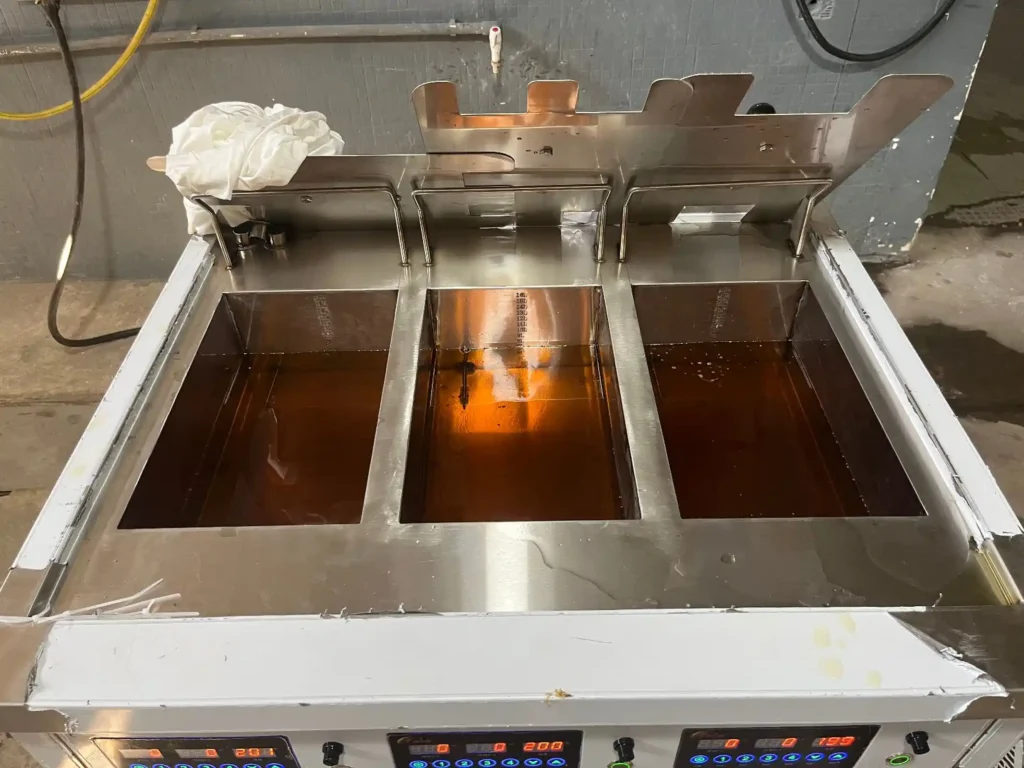
How to Clean a Commercial Deep Fryer: A Step-by-Step Guide
09/13/2026
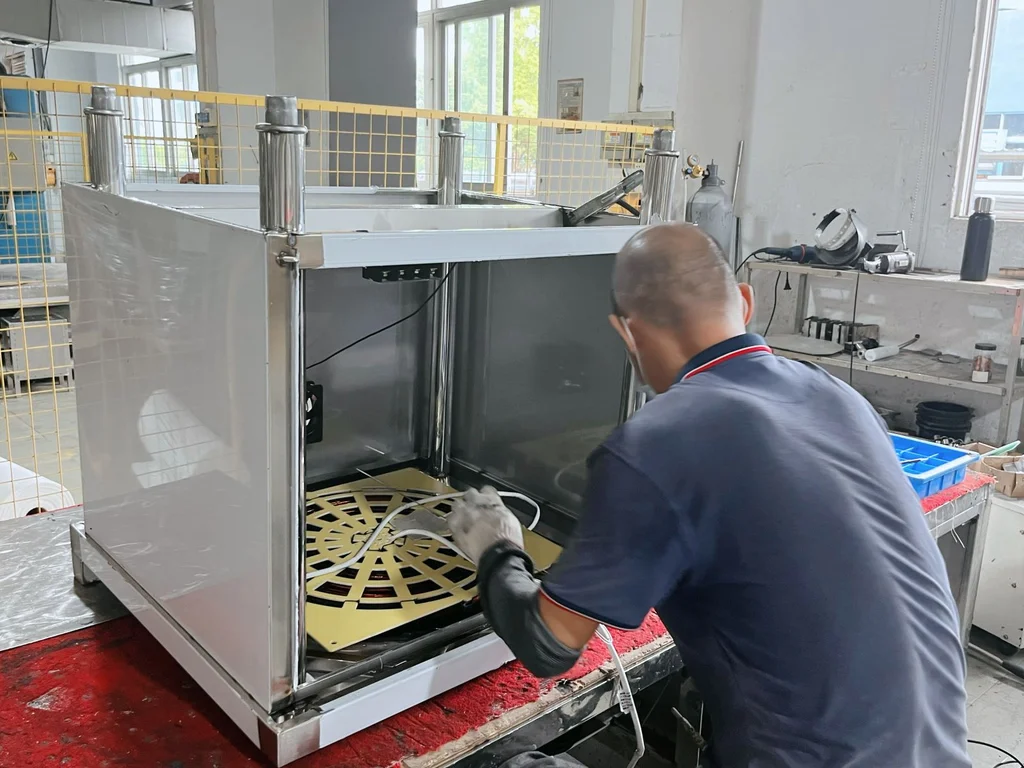
High Quality Commercial Induction Cooker Manufacturer
09/09/2026
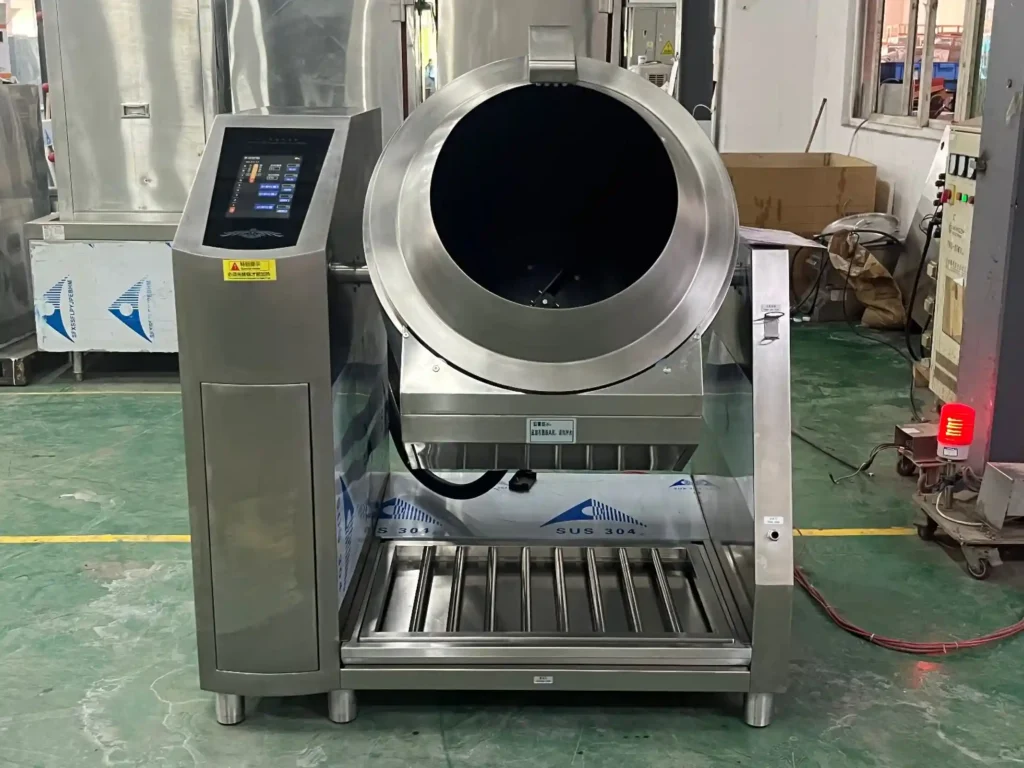
Automatic Wok Machine: Types, Specifications, Applications and Buying Guide
08/18/2026
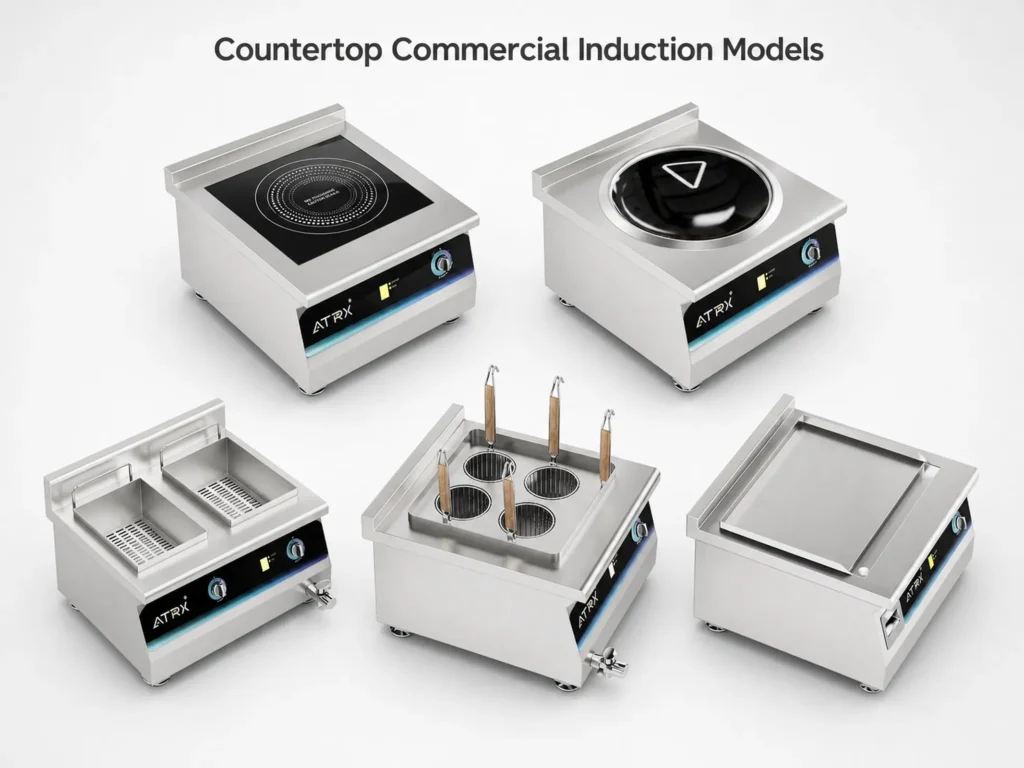
Commercial Induction Range: How to Choose the Right Size, Power, and Configuration for a Commercial Kitchen
08/15/2026
What Is a Commercial Induction Cooker and How Does It Work
08/13/2026
Commercial Induction Range for Hotel Kitchens: How to Choose the Right Model
08/11/2026