
Single-Layer vs. Double-Layer Coil Winding — What’s the Real Difference?
The coil disc is the heart of every commercial induction cooker coil assembly. How many induction cooktop winding layers it has determines one thing: how long it survives under full load before overheating becomes a problem.
Supplier proposals say “single-layer” or “double-layer.” Most buyers skim right past it. Copper wire in a disc shape, it heats up, done — right?
Wrong. Drop that equipment into a real kitchen. Run it at max power for hours straight. The gap between single-layer and double-layer will hit you — literally, when the surface is too hot to touch.
Temperature Rise: Single-Layer vs. Double-Layer, in Real Numbers
1. Commercial Kitchen Intensity — Temperature Rise Is the Lifeline
A commercial kitchen is not a lab. Lunch rush, dinner rush, back to back. An 8kW to 15kW burner running full power for 3 hours straight? That’s a normal Tuesday.
Single-layer coils have fewer turns. All the current gets jammed through limited copper. Current density per strand goes up. Heat concentrates. Surface temperatures spike to 110°C–120°C easily.
That’s already brushing against the insulation material’s safety ceiling. Stay near that temperature long enough and the insulation ages fast. Coil lifespan drops hard.
2. Double-Layer Runs 15°C–25°C Cooler. That’s Not a Small Number.
Double-layer adds more turns. Current gets spread across more copper. Each turn generates less heat. The whole disc dissipates heat more comfortably.
Test results are dead simple: same power, same cooling setup — double-layer surface temp runs 15°C to 25°C lower than single-layer.
Example — a 12kW machine. Single-layer, full load, 3 hours: surface hits about 115°C. Swap in double-layer, same conditions: stabilizes at 90°C–95°C. One’s dancing on the red line. The other has room to breathe.
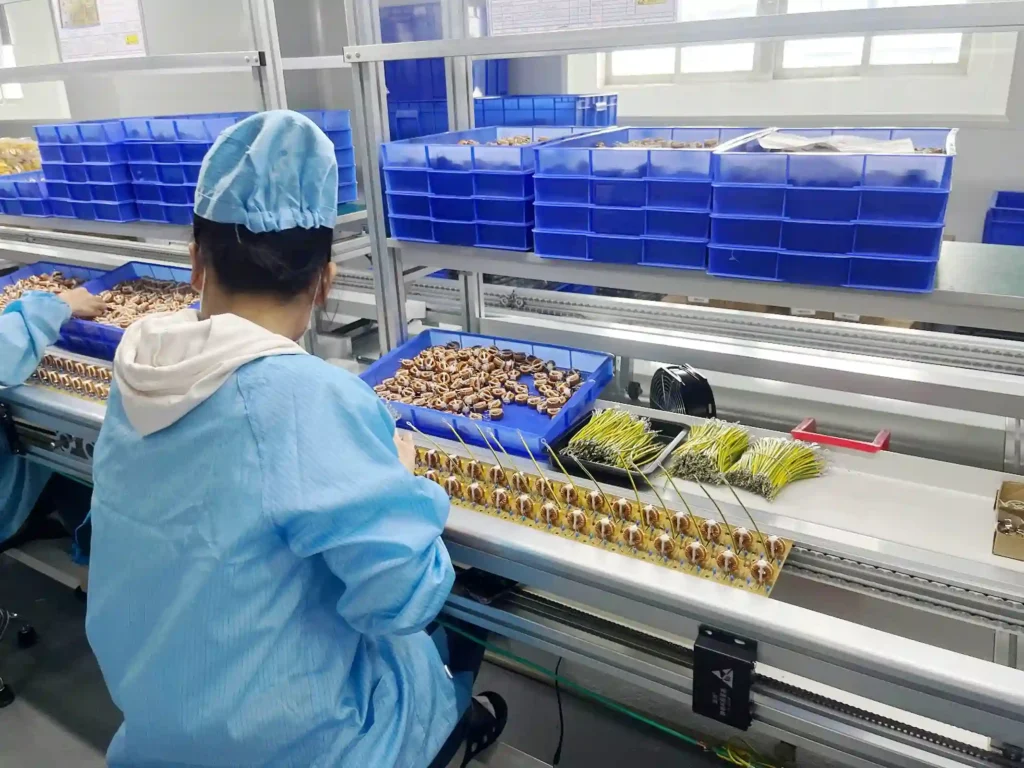
The root cause sits in the winding process — how tight the turns are packed, how well tension is controlled, how evenly the wire path is routed. All of it decides whether current distributes evenly or piles up in hot spots. For a deeper look at how flat winding vs. close winding actually works on the production floor, see: How Commercial Induction Cooker Coils Are Wound.
3. Where This Data Comes From — On-Site Testing During a Factory Audit
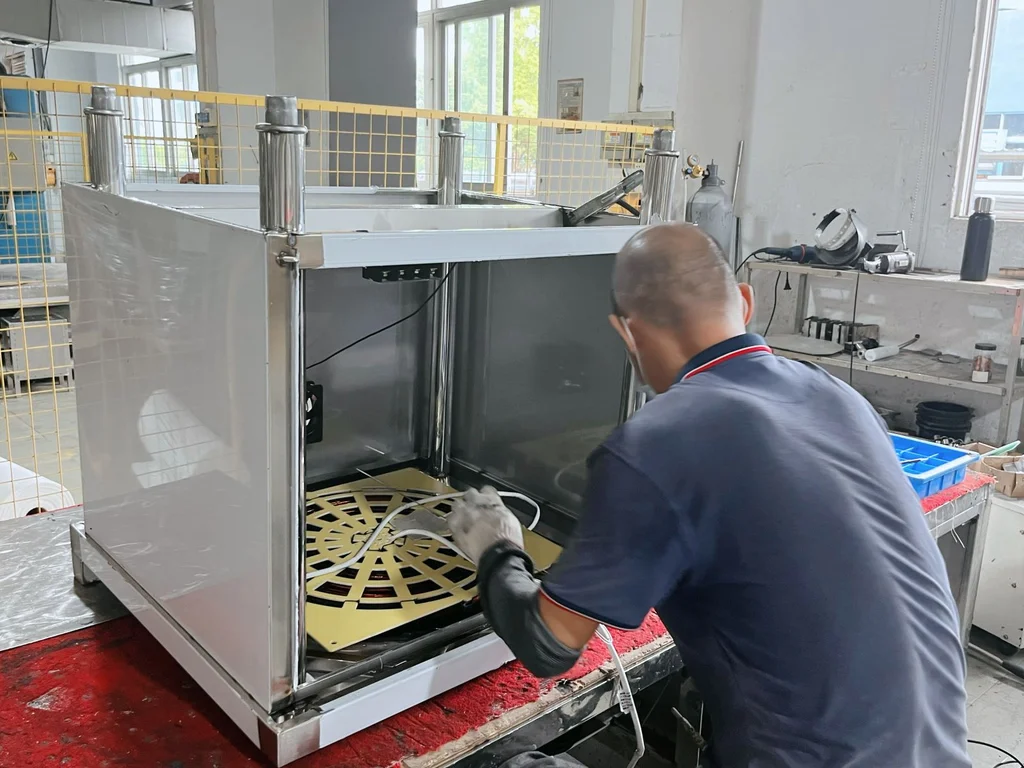
This isn’t guesswork on paper. Last year a Southeast Asian chain-restaurant client came to our ATRX factory for an audit. They specifically asked for a live temperature comparison.
We used the same test rig. Mounted a single-layer 12kW coil first, then swapped in a double-layer 12kW coil. Full load, 3 hours each, thermocouple patches logging throughout.
Result: double-layer ran roughly 20°C cooler. The client locked in the order on the spot — all future batches switched to double-layer.
Simple logic: same power, same intensity — double-layer stays cooler, safer, further from burnout. If a supplier puts a single-layer coil into a 10kW+ machine? Make them show temperature rise data. No data, no deal.
Which Power Range Needs Which Layer Count
More layers is not automatically better. The right answer is: match the power range, and use just enough.
Too few layers? Inductance falls short. Power output wobbles. The IGBT keeps triggering protection. The burner stutters. Kitchen can’t push food out.
Too many? Say you stick a double-layer coil onto a 5kW tabletop unit. Electrically, zero benefit. You just burned extra money on copper and process time for nothing.
The most common question we get on WeChat and WhatsApp: “Is this configuration actually reasonable?” It always boils down to one thing — does the power match the layer count?
This table is based on years of production data plus real customer feedback. Use it to cross-check any supplier proposal:
| Equipment Power Range | Recommended Winding Layers | What Happens If Under-Specified | What Happens If Over-Specified |
|---|---|---|---|
| 5kW and below | Single-layer | Single-layer handles this range fine; under-spec isn’t really an issue here | Cost goes up, no electrical benefit |
| 8kW – 15kW | Double-layer | Inductance too low, power output unstable, IGBT protection trips constantly | Cost goes up; cooling structure needs upgrading too, otherwise pointless |
| 20kW and above | Triple-layer | Not enough thermal headroom; prolonged full load risks burning the coil | Coil gets too bulky; can mess up the machine’s structural design |
Get a proposal? Check power first. Then layer count. If they don’t line up, ask for a temperature rise test report. This table isn’t an absolute rule — but it’s plenty good for filtering out bad proposals fast.
Copper Wire Specs — Where’s the Pass/Fail Line for Diameter and Strand Count?
When it comes to copper wire specifications induction coil quality depends on, two numbers matter most: wire diameter and strand count. Get these right and the coil holds up. Get them wrong and heat kills it.
Wire too thin? A single strand can’t carry the current. It heats up fast. Strand count too low? Total conductive area isn’t enough. Temperature spikes the moment you max out power.
When you get a spec sheet, check these two numbers first. They tell you immediately whether the supplier skimped on materials or not.
Qualified Diameter and Strand Count by Power Range
Wire diameter controls how much current one strand can handle. Strand count controls whether all those strands in parallel add up to enough total cross-section. Together they have to hit one hard target: full power, 3 hours straight, coil temp stays below 120°C.
Cross that line and insulation varnish starts aging fast. Lifespan shrinks.
Last year a Southeast Asian client brought his existing coil to our ATRX factory for a head-to-head test. His 3500W unit had a 0.35mm / 24-strand coil. Full load — temperature blew past 135°C in under two hours.
We swapped in our coil for the same power: 0.47mm / 32 strands. Three hours at full load. Final temperature: 108°C. Same machine. Different coil. Massive gap.
Here’s the reference table by power range:
| Power Range | Copper Wire Diameter (mm) | Strand Count | Pass/Fail Criterion |
|---|---|---|---|
| ~800W (tabletop small stir-fry) | 0.31 | 15 strands | Full load 3h, temp ≤120°C |
| 2000W (home/commercial dual-use) | 0.42 | 32 strands | Full load 3h, temp ≤120°C |
| 2200W–3500W (commercial workhorse) | 0.47 | 30 strands minimum | Full load 3h, temp ≤120°C |
| 8kW–15kW (large wok burner) | 0.47 | 60–90 strands | Full load 3h, temp ≤120°C |
Quick verdict: a supplier offers 0.31mm / 20 strands for a 3500W unit? Don’t waste time talking. Materials are substandard. Move on.
“Full load 3h, temp ≤120°C” is the bare minimum pass mark. But different markets and clients demand more — some need 4 hours non-stop, others 6 hours at full power without derating. For what standards apply at different duty durations, testing methods, and pass/fail criteria, see: Induction Coil Continuous Duty Standards Explained.
Three Ways to Spot Fake Copper Wire On-Site
Specs check out on paper. But is the material actually real? The most common trick: copper-clad aluminum (CCA) disguised as pure copper. Thin layer of copper on the outside. Aluminum inside.
Resistivity jumps 60% over real copper. It runs way hotter. Long-term, the coil burns out. Not a fluke — an inevitability.
Our own QC team got stung once. A batch came in looking perfectly normal. But the weight felt off. We checked. Sure enough — CCA mixed into the lot.
You don’t need a lab. A utility knife and a multimeter at the supplier’s warehouse will do:
Weight Method
Pure copper: 8.9 g/cm³. Aluminum: 2.7 g/cm³. Same spec, same length — pure copper weighs more than double. Pick it up and you’ll feel the difference. Bring a pocket scale if you want numbers nobody can argue with.
Scrape-and-Inspect Method
Blade off the insulation. Cut a fresh cross-section. Reddish-purple = pure copper. Scrape deeper and see silver-white? That’s the aluminum core showing. Zero equipment needed. Your eyes are the detector.
Multimeter Resistance Method
Same length, same diameter. Touch the leads. Pure copper reads 40%+ lower resistance than CCA. Use 1 meter as your standard length. The difference is unmistakable.
Pick any two of these three and cross-verify. Especially with suppliers whose quotes seem too low. Lock this step down. Cheap prices almost always mean the copper isn’t what they claim.
How to Compare Coil Disc Suppliers — Which Hard Metrics Actually Matter?
Temperature Rise, Inductance, Q-Value — How to Compare Them Properly
A proper coil disc supplier comparison falls apart when everyone measures differently. We learned this early at ATRX. Three suppliers, three “qualified” reports, all looked fine on the surface.
Then we dug in. One tested inductance at 25kHz. Another used 35kHz. Temperature rise? One ran 1 hour. Another ran 4. You can’t compare any of that. Apples to oranges.
After getting burned, we set one iron rule: all candidate samples go to the same lab, same equipment, same conditions. No exceptions. Otherwise the data doesn’t make it into the comparison table.
Here’s how the three key parameters need to be tested:
Temperature Rise — Max power, full load, 3 hours continuous. Ambient temp locked at 25±2°C. Measurement points: one at coil center, one at the edge. Take the higher reading. If someone stopped at 1 hour? That data is useless. Toss it.
Inductance — LCR bridge, same frequency for all samples. Commercial induction cookers run 20–40kHz. Pick one frequency. Stick to it. You cannot compare 30kHz readings with 40kHz readings. Also: don’t look at one sample. Test 3–5. Check if batch deviation stays within ±5%.
Q-Value — Same bridge. Same frequency. Same test voltage. All three must match. Acceptable range for commercial coils: 7–12. Below 7 means too much loss — the coil runs hot. Above 12? Don’t celebrate. Double-check the test setup wasn’t wrong.
Once conditions are locked in, the table tells the story instantly:
| Comparison Item | Supplier A | Supplier B | Supplier C | Judgment Criteria |
|---|---|---|---|---|
| Temperature Rise (full load 3h) | 58°C | 72°C | 63°C | Lower is better; ≤65°C preferred |
| Inductance (30kHz) | 88μH | 91μH | 86μH | Deviation within ±5% is qualifying |
| Inductance Batch Deviation | ±3.2% | ±6.8% | ±4.5% | ≤±5% = stable |
| Q-Value (30kHz) | 9.6 | 7.2 | 10.1 | 7–12 qualifying; higher is better |
Supplier B’s problems jump right out. Individual inductance numbers look OK. But batch deviation blows past the limit. Temperature rise is high. Process consistency isn’t there.
Suppliers A and C hold up better across the board. Whoever survives the same-conditions side-by-side test earns the next round of validation.
Same Specs on Paper — Where Are the Real Differences Hiding?
Three suppliers. Spec sheets all say: “double-layer close-wound, 0.47mm pure copper, 80-strand Litz wire.” Word for word identical.
Reality? Last year a client making chain-restaurant equipment came to our factory. Brought coils from two other suppliers. Asked us to run them head-to-head on the same machine.
Visually, almost no difference. Spec sheets, identical. Test results: one hit 58°C. The other blasted to 75°C. Seventeen degrees apart. Same pot. Same burner.
We cracked them open. The problems were hiding where eyes alone can’t reach.
After years of supplier screening, we’ve narrowed it down. When specs match on paper but quality doesn’t, the root cause is almost always one of these three:
Winding Tightness Off-Spec
“Close-wound” means each turn sits flush against the last. No gaps. But if machine precision is low or tension drifts during winding, turns loosen up.
Result: actual inductance drops 5%–15% below the labeled value. Heating efficiency falls with it. The nasty part? You can’t see it. Only an LCR bridge will expose it.
Actual Strand Count Falls Short
Label says 80 strands. Real count: 60–70. This isn’t rare in the industry. Fewer strands = less copper cross-section. At high frequency the skin effect wins. Copper losses climb. Temp goes up.
We had one supplier — sample data sent over WeChat looked great. Bulk order arrived. We snipped a wire end open at random and counted. 68 strands. Labeled 80. Fifteen percent short.
Batch-to-Batch Consistency Collapses
This one hides best. Sample stage? The supplier hand-crafts every piece to pass. Mass production starts, deadlines get tight, costs get squeezed. Winding speeds up. Tightness drops. Sometimes strand counts or turn counts quietly shrink.
How to catch it: demand actual inductance readings from 3–5 consecutive production batches. Check if deviation between batches exceeds ±5%. Can’t produce the data? Won’t provide it? That tells you everything you need to know.
Bottom line: same specs on paper ≠ same quality in hand. Spec sheets are the entry ticket. Real screening uses unified-condition test reports and multi-batch consistency numbers. Buy on paper specs alone and you’ll pay double in after-sales headaches.
Common Questions People Ask
Q1: Quotes differ by 30%+, but the coil spec sheets look identical. How do I judge if the cheap one is safe to use?
Ask the low-price supplier for a third-party lab temperature rise report and copper wire incoming inspection records. Can’t produce them? Request samples for self-testing.
Cut the Litz wire open — count strands. Weigh it — check material. Put it on an LCR bridge — measure inductance. Three steps. You’ll know whether the low price comes from efficient processes or from cutting corners.
Priced 20%+ below industry average AND refuses to send samples? Walk away.
Q2: Coils installed, but power output is 10%–15% below rated spec. What’s going on?
Most likely: coil inductance is off from the design value. When inductance runs low, resonant frequency shifts. IGBT switching losses go up. Total output power drops.
First step: LCR bridge, measure inductance at the machine’s actual operating frequency. Compare to the spec sheet number. Deviation over ±8%? That’s a winding or tightness defect. Non-conforming material — send it back for rework or replacement.
Also check: is the air gap between coil and cookware at the correct design distance?
Q3: First few batches were fine. Latest batch keeps tripping IGBT overcurrent protection. Why?
Classic batch-quality fluctuation. Two most common culprits:
One — strand count got cut. High-frequency copper losses increase. Coil impedance shifts. Protection triggers.
Two — magnetic strip (ferrite bar) material changed between batches. Permeability drops. Inductance drifts.
Fix: pull 3–5 random coils from the problem batch. Measure inductance. Count strands. Compare against the first good batch one-by-one. Once you confirm the gap, demand in-process inspection records for that batch. Run an induction cooker temperature rise test on random pulls to verify thermal performance hasn’t degraded. For all future orders, bump up your incoming inspection sample rate.
Commercial induction cooker coil procurement comes down to three things done right.
First — power and layer count must match. Below 5kW: single-layer is fine. 8–15kW: double-layer is mandatory. 20kW+: triple-layer minimum.
Second — copper wire specs have a hard floor. Diameter and strand count must be adequate. Full load 3 hours, temp stays under 120°C. Material must be real copper, verified.
Third — when comparing suppliers, unify every test condition. Temperature rise, inductance, Q-value — all measured on the same ruler. Skip paper specs. Look at actual test reports. Skip one-off samples. Look at multi-batch consistency.
Hit all three and your odds of a bad purchase drop by 80% at minimum. Any supplier who can’t hand over unified-condition test data? Not worth your negotiation time.
If you’re sourcing finished equipment — not just coil discs — with all three criteria already built in, browse our full product range as a commercial induction cooktop manufacturer. Every unit ships with double-layer coils, verified copper specs, and unified-condition test data on file.