

What Is a Commercial Induction Cooker and How Does It Work
08/13/2026
Estimated reading time: 2 minutes

A commercial induction cooker is a high-power cooking appliance that heats cookware directly through electromagnetic induction, purpose-built for the continuous, high-intensity demands of restaurants, hotels, and canteens. If you are not yet sure what this equipment actually is, how it generates heat, or why it differs from both a household induction cooktop and a gas stove, this article covers the fundamentals before any buying decision.
Below you will find how the core components work together, what the electromagnetic heating principle looks like in practice, how commercial units differ from residential ones, what types exist, and what kitchen conditions you need to have in place. This is not a product selection guide — it is the explanation that comes before it.
IN THIS ARTICLE
- Core Components of a Commercial Induction Cooker
- How Does a Commercial Induction Cooker Work
- What Is the Difference Between Commercial and Residential Induction Cooktops
- Types of Commercial Induction Cookers
- Commercial Induction Cooker vs Gas Stove: Key Comparisons
- What Cookware Does a Commercial Induction Cooker Require
- Electrical Requirements Before You Buy
- Frequently Asked Questions
Core Components of a Commercial Induction Cooker
To understand what a commercial induction cooker is, it helps to first look at what is inside the equipment.
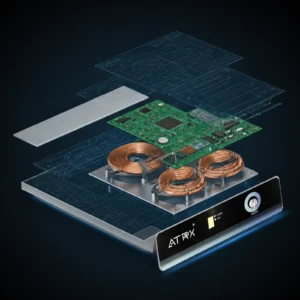
A commercial induction cooker is built around five core components. Each one affects whether the unit can work reliably in a busy commercial kitchen.
Electromagnetic coil — this is the “heart” of the unit. When powered, the copper coil creates a high-frequency alternating magnetic field. This magnetic field is what heats the cookware. Commercial models use larger and more powerful coils than residential units, so they can cover more of the pot bottom and support heavier cooking tasks.
Glass-ceramic panel — this is the working surface where the cookware is placed. A commercial-grade panel must handle high temperatures, heavy pots, daily impact, and frequent cleaning. Its thickness and strength are usually much higher than those used in residential cooktops.
Digital control system — this system controls power and temperature. In a commercial kitchen, chefs often need to switch quickly between high-heat stir-frying and low-heat simmering. A responsive control system helps keep cooking consistent and reduces mistakes during busy service hours.
Industrial-grade cooling fans — commercial induction cookers often run for 8 to 12 hours a day. Cooling capacity is critical. Commercial units usually use multiple large ball-bearing fans. These fans move more air and last longer than the small fans commonly found in residential models.
Safety sensors — these include empty-pot detection, dry-burn protection, and automatic over-temperature shutoff. In a busy kitchen where many people are working at the same time, these protections are not optional. They are basic safety requirements.
Together, these components allow a commercial induction cooker to handle the heat, workload, and pace of a professional kitchen.
How Does a Commercial Induction Cooker Work
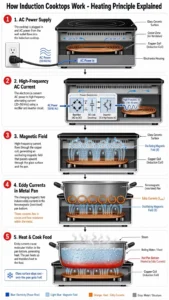
A commercial induction cooker works through electromagnetic induction. Inside the unit, a copper coil creates a high-frequency alternating magnetic field. When ferrous cookware is placed on the glass-ceramic panel, this magnetic field acts on the metal and creates eddy currents inside the cookware.
These eddy currents meet the natural electrical resistance of the metal. That resistance turns the electrical energy into heat. In simple terms, the pot itself becomes the heat source.
The process can be explained in four steps.
First, electric current passes through the copper coil inside the cooker.
Second, the coil generates a high-frequency alternating magnetic field.
Third, the magnetic field passes through the glass-ceramic panel and reaches the ferrous cookware.
Fourth, eddy currents form inside the cookware and turn into heat.
The result is direct heating. The cookware heats up, while the cooktop surface itself does not generate high heat in the same way a flame or electric resistance element does.
This is the key reason commercial induction cooking is efficient. Energy goes directly into the pot instead of heating the surrounding air first. It is also why induction cooking is safer and more comfortable for kitchen staff. There is no open flame, and much less heat radiates into the kitchen.
The main advantages of commercial induction cooking — energy efficiency, safety, faster heating, and a cooler kitchen — all come from this heating method.
What Is the Difference Between Commercial and Residential Induction Cooktops
The main differences are power, durability, cooling, and continuous operating capacity. Commercial induction cookers usually deliver 3.5 kW to 15 kW or more. They are designed to run for 8 to 12 hours a day without frequent power reduction or overheating.
They also use stronger cooling systems, conformal-coated circuit boards that resist oil and moisture, and heavy-duty glass-ceramic panels. These features are important in commercial kitchens, where equipment faces heat, steam, oil fumes, heavy cookware, and constant use.
Many buyers ask a simple question when they first look at commercial induction equipment: “I already have an induction cooktop at home. How different can the commercial version be?”
The difference is much bigger than it looks from the outside. The basic heating principle is the same, but the design target is completely different. A residential induction cooktop is made for occasional household cooking. A commercial induction cooker is made for high-volume foodservice work.
Power and Continuous Operating Capacity
The most obvious difference is power. Residential induction cooktops usually reach about 2.1 kW. Commercial units often start at 3.5 kW. Large freestanding models can reach 15 kW or even higher.
But power alone is not the whole story. Continuous operating capacity is even more important.
A commercial induction cooker is designed to run at high power for 8 to 12 hours or more per day. It should not quickly reduce output or shut down during a lunch or dinner rush.
Residential induction cooktops are not made for this kind of workload. In real kitchen use, many household models reduce power or show an error after long periods of high-load cooking. Some users have reported this happening after about 90 minutes of continuous heavy use.
For a restaurant kitchen that needs uninterrupted cooking for several hours, that is not acceptable.
Cooling Design and Durability
A commercial kitchen is a harsh environment for electrical equipment. There is heat, oil vapor, moisture, steam, and constant movement of heavy cookware.
Commercial induction cookers are designed for these conditions. Their circuit boards are often treated with conformal coating to help resist oil and moisture. This is common in commercial-grade equipment, but rarely found in household units.
The cooling fans are also different. Commercial models use industrial-grade ball-bearing fans with stronger airflow and longer service life. These fans help the cooker maintain stable performance during long hours of operation.
The glass-ceramic panel is thicker and more impact-resistant. It must handle heavy cast-iron pots, large stock pots, and frequent pot movement throughout the day.
Using a residential induction cooktop in a commercial kitchen is not a practical long-term solution. It may work for light temporary use, but it is likely to fail much sooner under commercial conditions.
If you want a more detailed side-by-side teardown, including IGBT modules, coil specifications, and real-world temperature control performance, you can read the ATRX complete commercial vs. residential induction cooktop comparison guide.
Types of Commercial Induction Cookers
Commercial induction cookers are available in several forms. The right type depends on installation method, power demand, and cooking application.
In most commercial kitchens, buyers usually choose from four main types.
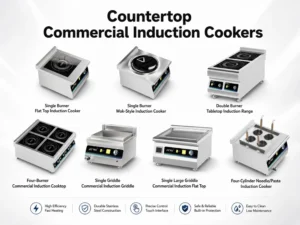
Countertop Commercial Induction Cookers
A countertop commercial induction cooker is the most flexible option. It sits directly on a worktable and can usually be installed without construction work.
Typical power ratings range from 3.5 kW to 5 kW. Many models can work with single-phase power, depending on local voltage and circuit conditions.
This type is suitable for small food stalls, compact restaurant kitchens, front-of-house cooking stations, and temporary cooking setups. It is also useful when a kitchen needs to add an extra cooking station quickly.
Countertop models are easy to deploy, cost less than larger systems, and can be moved when needed. Many chain restaurants use them because they support standardized kitchen layouts.
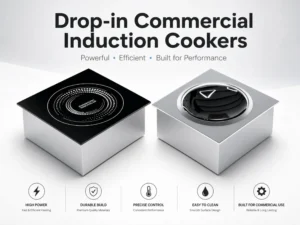
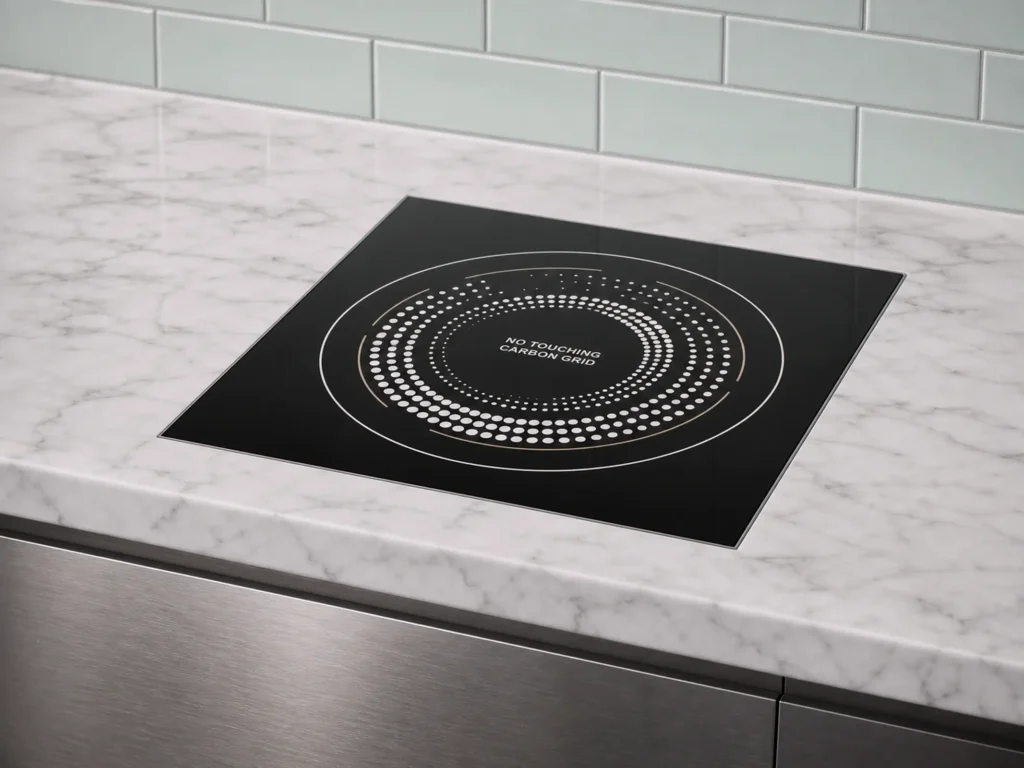
Drop-In / Built-In Commercial Induction Cookers
Drop-in, or built-in, commercial induction cookers are installed into the countertop. The cooking surface sits flush with the work surface, giving the kitchen a clean and integrated look.
They are often used in hotel buffet areas, open-kitchen live cooking stations, and fixed workstations in central kitchens.
The main advantage is space efficiency. The cooker does not take up extra counter space, and the work area looks more organized.
However, the countertop cutout size and electrical connection point must be planned before installation. Once installed, the unit is not easy to move.
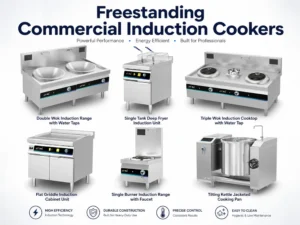
Freestanding Commercial Induction Cookers
Freestanding commercial induction cookers are the heavy-duty option. These are floor-standing units with their own structure and support frame.
Typical power ratings range from 8 kW to 15 kW or higher. Most high-power models require three-phase electrical supply.
They are designed for large-output kitchens, such as corporate canteens, school cafeterias, factory kitchens, and central kitchen production lines.
A freestanding induction unit can support large stock pots, large-diameter pans, or commercial woks for long periods at high power. If your kitchen serves thousands of meals per day, this type should be one of the first options to consider.
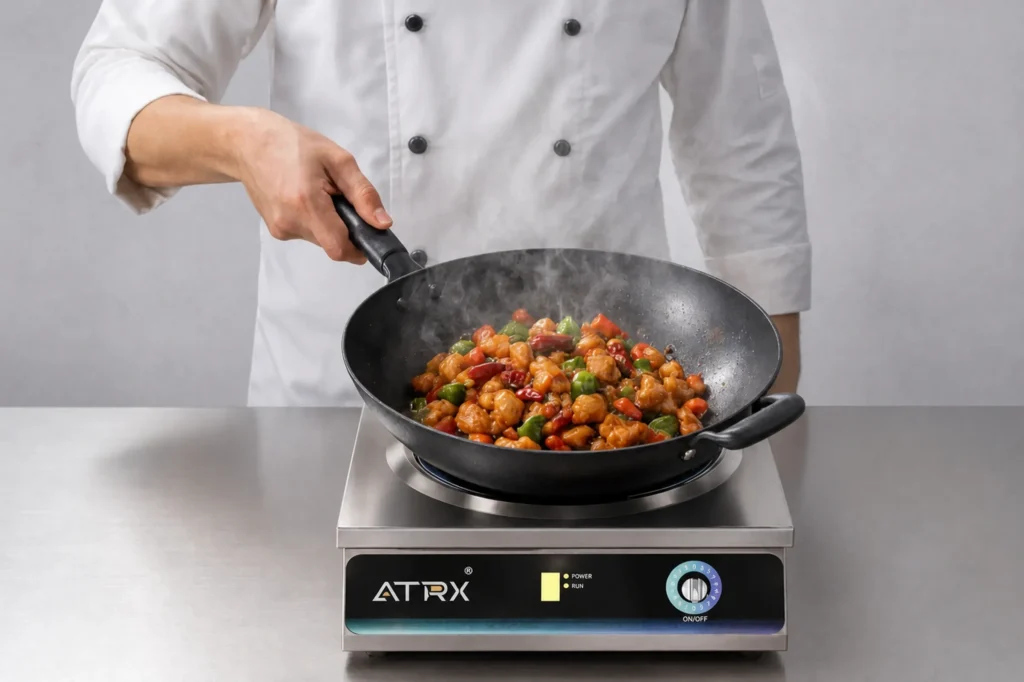
Commercial Induction Wok Cookers
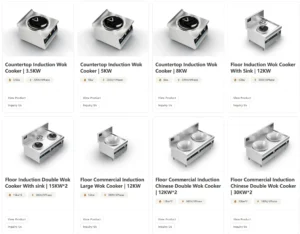
A commercial induction wok cooker is designed for Chinese-style high-heat stir-frying. It uses a concave heating surface that fits a round-bottom wok.
This is one of the most distinctive products in the commercial induction cooker category. It also shows one of the clearest differences between commercial and household induction products.
A flat household induction cooktop cannot perform true toss-and-stir wok cooking with a round-bottom wok. A commercial induction wok cooker can.
For Chinese restaurants, Asian restaurant chains, and kitchens that need fast high-heat stir-frying, induction wok cookers are now a common alternative to gas wok burners.
Commercial Induction Cooker vs Gas Stove: Key Comparisons
Commercial induction cookers usually achieve thermal efficiency of about 85% to 90%. Standard gas open-flame burners are usually around 40% to 50% efficient. Induction also heats faster and works without an open flame.
For many B2B buyers, the first question is straightforward: “Compared with the gas stove I use now, what is actually better?”
That question matters because gas stoves are still widely used in commercial kitchens. If a kitchen is going to switch to induction, the benefits must be clear in daily operation.
The most important comparisons are energy efficiency, cooking speed, safety, and kitchen environment.
For a deeper breakdown of gas and induction energy data, including operating cost calculations for natural gas, LPG, and induction solutions, you can read the ATRX gas stove vs. induction cooker efficiency comparison.
Energy Efficiency Comparison
Energy efficiency is one of the strongest reasons to choose commercial induction cooking.
According to a commercial kitchen equipment efficiency report from Southern California Edison, induction cooktops reach about 85% to 90% thermal efficiency. Standard gas open-flame burners are usually only about 40% to 50% efficient.
| Equipment Type | Thermal Efficiency |
|---|---|
| Commercial Induction Cooker | 85%–90% |
| Gas Open-Flame Burner | 40%–50% |
| Electric Resistance Cooktop | ~60% |
The difference is close to two times. For the same cooking task, induction sends much more energy into the pot instead of losing it to the surrounding air.
For chain restaurants, large canteens, and central kitchens, energy cost is a major part of daily operation. Over a full year, this efficiency gap can become a significant cost difference.
According to the ENERGY STAR commercial cooktop certification standard, certified commercial induction cooktops must reach a per-burner boiling efficiency of at least 80%. This is about 5% to 10% higher than standard electric cooktops.
One Southeast Asian chain restaurant partner tested a full kitchen conversion from gas to commercial induction cookers. After the change, the store’s monthly combined fuel and electricity cost dropped by about 35%. The exact result will vary by local gas and electricity prices, but the overall direction is consistent.
Cooking Speed Comparison
Induction heats cookware directly. It does not need a flame to heat the air first and then transfer heat to the pot.
Because of this, heating speed is usually faster.
A commonly cited industry benchmark shows that a commercial induction cooker can bring a 20-quart, or about 19-liter, pot of water to a boil in about 10 minutes. Under the same conditions, a gas stove takes about 14 minutes.
The U.S. Department of Energy also notes that induction cooktops can boil water 20% to 40% faster than gas stoves, with more even heating.
During a lunch or dinner rush, a few minutes matter. Faster heating can mean shorter waiting times, quicker table turnover, and higher kitchen output.
Kitchen Safety and Environment Comparison
The biggest safety advantage of commercial induction cooking is the absence of an open flame.
No open flame means no flame-related gas leak risk. It also lowers the chance of oil fires. When no cookware is placed on the unit, the cooktop surface does not generate high heat in the same way a gas flame does. This helps reduce burn risks for kitchen staff.
Induction also reduces heat radiation into the kitchen. More heat stays inside the cookware, so the overall working environment is cooler and more comfortable.
For operators, these safety and comfort benefits can have practical value. They may support easier fire safety management, reduce workplace risk, and improve staff working conditions.
High kitchen temperature has always been a challenge in foodservice. A cooler kitchen can help with staff comfort and retention.
Southern California Edison also notes in its commercial induction cooking technology fact sheet that flameless induction cooking helps create a cooler and more comfortable kitchen while reducing hazards related to gas leaks and damaged gas lines.

What Cookware Does a Commercial Induction Cooker Require
This is one of the most common questions from buyers: “Can I use my existing cookware?”
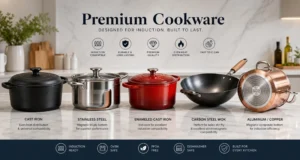
A commercial induction cooker requires cookware made with ferromagnetic material. In simple terms, the cookware must contain iron or have a magnetic base.
Compatible materials include cast iron, carbon steel, and many types of stainless steel. Pure aluminum, pure copper, glass, and ceramic cookware are not directly compatible.
The simplest test is the magnet test. Hold a magnet to the bottom of the pot. If the magnet sticks, the pot will usually work on an induction cooker. If it does not stick, the pot will not work.
Compatible:
- Cast iron cookware
- Carbon steel cookware
- Most stainless steel cookware with a ferrous base layer
- Enameled cast iron cookware
Not directly compatible:
- Pure aluminum cookware
- Pure copper cookware
- Glass cookware
- Ceramic cookware
For B2B buyers, cookware replacement is an important budget item. If your current kitchen uses many aluminum pots and pans, switching to induction may require replacing part or all of the cookware.
This cost should be included in the project plan from the beginning. It is better to confirm cookware compatibility before the equipment arrives, not after installation.
For more details on cookware materials, heating performance, and purchasing suggestions, see our induction cookware selection and matching guide. It compares cast iron, carbon steel, stainless steel, and other common materials in real use.
Electrical Requirements Before You Buy
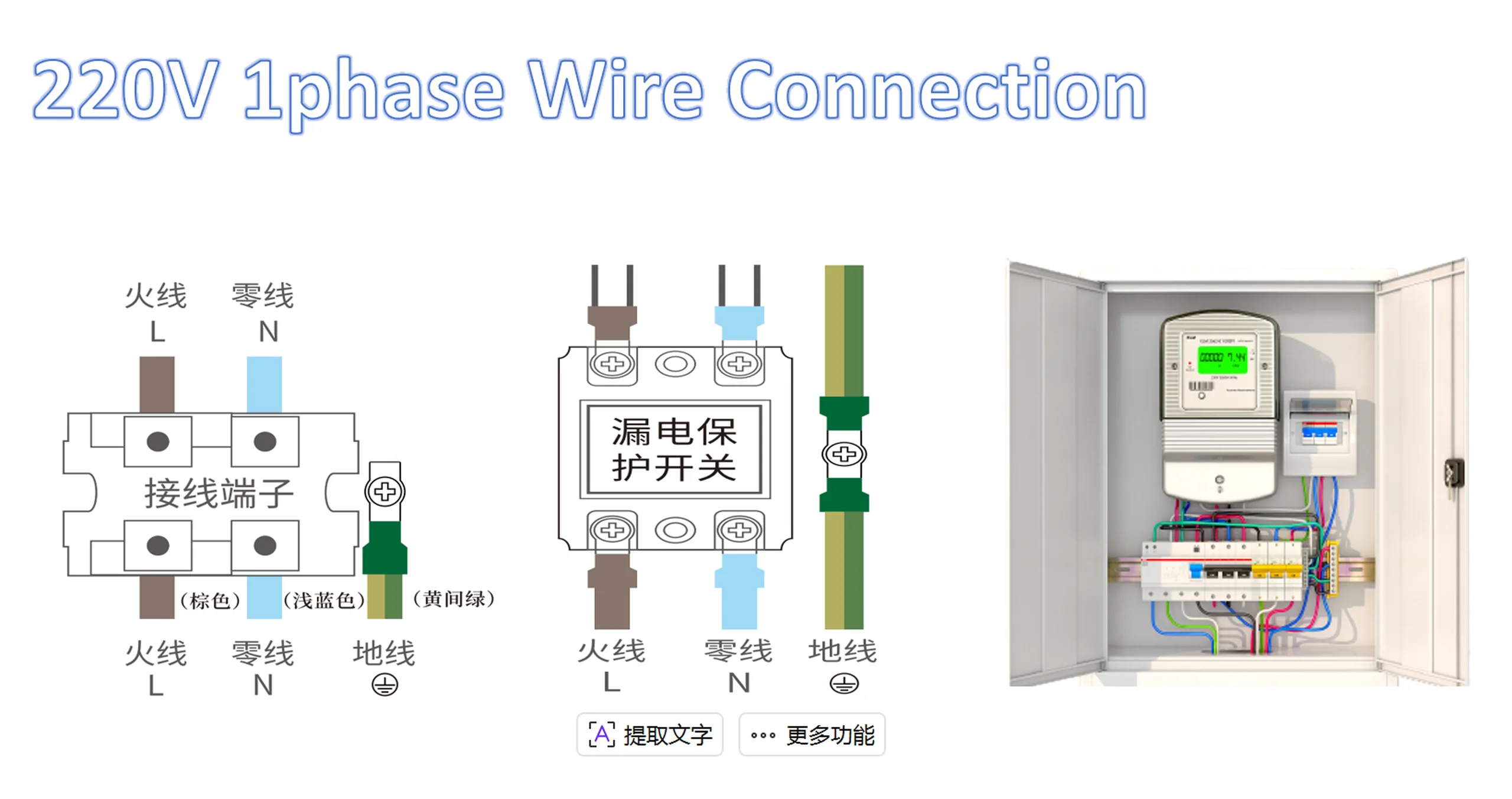
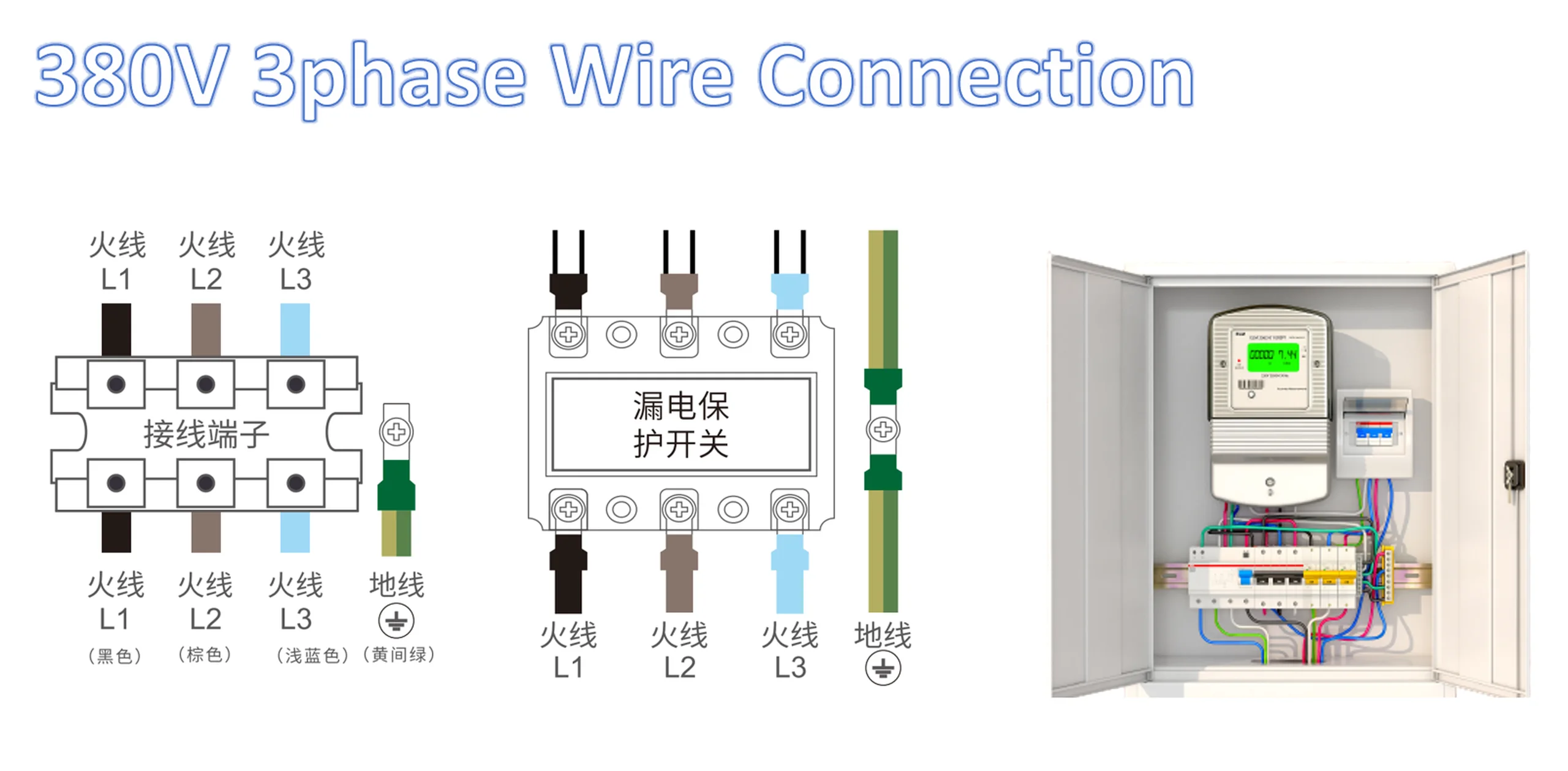
A commercial induction cooker is a high-power electrical appliance. Before buying one, you need to confirm whether the kitchen has enough electrical capacity.
Different power levels require very different electrical conditions.
| Equipment Type | Typical Power | Electrical Requirements |
|---|---|---|
| Low-power countertop unit | Under 3.5 kW | Single-phase 220V; a standard suitable outlet may be enough |
| Medium-power unit | 5 kW – 8 kW | Dedicated circuit required; single-phase or three-phase supply may be needed |
| High-power freestanding unit | 10 kW and above | Three-phase power, dedicated high-current circuit breaker, and electrician assessment required |
A common mistake is choosing the model first and checking the electrical system later.
This can lead to problems when the equipment arrives. The kitchen may not have enough capacity, the circuit may not be suitable, or the voltage system may not match the equipment. In that case, the buyer has to pay for electrical upgrades and accept project delays.
This can usually be avoided with an early site assessment.
Before confirming the equipment model, ask a licensed electrician to check the kitchen’s electrical distribution capacity, voltage system, grounding condition, and available circuits.
This step does not take long, but it can prevent one of the most common installation problems.
After the electrical conditions are confirmed, the next step is choosing the right model for the kitchen. Our complete commercial induction cooker buying guide explains how to compare type, power, cookware, certifications, and application scenarios before purchase.
Frequently Asked Questions
What is the commercial induction cooker meaning?
The commercial induction cooker meaning refers to a high-power electromagnetic cooking appliance made for professional foodservice environments.
Unlike residential units, it is designed for long daily operation, high power output, industrial-grade cooling, reinforced components, and built-in safety systems. These features help it meet the needs of restaurants, hotels, canteens, and large-scale kitchens.
Can a commercial induction cooker use ordinary household cookware?
It depends on the cookware material, not whether the cookware is labeled household or commercial.
If the pot bottom contains iron and can attract a magnet, it can usually heat on a commercial induction cooker.
However, household cookware is often thinner and may have lighter handles. Under the high-power and high-frequency use of a commercial kitchen, it may not last long.
It can work as a short-term backup solution. For long-term commercial use, commercial-grade cookware is recommended.
Does a commercial induction cooker require an exhaust ventilation system?
A commercial induction cooker has no open-flame combustion. It produces less exhaust gas and less waste heat than a gas stove.
In many cases, the ventilation load can be lower than with gas cooking.
But lower ventilation demand does not mean no ventilation is needed. Cooking still produces oil fumes, steam, and odors, especially during stir-frying and deep-frying.
Ventilation and exhaust requirements also depend on local building codes, fire safety rules, and food hygiene regulations.
During procurement or kitchen renovation, always check local requirements with the relevant authority or a qualified kitchen ventilation professional.
What is the typical lifespan of a commercial induction cooker?
Under normal use and regular maintenance, the core components of a commercial induction cooker are usually designed for about 8 to 10 years of service life.
The actual lifespan depends on several factors. These include daily working hours, oil and moisture levels in the kitchen, electrical stability, and maintenance quality.
Cooling fans and glass-ceramic panels are wear parts. They may need replacement during the equipment’s service life.
For B2B buyers, price should not be the only factor. After-sales service, spare parts availability, and supplier support are also important.
Before placing an order, it is worth asking whether replacement parts will still be available several years later.
How do commercial induction cooktops work compared to residential ones?
Commercial and residential induction cooktops use the same basic electromagnetic induction principle.
A coil creates an alternating magnetic field. That field induces eddy currents in ferrous cookware. The cookware then generates heat.
The difference is in the equipment design.
Commercial induction cooktops use larger coils, more powerful IGBT modules, stronger cooling systems, and more durable construction. These features allow them to maintain high output during long service hours.
Residential models are designed for lighter use. Under the same workload, they are more likely to reduce power, overheat, or shut down.
Does a commercial induction cooker make noise during operation?
Yes. Some operating noise is normal.
The sound mainly comes from two sources.
The first is a low humming sound from the electromagnetic system. This is related to the induction heating process and cannot be completely removed.
The second is fan noise. Commercial induction cookers use larger cooling fans and stronger airflow than residential models, so they are usually louder.
In most commercial kitchens, this noise is not a major issue. Range hoods, dishwashers, staff movement, and general kitchen activity are usually louder than the cooker itself.
If the unit will be used in a quiet open kitchen or front-of-house cooking area, a low-noise model is a better choice. Many professional manufacturers offer models designed for this type of setting.
If you already understand the basics and want to compare actual equipment options, you can browse the ATRX commercial induction cooker product range. It includes countertop units, drop-in units, wok cookers, stock pot cookers, steamers, fryers, and other commercial induction equipment made for professional kitchens.
About the author
ATRX Team| 18 Years Commercial
Induction Cooker Manufacturer in China
Induction Cooker Manufacturer in China
Related Posts
Best Commercial Induction Cooktop: Types &Buying Guide
10/09/2026
Commercial Double Hob Induction Cooker | Types, Power, and Installation Guide
10/05/2026
Commercial Induction Cooker 3500W: Model Selection, Commercial Power and Installation
09/29/2026
How to Install a Built-In Induction Cooktop: A Step-by-Step Guide
09/17/2026
How to Clean a Commercial Deep Fryer: A Step-by-Step Guide
09/13/2026
High Quality Commercial Induction Cooker Manufacturer
09/09/2026
Automatic Wok Machine: Types, Specifications, Applications and Buying Guide
08/18/2026
Commercial Induction Range: How to Choose the Right Size, Power, and Configuration for a Commercial Kitchen
08/15/2026
What Is a Commercial Induction Cooker and How Does It Work
08/13/2026
Commercial Induction Range for Hotel Kitchens: How to Choose the Right Model
08/11/2026