

Why does a commercial induction cooktop make a buzzing noise?
05/11/2026
Estimated reading time: 2 minutes

⚡Short note: Commercial induction cooktop buzzing is normal physical feedback, stemming from its electromagnetic heating mechanism and operation conditions
- Magnetic Vibration: Micro-vibrations at cookware bottoms are caused by high-frequency alternating magnetic fields, with amplitude amplified when the cooktop runs at 5kW+ high power, forming audible hums as a result of magnetic energy transfer.
- Cooling Fan Work: Internal cooling fans raise rotational speed during long-term cooktop operation, their airflow sound overlaps with electromagnetic vibration, and fans run briefly post-shutdown for residual heat dissipation.
- Coil Structural Resonance: Induction coils generate tiny electromagnetic forces via high-frequency current, resonating with structural parts, a natural characteristic of electromagnetic devices more noticeable in high-power modes.
- Usage-Related Amplification: Thin cookware or misaligned placement magnifies cooktop vibrations, and simultaneous operation of multiple burners creates noise superposition, all unrelated to equipment quality.
Why Is My Commercial Induction Cooktop Making a Humming Noise?
When you crank up the power to a high setting during peak hours in the back kitchen, with the sauce in the pan simmering and bubbling, a continuous and steady “hum—” sound may come to your ears, and you might pause instinctively: is the equipment alarming, or is it just operating normally? Most buzzing sounds on commercial induction cooktops aren’t fault signals, but the sound of the electromagnetic heating mechanism at work. The core question users really care about is actually just one—where exactly does the sound come from.
If we want to give a direct answer, the humming noise of a commercial induction cooktop usually comes from the following three locations:
- Micro-vibrations generated at the bottom of the cookware under the action of a magnetic field
- Continuous operation of the internal cooling fan under high-load conditions
- Resonance of induction coils and structural parts in the electromagnetic field

Understanding these three sources allows you to judge whether the sound is within the normal range, without associating the sound with equipment abnormalities as soon as you hear it. When we discuss the source of the sound, we are essentially understanding how the cooktop structure works.
Cookware Vibration: Physical Result of Magnetic Energy Transfer
Many people think the sound comes from the machine itself, but in actual operation, the sound often comes from the cookware. When the induction cooktop is activated, a high-frequency alternating magnetic field acts directly on the bottom of the pan, forming eddy currents inside the metal and causing rapid heating. During this process, extremely slight mechanical vibrations occur at the bottom of the pan. Such vibrations are usually imperceptible, but when the power is increased and the heating time is prolonged, the amplitude is amplified, thereby forming an audible hum.
Recent media discussions on this phenomenon point out:
“The sound usually occurs because magnetic energy is being transferred from the induction cooktop to the pan which heats it up and can cause it to vibrate slightly.”
This explanation is from an industry report – expert explanations of the buzzing phenomenon in induction cooktops.
Although the discussion scenario of this report is more inclined to household equipment, the physical mechanism of slight cookware vibration caused by magnetic energy transfer is also valid for commercial equipment. Especially in commercial kitchens, equipment often maintains high-load output for a long time, and the cookware continuously interacts with the magnetic field, making the sound more likely to be amplified. Suppose you adjust the same pan from a low setting to a high setting, and the sound intensifies accordingly; this is not a “problem occurring”, but a natural change brought about by the increase in current intensity.
In other words, the cookware is “participating in the work”, and its vibration is only part of the energy conversion process.
Cooling Fan: Continuous Background Sound Under High-Load Operation
If cookware vibration is more like a passive response, then the internal cooling fan is an active adjustment. When a commercial induction cooktop runs for a long time, the power module and control circuit will generate continuous heat. To maintain stable internal temperature, the cooling system will automatically increase the rotation speed.
Media reports also mention:
“The cooktop’s internal cooling fan may also contribute to some noise while cooking.”
In a commercial environment, equipment often runs continuously for several hours. After the fan speed increases, the airflow sound will overlap with electromagnetic vibration, forming a more obvious low-frequency background sound. On heavy-duty induction hobs, the cooling fan may keep humming for a few seconds after shutdown; this is part of the residual heat dissipation process and not an abnormality.
This sound can be understood as the equipment “self-regulating”. It is not a harsh metal collision sound, nor is it irregular vibration, but a uniform and continuous airflow sound. As long as the sound is stable, does not suddenly intensify, or is accompanied by abnormal heating, this hum is a normal cooling performance.
Coil and Structural Resonance: Inherent Characteristic of Electromagnetic Equipment
The third source is closer to the equipment itself. The induction coil generates tiny electromagnetic forces under the action of high-frequency current; although the amplitude is extremely small, when structural parts resonate, the sound will be amplified. This phenomenon is similar to the low-frequency hum during transformer operation and is an inherent characteristic of electromagnetic equipment.
In high-power mode, the current intensity increases, the electromagnetic force intensifies accordingly, and resonance is more likely to be heard. This does not mean that parts are loose or the equipment is aging, but a natural accompanying phenomenon in the electromagnetic conversion process. As long as the sound is stable, without irregular jumps or abnormal vibrations, there is no need to worry excessively.

Why Do Industrial Induction Cooktops Make a Buzzing Sound When Running?
In commercial kitchen environments, slight humming or current noise during machine operation is a common phenomenon. This sound is not an occasional noise, but a physical reaction generated by the electromagnetic induction heating mechanism operating at high frequencies. Especially in the high-power output stage, humming noises on industrial induction cooktops are far more noticeable, but as long as the equipment heats stably and the temperature control is accurate, this sound is usually a normal operating characteristic.
From a structural logic perspective, the formation of this current noise can be summarized into several highly relevant core factors:
- High-frequency current switches rapidly in the internal electromagnetic coil, generating slight structural vibrations
- The magnetic field acts on the cookware metal, forming eddy currents and triggering resonance
- High-power output of commercial equipment enhances the amplitude of magnetic field changes, making the sound more obvious
- Periodic sound wave changes caused by current on-off switching during power adjustment
Understanding these four logical points basically allows you to judge why a commercial induction cooktop generates current noise during operation.
Vibration Effect of High-Frequency Electromagnetic Coils
The core of a commercial induction cooktop is the electromagnetic coil system. When the equipment is powered on, the coil forms a rapidly alternating magnetic field driven by high-frequency alternating current. The current continuously changes direction in an extremely short time, and the magnetic field changes synchronously accordingly.
This high-speed magnetic field change exerts periodic electromagnetic forces on the metal structure of the coil itself. Although the vibration amplitude is extremely small, under the high-power conditions of commercial equipment, such micro-vibrations are sufficient to propagate as low-frequency humming sounds through the air. The higher the power, the stronger the magnetic field intensity, the more obvious the electromagnetic force borne by the coil, and the corresponding intensification of the sound.
This is not a mechanical friction sound, but a natural accompanying phenomenon of the electromagnetic system during the energy conversion process.
Resonance Response of Cookware in Magnetic Field
Heating of a commercial induction cooktop does not come from the panel, but from the cookware itself. After the magnetic field penetrates the bottom of the pan, eddy currents are generated inside the metal. When eddy currents flow, changes in electromagnetic force are also formed, causing slight vibrations in the metal at the bottom of the pan.
If the bottom structure of the pan is thin or the material density distribution is uneven, the vibration will be amplified, forming a clearer current noise. Conversely, thick and structurally stable cookware can often absorb part of the vibration, making the sound softer. Therefore, different cookware may show different sound performances on the same equipment.
This phenomenon indicates that current noise comes not only from the equipment itself but also is closely related to the degree of cookware matching.
Commercial Power Output and Load Characteristics
Compared with residential models, commercial induction cooktops usually have higher power and stronger load capacity. In commercial environments, equipment often maintains a high-heat state or continuously outputs stable power for a long time.
When the magnetic field maintains high-intensity changes for a long time, the electromagnetic reactions of the coil and cookware will be enhanced, making the current noise more likely to be perceived. Especially in the rapid heating stage, the current output reaches its peak, the magnetic field changes are more intense, and the sound is naturally more obvious.
The intensification of this sound is positively correlated with the efficient output of the equipment, rather than a signal of performance degradation.
Current Switching Brought by Power Adjustment
To achieve precise temperature control, commercial induction cooktops adopt high-speed power control modules. The equipment will perform current on-off adjustment between different gears to maintain a stable heating state.
When the firepower is adjusted or the system enters the constant temperature maintenance stage, the current will switch periodically. This switching causes short-term fluctuations in magnetic field intensity, thereby forming slight sound wave changes. Especially when the liquid is close to boiling or during the rapid heating process, this current switching is more frequent, and the sound is relatively more obvious.
This adjustment mechanism is a reflection of the precise control capability of commercial induction cooktops. Precisely because the cooktop system needs to complete current switching and heat response in an extremely short time, the sound becomes a perceptible by-product.
How Certain Cooking Habits Can Make Your Induction Cooktop Noisier
In commercial kitchen environments, it is not uncommon for a commercial induction cooktop to produce a humming noise. What really needs attention is not “whether there is sound”, but “why the sound is more obvious in certain situations”. Many times, the same equipment will show completely different sound performances under different operation methods. The reason is not complicated—electromagnetic heating essentially causes the metal at the bottom of the pan to generate high-frequency vibrations in the magnetic field, and certain usage habits will amplify such vibrations to a level that is easier to hear.
In actual commercial scenarios, the following usage methods are most likely to make the sound more obvious:
- Long-term high-power or full-load operation
- Use of thin or simply structured cookware
- Cookware not fitted or centered
- Preheating empty pans or heating with low water volume
- Multiple burners or multiple pieces of equipment running simultaneously
These factors are directly related to “whether vibration is amplified”, rather than problems with the equipment quality itself.
Impact of Power Usage Habits on Sound
During peak restaurant hours, boiling water on high heat, continuous stir-frying, and batch meal preparation often require pushing the power to a higher gear. When a commercial induction cooktop is in a high-power state for a long time, the coil current increases, the magnetic field intensity rises, and vibration noise at the pan’s bottom on commercial induction burners rises in line with this higher power. The stronger the vibration, the more likely it is to be converted into an audible hum.

This phenomenon is very intuitive in operation: when the firepower is adjusted to the highest level, the sound is significantly enhanced; when the firepower is turned down, the sound weakens accordingly; if multiple burners run at full power at the same time, the overall humming sensation in the environment also increases. There is a direct relationship between power and vibration, and sound changes are often just a reflection of energy output changes.
Cookware Structure and Resonance Amplification
Whether the sound is obvious depends largely on the cookware itself. A thin single-layer stainless steel pan bottom is more likely to produce slight deformation and resonance under the action of a magnetic field, thereby amplifying vibration. In contrast, a multi-layer composite pan bottom structure is more stable, vibration is dispersed, and the sound is usually more stable.
A common situation in commercial kitchens is: on the same burner, the sound changes immediately after changing a pan. Thin pans are more likely to produce a clear hum, while thick-bottomed or composite-structured cookware is quieter. This is not a change in the burner state, but the cookware amplifying or buffering the vibration.
Contact State and Fitting Degree
Whether the bottom of the pan is fully fitted to the glass panel also affects the sound performance. If the cookware is not centered, or the bottom of the pan is slightly deformed, resulting in uneven contact surfaces, vibration will concentrate in local areas to form resonance, thereby making the sound more obvious.

In busy operations, it is common to place cookware casually. However, when the cookware is slightly offset or tilted, local vibration is amplified; when the pan is repositioned, the sound often weakens significantly. The more stable the fit, the more uniform the vibration distribution, and the softer the sound.
Empty Pan and Low Water Volume Operation State
Liquid has a certain buffering effect on vibration. When there is sufficient water in the pan, the vibration at the bottom of the pan is partially absorbed, so the sound is relatively light. When preheating an empty pan or heating with a small amount of liquid in the pan, the vibration is almost directly transmitted to the air, and the hum is naturally more obvious.
In actual kitchen operations, the empty pan preheating stage is usually when the sound is most prominent. Once water or ingredients are added, the vibration is buffered, and the sound decreases accordingly. Similarly, when the soup or sauce is nearly dry, the sound may intensify again. This change is directly related to the buffering capacity of the liquid.
Superimposed Operation of Multiple Burners and Multiple Equipment
In central kitchens or open catering environments, simultaneous operation of multiple commercial induction cooktops is normal. The sound of a single piece of equipment may not be prominent, but when multiple burners or multiple pieces of equipment vibrate at high frequencies at the same time, the sound will produce a superposition effect.
The superimposed frequency is more likely to be perceived by the human ear, thereby forming a more obvious hum. After turning off some burners, the overall sound decreases, which often indicates that the problem comes from the superimposed operation state, not the abnormality of a single device.
Whether the sound is obvious is essentially the result of whether the vibration is amplified. High-power operation, differences in cookware structure, unstable contact, changes in liquid buffering, and multi-equipment superposition will all change the vibration transmission mode. When these usage habits are adjusted, the sound performance of the commercial induction cooktop usually improves accordingly. When multiple burners run simultaneously or the heat dissipation path is affected by the environment, the superposition of sound becomes more obvious.
When Should You Stop Using Your Induction Cooktop and Get It Checked?
In commercial kitchens, a desktop commercial induction cooktop emitting a humming noise does not in itself equal a fault. When high-frequency current drives the coil, the metal at the bottom of the pan is repeatedly excited by the magnetic field, and slight resonance is a physical phenomenon. But the real question is—Is it still the “original sound”?
Judging whether you should stop using it can actually start with the most intuitive changes:
- The humming noise suddenly becomes louder, sharper, and persists
- While the sound changes, the heating speed slows down significantly or the power is unstable
- Error reports, flickering, or automatic power reduction appear on the control panel
- Accompanied by peculiar smells, abnormal overheating, or increased body vibration
- After long-term high-load operation, internal cleaning and inspection have never been done
If none of the above situations occur, and the sound is stable and the heating efficiency is normal, it can usually continue to be used.
The Difference Between Sound “Existing” and Sound “Changing”
Imagine a scenario: during the evening peak, a chef is operating a desktop induction cooktop in the front hall to reduce the sauce for steak. The machine runs at a low frequency as always, with a steady sound; this state is often the rhythm of normal work. But if at a certain moment, the sound suddenly becomes sharp, like light metal scraping, even if the firepower is still on, you will instinctively be alert in your heart.
Desktop models have a compact structure, with internal coils, fans, and power modules concentrated in a limited space. Normal hums usually come from magnetic field vibration or cooling fan operation; in restaurant settings, an unusual sound from an induction cooktop (sudden, sharp, irregular) is often a signal of structural changes, such as loose fasteners, aging fan bearings, or power output fluctuations. The difference is not in the volume, but in whether it is different from before.
A stable and continuous sound means the machine is working; a sudden change in sound means the machine is “reminding”.
When Sound Starts to Affect Performance
Let’s switch to another scenario: with the same amount of water and the same cookware, it used to boil in three minutes, but now it takes five minutes. The displayed power has not changed, but the efficiency has quietly decreased. At this time, if the hum has intermittent or frequency jumps, it is no longer just a “noise problem”.
Desktop commercial induction cooktops are often used on countertops with limited space, and the power lines may also be shared with other equipment. When voltage fluctuates or internal temperature-sensing feedback is abnormal, the power module will frequently adjust the output. The sound will have rhythmic changes accordingly, and the heating efficiency will become unstable.
The machine is still running, but its performance is different. Continuing to use it may only postpone the risk to a busier time.
Alarms, Overheating, and Abnormal Odors
If the sound change is accompanied by panel flickering, automatic power reduction, or error code prompts, the situation is more clear. The control system has intervened for protection, and continuing to run it forcibly will often only increase the load.
For another example, the panel temperature is hotter than usual, and even a slight plastic smell appears. The desktop structure has a short heat dissipation path; once the air duct is blocked by oil fume or dust, the heat accumulation speed will be faster. The sound may only be the first signal, and abnormal temperature is the real source of risk.
Some users will ask: “It’s just a faint smell, do I need to stop?” If this smell has never appeared before, it is worth checking. Abnormal odors are not decorative; they usually mean that materials are changing at high temperatures.
Even if there is no obvious alarm, if the equipment has been used under high intensity for consecutive months but has never had internal cleaning, the gradual increase in sound should not be ignored. In an oil fume environment, the air inlet of the desktop induction cooktop is more likely to accumulate dust. The fan load increases, the rotation speed changes, and the originally slight vibration will be amplified.
This situation is not as sudden as a fault, but like slowly accumulated fatigue. It can still be used today, and maybe tomorrow too, but the internal temperature rise is already higher than the designed state.
In commercial scenarios, decisions are often based on efficiency. But the truly efficient approach is to take the initiative to handle it when abnormal signals appear, rather than waiting for a complete shutdown. If the sound remains stable, heating is normal, and there are no alarms or overheating phenomena, it can continue to be used; if the sound changes and is accompanied by abnormal performance or temperature, the equipment should be suspended and inspection arranged. The advantage of cooktop design lies in flexibility, high efficiency, and instant on/off, but it also relies on a stable internal structure and heat dissipation system. Sound is not the enemy; change is the signal. Understanding this is more important than simply judging “whether it is noisy”.
If you’re evaluating whether the buzzing you hear aligns with what a properly functioning unit should sound like, it helps to first understand the equipment itself. You can read a full breakdown at commercial induction cooker to see how the electromagnetic coil, cooling system, and power module work together—and why stable sound is part of the design, not a defect.
If the equipment has been running under high load for a long time but has not undergone internal cleaning or air duct inspection, the sound change is often just the first signal to be noticed. If you are also interested in daily maintenance and internal structure maintenance, you can refer to the Commercial Induction Cooktop Maintenance Practices to avoid amplifying operating noise due to dust accumulation or blocked heat dissipation.
Buzzing vs Clicking vs Rattling: Which Induction Cooktop Noise Is a Sign of Trouble?
Commercial induction cooktops produce a range of operational sounds, and distinguishing between normal electromagnetic/hydrodynamic sounds and mechanical fault sounds is critical for on-site troubleshooting. Unlike ambient noise amplification, these sound types directly reflect the internal state of the equipment, with clear diagnostic boundaries for each.
Buzzing/Humming: Normal Electromagnetic Operation
Continuous, low-frequency buzzing or humming is the baseline sound of commercial induction cooktops, generated by magnetic field-induced cookware vibration, coil resonance and cooling fan airflow. This sound is consistent with power output—louder at high power, softer at low power—and has no irregular fluctuations, and is never accompanied by performance degradation or abnormal temperatures.
Clicking: Conditional Normalcy
Soft, periodic clicking is a normal sound from the power control module’s high-speed current on-off switching, often appearing during temperature constant or firepower adjustment stages. Abnormal clicking is loud, frequent and random, and is usually associated with voltage instability, loose wiring at the power terminal or faulty temperature-sensing components, and may be accompanied by intermittent heating or power flicker.
Rattling: Almost Always a Mechanical Fault
Metallic rattling, clattering or jiggling is never a normal operational sound for commercial induction cooktops. This sound stems from mechanical issues with the equipment itself, such as loose fasteners for induction coils/structural parts, worn fan bearings with eccentric rotation, foreign objects in the cooling duct or loose internal power module brackets. Rattling often intensifies with fan speed or power, and prolonged operation may cause further structural damage or component burnout.
Technical Comparison: Commercial vs. Residential Induction Cooktops (Buzzing-Related Characteristics)
| Characteristic | Commercial Induction Cooktop | Residential Induction Cooktop |
|---|---|---|
| Power Output Level | High (typically 5kW – 15kW), long-term full-load operation is common | Low (typically 2kW – 3.5kW), intermittent low-load operation is dominant |
| Cooling Fan Speed | High rotation speed, continuous operation under load conditions | Moderate rotation speed, intermittent operation based on heating demand |
| Cookware Vibration Amplification | High probability due to prolonged exposure to high-intensity magnetic fields | Low probability, as magnetic field exposure is short-term and low-intensity |
| Resonance of Coils & Structural Parts | More obvious due to high current intensity and continuous operation | Less obvious, with low current intensity and intermittent work |
| Noise Perception | Louder and more persistent (superposition of fan and electromagnetic noise) | Softer and intermittent, rarely noticeable in daily use |
Frequently Asked Questions (FAQ)
Q1: Can buzzing or humming noises on commercial induction cooktops be lessened?
A1: Yes, several measures can effectively reduce the noise. First, use thick, multi-layer composite bottom cookware, as it can absorb and disperse vibrations better than thin cookware. Second, ensure the cookware is fully centered and tightly fitted to the cooktop surface to avoid local resonance caused by uneven contact. Third, avoid long-term full-power operation and preheating empty pans, as these behaviors amplify vibration. Additionally, regularly clean the internal cooling vents to keep the fan running smoothly, which reduces fan-related noise. These adjustments address the root causes of noise amplification (vibration and airflow) without affecting the cooktop’s heating performance.
Q2: Why do commercial induction burners have sudden vibration noise or unusual hums?
A2: A sudden change in vibration noise or hum is usually a response to either usage condition shifts or equipment internal changes. Temporary shifts like using thin cookware, misaligning the pan or running multiple burners at full power at once can amplify normal sounds. If the unusual hum persists after adjusting usage habits, it may indicate internal issues such as blocked cooling ducts, loose structural parts, aging fan bearings or voltage fluctuations. These issues alter the equipment’s normal electromagnetic or mechanical operation, leading to abnormal sound output alongside potential performance drops.
About the author

ATRX Team| 18 Years Commercial
Induction Cooker Manufacturer in China
Induction Cooker Manufacturer in China
Related Posts

Best Commercial Induction Cooktop: Types &Buying Guide
10/09/2026
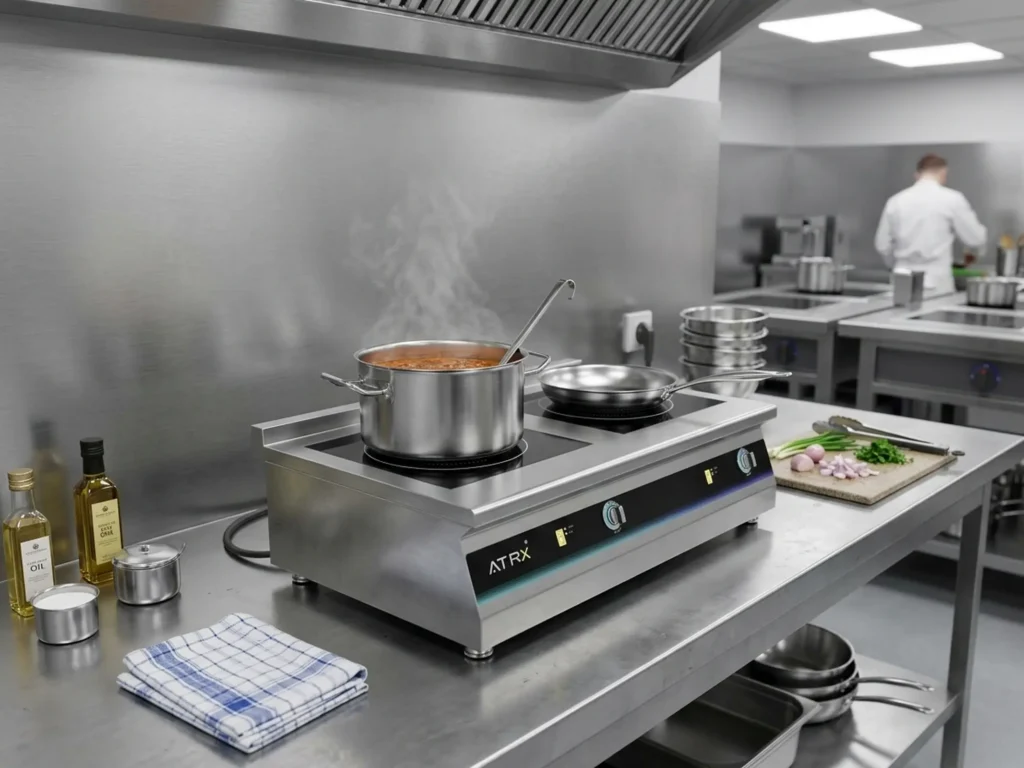
Commercial Double Hob Induction Cooker | Types, Power, and Installation Guide
10/05/2026
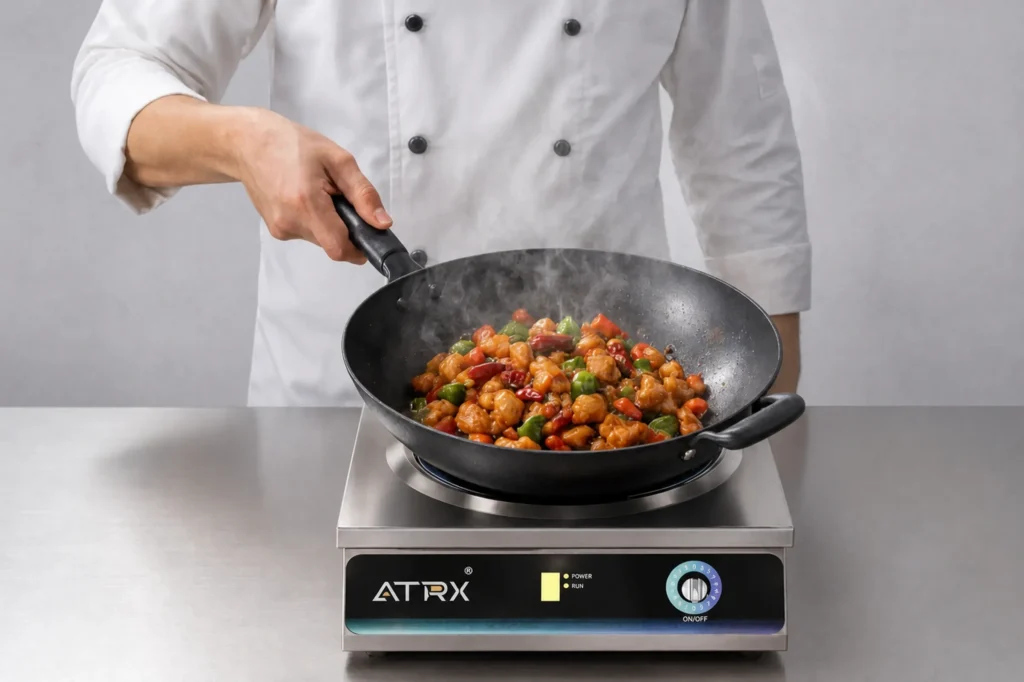
Commercial Induction Cooker 3500W: Model Selection, Commercial Power and Installation
09/29/2026
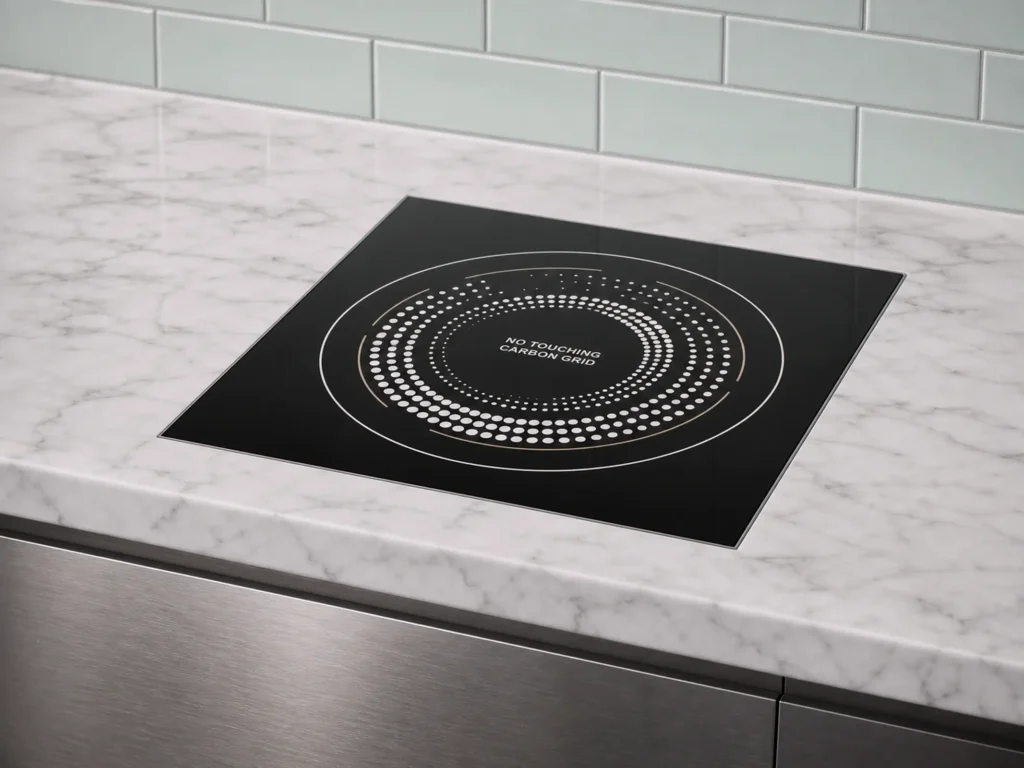
How to Install a Built-In Induction Cooktop: A Step-by-Step Guide
09/17/2026
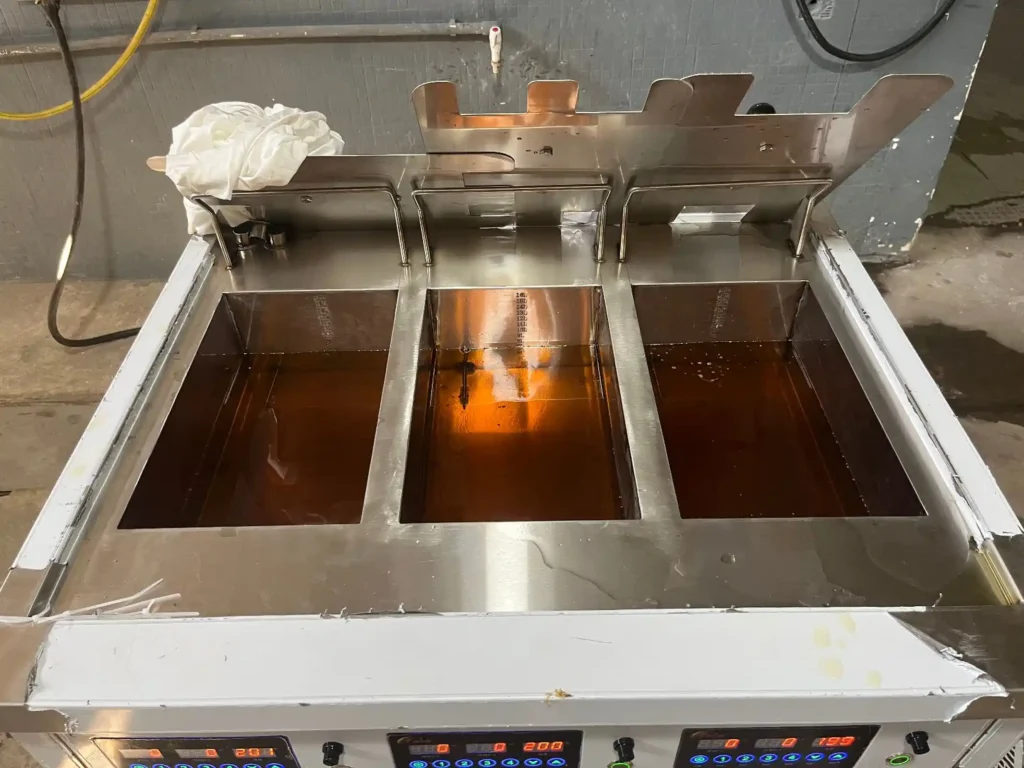
How to Clean a Commercial Deep Fryer: A Step-by-Step Guide
09/13/2026
High Quality Commercial Induction Cooker Manufacturer
09/09/2026
Automatic Wok Machine: Types, Specifications, Applications and Buying Guide
08/18/2026
Commercial Induction Range: How to Choose the Right Size, Power, and Configuration for a Commercial Kitchen
08/15/2026
What Is a Commercial Induction Cooker and How Does It Work
08/13/2026
Commercial Induction Range for Hotel Kitchens: How to Choose the Right Model
08/11/2026