

How to Choose a Commercial Induction Wok Stove
05/12/2026
Estimated reading time: 2 minutes

If you’re looking for a commercial induction wok stove for your restaurant, canteen, or central kitchen, this article is for you. The market offers everything from 3.5kW countertop units to 30kW freestanding machines, with prices ranging from a few hundred to several thousand dollars. Pick the wrong one, and you’ll either waste money or end up with a machine that can’t connect to your power supply — or simply can’t deliver enough heat. It’s worth ten minutes to understand how to choose a commercial induction wok stove before spending the budget.
This commercial induction wok stove buying guide walks you through the process step by step, from basic concepts to the specific parameters that matter most. By the end, you’ll know exactly what to look for and what to avoid.
IN THIS ARTICLE
What Is a Commercial Induction Wok Stove?
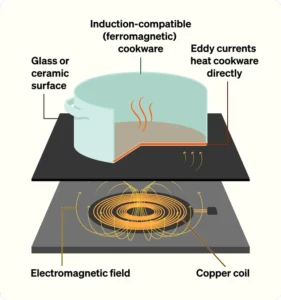
The principle is simple. Electromagnetic coils inside the stove generate a high-frequency magnetic field. That field causes the iron wok itself to produce heat. No flame, no gas — the heat comes directly from the wok body.
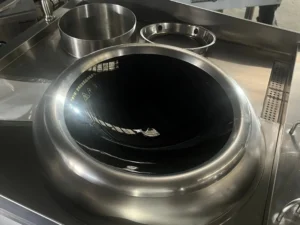
What sets it apart from a regular commercial induction cooktop is the concave cooking surface. This curved bowl shape is designed specifically for round-bottom woks. The coils follow the wok’s curvature so the entire bottom heats evenly. That matters for stir-frying. Chinese wok cooking needs uniform high heat across the whole surface — when ingredients hit the pan, they should sear instantly. A flat induction cooktop can’t do this with a round-bottom wok, because only a small patch at the very bottom makes contact.
What to Look for When Choosing a Commercial Induction Wok Stove
Many buyers start by comparing prices. That’s understandable, but if the wattage is wrong, the voltage doesn’t match your supply, or the wok doesn’t physically fit the stove, the cheapest option is still a waste of money. Here are the five specs you need to check before ordering.
Power Rating
Power determines your maximum heat output. Too low, and you can’t keep up during rush hours. Too high, and you’re overpaying on electricity for capacity you never use.
The most reliable way to find the right power level is to work backward from how many dishes you actually need to serve. One of our customers — a Chinese restaurant in Southeast Asia doing about 300 covers a day — needed each stir-fry dish done in under 2 minutes to keep up with the lunch rush. Their original 5kW countertop unit took nearly 4 minutes per dish. The problem was temperature recovery: every time cold ingredients went into the wok, the temperature dropped and took too long to climb back. They switched to a 12kW freestanding unit. Same dish, 1.5 minutes. Double the power meant the wok got back to working temperature fast enough that ingredients didn’t stall in a lukewarm pan.
That recovery speed is the core issue. Every time you add room-temperature food, the wok temperature crashes. Higher power means the coils pump heat back in faster, so the dip is shorter. For flash-fried dishes, this directly affects both speed and quality.
Here’s a quick reference:
| Kitchen Type | Daily Stir-Fry Output | Recommended Power | Typical Voltage |
|---|---|---|---|
| Small stall / food truck | 50–100 servings | 3.5–5kW | Single-phase 220V |
| Mid-size restaurant / fast-casual | 100–300 servings | 8–15kW | Single-phase 220V / Three-phase 380V |
| Large canteen / central kitchen | 300+ servings | 15–30kW | Three-phase 380V |
A rule of thumb: if your menu is heavy on flash-frying, go one tier higher on power. Flash-frying needs fast recovery. Braising and stewing are more forgiving, so you can step down. For a detailed breakdown of what each power level can handle, see our power level cooking guide.
Voltage
This is the spec people forget to check — and the one that causes the most headaches after delivery.
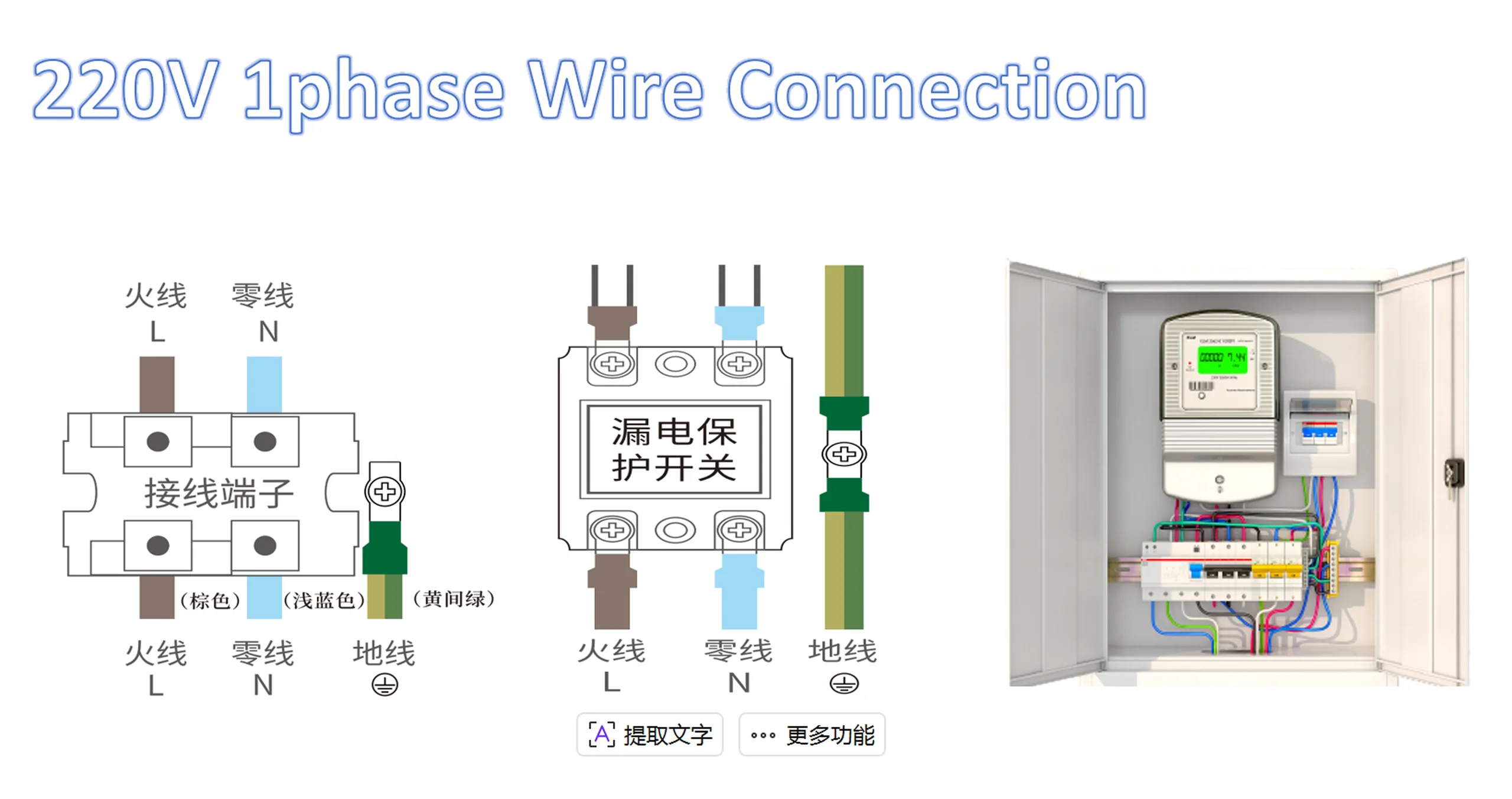
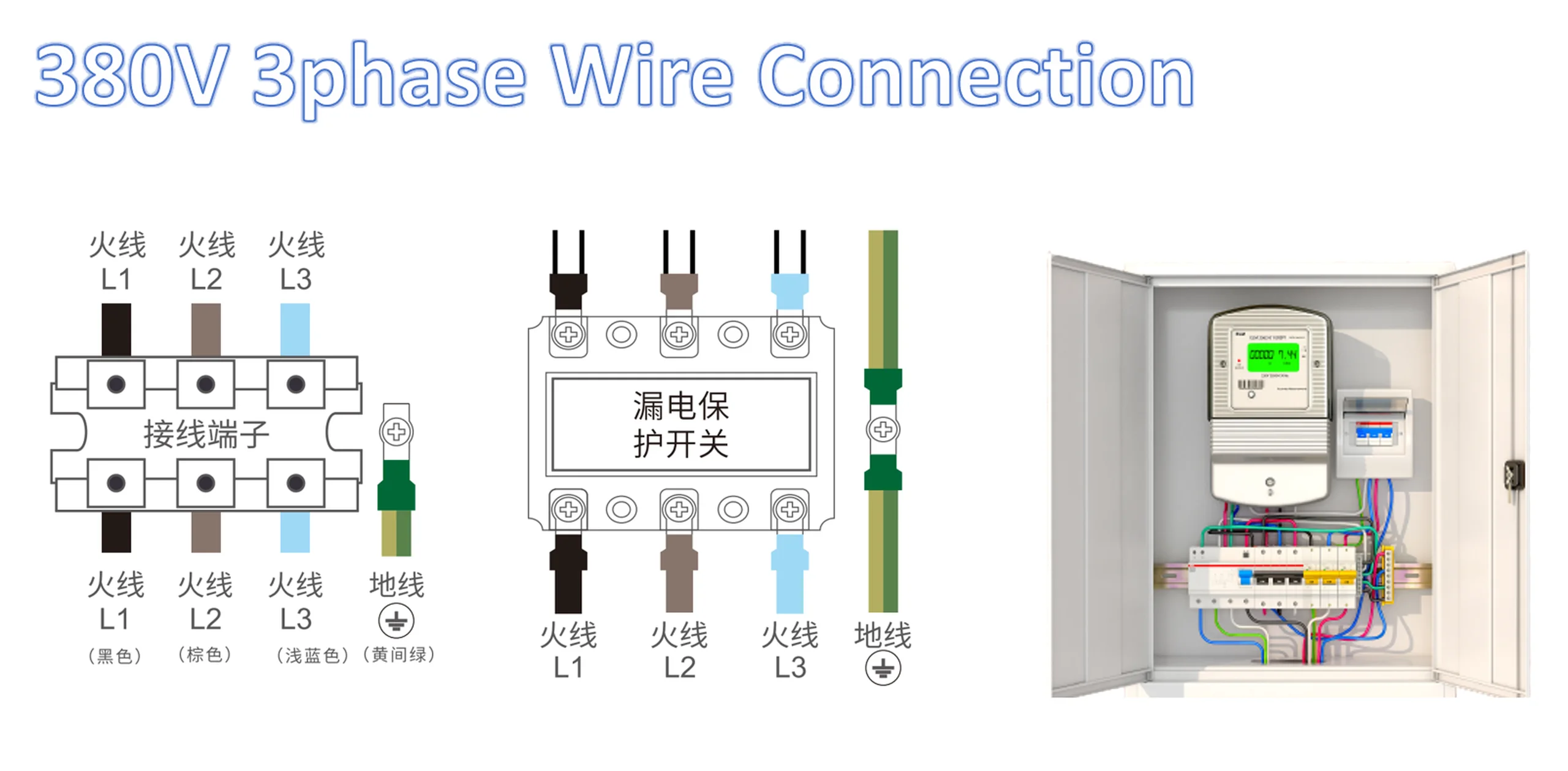
Commercial induction wok stoves come in two main voltage types: single-phase 220V and three-phase 380V. Country standards vary. The US typically uses 208V/240V. Europe runs on 380V/415V. Parts of the Middle East use 415V/480V.
The mistake happens when buyers look at the machine specs but never check their own kitchen’s electrical setup. The unit arrives, and then they discover the wiring can’t handle the load, the breaker is too small, or there’s no three-phase connection at all. Rewiring after the fact costs time and money.
A simple formula helps you check in advance: Current = Power ÷ Voltage. A 12kW stove on single-phase 220V draws about 54.5A. If your breaker is rated for 32A, that won’t work. The same 12kW stove on three-phase 380V draws only about 18.2A — much easier for your circuit to handle.
Before you order, have an electrician confirm your wire gauge, breaker capacity, and available voltage. Five minutes of checking can prevent weeks of delays.
Cooking Surface Diameter
Concave surface diameters range from 300mm to 1,200mm, fitting woks from 8 liters up to 180 liters.
The logic is straightforward: figure out your batch size first, then pick the wok, then match the stove to the wok. If you’re stir-frying 2–3 kg per batch (4–6 plates per round), you’ll typically need a 400–500mm round-bottom wok. The stove’s concave opening should be slightly larger than the wok’s curved bottom so the coils cover it completely.
One detail that’s easy to miss: the concave curvature must match your wok’s bottom curvature. If the wok sits deeper than the groove, only the edges make contact and the center floats — heating efficiency drops sharply. If the wok is too flat for the concave surface, it wobbles. That’s a safety problem, especially during toss-frying.
Measure your existing woks before buying. If you’re having the manufacturer supply woks, confirm the material, size, and curvature match the stove. “Bought the stove, wok doesn’t fit” sounds like a rookie mistake, but it happens more often than you’d think.
Body Material
Commercial kitchens are tough environments — heat, grease, and daily water blasting. Wok stoves get it worse than most equipment. The wok slams down hundreds of times a day. Oil splatters coat the body. Cleaning means hosing the whole thing down. What the body is made of determines how long the stove lasts.
Three things to check:
Stainless steel thickness. Wok stoves take more physical abuse than stock pot stoves or steamers because of toss-frying impact. Thin steel warps within months. Look for 1.2mm or thicker. A quick test: knock on the panel. A dull thud usually means heavier gauge steel than a tinny ring.
Ceramic glass panel grade. The panel has to handle both high heat and the physical shock of a wok being slammed into it repeatedly. Good panels are rated above 700°C and can support 125 kg. Cheap panels crack within six months. Ask the manufacturer for the exact temperature and load ratings — those numbers tell you more than any sales pitch.
Waterproof rating. Wok stations accumulate grease fast, which means more frequent and heavier washdowns. IPX4 is the minimum — it means the machine can handle splashing water from any angle. Below that, moisture damage to the circuit board is just a matter of time.
Countertop or Freestanding? It Depends on Your Kitchen
After you’ve nailed down power, voltage, and size, the next question is form factor. Choosing a commercial induction wok cooker in the right format comes down to how much space you have and how much output you need.
Countertop: Flexible, but Limited
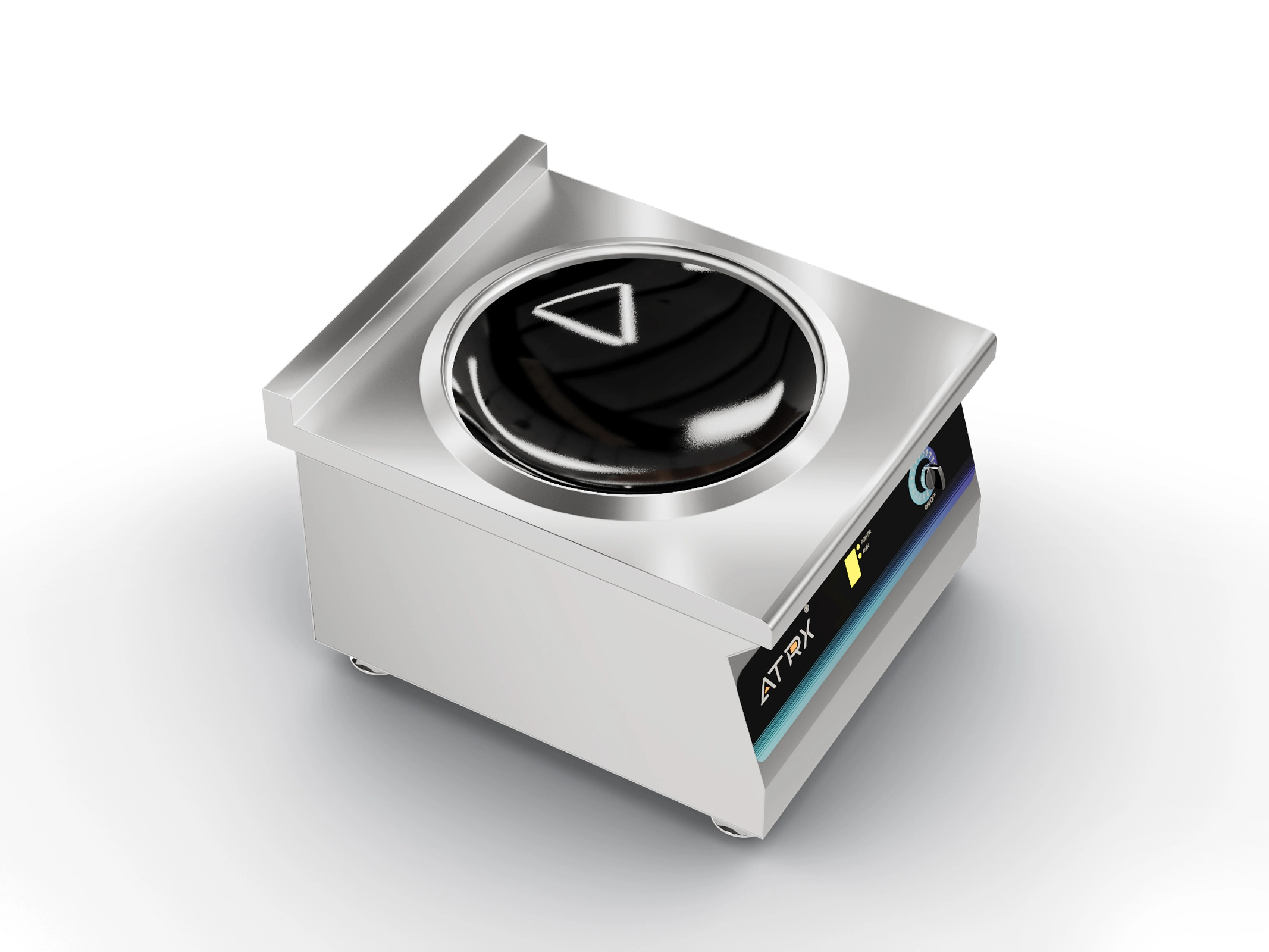
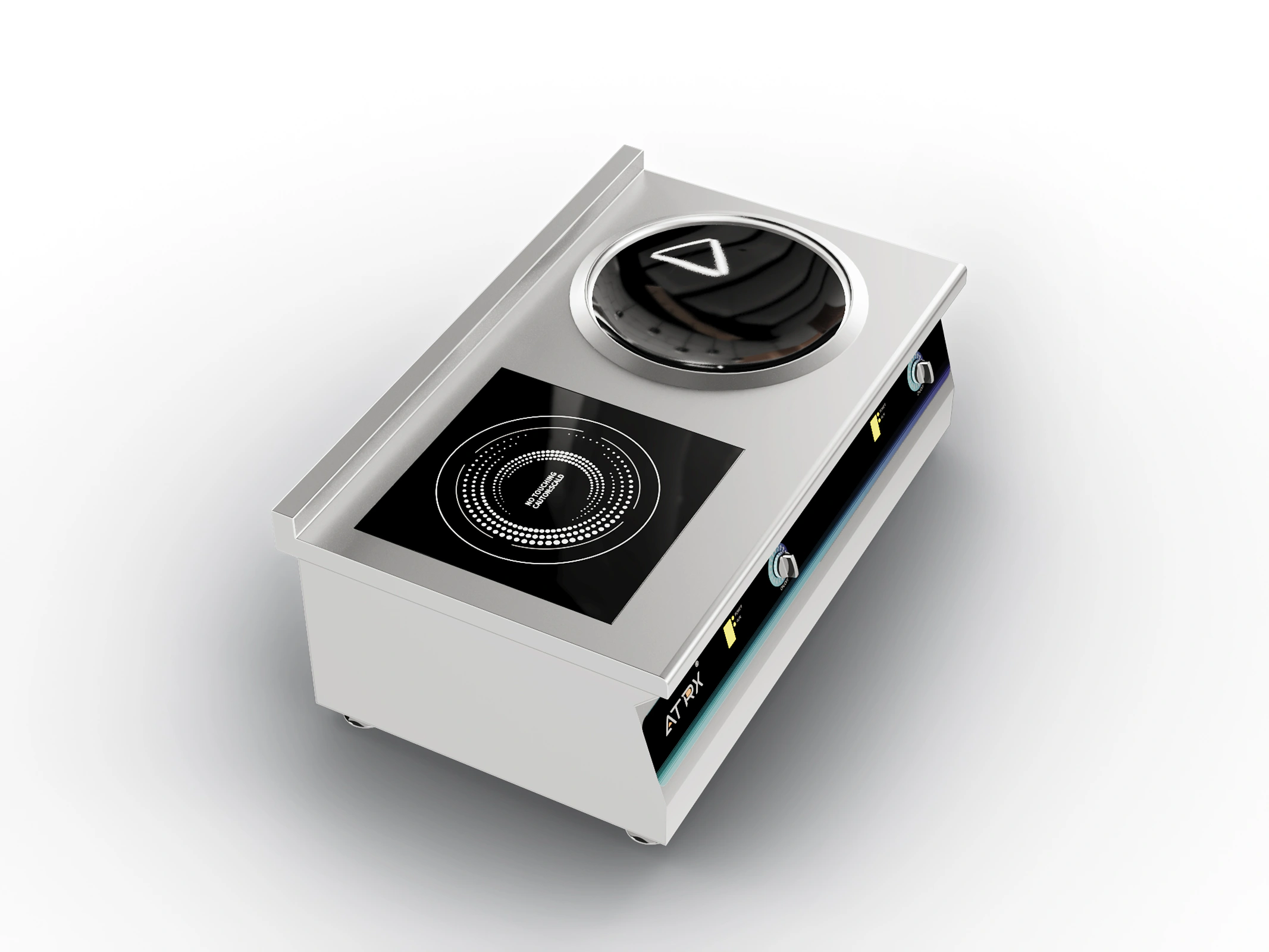
Countertop units sit on a worktable. No floor space needed, easy to move. They’re ideal for food trucks, small stalls, fast-casual windows, and temporary cooking setups at events.
The trade-off is power. Most countertop wok stoves only support single-phase electricity, capping out around 5kW. That’s fine for a small operation with moderate volume. But at 5kW, temperature recovery is slow. If your stir-fry orders regularly exceed 100 servings during peak hours, a countertop unit will likely bottleneck your kitchen.
Countertop gives you flexibility. Just make sure that flexibility isn’t coming at the cost of output when it matters most.
Freestanding: Built for Volume
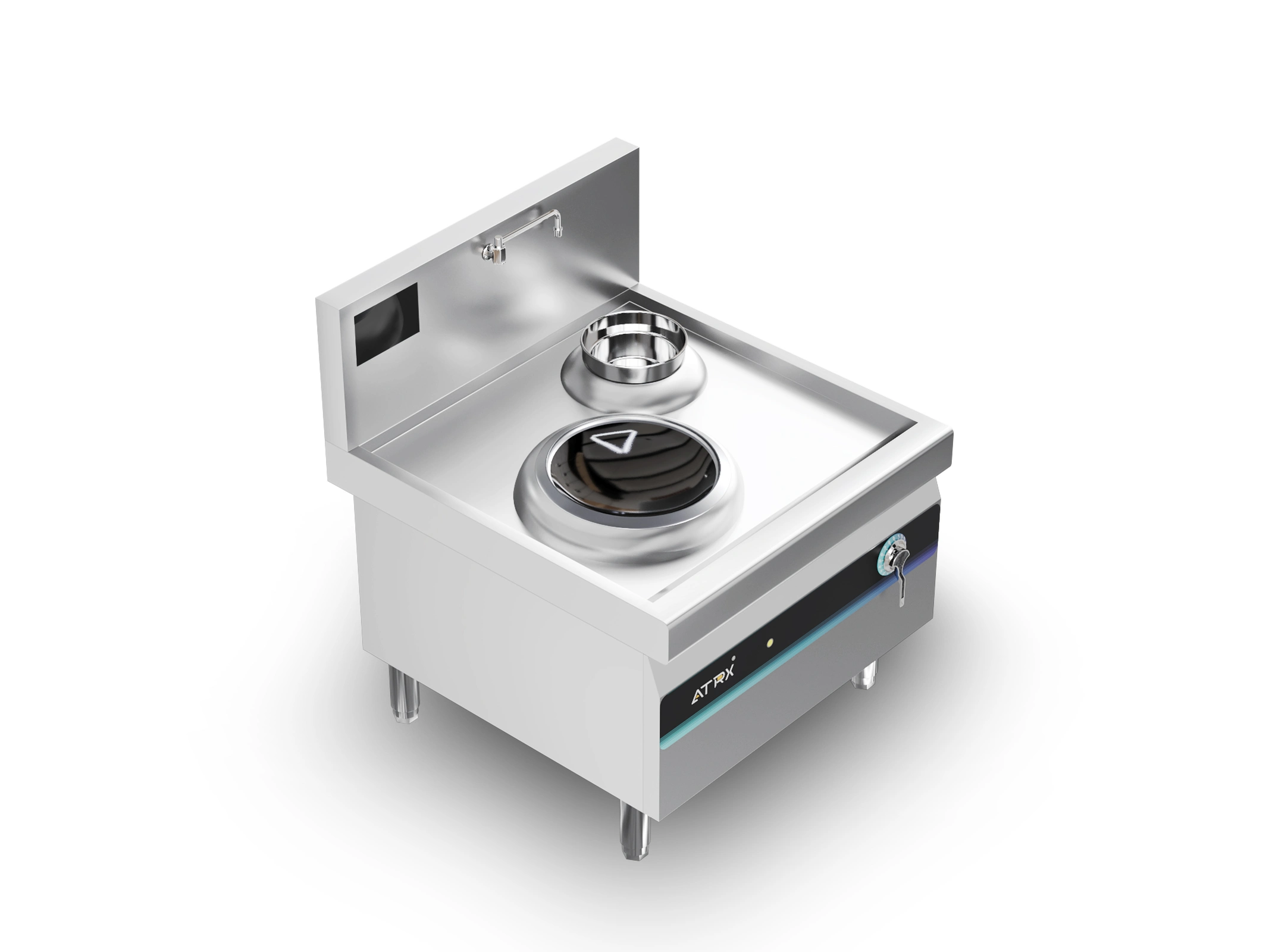
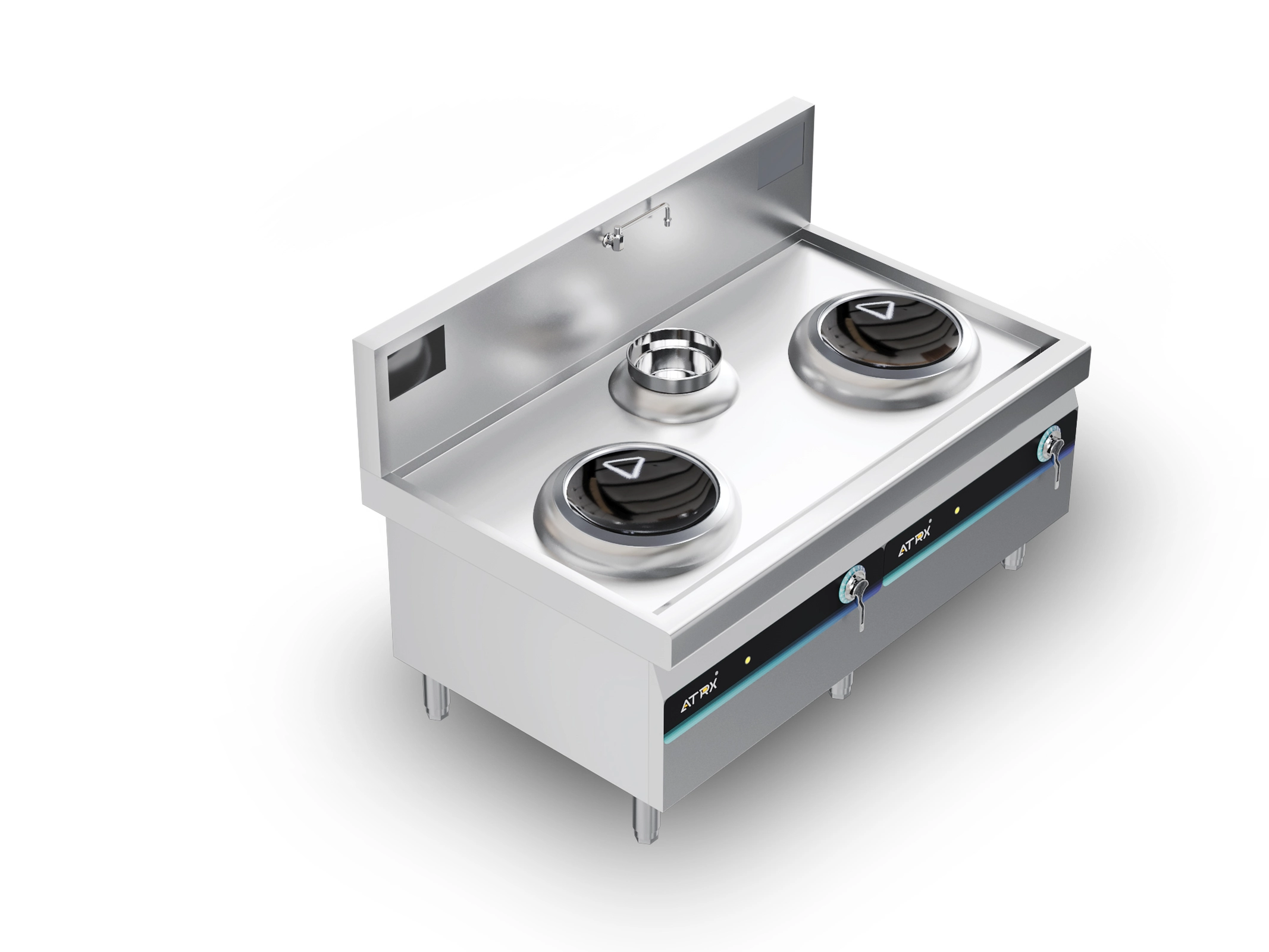
Freestanding wok stoves are the standard for mid-to-large kitchens. They run on three-phase power, cover 15kW to 30kW, and some models integrate a water basin or dual burners — one machine, two workstations.
But you can’t just drop one on the floor and plug it in. Before installation, confirm these four things:
Kitchen space. The machine needs clearance for airflow, and the chef needs room to toss-fry and move. Cramped setups create safety problems.
Floor load capacity. Machine weight plus wok plus ingredients adds up — check this especially if your kitchen has a raised floor.
Drainage. Wok stations get washed down constantly. Poor drainage means standing water around electrical equipment. That’s a serious hazard.
Professional electrical installation. Three-phase wiring is not a DIY job. Hire a licensed electrician.
When these conditions are met, freestanding units offer better output stability and a noticeably better long-term experience. Ready to compare specific models? You can filter by power and format here: browse all commercial induction wok stove products.
Common Mistakes When Buying a Commercial Induction Wok Stove
These are the errors we see again and again. Knowing how to select a commercial induction wok burner means understanding not just what to buy, but what to avoid.
Comparing price without checking electrical specs. Two stoves look the same, one costs 30% less — easy choice, right? Then it arrives and you find the voltage doesn’t match your supply. Or the power is overstated: labeled 12kW, but actual output is closer to 8kW. Always compare units at the same power and voltage. Otherwise, the comparison is meaningless.
Guessing on power. “8kW should be enough” is not a strategy. Power should be based on your daily stir-fry volume and menu mix. If you’re not sure, send your menu and daily output numbers to the manufacturer. They’ve seen hundreds of kitchens. Their recommendation will be more accurate than a guess.
Ignoring after-sales and spare parts. Induction wok stoves aren’t disposable. The concave ceramic panel takes constant impact from toss-frying and eventually needs replacing. So do coils and cooling fans. If the manufacturer has no parts supply or service network in your region, a cracked panel could mean weeks of downtime. Before you order, ask: Can I buy the concave panel separately? What’s the lead time on parts? Is there local service support?
Treating a “beefed-up home unit” as commercial equipment. Some budget products are essentially household induction cooktops with a bigger coil. The cooling system, panel durability, and waterproofing don’t meet commercial wok stove demands. The easiest way to check: ask for the rated continuous operating time. Home-grade units top out at about 2 hours. A commercial wok stove needs to run 8+ hours straight without throttling power. If the manufacturer can’t give you that number, move on.
Frequently Asked Questions
What’s the actual difference between a commercial induction wok stove and a household induction cooktop?
Three things. Power: commercial starts at 3.5kW, household maxes out around 2kW — that gap shows up directly in heat intensity and recovery speed. Cooling: commercial units use industrial fans built for continuous all-day operation; household units are designed for intermittent use only.
Structural strength: a commercial wok stove’s concave panel absorbs hundreds of toss-frying impacts daily, and the body is reinforced with heavy-gauge stainless steel. Household units aren’t built for that kind of punishment because the home cooking scenario doesn’t demand it.
Can an induction wok stove produce wok hei?
Yes — with the right setup. Wok hei comes from oil flash-vaporizing at extreme temperatures, producing distinctive flavor compounds. The wok needs to hit 300°C or above.
Getting an empty wok to 300°C isn’t the hard part. The challenge is staying there after cold ingredients go in. The wok temperature crashes on contact. You need enough power to recover fast. At 12kW and above, recovery is quick enough to maintain the conditions for wok hei. A 5kW stove can technically reach 300°C with an empty wok, but once food goes in, the temperature drops and can’t climb back fast enough — the wok hei window closes.
Pair a 12kW+ stove with a carbon steel round-bottom wok and a properly matched concave coil, and you can absolutely produce wok hei on induction.
What certifications does a commercial induction wok stove need?
It depends on your market. Europe requires CE. North America looks for UL or ETL. China requires CCC. These stoves are high-power electrical equipment — regulators pay close attention to them.
Missing certifications isn’t just a compliance issue. In many markets, it means failing fire inspections, being denied a food service license, or having insurance claims rejected after an incident. If you’re a distributor exporting to other countries, check for any additional electrical safety or hygiene certifications required at the destination. Confirm this during procurement, not after the container ships.
How long does a commercial induction wok stove last?
That depends on usage and maintenance. The two main wear components — the electromagnetic coil and the ceramic glass panel — typically have a design life of 3,000 to 5,000 hours. At 8 hours of daily use, that’s roughly 1.5 to 2 years before they need replacing. The machine itself doesn’t die at that point. The stainless steel frame and main circuit board last much longer. You replace the wear parts and keep going.
This is worth factoring into your total cost. The sticker price is just the starting point. Add the cost of one panel replacement and one coil replacement over two years, plus daily electricity, and you get a much more accurate picture of what you’ll actually spend. Before buying, ask: what does a replacement panel cost? What does a replacement coil cost? Those numbers matter more than the upfront price tag.
Does an induction wok stove need kitchen ventilation?
The stove itself produces no combustion byproducts — no carbon monoxide, no nitrogen dioxide. So you don’t need a gas exhaust system. But stir-frying still produces cooking fumes, especially at high heat with oil. That comes from the food and oil, not the heat source. You still need fume extraction.
The upside: no open flame means no extra combustion heat dumped into the kitchen. The area around the wok station stays noticeably cooler than it would with an equivalent gas burner. That means better conditions for the chef and less strain on your ventilation system.
About the author

ATRX Team| 18 Years Commercial
Induction Cooker Manufacturer in China
Induction Cooker Manufacturer in China
Related Posts
How to Install a Built-In Induction Cooktop: A Step-by-Step Guide
09/17/2026
How to Clean a Commercial Deep Fryer: A Step-by-Step Guide
09/13/2026
High Quality Commercial Induction Cooker Manufacturer
09/09/2026
Automatic Wok Machine: Types, Specifications, Applications and Buying Guide
08/18/2026
What Is a Commercial Induction Cooker and How Does It Work
08/13/2026
Commercial Induction Range for Hotel Kitchens: How to Choose the Right Model
08/11/2026
China Commercial Induction Cooker Manufacturer
08/09/2026
10 Best Commercial Induction Cooker Manufacturers & Supplier Selection Guide [2026]
08/07/2026
Tilting Skillet & Bratt Pan: How to Choose the Right One for Your Commercial Kitchen
08/06/2026

Commercial Induction Cooker for School Cafeteria: How to Pick the Right High-Power Unit
08/04/2026