
OEM Commercial Induction Cooker Manufacturer
06/21/2026
Estimated reading time: 2 minutes
This article is for procurement decision-makers who are shortlisting OEM factories for commercial induction cookers — whether you are a distributor, a brand owner, or a purchasing lead for a restaurant chain. You may already know you need OEM manufacturing. The question now is: does this factory have the capacity, product range, customization depth, and delivery reliability to be worth your first inquiry? Here is a full breakdown of what ATRX can do as an OEM commercial induction cooker manufacturer.
IN THIS ARTICLE
Who Is ATRX — OEM Factory Scale and Production Capacity
ATRX was founded in 2007. The factory sits in Dongguan, Guangdong, and covers 20,000 square meters.
Overseas buyers almost always ask the same thing first: are you a real factory, or a trading company? The shortest answer — we build our own PCB boards. The factory runs a dedicated SMT workshop held to Class 100 cleanroom standards. IGBT soldering, motherboard testing, final assembly — all done in-house. A Turkish distributor who visited last year filmed the PCB line and sent the clip straight to his partner. His words: “Once I saw the PCB workshop, I knew this wasn’t a middleman.”
| Metric | Data | What It Means for You |
|---|---|---|
| Years in Operation | Since 2007 — 18 years | Proven supply chain and mature processes |
| Factory Area | 20,000 ㎡ | Multiple lines run in parallel; different OEM projects handled at the same time |
| Monthly Output | 3,000+ units | 200-unit orders ship within 15 days; 3,000-unit runs finish in a month |
| Export Reach | 50+ countries and regions | Familiar with varying voltage, certification, and packaging requirements |
| PCB Production | In-house, Class 100 cleanroom | Core electronics never outsourced; traceable down to component level |
Which Commercial Induction Cookers Can Be OEM’d
When choosing a factory, one practical question comes up fast: can this single supplier cover every product category I need? Sourcing countertop units from one place, wok ranges from another, and fryers from a third means tripling your audits, coordination, and quality checks.
ATRX covers all major types of commercial induction cooking equipment under one roof.
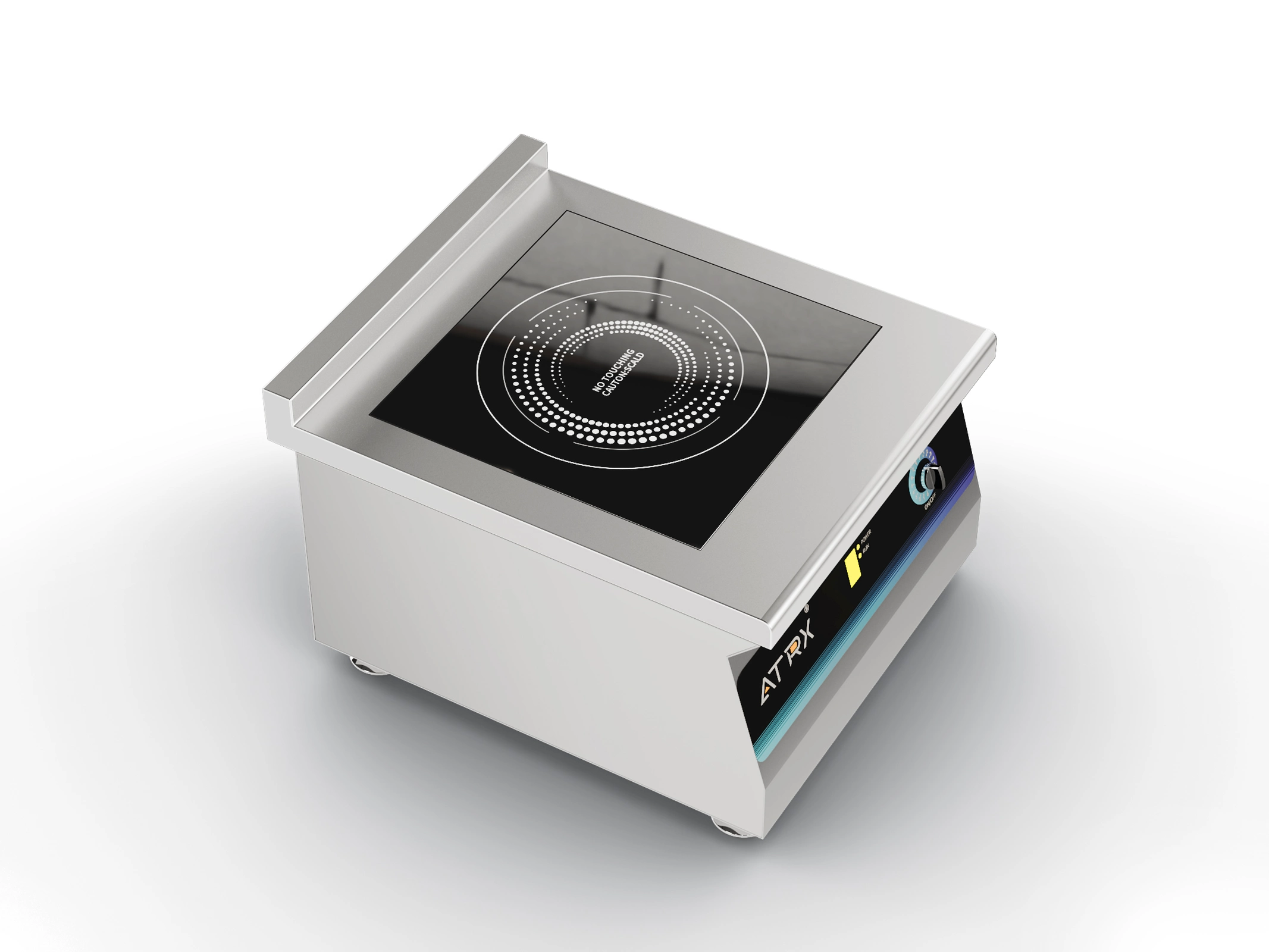
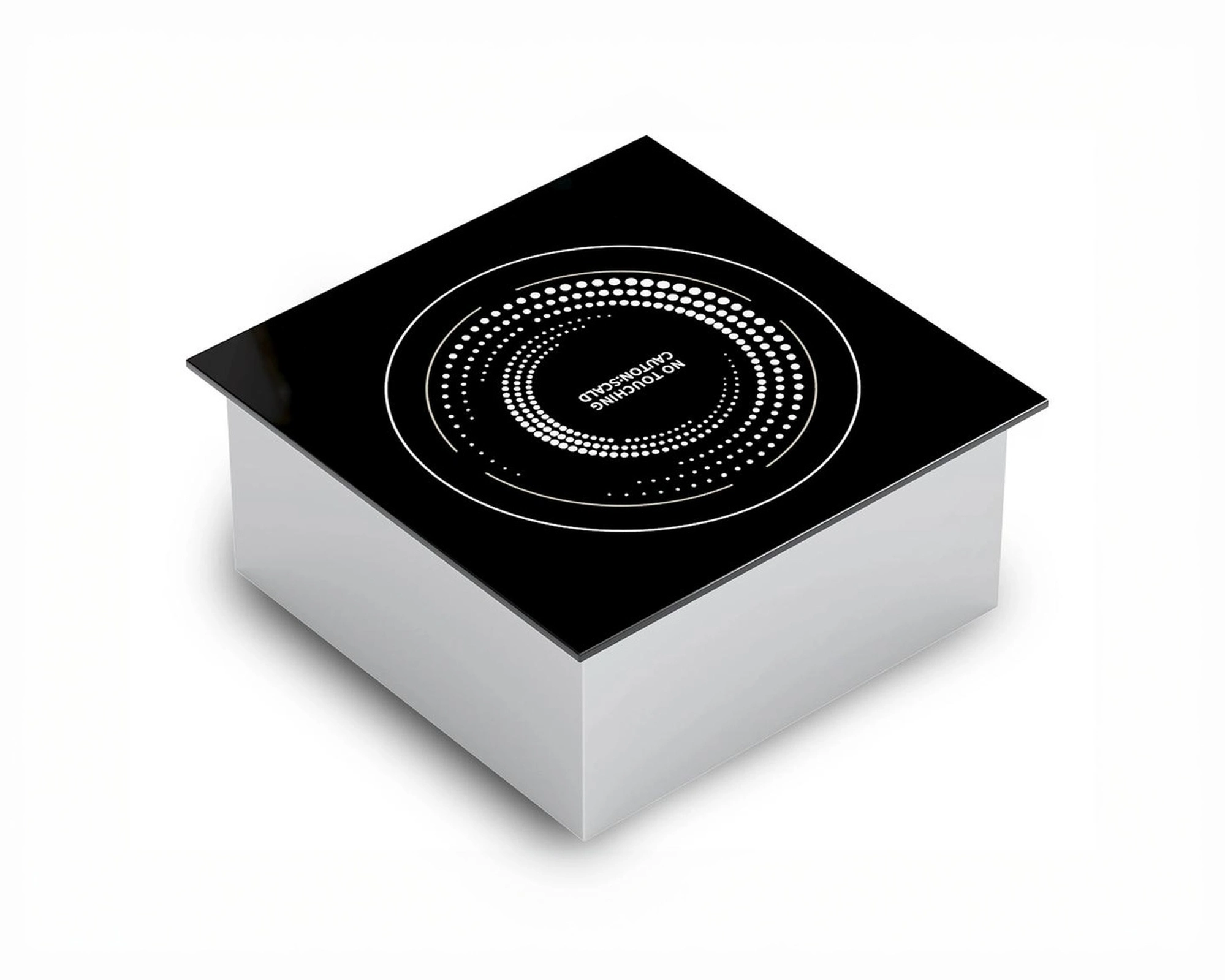
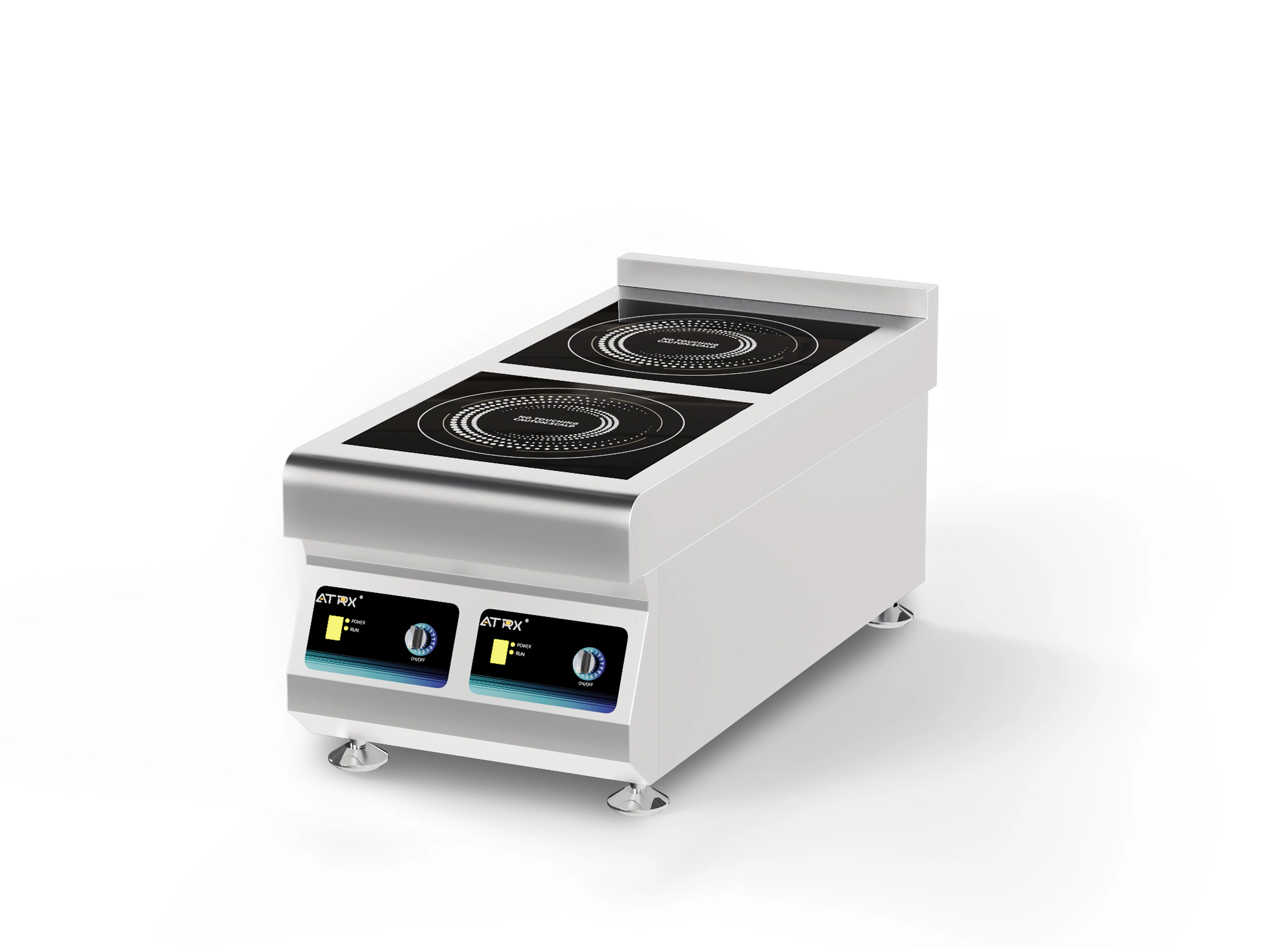
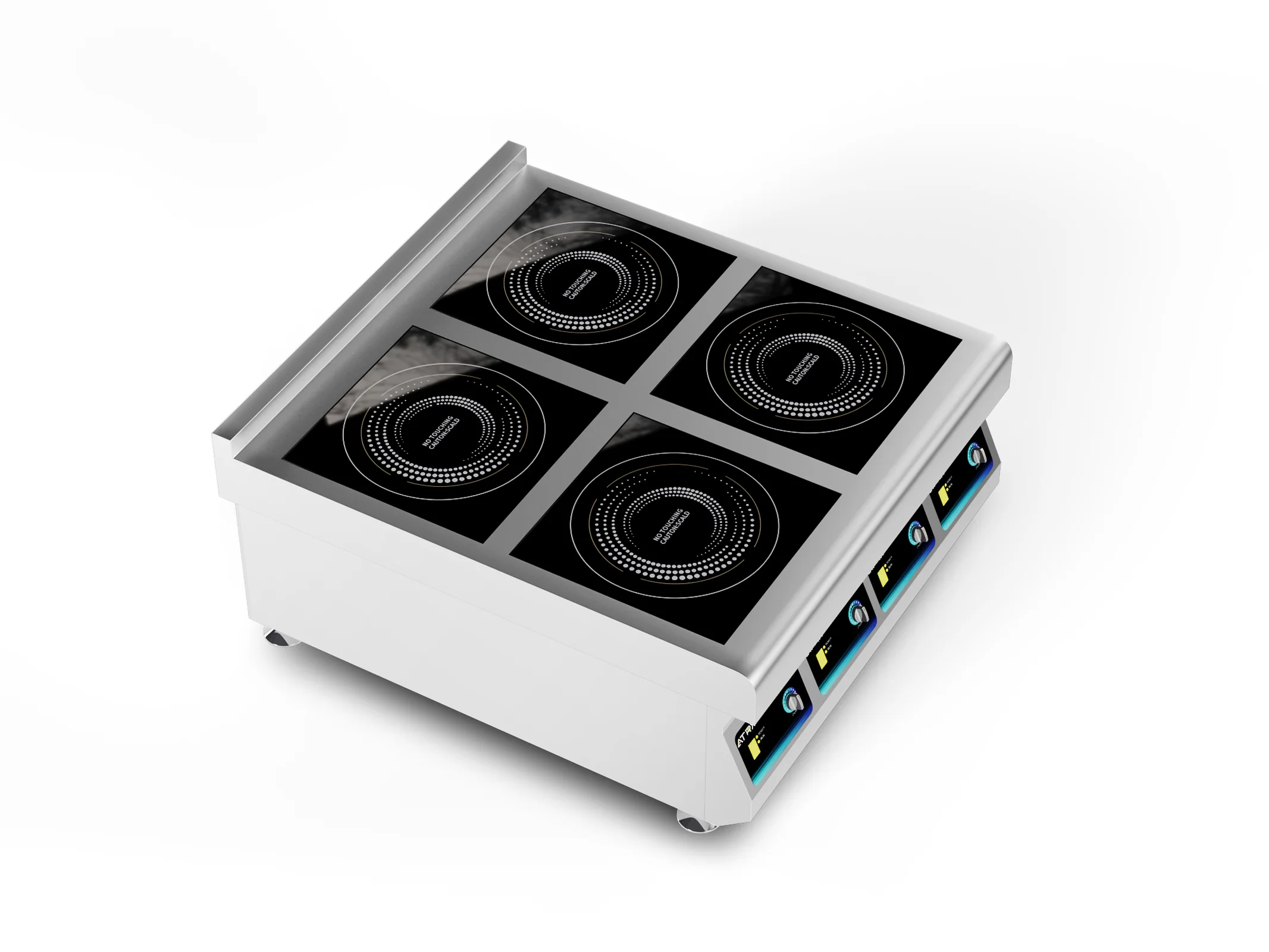
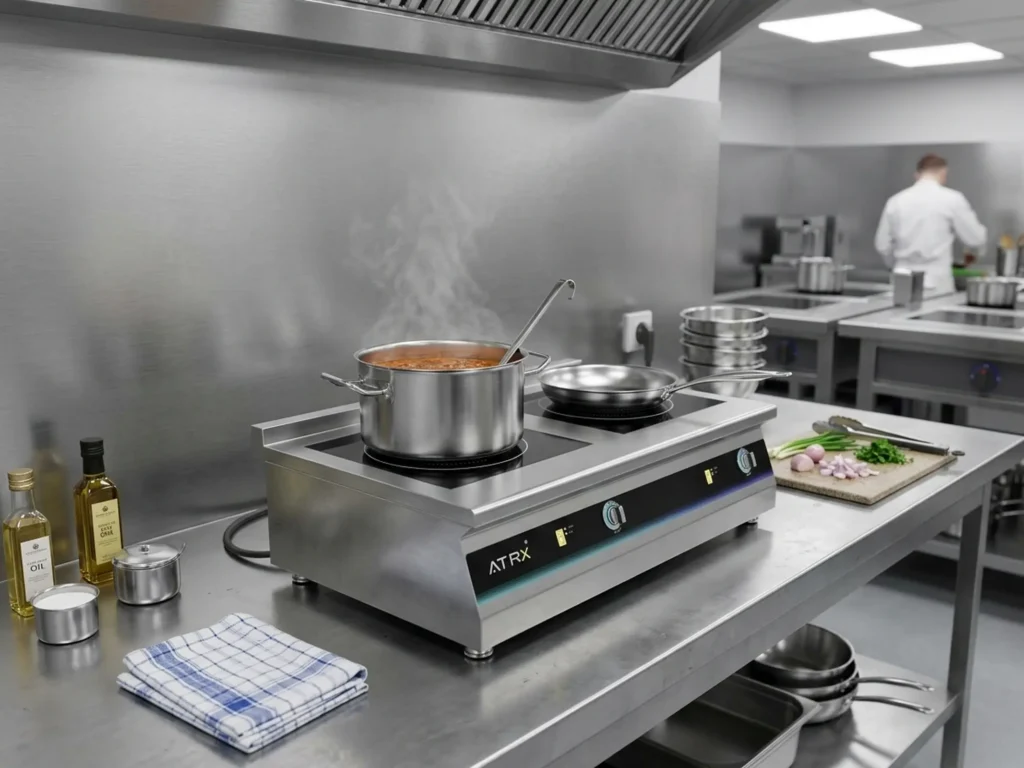
Countertop Commercial Induction Cookers
Power range: 3.5 kW to 8 kW. Single-burner and dual-burner options.
This is the highest-volume OEM category. The use cases are broad — buffet warming stations, beverage-shop brewing setups, food-truck prep counters, back-of-house stations. Small size, easy deployment, low retail price point. For distributors testing a new market, this is the lowest-risk entry.
Power and panel size can be adjusted to your target market. Southeast Asian buyers typically want compact 3.5 kW units; European buyers lean toward 5 kW wide-panel models. Tell us where you are selling, and we will match you to the specs that move.
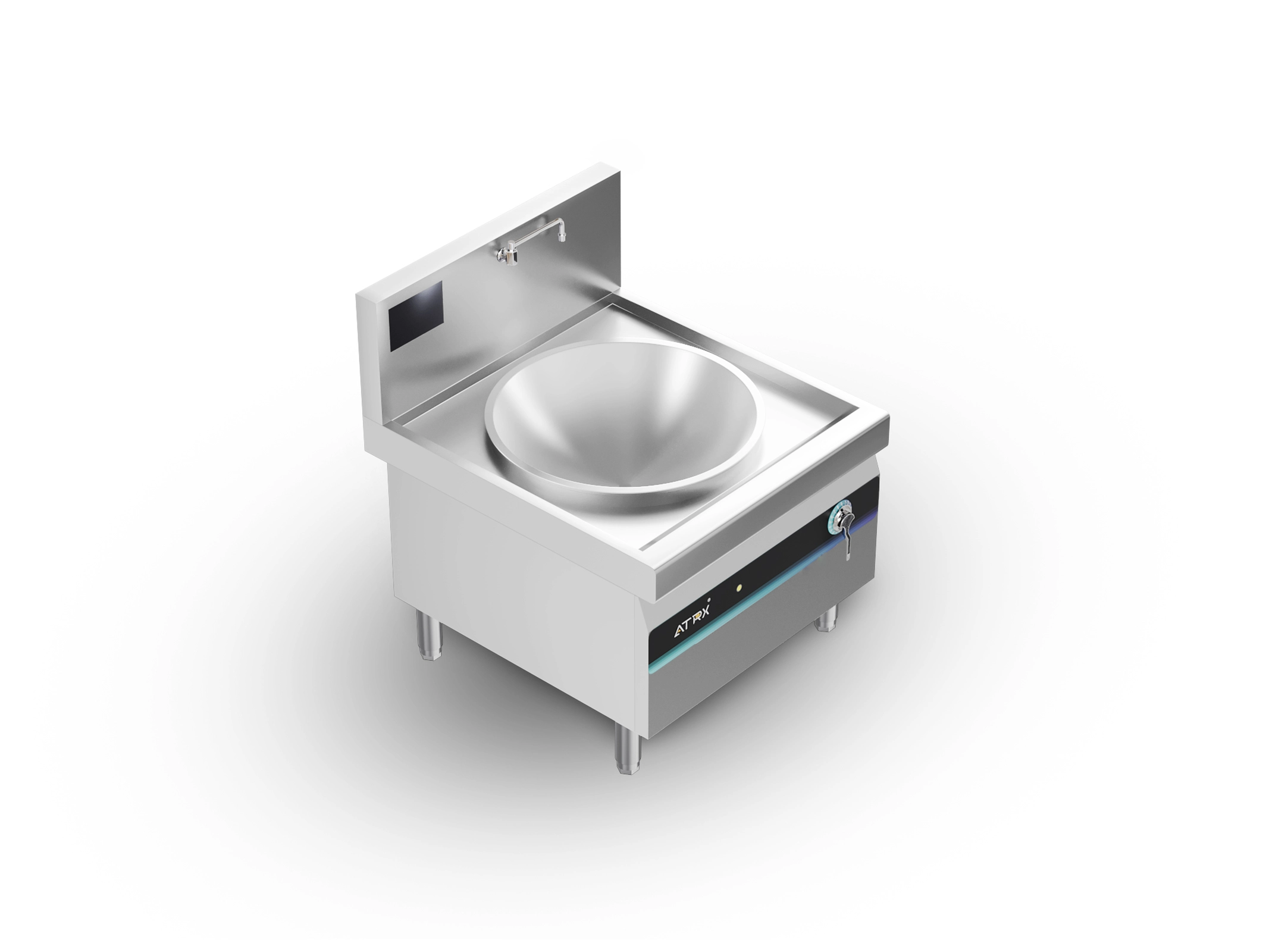
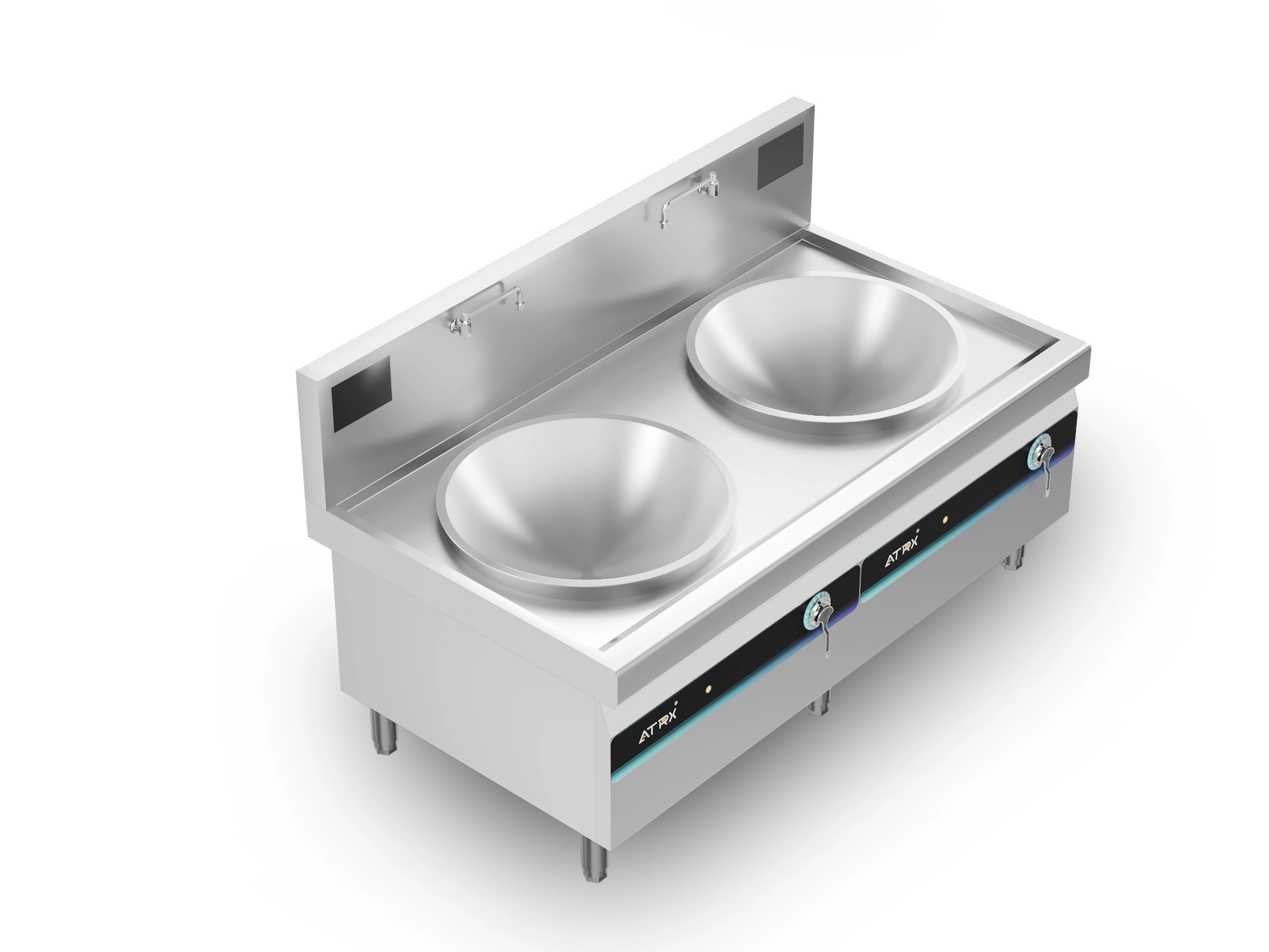
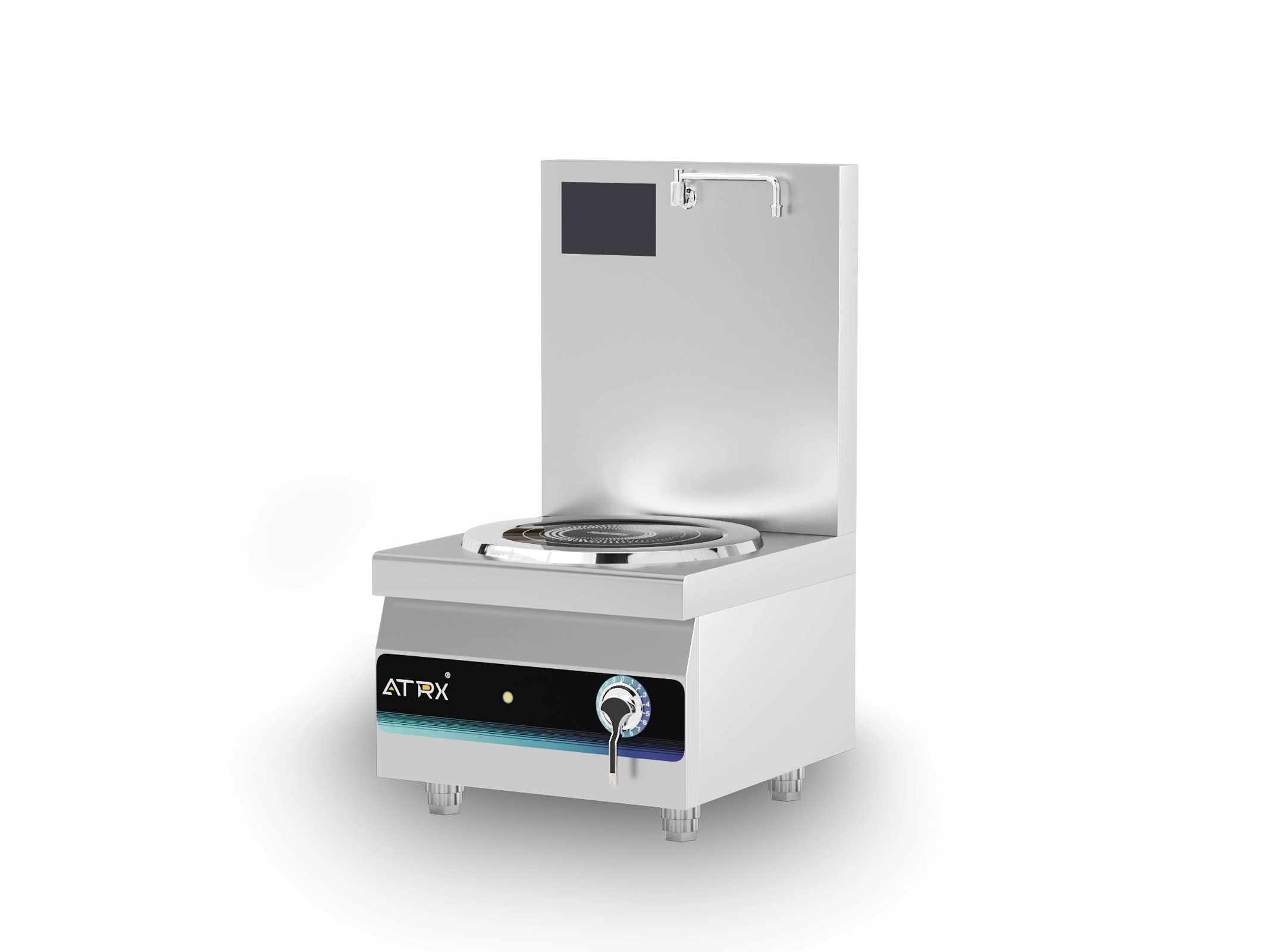
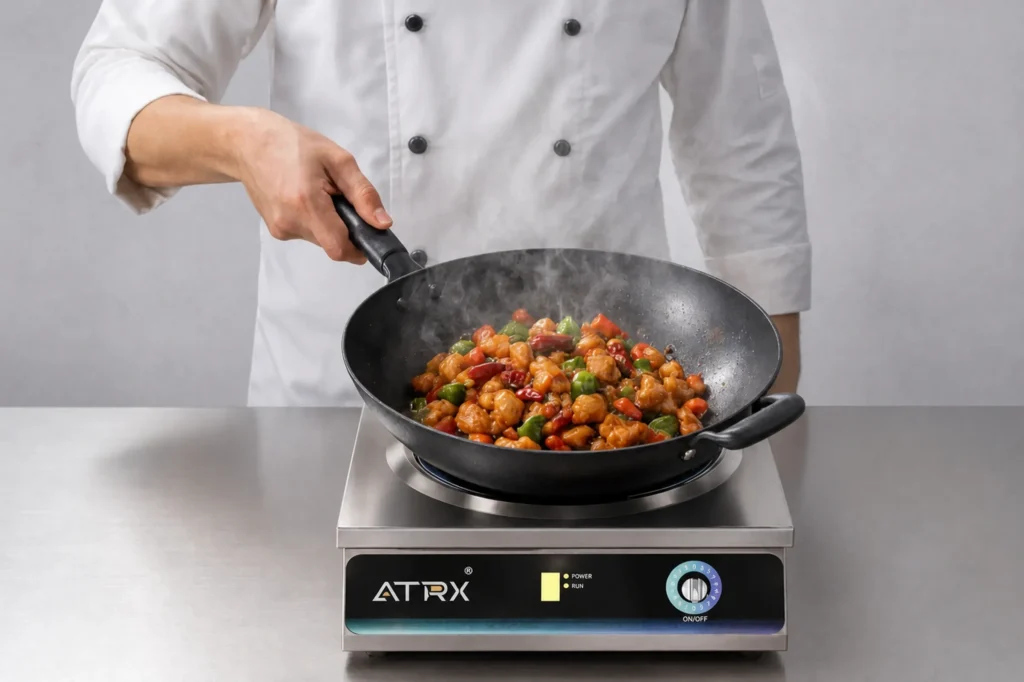
Floor-Standing Commercial Induction Wok Ranges
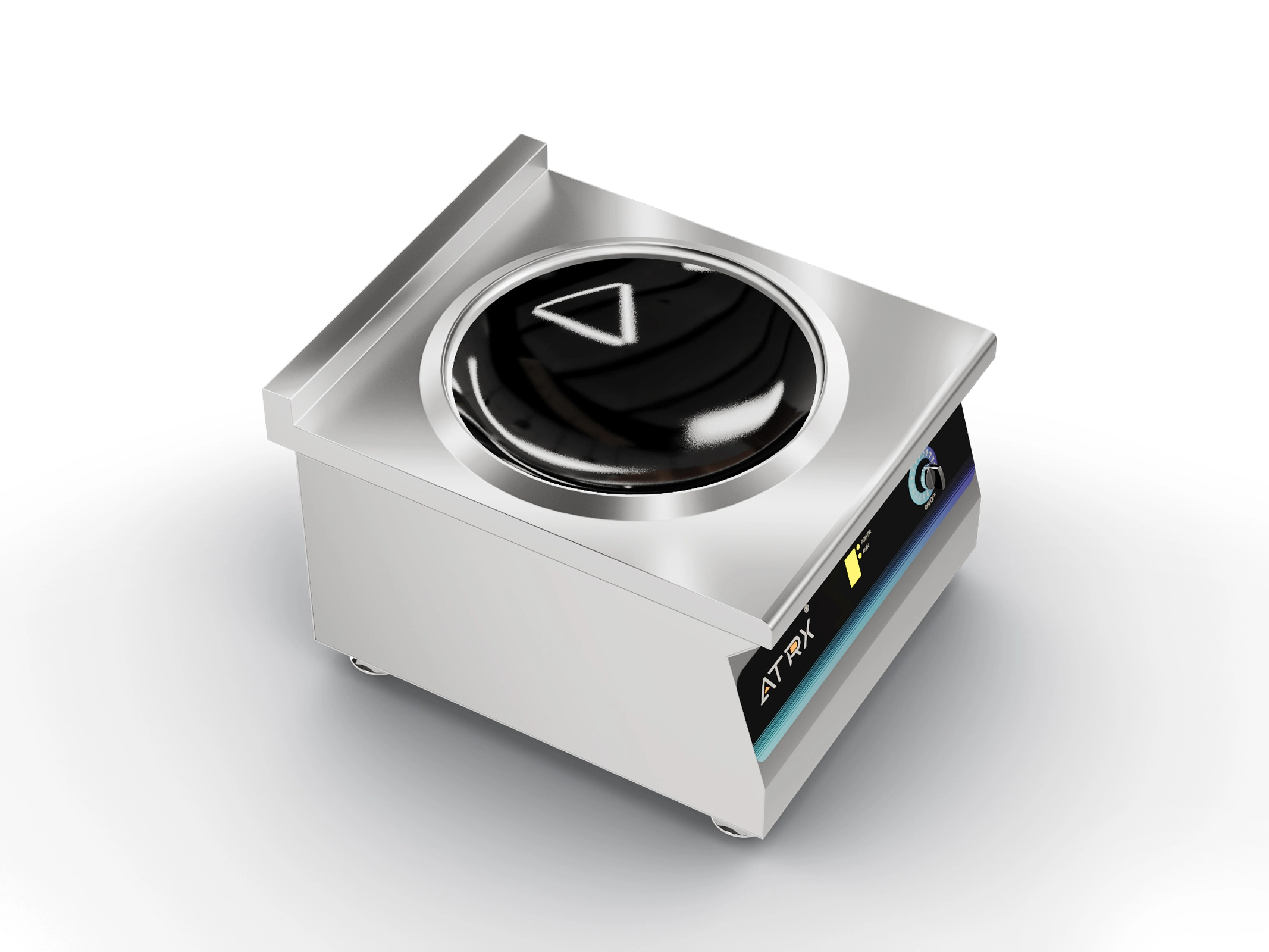
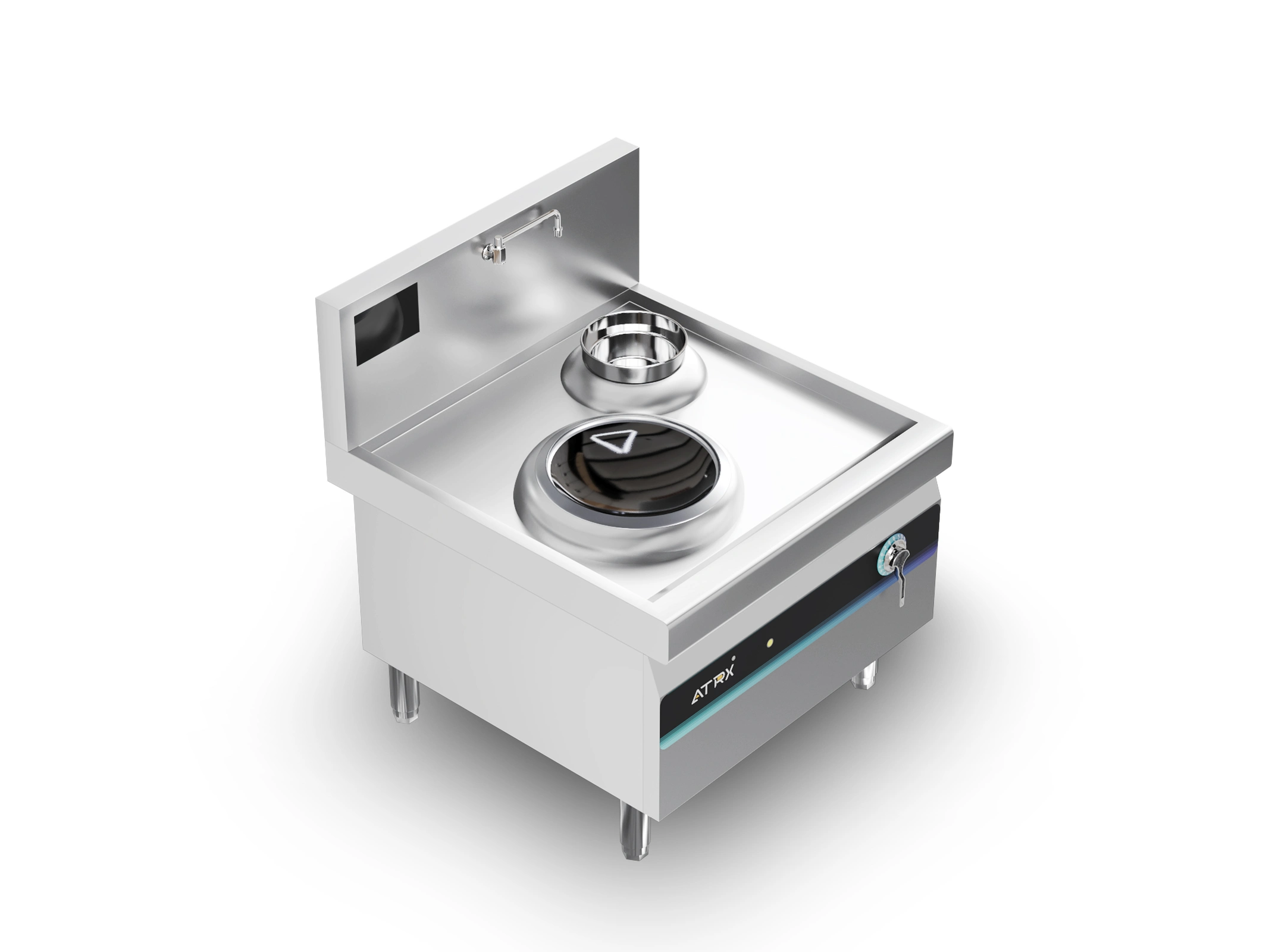
The main OEM category for overseas distributors. Power runs from 8 kW all the way to 20 kW.
The first fork in selection is not power — it is burner shape: concave or flat. That choice depends on what your end customers actually cook.
| Comparison | Concave Wok Range | Flat Cooktop Range |
|---|---|---|
| Best For | Chinese and Asian cuisines — tossing, high-heat stir-fry | Western and Middle Eastern cuisines — flat-pan searing, sautéing |
| Cookware | Round-bottom woks (iron or stainless steel) | Flat-bottom pans, stockpots |
| Top Export Markets | East Asia, Southeast Asia | Europe, Americas, Middle East |
Start with the cuisine, then pick the burner type. Power and dimensions follow from there. Voltage, wattage range, and enclosure size are all adjustable. For full model specs across every commercial induction cooktop OEM category, visit the ATRX product center.
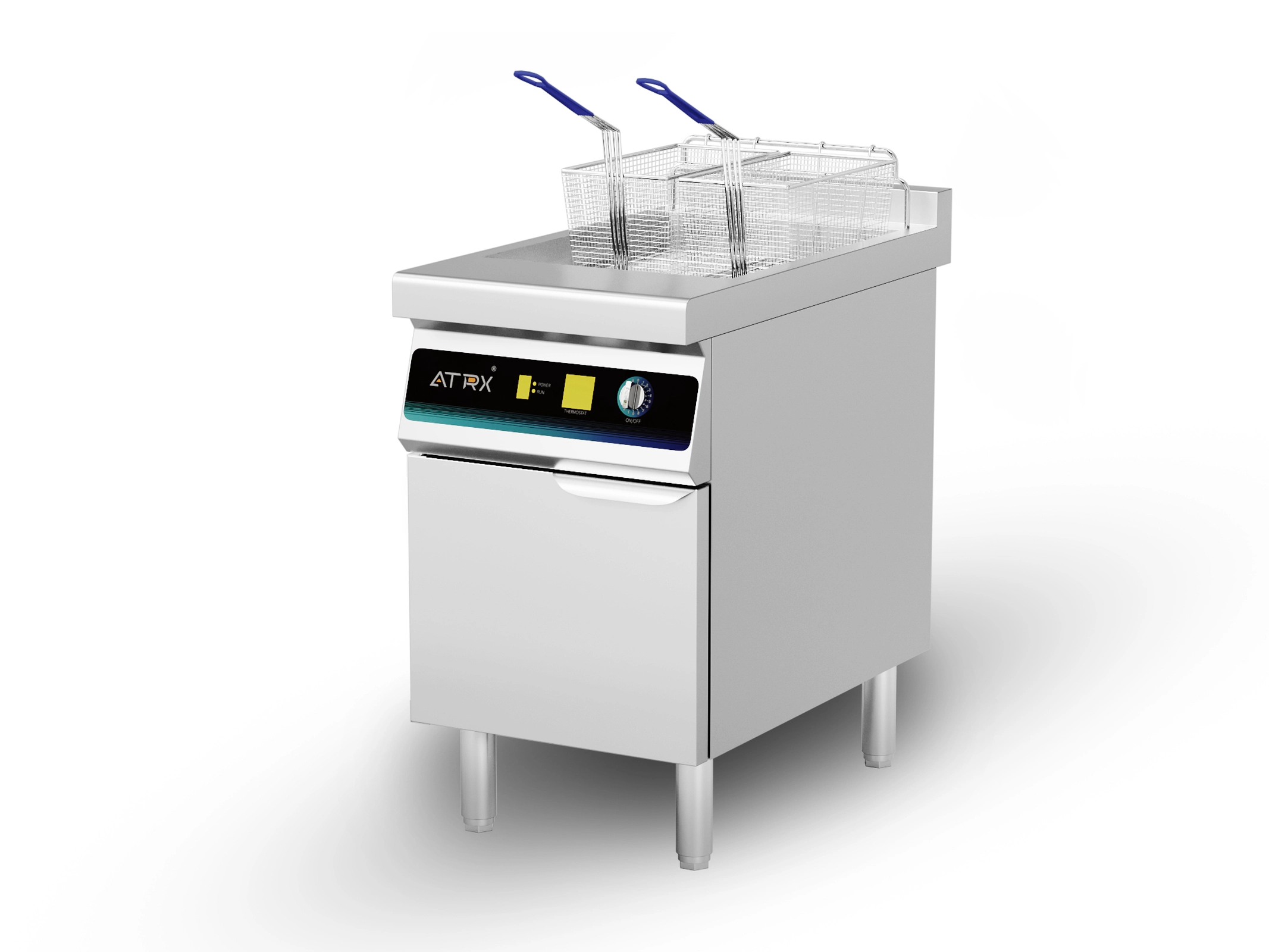
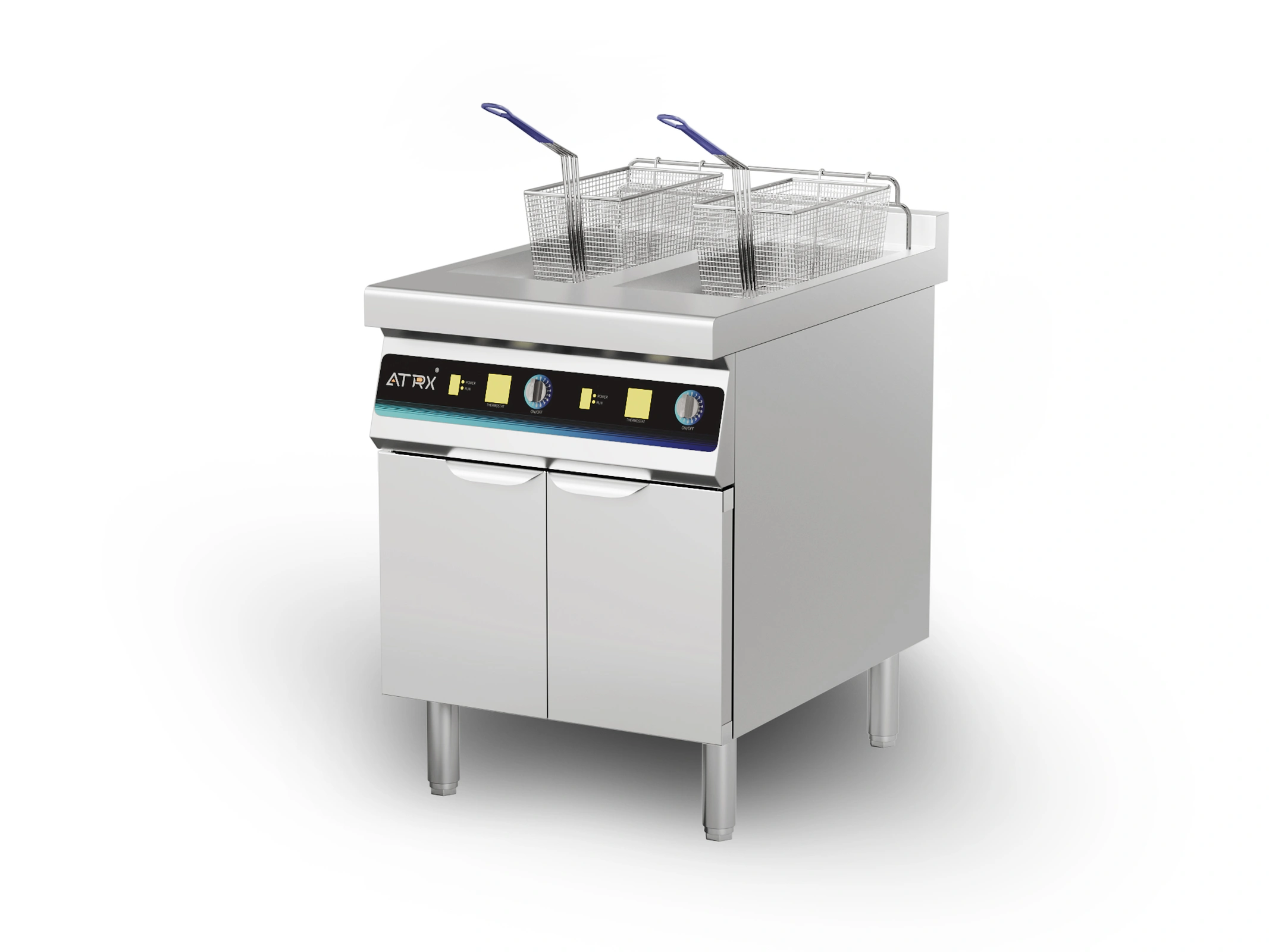
Commercial Induction Fryers
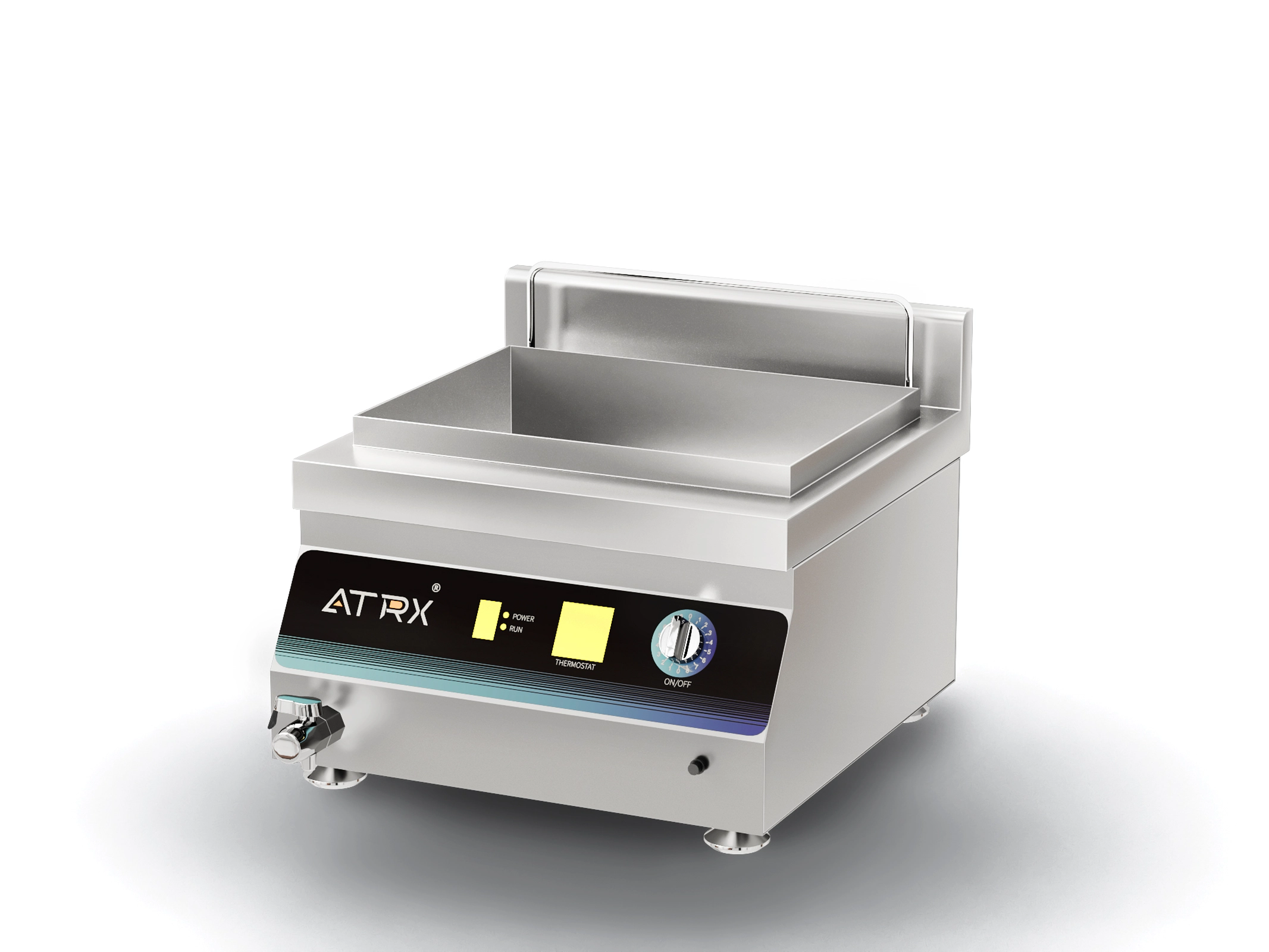
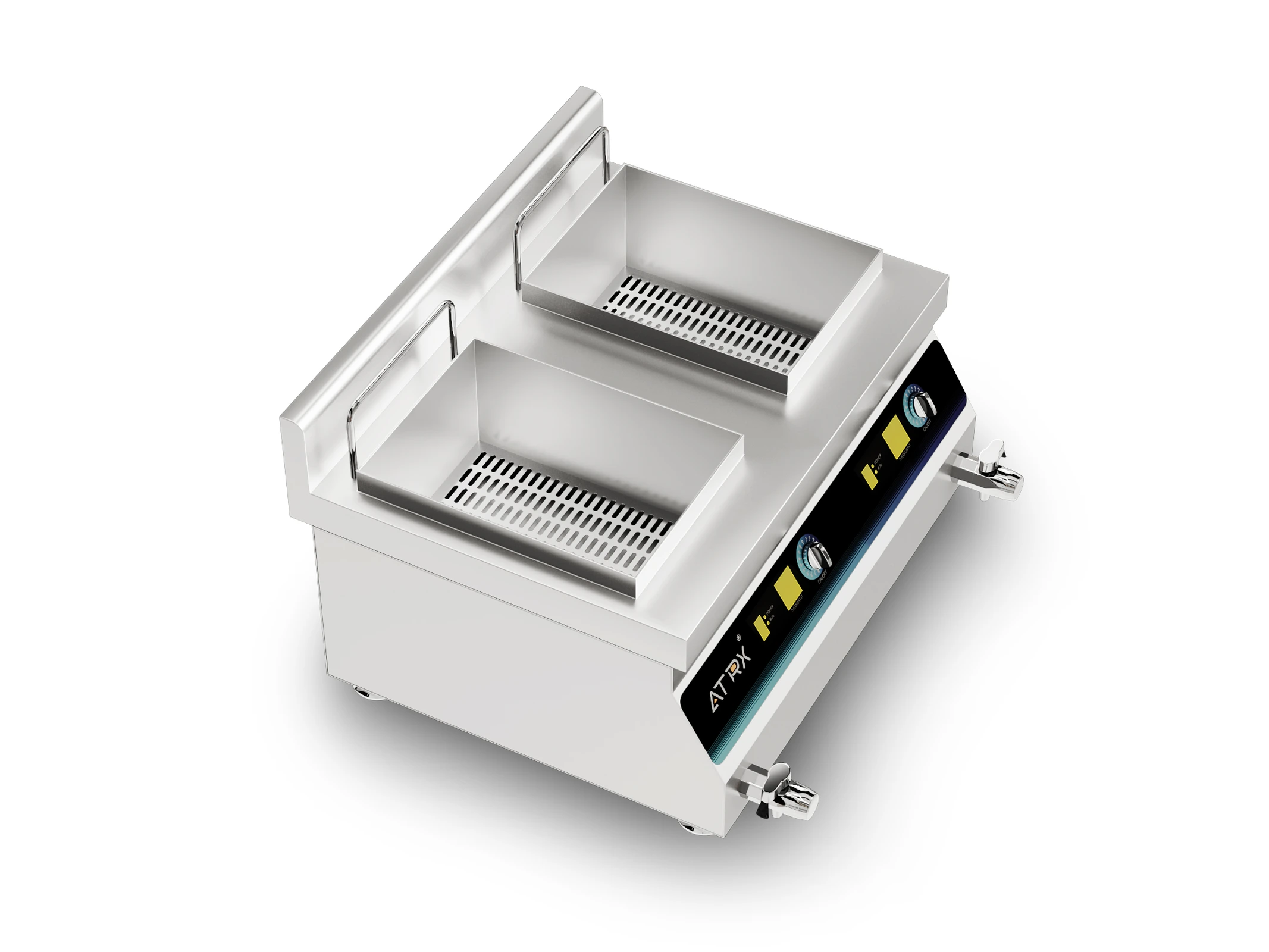
Single-tank and double-tank options. OEM orders mainly go to chain QSR brands and central kitchens.
The pitch to end users is simple: no open flame, precise oil-temperature control, lower energy bills. According to an ENERGY STAR evaluation report, induction heating reaches about 90% energy efficiency — roughly double the 40% typical of gas.
Common customization requests include tank capacity, oil-drain design, and control panel layout. If your customers have specific workflow preferences, those details get locked down during sampling.
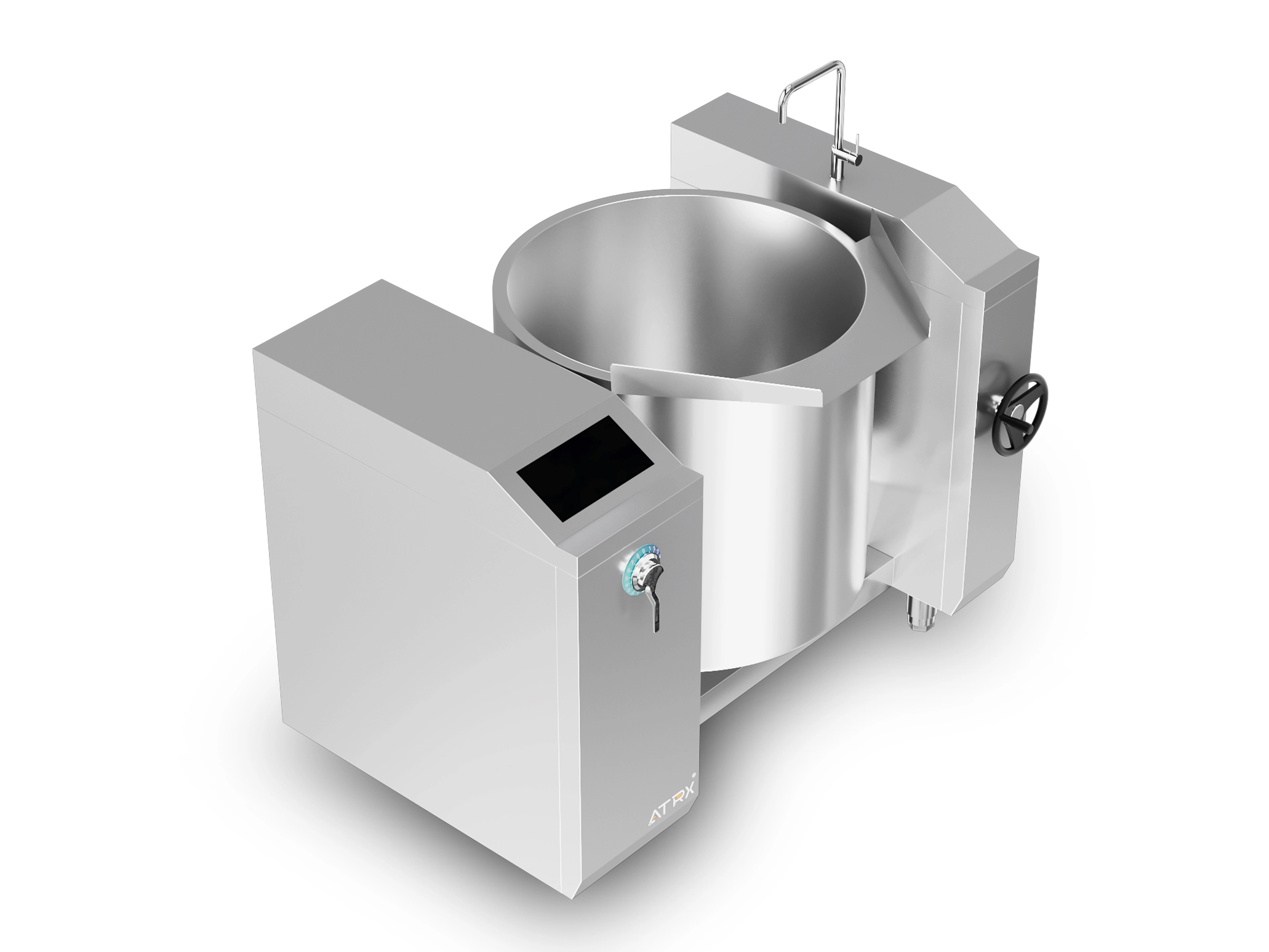
Induction Griddles and Steamer Cabinets
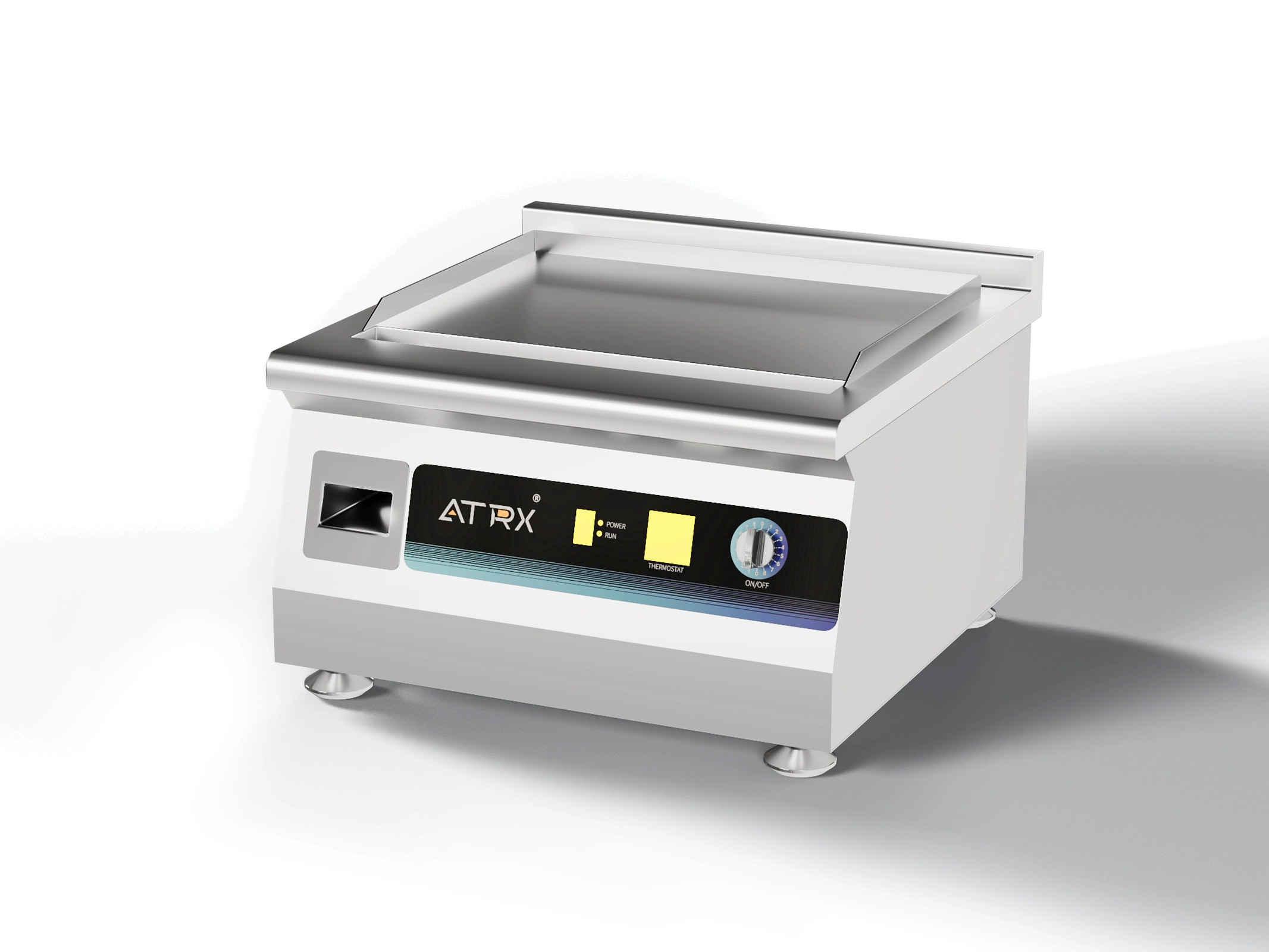
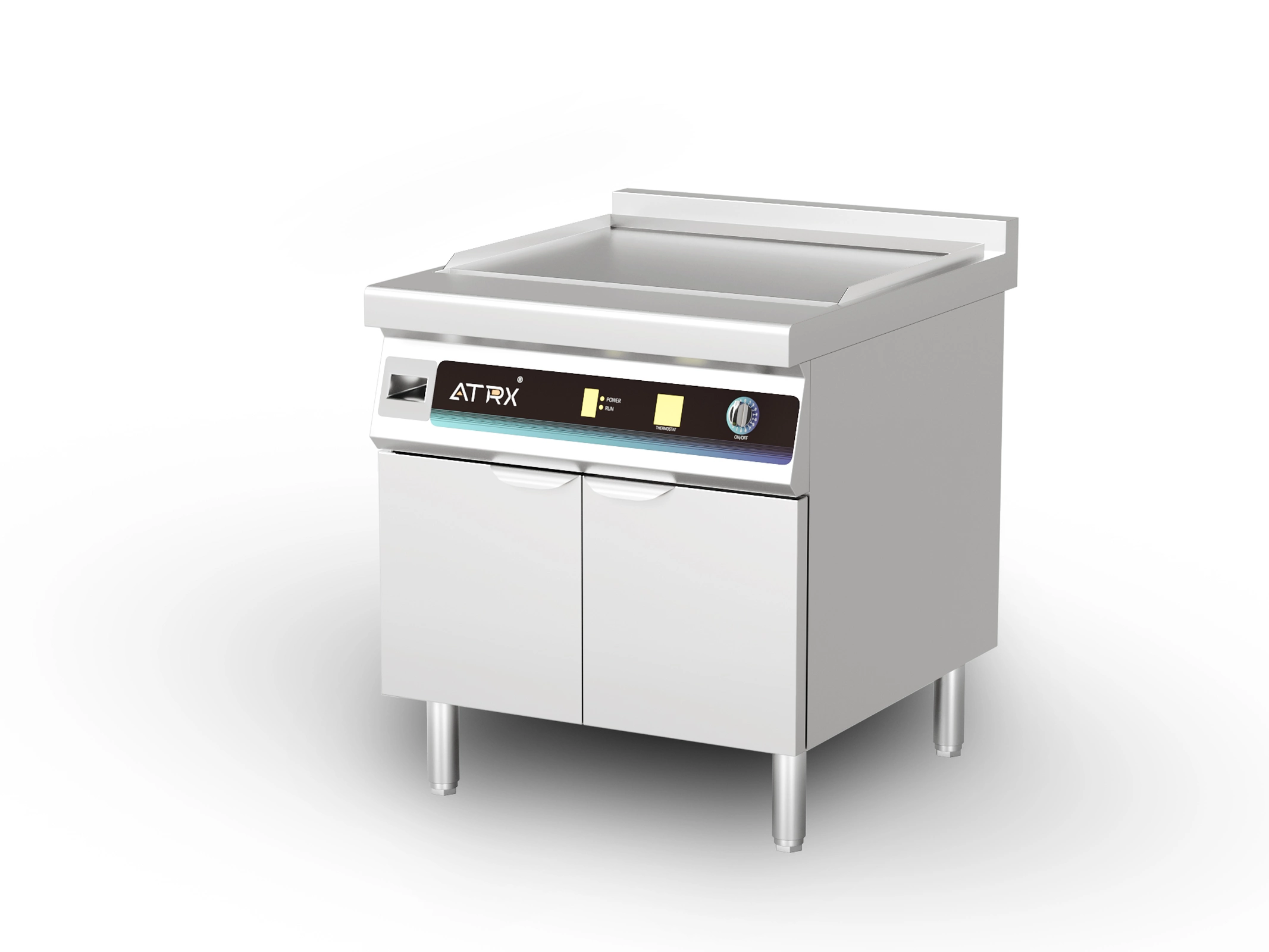
These two categories are not the biggest sellers on their own. Their value is strategic: they round out your product list so the entire order stays with one factory.
Griddles go mostly to Western restaurants and hotel breakfast lines. Steamer cabinets serve Chinese fast-food and institutional catering. Power, size, and controls are all customizable.
Being able to tell a customer “everything from the wok range to the griddle comes from one factory, same quality standard” — that is a selling point in itself.
What ATRX OEM Service Includes
“We do OEM” means very different things at different factories. Some only print a logo. Others can rework the motherboard logic from scratch. This section spells out exactly where the customization boundaries are, so you know before you inquire.
Logo, Panel Design, and Body Color
The most common request: private labeling.
Logo silk-screening goes on three spots — unit front, control panel, and packaging box. Several ready-made panel patterns are available, or you can supply your own artwork. Body color supports custom spray-finish; black and silver-gray are stocked, other colors need a minimum order quantity to confirm.
Every surface the end user sees can carry your brand.
Voltage and Power Adaptation
This is not optional for OEM — it is mandatory.
110 V for North America, 220 V for Europe and Asia, 380 V for industrial kitchens. Ship the wrong voltage and the unit is useless on arrival. ATRX redesigns the board circuitry and power-cord setup to match your destination market.
Why can’t you just swap the plug? A 5 kW unit draws about 23 A at 220 V. Drop to 110 V and the current nearly doubles to around 45 A. That forces changes to the IGBT modules, rectifier bridge, fuse ratings, and PCB trace widths. Voltage adaptation means a new electrical design, not a cable swap.
What we need from you at inquiry: target country, voltage, frequency (50 Hz / 60 Hz), and plug type. Those four items lock the electrical plan.
Control Panel and Interface Logic
Every button and every on-screen label affects how the end user operates the cooker.
You can adjust: button count and layout, display language (English, Arabic, Spanish, and more), number of power levels, timer function, temperature-control mode.
A heads-up: panel customization involves software changes and potentially new tooling, which can raise the MOQ and extend lead time. Simple tweaks like language or power-level adjustments have little impact. A full panel redesign pushes the numbers higher. We confirm exact figures during the inquiry.
Packaging and User Manuals
The last step in private labeling — and the one most often underestimated.
Color-box artwork, shipping-carton marks, manual translations, EAN/UPC barcodes. Get any of these wrong and you discover the problem only when goods hit your warehouse. Rework costs more than getting it right the first time.
Two paths work here. If you have design files ready, we follow them exactly. If you do not have an in-house design team, our designers draft packaging based on your brand guidelines for approval. Manuals can be typeset in all major languages.
Packaging work typically adds 3–5 days to the lead time. Finalize it when you place the order — not after bulk production is done.
Quality Inspection Before Shipment — From Raw Materials to Container Loading
The real question is not “do you do QC?” It is: “How many checkpoints does my order pass through before it ships?” Here is the answer.
Every OEM order at ATRX goes through four inspection stages. Each one catches a different type of risk.
Stage 1 — Incoming materials. Key components are tested on arrival: IGBT modules, induction coils, ceramic panels, cooling fans. Any batch that fails gets returned. It never reaches the line. Customer-specified materials (such as custom-printed glass panels) go through the same check — no exceptions.
Stage 2 — In-line inspection. PCBs are functionally tested right after soldering. Assembly accuracy is spot-checked during build. Defects are caught at the semi-finished stage, not after the unit is boxed. Orders with custom panels or non-standard voltages get additional targeted tests.
Stage 3 — Full-power burn-in. Every finished unit runs at maximum rated power for a sustained period. Engineers watch the temperature curve, verify protection circuits, and measure fan noise. Why full power? Commercial kitchens don’t run at half throttle. Chefs need sustained high heat. Testing below real-world load just shifts risk to your customer. Units that fail burn-in do not move to packaging.
Stage 4 — Pre-shipment sampling. Before container loading, random units are pulled per AQL standards. Appearance, function, packaging integrity, and label accuracy are all rechecked. For OEM orders, there is an extra pass: brand logo placement, manual language, and barcode info are verified against your approved proof. Mislabeled boxes and wrong-language manuals get caught here.
All four stages cleared — then the container is loaded. If you want third-party inspection (SGS, TÜV, or others), ATRX cooperates fully.
Certifications — What We Have and How We Help You Get More
Certifications already in hand:
| Certification | Where It Applies | How You Use It |
|---|---|---|
| CE | EU and CE-recognized countries | Ships with the product; ready for customs clearance |
| CB | 50+ countries via mutual recognition | Converts to local certification faster than starting from scratch |
| RoHS | EU and strict-environmental markets | Mandatory for EU exports |
| CCC | China | Required for domestic distribution |
These cover customs clearance across most of Europe and Asia. If your OEM shipment is headed there, certification adds no extra wait.
Need a certification we don’t hold?
North America usually requires ETL or UL. Saudi Arabia needs SASO. Some buyers ask for NSF. The certificate is issued in your brand’s name, not ours. What ATRX provides: compliant test samples, full technical documentation (schematics, BOM, safety-test data), and hands-on cooperation with the certifying body’s audits and supplementary tests.
Timeline: 4–6 weeks on the fast end, 2–3 months at the slower end, depending on the cert type and lab schedule. Bring up certification in your very first inquiry. We build the support plan and timeline right into the quote.
MOQ, Lead Time, and Payment Terms
Every OEM decision boils down to three numbers.
| Order Type | MOQ | Lead Time |
|---|---|---|
| Stock models — standard spec, your label | 50 units | 10–15 days |
| OEM custom — appearance + electrical + panel changes | Typically 100 units (confirmed per project) | 25–35 days |
| Deep ODM — structural or tooling changes | Typically 500 units (confirmed per project) | 45–60 days |
Lead time starts when the order is confirmed and the deposit arrives. Shipping time is not included.
Payment: T/T (wire transfer) is standard — 70% deposit, 30% before shipment.
Why Buy Direct from an OEM Factory, Not a Trading Company
Trading companies serve a purpose — consolidating small orders, bridging language gaps, sourcing across categories. For certain buying situations, they work fine. But for long-term, customized commercial induction cooker OEM procurement, the gap between the two channels is significant. Buyers looking for OEM commercial induction cooker factory direct pricing will notice it immediately.
| Dimension | Direct from Factory | Through a Trader |
|---|---|---|
| Price | Factory-gate, no markup | Typically 15–25% above factory price |
| Customization Response | Your request reaches engineering directly; technical answers come same day | Relayed through a middleman; round trip usually 3–5 days |
| Quality Traceability | Recorded at every node, from raw material to finished unit, down to the workstation | Usually limited to a shipment inspection report |
| After-Sales Support | Factory engineers provide remote video troubleshooting within 24 hours | Forwarded to the factory; longer response chain |
The honest bottom line: factory or trader depends on where your business is. If your volumes are steady, your specs are defined, and you need traceability plus fast technical support, the factory-direct advantages compound over time.
For a full look at the factory, collaboration models, and certification details, visit the commercial induction cooker manufacturer China page. As an OEM induction cooker supplier China buyers have worked with across 50+ markets, the ATRX project team responds within 24 hours with a technical proposal and quotation once your requirements are in.
Common Questions People Ask
Q: Can the first order mix different models — say, some countertop units and some wok ranges?
Yes. You can combine different categories in one OEM order, but each model still needs to meet its own MOQ. Example: 30 countertop units plus 20 wok ranges, shipped together on one production schedule. Mixing does not affect lead time — as long as all customization details for every model are confirmed before the order is placed.
Q: Can I get a sample before committing to bulk? What does it cost?
Yes — and you should. After the OEM spec is agreed, ATRX builds 1–2 production-grade samples and ships them for your testing. A sample fee applies, but it is credited back against your bulk order payment. The sample is not a showpiece. It uses the exact same PCB, panel, and packaging that bulk production will use.
Q: I want to launch my own brand but don’t have a product design team. Can ATRX build everything from zero?
Yes. Provide your target market, intended use, rough price range, and general look-and-feel preferences. The project engineering team handles the rest — model selection, electrical design, appearance, packaging. You do not need to supply circuit diagrams or CAD files. The final spec sheet is signed off by you, and all IP belongs to your brand.
About the author
ATRX Team| 18 Years Commercial
Induction Cooker Manufacturer in China
Induction Cooker Manufacturer in China
Related Posts
Best Commercial Induction Cooktop: Types &Buying Guide
10/09/2026
Commercial Double Hob Induction Cooker | Types, Power, and Installation Guide
10/05/2026
Commercial Induction Cooker 3500W: Model Selection, Commercial Power and Installation
09/29/2026
How to Install a Built-In Induction Cooktop: A Step-by-Step Guide
09/17/2026
How to Clean a Commercial Deep Fryer: A Step-by-Step Guide
09/13/2026
High Quality Commercial Induction Cooker Manufacturer
09/09/2026
Automatic Wok Machine: Types, Specifications, Applications and Buying Guide
08/18/2026
Commercial Induction Range: How to Choose the Right Size, Power, and Configuration for a Commercial Kitchen
08/15/2026
What Is a Commercial Induction Cooker and How Does It Work
08/13/2026
Commercial Induction Range for Hotel Kitchens: How to Choose the Right Model
08/11/2026